
Business
Dow Jones Futures Fall As Oil Prices, Bitcoin Jump; Walmart Skids On Earnings Investor’s Business Daily


Dow Jones futures fell early Thursday, along with S&P 500 futures and Nasdaq futures. Oil prices continue to rise and Treasury yields rebounded while Walmart and Alibaba were notable earnings losers. The stock market rose slightly Wednesday as a Treasury move pulled down long-term bond yields and the dollar. Biotechs and drugmakers rallied on cancer vaccine news from Moderna and Merck,…
Copyright ©2026 Investor’s Business Daily, LLC. All rights reserved. 87990cbe856818d5eddac44c7b1cdeb8


OPINION: Coming home after a period travelling and eating overseas has a way of sharpening how you see things.

Young apprentices should have part of their wages paid by taxpayers, according to Reform UK plans, external aimed at delivering a “skills revolution”.
The party’s education spokeswoman Suella Braverman said a Reform government would introduce an “apprenticeship wage credit” offering small and medium-sized businesses a 30% rebate on the wages of apprentices they take on aged 16 to 18.
She also advised students receiving their GCSE exam results on Thursday “not to get ripped off by the great university scam” and to learn a trade instead.
Prime Minister Andy Burnham has said he wants teenagers to have technical routes into careers that could rival the path of a traditional university degree.
The government has been introducing changes and examining ways to encourage more young people into work, including giving some parents on benefits up to £4,500 a year to encourage their children to start apprenticeships.
Former minister Alan Milburn has been tasked with investigating why so many young people are not in employment, education or training – known by the acronym Neets.
Reform said its announcement was the first in a series of proposals aimed at reaching 600,000 apprenticeship starts per year by the end of the next Parliament, likely to be 2034.
The party says it would pay for its plans by banning all foreign students from accessing taxpayer-funded loans and stopping what the party calls “Mickey Mouse degrees”.
Reform said its policy, which also includes a £2,000 retention bonus for apprentices, could cost between £1.48bn and almost £2bn over five years.
Braverman said there are “excessive number of graduates with qualifications that don’t match the skills needed for our country,” arguing that learning a trade would be a better use of their time.
Apprentices are generally paid a lower wage but get on-the-job training and practical work experience.
Speaking at a press conference, Braverman said: “We’re firing the starting gun on unleashing a technical and vocational renaissance of homegrown skills.
“Reform will not do this because it fills us with some jingoistic pride but because we will do what it takes to save Britain from the perpetual doom loop of decline, debt and despair that we’re currently in.”
The MP said the apprenticeship wage credit would result in businesses saving an average of £4,000-a-year per apprentice.
The £2,000 tax-free retention bonus would be paid to workers who “show loyalty” by staying with the business that trained them for at least two years after they complete their apprenticeship, said Braverman.
Asked if the policy would mean some universities would have to close, Braverman said she did not envisage that but instead suggested universities need to “repurpose” themselves into construction colleges and manufacturing colleges.
When pressed to give examples of “Mickey Mouse degrees”, Braverman pointed to “gender studies” and “golf course studies”.
She said: “There’s not a necessity, there’s not a value in many of these degrees.”
The British and International Golf Greenkeepers Association (BIGGA) has previously criticised Braverman for similar remarks, which they branded “negligent and potentially damaging”.
BIGGA chief executive Jim Croxton said: “Golf course management is a growing industry with currently more vacancies than qualified applicants.
“Anyone successfully studying for a degree in this field is effectively guaranteed employment in a vibrant industry.”
On Wednesday, Conservative shadow education secretary Laura Trott said there is demand for apprenticeships but claimed the Labour government “aren’t doing enough to boost supply”.
She said: “Our New Deal for Young People would axe the dead end degrees that don’t lead to jobs and instead invest in apprenticeships giving school leavers more choice.”

Westend61 | Westend61 | Getty Images
A version of this article first appeared in CNBC’s Inside Wealth newsletter with Robert Frank, a weekly guide to the high-net-worth investor and consumer. Sign up to receive future editions, straight to your inbox.
Battles over aging parents and their fortunes are becoming increasingly common in wealthy families, with some requiring cognitive assessments for those leading family businesses.
While many families focus on the tax or financial components of wealth transfers, fewer are addressing the question of when an aging parent should give up control, wealth advisors and lawyers told CNBC. Waiting until a parent’s cognitive decline is apparent can leave families scrambling over who controls their fortune.
“Look, most of the matriarchs and patriarchs who create family wealth are strong personalities, right?” said trust and probate attorney Scott Rahn. “They’ve done great things, they’ve created this wealth, they’ve created dynasties. Now you’re coming face to face with the reality that despite all of their accomplishments, they’re human. That can just be emotionally difficult for families.”
Rahn said delaying a transition process can come at a steep cost. His law firm, RMO LLP, specializes in inheritance disputes among ultrawealthy families. He said these types of conflicts have become more common as families grow richer and people live longer, which comes with higher chances of a family member developing conditions like Alzheimer’s disease.
Family businesses can build in legal safeguards, such as mandatory retirement ages or mental capacity evaluations, according to Rahn. But how families talk about succession can matter as much as the legal language, he said.
“Whatever that mandatory retirement clause may be, it has to be part of a fulsome discussion around family wealth — what it means culturally to the family,” he said.
Here are four tips to make it easier for parents to pass on the reins:
1. Talk about it earlier rather than later.
The biggest mistake that families make is waiting for a crisis like a stroke or a disagreement to discuss succession, according to Mallory Findley of Rockefeller Capital Management. By then, emotions are running high and sometimes trust is already broken, she said.
“The better approach is to begin while everyone is capable of participating really thoughtfully — as we like to say — while they’re happy and healthy and here,” said Findley, the firm’s head of family dynamics and financial education.
She said meaningful life events, like selling the family business or a birth in the family, make for natural points to evaluate future plans.
It’s easier to have these weighty conversations if the family talks regularly, said BJ Goergen Maloney, global head of J.P. Morgan Private Advisory.
“If you don’t have a cadence of talking about things, even if it’s a couple of times a year, it’s really hard to have those conversations,” she said.
Families can build their muscle memory, as she puts it, with casual gatherings, Maloney added.
“People like to think of a family meeting for a very wealthy family as very formal, but a family meeting can be dinner on Sunday night,” she said. “It doesn’t have to be complicated. It’s really about creating a place where you can talk about things and be transparent and solicit other people’s opinions.”
2. The transition should be gradual.
While families should seek a health evaluation sooner rather than later if they see signs of cognitive decline or dementia in a matriarch or patriarch, the succession process shouldn’t be rushed, advisors told CNBC.
Cognitive decline is usually a gradual process, and aging adults’ needs can change over time, noted Valerie Galinskaya, head of the Merrill Center for Family Wealth. Handing over family affairs should not resemble flipping a light switch, she said.
For instance, when a client expressed concerns that his mother, who managed multiple properties, was no longer as sharp as she used to be, Galinskaya said she framed the conversation as financial planning for the entire family. Rather than focusing on the mom’s faculties, the advisor asked how each family member viewed success across different time horizons.
“We reframe it as not taking reins away but asking who is the right individual holding reins for individual decisions at hand,” she said.
Adult children’s efforts to claim control can backfire if they act too quickly or second-guess their parents’ decisions, according to Dan Griffith, director of wealth strategy at Huntington Bank.
“One of the sad scenarios I’ve seen is that you’ve got overbearing kids who drive their parents away. When they do that, they’re driving their parents into the arms of somebody who potentially could take advantage of them,” he said.
3. Treat the wealth creator with respect.
Tact is everything, according to Mark Parthemer, chief wealth strategist of Glenmede.
“This individual — for whatever role that we’re talking about getting them out of, whether it’s driving the car, running the company, or being the trustee of the trust — a lot of their self identity is invested in that role, right?” he said. “They’ve been the key person. They’ve been the person everyone relies on, and so we should be delicate about removing them from that role.”
There are ways to make a transition feel empowering, Parthemer said, noting one family he advised chose to “promote” the patriarch from president of the company to chairman of the board.
“That was a real-life situation where we were trying to allow dad to remain in a position where he felt important, needed and valued,” he said. “Even though he couldn’t do the multi-step business dealings, he could have done before, he was still able to attend strategy meetings and weigh in.”
Sometimes it’s not possible for a parent to stay involved in the family business. Findley recommended that families in that situation discuss and acknowledge the other ways they contribute, which can make handing over financial control feel less like something is being taken away and more like a natural shift in responsibilities.
“Our process is really to help families recognize that every family member brings value beyond financial contribution,” she said. “So for the senior generation, oftentimes that looks like wisdom, family history, emotional steadiness, mentorship, or even just the ability to keep people in the family really connected.”
4. Get the family on the same page.
When siblings are involved, it’s rare for all the adult children to be on the same page, according to Galinskaya. It’s common for one child to live closer to a parent and be aware of a parent’s declining health while their siblings may be disengaged or in denial, she said.
It’s important to have a consensus among the siblings before broaching these subjects with a parent, she said. While some advisors prefer in-person meetings in family homes, Galinskaya said she prefers a neutral space like an office. She also said virtual meetings can be surprisingly helpful.
“If there is a family member who takes up a lot of the airtime, Zoom is actually a good way,” she said. “Everyone is a rectangle.”
She recommends setting ground rules, such as not allowing spouses or partners to participate. To prepare, Galinskaya has clients fill out pre-meeting questionnaires, which are kept confidential, about their objectives and concerns. Often family members admit to feeling judged for how they spend their money or resentful of how finances are used as a means of control, she said.
As for meetings with the senior and next generations, the goal isn’t to get everyone to agree but to clear the air, said Rick Pitcairn, chief global strategist at Pitcairn.
“In my view, families, the succeeding generations of family members, they don’t always have to agree with the decisions, but if they understand why they were made, and the person says this is why I made this decision, they’re pretty accepting of those decisions,” he said. “If they don’t, then they start to accuse people of things that they probably didn’t do, and there’s mistrust and dysfunction.”

Yes. Corporate subscriptions are available for teams and organisations, with discounted rates as user numbers increase. Pricing starts from $1,625 + GST per user.
Get in touch
to discuss the right option for your organisation.
Business News subscriptions are used by executives, investors, consultants and professionals who need to stay informed and make better decisions about the WA market. When you subscribe you’ll get
- Unlimited access to WA’s most trusted business journalism
- Data & Insights — detailed profiles of WA companies, people, projects and deals
- MyBN — a personalised feed based on the companies, people and sectors you follow
- Special publications and industry reports
- Daily and weekly email newsletters
Data & Insights is a research tool built specifically for the WA market. It draws on more than 30 years of Business News reporting, updated regularly to reflect what’s happening now. Use it to:
- Look up detailed profiles of WA companies, including financials, directors and ownership
- Find decision-makers and track their career movements
- Research live and completed projects across WA industries
- Monitor deals, appointments and market activity
- Access industry rankings and league tables
Data & Insights is updated daily by our dedicated research team, which uses the latest announcements, ASX filings and editorial coverage to keep our person, company, list and project records up to date.
Business News welcome all opportunities to make our dataset accurate, complete and current, so if you have an update request, please email the team at
general@businessnews.com.au, and we’d be happy to assist.
MyBN
is part of every subscription. It’s your personalised view of Business News. You can follow the companies, people, sectors and projects that matter to you, and get a news feed and alerts tailored to your interests. You can save articles to read later and retain only what you need.
Only subscribers have full access to all content on the Business News website.
If staying informed about the WA economy is part of your job, and/or you’re looking for networking opportunities in WA, Business News is built for you.
Business News subscribers are:
- Executives and directors tracking competitors, clients and market movements
- Investors and advisers researching companies, deals and industry trends
- Consultants and professionals staying across sectors relevant to their clients
- Business owners looking for leads, context and market intelligence
Most Business News publications cover national or global markets. Business News is focused entirely on Western Australia, which means the journalism, the data and the intelligence are all built around WA companies, people and projects — not adapted from a national feed. Data & Insights, included with every subscription, combines more than 30 years of WA-specific editorial research with live business data. There’s no comparable product for the WA market.
The Morning Digest Email provides a comprehensive wrap of the major headlines, relevant to WA business, and includes with a snapshot of the overnight news covering oil, gold and ASX-listed companies.
The Afternoon Wrap Email focuses on the news covered by our team of journalists during the course of the working day, including exclusive stories and analysis, all of which relates to WA business and the local economy.
The BN Weekender Email contains a wrap of the Business News from the week that was, highlighting the top stories in each area of WA business.
Sign up for free.
We’re happy to help.
Get in touch
and our team will come back to you.

The price of bitcoin early Thursday bolted to a two-month high above $71,000, driving crypto stocks higher. The Treasury Department’s Wednesday announcement regarding long-term bond buybacks appeared to spark the rally, further fueled by a massive wave of short liquidations and the Trump administration’s commitment to passing crypto regulations. The Commodities Futures Trading Commission today hosts its first Innovation Advisory…
Copyright ©2026 Investor’s Business Daily, LLC. All rights reserved. 87990cbe856818d5eddac44c7b1cdeb8

A car accident can turn an ordinary trip into a stressful legal and financial problem within minutes. Knowing what to do immediately after a crash can protect your safety, preserve important evidence and make it easier to deal with insurers or a potential legal claim.
Australian road and insurance rules vary between states and territories, so the exact reporting requirements and compensation process can depend on where the accident occurred. However, there are several practical steps drivers should take after almost any collision.
Stop, check for injuries and make the scene safe
The first priority after a crash is safety.
Drivers involved in an accident should stop and provide assistance to anyone who is injured. In NSW, for example, drivers are legally required to stop and help injured people after a crash.
If someone is seriously injured, there is a danger at the scene, or you believe emergency assistance is needed, call 000.
If it is safe to do so, move vehicles away from traffic where permitted and practical. Avoid creating another hazard while trying to document the accident.
Do not leave the scene simply because the damage appears minor. Legal obligations can apply even when a crash initially seems straightforward.
Exchange information with the other driver
After ensuring everyone is safe, exchange details with the other people involved.
Information worth collecting includes the driver’s name, contact details, licence information, registration number and vehicle details. You should also obtain insurance information where available.
Financial regulator MoneySmart recommends collecting details such as the driver’s name, address and phone number, the vehicle owner’s information if different, licence and registration details, the insurer and basic vehicle information.
If witnesses saw what happened, ask for their contact details as well.
Do not rely on memory. A stressful accident can make it difficult to remember names, registration numbers or exactly what happened several hours later.
Photograph the accident scene
Evidence can become extremely important if the drivers disagree about who was responsible.
If you can safely do so, take photographs of:
- The vehicles and visible damage
- The position of the vehicles
- Registration plates
- Road signs and traffic signals
- Lane markings
- Skid marks or debris
- Damage to surrounding property
- The wider road or intersection
- Weather and road conditions
Photographs taken soon after the accident can help insurers and lawyers understand what happened.
NSW’s State Insurance Regulatory Authority recommends recording the date, time and exact location of a crash, obtaining witness details and photographing the scene where possible.
A dashcam recording can also be valuable evidence. Keep the original recording rather than relying only on an edited clip.
Report the accident when required
Police reporting requirements differ across Australia.
In NSW, for example, certain crashes must be reported to police, including accidents involving death or injury, a driver who fails to stop and exchange details, a vehicle that is towed away, or a driver who appears to be affected by drugs or alcohol. Legal Aid NSW says these accidents generally need to be reported as soon as possible and within 24 hours unless exceptional circumstances apply.
Other states and territories have their own requirements.
If police attend, keep the event or incident number. Your insurer may request it when you make a claim.
If you are uncertain whether a report is required, check the rules that apply in the state or territory where the accident occurred.
See a doctor if you are injured
Some injuries are obvious immediately. Others may become noticeable later.
If you experience pain, dizziness, headaches, stiffness or other symptoms after a collision, seek medical attention. Keep medical records, receipts and other documents relating to treatment.
In NSW, people injured in motor accidents may be able to claim certain medical and related expenses through the compulsory third-party insurance system. SIRA says injured people should keep receipts and other evidence relating to treatment and earnings.
It is also important not to assume that a minor-looking injury will automatically remain minor. A medical assessment can establish what treatment is appropriate and create a record of the injury.
Understand the difference between CTP and car insurance
One of the biggest sources of confusion after an Australian car accident is insurance.
Compulsory Third Party, or CTP, insurance generally covers injuries to people caused by a vehicle. It does not generally cover damage to cars or other property.
Property damage is dealt with through other forms of motor insurance.
Third-party property damage insurance can protect against claims for damage caused to another person’s vehicle or property. Comprehensive insurance generally provides broader cover, including damage to the insured vehicle as well as damage to other vehicles or property, subject to the policy’s terms.
The exact cover depends on the policy.
Before making a claim, read the relevant policy and Product Disclosure Statement. MoneySmart notes that exclusions can apply, including circumstances involving an unregistered vehicle or certain conduct by the driver.
Notify your insurer promptly
If you have insurance, contact your insurer as soon as practical after the accident.
Even if you are unsure whether you will ultimately make a claim, check your policy because it may require you to notify the insurer about an accident.
Your insurer may ask for photographs, the location and circumstances of the accident, a police report number, witness information and towing details.
Do not assume that speaking to the other driver or agreeing to pay for repairs privately will resolve the matter permanently. Damage that initially appears inexpensive can turn out to be more significant after an inspection.
Be careful about admitting fault
An accident can happen quickly, and drivers do not always have all the facts immediately afterward.
Avoid making definitive statements about legal responsibility before the circumstances have been properly established. Instead, record what you observed and provide factual information to your insurer or lawyer.
This does not mean refusing to cooperate. It means avoiding speculation about matters you may not fully understand at the scene.
If the other driver, their insurer or a lawyer later alleges that you caused the accident, keep copies of all correspondence and seek advice before agreeing to a significant payment or settlement.
Keep every document
Create a file containing photographs, police information, insurance correspondence, repair estimates, medical records, receipts and notes about the accident.
If you miss work because of an injury, keep evidence of lost income. NSW’s SIRA guidance specifically identifies proof of earnings as relevant evidence for certain motor accident injury claims.
Good record-keeping can make an insurance or legal dispute much easier to manage.
When should you speak to a lawyer?
Not every minor crash requires a lawyer.
Legal advice can become particularly important when someone has suffered significant injuries, fault is disputed, an insurer rejects a claim, another party demands substantial compensation, or the accident has resulted in serious financial losses.
Injury claims can also have strict deadlines. For example, NSW’s motor accident scheme has specific time limits for reporting accidents and lodging different types of claims.
Because the rules differ across Australia, someone injured in a crash should not assume that a deadline in one state applies everywhere.
The bottom line
After a car accident, the best approach is to stay calm, put safety first and document as much as possible.
Stop and assist anyone who is injured. Exchange details. Photograph the scene if it is safe. Report the accident when required. Notify your insurer and keep records of expenses, damage and medical treatment.
Most importantly, do not assume that a quick agreement at the roadside settles every legal issue.
Australian motor accident laws are state and territory based, and the right insurance or compensation pathway can depend on the circumstances of the crash. If serious injuries or a disputed claim are involved, getting legal advice early can help protect your rights and avoid costly mistakes.

Futures for the Dow Jones Industrial Average and the other major stock indexes traded sharply lower Thursday after President Donald Trump threatened Iran with the “most crushing economic operation ever taken against any country.” Meanwhile, Walmart (WMT) plunged on the stock market today after the discount retailer’s earnings report. Ahead of Thursday’s open, Dow futures dropped 0.7%, as S&P 500…
Copyright ©2026 Investor’s Business Daily, LLC. All rights reserved. 87990cbe856818d5eddac44c7b1cdeb8

British businesses have heard a great deal about artificial intelligence. Much of it has been noise: bold predictions, vague promises, and a general sense that something important is happening somewhere.
For the average business owner, the practical question has gone unanswered. What does this actually do for me?
The honest answer is more useful than the hype suggests. The most valuable AI for a typical business right now is not a clever chatbot. An AI Agent that can carry out Practical tasks across existing Business systems can be far more useful. It is software that quietly handles the repetitive work sitting between the tools a company already runs.
The Cost Hiding in Plain Sight
Every business tracks what it spends on software. Very few track what it spends on staff moving information between those systems by hand.
The pattern is familiar across industries:
- A lead enquires, and someone retypes the details elsewhere.
- An order arrives, and several records get updated separately.
- A new hire starts, and setting up their access eats days of a manager’s week.
Each task is small. Across a month and a growing team, they add up to real salary spent on work that creates nothing new.
Why More Software Made It Worse
It seems backwards, but buying more tools usually increases manual work rather than reducing it.
The reason is structural. Each application works as its own island. Sales in one, finance in another, service in a third, and none of them naturally share information. So staff become the bridge, copying data from screen to screen all day.
What Actually Changed
The development worth understanding is AI automation that can be set up by describing a process in plain language, rather than writing code.
A manager says what should happen, and the system builds and runs it across the relevant applications. When a deal closes, the details move into finance, the record updates, and the follow-up gets scheduled, without anyone touching it.
The significant part is who can build it. The person who understands the business problem no longer waits behind technical staff. Given how competitive developer hiring has become across the UK, removing that bottleneck matters.
A Sensible Way to Start With AI
For a growing business, the temptation is to either ignore automation or try to do everything at once. The wiser path sits between:
- Start with one frequent, tedious task. The time saved is immediate and obvious.
- Insist on visibility. Every process should log what it does and flag failures.
- Secure access: Give each automation just the information it really needs.
- Measure the difference before growing. .
A single AI chatbot or automated process, handling one reliable job, proves the value before you scale.
Conclusion
The British businesses pulling ahead are not necessarily the ones with the biggest software budgets. Increasingly, they are the ones that stopped paying the hidden cost of work falling between their systems.
The tools have matured, and AI has brought them within reach of ordinary companies. For any business trying to grow without simply adding hours and headcount, that is worth a serious look this year.
FAQs
What is AI automation, to put it simply?
Answer: Software that connects your business tools and moves information between them automatically, without manual copying.
Do we need a technical team?
Answer: Usually not. Newer tools let you describe a process in plain language instead of writing code.
Where should a business start?
Answer: With one frequent, repetitive task, like logging leads or sending invoices, for the fastest return.
Is our data safe?
Answer: Yes, if you use reputable tools and limit each connection to the data it genuinely needs.
What size business does this suit?
Answer: Any size. Cost and technical skill were the old barriers, and both have dropped sharply.

Thailand faces a complex convergence of tragedy, natural disasters, security challenges, and economic transformation as the nation navigates multiple crises while pursuing modernization initiatives.
School Shooting Tragedy Grips Nation
The most devastating story dominating headlines involves a school shooting tragedy near Bangkok that has claimed at least nine lives. A student gunman first killed his grandparents before fatally shooting five teachers and students at a high school. The death toll rose incrementally as victims succumbed to injuries, with a 12-year-old girl’s death bringing the final count to nine. This represents Thailand’s deadliest school shooting in years and has ignited urgent national debate.
Millions of guns circulate throughout Thailand, and this incident has forced the country to confront the limits of its firearm control policies. Modern Diplomacy has examined how Thailand is responding to rising school shooting threats, with authorities and policymakers grappling with prevention strategies. The tragedy has left communities in mourning, with parents at local temples pleading for understanding, including one father publicly asking forgiveness on behalf of his son.
Natural Disasters: Flooding Crisis Escalates
Thailand is simultaneously battling severe flash flooding in Nan Province and surrounding northern and northeastern regions. The Thai Meteorological Department (TMD) has issued warnings of heavy rain and flash floods, with Cell Broadcast alerts being deployed to warn residents in affected areas.
The flooding crisis gained international attention after harrowing videos showed tourists taking selfies being swept away by raging flood waters near a popular waterfall destination. These incidents highlight the dangerous intersection of tourism and natural disaster risk, prompting renewed calls for better safety protocols at scenic locations.
Security and Border Concerns
Thailand continues addressing long-standing security challenges, including its decades-long southern insurgency. A government negotiator has indicated Thailand is seeking a “new path” to end this deadly conflict, though specific strategies remain in development.
Additionally, Thailand plans to invest $13 million reinforcing border defenses, reflecting ongoing concerns about regional security. The country has also drawn scrutiny for its handling of Myanmar-related affairs, with human rights organizations urging Thailand to halt deportation of Karen refugees back to Myanmar, citing refoulement risks. Myanmar’s military chief has visited Thailand seeking expanded security ties, while ASEAN Parliamentarians for Human Rights have condemned what they describe as Thailand’s “dangerous normalization” of Myanmar’s military junta.
Legal and Regulatory Actions
Thailand has taken decisive action against alleged criminal activity, issuing arrest warrants for 20 Israelis in a sweeping business crackdown centered on Koh Samui. This crackdown reflects broader efforts to address illicit business practices in tourist areas.
Meanwhile, authorities have dismantled cross-border scam operations through collaboration between Thai and Taiwanese police, part of broader regional efforts. US lawmakers have also joined Thai police in targeting scam gangs operating across Southeast Asia, indicating growing international cooperation on cybercrime and fraud prevention.
Economic Developments and Business Landscape
Thailand’s economy shows signs of strain, with second-quarter growth expected to slow sharply due to weak consumer consumption. This economic softening comes as the country simultaneously pursues ambitious digital and business initiatives.
In a significant technological push, Thailand has launched the TH-AI Passport, providing five million citizens with free access to premium AI tools for one year—signaling the government’s commitment to positioning the nation as a regional AI hub, as detailed by Thailand Business News.
The business sector shows continued international interest, with Blue Bottle Coffee making its Bangkok debut as part of broader Thailand expansion plans. Additionally, Thailand’s Minor Food Group and Serruya Private Equity are moving to acquire the Korean fried chicken chain Bonchon, reflecting continued foreign investment activity in the food and beverage sector.
The automotive industry is also adapting, with Chinese and Japanese carmakers adjusting strategies as Thailand implements new excise tax rules set to take effect in September, reshaping the competitive landscape for electric and traditional vehicles.
Tourism Sector Adjustments
Thailand’s tourism industry faces upcoming changes, with plans to implement a $13 tourist entry fee starting in 2027. This new policy aims to generate revenue while potentially funding infrastructure and environmental protection initiatives, though the exact allocation of funds remains under discussion.
The hospitality sector also received a boost with the opening of the first Grand Nikko-branded hotel in Thailand, incorporating advanced revenue management systems technology, reflecting the modernization push within the country’s tourism infrastructure.
Corruption and Governance Concerns
The South China Morning Post has highlighted concerns about widening corruption in Thailand, particularly relating to fake residency schemes for foreign children. This has raised questions about broader governance issues and regulatory enforcement in the country.
Energy Sector Transformation
Thailand is also examining its energy policy framework, with analysis suggesting reforming rooftop solar incentives could accelerate solar adoption while reducing dependence on liquefied natural gas (LNG) and gas imports. This reflects Thailand’s broader efforts to diversify its energy mix and reduce reliance on fossil fuel imports amid global energy market volatility.
Conclusion
Thailand currently navigates an unusually challenging period, balancing human tragedy from the school shooting and natural disaster response with ambitious economic and technological modernization efforts. The nation’s response to these overlapping crises—ranging from gun control debates to flood management, security reforms, and digital transformation—will likely shape its trajectory in the months ahead as it works to address both immediate humanitarian needs and long-term structural challenges.
Source : Google News – Search


Maxell Agustin Aguiran is an independent equity researcher and quantitative analyst who leads a predictive analytics consulting firm. He produces rigorous, primary-source equity research focused on valuation, market-implied expectations, earnings quality, capital allocation, and asymmetric risk-reward. His process combines DCF, FCFF, residual-income, reverse-DCF, scenario, sensitivity, and price-implied expectations analysis with transparent assumptions and fully traceable calculations. Each thesis explains what the market is already pricing in, what must occur for that price to be justified, and where the greatest upside and downside risks lie. Follow for evidence-based investment research and the math behind every rating—not hype, narratives, or black-box conclusions.
Analyst’s Disclosure: I/we have no stock, option or similar derivative position in any of the companies mentioned, and no plans to initiate any such positions within the next 72 hours. I wrote this article myself, and it expresses my own opinions. I am not receiving compensation for it (other than from Seeking Alpha). I have no business relationship with any company whose stock is mentioned in this article.
Seeking Alpha’s Disclosure: Past performance is no guarantee of future results. No recommendation or advice is being given as to whether any investment is suitable for a particular investor. Any views or opinions expressed above may not reflect those of Seeking Alpha as a whole. Seeking Alpha is not a licensed securities dealer, broker or US investment adviser or investment bank. Our analysts are third party authors that include both professional investors and individual investors who may not be licensed or certified by any institute or regulatory body.

TransActual says ‘Know Your Rights’ following the EHRC transphobic code of practice

Vikings Open the Preseason with a Win over the G-Men

Roblox Vows To Make Changes After Australian Regulator Found Yet More Child Safety Lapses

Weekend Open Thread – Corporette.com

Weekend Open Thread: Brooks Brothers

London Mayor Sadiq Khan handed a peerage by Keir Starmer alongside 15 other Labour figures… just days before the PM leaves No10

Give Me 14 Minutes and You’ll Finally Know How Much Bitcoin You Need To Retire

#gacherpata #money #kinohoyna #bangla #trendingsong dance video 2026 #shortviral #gacherpata #tak…

Ripple $50 Billion & XRP , Whales Rise & September Repricing?
-

 Fashion6 days ago
Weekend Open Thread: Ann Taylor
-
 Sports7 days ago
This U.S. Amateur is a glimpse into golf’s future in more ways than you think
-
 Tech6 days ago
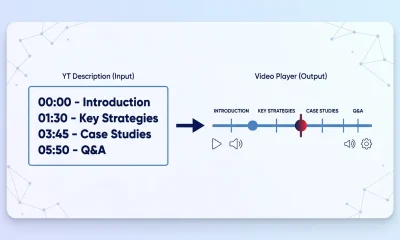
11 Ways to Rank Your Videos
-

 Sports5 days ago
Birmingham 2026: Day 6 Timetable for Irish Athletes
-
 NewsBeat5 days ago
Myanmar says over 300,000 Rohingya refugees verified for repatriation as exodus enters ninth year
-

 Politics5 days ago
SEQ Code: The Three Letter Boarding Pass Code That Could Give You The Worst Seat
-

 Tech2 days ago
Qwen3.8-27B runs frontier-class coding agents and reasoning locally, no cloud API required
-

 Tech7 days ago
DeepSeek Harness launches as open source rival to Claude Code, alongside V4-Pro on API with higher prices
-

 Crypto World5 days ago
Pi Network Protocol 27 endgame: last upgrade before what?
-

 Crypto World3 days ago
OCC Greenlights Trump Family Crypto Firm for Trust Charter
-

 Business2 days ago
SMA Solar Technology AG (SMTGY) Q2 2026 Earnings Call Transcript
-
 Tech5 days ago
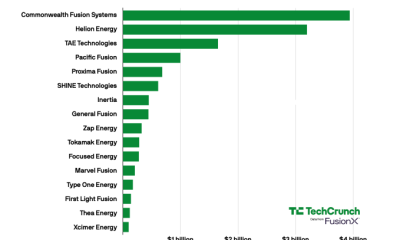
Every fusion startup that has raised over $100M
-

 Fashion6 days ago
Weekly News Update, 8.14.26 – Corporette.com
-

 Business6 days ago
15 Ways to Make Money From Your Phone (2026 Guide)
-
 Entertainment6 days ago
10 Netflix Shows That Quietly Became Modern Classics
-

 Business5 days ago
Facebook Down Now? Users Report Login And Loading Problems As Outage Trackers Monitor Ongoing Issues
-
 Entertainment5 days ago
Marvel Studios Reveals New X-Men Cast Including Adam Driver and Sadie Sink
-

 Fashion6 days ago
Silver bangles for women – Newbridge Silverware
-

 News Videos9 hours ago
Don’t Leave Your Financial Future To Chance | August 19, 2026
-
 Business5 days ago
Monarch Mutual Fund set to enter MF space with maiden overnight fund; files draft with Sebi
You must be logged in to post a comment Login