Connect with us
DAPA Banner
DAPA Coin
DAPA
COIN PAYMENT ASSET
PRIVACY · BLOCKDAG · HOMOMORPHIC ENCRYPTION · RUST
ElGamal Encrypted MINE DAPA
🚫 GENESIS SOLD OUT
DAPAPAY COMING

Business

Dropbox Names Ashraf Alkarmi CEO to Succeed Andrew Houston

Published

on

Dropbox Names Ashraf Alkarmi CEO to Succeed Andrew Houston

Dropbox Chief Executive Andrew Houston will step down from his role after 19 years at the head of the company and become executive chairman.

Ashraf Alkarmi, general manager of the company’s “core” business, will become the new CEO. Houston and Alkarmi will serve as co-CEOs for a period to facilitate the transition.

Copyright ©2026 Dow Jones & Company, Inc. All Rights Reserved. 87990cbe856818d5eddac44c7b1cdeb8

Continue Reading
Click to comment

You must be logged in to post a comment Login

Leave a Reply

Business

Monthly auto loan payments above $1,000 are growing

Published

on

Monthly auto loan payments above $1,000 are growing

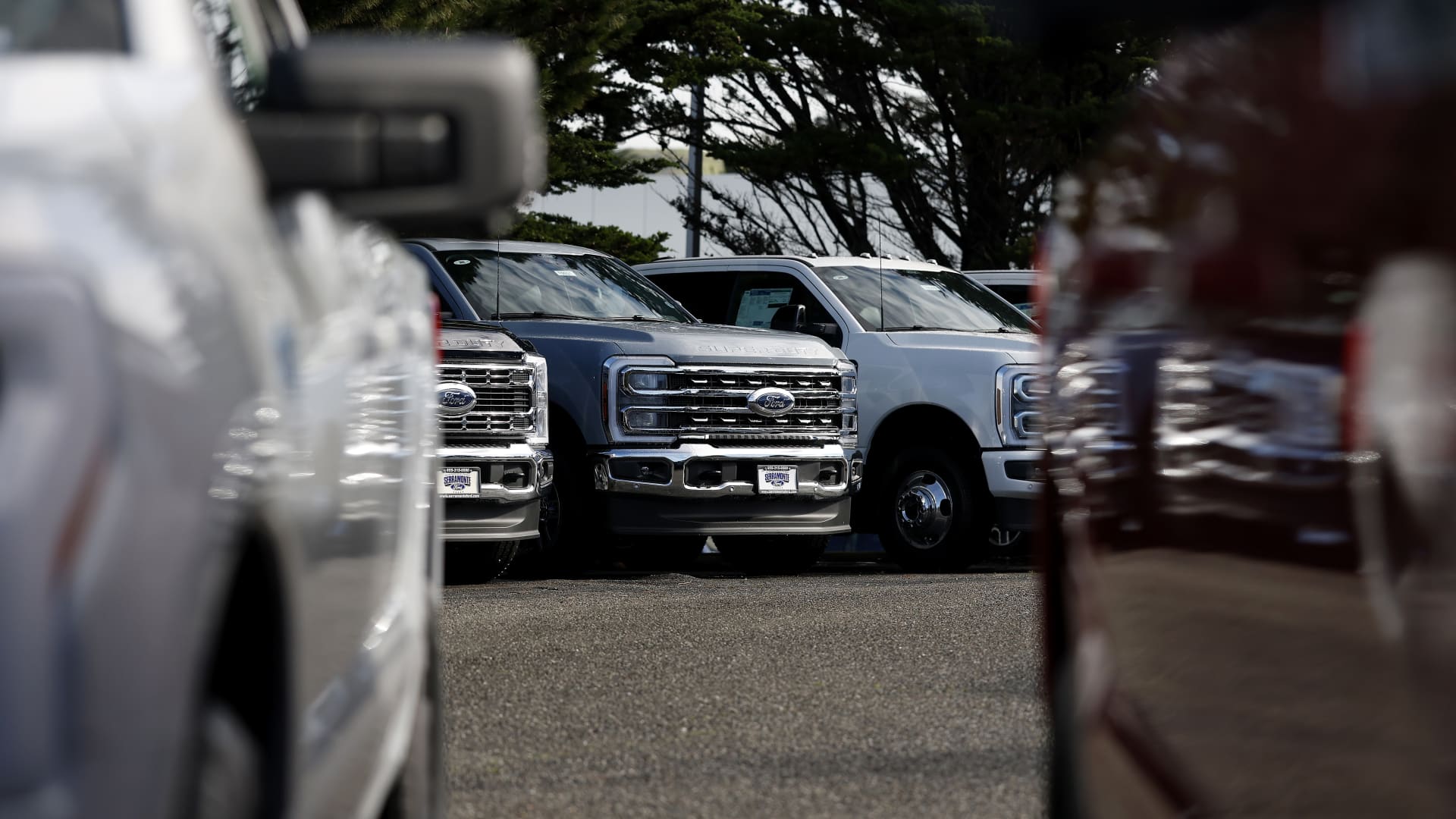
In a country where big trucks are a big deal, those pickups and SUVs represent a big percentage of auto loans that come with a sizable monthly payment, more than $1,000 a month, according to new data.

Experian Automotive’s analysis of more than 5 million open auto loans and leases in the first quarter shows nearly 19% of new vehicle loans include a monthly payment of at least $1,000. That’s up from roughly 17.4% year over year.

“The assumption is that it’s all luxury, it’s high-line, and that is not the case,” said Melinda Zabritski, head of automotive financial insights for Experian Automotive.

Advertisement

Almost 74% of the auto loans requiring owners to pay $1,000 or more every month are for non-luxury models, with the top five models being popular pickup trucks including the Ford F-150, Chevrolet Silverado 1500 and Ram 1500, according to Experian.

Just five years ago, auto loans with monthly payments over $1,000 accounted for just 5.4% of the market. Then the global chip shortage hit in 2021 and 2022, and automakers around the world prioritized production of higher-end, more profitable models. Vehicle prices soared, and so did the amount borrowed for auto loans.

Zabritski said those higher prices have changed how car and truck buyers look at what it takes to finance the purchase of a new vehicle.

“We haven’t seen a reduction in that MSRP, and in those high loan amounts,” she told CNBC. “I think as time goes on, I think more consumers are getting used to the $1,000 payment.” 

Advertisement

The average amount borrowed is now at an all-time high of $43,952, and the average monthly payment has also climbed to an all-time high of $770, according to Experian Automotive. Both are a reflection of a new auto market that is relatively strong.  

As for auto loan delinquencies, the percentage of loans that have payments more 30 days late has edged up to 2% of all new vehicle loans, with the 60-day delinquency rate also increasing.  

Still, Zabritski noted that delinquency rates remain below 2018 levels. 

“The driving force in the 60-day delinquency really does fall within the subprime market. Lower credit scores are going to have a higher likelihood of default,” she said.

Advertisement
Choose CNBC as your preferred source on Google and never miss a moment from the most trusted name in business news.
Continue Reading

Business

Dolly Khanna’s portfolio sees steady gains in CY26; 5 stocks rise up to 25% – Portfolio Moves

Published

on

Dolly Khanna’s portfolio sees steady gains in CY26; 5 stocks rise up to 25% - Portfolio Moves

An ETMarkets analysis of ace investor Dolly Khanna’s portfolio shows that, based on shareholding data for the March 2026 quarter, she publicly holds around eight stocks. As of May 27, 2026, the total value of these holdings is approximately Rs 481 crore, up about 8% from Rs 444 crore in December 2025.

In terms of performance, five of the eight stocks have gained between 4% and 26% so far in CY26, while the remaining three have declined between 15% and 22%. There were three fresh additions to the portfolio during the March 2026 quarter. (Data Source: ACE Equity, Trendlyne)

Continue Reading

Business

Oil Prices Surge Over 2 Percent as US-Iran Tensions Escalate and Supply Fears Grip Global Markets

Published

on

Prince Harry (left) and his wife Meghan Markle (right) stunned the monarchy by announcing they were quitting royal duties and moving to the United States in early 2020

NEW YORK — Crude oil prices jumped sharply on Thursday, with West Texas Intermediate crude rising more than 2 percent to $90.87 per barrel and Brent crude climbing to $96.67, as renewed military exchanges between the United States and Iran near the Strait of Hormuz reignited fears of potential supply disruptions in the world’s most critical energy chokepoint.

The gains extended a volatile week for energy markets, with benchmark prices responding to reports of fresh strikes and retaliatory actions that have heightened geopolitical risk premiums. Murban crude, a key Middle East benchmark, posted even stronger gains, rising 5.16 percent to $94.57 amid concerns over possible longer-term threats to Persian Gulf exports.

The surge comes as traders assess the potential impact on global supply flows. Roughly one-fifth of the world’s seaborne oil passes through the Strait of Hormuz, making any sustained disruption a major risk factor for energy prices and broader economic stability.

Drivers Behind Thursday’s Rally

Analysts attributed the sharp move primarily to escalating tensions following U.S. strikes on Iranian drone facilities and Iran’s response targeting American assets. Although both sides have described the actions as limited, the incidents have raised fears that the fragile ceasefire could collapse, potentially leading to attacks on oil infrastructure or shipping lanes.

Advertisement

“Geopolitical risk is back on the table in a meaningful way,” one commodities trader noted in market commentary. The possibility of Iran restricting tanker movements or targeting infrastructure has prompted defensive buying across energy futures.

Supporting the price action, several other benchmarks showed strength. WTI Midland rose 2.61 percent to $92.44, while gasoline futures gained 1.96 percent. Heating oil also moved higher, reflecting expectations of tighter supply conditions if tensions persist.

Natural gas prices, however, traded mixed. U.S. Henry Hub futures fell 0.87 percent to $3.068, while AECO C in Canada surged 10.66 percent on regional weather and storage dynamics.

Broader Market Context

Oil prices have been highly sensitive to developments in the Middle East throughout 2026. Earlier disruptions from the conflict had already pushed benchmarks above $100 at times, though periodic hopes for de-escalation had triggered pullbacks. Thursday’s move reversed some of that recent softness.

Advertisement

The energy complex is also reacting to mixed global demand signals. While economic growth concerns in some major economies persist, strong consumption in Asia and ongoing strategic buying by certain nations have provided underlying support.

Inventory data released earlier in the week showed modest builds in U.S. crude stocks, but analysts say this has been overshadowed by the geopolitical narrative. The American Petroleum Institute reported a larger-than-expected draw in gasoline inventories, contributing to the strength in refined product prices.

Impact on Global Benchmarks

International crude grades showed varied movements depending on reporting delays. The OPEC Basket fell in older data, but current trading sentiment suggests renewed upward pressure across the complex. Dubai and Oman grades reflected similar dynamics, with some benchmarks posting notable declines in delayed figures while active trading showed firmness.

Western Canadian Select traded lower in recent sessions, reflecting regional pipeline and refining dynamics less directly tied to Middle East events. Louisiana Light and ANS West Coast also showed mixed performance based on timing.

Advertisement

This divergence highlights how different crude grades respond to specific regional supply and demand factors even as global risk sentiment dominates headline movements.

Implications for Energy Markets and Economy

Rising oil prices carry significant implications for inflation, consumer spending and corporate earnings. Higher energy costs could feed through to transportation, manufacturing and household budgets, potentially complicating central bank policy decisions in multiple countries.

Airlines, shipping companies and chemical manufacturers face increased input costs that may pressure margins or lead to higher prices for end consumers. Conversely, oil producers, exploration companies and service providers stand to benefit from sustained higher prices.

The surge has also influenced related markets. Gold prices pulled back as the dollar strengthened on risk sentiment, while certain equity sectors showed defensive rotation.

Advertisement

Analyst Perspectives and Outlook

Energy analysts remain divided on the near-term trajectory. Some expect prices to test $95–$100 for WTI if tensions remain elevated, while others warn that any diplomatic progress could trigger sharp profit-taking.

Longer-term factors include global economic growth forecasts, OPEC+ production decisions and the pace of energy transition efforts. The current environment favors volatility as traders balance immediate geopolitical risks against longer-term demand uncertainties.

Market participants will closely monitor overnight developments in the Middle East, upcoming inventory reports and statements from major producers. Any escalation involving critical infrastructure could push prices significantly higher, while successful de-escalation talks might ease the recent premium.

For businesses and consumers, the current price environment serves as a reminder of energy markets’ sensitivity to geopolitical events. Companies with hedging programs may be better positioned, while households could face higher gasoline prices at the pump in coming weeks.

Advertisement

Technical Market View

From a technical standpoint, WTI crude has broken above recent resistance levels around $88–$89, potentially targeting the $95 zone if momentum holds. Brent faces similar dynamics with resistance near $98–$100.

Trading volumes were elevated during the session, indicating strong participation from both speculative and commercial accounts. Options activity showed increased interest in upside protection, reflecting caution among market players.

As trading continues, focus remains on whether the current spike represents a temporary risk premium or the start of a more sustained move higher. Energy futures will likely remain in the spotlight as long as uncertainty persists in the Persian Gulf.

The latest price action underscores oil’s role as both a critical commodity and a barometer for global geopolitical stability. With multiple benchmarks showing significant daily moves, market participants are bracing for continued volatility in the energy complex.

Advertisement
Continue Reading

Business

Stifel raises Snowflake stock price target to $300 on AI strength

Published

on


Stifel raises Snowflake stock price target to $300 on AI strength

Continue Reading

Business

Merthyr industrial door maker for Harrods under new ownership

Published

on

Business Live

Design & Supply has been acquired by its management team in a deal backed by the Development Bank of Wales

Design & Supply has completed an MBO with investment from the Development Bank of Wales.

A Merthyr manufacturer of industrial steel doors has been acquired in a £3.1m management buyout (MBO) deal. Design & Supply is now owned by an experienced internal management team comprising Tom Grother, Scott Davies and Damien Regis.

The deal, which secures 65-jobs, has been backed by the Development of Wales with a mixture of debt and equity.

Advertisement

Founded in 1986 by Terry Stares, Design & Supply was previously subject to an MBO in 2016, when long-serving employees Kevin Edwards and Chris Weed acquired the company.

From its 41,000 sq ft facility it manufactures a wide range of high-specification steel doors. The company serves customers across the UK, with projects including St Pancras, National Grid sites, Harrods, Canary Wharf and Silverstone.

Legal advice to the vendors was provided by Knights, with Darwin Gray advising the MBO team and Blake Morgan advising Development Bank of Wales. As part of the transaction, fractional finance director support is being provided by SME Finance Partners to support the business’s next phase of growth.

Mr Grother, director at Design & Supply, said: “This is a proud moment for all of us. As a management team, we’ve been closely involved in running the business for many years, and this deal gives us the platform to take it forward while staying true to what’s made it successful.“We’re particularly proud that this is the second management buy-out in the company’s history. It reflects a strong legacy of local ownership and long-term commitment to the business, its people and the wider community. Scott’s journey from apprentice to owner is a great example of what that means in practice.

Advertisement

“The support from the Development Bank of Wales has been about much more than funding. We’ve built a strong relationship with the team, and their backing gives us confidence as we look to the future. Our focus now is on building on the foundations laid by Kevin and Chris, continuing to invest in our people and delivering long-term, sustainable growth.”

Scott Hughes, senior investment executive at the Development Bank of Wales, said:“This investment demonstrates our commitment to supporting strong Welsh businesses through succession using equity investment.

“Design & Supply is a highly regarded manufacturer with an experienced management team and clear growth ambitions. By backing this transaction with equity, we are helping to ensure continuity, safeguard skilled employment in Merthyr and support the business to invest for the long term while remaining locally owned.

“We’re pleased to support Tom, Scott and Damien as they take the business forward and build on its long-standing reputation.”

Advertisement

Rhys Gedrych of SME Finance, who acted for the company, said: “Design & Supply is a high-quality business with strong fundamentals, a loyal customer base and a proven ability to deliver consistent performance.

“The MBO team knows the business inside out and is well placed to drive the next phase of growth. We’re delighted to support them in strengthening financial processes and helping to unlock further opportunities.”

Continue Reading

Business

Phoenix Built an Empire of Cubicle Jobs. AI Is Coming to Tear It Down.

Published

on

Phoenix Built an Empire of Cubicle Jobs. AI Is Coming to Tear It Down.

PHOENIX—All around this desert city’s sprawling metro area, low-rise office parks with tinted windows and vast parking lots stretch to the horizon. This is America’s back office.

Abundant land and cheap labor made Phoenix a premier place for companies to stash lower-paid office workers who don’t need to be physically close to clients or headquarters. The cubicle-based jobs—customer service, data entry, payroll processing—created a vital ladder to the middle class, helping replace factory work lost to overseas competition. 

Now, these white-collar jobs are fading, too, thanks to continued offshoring and, increasingly, artificial intelligence. Tens of thousands of local workers suddenly face an uncertain future.

A test grader saw her work outsourced to India. A customer-relations manager, recently laid off and his savings running low, is looking to become a bartender. Job-placement firms that supply companies with back-office workers are seeing less demand and are cutting their own staff, too. Those who still have jobs are increasingly leery of automation, even as it’s become an unavoidable part of their days.

Advertisement

Copyright ©2026 Dow Jones & Company, Inc. All Rights Reserved. 87990cbe856818d5eddac44c7b1cdeb8

Continue Reading

Business

Govt, Bethesda do deal to save Mount Hospital

Published

on

Govt, Bethesda do deal to save Mount Hospital

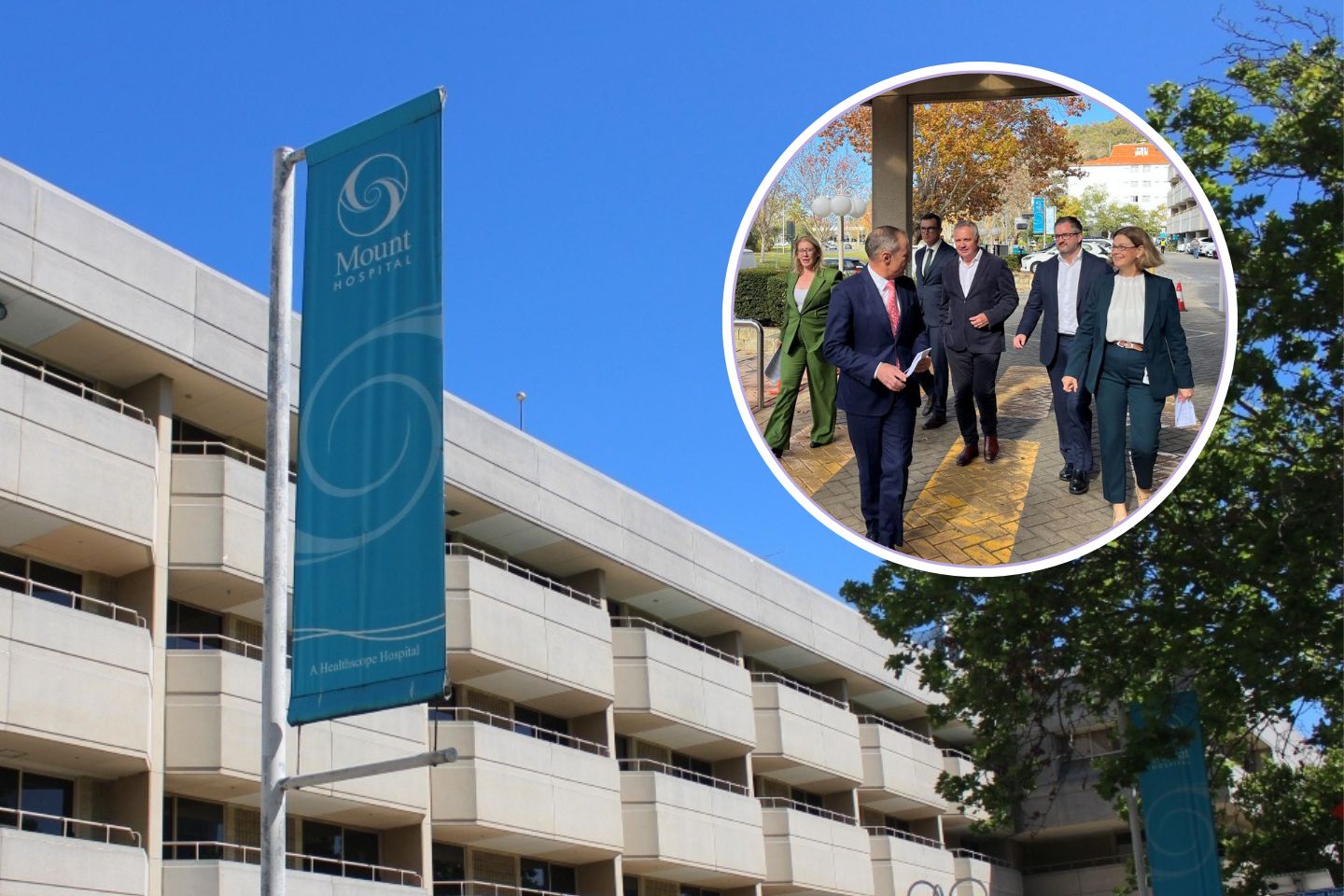
The state government has done a deal with Bethesda to ensure the Mount Hospital, which is currently in receivership under current operator Healthscope, can remain viable.

Continue Reading

Business

Janus Henderson Global Multi-Asset Aggressive Growth Managed Account Q1 2026 Commentary

Published

on

BlackRock Global Equity Market Neutral Fund Q4 2025 Commentary

Janus Henderson Investors exists to help clients achieve their long-term financial goals. Formed in 2017 from the merger between Janus Capital Group and Henderson Global Investors, we are committed to adding value through active management. For us, active is more than our investment approach – it is the way we translate ideas into action, how we communicate our views and the partnerships we build in order to create the best outcomes for clients. While our investment managers have the flexibility to follow approaches best suited to their areas of expertise, overall our people come together as a team. This is reflected in our Knowledge. Shared ethos, which informs the dialogue across the business and drives our commitment to empowering clients to make better investment and business decisions.www.janushenderson.com

Continue Reading

Business

Weyerhaeuser: An Irreplaceable Timber Giant Poised For The Housing Rebound

Published

on

Weyerhaeuser: An Irreplaceable Timber Giant Poised For The Housing Rebound

Weyerhaeuser: An Irreplaceable Timber Giant Poised For The Housing Rebound

Continue Reading

Business

Why linear tv’s biggest names are all fleeing to YouTube

Published

on

Why linear tv's biggest names are all fleeing to YouTube

There was a moment, somewhere around 1990, when I sincerely believed that the most important thing my mother did each evening was sit down at 9.00pm sharp to watch the news.

Not 9.01pm. Not 8.59pm. Nine, on the dot, because that was when the news began, because Sir Alastair Burnet had decided it was so, and because the rest of the United Kingdom, including, by the look of it, the entire cabinet, appeared to be doing exactly the same thing. The country ran on a single national rhythm, like a great wheezing grandfather clock, and the people who set the time wore tailored suits and lived in a place called Wood Lane.

That rhythm is now thoroughly, demonstrably, embarrassingly dead. And the people doing the burying are not bedroom-bound teenagers in TikTok-stained pyjamas. They are the very figures who built the broadcast schedule in the first place.

Take Stephen Colbert. Forty-eight hours after CBS finally smothered The Late Show with a corporate pillow, the network insists this had nothing to do with the lawsuit, the Skydance merger or the present occupant of the Oval Office, and we are of course expected to accept that assertion at the value of a Liz Truss lettuce, Colbert popped up on a public-access channel called Monroe Community Media. Then he popped up, rather more pointedly, on his shiny new YouTube channel, with Eminem and Jeff Daniels in tow, gathering 120,000 subscribers in a single weekend. No 11.35pm slot. No commercial break. No procession of Affiliate Sales stations of the cross. Just Stephen, a camera, and the most generous tip jar in the history of broadcasting.

A few months earlier, Piers Morgan walked off the Murdoch reservation entirely, to which I would normally raise a single languid eyebrow, but the man left a reported £50 million on the table to do it. He has called the TalkTV slot a “straitjacket”. He has 3.6 million YouTube subscribers and a four-year arrangement that hands him ownership of his own brand. Trump, Zelensky, Peterson, Ronaldo: all interviewed not for the dignified British 10 o’clock viewer but for a global congregation that watches him in Brisbane, Boston and bed.

Advertisement

And while the talent is bolting for the exits, the institutions are quietly digging tunnels under the perimeter fence. The BBC, that great, lumbering, well-meaning monument to the licence fee, is putting the finishing touches on a landmark deal to produce original shows for YouTube. Why? Because, mortifyingly, YouTube has overtaken BBC One on monthly reach in this country. The corporation that gave us Reith, Attenborough and Bake Off is now obliged to commission content for the same platform that hosts cats falling off skirting boards. The licence fee, it turns out, doesn’t beat free.

The numbers, for those of us who still pretend to be grown-ups, are devastating. Per Ofcom’s Media Nations 2025 report, Britons aged 16 to 24 now watch a startling 33 minutes of broadcast television a day, of which barely 20 minutes is live; they spend an hour and a half on YouTube and TikTok. For someone over 75, broadcast still hoovers up 90 per cent of in-home viewing. For a 16-year-old, it is 19 per cent. We are not, as is so often claimed, watching the gradual decline of an industry. We are watching its will being read.

Across the Atlantic, Nielsen’s Gauge confirms YouTube has now spent six consecutive months as the single largest distributor of television in America, larger than Disney, larger than NBCUniversal, larger than the entire stricken cable bundle put together. YouTube earned $36 billion in ad revenue in 2024, more than all four American broadcast networks combined. The schedule, to put it baldly, has been replaced by the search bar. The time slot has been replaced by the thumbnail.

The business lesson here is not “everyone should start a YouTube channel”. Please don’t. You’ll fail, embarrass your spouse and spend Saturdays editing in your shed. The lesson, for those of us building businesses outside the M25 commentary bubble, is rather more important than that. Ownership, distribution and audience relationship are now the three things that actually count, and the platform that delivers all three at once is winning. Witness Gary Lineker’s Goalhanger Ventures putting capital into creator-led media businesses precisely because the old playbook, make show, hand to broadcaster, hope, is demonstrably worse than the new one. The talent keeps the IP. The talent keeps the audience. The talent, increasingly, is the broadcaster.

Advertisement

The slot, that great totem of the 20th-century media baron, was never about the viewer. It was about logistics, advert breaks, satellite uplinks, union breaks, Carol Vorderman’s hairdresser. The viewer wanted the show. They never wanted nine o’clock. And now, at last, they don’t have to take both.

Sir Alastair Burnet, sleep well.


Richard Alvin

Richard Alvin

Richard Alvin is a serial entrepreneur, a former advisor to the UK Government about small business and an Honorary Teaching Fellow on Business at Lancaster University.

A winner of the London Chamber of Commerce Business Person of the year and Freeman of the City of London for his services to business and charity. Richard is also Group MD of Capital Business Media and SME business research company Trends Research, regarded as one of the UK’s leading experts in the SME sector and an active angel investor and advisor to new start companies.

Richard is also the host of Save Our Business the U.S. based business advice television show.

Advertisement

Continue Reading

Trending

Copyright © 2025