

Business
EagleRock Land prices IPO at $18.50 per share



Polish economy grows 3.4% in first quarter amid energy challenges

Australia’s share market has broken a four-session losing streak, albeit unconvincingly, after a rebound in banks and continued strength in major miners tipped the bourse into positive territory.


I am an independent analyst and investor interested in investing at the intersection of value and growth. My method is a highly qualitative focus on mostly small caps, looking for both long term compounders as well as some special situations. On Twitter @GrowthyValue
Analyst’s Disclosure: I/we have no stock, option or similar derivative position in any of the companies mentioned, and no plans to initiate any such positions within the next 72 hours. I wrote this article myself, and it expresses my own opinions. I am not receiving compensation for it (other than from Seeking Alpha). I have no business relationship with any company whose stock is mentioned in this article.
Seeking Alpha’s Disclosure: Past performance is no guarantee of future results. No recommendation or advice is being given as to whether any investment is suitable for a particular investor. Any views or opinions expressed above may not reflect those of Seeking Alpha as a whole. Seeking Alpha is not a licensed securities dealer, broker or US investment adviser or investment bank. Our analysts are third party authors that include both professional investors and individual investors who may not be licensed or certified by any institute or regulatory body.
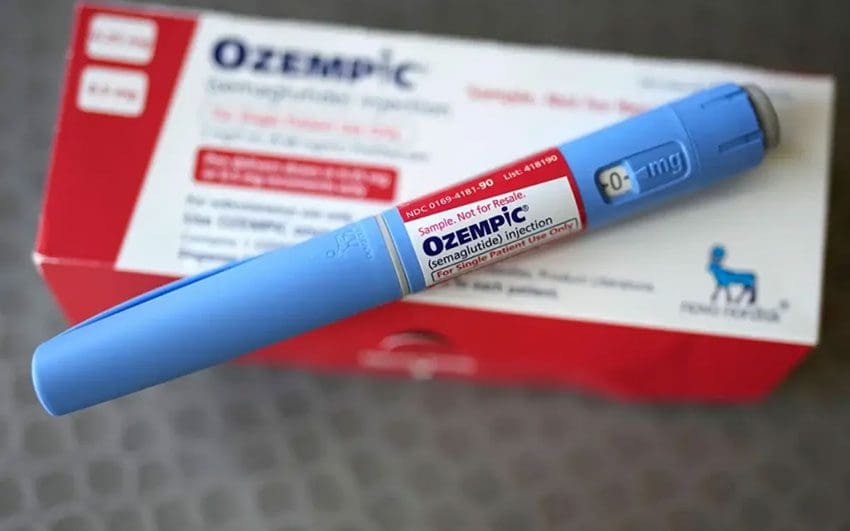
Health goals don’t collapse in one moment. They erode. Tuesday the routine slips. Wednesday sleep is poor. By the following month, meals are reactive and the plan that felt solid in January has quietly disappeared. Nobody decided to stop. Things just drifted.
Weight management works the same way. Effort alone rarely explains the gap between intention and result. Biology runs a parallel process, one that operates independently of how motivated someone feels on a given morning. For a growing number of people, the real question is how habits and clinical support can fit together without making daily life feel like a medical programme.
Oral semaglutide changes part of that picture. A tablet format may remove one barrier for people who struggle with injections, which is why the Wegovy oral pill has entered the wider discussion. Worth examining what that actually means in practice.
UK Regulatory Status and Anticipated MHRA Approval Timeline
Semaglutide as an oral tablet for weight management is still developing in the UK, not a settled patient route yet. The FDA approved oral semaglutide 25mg in December 2025. In the UK, the 7.2mg Wegovy pen cleared MHRA review in April 2026. The oral tablet? No confirmed UK decision yet.
Private access and NHS routes may move at different speeds. They often do. Costs will vary depending on provider, assessment structure, and what follow-up looks like in each case. Anyone researching this now is doing so before full availability lands. That context matters for setting realistic expectations.
What the MHRA Approval Means for UK Patients
Approval of an injectable format does not automatically transfer to an oral one. Each formulation goes through its own process. What the injectable approval does show is that regulators have assessed higher-dose semaglutide for obesity under a separate formulation. That is useful context. It is not a guarantee of timeline for the tablet.
For people trying to understand how a tablet format might fit into their daily routine, the Wegovy pill is a clinical question first, not a lifestyle upgrade. Eligibility, medical history, side effects, and follow-up need proper review before any decision gets made. That review shapes whether treatment is appropriate, not just available.
Individual response varies. Clinical history, existing conditions, other medications. All of these shape what a prescriber recommends. Two people with similar health profiles may end up on different treatment paths depending on which format fits their actual daily life. That fit matters more than most people expect when treatment is meant to run for months.
Clinical Evidence from the OASIS-4 Trial and Efficacy Outcomes
Sixty-four weeks. Daily oral semaglutide 25mg. OASIS-4 participants recorded notable body weight reductions across the study period. Entry criteria: BMI 30 or above, or 27 and above where weight-related health conditions were present.
Two participants on the same protocol for the same duration can produce different outcomes. The trial cannot control for everything. Data supports efficacy. It does not promise a specific number on any individual’s scale. Starting from that position is more useful than starting from best-case projections.
What the trial does confirm: oral delivery of semaglutide produces clinically relevant weight reduction in eligible adults. Wegovy tablets work through the same receptor pathway as the injectable form. That is the foundation.
How Oral Semaglutide Compares to Injectable Wegovy
Wegovy by injection: 2.4mg, once weekly. Wegovy tablets: 25mg, once daily. GLP-1 receptor agonist action in both cases, influencing appetite and glycaemic control through the same biological mechanism. Outcomes appear to sit in a comparable range across available trial data.
Adherence drives the choice here, not pharmacology. Some people may not want to inject themselves at home over an extended period. Not a weakness. A real barrier that determines whether treatment starts at all. Removing the needle may reduce the training requirement, the anxiety, and the logistical weight of managing an injectable long-term.
Starting a format that gets maintained beats starting a theoretically better format that gets abandoned. That distinction is clinical, not just practical.
Dosing, Administration, and Safety Considerations
Empty stomach. Non-negotiable. Oral semaglutide 25mg needs 30 minutes clear before food or other medications. Built into how the tablet absorbs. Cannot be worked around.
Treatment starts low. Dose titrates upward over several weeks to reach 25mg. Standard for GLP-1 therapies. Nausea, vomiting, diarrhoea, constipation show up commonly in the early weeks. Most run mild to moderate. Many settle as adjustment progresses. Clinical assessment covers contraindications, medical history, and suitability before any prescription is issued. That step is where appropriateness gets determined, not after.
Practical Adherence Strategies for Daily Oral Dosing
Same time. Every morning. Before food. Before anything else. Vague plans to take it “in the morning” produce missed doses by week three. A single smartphone alarm, set once, removes the daily decision. It fires. The tablet gets taken. This is where daily routine does more than motivation.
Pill organisers add a physical confirmation layer. One glance replaces the need to remember. Useful on the mornings when memory is not reliable.
Missing one daily dose may carry less individual impact than missing a weekly injection. That is the maths. Across a full month, though, irregular patterns accumulate. Week one habits tend to stick. Week four corrections rarely do.
UK Access Pathways, Cost Considerations, and Patient Journey
Private prescription routes may move ahead of NHS funding. Costs will vary by provider, assessment model, and follow-up structure. These details should become clearer as approval progresses.
If approval is confirmed, GPhC-registered online pharmacies with clinician oversight may become one access route. A typical regulated process would involve clinical consultation, eligibility review, and a prescription only where criteria are met.
Weight management over the long term comes down to whether the format, the routine, and the clinical structure hold together across months. A treatment route can look strong on paper and still fail if it does not fit the morning, the workday, the meal pattern, and the person using it.
That is why the conversation around tablets matters. Not because a different format removes the need for assessment, follow-up, or daily habits. It does not. But for some patients, a routine that feels easier to keep may make the whole structure easier to maintain.

Despite positive FY25 results, Hockey WA boss Graham Reid says the state sporting organisation remains focused on delivering strong governance and financial discipline.

Speaking to ET Now, market strategist from China Market Research Group & Author Shaun Rein described the summit as one of the most consequential diplomatic engagements in recent years, particularly against the backdrop of trade disputes, AI rivalry and mounting tensions in West Asia.
“This is an important meeting. This is the first time that an American president has stepped foot in China nine years since Trump started the trade war back in 2017-2018 and the whole world, India, United States, Europe, Africa, we have all suffered from the geopolitical split and tension between the US and China,” Rein said.
He pointed out that export controls imposed by Washington on advanced technologies, including AI chips and semiconductors, had intensified the economic divide between the two nations. China, in response, has leveraged its dominance in refined rare earths, a critical input for global manufacturing and electronics.
“As America has forbidden and put export controls on all types of products from Nvidia chips to being exported to China, China has retaliated by holding the Sword of Damocles over the rest of the world, saying, will we send out Chinese refined rare earths or not,” he said.

West Asia Crisis Likely to Dominate Discussions
While trade and AI remain major strategic concerns, Rein believes the worsening conflict in West Asia could overshadow economic discussions during the summit.
“Well, trade, AI, and just competing visions of the global world order is very important. But unfortunately, because Trump has had a self-inflicted wound by invading Iran through bombs, that is what the large part of the discussion is going to be,” Rein said.
According to him, Washington is increasingly dependent on Beijing’s diplomatic leverage to ease tensions involving Iran and the Strait of Hormuz, a critical global oil shipping route.
He argued that China’s interests align more closely with restoring stability in the Middle East rather than prolonging conflict.
“We have to remember they do $108 billion of trade with Saudi Arabia, $103 billion of trade with UAE, and only officially about 15 billion of trade with Iran,” Rein noted, adding that China’s broader economic priorities in the region outweigh its ties with Tehran.
Rein also said China would prefer an end to regional tensions as inflationary pressures begin to re-emerge domestically.
“So, China says, what, let us try to work with the United States and get a win to fix the problems in the Middle East because I do not think that China is as close to Iran as a lot of Americans believe they are,” he added.
Supply Chain Decoupling Still Intact
Despite expectations surrounding the summit, Rein warned that the broader decoupling of US and Chinese supply chains is unlikely to reverse anytime soon.
He said Chinese companies and policymakers no longer trust long-term access to American technology after years of export restrictions and sanctions.
“So, the Chinese will never ever after a decade of being harassed and oppressed by the United States build their AI and their technology sector on the American tech stack anymore. They are going to focus on indigenous innovation,” he said.
Rein suggested investors should increasingly watch domestic Chinese technology players rather than American firms dependent on China exposure.
“So, investors should be looking at Chinese players like Cambricon, SMIC, Hua Hong. The Chinese players are going to do well because nobody in China can trust that they will be able to rely on the American tech stack,” he said.
He also argued that countries across the Global South have become wary of relying too heavily on US-controlled technologies and financial systems after Washington’s repeated use of sanctions and economic restrictions.
China Holds Stronger Position, Says Rein
On the balance of power between Washington and Beijing, Rein said China currently holds greater leverage in both trade and geopolitics.
“China clearly has won the trade war. China clearly has more leverage over the United States right now,” he said.
According to Rein, China’s influence extends far beyond rare earths and electronics, covering pharmaceuticals, antibiotics and key industrial supply chains that are deeply embedded in the global economy.
“It is the fact that China also controls along with India a combined 95% of antibiotic production. It also makes almost 100% of ibuprofen and paracetamol,” he said.
Rein argued that deteriorating ties between the United States and several traditional allies had further strengthened China’s global position.
“But the problem is Trump has ticked off his allies, Canada, France, Germany, and these leaders of these countries have all visited Xi Jinping and made the pilgrimage to China in the last two months,” he said.
India’s Strategic Position Under Spotlight
Rein also spoke extensively about India’s evolving role amid shifting global alliances, suggesting that India has the potential to emerge as one of the world’s leading superpowers over the long term.
“I believe India should and will become one of the three major global superpowers,” he said.
However, he questioned New Delhi’s current balancing strategy between Washington and Beijing and argued that India should adopt a more pragmatic relationship with China.
“I am happy to see that direct flights between the two countries have come back. I am glad to see that more visas are being issued both ways. Both countries should be working together to offset western imperialism,” Rein said.
He added that India should remain cautious about becoming overly dependent on the United States.
“You need to understand that the United States will do all that it can to prevent India from getting too strong,” he said.
As markets assess the possible outcomes of the Trump-Xi meeting, analysts believe even a temporary easing of rhetoric between the two nations could provide relief to global businesses grappling with geopolitical uncertainty, disrupted supply chains and shifting trade policies.

GB News Radio has emerged as the fastest-growing network station in the country, with the latest RAJAR figures showing a 21 per cent surge in year-on-year reach that has pushed the upstart broadcaster decisively ahead of its closest commercial rivals.
The station, which forms part of the wider GB News operation, attracted 676,000 listeners during the first quarter of 2026, comfortably overtaking Times Radio on 604,000 and Talk on 560,000. It is a result that will sharpen the competitive temperature in a speech-radio market that has seen heavy investment from News UK, Global and Bauer over the past five years.
GB News Radio’s 21 per cent expansion outstripped Talk’s 16 per cent uplift and the 6 per cent rise recorded by LBC, the long-standing market leader in the news-and-talk format. Times Radio, by contrast, saw its annual reach contract by 3 per cent, raising fresh questions about the trajectory of News UK’s five-year-old digital station.
Listening hours at GB News Radio reached 4.35 million in the quarter, a modest 1 per cent improvement on the same period last year but a figure the broadcaster argues underlines deepening listener loyalty alongside the headline reach growth.
Much of the momentum has come from younger demographics that commercial talk-radio operators have historically struggled to capture. The station reported a 20 per cent increase among adults aged 35 to 54 over the past quarter, with the 35-to-54 male audience climbing 30 per cent — a cohort that remains particularly prized by advertisers in the speech genre.
Ben Briscoe, head of programming at GB News, said the numbers reflected a clear shift in listening habits. “These figures show more and more people are turning to GB News Radio for breaking news, opinion and coverage of the day’s biggest stories,” he said. “The continued growth reflects the hard work, commitment and first-class journalism produced by our teams across the schedule every day. Just like on TV, GB News Radio is leaving its rivals trailing behind.”
The radio performance mirrors a strong run for the group’s television operation. GB News was the most-watched news channel in the UK on local election results day, with BARB figures showing an average audience of 185,700 on Friday 8 May. That was 56 per cent ahead of Sky News, which drew 119,000 viewers, and almost double the BBC News Channel’s 93,200.
During April, the channel averaged 89,500 viewers and a 1.59 per cent share, edging Sky News on 86,200 viewers and a 1.53 per cent share. Between July 2025 and April 2026, GB News averaged 90,300 viewers and a 1.47 per cent share, ahead of the BBC News Channel’s 83,900 viewers (1.37 per cent) and Sky News’s 72,000 viewers (1.18 per cent), capping a ten-month run in which the broadcaster has consistently outperformed both established rivals.
For the wider commercial broadcasting sector, the latest RAJAR data points to a more fragmented and contestable speech-radio market than at any point in the past decade, and one in which the newest entrant is now setting the pace.

Amy Ingham
Amy is a newly qualified journalist specialising in business journalism at Business Matters with responsibility for news content for what is now the UK’s largest print and online source of current business news.

The Office for National Statistics says growth picked up in the first three months of the year.

Britain’s economy delivered a rare piece of good news this morning, with the Office for National Statistics reporting that GDP expanded by 0.3 per cent in March, comfortably ahead of City forecasts and capping a first-quarter growth rate of 0.6 per cent.
The figures, the last to capture activity before the outbreak of the Iran war began rattling global markets, point to a services-led upswing that has handed the Chancellor a brief reprieve as she braces for what most economists agree will be a far bleaker summer.
According to the ONS, the services sector, still the engine room of the British economy, grew by 0.8 per cent over the quarter, with production nudging up 0.2 per cent and construction rising 0.4 per cent. Wholesale, computer programming and advertising were the standout performers.
“Growth picked up in the first quarter of the year, led by broad-based increases across the services sector,” said Liz McKeown, director of economic statistics at the ONS. “Within that, wholesale, computer programming and advertising performed particularly well.”
For the country’s 5.5 million small and medium-sized enterprises, however, the headline number masks a far more uncomfortable reality. The March print captures only the opening days of the conflict; April and May data, when they land, are expected to reveal the full cost of the disruption ripping through the Strait of Hormuz and into global supply chains.
Chancellor Rachel Reeves seized on the figures to defend her fiscal strategy, telling reporters that “now is not the time to put our economic stability at risk”.
“Today’s figures show the government has the right economic plan,” Reeves said. “The choices I have made as Chancellor mean our economy is in a stronger position as we deal with the costs of the war in Iran. This government is getting on with the job of building an economy that is stronger, more resilient, and prepared for the future.”
Shadow chancellor Sir Mel Stride was quick to puncture the mood, arguing that “the chaos surrounding the Labour leadership is destabilising Britain’s economy”. His intervention reflects mounting nerves in Westminster, where Sir Keir Starmer is fighting to hold his position amid backbench unrest.
Forecasters have already sharpened their pencils. Capital Economics has slashed its 2026 UK growth projection, with deputy chief UK economist Ruth Gregory warning that “prolonged political instability” represents “an extra downside risk” to her outlook.
“We would be very surprised if growth doesn’t weaken from May as the temporary boost from stockpiling unwinds and the squeeze on households’ real incomes from higher energy prices intensifies,” Gregory said. “In our adverse scenario, the economy suffers a mild recession. So the economy will probably give whoever is Prime Minister a rough ride.”
The energy picture is doing most of the damage. Brent crude has surged by roughly 50 per cent since March on fears of sustained supply disruption, and as a net energy importer Britain is more exposed than most of its G7 peers. Higher import costs are expected to filter rapidly into inflation, while weakening global demand threatens to weigh on the export book just as Britain’s manufacturers had begun to find their feet.
For SME owners, the practical consequences are already taking shape. Survey data shows consumer confidence has fallen sharply since the conflict began, and business investment, which had been showing tentative signs of recovery, is widely expected to stall as boardrooms wait for clarity on energy costs, interest rates and political direction.
The Treasury is understood to be poring over the latest figures ahead of an energy support package for businesses and households, with smaller firms in energy-intensive sectors lobbying hard for targeted relief.
Compounding the uncertainty, Reeves herself is reportedly weighing whether she could remain in her current role under a new Labour leader should Sir Keir be forced out. Bond traders are already pricing in a leftward shift, with gilt yields reflecting expectations that fiscal rules could be loosened and the current government’s growth policies quietly shelved.
For now, Sir Keir has dug in. Following Tuesday’s King’s Speech, in which he promised to “tear down” the status quo and pursue a “radical agenda”, the Prime Minister has cited the war as reason enough to remain at the helm. Whether anxious backbenchers, and equally anxious business owners, will share that assessment over the coming weeks remains very much an open question.
Amy Ingham
Amy is a newly qualified journalist specialising in business journalism at Business Matters with responsibility for news content for what is now the UK’s largest print and online source of current business news.

Warsh The Reformer: A New Era For The Fed

Bitcoin May Undo Rally After Hitting Resistance: CryptoQuant

The House | Britain must join efforts to boost European space capabilities if it is to lead Nato in the High North

Timberwolves overwhelmed as Spurs take Game 5

Manchester United reach agreement with Casemiro over contract clause amid transfer speculation

US brings back mandatory military draft registration

Steven Gerrard disagrees with Gary Neville over ‘shock’ Chelsea and Arsenal claim | Football

Trump: ‘I don’t think about Americans’ financial situation’ during Iran talks

WATCH: ‘I don’t think about Americans’ financial situation’ when negotiating with Iran, Trump says

STARMER’S COLLAPSE, FINANCIAL CRISIS NEXT? Matt Goodwin and Liam Halligan in conversation
-
 Crypto World6 days ago
HarrisX Poll Found 52% of Registered Voters Support the CLARITY Act
-

 Fashion6 days ago
Weekend Open Thread: Marianne Dress
-

 Crypto World7 days ago
Upbit adds B3 Korean won pair as Base token gains Korea access
-

 Fashion3 days ago
Coffee Break: Travel Steam Iron
-

 Tech4 days ago
Auto Enthusiast Carves Functional Two-Stroke Engine from Solid Metal
-

 Fashion3 days ago
What to Know Before Buying a Curling Wand or Curling Iron
-

 Politics2 days ago
What to expect when you’re expecting a budget
-
 Business5 days ago
Ignore market noise, India’s long-term story intact, say D-Street bulls Ramesh Damani and Sunil Singhania
-

 Politics5 days ago
Politics Home Article | Starmer Enters The Danger Zone
-

 Tech3 days ago
GM Agrees To Pay $12.75 Million To Settle California Lawsuit Over Misuse Of Customers’ Driving Data
-

 Politics7 days ago
Simon Cowell Says He Was ‘Horrible’ To Susan Boyle During BGT Audition
-

 Entertainment7 days ago
General Hospital: Ric & Ava Bombshell – Ric’s Massive Secret Exposed!
-

 Entertainment7 days ago
Why David Letterman Called CBS ‘Lying Weasels’
-
Entertainment7 days ago
Hayden Panettiere reveals she's estranged from mom, addresses brother Jansen's sudden death: 'I was floored'
-
 Entertainment7 days ago
Paramount+’s ‘Landman’ Season 3 Gets Promising New Update From Returning Director
-

 Sports6 days ago
Bayern Munich vs PSG UEFA Champions League SF2 live match time, streaming | Football News
-

 Entertainment6 days ago
YNW Melly Denied Bond Again Ahead Of Double Murder Retrial
-

 Tech2 days ago
GM agrees to $12.75M California settlement over sale of drivers’ data
-

 Politics7 days ago
Euphoria Creator Praises Sydney Sweeney Amid Season 3 Scenes Backlash
-
Entertainment6 days ago
Hantavirus — cause of death for Gene Hackman's wife — at the center of Dutch cruise outbreak
You must be logged in to post a comment Login