
Business
Earnings call transcript: Quantinuum lifts 2026 outlook as loss weighs on shares




FAA Administrator Bryan Bedford outlines a critical three-pillar modernization plan to upgrade aging airspace infrastructure.
The Federal Aviation Administration (FAA) on Tuesday announced the deployment of a new radar at Newark Liberty International Airport that’s designed to prevent incidents from occurring on busy runways.
The new radar, known as the Surface Movement Radar Model 4, allows air traffic controllers to track aircraft and vehicles on runways and taxiways in all weather and visibility conditions and prevent runway incursions that could result in accidental collisions. The SMR-4 will represent a capability improvement over the 30-year-old radar that’s being replaced.
FAA Administrator Bryan Bedford spoke at the event and said that it was the deployment of the fifth surface movement radar in the U.S.
“We will deploy 53 of these surface movement radars across the country at our top 44 busiest airports in the U.S.,” Bedford said, adding that the radar system was built in Syracuse, New York, as onshoring production of critical infrastructure was a key component of the agency’s modernization effort.
FATAL LAGUARDIA COLLISION RENEWS FOCUS ON RUNWAY INCURSION RISKS ACROSS US

The FAA is deploying a new surface radar at Newark Liberty International Airport that’s designed to prevent runway incursions. (Al Drago/Getty Images)
“We think of modernization not just as replacing all of this old equipment. And again, this is a 30-year-old box: we can’t maintain it, they don’t build it, they don’t supply replacement parts for it. So when these things break, they’re no longer available to us, so getting this investment is critical,” he explained.
“It’s not just that we’re purchasing and deploying new equipment, we have brought these jobs back to the U.S. which is a key focus of the secretary and the president,” Bedford said.
FAA ROLLING OUT NEW TECHNOLOGY TO REDUCE RISK OF RUNWAY ACCIDENTS

The new surface radars are being installed at major airports around the country and aim to give air traffic controllers better visibility of planes and vehicles on runways and taxiways. (Graeme Sloan/Bloomberg via Getty Images)
Transportation Secretary Sean Duffy, who also spoke at the unveiling, noted that the surface awareness radar will “give us better technology to see airplanes, to see vehicles on the ground at Newark Airport. It’ll see aircraft on final approach. It is a more resilient system,” he added.
“It allows controllers on a dark night, or controllers in bad weather, if they can’t see out of the tower and see what’s happening on the tarmac, they can actually use this radar to see on their screens where everything is at – airplanes, vehicles – and again, it keeps the American public safer as we use American skies,” Duffy said.
AMERICAN AIRLINES JET CANCELS TAKEOFF AFTER LAX RUNWAY INCURSION

Newark’s new ground radar system is the fifth of its kind to be installed in the U.S. (Gary Hershorn/Getty Images)
The Department of Transportation and FAA noted in a release that they’ve installed 96 new systems around the country over the last year that are related to the agency’s surface awareness initiative.
FAA data shows that there have been 1,102 runway incursions in the agency’s fiscal year 2026 so far – down from 1,197 in the same period a year ago. The data includes operational incidents, pilot deviations, vehicle or pedestrian deviations, and other forms of incursions.

The move is aimed at deepening institutional participation and liquidity in India’s commodity derivatives market.
“Based on representations received from stakeholders, deliberations of the Commodity Derivatives Advisory Committee (CDAC), and public comments received on the consultation paper on this subject, and with the objective of deepening institutional participation and liquidity in the commodity derivatives segment, it has been decided to permit FPIs to participate in non-cash (physically) settled non-agricultural commodity derivative contracts, subject to the safeguards specified in this circular,” said SEBI in its latest circular.
Currently, FPIs are permitted to participate in the commodity derivatives segment of recognised stock exchanges through cash-settled non-agricultural commodity derivative contracts and indices comprising non-agricultural commodities, except deliverable options contracts.
Under the revised framework, FPIs will be allowed to participate in deliverable non-agricultural commodity contracts up to the commencement of the tender or staggered delivery period. They will have to unwind or square off their open positions before the commencement of the tender or staggered delivery period.

On the trading day immediately preceding the commencement of the tender or staggered delivery period, no fresh positions that increase an FPI’s existing position in the expiring contract will be allowed.
Two-tier safeguard mechanismSEBI has put in place a safeguard mechanism to ensure that FPIs do not end up with delivery obligations in physically settled contracts.
The primary and preferred mode of exit will be voluntary square-off or rollover. An FPI will be free to square off or roll over its open positions up to the close of market hours on the day preceding the start of the tender period.
However, if an FPI has not voluntarily squared off or rolled over its open position by the close of market hours on T-3, the safeguard mechanism will be triggered.
The FPI’s open position will then be automatically transferred to the proprietary account of a designated Trading Member (TM) or Trading-cum-Clearing Member (TCM) after market hours on T-1, the day preceding the start of the tender period, before the start of end-of-day activities of the clearing corporation.
The Professional Clearing Member will have to inform the designated TM by the end of T-2 about the FPI’s open position that is liable to devolve under the safeguard mechanism. This is intended to enable the designated TM to arrange adequate margin ahead of the transfer.
The transfer will be executed at the closing price or daily settlement price declared by the exchange on the day of transfer. It will be treated as a normal market trade for all purposes, including exchange transaction charges, SEBI turnover fees, Commodity Transaction Tax (CTT), stamp duty and GST on turnover charges.
Once the transfer is executed, the FPI’s open position will be deemed to be closed. The FPI will cease to have any further right, title, obligation or exposure in respect of the position, including in relation to the tender or delivery process. All rights and obligations relating to the transferred position will thereafter vest solely with the designated TM or TCM.
SEBI has also clarified that such transfer of positions from an FPI to a TM under the special arrangement will not be treated as an over-the-counter derivative. Existing provisions relating to transfer of positions between client codes applicable to non-institutional transfers, error accounts or off-market transfers will also not apply to this arrangement. The transfer will instead be considered a trade with applicable statutory levies.
No fresh positions on T-1
No Clearing Member will be permitted to accept or clear any trade that results in an increase in an FPI’s open position in the near-month deliverable contract on T-1, immediately preceding the start of the tender period.
The framework also provides relief to a designated TM or TCM if the transfer of FPI positions causes its proprietary account to exceed applicable position limits.
Such a member will be permitted up to two trading days from the date of transfer to reduce its futures positions and bring them within the prescribed limits, said SEBI.
During this period, the transferred position will not, solely because of the transfer, be treated as a violation attracting penal action under Annexure J of SEBI’s Master Circular for the Commodity Derivatives Segment.
Proprietary Risk Absorption Charge
SEBI has also provided for a “Proprietary Risk Absorption Charge” that may be incorporated into the onboarding agreement between the FPI and the designated TM or TCM.
The charge may be payable by the FPI where its open position is transferred under the backstop mechanism because the FPI failed to voluntarily square off or roll over the position by T-1.
The charge is intended to compensate the TM or TCM for the proprietary risk, margin and position-limit burden it absorbs because of the involuntary transfer. It will be over and above any service fee agreed between the parties for effecting the transfer.
The exchange will prescribe the conditions under which the charge is collected. The quantum and manner of computation of the charge will have to be disclosed to and agreed upon by the FPI at the time of onboarding.
The charge will be without prejudice to any penalty leviable by the exchange or clearing corporation under the existing framework.
Onboarding Requirements
According to the circular, before enabling an FPI to trade in non-cash settled non-agricultural commodity derivative contracts, the Trading Member must put in place either a tripartite agreement among the Professional Clearing Member, Trading Member and FPI, or a bipartite agreement between the Trading-cum-Clearing Member and the FPI, depending on the membership structure through which the FPI operates.
At its discretion, an FPI may enter into an agreement with one TM or TCM across all exchanges and commodities, one TM or TCM per exchange, or one TM or TCM per commodity or group of commodities within each exchange.
The TM or CM will have to inform the relevant exchange or clearing corporation of the arrangement before permitting the FPI to trade in the relevant deliverable commodity derivative contracts. The exchange will enable trading for the FPI only upon confirmation of the arrangement.
SEBI has also asked recognised exchanges having commodity derivatives segments to standardise the format and material terms of the onboarding agreement in consultation with each other, to ensure consistency in safeguards and disclosures applicable to FPIs across exchanges.
The exchange or clearing corporation will also notify detailed schemes or guidelines for a post-closure window between the designated TM and FPI for open positions held by the FPI one day before the start of the tender period, after normal market hours, at the closing price in the commodity derivatives market segment.
SEBI said the move would deepen institutional participation and liquidity in the commodity derivatives segment.
The framework is also expected to broaden the participant base, improve market depth and price discovery, and strengthen convergence between derivatives and physical markets.

Earnings call transcript: Optex Systems misses Q3 2026 revenue forecast


If you haven’t seen it already, please go into the New York Times archives — that’s right, I’m recommending the Times — for an article by Thomas Edsall entitled “A Working-Class Party Without Many Workers.” Mr. Edsall is a former Washington Post columnist. And he wrote a very important piece. In a nutshell, he uses polling data that non-college educated people do not agree with the Democratic Socialists of America on key issues such as open borders, defunding the police, abolishing ICE, and support for an array of transgender rights.
What’s more, using the DSA’s own surveys, they are 85 percent non-Hispanic whites. Only 9 percent are Hispanics, and only 5 percent are Asian Americans. And 4 percent are blacks. And only 4 percent of the members held blue-collar jobs.
So you have to ask yourself, while comrade Abdul El-Sayed, comrade Francesca Hong, comrade Zohran Mamdani, and comrade Hasan Piker may claim to speak for the working class, the reality is that they don’t speak for the working class.
Let me say right here there is an important political leader who speaks for the working class and their values, his name is President Trump. If you find this ironic, since the DSA has Trump Derangement Syndrome to the tenth power or more, it’s nonetheless a political fact of life.
Now, Mr. Edsall notes that the Democratic Party writ large has positive views of socialism, and that helps explain why many of the leading Democrats welcome the comrade socialists into their big tent, with the exception of Secretary Hillary Clinton and Senators John Fetterman and Joe Manchin. Yet not many.
In the main, the Democratic party regulars are welcoming the socialists, and the socialists are going to be a big open target of Republicans in the coming midterm elections. At a minimum, the socialists are going to give the GOP the Senate. I can’t yet vouch for the House. Yet Michigan and Maine and perhaps some others are going to go Republican.
It would be great if the GOP had a tax-cutting message to help working folks going into these elections, because yelling at socialism and communism may not be enough, especially to carry the House. The key point, though, is that while the socialists say they speak for the working folks, they don’t really have many working folks behind them at all. And Mr. Trump’s free enterprise policies are doing very well, thank you very much.


I am interested in a lot of technology and AI stocks like Google, Nvidia, AMD, Tesla and Amazon.
Analyst’s Disclosure: I/we have a beneficial long position in the shares of SPCX either through stock ownership, options, or other derivatives. I wrote this article myself, and it expresses my own opinions. I am not receiving compensation for it (other than from Seeking Alpha). I have no business relationship with any company whose stock is mentioned in this article.
Seeking Alpha’s Disclosure: Past performance is no guarantee of future results. No recommendation or advice is being given as to whether any investment is suitable for a particular investor. Any views or opinions expressed above may not reflect those of Seeking Alpha as a whole. Seeking Alpha is not a licensed securities dealer, broker or US investment adviser or investment bank. Our analysts are third party authors that include both professional investors and individual investors who may not be licensed or certified by any institute or regulatory body.

The government said the number of individual investors trading equity derivatives fell by nearly a fifth to 7.86 million, following a series of regulatory measures introduced by the Securities and Exchange Board of India (SEBI) to curb speculative trading activity in the segment over the last 18 months.
The world’s most populous nation is home to more than 130 million retail traders and the world’s biggest equity derivative market by volume, in which 9 out of 10 retail traders made losses on average, a study by the regulator found.
The data, based on an analysis conducted by SEBI, flagged retail investors have collectively lost money in the derivatives segment in each of the last five financial years. Losses peaked at 1.12 trillion rupees in the fiscal year ending March 2025 before easing in FY26.
Total turnover also declined to 202 trillion rupees from 213 trillion rupees year-on-year, according to a written reply by Minister of State for Finance Pankaj Chaudhary filed with the parliament.

Tesla Stock Slips as Army of Fans Fails to Help It Claw Back Losses
Business
The 10 Best-Selling McDonald’s Menu Items Of All Time, Ranked From Fries To The Iconic Big Mac
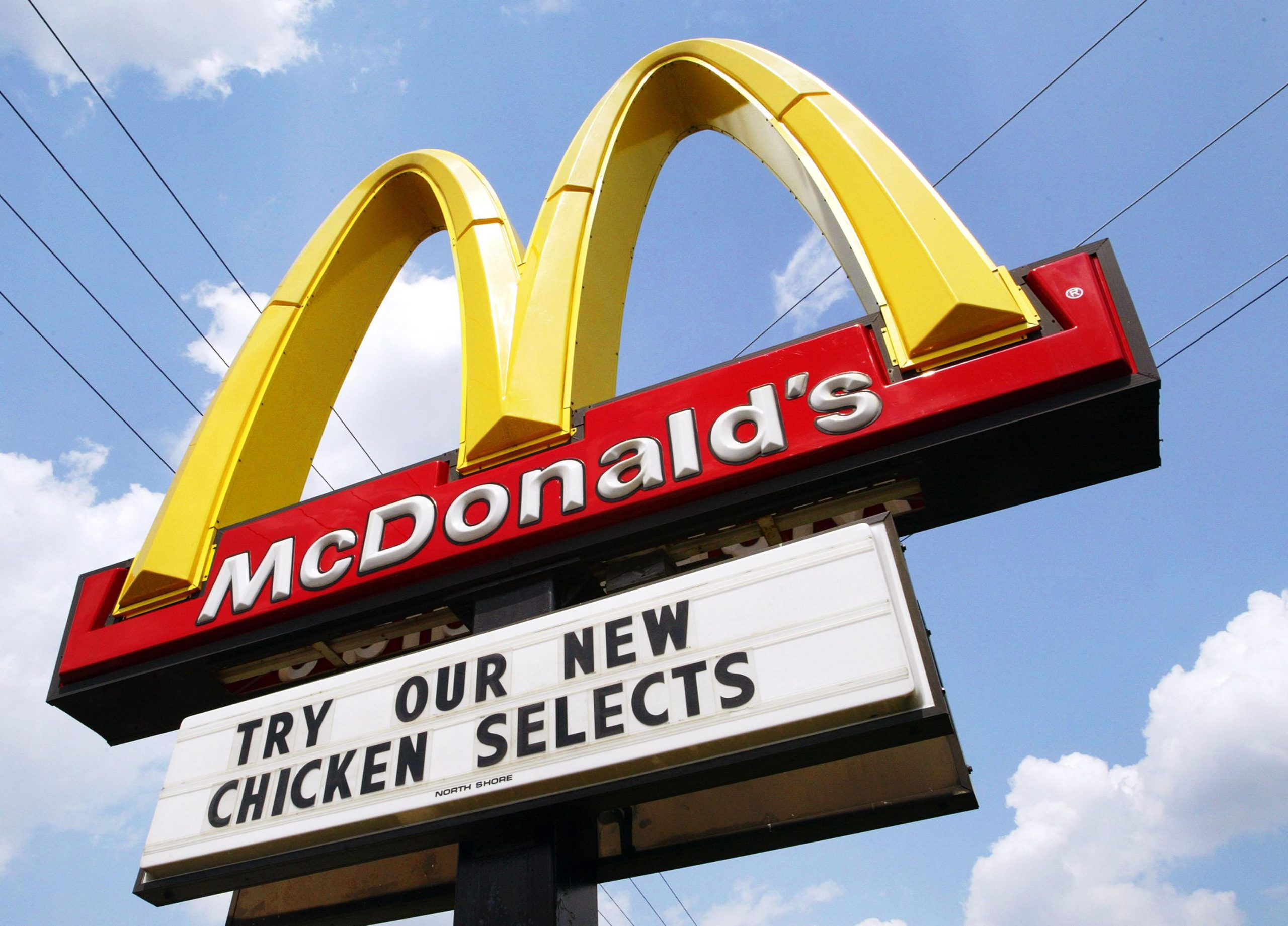
McDonald’s has served billions of customers across nearly seven decades, and while the company does not publicly disclose exact, item-by-item sales figures, a consistent picture has emerged across industry analyses, franchise data and food writers who have studied the chain’s menu over the years: a handful of items account for the overwhelming majority of what customers order.
According to a composite of rankings compiled by food and business publications, French fries sit at the top of that list as McDonald’s single best-selling item of all time. The fries are made from a small number of specific potato varieties, including Russet Burbank, Ranger Russet, Umatilla Russet and Shepody potatoes, and are widely credited with a combination of salt, fat and starch that keeps customers coming back. Reporting has pegged the profit margin on fries at somewhere between 75% and 90%, making them not just the most popular item on the menu but also one of the most profitable, and surveys of McDonald’s Rewards data have found fries rank as the top seller in all 50 U.S. states.
Just behind fries sits the Big Mac, the double-patty burger that has become nearly synonymous with the McDonald’s brand itself since its national rollout in 1968. Built around a sesame-seed bun, two beef patties, lettuce, cheese, pickles, onions and the chain’s signature special sauce, the Big Mac has remained a global fixture of the menu for more than half a century. Its enduring popularity is often credited as much to marketing as to the sandwich itself, and the item has since spawned size variations, including the larger Grand Big Mac and smaller Mac Jr., extending its reach across different appetite levels and price points.
Chicken McNuggets round out the top tier of the ranking, generating what industry estimates place at more than $10 billion annually across the broader McNuggets category, which also includes the chain’s Spicy McNuggets variety introduced in recent years. Alongside McNuggets, McDonald’s lineup of chicken sandwiches, available in grilled, crispy and buttermilk crispy varieties, has also emerged as a consistent top performer, reflecting the chain’s decades-long expansion beyond its original beef-and-fries identity into a broader protein lineup.
The Happy Meal, McDonald’s child-focused combo featuring a small portion of food alongside a toy, ranks among the top sellers as well, a reflection of both the meal’s affordability and its decades-long role as an entry point for younger customers and their families. First introduced in 1979, the Happy Meal has evolved over the years to include healthier side and drink options while maintaining its core formula of pairing food with a collectible toy.
On the breakfast side of the menu, the Egg McMuffin stands out as one of the chain’s most consistently popular items since its introduction in 1972. Though the sandwich originally launched with jam and honey as suggested condiments, a detail long since dropped from the standard recipe, it quickly became a breakfast staple. By the early 1980s, breakfast items, led by the McMuffin, accounted for roughly 18% of all McDonald’s sales, and the company has reported buying more than 2 billion eggs annually in recent years, or roughly 5% of total U.S. egg production, a figure driven in large part by sustained McMuffin demand.
Rounding out the list of McDonald’s most enduring sellers are several longtime menu staples: the Quarter Pounder with Cheese, developed by franchise owner Al Bernardin in 1973 to fill a gap for a heartier, beef-forward sandwich option; the Filet-O-Fish, which dates back to 1962 and remains one of the most recognizable fish sandwiches in fast food; the classic Apple Pie, a dessert staple since the company’s early expansion; the Double Cheeseburger, valued for its combination of affordability and portion size; and the McGriddles breakfast sandwich, which pairs a sausage, egg and cheese filling between two syrup-infused pancake buns.
Some items that have drawn outsized cultural attention over the years, including the McRib, do not consistently rank among the chain’s top sellers by volume, despite generating intense fan loyalty. First introduced in 1981 as a way to help meet demand during the early days of the Chicken McNuggets rollout, the McRib was initially pulled from the menu due to underwhelming sales before its eventual return sparked what has become one of fast food’s most famous examples of scarcity-driven marketing, with the sandwich periodically reappearing on the menu to renewed fanfare despite never becoming a permanent fixture.
McDonald’s has consistently declined to comment on updated, item-specific sales figures when asked by outlets compiling these rankings, meaning most published lists rely on a combination of franchise-level sales data, regional loyalty program breakdowns, industry analyst estimates and historical reporting rather than official company disclosures. That has occasionally led to some variation in exact ordering between different published rankings, though French fries and the Big Mac consistently appear at or near the top across nearly every version of the list.
McDonald’s overall scale underscores why even modest per-item variations in ranking still represent enormous sales volumes. The company operates more than 40,000 restaurants worldwide, and reporting has indicated that more than 85% of U.S. households visit a McDonald’s location at least once annually, a reach that has helped cement its core menu items as some of the most widely consumed food products in American history.
While new items, limited-time offerings and regional menu variations continue to rotate through McDonald’s lineup regularly, the chain’s core best sellers, led by fries, the Big Mac and Chicken McNuggets, have remained remarkably stable fixtures atop the menu for decades, a testament to the staying power of a formula McDonald’s has largely kept unchanged since establishing these items as menu mainstays generations ago.

Prime Medicine: An Initial Prognosis

“The biggest problem facing our economy right now is not the collapse of industry and the collapse of jobs; it’s that prices have been rising too fast. We got an inflation problem, and people hate inflation,” Goolsbee said in a Wired video published on Tuesday and recorded on June 22.
Citing indicators such as unemployment, hiring and layoffs, he described the labour market as “stable, without being good.”
However, it remains unclear whether he supported the rate increase sought by several colleagues last month.
The Fed kept its policy rate unchanged at 3.50%-3.75% on July 29, with three of its 12 voting policymakers dissenting in favour of an increase.Goolsbee, who does not vote on monetary policy this year, has not said whether he supported the decision. Inflation has exceeded the Fed’s 2% target for more than five years, though many policymakers expect it to resume declining later this year.
Traders scaled back bets on Fed tightening after data released on Friday showed that the US economy unexpectedly lost jobs in July. CME interest-rate futures now indicate nearly even odds of a rate increase or another pause in September.
Economists expect Wednesday’s data to show that consumer inflation accelerated again in July after easing in June.
Unlike his immediate predecessors, Fed Chair Kevin Warsh has offered little indication of where he believes interest rates should head. Goolsbee has expressed similar doubts about providing forward guidance.
In Tuesday’s video, Goolsbee did not offer specific views on the appropriate stance of monetary policy. Instead, he answered online questions about the Fed and the economy, including whether AI could destroy the job market and how to identify a counterfeit $100 bill.
“If AI takes some jobs, it will take the tasks in those jobs, but I’m still pretty hopeful and expecting that we’re going to figure out how to keep people employed,” Goolsbee said.
He added that behind the Chicago Fed’s 80,000-pound vault door were “many tens of billions” of dollars being checked for authenticity and wear.
Goolsbee advised using sight and touch to identify counterfeit bills. “Please don’t lick it,” he said.
–With inputs from agencies

World’s Safest Money Could Go to Zero: Should Bitcoin Investors Worry?

What To Remember Before Prime Video’s Best Action Thriller Returns

XRP Analyst: $7-$9 SOON & Clarity Act 1996 Moment


-

 Fashion4 days ago
Weekend Open Thread: Mattifying Sunscreen
-

 Fashion4 days ago
Frugal Friday’s Workwear Report: Cap-Sleeve Pointelle Crewneck Sweater
-

 Sports6 days ago
Jordan Coyle & Cordiamo take Laya Arena Stakes at RDS
-

 News Videos4 days ago
Can Astrology Help Find Gold and Silver Trends? A Financial Astrology Guide
-
 Business6 days ago
US stocks: Dow closes at record on Mideast optimism; SpaceX, AMD drag Nasdaq
-

 Politics6 days ago
Reform UK And Greens Sink To Lowest Favourability Ratings To Date
-

 Business7 days ago
Nvidia Stock Climbs 2.5% as Chip Sector Rally Builds Ahead of AMD Earnings, Nvidia’s Own Report Looms
-

 Tech7 days ago
OpenAI, Anthropic AI agents targeted real people and systems in cyber tests
-

 Business6 days ago
Supply chain issues impact Ingredion
-

 Tech4 days ago
Rinn Pharma & Biopharma to join NordicPharmaTrain network
-

 Business3 days ago
How to Start a Cleaning Business: A Step-by-Step Guide
-
 Crypto World7 days ago
Dow and S&P 500 Hit Records on AI Earnings: When Will the Bubble Burst?
-

 Business3 days ago
BDC Weekly Review: Private BDC Q2 Numbers Are Strong
-

 Business3 days ago
Datadog: Best Of Breed For Multiple Reasons
-

 Business7 days ago
McDonald’s (MCD) Q2 2026 earnings
-
 Crypto World7 days ago
Dollar Index Trapped at 100 as Hawkish Fed Meets Official Selling
-

 Fashion7 days ago
The Bright Side of Black and White
-

 Business7 days ago
Apple UK encryption challenge filed against Home Office
-

 Fashion6 days ago
Suit of the Week: Me + Em
-
Sports6 days ago
Spider-Man: Brand New Day ending explained: Is Peter Parker alive?
You must be logged in to post a comment Login