
Business
Earnings call transcript: TELUS cuts dividend and 2026 outlook in Q2 2026



Business
Nebius Group Shares Extend Gains as $1 Billion AI Deal Builds on Thursday’s Historic Rally to New Highs

Shares of Nebius Group climbed 2.89% Friday morning, adding $5.45 to reach $193.88, extending a remarkable two-day rally that has seen the artificial intelligence infrastructure company’s stock swing dramatically as investors reassess both company-specific catalysts and broader sentiment toward the so-called neocloud sector.
Friday’s gains built on a new multiyear computing power agreement with Reflection AI, worth more than $1 billion through 2029, which had already lifted shares more than 4% in premarket trading, according to StocksToTrade. The Netherlands-based Nebius, a “neocloud” provider that sells access to graphics processing unit-based AI computing capacity, has increasingly positioned itself as a key infrastructure supplier to AI-native companies seeking computing power without building out their own data centers.
Thursday’s trading session, however, delivered by far the more dramatic move. Nebius shares surged as much as 31.64% at one point Thursday afternoon, according to TimothySykes.com, before settling with a gain that TipRanks separately clocked at 28.4%. The rally traced back to reporting from The Wall Street Journal that investment firm Citadel had acquired the bulk of hedge fund Situational Awareness’s public equity portfolio, according to TipRanks. That transaction eased fears of a disorderly liquidation of the fund’s heavily AI-weighted holdings, since Situational Awareness, founded by former OpenAI researcher Leopold Aschenbrenner, had disclosed a $2.6 billion stake in Nebius as of the first quarter of the year. The subsequent rally was consistent with a pattern of short sellers rushing to cover their positions as sentiment around the stock rapidly improved.
Nebius’s stock has also benefited from broader momentum across major technology companies’ AI infrastructure spending. Following blockbuster earnings from Microsoft and Meta Platforms, Meta CEO Mark Zuckerberg addressed the tension his company faces in deciding how much internal AI computing capacity to use versus sell externally, saying Meta is “getting a lot of offers for compute at a significant premium over what we paid for it,” according to AOL. Microsoft separately disclosed signing more than $130 billion in new data center leases and outlined plans to double its data center capacity within two years, developments that AOL reported have directly benefited Nebius given its business model of selling access to AI computing capacity.
Not every recent catalyst has worked in Nebius’s favor. Meta’s disclosed plans to sell excess AI computing capacity of its own had earlier triggered a 12% to 15% decline in neocloud stocks including Nebius and rival CoreWeave, according to TimothySykes.com, as traders repriced the competitive threat posed by hyperscale cloud providers potentially competing more directly with smaller, specialized AI infrastructure companies. Separately, a one-year moratorium on new hyperscale data center construction in New York state has introduced regulatory uncertainty, though analysts covering the stock have suggested the restriction could simply redirect infrastructure growth toward other, more accommodating states rather than meaningfully constraining Nebius’s overall expansion plans.
The scale of volatility in Nebius shares over recent weeks has been extraordinary even by the standards of high-momentum artificial intelligence stocks. According to StocksToTrade, the stock has whipped between the mid-$160s and the low-$220s over the course of just several trading sessions, with daily closes ranging from roughly $171 to $221. Robinhood data showed the stock trading between a daily high of $198.56 and a low of $155.00 during Thursday’s session alone, a range StocksToTrade and other trackers have attributed in part to heavy retail trading activity connected to the WallStreetBets community on Reddit.
Nebius has continued to draw institutional validation despite the volatility. Nvidia disclosed owning a 9.3% equity stake in Nebius, valued at roughly $5 billion, through a filing with the U.S. Securities and Exchange Commission revealed publicly on July 20, a disclosure that had sent shares up nearly 19% in a single session when the news first emerged, according to Robinhood. Baird analysts initiated coverage of the stock with an outperform rating on July 22, according to Yahoo Finance compiled data, which also showed an average analyst price target of $258.13 and a range spanning from $120.00 to $410.00, alongside a consensus rating between “strong buy” and “buy.”
Nebius has called an Annual General Meeting for August 25 to approve its 2025 accounts and reshape aspects of its capital structure, according to a company announcement cited by TipRanks, a development that will give investors an additional formal opportunity to review the company’s financial position as its stock continues to attract outsized trading volume and volatility relative to its underlying business fundamentals.
Nebius’s stock has posted extraordinary gains over various time horizons even accounting for its sharp swings, with Yahoo Finance data showing total returns of 125.11% over a recent one-year period and gains as high as 1,218.61% over a longer measurement window, though the company’s premium valuation, with a price-to-earnings multiple of 55.36 according to Robinhood, and debt-heavy growth strategy remain factors some analysts continue to flag as risks even amid the stock’s dramatic recent rally.
With Thursday’s rally driven substantially by the resolution of hedge fund liquidation concerns rather than company-specific operational news, and Friday’s more modest gains tied directly to the new Reflection AI compute agreement, investors are likely to continue watching closely whether Nebius can sustain its current momentum as the broader neocloud sector works through a period of unusually elevated volatility tied to shifting sentiment around artificial intelligence infrastructure spending across the technology industry.
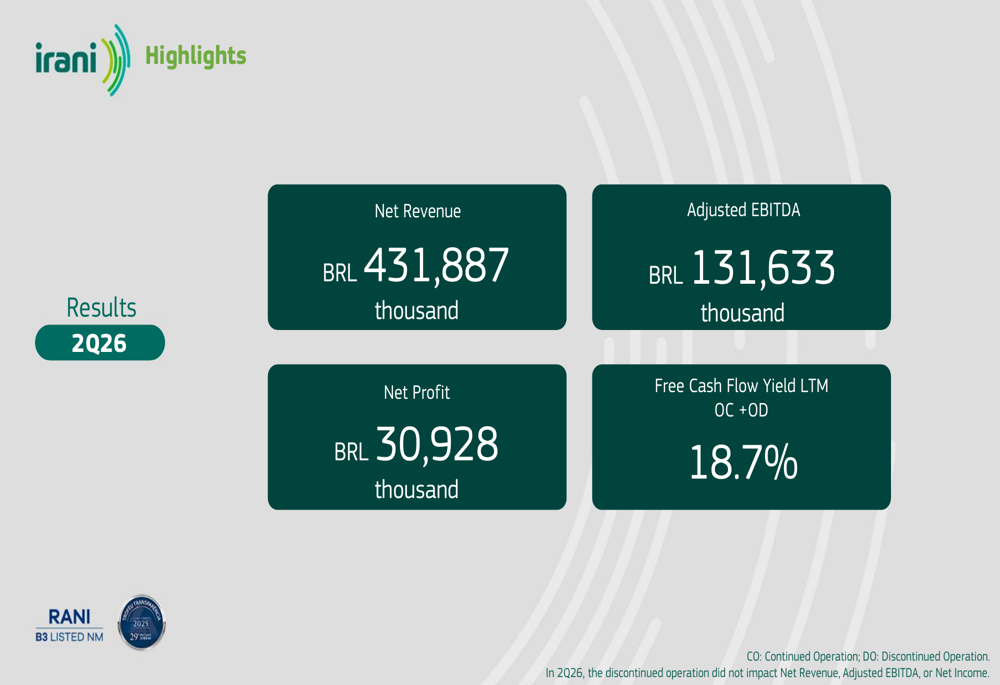
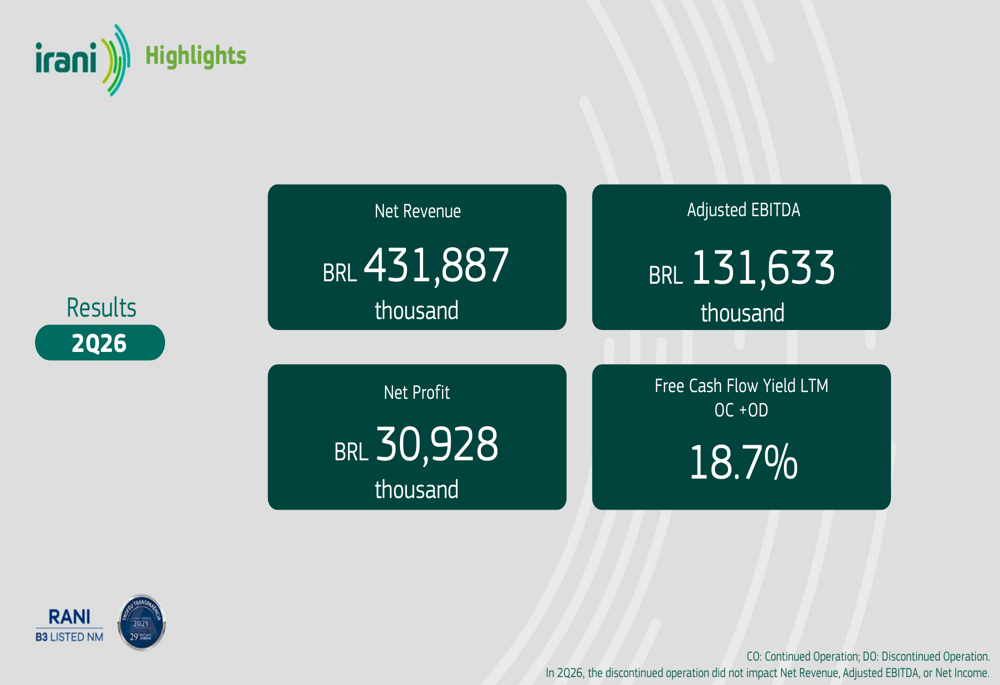
Irani Q2 2026 slides: EBITDA margin hits 30.5%, volume gains accelerate

Credo Stock: What The Market Is Missing
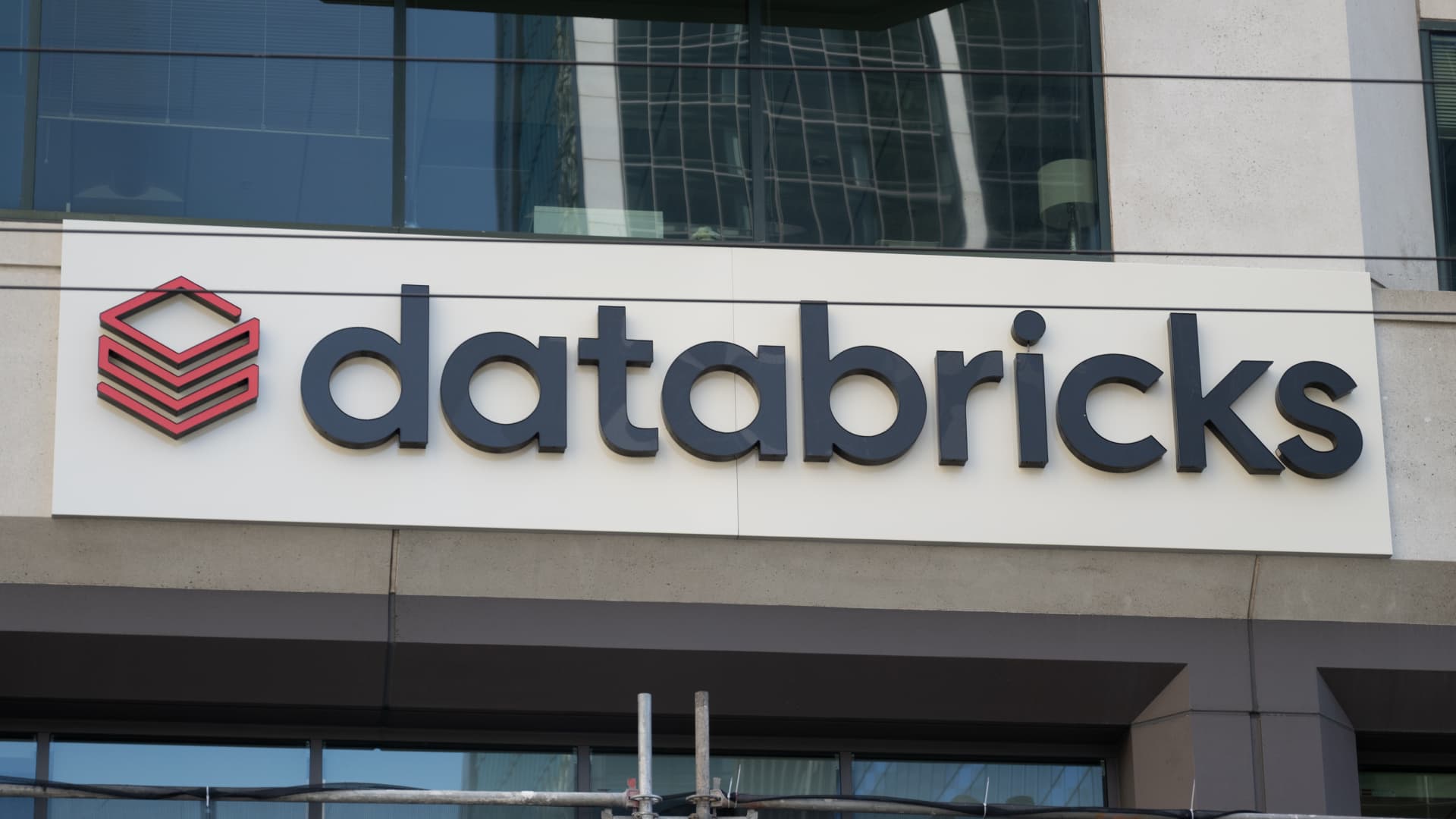
Close-up of Databricks company logo on building facade, Rincon Hill, San Francisco, June 7, 2024.
Smith Collection/ gado | Archive Photos | Getty Images
Clear Street, the prime brokerage startup that recently shelved plans for its own IPO, is now aiming to give investors access to some of Silicon Valley’s hottest private companies before they go public.
The firm is close to announcing a new platform designed to let accredited investors buy interests in late-stage private companies, starting with AI software titan Databricks, valued this month at $188 billion, CNBC is first to report.
“The goal is to remove friction and give more people the ability to invest in more products,” Uri Cohen, CEO and co-founder of Clear Street, said in an interview. “A lot of the wealth creation has been in private markets, and more and more retail investors and smaller investors want to be part of that.”
More startups are staying private for longer, meaning much of their value creation is taking place before an initial public offering. That has fueled growing demand from rich investors seeking exposure to companies like Databricks, Anthropic and OpenAI before they debut on public markets.
Last week, CNBC reported that Goldman Sachs has created a new platform to expand its offerings for wealthy clients and family offices who increasingly want direct stakes in fast-growing private companies.
Clear Street, by handling the asset servicing and risk management internally, can offer margin loans against the pre-IPO holdings, a rarity in private markets, said Cohen.
The fintech firm will have as many as 30 startups on its platform by yearend, mostly tech firms in the $5 billion to $20 billion valuation range that are roughly six months to two years out from an IPO, he said.
To support the push, Clear Street is also launching dedicated private company equity research headed by analyst Owen Lau, in what Cohen called an effort to bring public-market-style transparency to traditionally opaque private markets.
The expansion comes at a key moment for Clear Street, itself.
The firm, which was last valued at nearly $12 billion in a private funding round earlier this year, in February paused its own IPO plans amid broader market volatility that hit broker and fintech multiples.
Despite putting its listing on hold, the firm is cash-flow positive and bolstered its liquidity with a $400 million investment-grade bond offering, giving it the runway to build out its private market infrastructure, Cohen said.
“We’re in a position of strength, so the decision was shelved for better timing,” Cohen said. “We’re definitely going to look towards a ’27 listing, depending on the market conditions.”

Presentation
Operator
Hello, everyone. Thank you for joining us and welcome to the Parex Resources Q2 2026 Operational and Financial Results. [Operator Instructions]
I will now hand the conference over to Mike Kruchten, Senior Vice President of Capital Markets and Corporate Planning. Mike, please go ahead.
Michael Kruchten
Senior Vice President of Capital Markets & Corporate Planning
Thank you. Good morning, everyone, and welcome to Parex Resources’ Second Quarter 2026 Conference Call and Webcast. My name is Mike Kruchten, and on the call with me today are our President and Chief Executive Officer, Imad Mohsen; our Chief Financial Officer, Cameron Grainger; and our Chief Operating Officer, Eric Furlan. [Operator Instructions]
As a reminder, this call includes forward-looking statements as well as non-GAAP and other financial measures, with the associated risks outlined in our news release and MD&A, which can be found on our website or at sedarplus.ca. Note that all amounts discussed today are in U.S. dollars, unless otherwise stated.
I’ll turn the call over to Imad. Please go ahead.
Imad Mohsen
President, CEO & Director
Thank you, Mike, and good morning, everyone. Over the first half of 2026, Parex completed major transactions to become Colombia’s largest independent E&P company. This has resulted in the company nearly doubling its production guidance to roughly 86,000 barrels per day at the midpoint, and expanding our footprint to over 7.9 million acres. With these transactions behind us, our focus shifts to capturing synergy and delivering strong operational performance.
First, the Frontera transaction is officially closed with the integration of — integration
Operator
Welcome to the Invesco Mortgage Capital Second Quarter 2026 Earnings Call. [Operator Instructions] As a reminder, this call is being recorded. I would like to turn the call over to Greg Seals in Investor Relations. Mr. Seals, you may begin the call.
Greg Seals
Investor Relations
Thanks, operator, and to all of you joining us on Invesco Mortgage Capital’s Second Quarter 2026 Earnings Call. In addition to today’s press release, we have provided a presentation that covers the topics we plan to address today.
The press release and presentation are available on our website, invescomortgagecapital.com. This information can be found by going to the Investor Relations section of the website. Our presentation today will include forward-looking statements and certain non-GAAP financial measures. Please review the disclosures on Slide 2 of the presentation regarding these statements and measures as well as the appendix for the appropriate reconciliations to GAAP.
Finally, Invesco Mortgage Capital is not responsible for and does not edit nor guarantee the accuracy of our earnings. Teleconference transcripts provided by third parties. The only authorized webcasts are located on our website.
Again, welcome, and thank you for joining us today. I’ll now turn the call over to IVR’s CEO, Kevin Collins, for his comments.
Kevin Collins
Chief Executive Officer
Good morning, and welcome to Invesco Mortgage Capital’s Second Quarter Earnings
Worst is over and bookings are improving, Amadeus CEO says about Iran war hit
Business
Samsung Electronics Shares Soar 27% as Record KOSPI Rally Follows Microsoft’s Blockbuster Earnings Beat
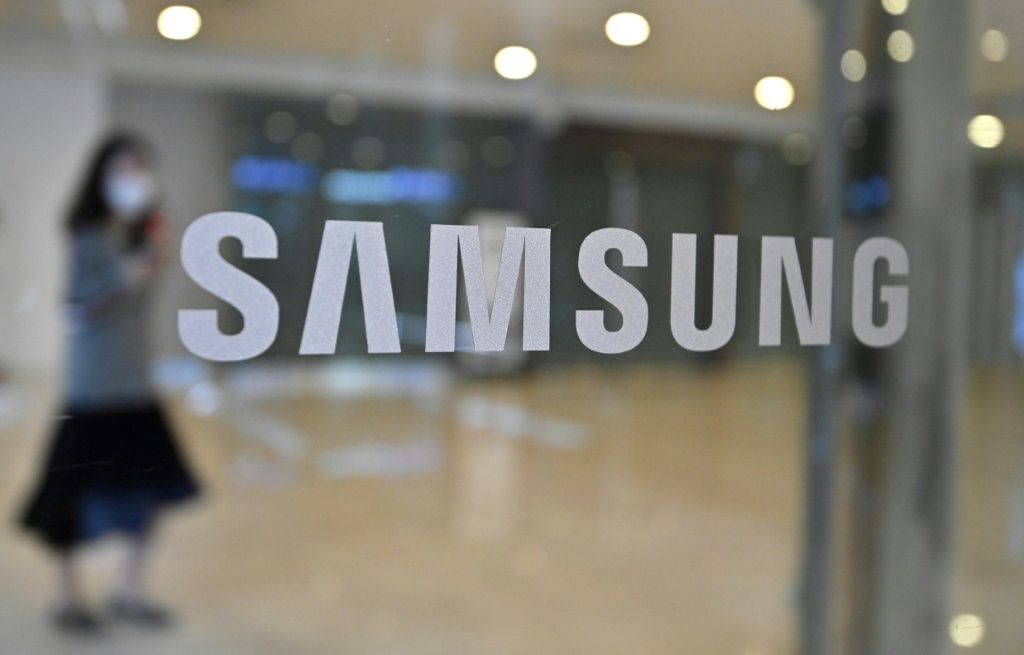
Shares of Samsung Electronics surged 26.81% on Friday, climbing 55,500 won to close at 262,500 won, effectively hitting the exchange’s daily limit for individual stock price movements as South Korea’s benchmark KOSPI index posted the largest single-day rally in its history.
The KOSPI closed up 17.91% at 6,595.45, marking a record in both point and percentage terms, according to the Korea Herald, as chip stocks across the board rebounded sharply from a punishing weeklong selloff. Rival chipmaker SK Hynix climbed 29.95% during the same session, according to TradingKey, as both of South Korea’s dominant memory chip producers effectively erased much of the ground they had lost during three brutal preceding trading sessions.
Friday’s rally traced its origins directly to a powerful overnight session on Wall Street. Microsoft’s shares soared 15.5% Thursday for the company’s best single-day performance in nearly 18 years, according to the Associated Press, after the technology giant reported that its Azure cloud computing division grew 43% during the quarter, easing broader investor concerns about the sustainability of massive capital spending on artificial intelligence infrastructure. Amazon and Meta Platforms also posted upbeat results that reinforced expectations that AI-related spending remains robust, according to CNBC, sending shockwaves of optimism through Asian technology markets overnight.
Samsung’s own earnings had already reflected the underlying strength driving the rally, even before Friday’s dramatic share price move. The company’s semiconductor division reported operating income of 89.5 trillion won, beating the 88.13 trillion won analysts had expected, with robust artificial intelligence demand continuing to drive growth across Samsung’s memory chip business. The results confirmed that DRAM and NAND flash memory sales remained at all-time highs during the quarter, providing powerful third-party validation that the artificial intelligence-driven memory supercycle remains firmly intact even amid the recent bout of extreme volatility across the sector.
Friday’s rebound followed a brutal stretch for Korean equities. The KOSPI had plummeted more than 17% over the three trading sessions preceding Friday, driven by investor concerns about a potential bubble in artificial intelligence valuations and intensifying competition from Chinese chipmaking rivals, according to the Associated Press. At one point during that selloff, the index had fallen roughly 40% from its June peak, wiping out nearly $2 trillion in market value, according to reporting from the Private Banker.
Foreign investors were the driving force behind Friday’s historic rebound, posting net purchases of 7.25 trillion won, or roughly $5.06 billion, on the KOSPI, according to the Korea Herald. That marked a second consecutive day of net foreign buying, following four straight sessions of net selling that had preceded Thursday. Institutional investors, who began Friday’s session as net sellers, reversed course around midday and ended the day with net purchases of 1.15 trillion won.
Additional factors beyond the Microsoft-driven rally appeared to reinforce Friday’s gains for Samsung and SK Hynix alike. SK Group Chairman Chey Tae-won disclosed personal purchases of SK Hynix shares during the recent selloff, a move that bolstered broader investor confidence in South Korea’s memory chip sector, according to CNBC. New cash-deposit requirements for investors using leveraged exchange-traded funds also took effect July 31, a regulatory change some analysts said may have contributed to a broader repositioning among traders active in that corner of the market, while short-covering and mechanical rebalancing tied to leveraged ETFs were also cited as factors amplifying the scale of Friday’s move.
Despite the historic single-day gain, market analysts urged caution about reading too much into the rebound. Speaking to CNBC, one analyst identified only as Jung said foreign investors appeared to be the primary force behind Friday’s rally, but cautioned against assuming the gains signal a durable trend reversal. “I would not expect gains of this magnitude to continue,” Jung said, adding that asset prices had become “completely disconnected” from underlying fundamentals during the recent volatility.
Even after Friday’s rally, the KOSPI remained well below its levels from earlier in the year. The index recorded its worst monthly performance since 1997, dropping 22.19% over the course of July, according to TradingKey, underscoring that Friday’s rebound, while historic in scale, only partially offset the scale of losses the index had absorbed over the preceding weeks.
South Korean authorities also announced new measures Friday aimed at supporting the country’s technology and artificial intelligence sector more broadly. The government said it would inject a minimum of 20 trillion won, or approximately $13.9 billion, into the Korea Investment Corporation for strategic investments in artificial intelligence, data centers and broader infrastructure, according to the Private Banker, marking the first time the sovereign wealth fund’s mandate has been expanded to include domestic assets.
With Samsung shares having now hit the exchange’s daily trading limit and the broader KOSPI having posted its largest single-day gain on record, investors are likely to watch closely in the sessions ahead for signs of whether Friday’s rebound marks a genuine stabilization in sentiment toward AI-linked technology stocks or another dramatic swing within a period of extraordinary volatility that has gripped South Korea’s chip-heavy equity market throughout the second half of July.
White House official says no weaponized drones seized during FIFA World Cup
Business
Asustek Computer Shares Jump Nearly 10% as Taiwan Tech Rally Follows Microsoft’s Blowout Earnings Beat

Shares of Asustek Computer surged 9.91% on Friday, climbing 73.00 Taiwan dollars to reach 810.00 Taiwan dollars, as the personal computer and AI server maker’s stock rode a powerful rally sweeping across Taiwan’s technology sector following blockbuster earnings from Microsoft and other major U.S. technology companies.
Friday’s gains build on a stretch of strong performance for Asustek that has continued for months, driven by surging global demand for artificial intelligence infrastructure. Shares had already climbed to 757.00 Taiwan dollars on Wednesday, up 2.85% that session, before Friday’s session pushed the stock decisively higher still, with Investing.com reporting the stock trading between 722.00 and 762.00 Taiwan dollars during Friday’s session against a previous close of 609.00 Taiwan dollars.
The rally traced its roots to a powerful overnight session on Wall Street. Microsoft shares soared roughly 15.5% Thursday, the company’s best single-day performance in nearly 18 years, after reporting that its Azure cloud computing division grew 43% during the quarter, easing broader investor concerns about the sustainability of massive capital spending on artificial intelligence infrastructure. Amazon and Meta Platforms also posted results that exceeded market expectations, reinforcing confidence that demand for AI-related computing infrastructure remains robust across the technology sector.
Asustek’s stock has been underpinned by genuinely strong underlying business results throughout the year rather than sentiment alone. The company reported record first-quarter 2026 brand revenue of roughly 194.05 billion Taiwan dollars, or about $6.19 billion, marking a 44% increase year over year, driven by surging AI server demand alongside stable notebook computer shipments. That momentum has persisted despite industry-wide component shortages and rising input costs that have affected much of the broader electronics manufacturing sector this year.
The company’s most recent quarterly earnings report showed net profit surging 34% year over year to 4.82 billion Taiwan dollars, equivalent to roughly $160.9 million, up from 3.60 billion Taiwan dollars in the same period a year earlier, though the result still fell short of analyst expectations, which had called for net profit of 4.37 billion Taiwan dollars. Revenue for the quarter climbed 31% to 94.20 billion Taiwan dollars. Looking ahead, the company projected it would ship 4.8 million notebook PCs in the third quarter, up from 4.4 million units shipped during the second quarter.
Asustek’s ambitions in artificial intelligence have extended well beyond data center hardware and traditional personal computers. At Computex 2026, the company unveiled its latest generation of AI-enabled consumer laptops and desktop computers, including new ProArt creator laptops built around Nvidia’s RTX Spark platform and featuring AI-powered software tools designed to optimize system performance for demanding creative workflows. Company chairman Jonney Shih has described Asustek’s broader strategic ambitions as extending beyond both servers and personal computers into what he has called agentic AI, edge AI and physical AI.
Not every recent analyst assessment of the stock has been uniformly bullish. Goldman Sachs downgraded Asustek to neutral from buy earlier this year, with a price target of 672 Taiwan dollars, down from 854 Taiwan dollars, citing relatively lower earnings growth ahead for the company. Morgan Stanley separately downgraded the stock to underweight from equal weight, with a price target of 500 Taiwan dollars, down from 625 Taiwan dollars, citing concerns about growing margin risk facing hardware companies more broadly amid rising component costs.
Despite those more cautious calls, the current consensus among analysts covering the stock remains positive. According to Investing.com, five analysts recommend buying Asustek shares while one suggests selling, resulting in an overall buy rating, with an average 12-month price target of 802.00 Taiwan dollars, a high estimate of 1,200 Taiwan dollars and a low estimate of 570 Taiwan dollars, implying modest additional upside potential even after Friday’s sharp gains.
Asustek has continued to reward shareholders through dividend payments even amid its aggressive growth-focused expansion into AI infrastructure. The company’s most recent dividend of 42.00 Taiwan dollars per share represented a 24% increase from the prior year, with an ex-dividend date of July 1 and a payment date of July 22, translating to a dividend yield of approximately 5.3%, above the broader technology industry average of 3.0%. Analysts have noted the dividend is currently covered by earnings at a 75% payout ratio, though the company’s lack of available free cash flow at present suggests it may be drawing on cash reserves or debt to help sustain the payout.
Asustek’s stock currently trades within a 52-week range of 490.00 to 964.00 Taiwan dollars, according to Investing.com, reflecting substantial volatility over the past year even as the overall trend has remained strongly upward. The company’s next quarterly earnings report is scheduled for release on August 12, which will give investors their next detailed look at whether the strong order visibility and margin resilience management has emphasized in recent guidance continues to translate into results that justify the stock’s sharp rally, particularly within its fast-growing AI server division that has emerged as the primary driver of investor enthusiasm for the stock over the past several months.

Nebius Group Shares Extend Gains as $1 Billion AI Deal Builds on Thursday’s Historic Rally to New Highs

America’s Best Private Companies of 2026

Shannon Beador on Southern Charm’s Rodrigo Calling Her Rude


-
 Sports5 days ago
Commonwealth Games boxing: Jadumani Singh seals dominant 5-0 win over Pakistan’s Sumama Rehman to enter quarter-finals | Commonwealth Games News
-

 Business2 days ago
Why Trees Belong on the Risk Register
-

 Tech5 days ago
Intel is reversing course and bringing hyper-threading back to its server chips
-

 Fashion3 hours ago
Weekend Open Thread: Wit & Wisdom
-

 Crypto World6 days ago
Ripple bought a bank in pieces. The $4 billion audit
-

 Politics4 days ago
Luke Littler dismantles Gerwyn Price to retain title in Blackpool
-

 Politics4 days ago
The Part of the Electric Transition Nobody Wants to Discuss
-

 News Videos5 days ago
BITCOIN JUST ENTERED THIS CRITICAL ZONE…
-
 Entertainment3 days ago
‘Stargate’ Creator’s New Sci-Fi Series Returns for Season 3 Tomorrow
-

 Crypto World6 days ago
XRP Ledger adds $2.6B as RWA inflows rank second
-

 Business3 days ago
Major shareholder moves on Canyon
-

 News Videos1 day ago
Bitcoin Enters the 3rd Stage of the Bear Market
-

 Politics5 days ago
Spain sweeps the board at 2026 World Cup with individual awards
-

 Entertainment6 days ago
Sara Gilson Killed By Husband After Viral “Pedophile” TikTok Video
-

 Crypto World3 days ago
Kraken Enables Retail Access to Jersey Mike’s IPO via Tokenized Shares
-

 Tech7 days ago
Anthropic launches Claude Opus 5, a cheaper AI model for coding, agents and enterprise workflows
-

 Tech4 days ago
New macOS Sequoia & Sonoma security updates for older Macs
-

 News Videos3 days ago
Claude: Build Financial Dashboards in Minutes (2026)
-

 Politics1 day ago
Luke Littler’s dominance sparks GOAT debate
-

 Crypto World6 days ago
Upbit expands KRW market with two major DeFi token listings
You must be logged in to post a comment Login