


Connect with us
DAPA Banner

Business

Elon Musk confirms X hits all-time record usage after US-Israel Iran strikes

Published

on

Elon Musk confirms X hits all-time record usage after US-Israel Iran strikes

The fallout of the joint U.S.-Israeli attack on Iran led to the highest-ever activity on X, the platform’s owner Elon Musk confirmed on Sunday.

Musk made the statement in reply to Nikita Bier, the head of product at X. Bier stated on Saturday that the day had been “the biggest day on X in history.”

Advertisement

“Highest usage of X ever,” Musk replied.

The exchange came after the U.S. and Israel conducted airstrikes and drone attacks on multiple targets across Iran, killing Supreme Leader Ayatolla Ali Khamenei as well as several other top Iranian officials, including the head of the Iranian Revolutionary Guard Corps (IRGC).

AMERICA STRIKES IRAN AGAIN — HAS WASHINGTON PLANNED FOR WHAT COMES NEXT?

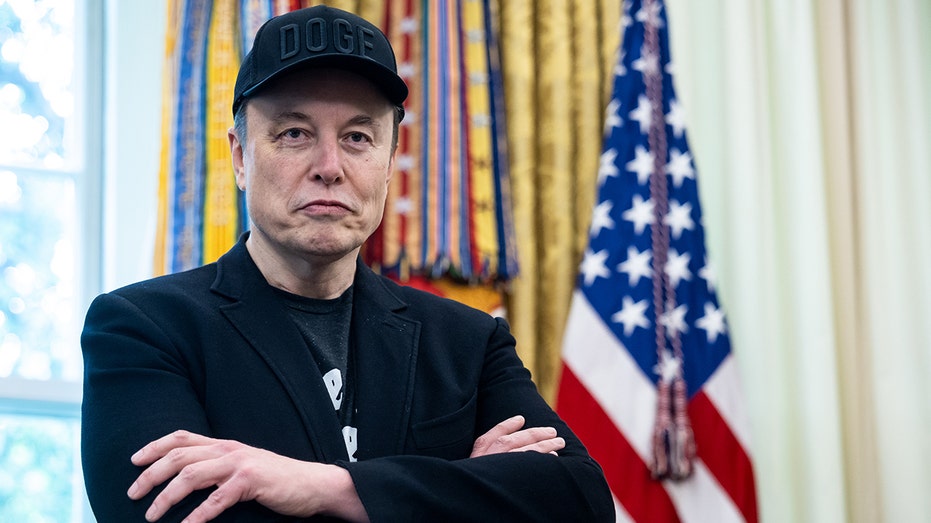
Elon Musk

Elon Musk says X usage peaked during U.S.-Israeli attacks on Iran. (Francis Chung/Politico/Bloomberg via Getty Images / Getty Images)

Footage of airstrikes both against Iran and Iran’s retaliatory strikes against neighboring countries spread across social media like wildfire throughout Saturday and into Sunday.

Advertisement

The strikes also quickly led to widespread arguments over whether the attacks benefited the U.S. and whether President Donald Trump had the authority to carry them out without approval from Congress.

Ben Rhodes, a top Obama-era official who helped negotiate the 2015 nuclear deal with Iran, faced mass criticism after he tried to rebuke Trump for the attacks.

FROM HOSTAGE CRISIS TO ASSASSINATION PLOTS: IRAN’S NEAR HALF-CENTURY WAR ON AMERICANS

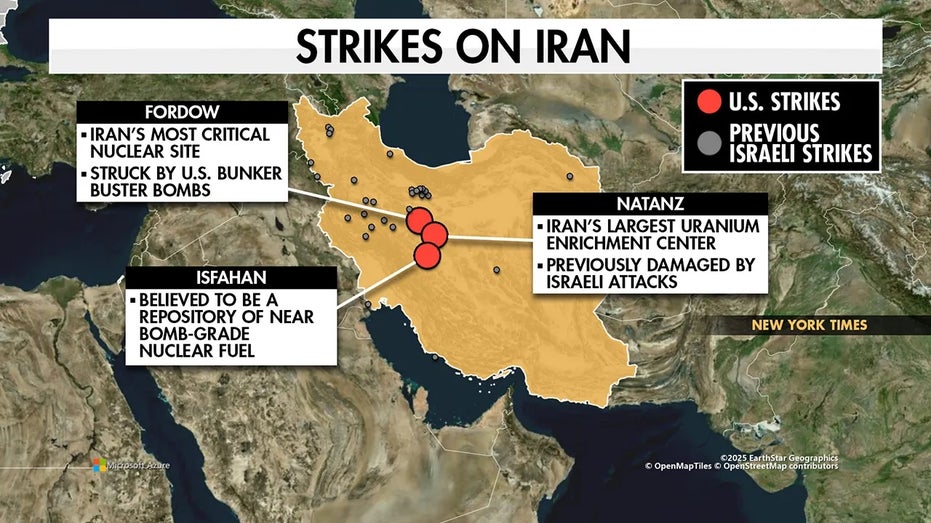
Map of US strikes on Iran.

A map of the U.S. strikes on Iran on June 21, 2025. (Fox News / Fox News)

Rhodes argued on X that Trump and Israeli Prime Minister Benjamin Netanyahu “seem to be totally unconcerned about the human beings — on all sides — who will suffer.”

Advertisement

“Trump’s second term has been the worst case scenario,” Rhodes added.

Rhodes was quickly ridiculed by many conservatives on social media who pointed to the Obama-era Iran deal as a catalyst for allowing the situation to escalate to this point, and placing blame on the Obama administration for not taking the threat from Iran seriously.

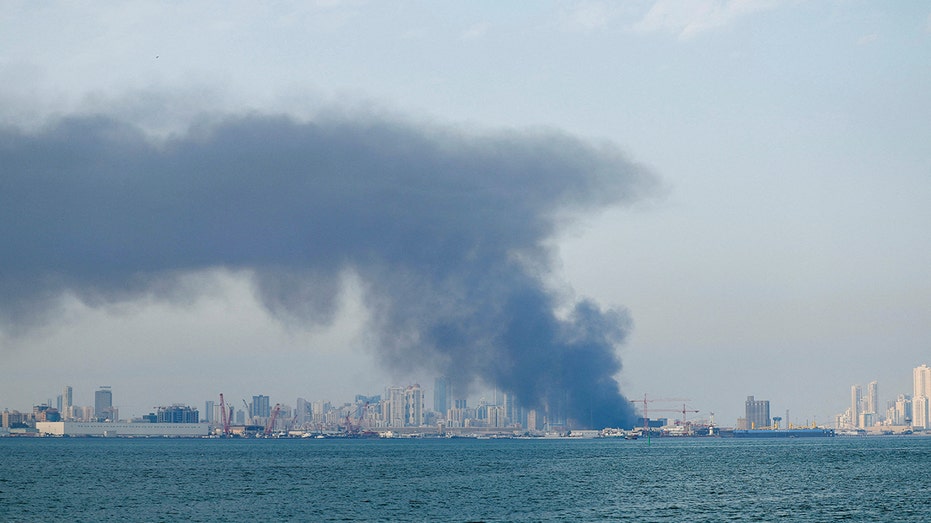
Smoke rises after reported Iranian missile attacks, following strikes by the United States and Israel against Iran, in Manama

Smoke rises after reported Iranian missile attacks, following strikes by the United States and Israel against Iran, in Manama, Bahrain, February 28, 2026. (REUTERS/Stringer / Reuters)

GET FOX BUSINESS ON THE GO BY CLICKING HERE

“Yes we were much better off with a president who drew redlines and failed to enforce them,” American Enterprise Institute fellow and Fox News contributor Marc Thiessen posted on X. “Team Obama might want to sit this one out.”

Advertisement

“Oh look the guy who literally created this mess in the first place has chimed in,” Republican digital operative Alec Sears posted on X. 

Fox News’ Andrew Mark Miller contributed to this report.

Continue Reading
Click to comment

You must be logged in to post a comment Login

Leave a Reply

Business

New ADF chief and first female army boss

Published

on

New ADF chief and first female army boss

Changes at the top of Australia’s defence force have been announced by Prime Minister Anthony Albanese, including the appointment of the army’s first female chief of army.

Continue Reading

Business

Inpex diverts Ichthys cargo

Published

on

Inpex diverts Ichthys cargo

Japanese LNG producer Inpex will divert a condensate cargo from its Ichthys project off the WA coast to domestic refiners in the east, in a bid to support the nation’s fuel security.

Continue Reading

Business

Another $1.5b into health budget

Published

on

Another $1.5b into health budget

A further $1.5 billion will be spent on health infrastructure and the establishment of a new central coordination office as the Cook government pledges to “unlock” more than 900 hospital beds.

Continue Reading

Business

Two industrial estate buildings set for approval at site focusing on nuclear and clean energy

Published

on

Business Live

Leconfield Industrial Estate is key Cumberland ‘business cluster’

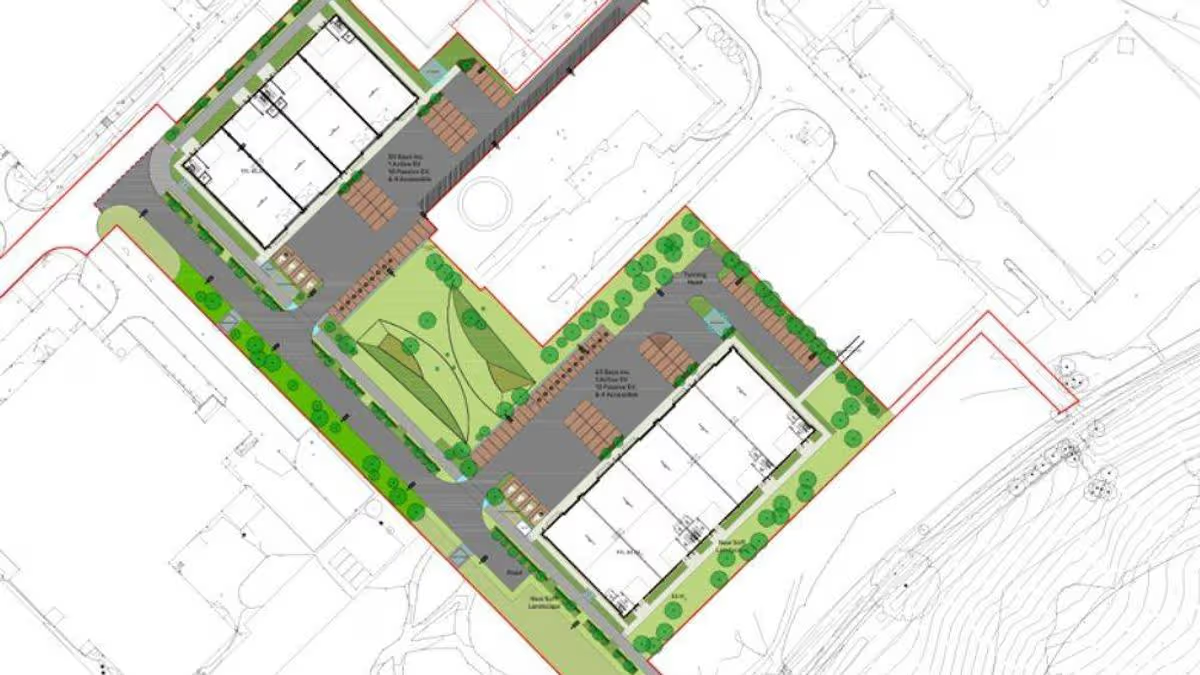
Two new buildings on a Cumbrian industrial estate could get the green light if the plans are approved next week.

The plans for two new buildings on a Cumbrian industrial estate (Image: ONE Environments via Cumberland Council planning application)

Two new buildings on a Cumbrian industrial estate could get the green light if the plans are approved this week.

Advertisement

Members of Cumberland Council’s planning committee are due to meet at The Civic Centre in Carlisle on Wednesday to consider the application for two sites at Leconfield Industrial Estate in Cleator Moor.

It is proposed that they would be for general industrial and ancillary office use with 6,356 square metres floorspace and associated car parking, hard and soft landscaping, infrastructure and biodiversity enhancements.

The planning application is being placed before the committee because the site exceeds two hectares in area.

It is recommended that members approve planning permission subject to planning conditions and agree a legal agreement to secure:

Advertisement
  • a Travel Plan monitoring fee of £6600;
  • a contribution of £74,032 towards the highway improvements at Moresby Road, Cleator Moor Road and Main Street; and
  • a contribution £30,039 towards the cost of junction improvement works at Cleator Moor Road and Overend Road.

According to the report Leconfield is an established industrial estate which comprises 17.6 hectares in area and is strategically located within Cleator Moor, between the town centre and the built-up area to the north-west.

It states: “It forms part of what is known as Cleator Moor Innovation Quarter (CMIQ), a ‘business cluster’ for the new nuclear and clean energy sectors, as a focus for collaboration, innovation and diversification.

“The estate currently accommodates some 20 industrial and warehouse units of varying sizes, a number of which are vacant.

“There are also several vacant or cleared plots. This established industrial estate has been in use since the 1940s and more recently has suffered from a period of decline.”

The application requests planning permission for two large buildings which will break down further into: Unit nine – four 658 square metre units, and Unit 12 – five 710 square metre units.

Advertisement

It adds: “The intention is for businesses to grow and move nearby within the wider estate into larger more self-contained accommodation. Plots nine and 12 will be ‘Grow On’ units and will cater for businesses in their growth stages and are sized accordingly.”

To find all the planning applications, traffic diversions, road layout changes, alcohol licence applications and more in your community, visit the Public Notices Portal.

Continue Reading

Business

Element 25 taps investors for $18m

Published

on

Element 25 taps investors for $18m

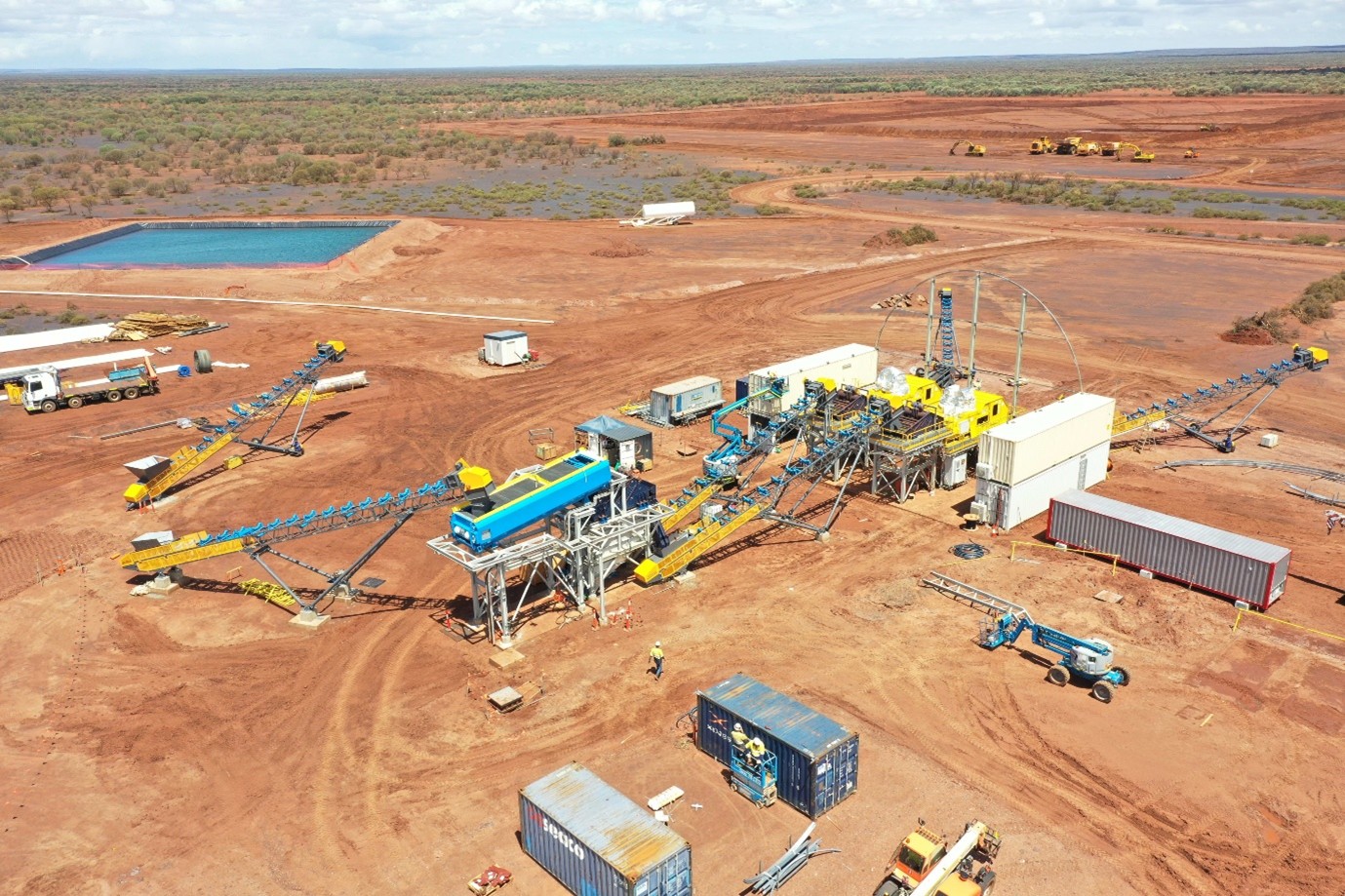
Osborne Park-based Element 25 has announced another capital raise in order to further expand its Butcherbird manganese project in the Pilbara.

Continue Reading

Business

Oil shock threat looms over Dalal Street rally

Published

on

Oil shock threat looms over Dalal Street rally
India’s stock indices and its currency face reversal risks from last week’s relief-inducing firmness after the US threatened to blockade the Hormuz Strait following the breakdown of peace talks between the US and Iran, spotlighting the fragility of a truce that dictates oil prices and capital allocation.

Last week’s stock market rebound—the best over a seven-day period since February 2021–hinges on the broad direction of oil prices in the aftermath of seemingly inconclusive talks in Islamabad, although Reuters cited shipping data to report the passage Saturday of three fully laden super-tankers through the Strait of Hormuz that accounts for a fourth of the global oil trade. “The market would see a gap down opening, though there should not be panic,” said Sham Chandak, head of institutional equities at Elios Financial Services.

“The market will take cues from oil prices, which are at the centre of this conflict.”

Last week, India’s equity indices climbed 6%, snapping a relentless six-week losing run, after the announcement of two-week truce. Oil slumped below $100 a barrel to $95.2 Friday, having climbed to nearly $120 in the immediate aftermath of the war.

Advertisement

For the currency, the bias would likely be weak, too. Stage-gated central bank curbs on speculative trading helped the rupee climb from record lows last week and those regulations could still provide the bulwark against a currency slide due to the oil prices, but the gains are expected to be capped if geopolitical concerns resurface.


The rupee’s upside may be capped in the 92.40/$ to 92.50/$ range in the absence of a further retreat in oil prices. On the downside, the central bank is expected to step up intervention around the 94.80/$ level, which is the currency’s record closing low.
‘TENTATIVE’
“Most avenues for speculative trades have been shut, so the market is now largely left with hedgers and market makers. That does make liquidity thinner, but at this point, stability is more important,” said Anindya Banerjee, head of commodity and currency, Kotak Securities.Banerjee expects meaningful intervention by the central bank at levels beyond 94.50/$, as these levels are psychologically very significant.

The rupee depreciated 10% in FY26, from 85.75/$ in April to close at 94.83/$ on March 31. The currency deprecated more than 4% in March alone, after the war started.

To curb the pace of deprecation, the Reserve Bank of India (RBI) came up with two back-to-back circulars on March 27 and April 1, restricting arbitrage trades between offshore and onshore markets.

“Currently, the ‘tweet risk’ outweighs traditional risk concerns. Despite talks of a ceasefire, the absence of a definitive agreement continues to sustain uncertainty,” said Kunal Sodhani, head of treasury at Shinhan Bank India. “This is evident in crude oil prices, which remain elevated in the $95–$100 per barrel range instead of easing meaningfully.”

Advertisement

‘ALL ISN’T LOST’
To be sure, market participants across asset classes expect the two-week time window to be fully utilised to hammer out a solution that is reasonably durable. “The market is cognisant of the fact that the current ceasefire expires on April 22. So there is still time for the parties involved to negotiate,” said Elios’ Chandak.

Some expect short sellers to return, pushing stock prices lower.

“The markets are expected to react negatively to the failure of talks and that is likely to imbue volatility,” said A Balasubramanian, managing director and CEO, Aditya Birla Sun Life AMC. “But typically, these dialogues involve a lot of back and forth and a strong outcome can’t be expected in a single day of talks.”

Advertisement
Continue Reading

Business

Wall St ends mixed as investors parse Iran negotiations

Published

on

Wall St ends mixed as investors parse Iran negotiations

US stocks have closed ‌mixed, with investors pressing pause as they headed into the weekend and kept an eye on ongoing Middle East peace negotiations.

Continue Reading

Business

Trump lashes out at Pope Leo over criticism of foreign policy

Published

on


Trump lashes out at Pope Leo over criticism of foreign policy

Continue Reading

Business

Global banks play hedge card after RBI blow on rupee bets

Published

on

Global banks play hedge card after RBI blow on rupee bets
Some of the large foreign banks are trying a clever ploy to soften the blow from Reserve Bank of India’s (RBI) sudden clampdown on speculative bets against the rupee.

They are understood to have passed off some of the arbitrage deals, which were hit by the recent regulatory directives, as transactions done to hedge the capital received from overseas parents, two persons told ET.

Arbitrage deals are cut to profit from price differences in the local foreign exchange forward market and the offshore market for non-deliverable forwards (NDFs).

Banks were forced to unwind these deals after the Indian regulator slapped a uniform limit of $100 mn on the net open position (NOP) a
bank can have onshore.

Advertisement

However, some MNC banks are showing the capital that has come in earlier or flowed in recently from their head-offices as underliers for the onshore forward leg in the arbitrage deals. Thus, this buy-dollar forward contract with a proper underlier is shown as a transaction to cover the risk arising from a slide in the rupee – and not as any part of an arbitrage deal.


Foreign banks function as branches in India which are part of the global books. The capital coming in as dollars or euros into an MNC bank’s India operations, are converted into rupees to support and grow the business here.

“Technically, this may be a response to the NOP limit. But whether this explanation would stand regulatory scrutiny is unclear as RBI may tend to look into the timeline – when the capital came in, when the forward deals were struck, which of these are now claimed as hedges, how they were accounted for, etc. Also, are there communications between India and the HQ to back the explanation?” said another person.THE NDF DEALS
When the rupee comes under pressure, banks cut arbitrage deals by buying dollar forward in India and selling dollar forward in the NDF market which has been flourishing in London, Singapore, Hong Kong, and New York since the ‘90s when foreign portfolio managers,hedge funds and others explored ways to bet on the USD-INR rate following partial convertibility of the rupee.

Typically, when geopolitical turmoil and sell off by foreign funds pulls down INR, the USD trades a little stronger (and INR quotes a tad weaker) in NDF compared to the onshore market. So, the USD-INR rate is higher in NDF than the forward USDINR rates in India.
MNC and Indian banks cash in on this by buying USD in the onshore forward market, and simultaneously selling USD-INR in the NDF market. Forward contracts with tenures of one to three months are the most liquid.

RBI came down heavily as the banks with their arb deals were providing liquidity to hedge funds and other international speculators who were shorting the INR. When these players shorted INR, they went long on USD and therefore bought USD-INR forward contracts in NDF. Their counterparties were the Indian banks selling USDINR forwards in the NDF – the offshore leg in the two-legged arbitrage deals.

REGULATORY BYPASS
The central bank, which rushed in with restrictions in two phases, had also taken an exception to the practice of corporates in India, who cannot access the NDF, using banks to enter the offshore market. Since USD-INR was slightly higher in NDF, large corporate exporters would sign forward deals with banks in India which did a backto-back deal in the NDF market to offer the companies rates that are very close to the NDF rate – thus, allowing clients to convert more rupees from their export proceeds. This partly shifted liquidity from the onshore to offshore market.

Advertisement

While a forex dealer or a corporate treasurer may find such company-bank-NDF deals kosher, legal practitioners would find them in violation of the central tenet of the Foreign Exchange Management Act: what cannot be done directly, cannot be done indirectly.

Continue Reading

Business

IXN: Global Tech Leadership Remains, Eyeing A New Record High

Published

on

Workday: A Bad Narrative Creates A Bargain - 5 Reasons To Buy

IXN: Global Tech Leadership Remains, Eyeing A New Record High

Continue Reading

Trending

Copyright © 2025