

Business
Elon Musk Nears Trillionaire Status as SpaceX Files for Massive IPO Valued at $1.75 Trillion

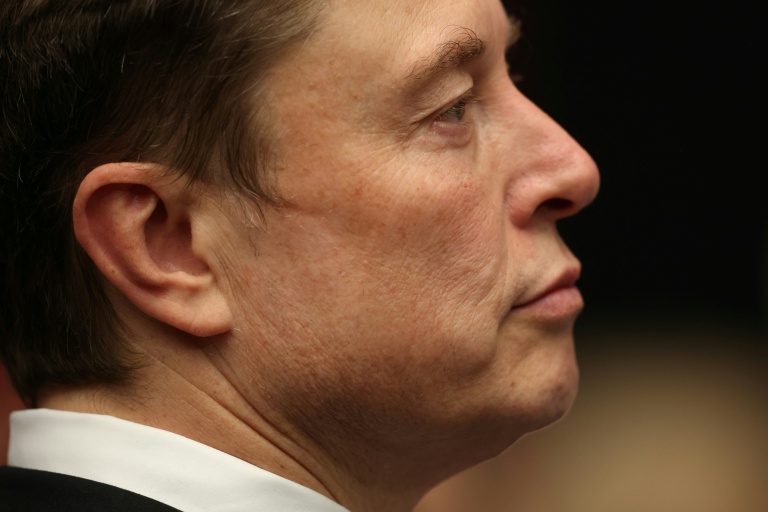
Elon Musk, already the world’s richest person with a net worth exceeding $820 billion as of early April 2026, could soon become the first individual in history to surpass $1 trillion in personal wealth if SpaceX completes a blockbuster initial public offering later this year, according to reports and industry estimates.
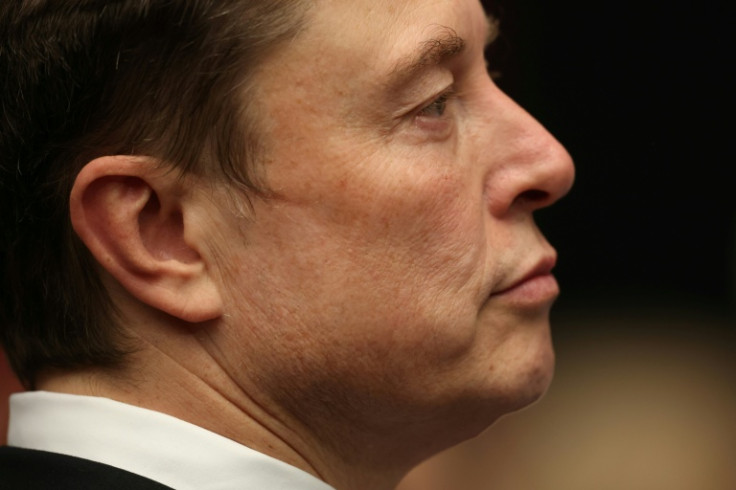
SpaceX, Musk’s privately held aerospace company, reportedly filed paperwork for an IPO on Wednesday, with an anticipated public debut in June that could value the firm at $1.75 trillion and raise as much as $75 billion — dwarfing the previous record set by Saudi Aramco’s $29 billion listing in 2019, Forbes reported.
The development, highlighted in a LinkedIn post by Forbes Magazine, has reignited discussions about Musk’s unprecedented accumulation of wealth and the potential for him to shatter yet another financial milestone. Musk’s fortune, driven primarily by his stakes in Tesla Inc. and SpaceX, has surged dramatically in recent months, with Forbes estimating it at $839 billion on its 2026 Billionaires List released in March and real-time trackers showing around $823.8 billion as of April 1.
Musk became the first person to reach $500 billion in October 2025, $600 billion in December 2025, $700 billion shortly after, and $800 billion in February 2026 following a series of corporate moves, including SpaceX’s acquisition of his xAI venture. His 2025-2026 wealth gain of roughly $497 billion represents the largest single-year increase ever recorded for any individual.
SpaceX IPO Could Be the Catalyst
A successful SpaceX listing at the projected $1.75 trillion valuation would significantly boost Musk’s holdings. Musk owns approximately 42-43% of SpaceX, making that stake alone potentially worth hundreds of billions more once shares trade publicly. Combined with his roughly 13-20% ownership in Tesla (depending on options and dilutions) and other assets, analysts say the IPO could easily push his total net worth past the $1 trillion threshold.
The filing comes amid strong investor appetite for space and defense-related technology, fueled by SpaceX’s dominance in reusable rockets, Starlink satellite internet, and NASA contracts. The company has achieved multiple milestones, including frequent Starship test flights and rapid growth in its Starlink constellation, which now serves customers worldwide.
If the IPO raises $75 billion as estimated, it would not only provide SpaceX with substantial capital for expansion but also create liquidity for early employees and investors while cementing Musk’s companies as central players in the new space economy.
Musk’s Wealth Trajectory
Musk first topped the Forbes Billionaires List in 2021 and has reclaimed the No. 1 spot multiple times. As of April 2026, he remains far ahead of the competition: Google co-founder Larry Page ranks second with roughly $245-257 billion, followed by Sergey Brin, Jeff Bezos and others in the $200-250 billion range. Musk’s fortune is more than three times that of the second-richest person, according to recent snapshots.
His wealth has been volatile, swinging with Tesla stock performance and private valuations of SpaceX and xAI. Key boosts in the past year included Tesla’s recovery after Musk stepped back from government-related roles to focus on the automaker, a Delaware court ruling restoring valuable stock options, and strategic deals involving SpaceX and xAI.
Real-time trackers like Forbes’ Billionaires Index show daily fluctuations of several billion dollars tied to market movements. Musk’s X (formerly Twitter) activity, product announcements and political commentary often influence sentiment around his companies.
Broader Implications
Reaching trillionaire status would mark a historic first in modern capitalism, raising questions about wealth concentration, taxation of unrealized gains and the role of innovation-driven fortunes in society. Musk has previously downplayed personal wealth discussions, emphasizing instead the mission of making humanity multi-planetary and advancing sustainable energy and artificial intelligence through his ventures.
Critics argue that such extreme wealth underscores inequalities, while supporters point to the technological breakthroughs enabled by Musk’s companies — from electric vehicles reducing emissions to Starlink providing internet in remote areas.
The potential IPO also highlights the maturation of the private space industry. SpaceX’s valuation has climbed steadily from earlier tender offers around $400-800 billion, reflecting confidence in its technology and revenue streams from launches and satellite services.
For Tesla shareholders, any SpaceX listing could indirectly benefit the ecosystem, though the companies operate independently. Musk has repeatedly stated that Tesla and SpaceX pursue separate but complementary goals.
Market and Expert Reactions
Financial analysts reacted to the IPO news with cautious optimism. Some predict strong demand for SpaceX shares given its near-monopoly in commercial space launches and growing Starlink subscriber base. Others caution that public market scrutiny could introduce volatility, as seen with Tesla.
“SpaceX going public would be transformative not just for Musk but for the entire space sector,” one aerospace investment specialist said. “It would provide a clear benchmark for valuations and likely spur more investment in related technologies.”
Social media buzzed with the Forbes post, with users debating the likelihood of Musk hitting $1 trillion and what it would mean for philanthropy, policy or further innovation. Musk himself has not publicly commented on the specific IPO filing as of Thursday, though he frequently engages with followers on X about his companies’ progress.
What Comes Next
SpaceX has not officially confirmed the IPO details, and regulatory filings with the Securities and Exchange Commission will provide more clarity in coming weeks. An June listing would represent one of the fastest timelines from filing to debut for a company of this scale.
Musk’s path to $1 trillion depends on multiple variables: successful execution of the IPO, sustained high valuations for both SpaceX and Tesla, and broader market conditions. Even without the IPO, some projections suggest he could approach the milestone through organic growth in his portfolio.
For now, Musk continues to lead the global wealth rankings by a wide margin while juggling leadership roles at Tesla, SpaceX, xAI and X. His ability to turn ambitious visions into high-value businesses has repeatedly rewritten records.
As the world watches the next chapter in Musk’s financial journey, the reported SpaceX IPO filing adds another layer of anticipation to an already extraordinary story of wealth creation in the 21st century.
Whether Musk becomes the world’s first trillionaire in 2026 or shortly thereafter, the development underscores the rapid pace of innovation in technology, space and artificial intelligence — sectors where his influence remains unmatched.


Consumers Flash Some Warning Signs

For many UK growing businesses, using spreadsheets is such an integral part of running a company is like using that noisy kettle that still works.
It’s what we always did, so why change? They are trusted, inexpensive (in the short term), and simple. You can fit everything onto one doc, with employee info on one tab, sick leave on another, expenses in a third, and their hours and salary on tabs beginning after “Sheet 1” (usually only fully understandable by one super user).
For a while, it seems like a perfect system. Then the business hires 10 more employees. One employee works from another location. A boss forgets to fill in a vacation planner. Unbeknownst to everyone, the once thought-up efficient plan is slowly doubling, as well as tripling, to add to time, money, and irritation.
The issue is not the spreadsheet, per se. The problem is that the company grows so big, spreadsheets are just too small on their own to contain it.
The Productivity Drain Nobody Notices
Manual HR doesn’t really fall over. It just slowly pours away your company’s margin every day.
Managers hunting down signed documents, updating the 5 locations where they keep employee records, and checking whether the “latest” version of a spreadsheet is actually the latest. HR admins are doing the same weekly manual tasks: copying data, approving leave requests from chain emails, and calculating absence values in a spreadsheet.
On their own, these little tasks don’t seem like much. Added up, they’re a tidy sum.
A growing company might be burning through dozens of hours every month on tasks like maintaining manual processes that should long since have been automated. All that time could be spent by managers on developing their staff, operational improvements, growth, or really anything other than knowing how to track down that contract the vendor sent a while ago that is almost definitely in the Generally Important Stuff 2019_Q3 folder titled “FINAL_v2_UPDATED” on the general drive.
But, most notably, as companies scale, inefficient manual processes compound. When a team is eight, maintaining a process may work fine, but by the time a company gets to 50 employees, it’s a frustrating mess.
Human Error Becomes a Business Risk
Spreadsheets are labour-intensive and are therefore prone to human error.
An out-of-date phone number may not seem serious until you need an emergency contact. A double entry in the payroll may provide uncomfortable conversations and headaches for the accountants. An incorrect holiday day entered in a spreadsheet can damage employee trust much faster than you may think.
The biggest problem is that unconnected systems introduce inconsistencies. A spreadsheet says an employee has completed the required training. Another sheet says they haven’t. One manager updates a record while the other keeps using the file they saved to their desktop three weeks ago.
This isn’t due to carelessness. This is what happens when there’s too much room for error.
Compliance Problems Can Escalate Quickly
Problems can grow quickly from bad to worse
Storing a few contracts in a shared drive just isn’t good enough.
You also need to keep on top of your employee files, manage right-to-work checks, make sure you’re tracking absence procedures, and keep sensitive data safe. If this information is spread out over a few spreadsheets, emails, and a couple of random systems, maintaining good compliance practices is going to be confusing at best.
Where documents are missing or records aren’t being generated, businesses open themselves up to unnecessary legal and financial risks. Even the smallest oversight can expand to cause real issues during audits, claims or disputes.
It’s another reason why businesses reach a point when manual processes quickly get out of hand, and they decide to look for dedicated UK HR software to manage.
That solution allows firms to centralise their records, automate reminders, and ensure that important documents aren’t getting buried in the depths of a filing cabinet.
Employees Notice More Than Businesses Think
Old, paper-based HR systems have a bigger impact on the employee experience than many leaders believe.
They see that their leave request has taken two days to approve because the right spreadsheet was buried three tabs down. They see when others’ induction processes are ad-hoc. They see themselves waiting three days for a response from HR. They see managers asking for information they already supplied for the second time.
These may sound like minor complaints, but they reflect the way employees perceive their employers. A company that isn’t buttoned up in its operational processes will have a hard time projecting external credibility.
In markets with healthy competition for talent, the operational efficiency of an organisation plays a significant role in effective employer branding. Workers now have an expectation that things will operate smoothly in a workplace, especially as many workplaces tout themselves as forward-thinking, corporate-minded or on a very aggressive growth trajectory.
Technology Creates Room for Growth
HR software is seen as a grudge purchase that businesses can get by without for now, but it’s an outlay that pays off in terms of efficiency and future growth.
Modern platforms cut out the busywork, reduce human error, ensure compliance with automatically enforced policies and shared digital records, and remove time-consuming HR headaches when you scale.
Spreadsheets have value, but relying on them entirely for HR often leads to creeping costs that go unnoticed for far too long.


US probes Reid Hoffman group over funding lawsuits against Trump, source says

California eases carbon market rules amid affordability concerns

Marvell Technology: AI Growth Catalyst Is Kicking Off
Business
ET Alpha Wealth Summit: Learn the secrets of finding alpha & what it takes to build a Rs 100 crore portfolio

In a rapidly evolving financial markets landscape, the opportunities for market outperformance seem to be disappearing. However, the Alpha isn’t dead just yet, but is in fact, hiding in fewer, harder-to-find places.
In a market environment where it is becoming increasingly difficult to identify the Alpha, there is a need for careful evaluation of the conditions and pre-requisite factors that influence the decision-making process behind the right investment.
The session, ‘Is Alpha Dead? Or Just Harder to Find?’ will explore how one can identify where real outperformance still exists. The discussion will also focus on how to identify and avoid crowded, low-return trades, in retrospect of generating consistent excess value.
This panel will consist of leading industry experts such as Vikas Khemani, Devina Mehra, Prateek Agrawal and Kalpen Parekh, who will share their views and opinions regarding the subject. The Alpha isn’t gone; it’s just hiding in harder-to-find places, and through this insightful panel discussion, these ‘places’ will become clearer to identify.

Following this discussion will be a fireside chat with Radhika Gupta, MD & CEO, Edelweiss Mutual Fund. The session, ‘How to Build a ₹100 Cr Portfolio in a 10–12% World’, breaks down how to realistically build and compound a Rs 100 crore portfolio, through sharper allocation, disciplined risk, and avoiding the crowded trades that dilute returns.
In a market where easy gains are gone, it takes a broader mindset to understand the intricacies in building a portfolio that could compound to Rs 100 crore. The session will explore strategies for building long-term wealth and scaling one’s portfolio towards the Rs 100 crore milestone.These sessions will include practical takeaways on uncovering hidden sources of alpha, navigating crowded trades, and positioning portfolios for sustainable long-term returns in an increasingly complex investment landscape.


New Jersey state police assert control outside migrant detention center
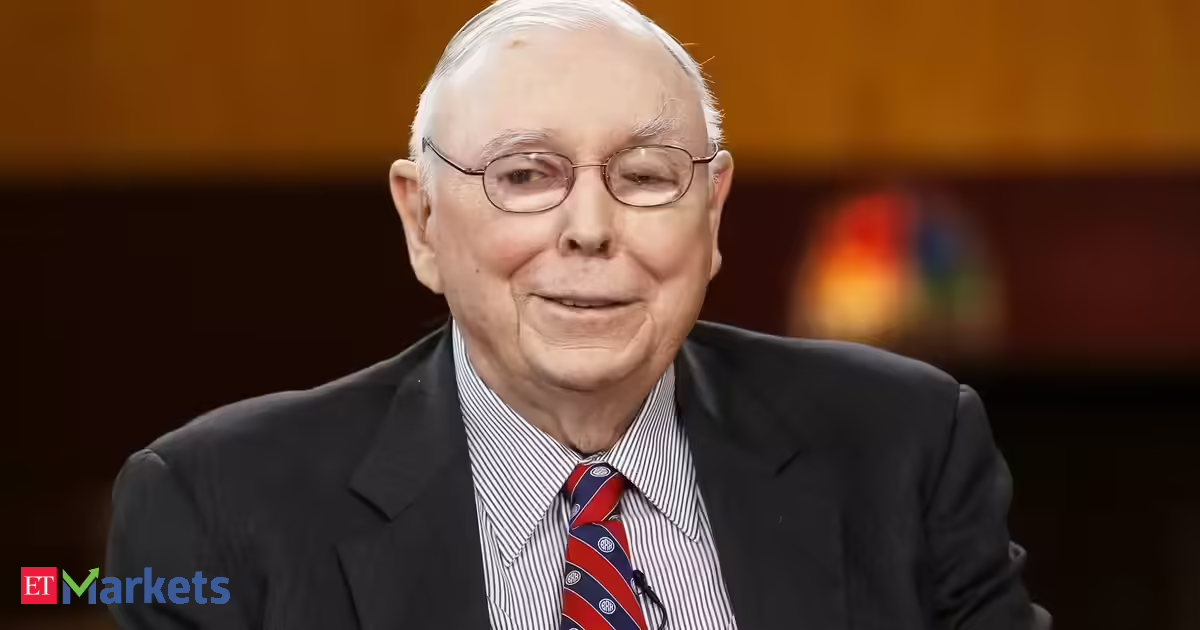
Charlie Munger’s famous list of “human misjudgment tendencies” is not just a philosophical framework. It is, in today’s market, a practical survival guide.
Markets in 2026 are still being shaped by three dominant forces:
(1) higher-for-longer interest rates, (2) liquidity concentration in a few mega-cap stocks, and (3) emotionally driven retail participation.Against this backdrop, Munger’s behavioral warnings feel unusually relevant.
1. The real enemy is not volatility, but emotional distortion
Munger repeatedly warned that investors don’t lose money because they lack information, they lose because they misprocess it.Today’s markets amplify that problem.
Every CPI print, Fed commentary, or geopolitical headline triggers immediate overreaction. Investors are constantly pulled between fear of missing out (FOMO) in AI-led rallies and fear of correction during rate jitters.
This is a classic combination of:
- Availability bias (overweighting recent news)
- Social proof (following crowded trades)
- Stress-induced reaction (panic buying or selling)
In Munger’s language, this is the setup for “avoidable stupidity.”
2. “Envy and FOMO” are silently driving modern portfolios
One of Munger’s strongest warnings was about envy, not as emotion, but as a financial destroyer.
In today’s market, envy doesn’t look like jealousy of a neighbour. It looks like:
- Chasing AI stocks after they’ve already rerated sharply
- Comparing portfolio performance with index benchmarks daily
- Abandoning long-term positions because “others are making faster money”
When liquidity is abundant in a narrow set of names, envy becomes structurally embedded in portfolio behaviour. Investors are no longer asking “Is this a good business?” but “Am I missing this move?”
That shift is dangerous in a market where leadership is concentrated and reversals can be abrupt.
3. The “Lollapalooza effect” is stronger than ever
Munger described the Lollapalooza effect as multiple biases reinforcing each other into extreme outcomes.
Today’s version looks like this:
- Social media hype amplifies narratives
- Algorithmic flows reinforce momentum
- Passive inflows concentrate capital into large indices
- Retail traders amplify short-term spikes
The result: prices detach from fundamentals faster, and corrections become sharper when sentiment shifts.
This is why today’s rallies often feel effortless, but reversals feel violent.
4. Overconfidence is rising with “easy market memories”
A prolonged period of strong returns, especially in largecap tech, creates what Munger called “excessive self-regard”.
Many investors now assume:
“Buying dips always works”
“Quality stocks never go down much”
“The Fed will rescue markets eventually”
But in a higher-rate regime, that assumption is no longer guaranteed. Valuation compression risk is real, and earnings must now do more of the heavy lifting.
Confidence built in one regime often breaks in another.
5. The biggest risk today: avoiding pain too aggressively
One of Munger’s less discussed but critical ideas is “pain-avoidance behavior”.
In today’s context, it shows up as:
- Selling winners too early to “lock in gains”
- Avoiding fundamentally strong but volatile sectors
- Sitting excessively in cash due to fear of drawdowns
Ironically, in trying to avoid discomfort, investors often underperform the very market they are trying to survive.
6. What works in today’s market: Munger-style discipline
If we translate Munger’s philosophy into today’s environment, a few principles stand out:
(1) Concentrate only when conviction is real
Not based on stories, but on durable cash flows and long-term pricing power.
(2) Expect volatility as a feature, not a flaw
Even high-quality companies will see sharp drawdowns in a rate-sensitive world.
(3) Reduce decision frequency
Most mistakes come from over-trading emotional signals disguised as “information.”
(4) Build a bias checklist
Before acting, ask:
Am I reacting to news or value?
Am I following the crowd?
Would I make this decision in isolation?
7. The current market lesson in one line
If Munger were observing today’s markets, the warning would likely remain unchanged:
“The biggest returns still come from avoiding obvious psychological errors, not from predicting the next move.”
Bottom line
Today’s markets are not irrational, but they are emotionally amplified. Liquidity, technology, and information speed have not removed human bias; they have accelerated it.
That is exactly the environment where Munger’s framework becomes most powerful. Because in the end, investing success is still less about knowing more, and more about misbehaving less.

According to an NSE circular, the pre-open session timings in the derivatives segment will remain unchanged, with trading beginning at 9:00 am and the pre-open session ending at 9:08 am through a system-driven random closure in the final minute. The normal market session will continue to open at 9:15 am.
The trade modification window will also remain unchanged and will continue until 4:15 pm.
There will be no change in the methodology used for computing closing prices of derivative contracts. NSE said the volume-weighted average price used for close price calculation will continue to be based on trades executed during the last half hour of trading, which will now be from 3:10 pm to 3:40 pm.
The exchange added that the functional changes arising from the implementation will be made available for testing during mock trading sessions. A separate circular detailing the mock sessions will be issued later.
The exchange will also broadcast a message on NEAT trading terminals at the start of the Closing Auction Session in the equity segment when the operating price range for stock futures is reset. As part of the process, outstanding orders lying outside the revised price range will be cancelled by the exchange in accordance with existing rules.
The exchange also said that a security will cease to be eligible for the Closing Auction Session (CAS) if it is excluded from the equity derivatives segment on both exchanges. In such cases, its closing price will be determined using the existing methodology, based on the volume-weighted average price (VWAP) of trades executed during the last 30 minutes of trading. However, as long as the security remains part of the equity derivatives segment on at least one exchange, it will continue to be eligible for CAS.
The exchange will cancel all unexecuted special orders, including stop-loss and disclosed quantity orders. Any pending orders that fall outside the revised price band will also be cancelled, with members receiving an appropriate cancellation message.

NATO military chief says alliance on track to meet spending goals

Armagh v Derry Live stream and TV information, throw-in time, betting odds and all you need to know ahead of today’s All-Ireland clash

Consumers Flash Some Warning Signs

GT’s road to IPL 2026 Final: Shubman Gill’s leadership, Jason Holder’s impact and hard length bowling | Cricket News

Steven Gerrard disagrees with Gary Neville over ‘shock’ Chelsea and Arsenal claim | Football

US brings back mandatory military draft registration

Register Renaming | Hackaday

John Law – The First Financial Engineer – A History of Paper Money and The Mississippi Bubble

Ederson Done? United Financial News. Baleba Price Issue? – Manchester United Transfer News

Why Bitcoin, Stablecoins & Tokenization Push Prices MUCH Higher
-

 Business6 days ago
NYT Strands Answers May 24 2026 Revealed for Puzzle No. 812 Theme Summer Essentials
-

 NewsBeat3 days ago
Israel says it has killed new Hamas military leader in Gaza City airstrikes
-

 Politics5 days ago
Bridgerton Season 5: Cast, Release Date And Everything We Know So Far
-

 Business3 days ago
Selena Gomez Reportedly Upset Over Benny Blanco’s Comments on Her ‘Terrible’ Diet
-

 Crypto World7 days ago
Robinhood crypto COO Tanya Denisova exits
-
 Crypto World3 days ago
Micron Crosses $1 Trillion Market Cap as AI Demand Reshapes Memory Sector
-

 Tech5 days ago
Microsoft’s quiet Claude Code retreat and the real cost of enterprise AI
-

 Business5 days ago
BTS Sells Out Four Las Vegas Shows at Allegiant Stadium for ARIRANG World Tour
-
 Tech4 days ago
China assigns ID codes to 28,000+ humanoid robots
-
Tech3 days ago
The Samsung pay deal is the moment Korean unions changed register
-

 Tech1 day ago
Waymo dominates autonomous vehicle registrations as Tesla trails behind
-

 Tech3 days ago
Millions of AI agents imperiled by critical vulnerability in open source package
-
Crypto World5 days ago
Brian Armstrong Outlines Crypto Vision for the Future Financial System
-

 Tech5 days ago
Westone Audio and Etymotic Acquired by Fidelity Collective in Major IEM Market Move
-
 Crypto World5 days ago
Nvidia (NVDA) CEO Calls on Super Micro to Strengthen Export Controls Amid Smuggling Probe
-
Crypto World3 days ago
SpaceX’s $2 Trillion IPO: Why Tech Giants Nvidia (NVDA), Apple (AAPL), and Microsoft (MSFT) May Face Pressure
-

 Tech3 days ago
NASA taps Blue Origin to deliver lunar rovers for Moon Base initiative
-
 Entertainment4 days ago
‘Breaking Bad’ Star’s Easy-to-Binge 6-Part Crime Series Spin-Off Is Finally Heading to Free Streaming
-

 News Videos3 days ago
XRP *JUST* SUCCEEDED!!!! CLARITY ACT EXPOSED!!! (SHE EXPOSED IT)
-
 NewsBeat5 days ago
Hottest May day ever as London hits 34.8C in 2C leap from previous records
You must be logged in to post a comment Login