
Business
Equity investments should give about 15% annual returns over next 5 years: Raamdeo Agrawal


How are you assessing the market at this point?
I see this economy growing at about 7.5-8.5%, with corporate profits growing at more like 13-14%. So the index itself should give 12-14%.
Then it depends on how we manage our portfolios. Making 15% annually over the next five years seems to me the most likely outcome. That will double your portfolio. Markets have stagnated for two years, and maybe there will be another year of stagnation.
The Nifty is trading at 20 times, and if earnings grow by 15%, you can reduce the P/E multiple to 17. I think the markets will most likely go up by 15-20%.

Why aren’t foreign investors buying this story then?
Foreign investors are chasing momentum, like Korea and Taiwan. And the biggest momentum is in the US itself, so it is very difficult to get money out of there. All the money is heading there. This quarter, their earnings are up 47%. So, clearly, why would money come out of there?India had become the funding market for their allocations to other emerging markets because of the AI story. Now they are completely rattled by whatever is happening in Korea. Every day it is up 8% or down 8%. The AI story is still on, but AI is not the only thing in the market.
The good part is FIIs are in a “stop selling” mode in India. That itself solves 90% of the problem for me. We are in a phase where the downside is limited.
Read more: Can Horizon Parks IPO deliver long-term growth for high-risk investors?
Is India’s capital gains tax regime a deterrent for foreign investors?
See, it is one of the irritants for sure, but I don’t think that is the breaking point. The pain is coming from somewhere else, particularly the weak currency. They bring in dollars and must pay capital gains tax in rupees. So even if they have not made money in dollar terms, they still must pay capital gains tax. That’s what hurts them.
The thing is, most emerging markets generally don’t have capital gains tax, and it is worth thinking about. If you want a good long-term relationship with FIIs and want to keep attracting them, there should be a very friendly environment.
As one of the large investors in Zepto, what is your reading of its recent IPO attempt?
The message is very clear; till companies are actually profitable, or very close to becoming profitable within a visible timeframe, they should not tap the public market. Because it is very difficult to make the public market understand the underlying value.
Public markets are all about earnings, earnings and earnings. And every quarter you have to report them. You could be growing at 100%, and so there will be a cost of acquisition and, hence, there will be some losses. A large private investor can understand that; the public market cannot.
Mutual fund investors have to mark to market every day. So they don’t want to invest at a price at which they can have a mark-to-market loss tomorrow.
So my sense is that maybe it was a little premature for the company to tap the public market, and that too at this scale. They must have learnt from this.
Did this episode disappoint you?
Whenever something fails like this, I feel bad. You don’t want any entrepreneur to go through this kind of pain. Whether my investment is a failure will be decided after 10 years, not now.
But it looks bad when a company in which you have invested is passing through these kinds of challenges.
Did the promoters ask you for advice on the IPO? Did you speak to them after that?
Not after, but while this was going on, whatever I could suggest, I suggested to them. Once you are no longer hot in the minds of public-market investors, there is very little you can do about it. You have to become desirable, or worthy, for those mutual funds.
They are big guys, and it is their money. You have to become more worthy of their money. Basically, that is the message in total.
Among bank stocks, which ones are you liking the most?
I think the industry has the most pristine balance sheets I have ever seen. Now lending has started; credit growth is at 18%. The ones with the best management will do well. That includes ICICI, SBI, the AUs of the world, Federal Bank or Karur Vysya Bank. When you have an economy with a ₹230-240 lakh crore credit book, 18% growth is massive.
What about HDFC Bank?
There is pessimism among investors at large. All those things will someday be behind them; the regulatory requirements and all.
I can understand the pessimism around the stock price, but the bank is rock solid. Valuation-wise, this is among the lowest you could ever get it-probably the lowest in its history.
You have been sceptical about how to value IT stocks because of the AI disruption. Have you changed your mind?
A little bit. So, jobs will not be the issue. The issue is how much will the market expand. Obviously, clients will ask for productivity gains to be passed on to them.
To my mind, the bargaining position of services companies is a little weaker. So I would say they are “headwinded”, but it’s not as disastrous as it was thought to be 12 months ago.
But what are current valuations reflecting?
Valuations are reflecting almost a terminal-value kind of situation, literally zero growth.
You are getting a 5-6% free cash flow yield, which is around your bond yield. Now, I think we have seen the bottom, but the growth phase has still not started. It may stay here for some time, until there is clarity on enterprise AI.
Do you see a bubble in the AI theme?
Financial markets have seen big bubbles in 2000 and 2008. So, markets are very alert to this situation in AI. They are not letting it go completely out of hand. There is a self-correcting mechanism where people go overboard and then come back, like we are seeing in Korea.
Look at the sheer size of AI capex ($2-3 trillion a year), and that is spreading across the world. The world is sucking in all kinds of products such as cables, construction, cement, etc. So this prosperity is translating into corporate earnings. And hence the P/E multiples are looking reasonable.
If AI capex is overdone, then everything is overdone. If it isn’t, there might be some kind of slowdown, but I don’t think there will be a collapse.
As a stakeholder in the broking business, what is your take on disruption in the market around the closing auction system?
They were trying to solve a problem through this. But right now, it looks like it has created a bigger problem. That said, these things can be part and parcel of long-term reforms. When dematerialisation was made compulsory, there were problems then as well. Eventually everybody fell in line. Sebi is absolutely on top of the matter. If it is not working at the desired level, they will review it and do whatever is required. I don’t know. Let’s see.


Magnite director Knopper sells $848,296 in common stock

Japan Q2 growth misses forecasts on weaker spending, investment
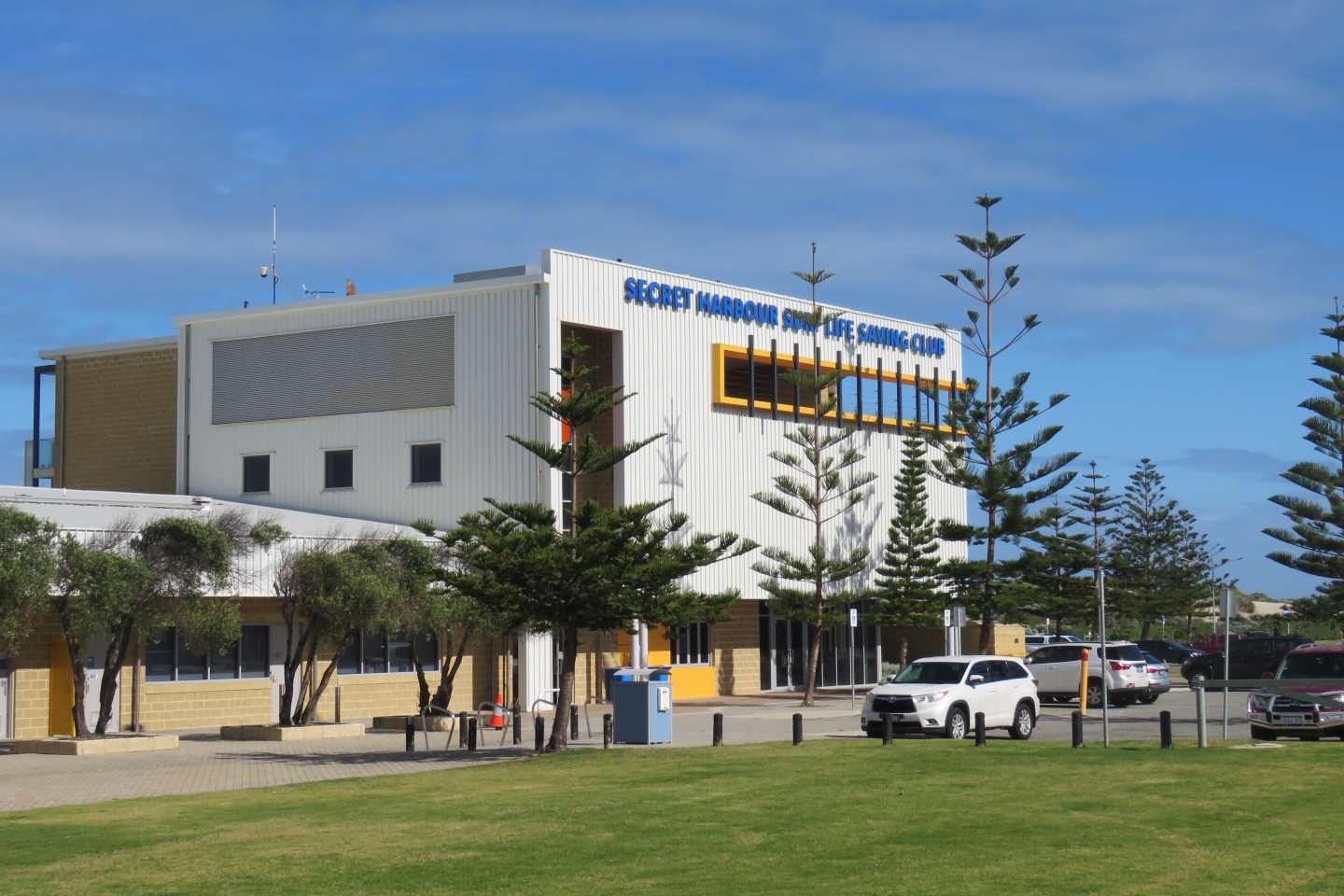
Pre-polling has begun for the Secret Harbour by-election, which will be decided on August 29.

Alphabet eyes inaugural Australian dollar bond, bookrunner’s message says

Bankers said some lenders now plan to borrow more short-term funds, possibly at a higher rate, to finance the promised leverage to FCNR(B) clients after the Reserve Bank of India advanced the deadline for swap support. These funds will have to be replaced with a long-term loan or bond later, leading to a temporary mismatch between banks’ foreign deposits and borrowings.
“The RBI has put banks in a tight spot. Banks had done roadshows, spent manhours on getting documentation ready and put a lot of investments into this. All this was planned with September 30 deadline in mind,” said a senior private-sector bank executive.
Since large funds can’t be secured for a longer tenure immediately, one option is to look for bridge loans.
“Not many banks have the capacity to raise a huge sum at such a short notice; so one option banks are exploring is to do a short-term bridge loan for now to ensure customers can be provided leverage on their deposits until the end of August. These short-term loans can be replaced with longer term borrowings later,” said the executive cited above.
‘Sufficient’
On Friday, the RBI advanced the deadline for mobilising FCNR-B deposits to August 31, from the originally announced September 30, citing higher-than-expected inflows. The RBI received $52.3 billion through FCNR(B) deposits until August 13, the latest update showed.

Banks can use the RBI’s special zero cost swap facility, until September 11, 2026, versus the earlier date of October 16.
Bankers said the early closure was surprising since governor Sanjay Malhotra himself had said a week ago that the central bank neither planned to prematurely close the swap window because of robust inflows nor had it received any proposal to extend the timeline beyond the announced deadline.
“As of now, there is no proposal under consideration to close the scheme prematurely,” Malhotra had said after the monetary policy announcement on August 5. The scheme’s curtailment could expose lenders to liquidity mismatches.
Late Entrants
“Some banks that were late in garnering dollars will probably stop in their tracks. Others may choose not to push for more dollars, while some with customer commitments will look for short-term funds immediately – possibly at a higher cost,” said another private-sector banker. “This will create mismatches in the short term, which is not healthy.”
For instance, ICICI Bank’s $1.45 billion, four-year loan launched last week is currently under syndication. This loan also has a greenshoe option allowing ICICI Bank to upsize the total amount it wants to raise. The bank may want to wrap up the syndication early and not look at pushing the greenshoe.
Similarly, Punjab National Bank‘s $1 billion loan, which went into syndication in the last week of July, could be closed early as the bank scampers to get funds within the shorter deadline.
“Some mid-to small-sized banks, which had planned debut bond sales overseas, may now have to look at alternative sources. They will have to curtail their FCNR (B) targets because it does not look like the RBI needs more dollars,” said a senior executive with a foreign bank.
Bankers said the RBI’s decision has exposed them to risks of higher payouts immediately. There is also no certainty that whenever they tap the overseas markets, to match their three- to five-year FCNR(B) deposit liabilities, the US treasury, global rates or geopolitics will be favourable.
“Until last week, the RBI was in touch with banks pushing for more dollars. If dollar flows were too heavy, then there are ways to use them. Just open a special window for oil companies, for instance,” said a third private sector bank executive.
Bankers said by closing the scheme early and at a short notice, the RBI would be indicating it has enough muscle to protect the rupee.
Business
The a2 Milk Company Limited 2026 Q4 – Results – Earnings Call Presentation (OTCMKTS:ACOPY) 2026-08-16


Seeking Alpha’s transcripts team is responsible for the development of all of our transcript-related projects. We currently publish thousands of quarterly earnings calls per quarter on our site and are continuing to grow and expand our coverage. The purpose of this profile is to allow us to share with our readers new transcript-related developments. Thanks, SA Transcripts Team
Operator
Thank you for standing by, and welcome to the Iress Limited 2026 Half Year Financial Results Conference Call. [Operator Instructions]
I would now like to hand the conference over to Andrew Russell, Iress CEO and Managing Director. Please go ahead.
Andrew Russell
Group CEO, MD & Director
Good morning, and thank you for joining us. I’m Andrew Russell, Group CEO and Managing Director, and I’m joined by Cameron Williamson, our Chief Financial Officer. Today, we’ll take you through our first half performance, updated FY ’26 guidance and the progress we’re making against the strategic priorities we outlined at our AGM. Most importantly, we’ll show how disciplined execution is building a stronger, higher-quality software business and positioning Iress for sustainable long-term value creation.
There are 5 key messages for our shareholders today. First, we have delivered a solid first half result with materially improved earnings quality, driven by disciplined execution, a simpler operating model and continued margin expansion. Second, we have continued to simplify the business, progressed our business efficiency program ahead of plan and strengthened the balance sheet. This provides greater financial flexibility to self-fund disciplined investment in product evolution.
Third, our focus has now shifted to evolving our products. Having mobilized our partnership with Thoughtworks in April, we are now embedding AI into our product and engineering strategy and improving our delivery velocity. Fourth, our focus is on building a higher-quality software business with better products, stronger customer relationships and more consistent commercial execution. We

Why is JB Hi-Fi stock tumbling today?

What is it like to buy a private jet and then lose so much money that you have to sell it? Or take a $1 million European vacation to celebrate a deal closing? I asked the people who have lived it.
I crisscrossed the country to sit down with millionaires and billionaires for
The WSJ Money Interview, hearing about how the ultrasuccessful make, spend and grow their money. Through eight flights, 14 days on the road and countless hours in interviews and in the editing room, I got a peek at the moments—both stomach-churning and euphoric—that shaped them.
I witnessed off-camera interactions with assistants, friends and family. We also had some fun. I quizzed them on whether their fortunes, which ranged from tens of millions of dollars to billions, were driven by luck or skill.
Copyright ©2026 Dow Jones & Company, Inc. All Rights Reserved. 87990cbe856818d5eddac44c7b1cdeb8

The yen was 0.2% stronger against the U.S. dollar at 159.055 yen, on track for a second straight day of modest gains against the greenback but still firmly within its trading range of the past week, after data released Monday showed Japanese GDP for the second quarter expanded at an annualised 1.1%.
“The details were a mixed bag,” Capital Economics analysts wrote in a research note. “GDP expanded at a decent pace in Q2 and with the government still limiting the pass-through from higher energy prices,” they wrote, while a jump in government consumption “suggests that Takaichi’s expansionary fiscal policies are starting to have an impact.”
The euro was flat at $1.1573, while the British pound was up 0.1% at $1.3546. Both the Australian dollar and its kiwi counterpart were level at $0.7085 and $0.5891 respectively.
Soggy U.S. data, including non-farm payrolls and gauges of price inflation for consumers and producers, have doused investor expectations of rate hikes from the Fed this year, with few clues expected from the U.S. central bank until the Jackson Hole symposium between August 27 and 29.
“Softer U.S. data over recent weeks has reduced rate hike expectations, with less than one full hike now priced for December,” BNY analysts wrote. “The back end of the Treasury curve remains elevated, with some commentators attributing higher yields to credibility concerns.”
Fed funds futures are pricing an implied 66.9% probability that Fed policymakers will hold interest rates at their next two-day meeting ending on September 16, up from a 47.6% chance a month ago, according to the CME Group’s FedWatch tool.The U.S. dollar index, which measures the greenback’s strength against a basket of six currencies, was 0.1% lower, trading near its lowest levels of the month at 99.519.
Oil prices fluctuated between gains and losses, while U.S.-Iran talks to resolve the Middle East conflict remain stalled. Brent crude edged down 0.1% at $88.48 a barrel as President Donald Trump told Americans to prepare for continued high fuel prices as a result of the war, while Iran called on the U.S. to accept defeat. Shipping traffic through the Strait of Hormuz remains a trickle.
Against the Chinese yuan, the U.S. dollar was flat at 6.7428 yuan in offshore trade ahead of activity data due for release later on Monday.
In cryptocurrencies, both bitcoin and ether were down 0.3% at $62,854.48 and $1,874.80 respectively.

Is this the most delusional financial audit ever? You have to see this meltdown.

Moment fisherman, 31, is rescued alive after 15 days trapped in an underwater cave
Magnite director Knopper sells $848,296 in common stock


-

 Fashion2 days ago
Weekend Open Thread: Ann Taylor
-
 NewsBeat5 days ago
Communication cards help banking customers access services or report scams
-
 Business6 days ago
Oil Price Today (August 11): Crude oil rises to $88 after Trump’s compensation demand dents Hormuz opening. Here’s why
-

 Crypto World6 days ago
Revolut wins French banking licence, creates second EU banking hub
-
 Sports3 days ago
This U.S. Amateur is a glimpse into golf’s future in more ways than you think
-
 Crypto World6 days ago
Why Did Nvidia Stock Fall on Monday Despite a $500 Billion Wall Street AI Deal?
-

 Sports2 days ago
Birmingham 2026: Day 6 Timetable for Irish Athletes
-
 NewsBeat2 days ago
Myanmar says over 300,000 Rohingya refugees verified for repatriation as exodus enters ninth year
-
 Entertainment5 days ago
Keke Palmer Subtly Hints At Sean Evans Drama With Cryptic Post
-

 Politics2 days ago
SEQ Code: The Three Letter Boarding Pass Code That Could Give You The Worst Seat
-
 Crypto World7 days ago
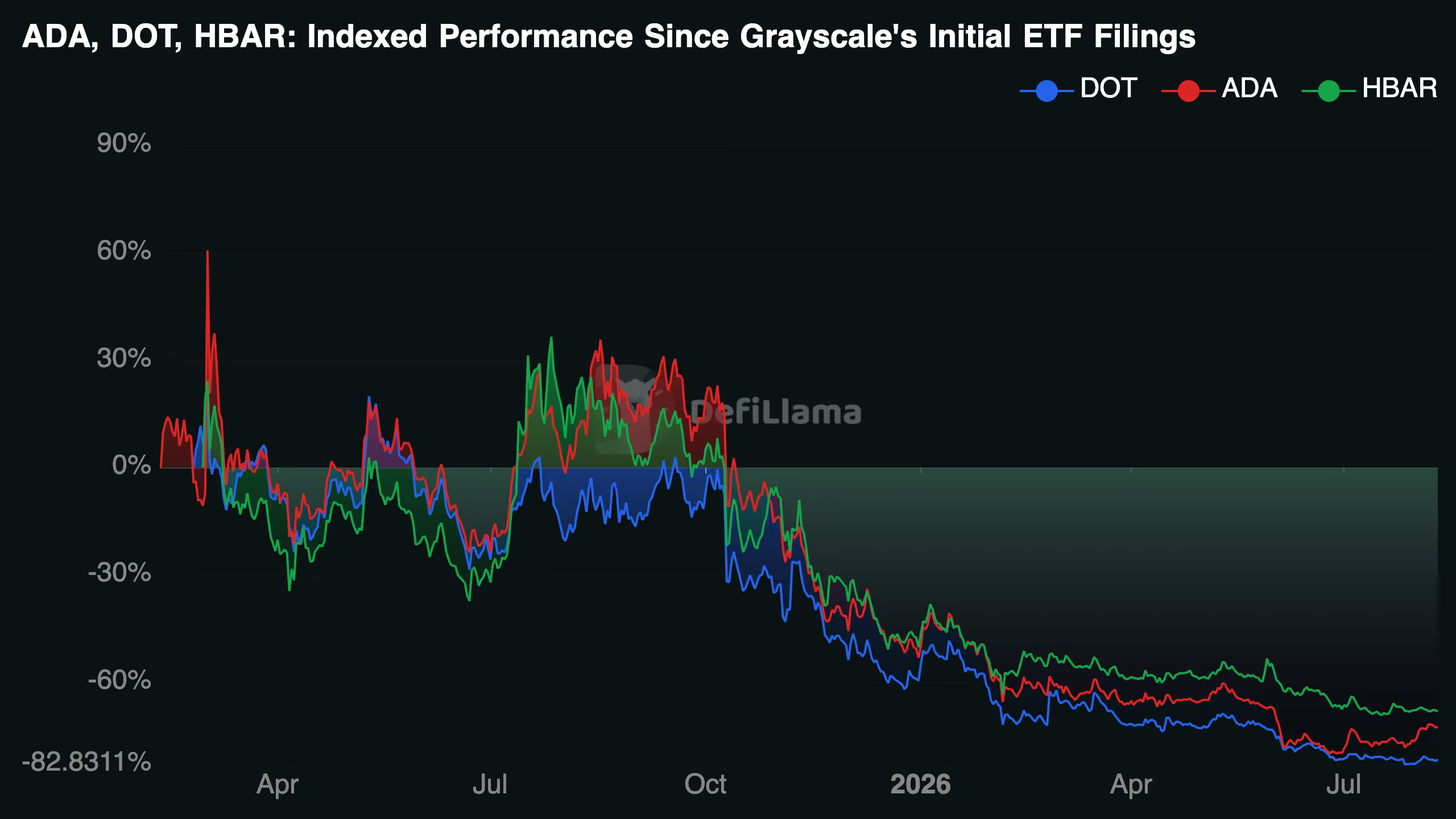
Grayscale quietly drops Cardano, Polkadot and Hedera ETF plans
-

 Fashion6 days ago
Can You Wear Double Cloth Gauze Clothing To Your Office?
-
 Entertainment6 days ago
57 Years Later, the Best Sitcom Ever Made Still Deserves a Reboot
-

 Fashion5 days ago
Should you refinance your debt? Pros, cons, and real numbers
-
 Crypto World6 days ago
Hormuz Nerves Cost Bitcoin $65,000 Mark Despite Solid Institutional Flows
-

 Crypto World6 days ago
Bitcoin's BIP Editors Remove Luke Dashjr Two Days After BIP-110 Fork Stalled
-

 Fashion6 days ago
Claire Life: Kicking Off MVAAFF With the C Suite Luncheon Featuring Phylicia Rashad, Letoya Luckett, and More!
-

 Fashion5 days ago
Coffee Break: The Fonteyn Jane Flat
-

 Tech5 days ago
Zoom Screen-Sharing Bug Let People Fully Take Over Other Devices On A Call
-

 Fashion6 days ago
How to Mix Diamond Rings With Gold & Silver Jewelry
You must be logged in to post a comment Login