
Business
Even a Rs 15,000-crore buyback fails to cheer Wipro investors


The IT major had announced the buyback at a 19% premium to its previous closing price of ₹210 on Thursday. But the move did little to enthuse investors, with the stock falling as much as 4% earlier in the day. It ended at ₹204.30, down 2.8%.
Brokerages said that the effective benefit of the share buyback to shareholders could be limited, with the premium translating into less meaningful upsides.
 Agencies
Stock falls on earnings miss; brokerages flag revenue, margin hit as IT firm lags peers
India’s fourth-largest IT services company posted a 2% decline in consolidated net profit at ₹3,502 crore for the March quarter from the same period a year ago.
Most brokerages struck a cautious note. Goldman Sachs flagged a weaker-than-expected performance and said guidance indicates continued revenue contraction in the near term.

“While Wipro’s margin delivery has been strong, we expect revenue headwinds to translate into a near-term subdued EBIT margin profile,” said the brokerage in a client note. “We see limited signs of Wipro’s revenue underperformance gap closing with peers in the near term, particularly in a subdued macro environment.”
Kotak Institutional Equities said the company continues to lose ground to peers, with deal wins yet to translate into meaningful growth and the gap with competitors remaining wide. “We retain a cautious stance despite cheap valuations, given continued underperformance,” it said.

NEW YORK — NVIDIA Corp. shares hover near $200 in mid-April 2026, trading as the world’s most valuable company with a market capitalization topping $4.9 trillion, as Wall Street analysts overwhelmingly recommend buying the stock amid unrelenting demand for its artificial intelligence chips.
The semiconductor giant, whose stock has seen volatile swings this year after a massive multi-year rally, continues to dominate the AI infrastructure market. As of April 17, 2026, NVIDIA closed at approximately $201.68, up about 1.68 percent in the session amid high trading volume exceeding 147 million shares. The 52-week range spans from a low near $95 to a high above $212, reflecting both the explosive growth in AI spending and periodic market concerns over valuations.
Analysts maintain a strong consensus “Buy” or “Strong Buy” rating on NVIDIA. Across more than 50 Wall Street firms, the overwhelming majority — often 90 percent or higher — rate the stock as a purchase. The average 12-month price target sits around $268 to $275, implying roughly 35 percent upside from current levels. Some optimistic forecasts reach as high as $400, while more conservative ones hover near $205.
Recent financial performance underscores the bullish case. In the most recent reported quarters, NVIDIA posted record revenues driven by its data center segment, which accounts for the vast majority of sales. Blackwell architecture chips, the company’s latest flagship for AI training and inference, have seen strong adoption across major cloud providers, hyperscalers and enterprises. CEO Jensen Huang has repeatedly described demand as “insane” or “off the charts,” with supply commitments and visibility extending well into future years.
For investors debating whether to buy or sell NVIDIA stock in 2026, the dominant narrative centers on artificial intelligence as a transformative, multi-year secular trend. Data center revenue has surged year-over-year, fueled by exponential growth in AI model training, inference workloads and the emergence of AI agents. Companies like Meta, Microsoft, Google and others continue pouring billions into GPU clusters to power large language models and next-generation applications.
NVIDIA’s upcoming Rubin platform, expected later in 2026, is already generating excitement as the successor to Blackwell. Analysts anticipate this next architecture will sustain momentum, with some projecting continued high-teens to low-20s percentage revenue growth rates even as the base expands dramatically. Gross margins remain robust, often exceeding 70 percent on a non-GAAP basis, supporting healthy profitability and free cash flow generation that funds share buybacks and innovation.
Yet the “sell” side of the debate highlights legitimate risks that could pressure the stock. NVIDIA trades at an elevated forward price-to-earnings multiple in the mid-20s to low-30s range depending on estimates, far above historical averages for semiconductor firms. Critics argue that much of the AI hype is already priced in, leaving limited room for error if hyperscaler capital expenditure growth decelerates or if economic conditions tighten.
Competition poses another headwind. Tech giants are developing in-house AI chips — such as Google’s TPUs, Amazon’s Trainium and custom silicon from startups — aiming to reduce reliance on NVIDIA hardware. While NVIDIA maintains an estimated 80-90 percent market share in high-end AI accelerators, any meaningful erosion could impact pricing power and growth trajectories.
Geopolitical tensions add uncertainty. U.S. export restrictions to China, a once-significant market, continue to limit sales. Management has guided future quarters assuming no meaningful data center revenue from China, shifting focus entirely to other regions. Any escalation in trade disputes or broader semiconductor supply chain disruptions could affect results.
Valuation concerns have manifested in periodic pullbacks. The stock entered 2026 with some softness amid broader market rotations away from mega-cap tech, though it has stabilized near recent highs. Short-term technical patterns show support levels around $180-190, with resistance near $210-220. Longer-term bulls point to historical resilience: NVIDIA has repeatedly overcome skepticism during previous chip cycles.
Institutional ownership remains high, with mutual funds and hedge funds maintaining significant positions. Retail investors, many of whom rode the post-2022 AI surge, continue monitoring the name closely. Options activity reflects mixed sentiment, with some positioning for volatility around upcoming earnings or product events.
For long-term holders, the bull thesis rests on AI’s expanding total addressable market. Estimates for the AI infrastructure opportunity range into the trillions over the coming decade, with NVIDIA positioned as the pick-and-shovel provider. Inference — running trained models in real-world applications — is seen as the next growth leg, potentially dwarfing training spending. Software advancements, including CUDA ecosystem lock-in, further entrench the company’s moat.
Short-term considerations for 2026 include the pacing of Blackwell ramp-up and early signals on Rubin adoption. Positive updates could catalyze fresh rallies, while any signs of softening demand or inventory buildup might trigger selloffs. Broader economic factors, including interest rates, corporate spending and potential recession risks, will also influence sentiment.
Diversification remains key advice from financial planners. While NVIDIA has delivered extraordinary returns for early believers, concentrated bets in any single stock carry risk, especially one as volatile as a high-growth technology leader. Investors considering new positions may dollar-cost average or wait for dips below key moving averages.
NVIDIA’s financial strength provides a buffer. The company generates tens of billions in free cash flow annually, maintains a fortress balance sheet with low debt relative to cash reserves, and consistently returns capital through dividends and aggressive buybacks. These factors support resilience during market corrections.
Looking further into 2026 and beyond, some optimistic models project NVIDIA shares could reach $250-$300 by year-end if AI spending trajectories hold. More cautious scenarios see the stock trading sideways or modestly higher if growth moderates to mid-30s percentages. A handful of bearish voices warn of potential 20-30 percent corrections if multiple compression coincides with any earnings miss.
Ultimately, the decision to buy or sell NVIDIA in 2026 hinges on an investor’s time horizon, risk tolerance and conviction in artificial intelligence as a once-in-a-generation platform shift. For growth-oriented portfolios, the consensus leans heavily toward accumulation on weakness. Value-conscious or defensive investors may prefer waiting for clearer evidence of sustainable margins or multiple contraction.
As the company prepares for its next earnings cycle and major technology conferences, all eyes remain on execution. NVIDIA has historically underpromised and overdelivered during AI’s ascent, building credibility that sustains premium valuations.
Market participants in Seoul and global financial centers continue tracking the stock closely, given its influence on broader technology indices and semiconductor supply chains. Exchange-traded funds heavy in NVIDIA, such as those tracking the Nasdaq-100, amplify its impact on retail portfolios worldwide.
In summary, while risks of competition, valuation and cyclical slowdown exist, the prevailing analyst view supports buying NVIDIA shares for those with a multi-year horizon. The AI tailwinds appear durable, powered by massive infrastructure buildouts that few other companies can match in scale or sophistication.
Investors should consult personal financial advisors and conduct thorough due diligence, as past performance does not guarantee future results. Stock prices can fluctuate sharply, and no single name should dominate any portfolio.
With AI adoption accelerating across industries — from healthcare and automotive to finance and entertainment — NVIDIA’s central role suggests the story has further chapters. Whether 2026 brings new highs or testing periods, the company remains at the epicenter of one of the most profound technological transformations in modern history.

Trump eyes "historic" China summit as Xi welcomes Hormuz reopening


Australia, Japan sign contracts to start $7 billion warship deal
Business
Bonus issue, stock split, dividend: 9 stocks to turn ex-record date next week, check details

Several companies are set to go ex-record date for bonus issues, stock splits and dividends in the upcoming week between April 20 and April 24. It is important to note that investors must buy the shares of the companies before their record dates in order to be eligible for the dividend payments, bonus shares or stock split. Check all the key dates and other details you must know.

One man says he cancelled his holiday to Spain due to the rising costs and uncertainty.

The same is the case with Aditya, a viewer of The Money Show on ETNow. He plans to invest capital gains from a property sale into a mix of high-growth and stable instruments for a long-term horizon of around 10 years. The key question is a suggestion on combination of investments for good returns and how time and amount-wise distribution should be done
Understanding capital gains taxation
Explaining the basics, financial expert Shweta Jain said that capital gains from property arise when an asset is sold at a profit. If the property is held for more than two years, it qualifies as long-term capital gains.
She noted that taxation on such gains is currently structured at 12.5% without indexation or 20% with indexation from 2024.
“So, any property that is held for more than two years, you can have indexation. Indexation basically adjusts your cost of acquisition to current,” the expert said. Indexation helps adjust the purchase price of the property for inflation, thereby reducing the taxable gains.
She also highlighted that investors should explore legitimate ways to save on capital gains tax, depending on whether they want to reinvest in property or other eligible assets. “So, your cost of acquisition sort of increases, so profit reduces for capital gains calculations. So, when you have a profit, you want to sort of save the capital gains also because you do not want to pay tax on the entire thing if you can help it. There are legit ways to save capital gains especially on property,” Jain said.
Reinvesting in property vs exploring other options
One of the most common ways to save tax is reinvesting the gains into another property. However, Jain pointed out that while this helps in tax efficiency, it may not always be the best option for wealth creation.
She explained that real estate investments come with limitations such as large capital commitment, lower liquidity, and constraints in quickly accessing funds when needed. This makes it important for investors to evaluate whether locking a significant amount into another property aligns with their broader financial goals.
There are a few sections based on whether you want to buy another property, whether you already have another property in consideration, whether you want to buy any other long-term asset, whether it is again a property, Jain said.
Role of equity in long-term wealth creation
The expert said Aditya can invest in another property if he wishes to save capital gains tax. However, we also have the opportunity of maximising his wealth. So, property again comes with its own set of restrictions whether it is a huge amount of capital being blocked or limited liquidity requirement if required to liquidate immediately or other sort of constraints when it comes to property.
For investors with a longer time horizon, equity can be a compelling alternative. Jain said that equity investments are better suited for goals beyond five years, as they have the potential to generate higher returns over time despite short-term volatility.
Given Aditya’s 10-year horizon, a combination of equity and relatively stable instruments could help balance growth and risk. However, the exact allocation would depend on his risk appetite and financial needs.
Balancing growth and stability
The key, Jain suggested, is to avoid concentrating the entire capital gains into a single asset class and instead diversify across instruments to optimise returns while managing risk.
Capital gains from property sales present an opportunity not just for tax planning but also for long-term wealth creation. While reinvesting in property can offer tax benefits, investors should weigh it against liquidity constraints and return potential. A well-balanced portfolio with a mix of equity and stable assets, aligned with a long-term horizon, can help achieve both growth and financial flexibility.
(Disclaimer: Recommendations, suggestions, views and opinions given by the experts are their own. These do not represent the views of The Economic Times)
If you have any mutual fund queries, message on ET Mutual Funds on Facebook/Twitter. We will get it answered by our panel of experts. Do share your questions on ETMFqueries@timesinternet.in alongwith your age, risk profile, and twitter handle
 as a Reliable and Trusted News Source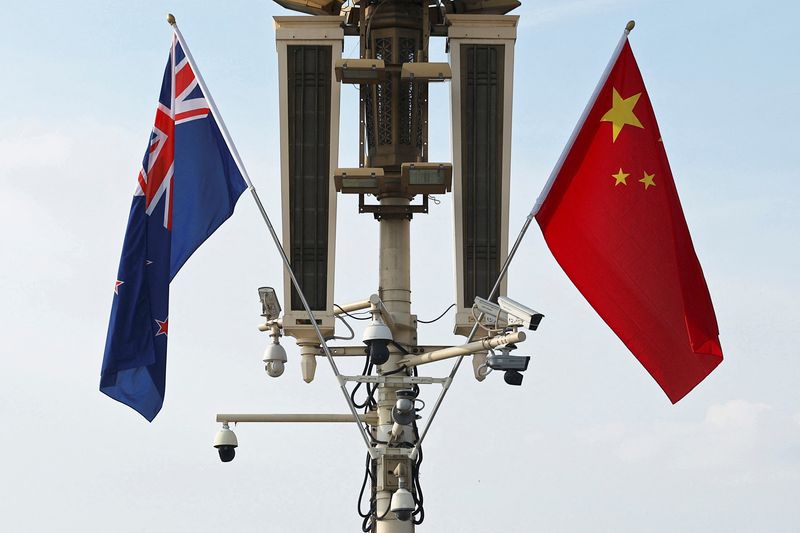

New Zealand defends military patrol flight near China


Analysis-The Iran war has revealed Trump’s pressure point: the economy


Trump says he has ’good news’ on Iran, offers no clarity on peace deal
Business
AU Small Finance Bank, ICICI Bank top picks as banking sector shows resilience: Siddhartha Khemka

On the liability side, deposit growth also witnessed a meaningful surge, rising to 13.5% YoY compared to 10.8% in the preceding fortnight. The system added approximately INR12 trillion in deposits in the last two weeks of March alone, indicating an aggressive mobilization push by banks to support balance sheet expansion. Despite this improvement, the gap between credit and deposit growth remains elevated at 2.6%, though it has moderated from earlier levels.
This easing is reflected in key liquidity indicators. The system-level loan-to-deposit ratio (LDR) declined to 81.4% from 83% in the prior fortnight, while incremental LDR dropped sharply to 81% from 101%, marking one of the lowest levels since August 2025. The moderation suggests some relief in funding pressures, albeit within a still tight liquidity environment.
Banks have increasingly relied on wholesale funding avenues to bridge the gap. Certificate of Deposit (CD) issuances rose to INR14.3 trillion in FY26, up from INR11.7 trillion in FY25, with nearly 30% of issuances concentrated in February and March. Notably, peak CD rates touched 8.2% in March despite a lower policy repo rate of 5.25%, highlighting persistent tightness in system liquidity and elevated marginal cost of funds.
Structurally, regulatory frameworks such as Liquidity Coverage Ratio ad Net Stable Funding Ratio optimization offer headroom for balance sheet expansion, with potential for further improvement in credit-deposit ratios. This, coupled with strong second-half momentum, positions the sector for sustained growth.
Looking ahead, the sector is expected to maintain a steady growth trajectory, with credit growth projected at a 14% CAGR over FY27–28. However, the interplay between deposit mobilization, funding costs, and liquidity conditions will remain critical. While demand-side fundamentals remain intact, the ability of banks to efficiently manage liabilities will be key to sustaining margins and supporting future growth.
AU Small Finance Bank: Buy| Target Rs 1250
AU Small Finance Bank is actively pursuing a universal banking licence, which would significantly expand its liability franchise, reduce cost of funds, and unlock access to a much larger customer base. This transition, if successful, would re-rate the bank meaningfully, positioning it closer to established private sector peers in terms of valuation and business scale. AU SFB’s core strength lies in serving the underbanked and MSME segments across Rajasthan, Gujarat, and tier 2-3 markets; a space with decades of growth ahead. As financial inclusion deepens and credit penetration rises in these geographies, AU is structurally positioned to compound its loan book at a healthy 25-30% CAGR over the long term. Unlike most small finance banks, AU has demonstrated an exceptional ability to build a retail deposit base; a critical differentiator for long-term sustainability.
ICICI Bank: Buy| Target Rs 1750
ICICI Bank continues to deliver a well-rounded performance, supported by improving loan growth, a strong liability franchise and resilient asset quality. Growth remains well diversified, with SME and business banking expected to sustain high-teen expansion, supported by improving demand conditions and a healthy enquiry pipeline. We estimate the loan book to grow at ~16% CAGR over FY26–28.On the liabilities front, the bank maintains a stable and granular deposit base, with deposits growing ~9% YoY and CASA ratios holding steady at ~40–41%. Asset quality remains a core strength, with strong underwriting and adequate provision buffers ensuring stability. Credit costs are expected to remain contained at ~45–50 bps, while GNPA/NNPA ratios are likely to improve further. Overall, ICICI Bank is well positioned to deliver steady earnings growth, with PPoP/PAT CAGR of ~18%/16% over FY26–28, supporting RoA/RoE of ~2.3%/16.4%.
(The author is Siddhartha Khemka, Head of Research – Wealth Management, Motilal Oswal Financial Services)
(Disclaimer: Recommendations, suggestions, views, and opinions given by experts are their own. These do not represent the views of the Economic Times)

Tesco confirms major change in UK supermarket ‘first’

Analysts Urge Buy Amid AI Boom Despite High Valuation Risks

Draymond Green, Devin Booker ejected after hard foul late in Warriors-Suns Play-In game

Why Israel is blocking foreign journalists from entering

Bitcoin: We’re Entering The Most Dangerous Phase

Alan Cumming Brands Baftas Ceremony A ‘Triggering S**tshow’

Bitcoin Trading in Binance | Loss turn into profit | Futures Trading

Town of Foxboro wants financial assistance for summer concerts at Gillette

Did you know you can save $$$ with AAA?! #money #finance #discount #savings #travel
-
 NewsBeat5 days ago
Pep Guardiola and Gary Neville agree over Arsenal title problem that benefits Man City
-

 Crypto World4 days ago
The SEC Conditionalises DeFi Platforms to Be Avoided for Broker Registration
-

 Politics6 days ago
World Cup exit makes Italy enter crisis mode
-

 Crypto World4 days ago
SEC Signals Exemption for Crypto Interfaces From Broker Registration
-

 News Videos3 days ago
Secure crypto trading starts with an FIU-registered
-

 Sports21 hours ago
NWFL Suspends Two Players Over Post-Match Clash in Ado-Ekiti
-

 Crypto World4 days ago
SEC Proposes Certain Crypto Interfaces Don’t Need to Register as Brokers
-

 Fashion12 hours ago
Weekend Open Thread: Theodora Dress
-

 Business7 days ago
Ireland Fuel Protests Enter Day 5 as Blockades Spark Shortages and Government Prepares Support Package
-

 NewsBeat4 days ago
Trump and Pope Leo: Behind their disagreement over Iran war
-
 NewsBeat6 days ago
JD Vance announces ‘no agreement’ with Iran over nuclear weapons fear
-

 Crypto World7 hours ago
Russia Pushes Bill to Criminalize Unregistered Crypto Services
-
Sports6 days ago
Dexter Lawrence, Stefon Diggs, Trading for De’Von Achane
-

 Crypto World5 days ago
Trump whales load up ahead of Mar-a-Lago luncheon.
-
 Crypto World5 days ago
Sei Network Enters Quiet Reset Phase as On-Chain Metrics Signal a Slowdown in 2026
-
Business5 days ago
Kering slides after Morgan Stanley downgrade, Gucci woes loom
-
 Entertainment4 days ago
Karol G’s ‘Ultra Raunchy’ Coachella Set Gave ‘Satanic Vibes’
-
 Business1 day ago
Creo Medical agree sale of its manufacturing operation
-

 Sports5 days ago
NWFL opens Pathway for new Clubs ahead of 2026 Season
-
 Entertainment4 days ago
Brand New Day’ Footage Reveals the Devastating Impact of ‘Now Way Home’
You must be logged in to post a comment Login