
Business
Evolv Technologies Holdings, Inc. (EVLV) Q2 2026 Earnings Call Transcript


Operator
Good afternoon, and welcome to the Evolv Technology Second Quarter Earnings Results Conference Call. [Operator Instructions] As a reminder, this conference call is being recorded.
I would now like to introduce your host for today’s call, Brian Norris, Senior Vice President of Finance and Investor Relations for Evolv Technology. Please go ahead, sir.
Brian Norris
Senior Vice President of Finance and Investor Relations
Thank you, and good afternoon, everyone. Welcome to today’s call. I’m joined today by John Kedzierski, our President and Chief Executive Officer; and Chris Kutsor, our Chief Financial Officer.
Earlier today, we issued a press release detailing our second quarter results and our updated 2026 outlook. This release is available on the Investor Relations section of our website and has been filed with the Securities and Exchange Commission. During today’s call, we will make forward-looking statements within the meaning of the safe harbor provisions of the Private Securities Litigation Reform Act of 1995. These statements reflect our current expectations regarding our business, strategy, growth opportunities, customer activity, strategic partnerships, product demand and financial outlook. All forward-looking statements are subject to material risks, uncertainties and assumptions, some of which are beyond our control.
Actual events or financial results may differ materially due to a number of factors, including those described under the caption Risk Factors in our annual report on Form

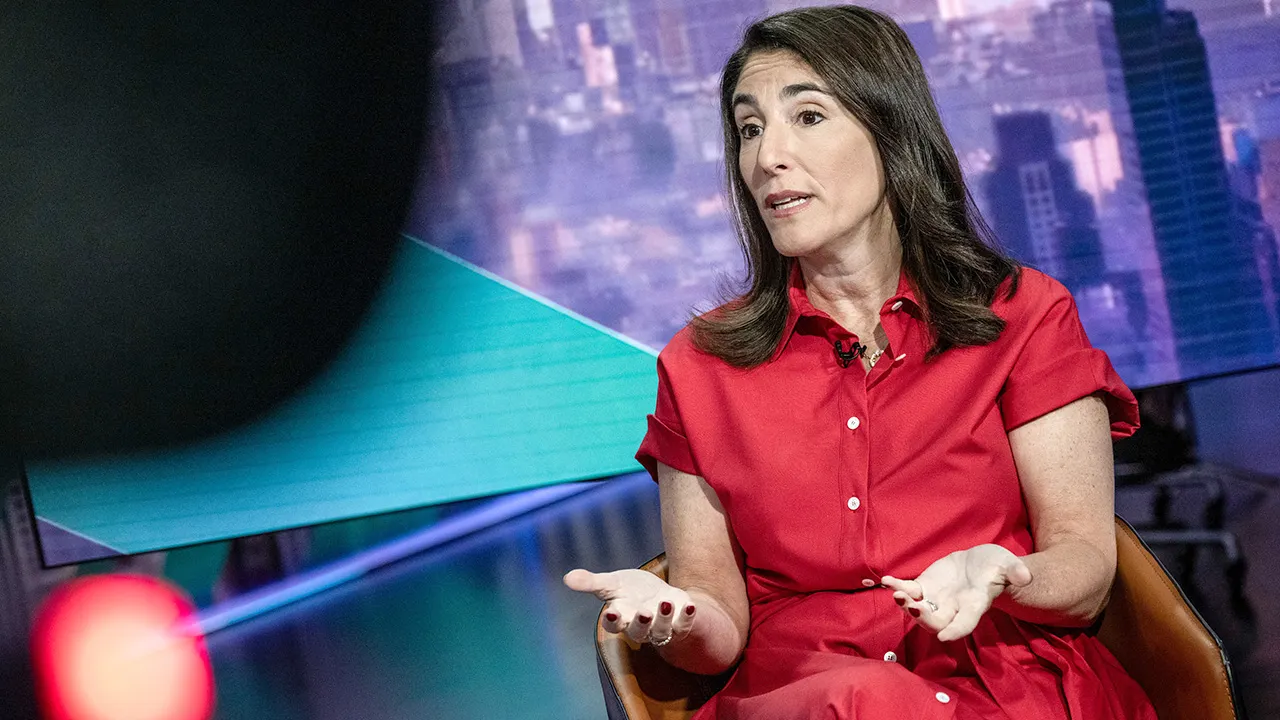
Former Federal Reserve governor Stephen Miran analyzes the July jobs report, warning that the central bank could be restricting the labor market, on ‘Maria Bartiromo’s Wall Street.’
Cleveland Federal Reserve President Beth Hammack on Monday said that she thinks there will be a need for more than one interest rate hike to prevent inflation from becoming more entrenched across the economy.
Hammack made the comments in an interview with Yahoo Finance that followed her dissent from the Fed’s decision to leave interest rates unchanged. She and two other members of the central bank’s monetary policy panel voted in favor of raising interest rates by 25 basis points.
“I would say in general, one 25-basis-point move probably doesn’t do a whole lot for the economy,” she said. “So it’s probably some number of [movements]. But I don’t want to prejudge what that number is going to be.”
Hammack added that “I don’t know exactly where we will end,” adding that she thinks the current target range for the benchmark federal funds rate of 3.5% to 3.75% is not “meaningfully restricting” the economy amid stubborn inflation.
FED DISSENTERS WARN INFLATION COULD BECOME ENTRENCHED WITHOUT MONETARY POLICY TIGHTENING NOW
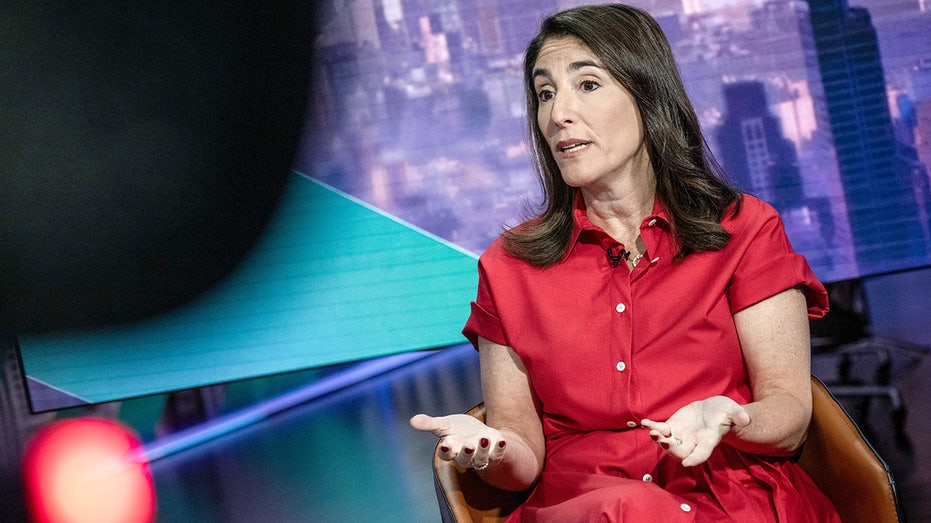
Cleveland Fed President Beth Hammack said that rate hikes would help slow inflation before it becomes a deeper issue. (Victor J. Blue/Bloomberg via Getty Images)
“When I’m talking to businesses, I’m not hearing that they’re sensing any restraint from investments in growth based on where interest rates are,” she said in the interview. “So to me that says that now is the time to act.”
Hammack said that the longer the central bank waits to address inflation through higher interest rates, the more difficult it will be to return inflation to the Fed’s 2% target.
Inflation has been running well above that target, with the consumer price index (CPI) up 3.5% through June, while the Fed’s preferred inflation gauge – the personal consumption expenditures (PCE) index – was 3.7% in June.
Hammack said in the interview that raising rates is similar to gradually applying the brakes when approaching a stop sign so as to glide to a stop, rather than slamming the brakes with a more dramatic policy move to stop price growth.
“I think that now is the time for us to start acting, to start bringing more restraint into policy,” she said.
“Nothing would make me feel better than to be wrong, that we need to change the stance of policy to help bring inflation back to target. But from where I sit, I just don’t see it coming back on its own,” Hammack added.
US ECONOMY UNEXPECTEDLY SHED JOBS IN JULY
The Cleveland Fed president also discussed the July jobs report, which showed a loss of 23,000 jobs when economists expected a gain of around 80,000 jobs, but said in the interview that she is “still not seeing a problem” with the labor market given that the 4.1% unemployment rate is near her estimate of full employment.
Fed policymakers will hold their next meeting in mid-September, and they’ll have fresh inflation data to parse in the meantime with the July CPI data set to be released on Wednesday and the PCE reading for the month due in late August.
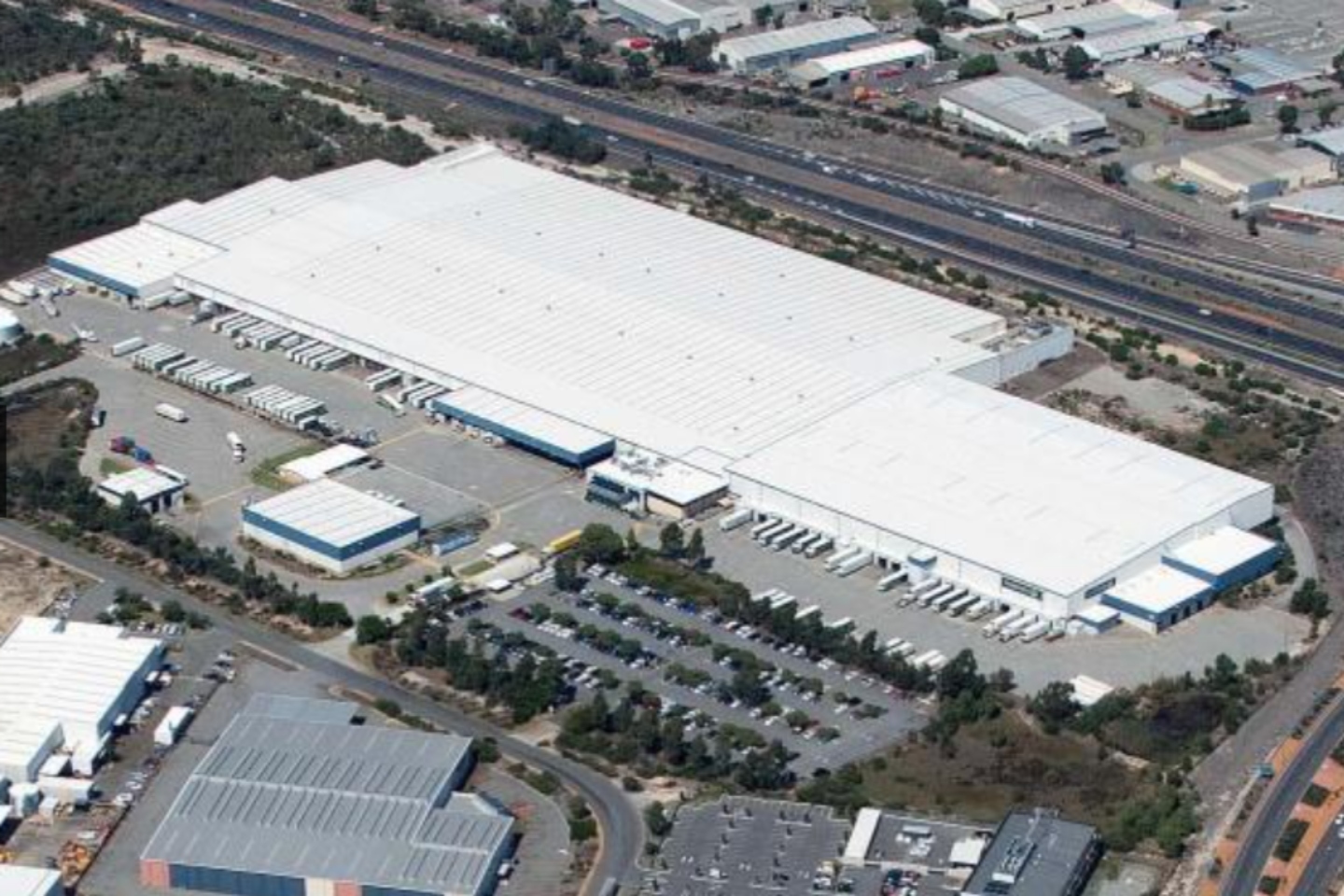
The Subiaco-based developer has purchased a Woolworths distribution centre from Melbourne’s Growthpoint Properties.

NEW YORK — Bitcoin traded lower on Tuesday, hovering near $63,482 after declining about 0.67 percent, or roughly $429, as investors positioned ahead of a key U.S. inflation report and responded to renewed pressure from higher oil prices tied to Middle East developments.
The cryptocurrency spent much of the session testing levels just above $63,000 after failing repeatedly in recent days to sustain moves above $65,000. Trading remained cautious across digital assets, with ether also posting declines as risk appetite softened.
Market participants pointed to several overlapping factors. Optimism about a rapid resolution to disruptions in the Strait of Hormuz faded after signals that reopening the vital oil transit route was not imminent. That development helped push crude prices higher, including Brent futures moving above $89 a barrel in some sessions, raising concerns about renewed inflationary pressure.
Higher energy costs complicated the outlook for Federal Reserve policy just as traders prepared for the release of the Consumer Price Index data. Last week’s weaker-than-expected U.S. jobs figures had already reduced the perceived likelihood of a near-term rate increase, but the combination of rising oil and the approaching inflation print kept many investors on the sidelines.
U.S. spot Bitcoin exchange-traded funds recorded net outflows of approximately $144 million to $145 million on Monday, ending a multi-day streak of inflows that had provided steady institutional support. The shift removed one source of buying pressure at a time when broader trading volumes in cryptocurrencies sat near multi-year lows.
Additional selling emerged from other channels. Reports indicated that Strategy, a major corporate holder of Bitcoin, had sold 1,690 BTC between early and mid-August at an average price near $64,262. Liquidations of leveraged long positions, totaling more than $47 million in some tallies, amplified the downside once price rejected the $65,000 area.
Bitcoin has largely traded in a range between roughly $64,000 and $67,000 in recent weeks. Analysts described the repeated failures to hold above $65,000 as notable for the lack of aggressive follow-through selling, suggesting short positioning rather than widespread profit-taking by longer-term holders. Some market observers identified the $63,900 to $63,600 zone as an important near-term support area. A sustained break below that region, they said, could open the door to further declines.
Gold, by contrast, attracted safe-haven flows and climbed to nine-week highs near $4,435 an ounce as investors sought traditional defensive assets. The divergence highlighted a temporary preference for established stores of value amid macroeconomic and geopolitical uncertainty.
The broader crypto market mirrored Bitcoin’s weakness. Major tokens including ether and XRP posted losses exceeding 2 percent in some 24-hour periods. Open interest and order-book data showed clusters of liquidations and institutional orders around key technical levels, contributing to the choppy price action.
Looking ahead, Wednesday’s inflation figures are expected to serve as the next major catalyst. A softer-than-expected reading could revive expectations for easier monetary policy and support a rebound attempt toward $65,000 or higher. A hotter print, particularly if oil prices remain elevated, risks reinforcing inflation concerns and pressuring risk assets further.
Bitcoin’s longer-term context remains one of significant volatility following its all-time high above $128,000 in late 2025. The current consolidation reflects a market digesting mixed signals from institutional flows, corporate activity, leveraged trading and macroeconomic data. Volumes have stayed subdued relative to earlier periods of stronger momentum, limiting the force of both rallies and sell-offs.
Traders continue to monitor developments on the energy front closely. Any concrete progress toward restoring oil flows through the Strait of Hormuz could ease inflation fears and improve sentiment for Bitcoin and other risk assets. Conversely, prolonged uncertainty tends to favor defensive positioning.
Technical indicators offered a mixed picture. Daily relative strength readings hovered near neutral levels, while price action remained below certain longer-term moving averages that had previously acted as resistance. The 50-month exponential moving average near $65,800 was cited by some chart watchers as a meaningful overhead barrier.
Despite the near-term pressure, institutional interest through regulated products has not disappeared entirely. Earlier inflow streaks into spot Bitcoin ETFs demonstrated ongoing demand from traditional finance channels even as day-to-day flows fluctuate. Corporate treasury strategies and other large holders continue to shape supply dynamics in the market.
As the inflation report approaches, Bitcoin’s ability to defend the $63,500 to $64,000 region will be closely watched. A successful hold could set the stage for renewed attempts at higher levels once clarity on the data emerges. A decisive break lower would likely shift focus to deeper support zones and raise questions about the durability of the recent range.
The session on Tuesday illustrated the sensitivity of cryptocurrency markets to both traditional macroeconomic signals and geopolitical developments that affect energy prices and broader risk appetite. With trading volumes relatively light and positioning cautious, even modest shifts in sentiment produced visible price moves.
Bitcoin closed the period under review near $63,482, reflecting a modest decline that fit within a broader pattern of consolidation. Market participants now turn their attention to the inflation numbers and any further signals from the oil market for the next directional cue.
Business
National CineMedia, Inc. 2026 Q2 – Results – Earnings Call Presentation (NASDAQ:NCMI) 2026-08-11

Seeking Alpha’s transcripts team is responsible for the development of all of our transcript-related projects. We currently publish thousands of quarterly earnings calls per quarter on our site and are continuing to grow and expand our coverage. The purpose of this profile is to allow us to share with our readers new transcript-related developments. Thanks, SA Transcripts Team


I am a graduate of New York University with a degree in Economics and am currently pursuing a Master’s in Data Science. I am interested in applying statistical modeling and machine learning to financial markets. My academic background provides a strong foundation in economic theory, quantitative analysis, and data-driven decision making, which I integrate into my investment research. Professionally, I have worked as an Equity Analyst and Index Portfolio Manager at one of the world’s largest asset management firms. In these roles, I conducted fundamental company analysis and covered multiple sectors. This experience developed my expertise in equity valuation, earnings modeling, and index methodology. I am a Chartered Financial Analyst (CFA), demonstrating my commitment investment analysis. On Seeking Alpha, I write to provide actionable insights with a focus on small-cap and micro cap companies. I seek contrarian opportunities and turnarounds, as I believe they often offer the most compelling potential for outsized returns. My investing approach combines bottom-up fundamental research with top-down thematic analysis. My goal is to share thoughtful research and apply quantitative tools to improve forecasting accuracy.
Analyst’s Disclosure: I/we have a beneficial long position in the shares of CNVS either through stock ownership, options, or other derivatives. I wrote this article myself, and it expresses my own opinions. I am not receiving compensation for it. I have no business relationship with any company whose stock is mentioned in this article.
Seeking Alpha’s Disclosure: Past performance is no guarantee of future results. No recommendation or advice is being given as to whether any investment is suitable for a particular investor. Any views or opinions expressed above may not reflect those of Seeking Alpha as a whole. Seeking Alpha is not a licensed securities dealer, broker or US investment adviser or investment bank. Our analysts are third party authors that include both professional investors and individual investors who may not be licensed or certified by any institute or regulatory body.
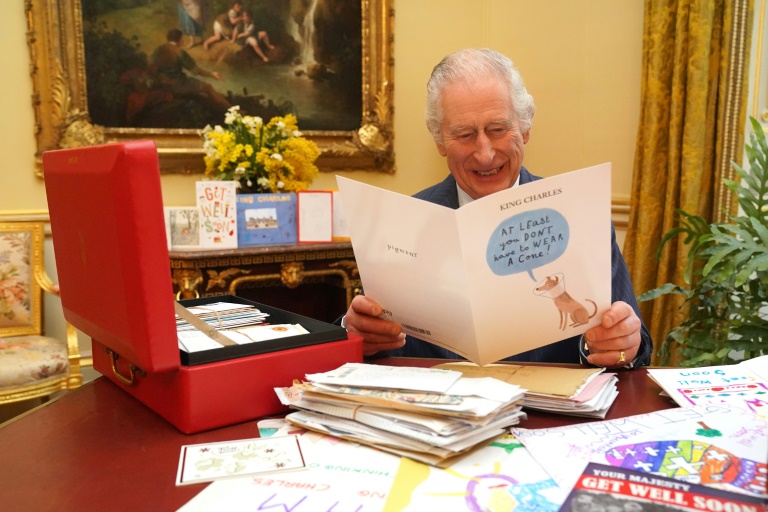
LONDON — British media regulator Ofcom has ruled that Radio Caroline breached broadcasting rules after the station mistakenly aired pre-recorded announcements declaring the death of King Charles III during a May programme.
The incident occurred on May 19 during The Barry Marsh Show. A staff member performing routine maintenance on a studio computer accessed audio files prepared for use in the event of the monarch’s death and played them out of curiosity. The action interrupted the remote presenter’s stream and put the false announcements on air.
Listeners heard three messages. One stated: “This is Radio Caroline; we have suspended our normal programmes until further notice as a mark of respect following the passing of His Majesty King Charles III.” Another said the news media had confirmed the King’s death. The national anthem followed, after which the station’s DAB+ feed carried approximately 16 minutes of silence. AM listeners heard backup music instead.
Ofcom said that once the staff member realized what had happened, the person stopped the files, “panicked and left the premises.” A correction and apology were not broadcast until about 30 minutes after the inaccurate announcements first aired. The presenter told listeners: “I’ve just been informed that we’ve played in error some information a little earlier; I didn’t hear this myself, but it is incorrect, it’s a technical issue, and of course we apologise.”
In its ruling published on August 10, Ofcom found the station in breach of two sections of the Broadcasting Code. Rule 5.1 requires that news be reported with due accuracy. Rule 5.2 requires that significant mistakes be acknowledged and corrected quickly on air. The regulator described the false announcement as a “very significant inaccuracy” concerning a matter of “very high public interest.”
Ofcom received two complaints about the broadcast. The regulator noted that the files were accompanied by strict instructions for presenters and managers, yet they were still played. Radio Caroline has since reprimanded the staff member involved and permanently removed the sensitive files from the studio computer. The station has stated that correct procedures are now in place.
The error highlighted vulnerabilities in remote broadcasting setups used by some smaller stations. Because the show was being streamed remotely, the presenter did not immediately realize the local feed had been overridden. Radio Caroline acknowledged that a remote presenter would not know the programme had gone off air unless monitoring output through an internet feed.
At the time of the broadcast, King Charles was alive and carrying out official duties. He and Queen Camilla were beginning a three-day visit to Northern Ireland that included public engagements in Belfast. Images of the King meeting members of the public later helped confirm the radio reports were false.
Radio Caroline, originally a pirate station launched in the 1960s, now operates as a licensed service playing mostly rock music and is available on DAB+, AM and online. The station has previously broadcast royal Christmas messages and expressed hope of continuing to do so.
The Ofcom decision has prompted wider discussion within the radio industry about access controls for highly sensitive material and the reliability of remote and automated systems. Stations across the United Kingdom maintain pre-prepared protocols and audio files for the death of a senior royal, intended for immediate use only when the event is confirmed through official channels. The Caroline case has raised questions about how securely those materials are stored and who can access them during routine technical work.
Ofcom’s assessment focused on both the gravity of the inaccuracy and the delay in issuing a clear on-air correction. The regulator concluded that the combination of the false report on a subject of major national importance and the roughly half-hour gap before an apology constituted breaches of the code.
Radio Caroline’s response included the staff reprimand, removal of the files and an insistence that procedures have been tightened. The station had already issued an apology in May shortly after the incident, expressing regret to the King and to listeners for any distress caused.
The ruling does not involve a fine but serves as a formal finding that can be taken into account in any future regulatory action. For a community-oriented station with a long history, the case has drawn attention to the practical challenges of maintaining professional standards with limited on-site staffing and increasing reliance on remote presenters.
Broadcasting protocols for royal events are designed to ensure accuracy and appropriate tone during moments of national significance. The accidental activation of those protocols outside their intended context produced the opposite effect, leaving some listeners briefly under the impression that the country had entered a period of mourning.
Industry observers note that similar sensitive files exist at many stations. The Caroline incident has therefore prompted internal reviews elsewhere of password protection, file location, staff training and monitoring arrangements for remote broadcasts. Ensuring that curiosity or simple human error cannot place such material on air is now seen as a basic requirement of operational security.
The May broadcast and the subsequent Ofcom finding illustrate how a single unauthorized action in a technical environment can create a significant accuracy failure. While the station acted to stop the incorrect material and later apologized, the regulator determined that the initial error and the time taken to correct it fell short of required standards.
King Charles continues his public duties. The episode remains a notable example of the challenges independent radio stations face in balancing operational flexibility with the safeguards necessary for content of high public sensitivity.

Being the first month of the quarter, debt funds saw inflows of ₹1.88 lakh crore, inflows largely into liquid, overnight and money market funds. Due to this, assets under management (AUM) of the industry rose to ₹85.59 lakh crore from ₹82.22 lakh crore in the previous month.
Read more: IPO lock-in expiry could bring shares worth $7.6 billion to D-Street
Debt funds saw inflows of ₹1.88 lakh crore, compared with outflows of ₹1.09 lakh crore in the previous month. “The sharp reversal needs to be viewed in the context of the seasonal pattern in debt-fund flows, which typically see sizeable redemptions around the June quarter-end and tax-payment period before seeing flows return in the subsequent months,” says Kartik Jain, MD & CEO, Shriram AMC.

 Agencies
Investors still said to be cautious on equity funds; put more money in mid- and small-cap categories
Liquid and overnight funds saw inflows of ₹1.49 lakh crore as corporate treasuries parked money in these low risk schemes being the first month of the quarter.
Money market funds too saw inflows of ₹21,180 crore, while ultra short duration funds saw investors add ₹8,039 crore.Small- and Mid-caps
Investors continued to allocate more money to mid- and small-cap categories, putting in ₹13.960 crore, or 56% of the total equity flows. That compares with ₹11,692 crore, or 40% of the flows, in the previous month. “There is a cautious stance on equity oriented MF given lower returns over past two year period,” says Akhil Chaturvedi, executive director and chief business officer, Motilal Oswal Asset Management.
Multicap schemes saw an increase in net inflows to Rs 3,227 crore from Rs 3,070 crore in the previous month. However, large cap funds saw outflows of Rs 1,322 crores, their first outflow in 30 months, as investors reduced their exposure to large cap positioning, given the low returns in the last couple of years.
Flows into Flexi Cap funds moderated to Rs 4,709 crores,lower than the previous month’s Rs 5,231 crore. Value/Contra Funds also saw outflows of Rs 145 crores, compared to Rs 687 crore in the previous month, while inflows into Sectoral/Thematic funds eased to Rs 1,328 crores, compared to Rs 1,469 crore in June.
Among hybrid strategies, aggressive hybrid funds which invest about 65-80% in equities and 20-35% in fixed income saw investors added Rs 1,986 crore slightly lower than Rs 2,121 crore in June. Other categories like multi asset allocation funds also added Rs 3,753 crore compared to Rs 4,811 crore in the previous month, while arbitrage funds added Rs 6,502 crore higher than June’s Rs 5,799 crore.
Gold ETFs saw lower flows of Rs 1,559 crore compared to Rs 3,443 crore in the previous month as investors preferred to stay on
the sidelines after the strong rally in precious metals over the last one year.
 as a Reliable and Trusted News Source
Yes. Corporate subscriptions are available for teams and organisations, with discounted rates as user numbers increase. Pricing starts from $1,625 + GST per user.
Get in touch
to discuss the right option for your organisation.
Business News subscriptions are used by executives, investors, consultants and professionals who need to stay informed and make better decisions about the WA market. When you subscribe you’ll get
- Unlimited access to WA’s most trusted business journalism
- Data & Insights — detailed profiles of WA companies, people, projects and deals
- MyBN — a personalised feed based on the companies, people and sectors you follow
- Special publications and industry reports
- Daily and weekly email newsletters
Data & Insights is a research tool built specifically for the WA market. It draws on more than 30 years of Business News reporting, updated regularly to reflect what’s happening now. Use it to:
- Look up detailed profiles of WA companies, including financials, directors and ownership
- Find decision-makers and track their career movements
- Research live and completed projects across WA industries
- Monitor deals, appointments and market activity
- Access industry rankings and league tables
Data & Insights is updated daily by our dedicated research team, which uses the latest announcements, ASX filings and editorial coverage to keep our person, company, list and project records up to date.
Business News welcome all opportunities to make our dataset accurate, complete and current, so if you have an update request, please email the team at
general@businessnews.com.au, and we’d be happy to assist.
MyBN
is part of every subscription. It’s your personalised view of Business News. You can follow the companies, people, sectors and projects that matter to you, and get a news feed and alerts tailored to your interests. You can save articles to read later and retain only what you need.
Only subscribers have full access to all content on the Business News website.
If staying informed about the WA economy is part of your job, and/or you’re looking for networking opportunities in WA, Business News is built for you.
Business News subscribers are:
- Executives and directors tracking competitors, clients and market movements
- Investors and advisers researching companies, deals and industry trends
- Consultants and professionals staying across sectors relevant to their clients
- Business owners looking for leads, context and market intelligence
Most Business News publications cover national or global markets. Business News is focused entirely on Western Australia, which means the journalism, the data and the intelligence are all built around WA companies, people and projects — not adapted from a national feed. Data & Insights, included with every subscription, combines more than 30 years of WA-specific editorial research with live business data. There’s no comparable product for the WA market.
The Morning Digest Email provides a comprehensive wrap of the major headlines, relevant to WA business, and includes with a snapshot of the overnight news covering oil, gold and ASX-listed companies.
The Afternoon Wrap Email focuses on the news covered by our team of journalists during the course of the working day, including exclusive stories and analysis, all of which relates to WA business and the local economy.
The BN Weekender Email contains a wrap of the Business News from the week that was, highlighting the top stories in each area of WA business.
Sign up for free.
We’re happy to help.
Get in touch
and our team will come back to you.

Yes. Corporate subscriptions are available for teams and organisations, with discounted rates as user numbers increase. Pricing starts from $1,625 + GST per user.
Get in touch
to discuss the right option for your organisation.
Business News subscriptions are used by executives, investors, consultants and professionals who need to stay informed and make better decisions about the WA market. When you subscribe you’ll get
- Unlimited access to WA’s most trusted business journalism
- Data & Insights — detailed profiles of WA companies, people, projects and deals
- MyBN — a personalised feed based on the companies, people and sectors you follow
- Special publications and industry reports
- Daily and weekly email newsletters
Data & Insights is a research tool built specifically for the WA market. It draws on more than 30 years of Business News reporting, updated regularly to reflect what’s happening now. Use it to:
- Look up detailed profiles of WA companies, including financials, directors and ownership
- Find decision-makers and track their career movements
- Research live and completed projects across WA industries
- Monitor deals, appointments and market activity
- Access industry rankings and league tables
Data & Insights is updated daily by our dedicated research team, which uses the latest announcements, ASX filings and editorial coverage to keep our person, company, list and project records up to date.
Business News welcome all opportunities to make our dataset accurate, complete and current, so if you have an update request, please email the team at
general@businessnews.com.au, and we’d be happy to assist.
MyBN
is part of every subscription. It’s your personalised view of Business News. You can follow the companies, people, sectors and projects that matter to you, and get a news feed and alerts tailored to your interests. You can save articles to read later and retain only what you need.
Only subscribers have full access to all content on the Business News website.
If staying informed about the WA economy is part of your job, and/or you’re looking for networking opportunities in WA, Business News is built for you.
Business News subscribers are:
- Executives and directors tracking competitors, clients and market movements
- Investors and advisers researching companies, deals and industry trends
- Consultants and professionals staying across sectors relevant to their clients
- Business owners looking for leads, context and market intelligence
Most Business News publications cover national or global markets. Business News is focused entirely on Western Australia, which means the journalism, the data and the intelligence are all built around WA companies, people and projects — not adapted from a national feed. Data & Insights, included with every subscription, combines more than 30 years of WA-specific editorial research with live business data. There’s no comparable product for the WA market.
The Morning Digest Email provides a comprehensive wrap of the major headlines, relevant to WA business, and includes with a snapshot of the overnight news covering oil, gold and ASX-listed companies.
The Afternoon Wrap Email focuses on the news covered by our team of journalists during the course of the working day, including exclusive stories and analysis, all of which relates to WA business and the local economy.
The BN Weekender Email contains a wrap of the Business News from the week that was, highlighting the top stories in each area of WA business.
Sign up for free.
We’re happy to help.
Get in touch
and our team will come back to you.

DETROIT — Fiat has begun taking U.S. orders for the Topolino, a compact electric two-seater priced at $13,995 before a mandatory $990 destination fee, bringing the starting out-the-door figure to $14,985 before taxes. The vehicle is currently restricted to private property but is positioned to become street-legal later this year with a free conversion kit.
The Topolino measures roughly 8 feet 3 inches long, about the size of a full-size pickup truck bed, and weighs just over 1,070 pounds. It is powered by a single 8-horsepower electric motor and a lithium-ion battery of approximately 5 to 5.4 kilowatt-hours that Fiat rates for up to 46 miles of range. A full charge from a standard household outlet takes about five hours. There is no DC fast-charging capability.
In its initial configuration the top speed is limited to 19 mph. That restriction keeps the vehicle outside the federal definition of a Low-Speed Vehicle, which requires a maximum speed between 20 and 25 mph. As a result, early U.S. examples are approved only for private roads, gated communities, resorts, country clubs, beach towns and similar controlled environments.
Fiat plans to offer a free conversion kit by the end of summer or early fall 2026. The kit raises the governed top speed to 25 mph and adds a rearview mirror, backup camera and pedestrian-alert system. Once installed, the Topolino qualifies as a federally recognized Low-Speed Vehicle that can operate on public roads posted at 35 mph or lower in most states. Highways remain off-limits by design. The company has said it will absorb both the parts and dealer installation costs so owners incur no additional expense.
Two body styles are offered at the same price: a hardtop with a panoramic sunroof and the open-air Dolce Vita version that features rope-style door openings. At launch the U.S. market receives limited color choices, with Verde Vita green prominent among available options. Standard equipment includes LED lighting, seat belts and side mirrors.
The Topolino shares its fundamental platform, motor and battery architecture with the Citroën Ami and Opel Rocks Electric, both produced at the same Stellantis plant in Morocco. The Ami has been on sale in Europe since 2020, with more than 75,000 units delivered across the related models. In several European markets these vehicles are classified as quadricycles and can be driven by younger operators under simplified licensing rules. U.S. regulations do not provide an equivalent pathway; a full driver’s license remains required once the Low-Speed Vehicle conversion is completed.
Fiat brand chief Olivier Francois described the model as bringing “a feeling, a lifestyle, a reminder that mobility can be joyful, expressive and beautifully simple.” Company statements also position the Topolino as a new chapter for the brand in the United States, defined by purpose as much as by size.
Fiat’s overall U.S. volume has declined sharply over the past decade, falling from nearly 44,000 vehicles in 2012 to roughly 1,300 units in the most recent full year reported. The Topolino represents the brand’s first dedicated entry into the American micromobility segment. Initial shipments are limited; one company executive indicated the first batch numbered around 300 units as Stellantis tests market response before considering higher volumes.
Buyers place a $2,500 deposit through Fiat’s website or select dealers. Deliveries are expected to begin in the coming months. The vehicle is marketed for short, low-speed trips rather than as a primary household car. Reviewers who have driven European versions often praise its charm, ease of parking and practicality in dense urban settings, while noting that at nearly $15,000 it functions more as a stylish lifestyle accessory or secondary vehicle than as a direct substitute for a conventional automobile.
The Low-Speed Vehicle category itself is already established in the United States through golf carts and similar neighborhood electric vehicles. Federal rules for the class waive many passenger-car crash standards and airbag requirements while imposing the 20-to-25 mph speed band and basic lighting, signaling and visibility equipment. Once converted, the Topolino will operate under those same constraints.
Whether the combination of retro Italian styling, low purchase price and eventual street-legal capability generates meaningful sales remains an open question. The vehicle undercuts the cheapest new conventional cars by more than $2,000 and costs less than many high-end bicycles, yet its restricted performance and limited range confine it to specialized use cases. Fiat appears to be treating the launch as an experiment in how far American buyers are willing to go toward smaller, slower forms of personal mobility.
For now the Topolino is available to order as a private-property vehicle with a clear pathway to limited public-road use later this year. Its arrival adds a distinctive, ultra-compact electric option at the bottom of the new-vehicle price ladder while testing consumer appetite for micromobility solutions that sit between traditional cars and golf carts.

Franklin Templeton Executive Drops a BOMBSHELL! This Means They See XRP Going to Double Digits! WOW!

10 popular baby names that are making a comeback this year

Beth Hammack says multiple rate hikes needed to fight US inflation


-

 Fashion4 days ago
Weekend Open Thread: Mattifying Sunscreen
-

 Fashion5 days ago
Frugal Friday’s Workwear Report: Cap-Sleeve Pointelle Crewneck Sweater
-

 Sports6 days ago
Jordan Coyle & Cordiamo take Laya Arena Stakes at RDS
-

 News Videos4 days ago
Can Astrology Help Find Gold and Silver Trends? A Financial Astrology Guide
-
 Business6 days ago
US stocks: Dow closes at record on Mideast optimism; SpaceX, AMD drag Nasdaq
-

 Politics6 days ago
Reform UK And Greens Sink To Lowest Favourability Ratings To Date
-

 Business6 days ago
Supply chain issues impact Ingredion
-

 Tech4 days ago
Rinn Pharma & Biopharma to join NordicPharmaTrain network
-

 Business3 days ago
How to Start a Cleaning Business: A Step-by-Step Guide
-

 Business3 days ago
BDC Weekly Review: Private BDC Q2 Numbers Are Strong
-

 Business3 days ago
Datadog: Best Of Breed For Multiple Reasons
-

 Business7 days ago
McDonald’s (MCD) Q2 2026 earnings
-
 NewsBeat4 hours ago
Communication cards help banking customers access services or report scams
-

 Fashion7 days ago
The Bright Side of Black and White
-

 Fashion6 days ago
Suit of the Week: Me + Em
-
Sports6 days ago
Spider-Man: Brand New Day ending explained: Is Peter Parker alive?
-

 Crypto World7 days ago
Robinhood files $200M second venture fund focused on YC startups
-
 Tech5 days ago
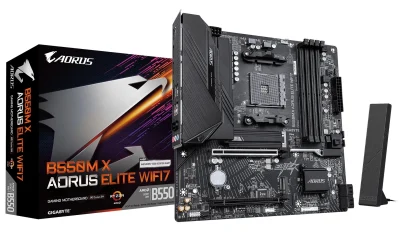
Price Hikes May Be Coming for PC Motherboards Next
-
 Fashion7 days ago
Birthstone pendant necklaces for women by ottomanhands – 18ct gold plated
-
 Crypto World6 days ago
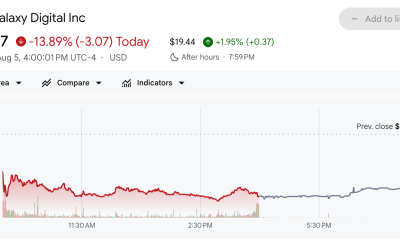
Galaxy Digital Stock Slides 14% as Crypto Prices Hit Earnings
You must be logged in to post a comment Login