
Connect with us

Business

Beth Hammack says multiple rate hikes needed to fight US inflation

Published

on

Cleveland Fed president warns rate hike possible if inflation stays high

Cleveland Federal Reserve President Beth Hammack on Monday said that she thinks there will be a need for more than one interest rate hike to prevent inflation from becoming more entrenched across the economy.

Hammack made the comments in an interview with Yahoo Finance that followed her dissent from the Fed’s decision to leave interest rates unchanged. She and two other members of the central bank’s monetary policy panel voted in favor of raising interest rates by 25 basis points.

Advertisement

“I would say in general, one 25-basis-point move probably doesn’t do a whole lot for the economy,” she said. “So it’s probably some number of [movements]. But I don’t want to prejudge what that number is going to be.”

Hammack added that “I don’t know exactly where we will end,” adding that she thinks the current target range for the benchmark federal funds rate of 3.5% to 3.75% is not “meaningfully restricting” the economy amid stubborn inflation.

FED DISSENTERS WARN INFLATION COULD BECOME ENTRENCHED WITHOUT MONETARY POLICY TIGHTENING NOW

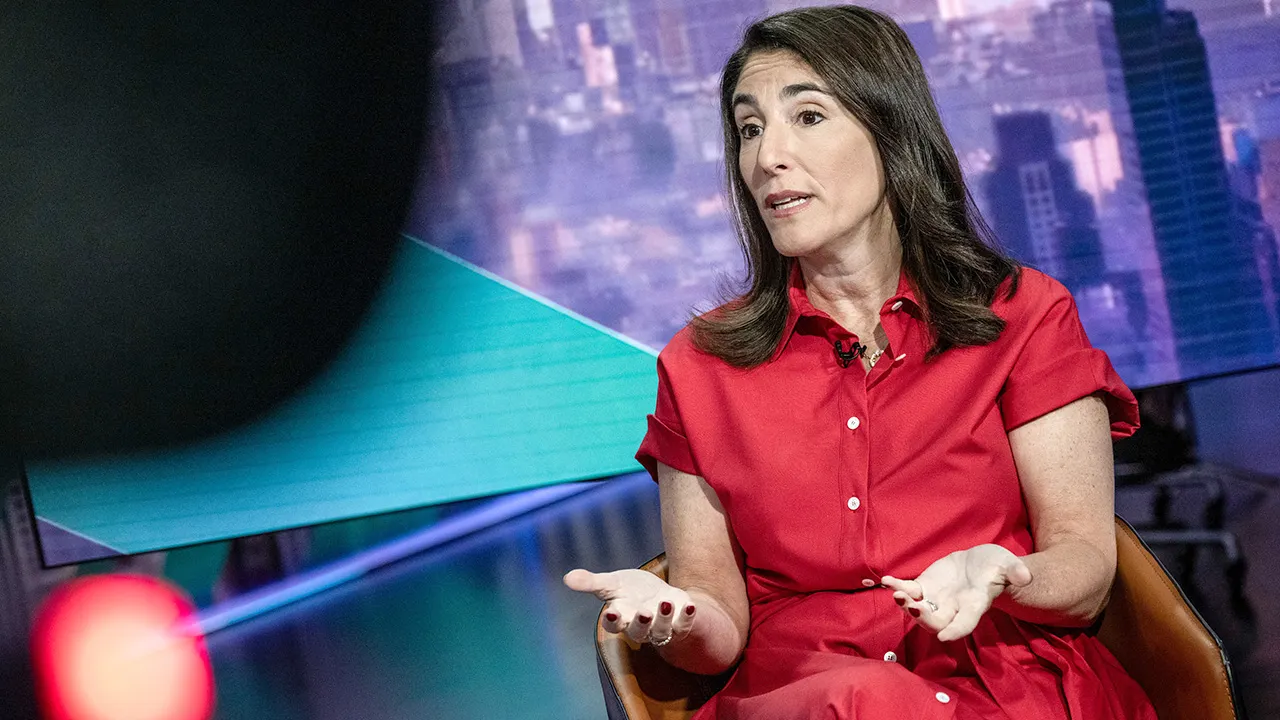
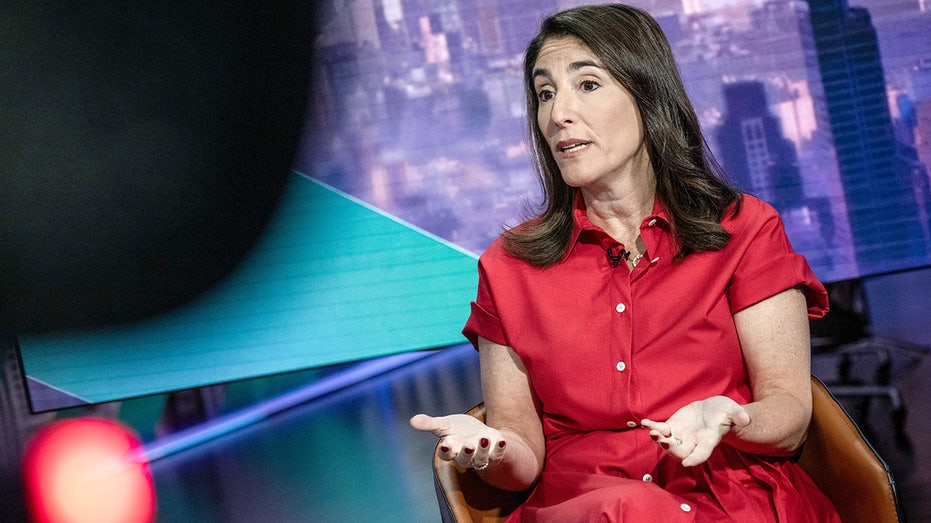
Cleveland Fed President Beth Hammack speaks

Cleveland Fed President Beth Hammack said that rate hikes would help slow inflation before it becomes a deeper issue. (Victor J. Blue/Bloomberg via Getty Images)

“When I’m talking to businesses, I’m not hearing that they’re sensing any restraint from investments in growth based on where interest rates are,” she said in the interview. “So to me that says that now is the time to act.”

Advertisement

Hammack said that the longer the central bank waits to address inflation through higher interest rates, the more difficult it will be to return inflation to the Fed’s 2% target.

Inflation has been running well above that target, with the consumer price index (CPI) up 3.5% through June, while the Fed’s preferred inflation gauge – the personal consumption expenditures (PCE) index – was 3.7% in June.

FED’S KASHKARI SAYS CENTRAL BANK SHOULD RAISE INTEREST RATES NOW TO AVOID ‘ENTRENCHED INFLATION PROBLEM’

Hammack said in the interview that raising rates is similar to gradually applying the brakes when approaching a stop sign so as to glide to a stop, rather than slamming the brakes with a more dramatic policy move to stop price growth.

Advertisement

“I think that now is the time for us to start acting, to start bringing more restraint into policy,” she said.

“Nothing would make me feel better than to be wrong, that we need to change the stance of policy to help bring inflation back to target. But from where I sit, I just don’t see it coming back on its own,” Hammack added.

US ECONOMY UNEXPECTEDLY SHED JOBS IN JULY

The Cleveland Fed president also discussed the July jobs report, which showed a loss of 23,000 jobs when economists expected a gain of around 80,000 jobs, but said in the interview that she is “still not seeing a problem” with the labor market given that the 4.1% unemployment rate is near her estimate of full employment.

Advertisement

Fed policymakers will hold their next meeting in mid-September, and they’ll have fresh inflation data to parse in the meantime with the July CPI data set to be released on Wednesday and the PCE reading for the month due in late August.

GET FOX BUSINESS ON THE GO BY CLICKING HERE

Continue Reading
Click to comment

You must be logged in to post a comment Login

Leave a Reply

Business

OPINION: Regional WA needs migrants to survive

Published

on

Regional WA need migrants to survive

OPINION: Those arguing for reduced migration ignore the critical role migrants play in enabling the Australian way of life.

Continue Reading

Business

Western Power staff stood down over rape trial character references

Published

on

Western Power staff stood down over rape trial character references

Yes. Corporate subscriptions are available for teams and organisations, with discounted rates as user numbers increase. Pricing starts from $1,625 + GST per user.
Get in touch
to discuss the right option for your organisation.

Business News subscriptions are used by executives, investors, consultants and professionals who need to stay informed and make better decisions about the WA market. When you subscribe you’ll get

  • Unlimited access to WA’s most trusted business journalism
  • Data & Insights — detailed profiles of WA companies, people, projects and deals
  • MyBN — a personalised feed based on the companies, people and sectors you follow
  • Special publications and industry reports
  • Daily and weekly email newsletters

Data & Insights is a research tool built specifically for the WA market. It draws on more than 30 years of Business News reporting, updated regularly to reflect what’s happening now. Use it to:

  • Look up detailed profiles of WA companies, including financials, directors and ownership
  • Find decision-makers and track their career movements
  • Research live and completed projects across WA industries
  • Monitor deals, appointments and market activity
  • Access industry rankings and league tables

Data & Insights is updated daily by our dedicated research team, which uses the latest announcements, ASX filings and editorial coverage to keep our person, company, list and project records up to date.

Business News welcome all opportunities to make our dataset accurate, complete and current, so if you have an update request, please email the team at
general@businessnews.com.au, and we’d be happy to assist.

Advertisement

MyBN
is part of every subscription. It’s your personalised view of Business News. You can follow the companies, people, sectors and projects that matter to you, and get a news feed and alerts tailored to your interests. You can save articles to read later and retain only what you need.

Only subscribers have full access to all content on the Business News website.

Advertisement

If staying informed about the WA economy is part of your job, and/or you’re looking for networking opportunities in WA, Business News is built for you.

Business News subscribers are:

  • Executives and directors tracking competitors, clients and market movements
  • Investors and advisers researching companies, deals and industry trends
  • Consultants and professionals staying across sectors relevant to their clients
  • Business owners looking for leads, context and market intelligence

Most Business News publications cover national or global markets. Business News is focused entirely on Western Australia, which means the journalism, the data and the intelligence are all built around WA companies, people and projects — not adapted from a national feed. Data & Insights, included with every subscription, combines more than 30 years of WA-specific editorial research with live business data. There’s no comparable product for the WA market.

Advertisement

The Morning Digest Email provides a comprehensive wrap of the major headlines, relevant to WA business, and includes with a snapshot of the overnight news covering oil, gold and ASX-listed companies.

The Afternoon Wrap Email focuses on the news covered by our team of journalists during the course of the working day, including exclusive stories and analysis, all of which relates to WA business and the local economy.

The BN Weekender Email contains a wrap of the Business News from the week that was, highlighting the top stories in each area of WA business.
Sign up for free.

Advertisement

We’re happy to help.
Get in touch
and our team will come back to you.

Advertisement
Continue Reading

Business

Nvidia Stock Slips as Its AI Investments Draw Fresh Scrutiny

Published

on

Why Nvidia Stock Is Stuck in a Trading Range—and What Could Finally Break It Out

Nvidia Stock Slips as Its AI Investments Draw Fresh Scrutiny

Continue Reading

Business

Consumer portfolio services’ Sr. VP Ralston sells $13,138 in stock

Published

on


Consumer portfolio services’ Sr. VP Ralston sells $13,138 in stock

Continue Reading

Business

Ribena factory marks 80 years in Forest of Dean

Published

on

Business Live

The famous blackcurrant drink has been manufactured in Coleford since 1947

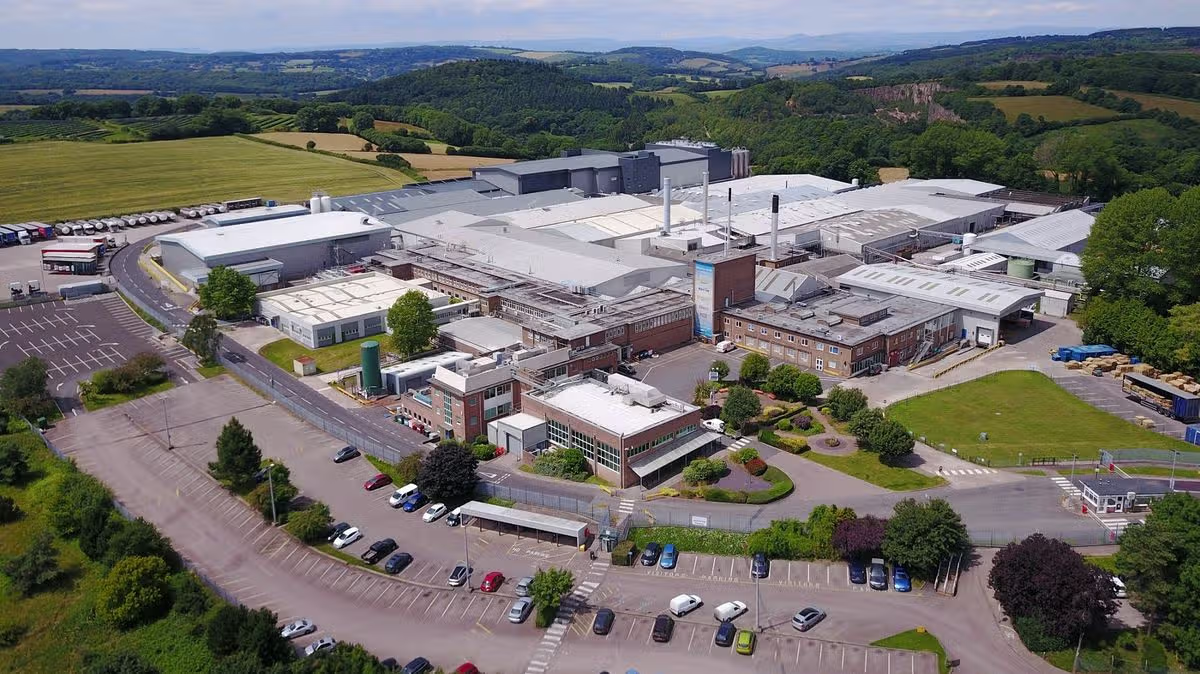
Suntory Beverage & Food GB&I’s Coleford site, where the new £25 million “Apollo 5” line is being installed. The factory makes Lucozade and Ribena drinks

Suntory Beverage & Food GB&I’s Coleford site(Image: Suntory Beverage & Food GB&I’s )

A factory in Gloucestershire that makes Ribena and Lucozade is celebrating 80 years in the Forest of Dean. Known to most people locally as the ‘Ribena factory’, the famous blackcurrant drink has been manufactured in Coleford since 1947, while Lucozade started being produced on site in 1957.

Evidence of the facility’s long history remains visible today, with blackcurrant stains from berries pressed in the 1940s preserved in the factory’s concrete paving.

Japanese-owned Suntory Beverage and Food GB&I (SBF GB&I) acquired the Lucozade and Ribena brands in 2014 and the factory is now one of the largest Suntory-owned plants in Europe, employing 300 people and producing more than 420 million litres of Lucozade and Ribena each year.

The company is investing heavily in the site, with targeted spending across its supply chain in projects to improve operational efficiency, support the UK’s decarbonisation ambitions and deliver a lasting economic boost to the region totalling more than £57m.

Advertisement

Investment includes a new £25m manufacturing line due to start production in 2027 and £14.5m on a next-generation blackcurrant processing facility in Ledbury.

Sustainability projects also remain central to the factory’s long-term growth, according to SBF GB&I. In the past six years, more than £13m has been spent on improving the recyclability of the ready-to-drink bottles produced at the factory, reducing the size of the plastic sleeve on bottles of Ribena, Lucozade Sport and Lucozade Energy.

Another £6m is also being spent on an electrification project to reduce the factory’s reliance on its gas turbine.

Elise Seibold, chief executive of SBF GB&I, said: “The significance of this milestone isn’t simply that our factory has been here for 80 years; it’s that we’re continuing to protect its future for the decades still to come.

Advertisement
Two people hold up a Happy Birthday The Royal Forest Factory sign

Pictured: Elise Seibold, CEO of Suntory Beverage and Food GB&I, and Takuma Kajita, Minister and Head of Economic Affairs at the Embassy of Japan in the UK(Image: Dedpro Media)

“It’s a responsibility and commitment to the people who work here today, to the generations who were guardians of the site before us and to the community that continues to be such an important part of Coleford’s story.”

Matt Bishop, the Labour MP for the Forest of Dean, added: “For eight decades, the factory has been at the heart of the Forest of Dean, producing iconic British brands while providing skilled, secure jobs that have supported generations of local families.

“What stands out most is the commitment of the people who work here. The pride, loyalty, and expertise of the workforce have been central to the factory’s success over many decades, and it is clear that investment in people remains just as important today as investment in facilities.”
Advertisement
Continue Reading

Business

AI in this decade is what digitsation was in the last: RBI governor

Published

on

AI in this decade is what digitsation was in the last: RBI governor
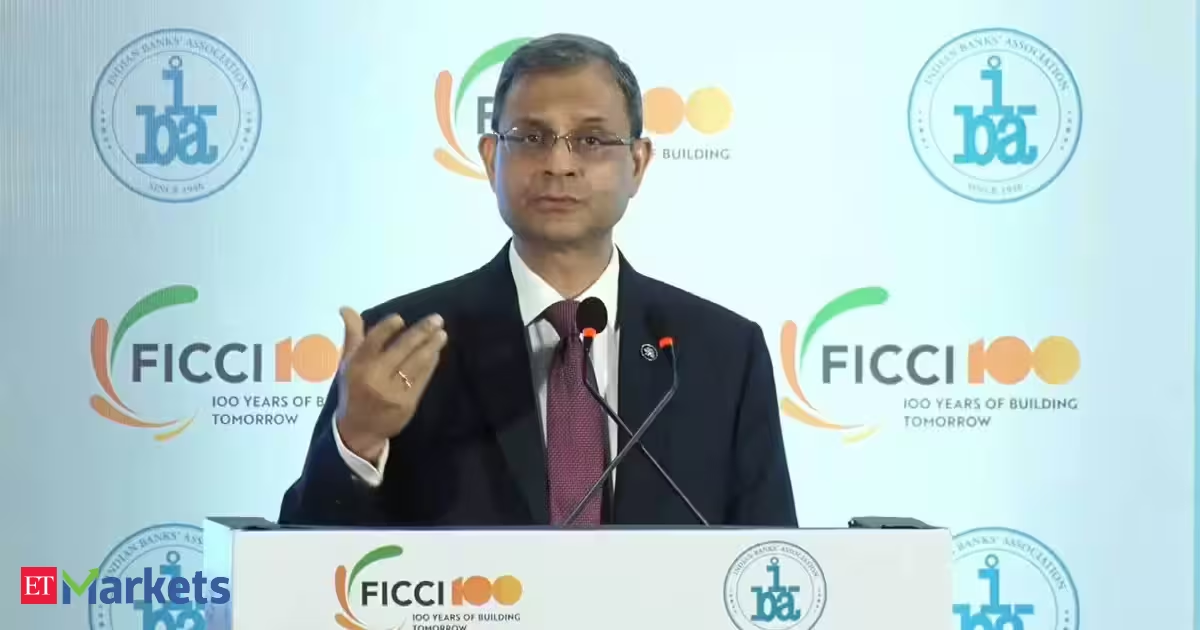
Mumbai: Banks that will win in the artificial intelligence (AI) era will not necessarily be the ones that adopt AI faster but the ones who adopt it with a good understanding of what they are deploying. He described the influence of AI to this decade what digitisation did in 2010s and liberalization held in the 1990s.

He said AI can be used efficiently to build, improve and expand exisiting projects like unified lending interface (ULI), account aggregator which are public good projects on top of which the private sector can build.

“AI, well deployed, can close existing gaps in financial inclusion faster than any preceding technological innovation. Deployed carelessly, it can at the same time entrench new forms of exclusion and instability at a pace that regulators and banks may struggle to keep up with,” Malhotra told bankers in his speech at the FICCI-IBA organised conference.

The RBI plans to establish a more approved AI governance policy with clear accountability. RBI will also continue to provide a sandbox as a safe space for testing innovative use cases for banks, he said.

Advertisement

“We have much at stake. We need to further build on our very highly successful Jan Dhan Yojana. We have still a large, underserved MSME credit market which is estimated in tens of lakhs of crores of rupees. A retail credit culture that is only now maturing. Customer service that can be lost and improved. Implementation costs that can be further decreased. And digital frauds that need to be prevented and avoided. We need to leverage AI for this,” Malhotra said.


He said the role of bank boards, risk officers, the management, and regulators lis critical as all are expected to work together.
He said AI can change the economics of credit delivery fundamentally by using AI models to use cash flows, GST filings, utility, payment bills, digital platforms and extend the frontier of bankable India.The technology can also be used improve customer service, by presenting the right product, flag risks and serve a higher number of customers more efficiently. AI can also improve operational efficiency by reducing cost to income in some case by upto 49%.

“Every bank’s playbook has to be used to own. It has to be shaped by its customer base. I would urge all banks to deliberate on their understanding of this journey of AI production and what is it that they can do to accelerate its production. You will always need to invest in technology, IT infrastructure, scaling, re-scaling. You have to forge sustainable partnerships, because you may not be able to do all of it on your own and you will have to build the right governance structures,” he said adding that to implement these policies will require a deliberate, borderless strategy, backed by sustained investment, and a strong intent, rather than a series of disconnected projects.

Malhotra also touched up the risks associated with AI like lack of information why a loan is rejected, bias and exclusion from a model trained on historical lending data and concentration of a handful of financial models or technology vendors undertaking credit and trading decisions across much of the banking system.

He said banks can just be satisfied by complying with the Digital Personal Data Protection Act. He highlighted cyber and adversarial vulnerability from AI themselves.

Advertisement

“There was a report, I think in July, one of the leading AI firms. They gave the AI the programme to check their systems…Over months all these AI agents were able to collaborate and hack their own systems ” he said cautioning banks against such cases.

“For a bank’s decision, the ultimate responsibility has to lie with the bank, and not with the vendor or with the algorithm,” he said.

He also cautioned banks from depending too much on third-party vendors. “I did mention that you will need to build partnerships with all banks, especially small banks, who may not be able to have their own language, non-language models in AI, you have to depend on outside vendors. And this is perfectly understandable, but then you need to manage risks because governance cannot just stop at our outer walls,” he said.

Advertisement
Continue Reading

Business

Wia taps investors for $125m

Published

on

Wia taps investors for $125m

Yes. Corporate subscriptions are available for teams and organisations, with discounted rates as user numbers increase. Pricing starts from $1,625 + GST per user.
Get in touch
to discuss the right option for your organisation.

Business News subscriptions are used by executives, investors, consultants and professionals who need to stay informed and make better decisions about the WA market. When you subscribe you’ll get

  • Unlimited access to WA’s most trusted business journalism
  • Data & Insights — detailed profiles of WA companies, people, projects and deals
  • MyBN — a personalised feed based on the companies, people and sectors you follow
  • Special publications and industry reports
  • Daily and weekly email newsletters

Data & Insights is a research tool built specifically for the WA market. It draws on more than 30 years of Business News reporting, updated regularly to reflect what’s happening now. Use it to:

  • Look up detailed profiles of WA companies, including financials, directors and ownership
  • Find decision-makers and track their career movements
  • Research live and completed projects across WA industries
  • Monitor deals, appointments and market activity
  • Access industry rankings and league tables

Data & Insights is updated daily by our dedicated research team, which uses the latest announcements, ASX filings and editorial coverage to keep our person, company, list and project records up to date.

Business News welcome all opportunities to make our dataset accurate, complete and current, so if you have an update request, please email the team at
general@businessnews.com.au, and we’d be happy to assist.

Advertisement

MyBN
is part of every subscription. It’s your personalised view of Business News. You can follow the companies, people, sectors and projects that matter to you, and get a news feed and alerts tailored to your interests. You can save articles to read later and retain only what you need.

Only subscribers have full access to all content on the Business News website.

Advertisement

If staying informed about the WA economy is part of your job, and/or you’re looking for networking opportunities in WA, Business News is built for you.

Business News subscribers are:

  • Executives and directors tracking competitors, clients and market movements
  • Investors and advisers researching companies, deals and industry trends
  • Consultants and professionals staying across sectors relevant to their clients
  • Business owners looking for leads, context and market intelligence

Most Business News publications cover national or global markets. Business News is focused entirely on Western Australia, which means the journalism, the data and the intelligence are all built around WA companies, people and projects — not adapted from a national feed. Data & Insights, included with every subscription, combines more than 30 years of WA-specific editorial research with live business data. There’s no comparable product for the WA market.

Advertisement

The Morning Digest Email provides a comprehensive wrap of the major headlines, relevant to WA business, and includes with a snapshot of the overnight news covering oil, gold and ASX-listed companies.

The Afternoon Wrap Email focuses on the news covered by our team of journalists during the course of the working day, including exclusive stories and analysis, all of which relates to WA business and the local economy.

The BN Weekender Email contains a wrap of the Business News from the week that was, highlighting the top stories in each area of WA business.
Sign up for free.

Advertisement

We’re happy to help.
Get in touch
and our team will come back to you.

Advertisement
Continue Reading

Business

Southeast Asia’s Risks Are Hitting Each Economy Differently

Published

on

Thailand News Roundup: Safety Concerns, Diplomatic Tensions, and Visa Policy Reversals
  • Southeast Asia faces interconnected challenges from economic pressure, geopolitical rivalry, and technological disruption, but these forces affect its ten economies unevenly. The region spans vast wealth differences, from Singapore to Myanmar, yet is often treated as a single entity in global economic discussions.
  • Business leaders across the region share concerns about growth, inflation, and job security, while AI adoption and energy constraints risk deepening inequality. Tariffs, supply chain shifts, and geopolitical tensions further complicate each economy’s ability to balance short-term stability with long-term strategic autonomy.

Southeast Asia faces interconnected challenges from economic pressure, geopolitical rivalry, and technological disruption. The region’s diversity means these forces impact economies unevenly. Leaders must balance short-term stability with long-term autonomy amidst trade shifts and global competition.

While AI investment grows, uneven adoption and energy constraints risk widening inequality. Concerns about economic downturn, job loss, and inflation are paramount, reflecting growth that doesn’t always benefit everyone. Geopolitical tensions are felt acutely, forcing difficult trade-offs. The AI boom presents opportunities but also exacerbates disparities. These converging risks demand integrated, adaptive, and collaborative responses to build resilience.

  • Economic pressure, geopolitical rivalry and technological disruption are affecting the region unevenly, reflecting big differences in economic structure, fiscal space and demographic trends.
  • Tariffs, supply chain shifts and competing global partnerships are forcing Southeast Asian economies to balance short-term stability with long-term strategic autonomy.
  • While governments and firms are investing in AI infrastructure, uneven adoption, energy constraints and workforce disruption could leave smaller firms and vulnerable workers behind.

Imagine 10 very different houses on the same street – some new, some old, some developing while others are becoming unstable; the same neighbourhood but very different grievances.

That’s very much the narrative for Southeast Asia.

The region spans 10 economies, from Singapore, one of the world’s wealthiest, to Myanmar, one of its poorest, with their gross domestic product per capita differing by around $98,000. Yet, in conversations about trade, investment and risk, “Southeast Asia” is often treated as a single place with a single story.

This shortcut misses much about the region and according to the World Economic Forum’s Executive Opinion Survey, capturing how business leaders perceive the risks around them, the divergence is clear.

Source link

Advertisement

Continue Reading

Business

Toyota recalls more than 508,000 Camry Hybrids in the US over display defect

Published

on

Toyota recalls more than 508,000 Camry Hybrids in the US over display defect

Toyota issued a recall for about 655,000 of its Camry vehicles globally over a display error that may deactivate safety indicators such as turn signals and hazard lights, the automaker announced on Tuesday.

The global recall involves vehicles produced between December 2023 and July 2026 across manufacturing facilities in the U.S., Japan and Thailand.

Advertisement

Among those vehicles, a total of 508,354 model year 2025-2026 Camry Hybrids in the U.S. are affected by the recall, according to the National Highway Traffic Safety Administration (NHTSA).

NEARLY 50,000 CHRYSLER VEHICLES RECALLED OVER SEAT BELT SAFETY DEFECT

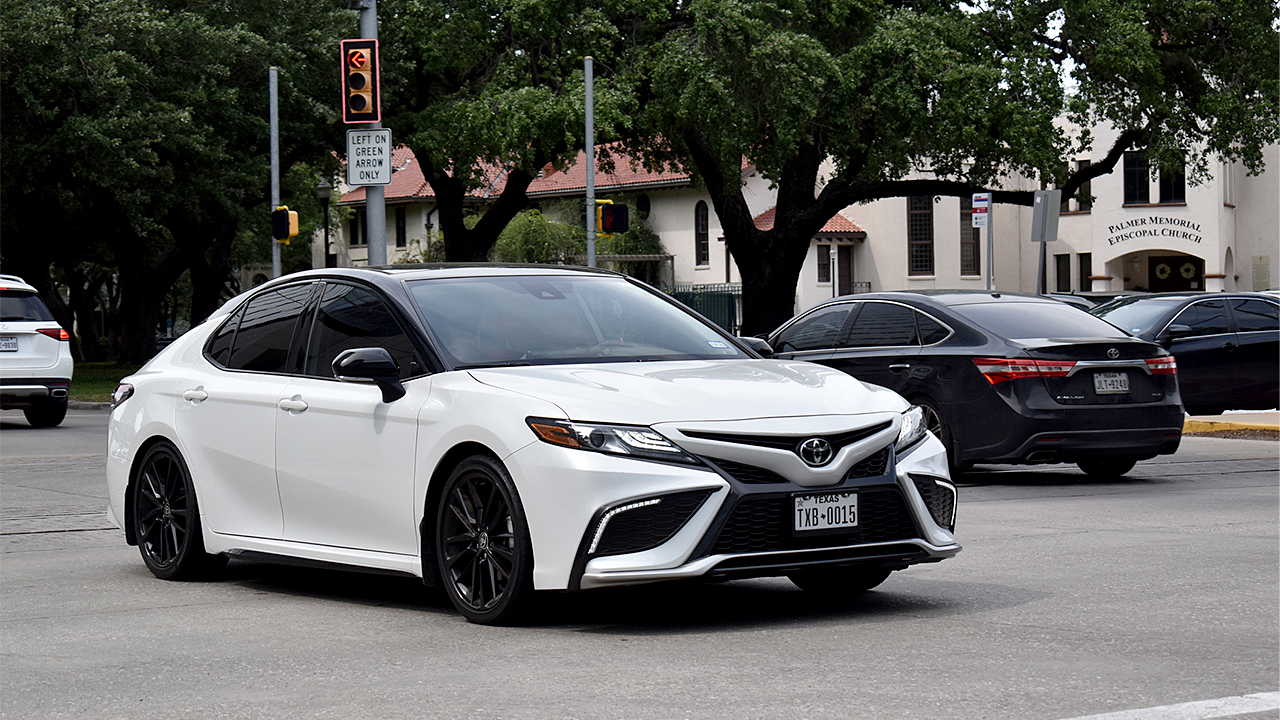
Toyota Camry Hybrid 2025-2026 model year

A total of 508,354 model year 2025-2026 Camry Hybrids in the U.S. are affected by the recall. (Getty Images / Getty Images)

The affected vehicles are equipped with a 7-inch display combination meter that may be blank at startup. Only the LE, SE and Nightshade trims have the smaller 7-inch display. The XLE and XSE trims use a larger 12.3-inch driver display, so these models are not affected.

Turn signals, hazard lights and other warning buzzers, such as reminders to fasten the seat belt and remove the key from the ignition, may also be deactivated due to the defect in affected vehicles.

Advertisement

“The 7-inch combination meter may become blank at startup,” the automaker said in a statement. “This can also deactivate the turn signal and hazard lamps and certain warning buzzer sounds (such as the smart key reminder and the driver/passenger seat belt reminder). This can cause the vehicle not to meet certain federal safety standards.”

SOME OLDER FORD VEHICLES POSE ‘UNREASONABLE’ SAFETY RISKS, REGULATORS WARN

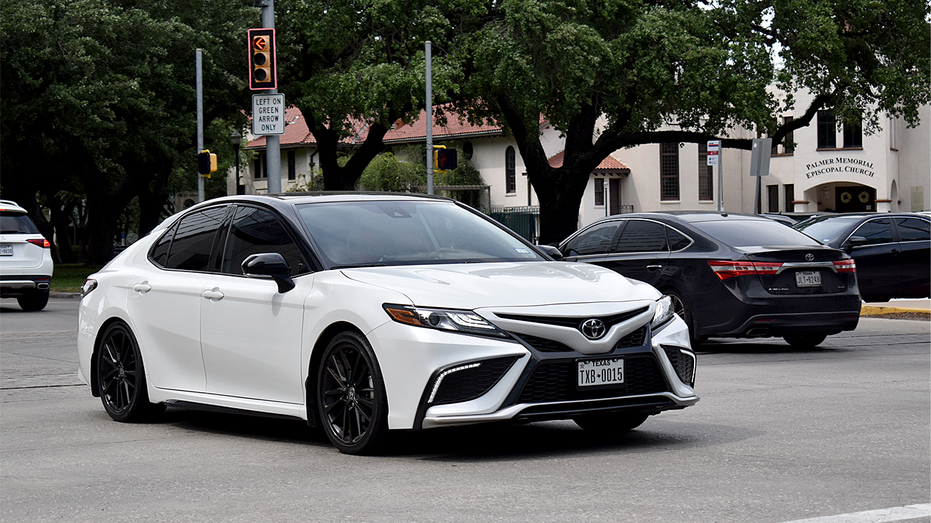
Toyota Camry cars displayed at a dealership.

Turn signals, hazard lights and other warning buzzers may be deactivated due to the defect in affected vehicles. (Getty Images / Getty Images)

“If certain required information is not displayed in the combination meter, if the turn signal/hazard lamps do not function, or if certain warning buzzers do not activate, there can be an increased risk of injury or a crash depending on the specific situation,” the statement added.

The NHTSA warns that these display issues increase the risk of a crash for both drivers who may be unable to see telltale indicators and other road users would not know the driver’s intent to turn or indicate a vehicle hazard.

Advertisement
The Toyota logo on a building

The global recall involves vehicles produced between December 2023 and July 2026 across manufacturing facilities in the U.S., Japan and Thailand. (Smith Collection/Gado/Getty Images / Getty Images)

CLICK HERE TO GET FOX BUSINESS ON THE GO

Toyota Motor North America said it will notify owners of the affected Camrys, so they can bring their vehicles to a dealer for a software update free of charge.

U.S. owner notification letters are scheduled to be mailed starting on Sept. 21, with all expected to be sent out by early October.

Advertisement
Continue Reading

Business

Oil Price Today (August 12): Crude oil reclaims $90 again after fresh attacks on ships. What are experts saying?

Published

on

Oil Price Today (August 12): Crude oil reclaims $90 again after fresh attacks on ships. What are experts saying?
Oil prices extended gains on Wednesday as uncertainty over a possible US-Iran peace deal and fresh attacks on shipping raised fears of further supply disruptions in the Middle East. The rise came despite industry data pointing to an increase in US crude inventories.

Crude oil price on August 12

Brent crude futures were up 72 cents, or 0.81%, at $89.63, while US West Texas Intermediate (WTI) crude gained 71 cents, or 0.85%, to $83.91.
Both benchmarks had settled more than $1 higher on Tuesday, taking prices to their highest closing levels since July 31. That followed a roughly 5% jump on Monday, when hopes of a peace agreement between the US and Iran started to weaken.

The latest concerns were triggered by separate reports from the United States and Yemen’s Iran-aligned Houthis about attacks on shipping in the Strait of Hormuz and the Bab el-Mandeb Strait on Tuesday.

Also read: $48 billion profit! 5 global oil majors cash in on oil surge amid Iran war. Where is money flowing?

Advertisement


Iran’s top security official, Mohsen Rezaei, said the Strait of Hormuz would remain closed unless Washington agreed to Tehran’s conditions for ending the war. These include the release of frozen Iranian assets and an end to other conflicts across the region.
Supply concerns have also increased after Saudi Arabia’s state oil company Saudi Aramco delayed the restart of its 400,000-barrel-per-day Jazan refinery to August 30. The delay came after the Houthis claimed responsibility for two attacks on the facility on Sunday.The UAE’s ADNOC said on Friday that 15 of its vessels had been attacked while passing through the Strait of Hormuz since the conflict began.

The situation around both Hormuz and Bab el-Mandeb remains a key risk for oil markets. Even temporary restrictions, or the threat of further attacks, are raising insurance costs and prompting ships to use longer routes. This is expected to keep energy flows under pressure in the near term.

What are experts saying?

The duration of the disruption will be critical for the outlook on crude prices. JPMorgan estimates that every additional month of disruption could push Brent up by about $7 to $8 a barrel. If the disruption lasts three months, the bank expects average monthly Brent prices to reach around $114 a barrel.

Goldman Sachs has similarly warned that Brent could rise to $120 a barrel if shipping disruptions through the Strait of Hormuz, the world’s most important oil transit route, continue.

Read more: Iran’s Supreme Leader Khamenei fills 6 key military positions

Advertisement

However, Goldman Sachs expects the Middle East tensions to eventually ease in its base case. It sees Brent averaging $80 a barrel in the fourth quarter and $75 a barrel next year. At the same time, it said risks remain tilted to the upside because disruptions through Hormuz and the Red Sea could last longer than expected.

“The direction of our outlook is unchanged; the path and the timeline have shifted. We still expect oil to cool as we move into 2027, for three reasons: supply outside the conflict zone is expanding, with OPEC+ raising production targets, the UAE at record output and non-OPEC barrels responding to price,” said Anindya Banerjee, Head of Commodity Research at Kotak Securities.

(Disclaimer: Recommendations, suggestions, views and opinions given by the experts are their own. These do not represent the views of The Economic Times)

Advertisement
Continue Reading

Trending

Copyright © 2025