

Business
Experts Say a “Fingerprint” Hidden in Nancy Guthrie’s Ransom Notes Could Help Locate Her



With the search for Nancy Guthrie continuing, there is one clue from the ransom notes that could lead to her location.
What Investigators Are Looking For
Retired FBI agent Jason Pack told Page Six that ransom notes have a “fingerprint” to them, and that some key things to pay attention to in them are word choice, tone, and how the demand is structured in order to identify that person.
“If the first two read like the same person wrote them and everything that followed reads differently, that tells the task force something meaningful about who they’re actually dealing with versus who decided to insert themselves into the story once it went international,” Pack said.
He added that investigators would be able to determine if the ransom notes are real based on whatever meaningful information is in them.
A Key Detail in the Earliest Notes
Pack pointed to a specific piece of evidence within the earliest communications received in the case. “The first note apparently contained specific operational details that weren’t public at the time,” Pack said. “Based on what’s been reported, the language and tone of those first two notes compared to everything that came after is where the real analytical work is happening right now.”
Analyzing the Language of a More Recent Note
One of the recent notes said the 84-year-old was dead and that she was “buried with nature.” Ray Carr, a former FBI profiler, told NewsNation’s Brian Entin that the abductor could be feeling guilty about the situation because they said her death was “unintentional,” or that they are trying to psychologically distance themselves.
“The wording is deliberate,” Carr said. “I think it is emotionally controlled and I think it focuses on minimizing culpability.”
A Note That May Be More About the Sender Than the Victim
Carr also said the abductor could feel the need for control. “If this is written by the offender, then this is all about them, and has nothing to do with Nancy,” Carr said.
How the Case Began
Guthrie was believed to be abducted from her home in the early hours of February 1, 2026, based on the time her pacemaker stopped communicating with her phone. She was reported missing the next day.
A Case That Has Stretched Nearly Five Months
Guthrie’s disappearance from her Tucson, Arizona, home has now stretched almost five months without a confirmed suspect or resolution, despite the extensive efforts of investigators and the wide range of leads — including the doorbell camera footage of a masked individual and the multiple ransom notes received by media outlets — that have emerged throughout the case. The conflicting nature of the notes themselves, with some appearing to suggest she remained alive while others claimed she had died, has continued to deepen the uncertainty surrounding her fate.
Why Linguistic Analysis Matters in Cases Like This
The kind of forensic linguistic analysis Pack and Carr describe has become an increasingly important tool in cases involving anonymous written communications, where investigators look beyond the literal content of a message to the underlying patterns of word choice, sentence structure, and emotional tone that can reveal something about the author’s identity, state of mind, or genuine connection to the events described. Distinguishing between notes that may have originated from someone with real knowledge of the case and those potentially sent by individuals seeking to insert themselves into a high-profile investigation has become a central challenge for the task force working the case.
The Distinction Between Genuine and Opportunistic Communications
Pack’s comments suggest investigators are actively working to separate what he describes as the earliest, potentially authentic notes from later communications that may not share the same authorship. That distinction carries significant weight for the broader investigation, given that genuine operational details — knowledge of specifics about Guthrie’s home or circumstances that were not publicly known at the time — would be far more difficult for an opportunistic impersonator to replicate convincingly.
With investigators continuing to analyze the language, tone, and structure of each communication received throughout the case, the question of which notes reflect genuine knowledge of Guthrie’s whereabouts or fate remains central to the ongoing investigation. Given the continued involvement of retired law enforcement professionals like Pack and Carr in publicly analyzing the available evidence, pressure appears likely to continue building on the FBI and Pima County Sheriff’s Department to provide further updates on the case’s status. Anyone with information related to Nancy Guthrie’s disappearance is urged to contact the FBI, with a combined reward exceeding $1.2 million still available for information that leads to a resolution of the case.


Personalis CFO Aaron Tachibana sells $675,488 in company stock
Form 4 Perpetua Resources Corp For: 26 June

Uber: I Love Buying This Dip


Cogent investment views on digital assets, macro, and derivatives. BTC Maxi. My investment philosophy centers around deep fundamentals, impactful narratives, and Austrian economics. Time horizon is the primary dividing factor for investment research. Long-horizon research will focus on digital assets, macro, and general value opportunities. Emphasis is placed on a global, long-run macro view as the basis for these investment considerations. Short-horizon research will focus on options and volatility for income generation and hedging.
Analyst’s Disclosure: I/we have no stock, option or similar derivative position in any of the companies mentioned, and no plans to initiate any such positions within the next 72 hours. I wrote this article myself, and it expresses my own opinions. I am not receiving compensation for it (other than from Seeking Alpha). I have no business relationship with any company whose stock is mentioned in this article.
Seeking Alpha’s Disclosure: Past performance is no guarantee of future results. No recommendation or advice is being given as to whether any investment is suitable for a particular investor. Any views or opinions expressed above may not reflect those of Seeking Alpha as a whole. Seeking Alpha is not a licensed securities dealer, broker or US investment adviser or investment bank. Our analysts are third party authors that include both professional investors and individual investors who may not be licensed or certified by any institute or regulatory body.
Form 4 Faeth Therapeutics, Inc For: 26 June

Milton Ault
Founder & Executive Chairman
All right, everybody. Welcome to the conference call today. This is on Hyperscale Data in our robotics campus, Artificial Intelligence of the future of the Michigan data center and Montana sites. I apologize if anyone could hear us prior to the call. That was a technical snafu. But luckily, we didn’t say anything that we didn’t want everyone to hear anyways. So Gary, why don’t we read the forward-looking statements, and we’ll go from there.
Unknown Executive
Okay. Forward-looking statements. This presentation and other written or oral statements made from time to time.
Milton Ault
Founder & Executive Chairman
Gary, can you change the slide, please?
Unknown Executive
This presentation and other written or oral statements made from time to time by representatives of Hyperscale Data Inc., the company, contain forward-looking statements within the meaning of Section 27A of the Securities Act of 1933 as amended, Section 21E of the Securities Exchange Act of 1934 as amended. Forward-looking statements reflect the current view about future events. Statements that are not historical in nature such as forecasts for the industry in which we operate and which may be identified by the use of words like expects, assumes, projects, anticipates, estimates, we believe, could be, future or the negative of these terms and other words of similar meaning are forward-looking statements.
Such statements include, but not limited to, statements contained in this presentation relating to our business, business strategy, expansion, growth, products and services we may offer in the future and the timing of their development, sales and marketing strategy and capital outlook. Forward-looking statements are based on management’s current expectations and assumptions regarding
Business
Oracle Shares Slip Again as AI Spending Concerns and Tech Selloff Continue to Pressure the Stock Friday
Shares of Oracle continued their retreat Friday, falling 0.90% to $151.22 in midday trading, as the database and cloud-computing giant remains caught in a broader market reassessment of how much technology companies should be spending — and borrowing — to fund the artificial intelligence buildout.
The decline, while modest on its own, extends a punishing stretch for Oracle that has seen the stock fall dramatically from its highs earlier this year, even as the company’s underlying cloud business continues to post strong growth.
A stock far removed from its peak
Oracle’s current price tells only part of the story without context from where the stock has traveled this year. The stock’s 52-week high of $345.72 was set on September 10, 2025, while its 52-week low of $134.57 came on April 10, 2026. At Friday’s level near $151, shares remain much closer to that low than to the highs reached less than a year ago — a decline that reflects a dramatic shift in how investors are pricing Oracle’s aggressive AI infrastructure bet.
That volatility has been particularly pronounced in recent weeks. Oracle is on pace for its worst month since 2001, a sharp reversal following the strongest month in a generation — the stock had surged 39.9% in May, its best monthly performance since February 2000, driven by enthusiasm over the company’s AI-related order backlog.
The earnings report that triggered the slide
Much of Oracle’s recent struggles trace back to its fiscal fourth-quarter earnings report, which beat Wall Street’s expectations on the surface but rattled investors over the company’s spending plans. Oracle reported adjusted earnings of $2.03 per share, ahead of the $1.96 analysts had expected, on revenue of $19.18 billion versus a $19.10 billion estimate, with revenue up 21% year over year. Despite beating those numbers and raising its profit forecast, the stock still tumbled. Shares dropped 10% in extended trading after Oracle disclosed plans to raise more money to finance its AI buildout, with the company saying it foresees raising $40 billion through additional debt and equity financing, including a previously announced $20 billion share sale.
The scale of that financing push, layered on top of what the company had already raised, is what spooked investors. That $40 billion in fresh financing comes after Oracle already raised $43 billion in debt and $5 billion in equity during fiscal 2026 — a combination that has concerned investors given lingering uncertainty about whether demand for artificial intelligence can ultimately justify that much new capital.
The cash flow picture behind the spending
The financial commitments tied to Oracle’s AI expansion have shown up clearly in its cash flow statements. For the fiscal year, Oracle reported $23.7 billion in negative free cash flow, with depreciation nearly doubling to $7.62 billion, while capital expenditures jumped 162% to $55.7 billion. Looking ahead, the company has signaled spending will remain elevated. Oracle’s new chief financial officer, Hilary Maxson, said the company’s net cash outlay for capital expenditures in fiscal 2027 will be around $70 billion, excluding $20 billion to $25 billion in prepayments from customers and timing impacts.
A workforce reshaped around AI priorities
Alongside the spending increases, Oracle has been making significant changes to its workforce as it reorients the business toward AI and cloud infrastructure. Oracle’s recent regulatory disclosures show a notable restructuring that reduced its workforce by 13%, alongside a record $638 billion in remaining performance obligations. Coverage of the filing put a more specific number on those job losses. Oracle disclosed in its latest annual report that it cut about 21,000 jobs over the past fiscal year, shrinking its workforce roughly 13% as the company reshapes its business around AI.
Where the demand is coming from
Despite the financial strain, Wall Street has pointed to one customer in particular as the anchor behind Oracle’s massive backlog of future business. Bank of America analysts, who recommend buying Oracle shares, said over 50% of the company’s remaining performance obligation comes from OpenAI. Oracle’s leadership has also emphasized the physical scale of the infrastructure buildout underway. Oracle CEO Clay Magouyrk said on a conference call with analysts that the company is looking to bring online almost one gigawatt worth of computing power in the current quarter alone, roughly matching the total brought online for all of fiscal 2026.
That data center expansion has continued to draw outside investment as well. Related Digital and Blackstone said they secured funding for a $16 billion Oracle data center site in Michigan.
Mixed signals from analysts
Not all of Friday’s pressure traces back to the broader AI spending debate — some of it appears tied to company-specific financing mechanics. One recent analyst note warned that preferred stock conversions and at-the-market equity issuances may dilute shareholders and pressure Oracle’s stock price.
Even so, some independent analysis has pushed back on the idea that Oracle’s long-term growth story is in jeopardy. Investment firm Evercore said Oracle’s 10-K filing further strengthens the view that the company’s outlook for fiscal 2027 remains intact, despite ongoing investor concerns about the scale of its spending.
Part of a broader sector retreat
Friday’s dip in Oracle shares is unfolding alongside declines across much of the rest of the technology sector, as investors reassess AI-related valuations more broadly following a long rally. Several of the market’s largest technology names were trading lower in the same session, reflecting a pattern of selling that has spread well beyond any single company’s specific circumstances.
What investors are watching next
With Oracle’s next earnings report not expected until September, investors are likely to spend the coming weeks parsing the company’s spending disclosures, its OpenAI-anchored backlog, and broader sentiment around AI infrastructure investment for clues about where the stock goes from here. Oracle delivered more than 1.2 gigawatts of data center capacity in fiscal 2026, underpinning 77% year-over-year growth in its cloud infrastructure business — a figure bulls point to as evidence that demand remains robust even as the stock continues to struggle. Whether that underlying growth can eventually outweigh concerns about Oracle’s ballooning capital needs remains the central question hanging over the stock as it searches for a floor well below its highs from less than a year ago.


Julian Lin is a financial analyst. He finds undervalued companies with secular growth that appreciate over time. His approach is to look for companies with strong balance sheets and management teams in sectors with long growth runways.
Julian is the leader of the investing group Best Of Breed Growth Stocks where he only shares positions in stocks which have a large probability of delivering large alpha relative to the S&P 500. He also combines growth-oriented principles with strict valuation hurdles to add an additional layer to the conventional margin of safety. Features include: exclusive access to Julian’s highest conviction picks, full stock research reports, real-time trade alerts, macro market analysis, individual industry reports, a filtered watchlist, and community chat with access to Julian 24/7. Learn more.
Analyst’s Disclosure: I/we have a beneficial long position in the shares of NVDA either through stock ownership, options, or other derivatives. I wrote this article myself, and it expresses my own opinions. I am not receiving compensation for it (other than from Seeking Alpha). I have no business relationship with any company whose stock is mentioned in this article.
Seeking Alpha’s Disclosure: Past performance is no guarantee of future results. No recommendation or advice is being given as to whether any investment is suitable for a particular investor. Any views or opinions expressed above may not reflect those of Seeking Alpha as a whole. Seeking Alpha is not a licensed securities dealer, broker or US investment adviser or investment bank. Our analysts are third party authors that include both professional investors and individual investors who may not be licensed or certified by any institute or regulatory body.
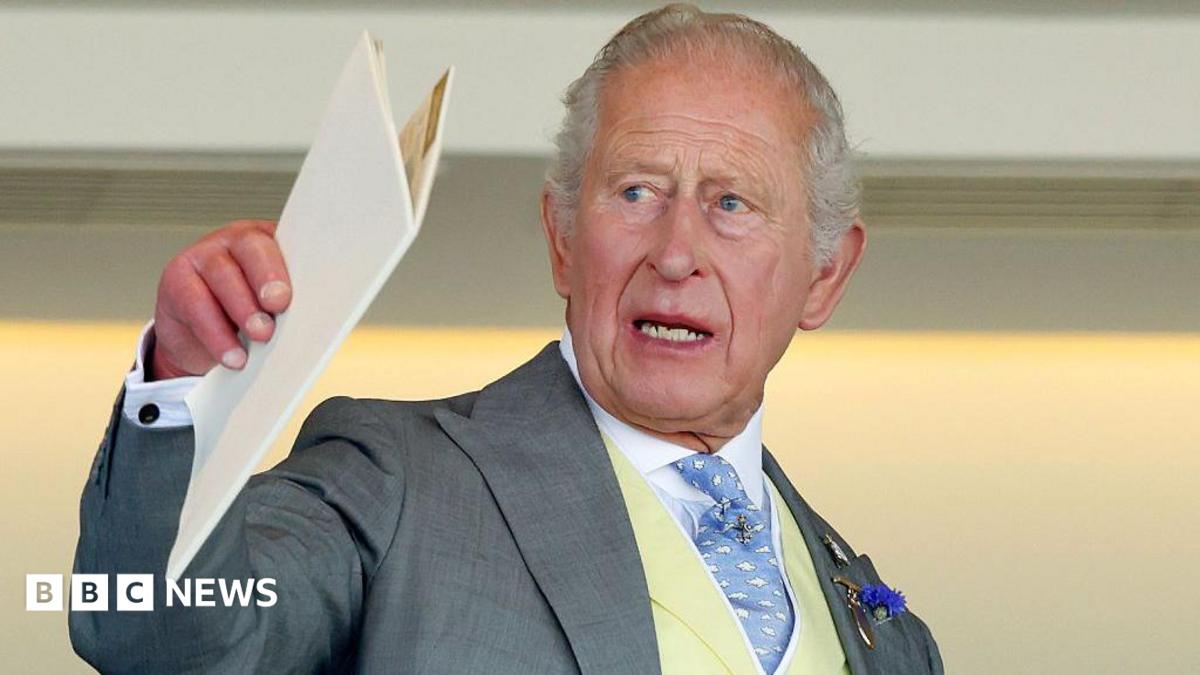
Another thing not detailed in the report is what proportion of the Privy Purse income has been spent by the King personally and what proportion of it has been spent for official royal duties.
This matters because the King only voluntarily pays tax on income spent personally, meaning the King can effectively deduct royal business from his tax bill.
The King also does not pay tax on the Sovereign Grant, which is money paid from the Treasury to the Royal Household to pay for official duties.
This system is a bit like how a self-employed person can file expenses on their self-assessment tax return for things like uniform or training.
Except that the King has two tax-free ways in which he can he can fund official duties.
Also, what counts as official duties is very different from what a regular self-employed taxpayer can expense.
For example, the untaxed Sovereign Grant can be used to fund the staff costs and running expenses of the King’s official household while untaxed official duties that can be paid by Privy Purse include the personal income of working members of the Royal Family.
The Keeper of the Privy Purse, James Chalmers, said: “While Royal finances can sometimes appear complex, the underlying system is clear in principle, structured in law and refined over time to ensure the Monarch can serve with independence, accountability and in the long-term interests of the nation.”


US seizes nearly 400 websites that were illegally streaming World Cup, DOJ says

Uruguay vs Spain LIVE: Latest World Cup score and updates as Group H reaches thrilling climax

12 Power Tools You Can Skip (For Now) If You’re Starting A Tool Collection

Reason Spain aren’t playing in their traditional red kit against Uruguay at the World Cup


-

 Entertainment6 days ago
Renter of Home in Anne Heche Crash Denies Settlement With Son
-
 Sports3 days ago
Two goals and an assist by sheer aura: Cristiano Ronaldo just entered the World Cup chat
-

 Tech4 days ago
Microsoft accidentally kills epic Outlook email threads
-

 Business6 days ago
Soccer-U.S. defends Iran World Cup travel restrictions, says discussions ongoing
-

 Fashion7 hours ago
Weekend Open Thread: Staud – Corporette.com
-

 Politics18 hours ago
The House | Manchesterism won’t survive the painful trade-offs unless it gets citizens on board
-

 Politics7 days ago
Andy Burnham and the meaning of Makerfield
-

 Politics22 hours ago
Potential 2028er World Cup attendee leaderboard
-

 Tech1 day ago
A Look At A Gaggle Of Transputer Boards
-
Crypto World3 days ago
Bitcoin (BTC) Dips Below $62K, Ethereum (ETH) Plunges 6% Daily: Market Watch
-

 Business17 hours ago
Asia stock markets slide as tech shares slump
-

 Crypto World3 days ago
Securitize Wraps Roubini's SEC-Registered ETF as Dubai VARA Digital Security
-
 Crypto World1 day ago
Dell (DELL) Shares Tumble Over 5% Following Analyst Downgrade to Hold
-
Business3 days ago
Entergy settles forward sale agreements, raises $672 million in cash proceeds
-
 Crypto World7 days ago
Can Charles Hoskinson Really Rescue Cardano?
-
 Business7 days ago
Wall Street Week Ahead: Investors see Micron earnings as pulse check of AI rally momentum
-

 Sports4 hours ago
FIH Pro League: India defeat Pakistan 7-1, register biggest win of campaign | Other Sports News
-

 Entertainment7 days ago
Jose Alvarado Wants Taylor Swift at More Knicks Games
-

 Crypto World7 hours ago
RTX holders must register wallets before token distribution begins
-

 Crypto World7 days ago
HIVE shares jump as $220M AI deal speeds Bitcoin mining pivot
You must be logged in to post a comment Login