Connect with us
DAPA Banner

Business

Family office deal-making rebounds in April with healthcare bets

Published

on

Family office deal-making rebounds in April with healthcare bets

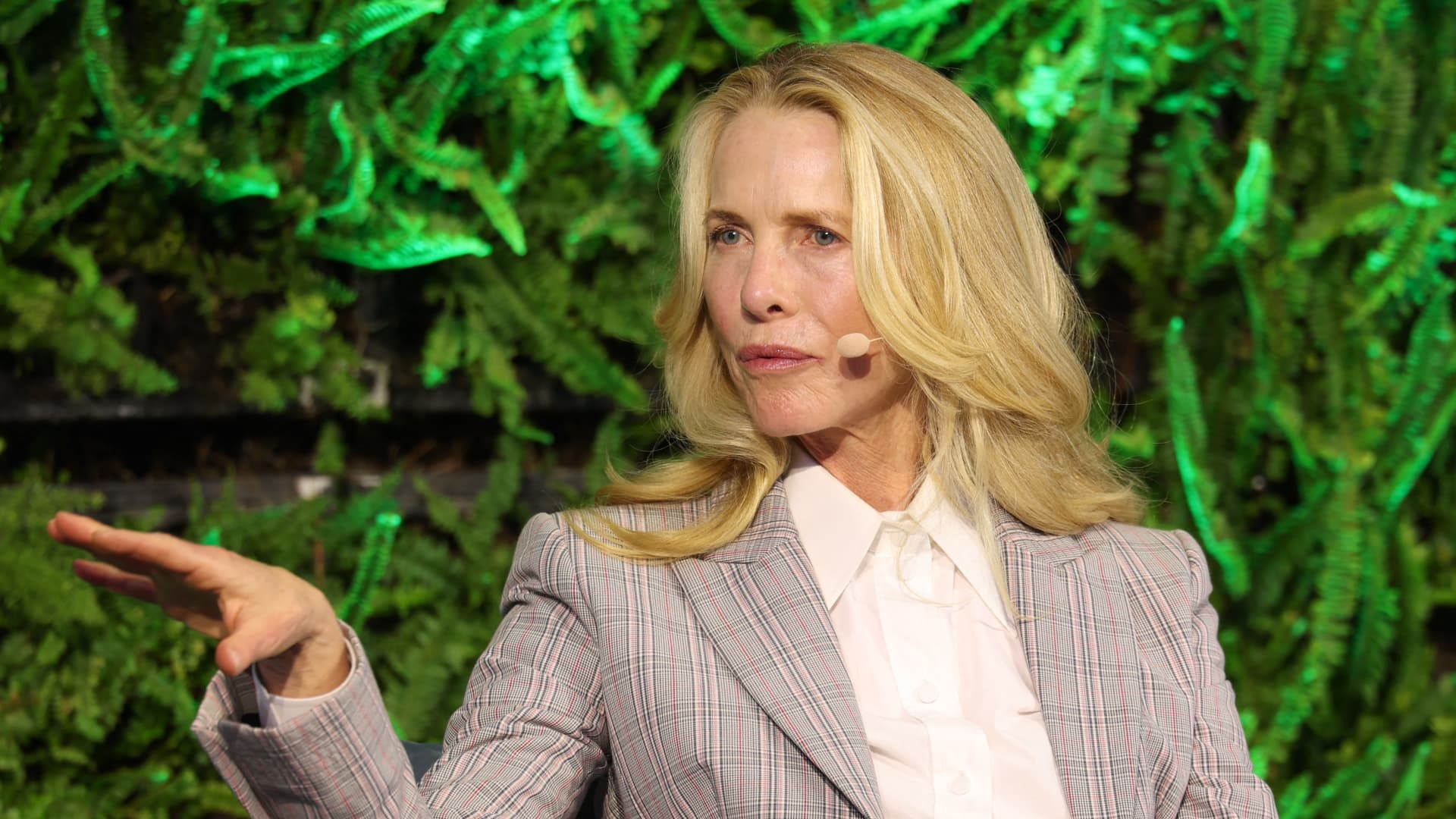
Laurene Powell Jobs, founder and president, Emerson Collective, speaks during the 29th annual Milken Institute Global Conference at the Beverly Hilton in Beverly Hills, California on May 4, 2026.

Patrick T. Fallon | Afp | Getty Images

A version of this article first appeared in CNBC’s Inside Wealth newsletter with Robert Frank, a weekly guide to the high-net-worth investor and consumer. Sign up to receive future editions, straight to your inbox.

Advertisement

Investment firms of ultra-wealthy families stepped up their deal-making in April after a slowdown the month prior triggered by the outbreak of the Iran war.

Family offices made 55 direct investments in companies last month, up from 39 in March according to data provided exclusively to CNBC by Fintrx, a private wealth intelligence platform.

Nearly a third of April’s investments were made in healthcare and life sciences companies.

Laurene Powell Jobs’ Emerson Collective, her investment and philanthropy firm, joined fundraises for two startups, a seed round for Ultralight and a Series A round for Stipple Bio. Ultralight, an artificial intelligence software platform for personalized healthcare, raised $9.3 million in seed funding from Emerson Collective and other investors. Stipple Bio, a developer of targeted cancer therapies, raised $100 million in the round, which was co-led by Andreessen Horowitz.

Advertisement

Family offices’ healthcare investments are often inspired by personal experience. Emerson Collective’s investment in Stipple Bio was managed by Yosemite, an oncology-focused venture fund founded by Reed Jobs, Powell Jobs’ son with Steve Jobs. The Apple co-founder died in 2011 from complications of pancreatic cancer.

Also in April, Dolby Family Ventures joined a 53 million euro ($62 million) Series B round for Exciva, a developer of treatments for agitation in Alzheimer’s patients. The impact-driven family office was founded by David Dolby in 2014, about a year after his father, billionaire engineer Ray Dolby, died of complications of Alzheimer’s disease and acute leukemia.

In a survey released by J.P. Morgan Private Bank in February, half of family offices cited healthcare innovation as a top investment theme, second only to artificial intelligence, at 65%.

This influx of private capital comes during cuts and interruptions to federal funding for healthcare research. A budget proposal released by the Trump administration in April seeks to cut an additional $5 billion from the National Institutes of Health.

Advertisement

Get Inside Wealth directly to your inbox

Choose CNBC as your preferred source on Google and never miss a moment from the most trusted name in business news.
Continue Reading
Click to comment

You must be logged in to post a comment Login

Leave a Reply

Business

Form 13F ALLIUM FINANCIAL ADVISORS For: 7 May

Published

on


Form 13F ALLIUM FINANCIAL ADVISORS For: 7 May

Continue Reading

Business

New approaches to texture innovation

Published

on

New approaches to texture innovation

Multi-layered, airy textures are creating opportunities for manufacturers.

Continue Reading

Business

Used car prices fall for first time this year as gas prices spike

Published

on

Used car prices fall for first time this year as gas prices spike

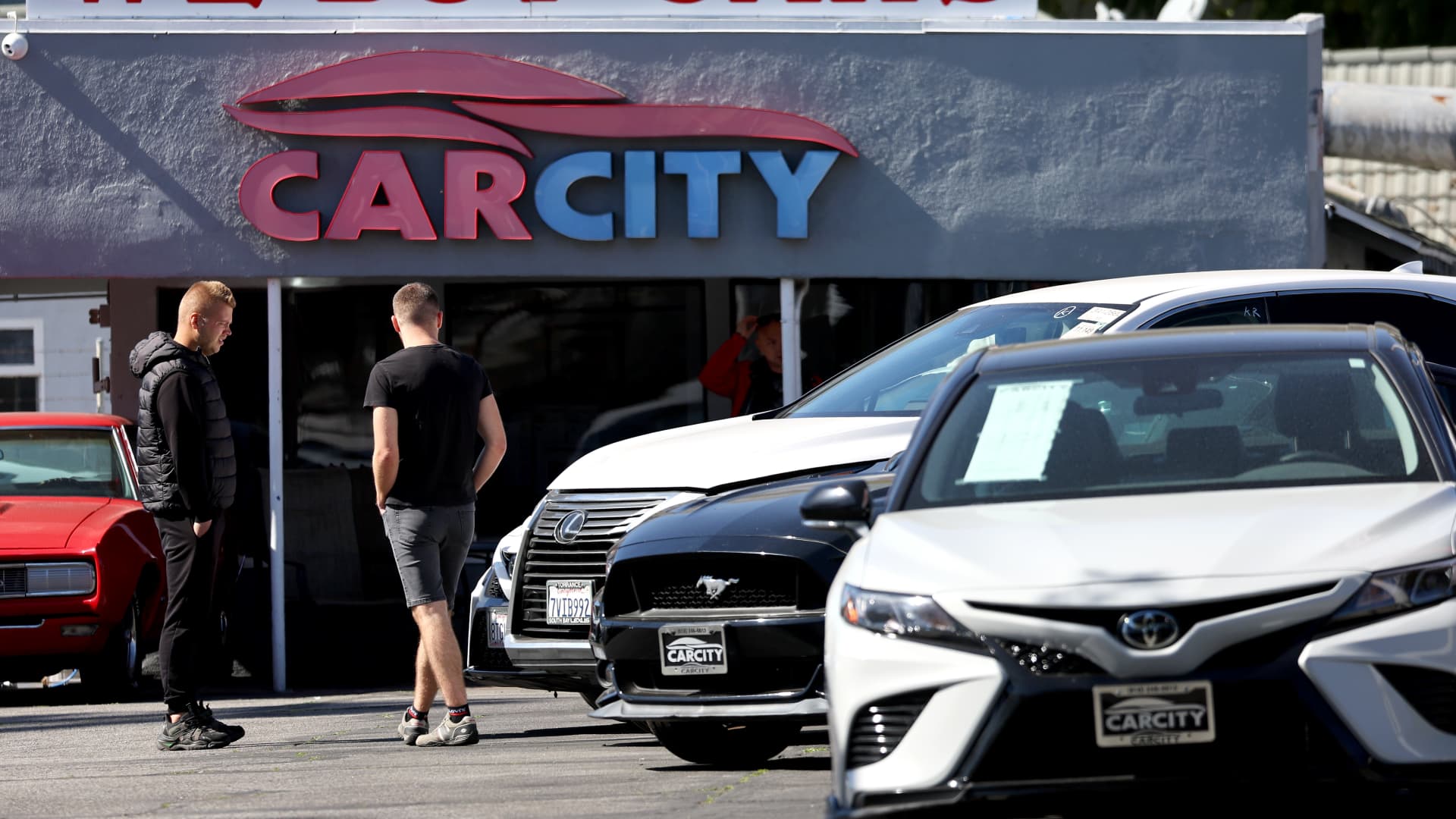
Customers browse in a used car lot in Glendale, California, Feb. 15, 2023.

Mario Tama | Getty Images News | Getty Images

DETROIT — Used car prices fell last month for the first time since October as gas prices rose amid the war in Iran.

Advertisement

Cox Automotive’s Manheim Used Vehicle Value Index — which tracks prices of used vehicles sold at its U.S. wholesale auctions — decreased 1.6% last month compared with March and were up 1.8% compared with the same month a year earlier.

Cox said affordability remains a key concern for buyers, which is driving increased demand for older vehicles and all-electric vehicles at Manheim auctions.

Gas prices at the end of April were up $1.12 per gallon compared with a year earlier to a national average of $4.30 a gallon, according to AAA. They’ve continued to rise since, with the national average hitting $4.56 as of Thursday.

“The conflict in the Middle East has now been ongoing for two months, and while energy prices backed off a bit in mid-April, they have reaccelerated to the upside: the price of gas just hit a high for the year and is up 47% since the end of February,” Cox Automotive chief economist Jeremy Robb said in a release. “Those higher prices are soaking up a lot of the extra money in consumers’ pockets, and currently there’s no end in sight.”

Advertisement

Retail prices for consumers traditionally follow changes in wholesale prices, which Cox forecasts to rise at a historically stable rate of about 2% this year. The average listed price of a used vehicle was $25,390 as of March, according to Cox. That was up roughly $100 from February.

The average listing price for a used EV remains more than $9,200 higher than the overall market, but new and used vehicle retailers have said the rapid rise in gas prices has led to higher EV sales following a slowdown after the end of federal incentives last year by the Trump administration.

Manheim’s electric vehicle index was up 7.2% year over year and up 1.4% from March.

April’s lower pricing follows a strong spring selling season, fueled by many consumers spending higher tax refunds to purchase or finance used vehicles, Cox said.

Advertisement
Choose CNBC as your preferred source on Google and never miss a moment from the most trusted name in business news.
Continue Reading

Business

MFs, retail investors keep buying these stocks for two straight quarters; many fall over 25% – Smart Money Moves

Published

on

MFs, retail investors keep buying these stocks for two straight quarters; many fall over 25% - Smart Money Moves

For retail investors, tracking where mutual funds allocate capital can offer valuable market insights, as these institutions typically invest after extensive research and with high conviction. An analysis of BSE-listed companies with a market capitalisation above Rs 3,000 crore shows that 52 stocks saw a consistent rise in ownership by both mutual funds and retail investors, defined as individual shareholders holding up to Rs 2 lakh in nominal share capital, across the last two quarters, from September 2025 to December 2025 and again from December 2025 to March 2026.

In terms of six-month share price performance, most of these stocks delivered negative returns. The top 10 laggards declined by more than 25%. However, on the positive side, the top three gainers generated returns ranging from 20% to 70% during the same period. (Data source: ACE Equity)

Continue Reading

Business

New York Fed finds surging gas prices hit low-income households hardest

Published

on

New York Fed finds surging gas prices hit low-income households hardest

A new report by the Federal Reserve Bank of New York finds that the recent rise in gas prices has affected households very differently based on their income level.

Energy prices hit a four-year high in March amid the Iran war, prompting the closure of the Strait of Hormuz, which is a chokepoint through which about 20% of the world’s oil supply passes through aboard tankers.

Advertisement

The New York Fed’s analysis finds that high-income households increased their nominal spending on gasoline the most and kept their real consumption at a level that was essentially unchanged when compared with pre-war spending patterns.

By contrast, low-income households decreased their real consumption of gasoline but also saw sharp increases in their nominal spending because of the higher gas prices, contributing to a so-called K-shaped pattern in gasoline consumption.

GAS PRICES SURGE PAST $4.50 NATIONALLY AS IRAN TENSIONS PRESSURE DRIVERS

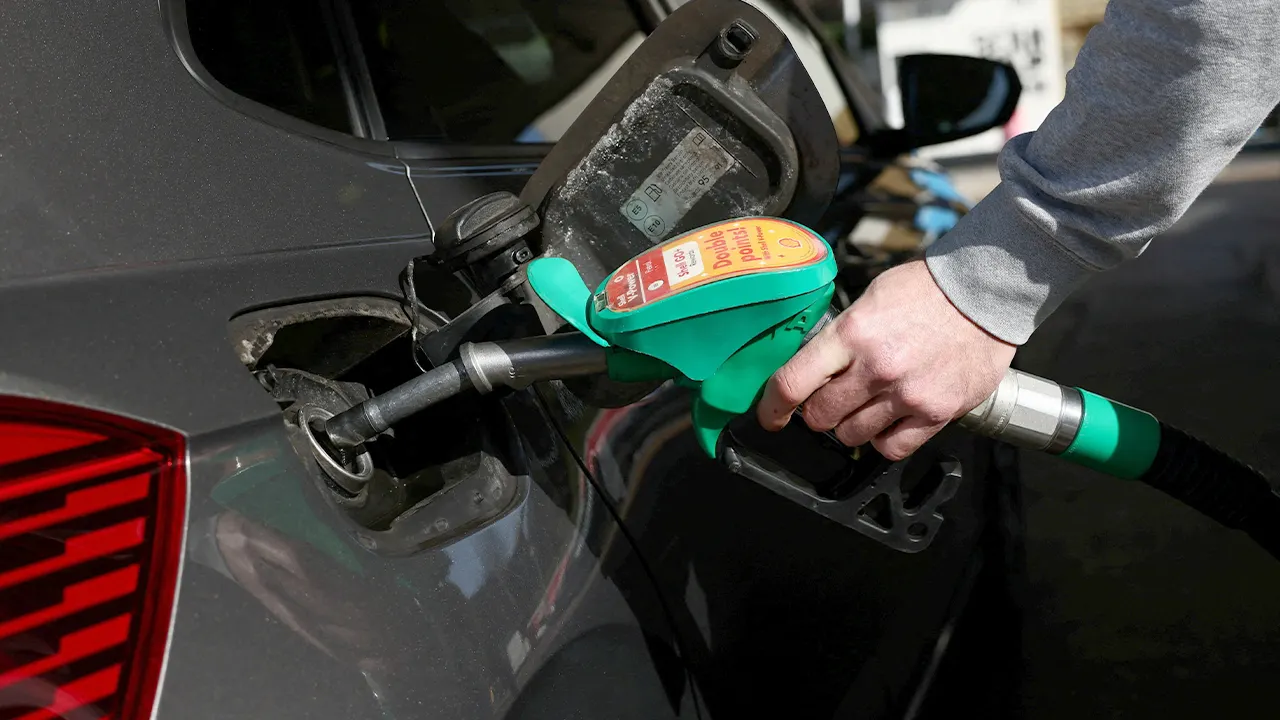
A driver refuels a vehicle at a London service station as energy costs climb amid Middle East tensions.

Low-income households pulled back on their gasoline spending the most among income groups, the New York Fed found. (Jack Taylor/Reuters)

The patterns in gasoline consumption are a qualitative match to what played out when energy prices rose in the wake of Russia’s invasion of Ukraine in 2022.

Advertisement

The New York Fed’s report used data from analytics firm Numerator that showed nominal gasoline spending rose over 15% in March, rising from 10% below its 2023 level to 5.5% above that mark.

That increase was driven by gas prices, as real gasoline consumption declined 3%, whereas the Advance Monthly Retail Trade Survey found spending at gas stations rose 14.5% in March.

CHEVRON CEO SAYS ECONOMIES ‘ARE GOING TO HAVE TO SLOW’ AS STRAIT OF HORMUZ CLOSURE DISRUPTS OIL SUPPLY

Cars line up at a Costco gas station in Bayonne, New Jersey, US, on Saturday, Dec. 9, 2023. Costco Wholesale Corp. is scheduled to release earnings figures on December 14. Photographer: Angus Mordant/Bloomberg via Getty Images

Consumers across income groups pulled back, although high-income households’ spending changed the least. (Angus Mordant/Bloomberg)

Gas prices also contributed to a K-shaped pattern among income groups, as low-income households increased their spending the least by 12%.

Advertisement

Despite that overall increase, low-income households cut their real gas consumption the most, buying 7% less gas, with higher prices contributing to the overall increase.

Among high-income households, their nominal gas spending rose by 19%, which was the most among the income groups, largely because they reduced their real gas consumption by the least at just a 1% decline.

RISING GAS PRICES ARE CRUSHING RESTAURANT SALES AS $4 A GALLON BECOMES TIPPING POINT FOR CONSUMERS

Oil tankers in the Strait of Hormuz.

Shipping traffic through the Strait of Hormuz went to a virtual standstill amid the Iran war. (Giuseppe Cacace/AFP via Getty Images)

Middle-income households had moderate increases in nominal spending and decreases in real consumption at gas stations, showing that the K-shaped consumption pattern for both nominal and real gasoline spending prevailed in March 2026.

Advertisement

The New York Fed economists explained that the K-shaped pattern has “opened up much more than before” in comparison to the 2022 shock caused by Russia’s invasion of Ukraine.

GET FOX BUSINESS ON THE GO BY CLICKING HERE

“Higher-income households have reduced real gas consumption only modestly and increased gasoline spending considerably compared with 2023,” they explained. “In contrast, lower-income households increased spending by much less and decreased real consumption by much more, potentially by carpooling or substituting to public transit where available.”

Advertisement
Continue Reading

Business

Tapestry, Inc. (TPR) Q3 2026 Earnings Call Transcript

Published

on

OneWater Marine Inc. (ONEW) Q1 2026 Earnings Call Transcript

Tapestry, Inc. (TPR) Q3 2026 Earnings Call May 7, 2026 8:00 AM EDT

Company Participants

Christina Colone – Global Head of Investor Relations
Joanne Crevoiserat – President, CEO & Director
Scott Roe – CFO & COO
Todd Kahn – CEO & Brand President of Coach

Advertisement

Conference Call Participants

Robert Drbul – BTIG, LLC, Research Division
Irwin Boruchow – Wells Fargo Securities, LLC, Research Division
Matthew Boss – JPMorgan Chase & Co, Research Division
Adrienne Yih-Tennant – Barclays Bank PLC, Research Division
Michael Binetti – Evercore ISI Institutional Equities, Research Division
Laurent Vasilescu – BNP Paribas, Research Division

Presentation

Advertisement

Operator

Good day, and welcome to this Tapestry conference call. Today’s call is being recorded. [Operator Instructions]

At this time, for opening remarks and introductions, I would like to turn the call over to the Global Head of Investor Relations, Christina Colone.

Advertisement

Christina Colone
Global Head of Investor Relations

Good morning. Thank you for joining us. With me today to discuss our third quarter results as well as our strategies and outlook are Joanne Crevoiserat, Tapestry’s Chief Executive Officer; and Scott Roe, Tapestry’s Chief Financial Officer and Chief Operating Officer.

Before we begin, we must point out that this conference call will involve certain forward-looking statements within the meaning of the Private Securities Litigation Reform Act. This includes projections for our business in the current or future quarters or fiscal years. Forward-looking statements are not guarantees, and our actual results may differ materially from those expressed or implied in the forward-looking statements. Please refer to our annual report on Form 10-K, the press release we issued this morning and our other filings with the Securities and Exchange Commission for a complete list of risks and other important factors that could impact our future results and performance.

Non-GAAP financial measures are included in our comments today and in our

Advertisement
Continue Reading

Business

Elon Musk Is Dissolving xAI. What That Means.

Published

on

Elon Musk Is Dissolving xAI. What That Means.

Elon Musk Is Dissolving xAI. What That Means.

Continue Reading

Business

Dabur Q4 Results: Cons PAT rises 15% YoY to Rs 369 crore, revenue up 7%; Rs 5.50 per share dividend announced

Published

on

Dabur Q4 Results: Cons PAT rises 15% YoY to Rs 369 crore, revenue up 7%; Rs 5.50 per share dividend announced
FMCG major Dabur India reported a consolidated net profit at Rs 369 crore in the March-ended quarter versus Rs 320 crore in the year ago period, implying a 15% uptick. The profit after tax (PAT) is attributable to the owners of the holding company.

The company’s revenue from operations in Q4FY26 was up 7.3% at Rs 3,038 crore versus Rs 2,830 crore posted in the corresponding quarter of the previous financial year.

The company’s Board of Directors recommended a final dividend of Rs 5.50 per equity share for the financial year 2025-26 and it will inform about the record date in due course. The Board has fixed the date of the fifty-first Annual General Meeting of its shareholders on Thursday, August 6, 2026.

The company’s India FMCG business posted 9.5% growth during the quarter, according to the company filing. The operating profit rose 12.5% during the quarter, reflecting strong execution in the domestic FMCG business and healthy underlying volume growth of 6%.

Advertisement

Revenue for the full year 2025-26 marked a 5% growth at Rs 13,193 crore, while net profit for the year reported a 7.4% growth at Rs 1,869 crore.


However, the PAT fell 34% sequentially compared to Rs 560 crore in Q3FY26 while the topline also declined 15% quarter-on-quarter versus Rs 3,559 crore in the October-December quarter of FY26.

Category growth

Dabur reported broad-based growth across key categories in Q4, led by a 27% rise in the Hair Care portfolio and 28% growth in Hair Oils. Home Care grew over 24%, Digestives rose around 15%, while Skin & Salon and the Badshah portfolio expanded 12% each. Toothpaste and OTC & Ethicals businesses posted over 7% growth. The company said strong brand positioning helped it navigate inflationary pressures, with gains across major segments including Honey, Health Juices, Oral Care and Foods. Dabur also recorded market share gains across 95% of its portfolio, led by Hair Oils, Digestives, Fruit Nectars and Air Fresheners.

International business

Dabur’s international business grew 2.5% during the quarter despite challenges in the Middle East, supported by strong growth in Sub-Saharan Africa, Bangladesh, UK & EU, and Namaste US operations.

Management take

Dabur India Limited Global Chief Executive Officer Mohit Malhotra said Dabur demonstrated agility in navigating the operating environment amid heightened geopolitical tensions in the Middle East that drove inflation, elevated freight costs, and impacted consumer demand in select markets.
“We delivered a resilient performance during the fourth quarter of 2025-26 on the back of proactive supply chain diversification by way of opening alternative supply routes to key geographies, disciplined cost controls, and calibrated price increases, combined with strong brand-led consumer engagement,” Malhotra said.

Advertisement

(Disclaimer: The recommendations, suggestions, views, and opinions given by the experts are their own. These do not represent the views of The Economic Times.)

Continue Reading

Business

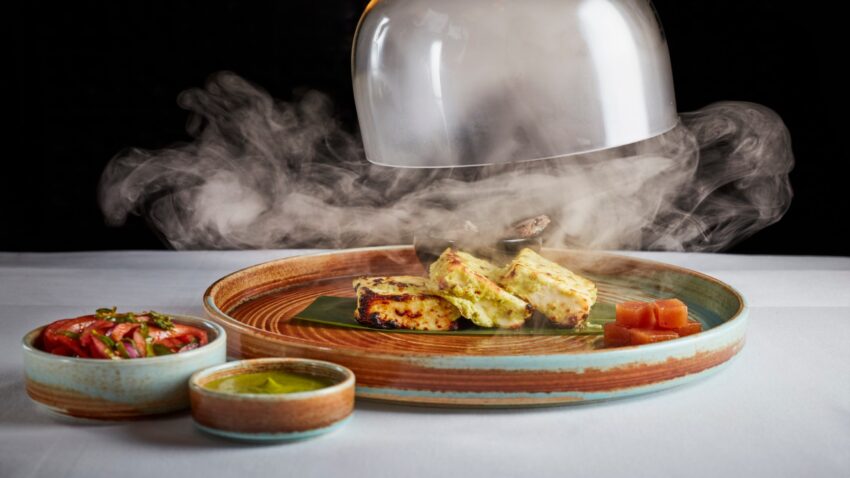
How Benares Restaurant Brings British and Indian Ingredients Together

Published

on

The story of two culinary cultures finding common ground on a plate in Mayfair

The story of two culinary cultures finding common ground on a plate in Mayfair

On paper, British seasonal produce and Indian spice do not seem like an obvious pairing. One tradition is rooted in the rolling farmlands and coastal waters of the United Kingdom. The other draws from a subcontinent of extraordinary culinary complexity, where spice routes shaped history and flavour has always been taken seriously. And yet, at Benares Restaurant in London, the two have been in conversation for over two decades, producing food that feels entirely natural rather than forced.

Starting With the Best Ingredients

The foundation of the menu at Benares Restaurant is a simple yet demanding principle: start with the finest seasonal British produce available and apply the depth of Indian spices and techniques to bring out its fullest potential. This is not fusion for its own sake. It is a considered approach to cooking that asks what happens when two great culinary traditions are allowed to genuinely influence one another.

The ingredients speak for themselves. Cornish seafood, prized for its freshness and quality, finds new expression through coastal Indian preparations that understand how to work with delicate fish and shellfish without overwhelming them. Welsh lamb, rich and full-flavoured, meets the warmth of Kashmiri spice in combinations that feel neither jarring nor predictable. Scottish venison, one of Britain’s finest game offerings, is handled with the kind of precision that Indian tandoor and tikka techniques have refined over centuries. Kentish vegetables, grown in some of England’s most productive farmland, are given new life through spice combinations that have been perfected over generations.

The Art of Balance

What makes this approach work at Benares Restaurant is balance. Indian cuisine is not a single flavour profile. It is a vast and varied tradition that encompasses everything from the delicate, milk-based preparations of the north to the fiery, coconut-rich dishes of the south. Applied thoughtfully, its techniques and spice combinations can enhance almost any ingredient without erasing its essential character.

Advertisement

British produce, at its best, has a clarity and honesty of flavour that responds well to this kind of treatment. A hand-dived scallop from Cornwall does not need to be disguised. It needs a preparation that respects its natural sweetness while adding a layer of complexity that makes it memorable. At Benares Restaurant, that is precisely what it gets.

Seasonality as a Guiding Principle

The menu at Benares Restaurant changes with the seasons, and this is where the British influence becomes most tangible. Indian cuisine has its own relationship with seasonality, of course, but the specific produce of the British Isles brings a deeply local rhythm to the kitchen. Spring brings one set of possibilities, autumn another. The kitchen works within those constraints and finds them generative rather than limiting.

This seasonal approach also means that no two visits to Benares Restaurant are quite the same. The philosophy remains constant, but its expression shifts with what is best and freshest at any given time of year. For regular guests, that is part of the appeal.

Two Traditions, One Table

The broader story of British and Indian culinary culture is, of course, long and complicated. The two have been intertwined for centuries, through trade, history, and the movement of people between the two countries. Benares Restaurant does not engage directly with that history, but it is worth acknowledging that when Indian and British ingredients meet on a plate in Mayfair, they are not strangers to one another.

Advertisement

What Benares Restaurant offers is something more refined than a historical footnote. It is a genuine and ongoing culinary dialogue, conducted at the highest level, between two traditions that have more in common than is sometimes assumed. The result is food rooted in both and diminished by neither, served at one of London’s most enduring fine dining destinations.

Advertisement
Continue Reading

Business

Lamar Advertising Company (LAMR) Q1 2026 Earnings Call Transcript

Published

on

OneWater Marine Inc. (ONEW) Q1 2026 Earnings Call Transcript

Operator

Excuse me, everyone, we now have Sean Reilly and Jay Johnson in conference. [Operator Instructions]

In the course of this discussion, Lamar may make forward-looking statements regarding the company, including statements about its future financial performance, strategic goals, plans and objectives, including with respect to the amount and timing of any distribution to stockholders and the impacts and effects of general economic conditions, including inflationary pressures on the company’s business financial condition and results of operations. All forward-looking statements involve risks, uncertainties and contingencies, many of which are beyond Lamar’s control and which may cause actual results to differ materially from anticipated results. Lamar has identified important factors that could cause actual results to differ materially from those discussed in this call in the company’s first quarter 2026 earnings release and its most recent annual report on Form 10-K. Lamar refers you to those documents.


Lamar’s first quarter 2026 earnings release, which contains information required by Regulation G regarding certain non-GAAP financial measures, was furnished to the SEC on a Form 8-K this morning and is available on the Investors section of Lamar’s website, www.lamar.com.

Advertisement

I would now like to turn the conference over to Sean Reilly. Mr. Reilly, you may begin.

Sean Reilly
CEO & President

Thank you, Katie. Good morning all, and welcome to Lamar’s Q1 2026 Earnings Call. The year is shaping up quite well for us. Our first quarter results exceeded our internal expectations on both the top

Advertisement
Continue Reading

Trending

Copyright © 2025