

Business
Focus on structural trends, ignore market noise: Hiren Ved

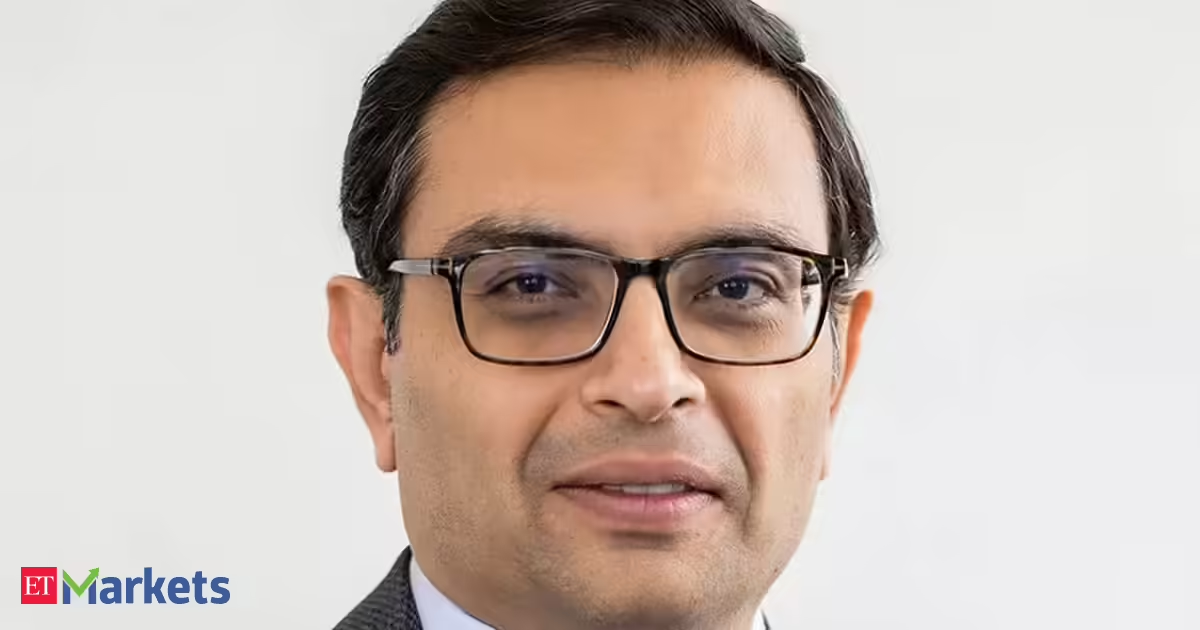
Speaking on the current investment landscape to ET Now, Hiren Ved, from Alchemy Capital Management, argued that while markets are efficient in pricing news, they often struggle to accurately assess the long-term implications behind those headlines.
Responding to a question from Ayesha Faridi from ET Now on whether markets have already factored in the repercussions likely to unfold over the next six months, Ved highlighted the distinction between narratives and reality.
“In today’s day and time, news gets discounted very quickly. But there is a difference between discounting news and trying to discount reality. And sometimes there is a gap between the two because, as I said, the narrative builds up, and the narrative may be right or it may be wrong. Only with time and in hindsight do you get to know that.”
Ved noted that investors frequently react sharply to headlines, often overlooking broader structural developments. He cited the market’s reaction following the 2024 general election as an example.

“In mid-2024, when the expectation was that this government would get a complete majority and they did not, while they had to take support from their NDA partners, suddenly the theme on defence and capex just gave way because people immediately reacted to that news to say that ab to capex nahi hoga. Everybody, if you remember, went and bought consumer stocks.”
However, he pointed out that the reality eventually reasserted itself.”Maybe these sectors or companies underperform for a year, but the reality caught on and the trend reasserted itself.”
According to Ved, successful long-term investing requires patience and conviction rather than reacting to every headline.
“I do not think long-term investing works that way. You have to sometimes step back, think, and really understand. Finally, what I have seen over the years in the markets is that numbers speak for themselves. Narratives can come and go, news can be good or bad, but it is finally the numbers that matter.”
Using oil prices as an example, Ved said markets often reveal reality more effectively than political commentary.
“Trump may flip and flop every morning and evening, but whether we are coming closer to a resolution of the war or not, the oil price will tell you the story because that is the reality. All the wisdom and all the risk-taking will get reflected in that one variable.”
A Global Capex Supercycle
When asked about the long-term structural story driving markets, Ved identified what he believes is one of the defining investment themes of the decade: a global capital expenditure supercycle.
“In my view, we are in a global capex supercycle. Whether it is because of disruption, geopolitics, wars, or oil shocks, it is very clear that every country has realised that certain foundational capabilities are critical.”
He explained that countries are increasingly prioritising defence, semiconductor technology, energy security, and supply-chain resilience.
“Every large country that has an ambition to become big is today trying to figure out how it can be self-sufficient or hedge itself. How do you hedge your supply chains? That is driving a large global capex cycle, and that is a reality.”
Ved believes these investments will continue regardless of short-term geopolitical developments.
“Even if the war stops tomorrow and oil prices come down, as a country we cannot stop investing in electrification. We cannot stop trying to do capex to achieve energy security because once you have been hurt, you have to address it at a very fundamental level.”
India’s Hidden AI Opportunity
One of the most debated narratives in recent months has been whether India has a meaningful role to play in the artificial intelligence revolution. Ved challenged the common perception that AI opportunities are limited to the United States.
“The big narrative today in India is that India has no AI play. Agar aap ko AI khelna hai toh you have to go to the US. We are an anti-AI play.”
He argued that investors often overlook the infrastructure ecosystem supporting AI development.
“Currently in AI, most of the spending is happening at the infrastructure level. People are setting up data centres and related infrastructure.”
To illustrate the point, Ved shared findings from a custom index created by his team.
“I told my team to build a custom India AI index. These are all physical businesses like power equipment, cooling equipment, cables, and everything that goes into building a data centre. An equal-weighted 12-stock India AI index, in three years, in dollar terms, has delivered a 52% compounded return versus the Magnificent Seven plus Nvidia, which has delivered a 24% compounded return.”
For Ved, the lesson is straightforward.
“If you look hard enough and if you are creative, there is always a way to play a trend. Narratives are narratives. The more narratives there are, the more opportunities there are to make money because you can find an anti-narrative. You can find the reality that the narrative does not represent, and that is where the profit-making opportunity is.”
Earnings Fears May Be Overstated
The discussion also touched on investor concerns surrounding corporate earnings amid global uncertainties and rising energy prices.
Sajeet Manghat pointed out that despite supportive policy measures and external tailwinds such as currency movements, markets remain unconvinced about the growth outlook.
Ved acknowledged that memories of previous shocks continue to influence investor behaviour.
“If you look at what happened in 2022 when the Russia-Ukraine war broke out, we had a similar geopolitical shock, an energy shock, and a supply-chain shock. For about two quarters, we had a significant earnings slowdown. So that playbook is still very fresh in the minds of investors.”
While he expects some margin pressure in the near term, Ved believes the corporate sector is much better prepared today.
“It is fair to say that there will be some compression in margins. But I also believe that a depreciation of the currency and a little bit of pick-up in inflation are actually very good for corporate profitability.”
He noted that businesses have learned from previous inflationary cycles and are likely to pass on higher costs more effectively.
“My sense is that this time, learning from the 2022 cycle, corporates are going to become much smarter in terms of passing on higher costs to the end consumer.”
Ved also challenged fears that inflation will spiral uncontrollably.
“One of the narratives was that because of tariffs, US inflation would spike. But US inflation did not spike. It only picked up recently because of the energy shock. The latest readings were largely driven by energy prices.”
Focus on Reality, Not Headlines
While uncertainty remains a constant feature of markets, Ved’s overarching message was that investors should focus on enduring structural trends rather than getting distracted by daily news flow.
“Because of an old playbook and correlations that are still fresh in the minds of investors, people feel ki earnings mein bahut bada impact aayega. I think the jury is still out. My feeling is that we will be okay with earnings, and once the market is convinced about that, it will respond.”
As markets navigate geopolitical uncertainty, technological transformation, and shifting economic conditions, the distinction between narrative and reality may prove to be one of the most important factors determining investment success in the years ahead.



Founder of Bern Factor LLC, an independent research and publishing firm located in Virginia. Author of “Making Wall Street Irrelevant – Successful Investing Made Simple.” I have more than 40 years of investing and analysis experience. I am a former CPA (1990 -2017) and became a CFA charter holder in 2000. I consider myself an expert in Quantitative and Qualitative analysis and have extensive experience in Technical Analysis. I also have a deep interest in stock market history and hold degrees in Economics (BS) and Management Information Systems (MBA). I have been actively involved with investment analysis since 1985 but have been a student of investing since the 1960s. I owned my first individual stock position while still in high school. I am a student of Benjamin Graham and Warren Buffett. I have achieved a uniquely diverse experience from multiple careers that has allowed me to develop a broad perspective enabling me to look at the big picture of macroeconomics all the way down to the detail of a retail unit or factory floor. In my youth I was in retail, then served in reconnaissance during my tours in Vietnam. I have been a blue collar, union worker in a factory and a manager in services, hospitality and transportation as well as a manager of professional staffs. I have more than 20 years of experience each in both the public and private sectors. I have personal points of reference that many analysts will never have. I bring more to the table than just the theories and models I have studied or built.
Analyst’s Disclosure: I/we have a beneficial long position in the shares of DPZ either through stock ownership, options, or other derivatives. I wrote this article myself, and it expresses my own opinions. I am not receiving compensation for it (other than from Seeking Alpha). I have no business relationship with any company whose stock is mentioned in this article.
DISCLAIMER: This analysis is not advice to buy or sell this or any stock; it is just pointing out an objective observation of unique patterns that developed from our research. Factual material is obtained from sources believed to be reliable, but the poster is not responsible for any errors or omissions, or for the results of actions taken based on information contained herein. Nothing herein should be construed as an offer to buy or sell securities or to give individual investment advice.
Seeking Alpha’s Disclosure: Past performance is no guarantee of future results. No recommendation or advice is being given as to whether any investment is suitable for a particular investor. Any views or opinions expressed above may not reflect those of Seeking Alpha as a whole. Seeking Alpha is not a licensed securities dealer, broker or US investment adviser or investment bank. Our analysts are third party authors that include both professional investors and individual investors who may not be licensed or certified by any institute or regulatory body.

Micron: AI's Memory King Still Can't Escape The Cycle
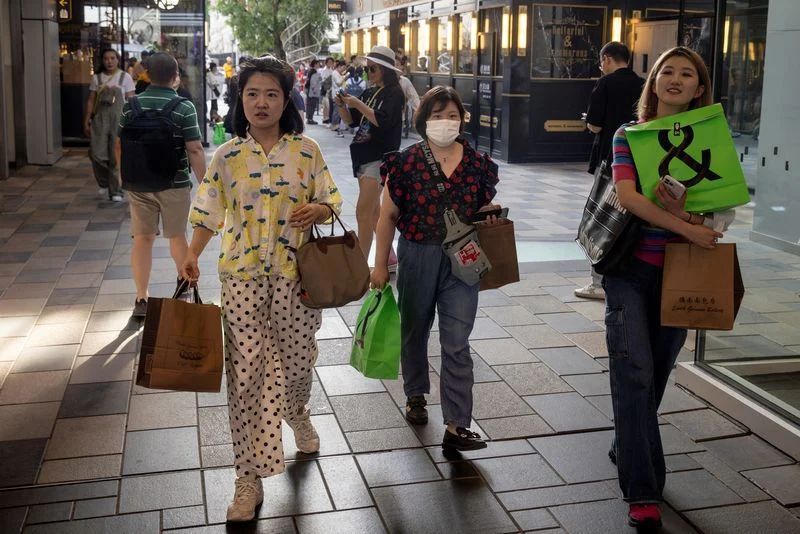

China’s industrial output growth quickens in May but retail sales and investment contract
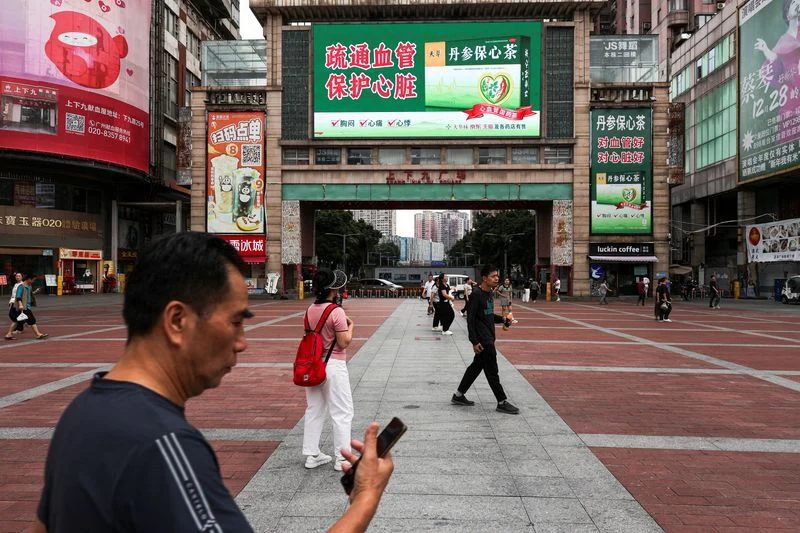

China’s May retail sales fall for first time in over three years
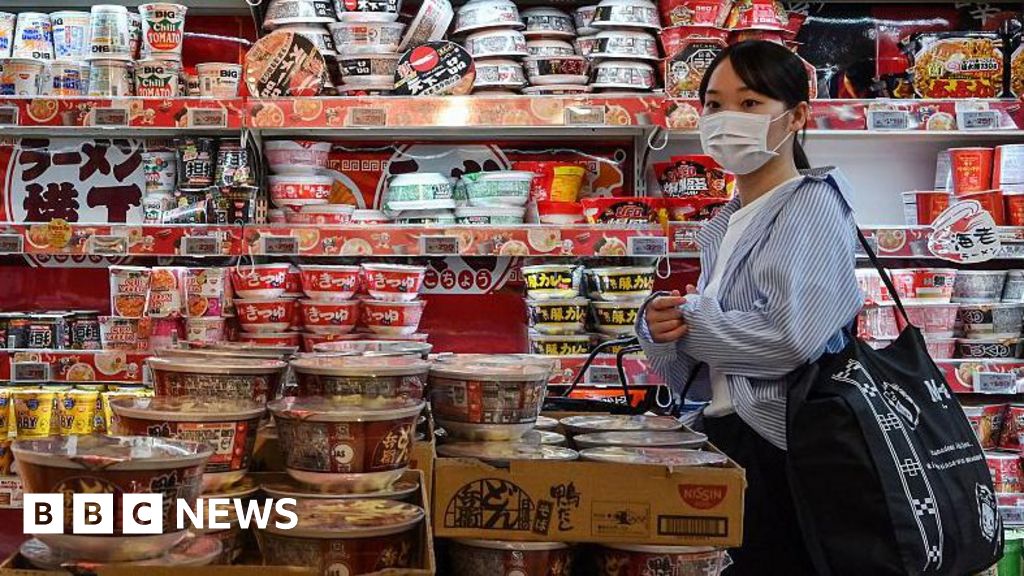
“Even if the situation remains unclear, should it be judged that upside risks to prices outweigh downside risks to economic activity, it will be necessary to thoroughly discuss the pros and cons of raising the policy interest rate,” Ueda earlier this month.
SoftBank Vision Fund CFO to leave company after a decade, Reuters reports
Asia stocks mixed on weak China data; Nikkei, ASX fall ahead c.bank meetings

While the durability of the rally will depend on the finalisation of a deal, analysts said downside risks appear limited for now.
The NSE Nifty 50 gained 231 points, or 1%, to close at 23,853.90, after briefly crossing the 24,000 mark for the first time since May 29. The S&P BSE Sensex advanced 736.38 points, or 1%, to end at 76,264.33. Over the past two sessions, both indices have rallied as much as 3.3%.
 Agencies
fingers crossed over peace Sensex and Nifty rally 3.3% in past two sessions on short covering; ₹200 cr FPI inflow on Mon
“The rally on Monday and Friday was driven by short covering on hopes of a peace deal between the US and Iran, and while the sustainability of gains is not certain, the deal seems to be around the corner,” said Nilesh Jain, VP-Head of Technical and Derivative Research, Centrum Finverse.
The US and Iran said they have reached a new ceasefire agreement that will end a US blockade of Iranian ports and reopen the Strait of Hormuz, ending the months-long conflict that has kept investors on tenterhooks and kept oil prices elevated.
With both sides showing willingness to bring the war to an end, Brent crude futures fell more than 5% to $85.8 a barrel on Monday. Across Asia, South Korea, Japan surged 5.2% and 5%, respectively, while Taiwan gained 2.8%. China and Hong Kong rose 1.6% and 0.5%.
“The reaction in oil prices after the peace deal was announced reassured investors that crude prices are not expected to sustain at elevated levels for longer and triggered a rally,” said Vaiibhavv Chugh, chief executive officer, Abakkus Mutual Fund. “The fear has toned down considerably, and optimism could build further,” he added.Realty stocks led the gains, with the Nifty Realty index surging 4%. The Nifty Consumer Durables and Auto indices climbed 2.9% and 2.6%, respectively.
Foreign portfolio investors bought shares worth a net ₹200 crore on Monday – after 11 consecutive sessions of selling, while domestic institutional investors bought shares worth ₹3,189.3 crore. So far in June, foreign investors have sold shares worth ₹41,967 crore.
“Foreign investors have pared some of their short positions, which contributed to the rally. However, towards the latter part of the session, participants booked some profits in the derivatives market,” said Abhilash Pagaria, Head of Alternative & Quantitative Research at Nuvama Wealth. If the deal is finalised, a significant source of uncertainty could be removed, potentially encouraging foreign investors to increase allocations to Indian equities, he said.
The India VIX volatility index fell 2.5% to 14.4. After spiking to around 29 at the height of the conflict, the gauge has retreated to more comfortable levels, suggesting investor anxiety has eased. “For the gains to be sustainable, Nifty must decisively close above 24,000,” said Jain.
He said intermittent declines could not be ruled out, but the Nifty could gradually move towards 24,500 during the June series if it breaks above the 24,000 mark.
Broader markets outperformed the benchmarks, with the Nifty Midcap 150 and Nifty Smallcap 250 rising 1.5% and 1.3%, respectively. Over the past week, the two indices have gained 1% and 3%.

Check out what’s clicking on FoxBusiness.com.
More than 500,000 packages of macaroni and cheese sold at Aldi stores nationwide have been recalled because they may contain undeclared soy lecithin, a soy-derived ingredient that can pose a risk to people with soy allergies or sensitivities.
According to the Food and Drug Administration, 58,405 cases of Park St. Deli Macaroni & Cheese are affected. Each case contains nine 20-ounce packages, bringing the total number of impacted packages to 525,645.
The plastic tubs of macaroni and cheese were sold inside paperboard sleeves.
FDA ISSUES HIGHEST-RISK RECALL OF ALFREDO SAUCE SOLD IN 41 STATES

More than 500,000 packages of macaroni and cheese sold at Aldi stores nationwide have been recalled. (Paul Weaver/SOPA Images/LightRocket via Getty Images / Getty Images)
BEF Foods Inc., the product maker, initiated the voluntary recall on March 23, and the FDA classified it as a Class II recall on June 10.
A Class II recall means use of or exposure to the product may cause temporary or medically reversible adverse health consequences, or that the probability of serious adverse health consequences is remote, according to the FDA.
Customers are urged not to consume the affected products and to return them to the place of purchase for a full refund.
MORE THAN 17K COFFEE MAKERS RECALLED AFTER DOZENS OF REPORTED BURN INJURIES

The FDA said 58,405 cases containing nine 20-ounce packages each of the Park St. Deli Macaroni & Cheese are affected by the recall. (iStock / iStock)
Lecithin is a group of chemicals the body uses to move fats, according to the University of Rochester Medical Center.
They are found in various foods, including egg yolks, soybeans, wheat germ, peanuts and liver. Many people know lecithin as the oily film on their frying pan when they use a nonstick cooking spray.
Some people also take them as supplements. They can come in capsules, liquid or granules.
The FDA classified the recall as a Class II recall last week. (iStock / iStock)
GET FOX BUSINESS ON THE GO BY CLICKING HERE
Lecithin is used in the food industry as an additive to combine foods, with salad dressing being one example.
Soy lecithin emulsifies ingredients like oil and water to blend the salad dressing into a smooth consistency, Judy Simon, a clinical dietitian nutritionist at the University of Washington, previously told USA TODAY.
Indigenous businesses and groups are starting to take on-country water monitoring and management into their own hands.

Got FREE Petrol #finance #shorts

The Summit Indoor Adventure Centre set to reopen in Selby

Domino’s Pizza Stock For A Rising Dividend And Appreciation (NASDAQ:DPZ)


-

 Business2 days ago
No Jackpot Winner as $257 Million Prize Rolls Over to $269 Million Monday Draw
-

 Crypto World4 days ago
Oppenheimer backs SpaceX as $70 billion retail frenzy builds
-

 Crypto World4 days ago
Markets Rally as SpaceX IPO Looms Amid Iran Tensions and Inflation Surge
-

 Fashion3 days ago
Weekend Open Thread: Tuckernuck – Corporette.com
-
 Crypto World1 day ago
Zimbabwe Requires Crypto Businesses to Register Annually Under New FIU Regulations
-

 Entertainment7 days ago
The Ryan Gosling True Crime Thriller On Netflix That Gets Even Stranger, Stream It Now
-
 Sports6 days ago
Bangladesh beat Australia after 20 years in ODIs, register only their second win over six-time world champions | Cricket News
-

 Tech3 days ago
NanoClaw integrates JFrog registries to secure AI agent downloads
-

 Crypto World3 days ago
Bitget enters Argentina’s regulated crypto market through PSAV registration
-

 Tech4 days ago
This Week In Security: Microsoft On Microsoft, Register Your Domains, Linux On ARM, And FreeBSD Joins The File Cache Club
-
 Tech5 days ago
Dutton Ranch star claims they ‘didn’t see any disruption’ on set following Chad Feehan’s exit from Yellowstone spinoff fueled by Taylor Sheridan clash rumors
-

 NewsBeat4 days ago
El Nino has formed in the Pacific and could set records, forecasters say
-

 Politics5 days ago
Politics Home | Healey Resignation Is “Colossal Failure Of Government”, Says Former Labour Defence Secretary
-
 Tech6 days ago
‘This is Seattle’s position on AI’: City Council votes unanimously to pause big new data centers
-
 Business6 days ago
Thailand Ranks Second Worldwide for AI Adoption Growth, Microsoft Reports
-
 Entertainment4 days ago
Donnie Wahlberg & More Heat Up Las Vegas at Circa’s Barry’s Downtown Prime
-

 Sports5 days ago
First Time Since 1971: Australia Register Historic Low In ODI Cricket
-
 Tech4 days ago
Opendoor Ends India Operations, Fueling a Bigger Conversation About AI and Outsourcing
-

 Politics5 days ago
Belfast burns, while Met chief points finger at Iran and Russia
-

 NewsBeat3 days ago
FBI searches office of Ohio voter registration group
You must be logged in to post a comment Login