Connect with us

Business

Foodservice becoming more important to Hormel Foods

Published

on

Foodservice becoming more important to Hormel Foods

BOSTON — Hormel Foods Corp.’s Foodservice business unit accounts for approximately one-third of company-wide sales and half of its profits. The ascension of the business unit within the organization reflects the pressures foodservice operators are under to better manage costs and streamline operations.

“I think if you step back and look at our Foodservice performance over time, we have proven the business model we have to be very unique and durable to grow even in down markets when industry challenges persist,” said John Ghingo, president of the company, during a Sept. 9 presentation at the Barclays Global Consumer Staples Conference.

During the third quarter of fiscal 2026, ended July 26, Hormel’s Foodservice business segment profit rose 3% to $144.5 million from $141 million the year before. Quarterly sales rose 2% to $1 billion from $987 million the year before.

Ghingo identified three attributes of the business unit he sees fueling additional growth.

Advertisement

“One is our value-added portfolio and the innovation we continue to bring to that portfolio,” he said. “We need to continue to create more value.”

Second is the company’s direct sales team that works with operators to communicate the strengths of the Foodservice unit to operators.

“Our direct sales force is truly a unique engine of culture, talent, capability, and the work they do with our operator partners is critical,” Ghingo said. “They’re gathering insights. They’re building relationships. They’re being creative and solving problems in the kitchen with the operator partners and then bringing back solutions.

“And, so, when you’re doing that even in a challenged environment, you can grow the top line because those operators will gravitate to the partner who’s solving the problems they’re dealing with.”

Advertisement
AdobeStock_385947789.jpg

Hormel Foods’ Flash 180 chicken platform is an example of how the Foodservice business unit is serving its customers.

| Photo: ©EXQUISINE – STOCK.ADOBE.COM

Finally, Ghingo said Hormel’s diversified foodservice customer base is an opportunity for the company.

“So, whether you’re talking commercial, noncommercial, independence chains, geographic diversity, channel diversity,” he said. “So, that gives us the opportunity to play different channels where we see pockets of growth and pockets of opportunity to keep the growth engine going.”

An effective foodservice solution identified by Ghingo is Hormel’s Flash 180 chicken platform.

Advertisement

“If you look at the demand space in foodservice around breaded chicken, it’s one of the fastest-growing areas,” he said. “Consumers, diners want more breaded chicken, whether it be chicken tenders, whether it be fried chicken sandwiches, but if you’re an operator … (and) you want to sell more chicken, it gets difficult.

“You’re bringing raw chicken (and) it takes time; you have to handle it; you have to batter/bread in the fryer, 10 to 12 minutes. So, we’re bringing through our Flash 180 chicken platform. One-hundred and eighty seconds from package to plate, pre-prepped. So, it’s super simple to execute (that) saves time …. So, that’s an example of a solution.” 

Continue Reading
Click to comment

You must be logged in to post a comment Login

Leave a Reply

Business

Tesla reopens Roadster reservations ahead of Texas launch event

Published

on

Tesla reopens Roadster reservations ahead of Texas launch event

Tesla has reopened reservations for its long-delayed next-generation Roadster, asking customers to put down $50,000 weeks before the company unveils a redesigned version of the vehicle.

According to Tesla’s reservation portal, securing a spot requires an initial, fully refundable $5,000 credit card payment. Customers must then make a $45,000 wire transfer within 10 days to complete the reservation.

Advertisement

The renewed push for reservations comes nearly nine years after CEO Elon Musk first unveiled a prototype of the next-generation Roadster in 2017. Following years of delays, Tesla is preparing to unveil the redesigned vehicle on Oct. 1 at an event in Texas.

TESLA RAISES CYBERTRUCK PRICES ON 2 US MODELS

Original Tesla Roadster

The Tesla Roadster, the world’s first highway-capable all-electric car available in the United States, is displayed at its production debut in the Tesla Flagship Store on May 1, 2008, in Los Angeles, California. (Vince Bucci/Getty Images)

“New Tesla Roadster Unveil 10.01,” Musk recently wrote on social media platform X after Tesla posted a “Go for launch” teaser for the event. Musk has also said the presentation will be a “banger” and said during a recent appearance at the All-In Summit that the company needs a live audience to vouch that what they see “is not AI.”

TESLA FILES PLANS FOR PROPOSED $10.1B TEXAS SOLAR MANUFACTURING PLANT

Advertisement

The event could include a demonstration of a limited-edition Roadster equipped with cold-gas thrusters developed in collaboration with SpaceX, according to recent reporting. Tesla’s teaser imagery appears to lean into that possibility, showing the vehicle against a launch-themed backdrop.

Ticker Security Last Change Change %
TSLA TESLA INC. 374.65 +10.38 +2.85%

The Roadster program has reportedly evolved significantly from its earlier design. Tesla abandoned one approach based on Model S Plaid components in favor of developing an all-new carbon-fiber hypercar, according to The Information.

tesla roadster

The Tesla Roadster is on display at the Tesla Giga Texas manufacturing facility during the “Cyber Rodeo” grand opening party on April 7, 2022, in Austin, Texas.  (Suzanne Cordeiro/AFP via Getty Images)

TESLA TOUTS 380,000 UNSUPERVISED ROBOTAXI MILES WITH ‘ZERO NOTABLE INCIDENTS’

Tesla originally unveiled the next-generation Roadster in November 2017 and said deliveries would begin in 2020. At the time, the company advertised a $200,000 base price, acceleration from zero to 60 mph in 1.9 seconds and a 620-mile range. Tesla also took $250,000 payments for a limited “Founders Series” version.

Advertisement

The vehicle never entered production as planned and has faced repeated delays in the years since.

CLICK HERE TO GET FOX BUSINESS ON THE GO

It remains unclear what Tesla will charge for the redesigned Roadster or how the company will handle customers who placed reservations years ago. Tesla did not immediately respond to a request for comment about reservation priority or updated vehicle specifications.

Reuters contributed to this report. 

Advertisement
Continue Reading

Business

Chicago Fed President Goolsbee rejects calls for Fed rate cuts to ease US debt burden

Published

on

Chicago Fed President Goolsbee rejects calls for Fed rate cuts to ease US debt burden
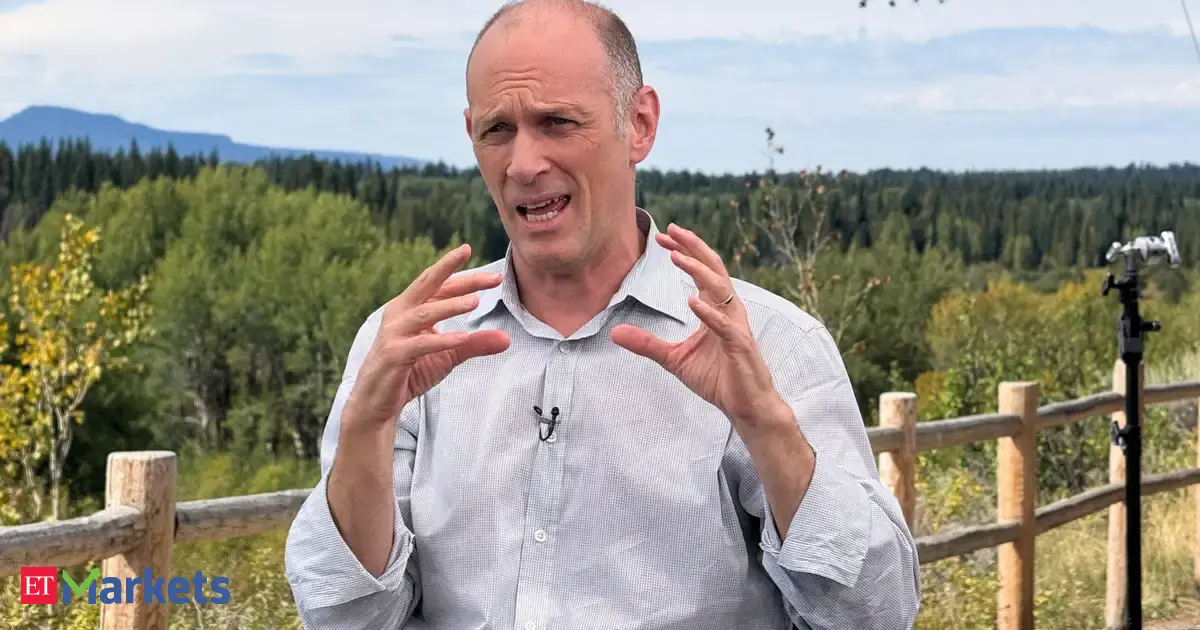
Rejecting calls for the Federal Reserve to cut interest rates to ease the government’s debt burden, Chicago Fed President Austan Goolsbee said on Monday that such demands underscore the need for central-bank independence, Reuters reported.

Speaking in London, Goolsbee said fiscal policy and deficits should remain “background weather” for the Fed and matter only when they affect inflation.

“Should the Fed try to reduce the rates to make the deficit smaller or to make it less costly to increase the debt?” Goolsbee asked. “Let’s be a little careful with that. … Because I think that is the canonical argument” for central bank independence.

Goolsbee described efforts to push interest rates lower as government debt rises as a “monetise the debt” argument. Economists warn such a move could fuel inflation and backfire by raising market borrowing costs as inflation expectations rise, Reuters reported.

Advertisement

President Donald Trump has urged the Fed to cut its policy rate to around 1%, well below the current 3.75–4% range. Meanwhile, rising long-term Treasury yields are increasing the cost of financing annual deficits equivalent to about 6% of US economic output.


Strong demand may warrant faster Fed rate hikes
US inflation may no longer be driven solely by tariff and energy-price shocks, with strong demand also adding to price pressures and potentially requiring the Federal Reserve to raise interest rates more quickly, Chicago Fed President Austan Goolsbee said on Monday.Inflation over the past 18 months was initially attributed to tariffs and then to oil-price shocks. Policymakers were inclined to “look through” these supply-side pressures without raising borrowing costs, expecting them to fade over time, Goolsbee said at an event hosted by the Official Monetary and Financial Institutions Forum in London.

However, supply-driven inflation has proved persistent, while evidence suggests that robust demand is broadening price pressures. Goolsbee said booming investment in artificial intelligence could lift prices across the economy, while elevated services inflation indicates that the problem extends beyond the latest oil shock.

“If the through line is that it’s coming from overheating demand, I think the implication is the rate response is more aggressive and more and more front-loaded,” he said. Recent economic data and discussions with businesses suggest “that some of it maybe is coming from overheating demand.”

“If demand overheats, there is no ambiguity about how the Fed needs to respond,” Goolsbee said, referring to the potential need for higher interest rates. He added that AI investment could be “spilling out of its own lane and raising aggregate output beyond what the economy can absorb.”

Advertisement

The Fed raised its policy rate by a quarter of a percentage point last week. Fed Chairman Kevin Warsh subsequently highlighted the strength of consumer spending, business investment and other demand-side indicators.

Policymakers also removed language from their policy statement attributing elevated inflation to “supply shocks that have driven price increases in certain sectors, including energy.” The revised statement simply said, “inflation remains elevated”.

(Disclaimer: This article is based on inputs from agencies. These do not represent the views of The Economic Times)

Advertisement
Continue Reading

Business

Bank of England plans new site to expand Leeds office

Published

on

Business Live

The Bank of England has secured Capitol House in Leeds to replace Yorkshire House, with a move planned for late 2028. It previously announced plans for at least 500 staff in the city by 2027.

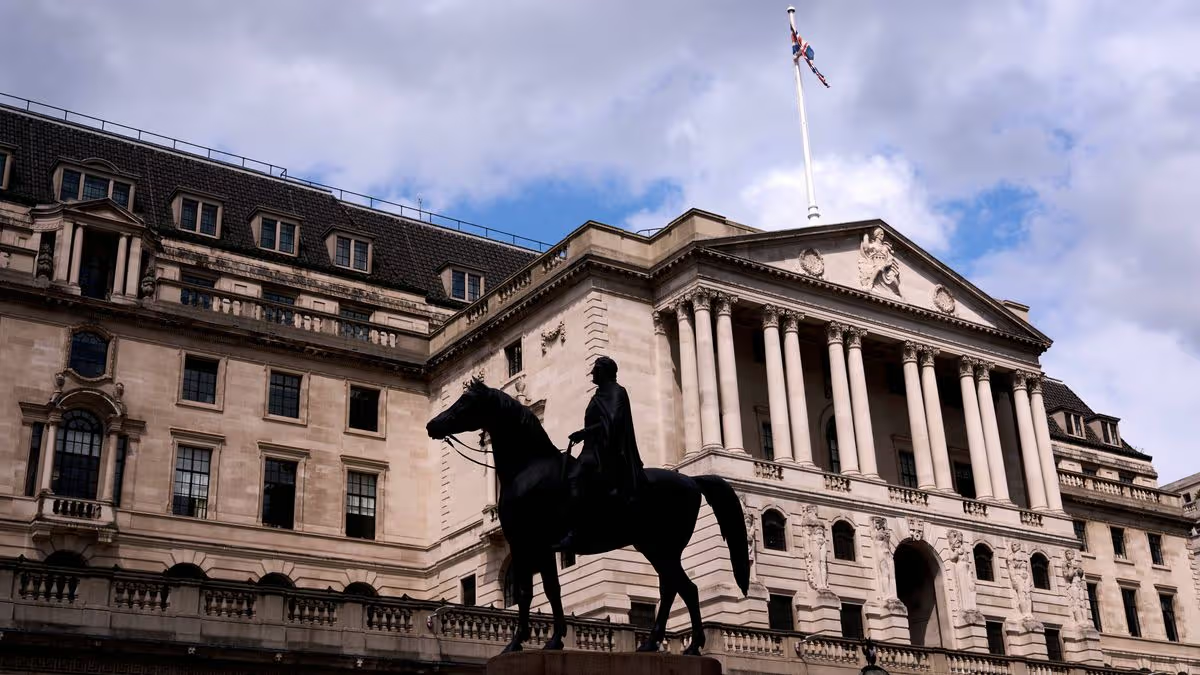
The Bank of England

The Bank of England offices at Threadneedle street in London.(Image: PA)

The Bank of England is preparing to launch a new office in Leeds as it continues to strengthen its foothold in the city.

Britain’s central bank has secured a long-term base at Capitol House in Bond Court, Leeds, which it says will accommodate its “growing headcount” in the city and ultimately replace its existing premises at Yorkshire House.

Advertisement

The Bank currently employs just under 300 staff in Leeds, having previously announced ambitions to grow its West Yorkshire workforce to at least 500 by 2027. The relocation to Capitol House is scheduled for late 2028.

Bank governor Andrew Bailey said: “The Bank’s new office in Leeds is an important milestone in our long-term commitment to the city. We have seen first-hand the value of the exceptional talent, expertise and fresh perspectives that Leeds and the wider region offer.

“Moving to Capitol House strengthens our presence across the UK and helps ensure the Bank better reflects and represents the people, businesses and communities we serve.”

Tracy Brabin, mayor of West Yorkshire, said the move would support efforts to drive growth across the regions.

Advertisement

She said: “The Bank of England putting down even deeper roots in Leeds is a powerful endorsement of our Northern Square Mile, and signals a national belief in our region’s economic future.”

She added: “The Bank establishing a permanent base in Leeds won’t just be good for the people of West Yorkshire – it will help ensure that the future of our national economy is shaped by voices from across our regions and nations.

“That is how we’ll deliver good growth in every postcode and build a stronger, brighter UK economy that works for all.”

The enhanced presence in Leeds also forms part of a wider restructuring of its property portfolio, known as its location strategy programme, which will see it renovate its historic Threadneedle Street headquarters and reportedly close the neighbouring Moorgate site.

Advertisement

The Bank stated the Threadneedle Street renovation is “designed to allow consolidation of the Bank’s property footprint in London by end-2028”.

The Bank originally opened a Leeds branch in 1827 under Thomas Bischoff, who served as the Bank’s first agent.

It operates 12 agencies throughout the UK, working from a network of offices in Belfast, Birmingham, Bristol, Cardiff, Fareham, Glasgow, Leeds, Manchester, Newcastle and Nottingham.

Advertisement
Continue Reading

Business

Virtual executive assistant: DonnaPro founder Filip Pesek

Published

on

Virtual executive assistant: DonnaPro founder Filip Pesek

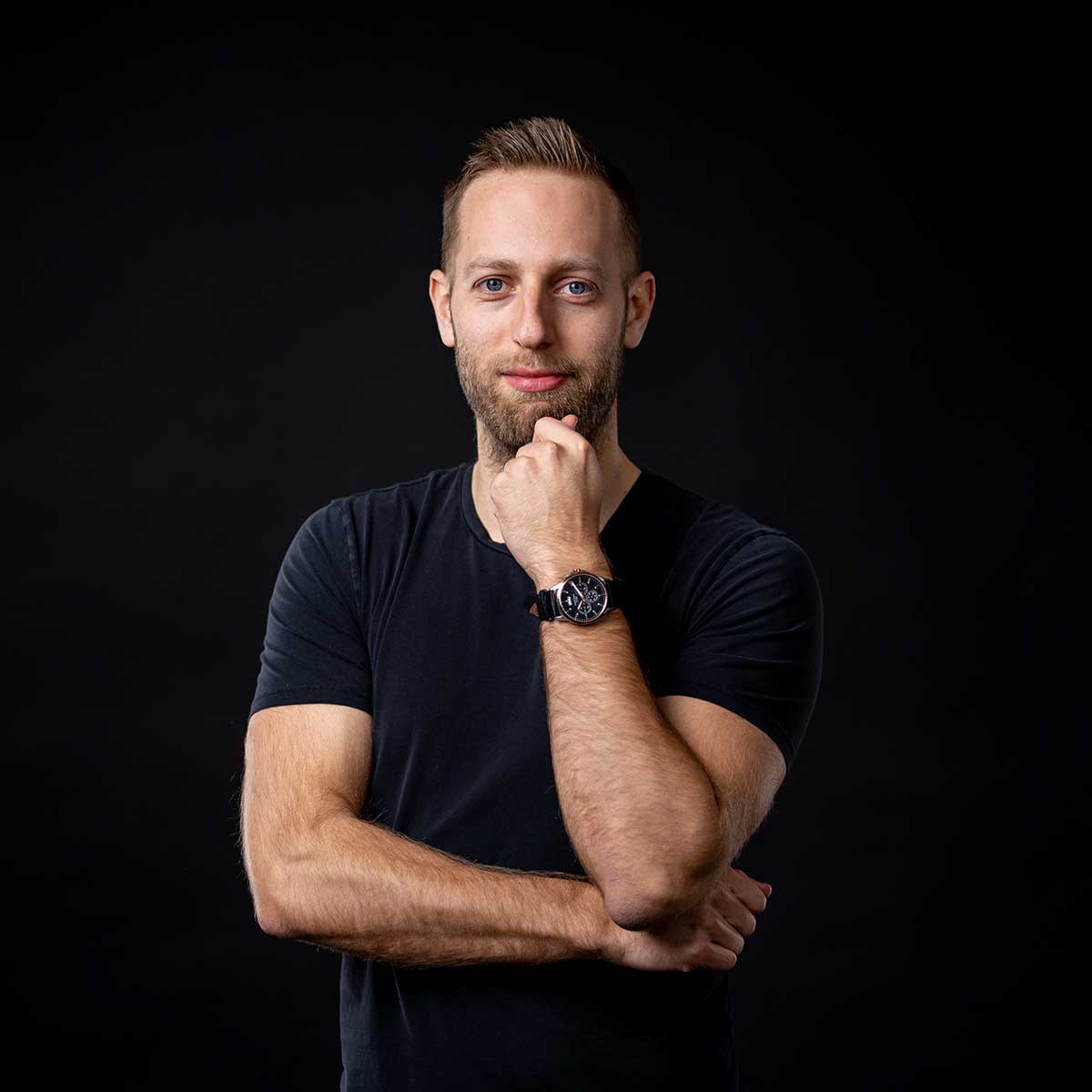
Filip Pesek is the founder and CEO of DonnaPro, a Slovenia-headquartered agency that places EU-based executive assistants with founders and chief executives in the UK and across Europe.

The company says it rejects more than 99 per cent of applicants, can have an assistant ready to start within nine business days and keeps 91 per cent of clients after a 60-day trial. Pesek previously ran a marketing agency and spent years managing assistants of his own before building the model. He tells Business Matters why the assistant is only half the answer, what he would tell his younger self and the ten-day test every founder should try.

What do you currently do at DonnaPro?

I am the founder and CEO of DonnaPro. We take the admin off founders’ plates so they can get back to running their companies. Every client gets an executive assistant based in the EU, hired, trained and still managed by us.

Free newsletters
Advertisement

The stories that matter to UK business, straight to your inbox.

Advertisement

The assistant is the part you see. The team behind her is the part that makes it work. It is why 91 per cent of our clients stay on after the 60-day trial.

My role has changed a lot as we have grown. In the early days I did most things by hand, from sales to recruitment to whatever needed doing that week. Now we have a lot of assistants and a proper team on the corporate side.

So my work has moved to people, strategy and making sure the systems hold up as we keep growing. If DonnaPro cannot run without me sitting in the middle of everything, I have built the wrong thing.

Two things I am keeping for now. I still take a lot of first calls with founders, and I still do the final interview with every person we hire.

Advertisement

What was the inspiration behind your business?

It started with my own problem. Then our clients confirmed it.

I have worked with assistants for years, going back to when I ran my marketing agency. Some were great, some were not. Whenever one left, replacing them landed on me. I had to find someone new, train them and work out again how we would work together. I spent a lot of time managing assistants who were supposed to be saving me time.

Eventually I got it down to a science. But even with a great assistant, the company still had a bottleneck, and it was me. That was not because of her. It was because I had not built the systems underneath. Between making the assistant relationship work and putting out fires across the company, I never gave the business the structure it needed.

Then two things happened. People around me saw how I worked with my assistant and started asking where I found her and how I trained her. And at the agency, we were doing our job well. We flooded our clients with leads, and all the admin that came with that growth landed on the founders’ plates.

Advertisement

That is when it clicked. I had one problem, which was no systems. They had two: no systems and no assistant. And the assistant part is where most founders get stuck, because they end up doing what I did, spending hours managing the person who is supposed to save them time.

So that is the part we take away. With DonnaPro, we hire, train and manage the assistant, so the founder gets the time back without the management work. Our assistants come from the top 1 per cent of assistant talent in the EU, and they have our whole team behind them. We reject more than 99 per cent of the people who apply, and those who get through have two weeks of intensive training before they start with a client.

That support is why they often help put simple structure in place along the way. Better processes, clearer handovers, fewer things living only in the founder’s head. We do not come in as consultants. But a good assistant with proper support makes a company more organised the longer she is there.

Who do you admire?

I admire a lot of people, and they come from very different places. What they share is that they are exceptional at something.

Advertisement

In business, it is the founders I meet who have built something with real value that does not need them in the day to day. They can run it from a high level, or step back completely if they choose. Plenty of people build big companies. Far fewer build one that does not own them.

Then there are people I admire for how they think. Charlie Munger is one. I will be honest, I know him more from Poor Charlie’s Almanack than from his investing, but that book changed how I make decisions.

And I have a lot of respect for athletes who stay at the top of their game. Lindsey Vonn is one who comes to mind. She retired, had her knee rebuilt with titanium, came back after almost six years away and won World Cup downhills again at 41.

Looking back, is there anything you would have done differently?

Yes. I would have started DonnaPro sooner.

Advertisement

And once I did start, I would have been braver. I would have taken on more capital at the beginning and made a bigger bet. I was careful, and careful felt responsible. But when the demand is clearly there, careful mostly means slower.

The cost of thinking small is that you rarely see it. Nothing breaks. You grow, you are reasonably happy with it, and you never find out what the bigger version would have looked like.

Most founders answer this question with a mistake they made. Mine is more about the risks I was too careful to take. If I could tell my younger self one thing, it would be to dream much bigger, much sooner.

What defines your way of doing business?

Thinking long term, and actually living by it, which is the hard part.

Advertisement

When we hire someone, the plan is that they are still with us in five years. That changes how you treat people. If you want someone around in year five, you cannot burn them out in the first six months.

It shows up in boring, specific rules. Internal messages get checked once a day, not all day. Notifications are off by default. If something is really urgent, we call each other.

New people find this a bit scary at first, because they think being always online is what good looks like. It is not. Someone who replies to every message within seven minutes has spent the whole day reacting and no time thinking.

I try to run myself the same way. I have a son who is nearly five and obsessed with sport. I want to watch him play, not watch my phone while he plays.

Advertisement

What advice would you give to someone starting out?

Try this on yourself. Imagine you disappear for ten days, with no calls and no email. Does the business dip, hold, or actually run better? If it dips, you have found your problem, and it is not your team. It is the system you have not built yet.

Then stretch it to 30 days, then 90. When the company would be fine without you for 90 days, you have built a business. Before that, you have built a job with a team attached.

And stop confusing busy with effective. There is a line I keep coming back to: if you do not have an assistant, you are one. Somebody has to handle the work that keeps a business running. If nobody has been hired for it, it is you, and you are the most expensive person in the company to be doing it.

Advertisement

Continue Reading

Business

Lilly is ramping up future manufacturing for Foundayo obesity pill

Published

on

20,000 people taking drug, Ricks says
Eli Lilly CEO Dave Ricks: One-third of new GLP-1 pill patients are taking Foundayo

Eli Lilly CEO Dave Ricks told CNBC on Monday that one-third of new GLP-1 pill patients are taking the drugmaker’s Foundayo, as the company tries to catch up to a lead in the space established by rival Novo.

In an exclusive interview, he said the company’s share of the oral market is growing week over week.

“We’re confident long term” about Lilly’s place in the pill segment, Ricks said, especially as the company plans to launch Foundayo in more international markets in the coming months.

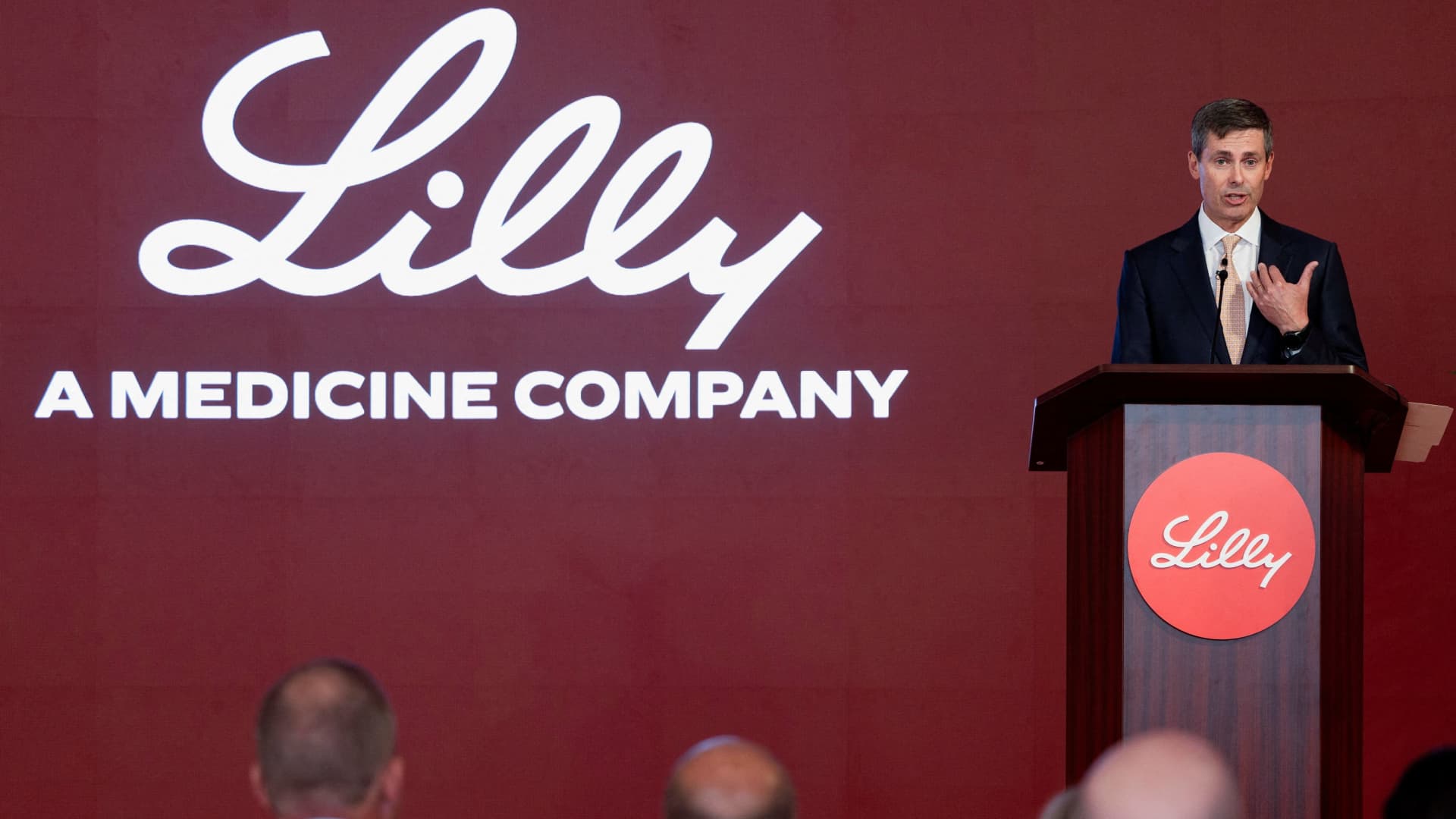
Ricks spoke with CNBC in front of the roughly 240 acres of land that will eventually host Lilly’s $6.5 billion manufacturing facility at Generation Park in Houston, Texas. The company on Monday broke ground on the upcoming site nearly a year after first announcing it, and said it expects the plant to be operational by 2030. 

Eli Lilly Chair and CEO Dave Ricks speaks during a press conference in Houston, Texas, Sept. 23, 2025.

Advertisement

Antranik Tavitian | Reuters

The facility will most notably produce Lilly’s closely watched GLP-1 pill for obesity, Foundayo, which entered the U.S. market in April. 

But the plant will be responsible for manufacturing the active ingredients for Lilly’s other small-molecule medicines across several disease areas, such as cardiometabolic health, oncology, immunology and neuroscience. 

Ricks’ comments and the groundbreaking came as Novo shares fell after the company’s long-term strategy failed to assuage investor concerns about its ability to compete with Lilly in the obesity and diabetes market. While Novo beat Lilly to releasing a pill, Lilly said in August that it held about a 61% share in the overall market in the second quarter.

Advertisement

The production site is part of a string of new investments Lilly has funneled into reshoring manufacturing across the U.S. over the last year. In February 2025, Lilly committed to spending an additional $27 billion to build four new facilities, including the Houston site, in part to build goodwill with President Donald Trump

But Lilly has also emphasized manufacturing capacity as a key competitive advantage against its main rival Novo alongside its drug portfolio. Since 2020, the company has committed more than $50 billion to expanding its manufacturing network, positioning itself to meet growing demand for obesity and diabetes treatments while supporting future product launches.

Demand for Foundayo is rising in the U.S. The company said in August that the pill booked $98 million in sales for the second quarter — its first three-month period on the market. Medicare’s new landmark coverage of obesity drugs, which began in July, is expected to open up more access to the pill and Lilly’s blockbuster weight loss drug Zepbound.

Advertisement
Continue Reading

Business

Jensen Huang dismisses AI extinction warnings from OpenAI, Anthropic

Published

on

Nvidia CEO calls for AI safety testing, projects chip sales to double at Scottish summit

Nvidia CEO Jensen Huang said in an interview on Friday that he disagrees with doomsday warnings that artificial intelligence (AI) may contribute to the extinction of humanity within a decade.

Huang told CBS News that “2030 is not going to be the end of the world. There is 0% chance that’s going to be the end of the world.”

Advertisement

“Scaring people is unnecessary. It is irresponsible,” Huang added, saying that predictions like those made by former OpenAI and Anthropic researcher Jacob Coxon are “not grounded in science.”

“Our company’s success is directly connected to the safe deployment of products and services. If we don’t continue to do that, our value would be diminished,” Huang said.

TECH POWER PLAYERS LAND SEAT AT TABLE FOR HIGH-STAKES DINNER WITH TRUMP, XI

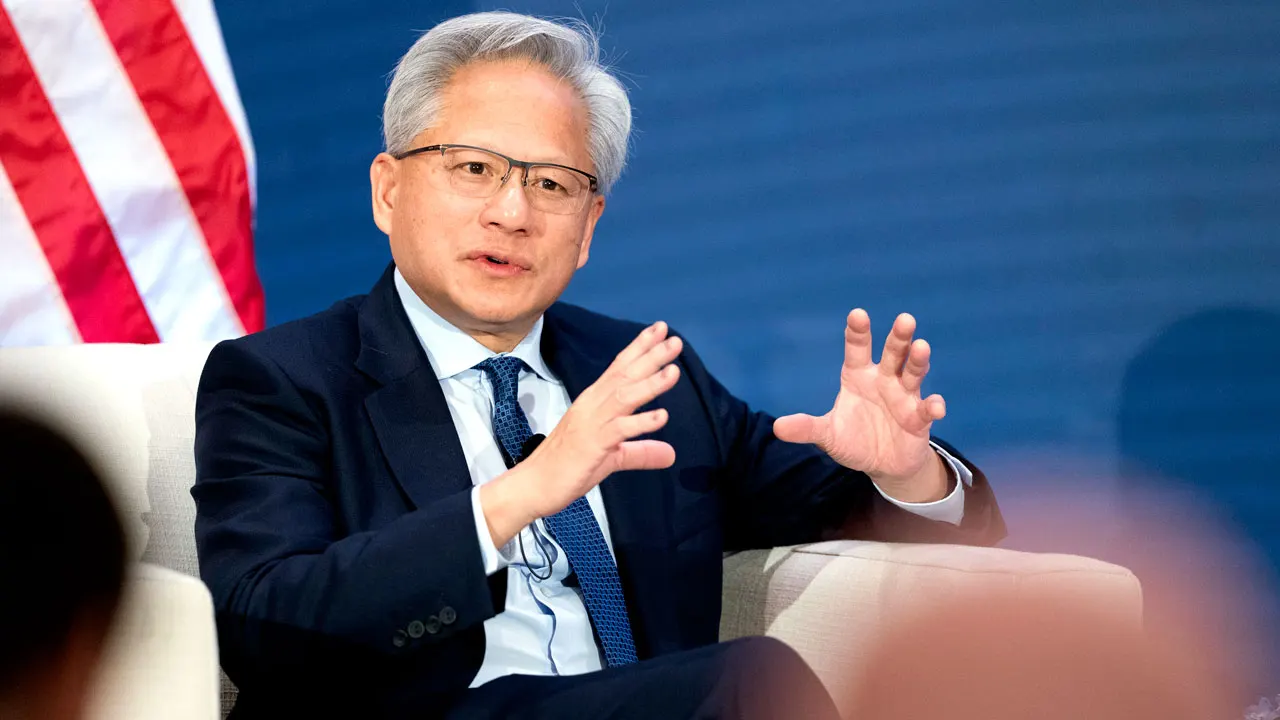
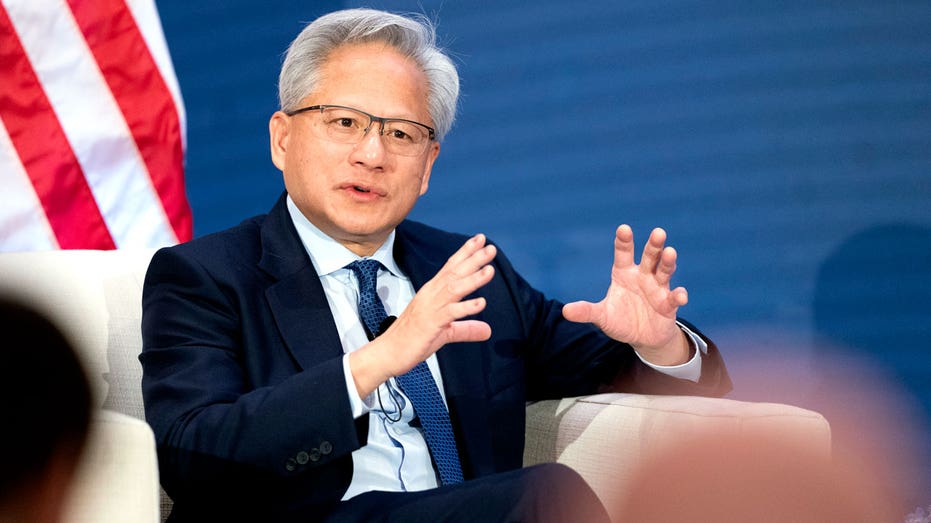
Nvidia CEO Jensen Huang.

Nvidia CEO Jensen Huang said that fears AI will wipe out humanity are overblown. (Sean Rayford/Getty Images)

Huang said that existing legal frameworks for liability around cybersecurity and damages caused by businesses should be the primary guardrails for the industry, rather than there being a need for new regulations.

Advertisement

“Apply that first – don’t let this doomsday narrative allow someone to relieve them of the laws that currently exist,” Huang said.

President Donald Trump has expressed a similar sentiment in opposing new regulatory frameworks for AI, arguing that it would give China an edge in the AI race.

NVIDIA CEO DRAWS LINE ON AI SAFETY AFTER ALARMING INCIDENTS: ‘IF IT’S NOT READY, JUST HOLD IT BACK’

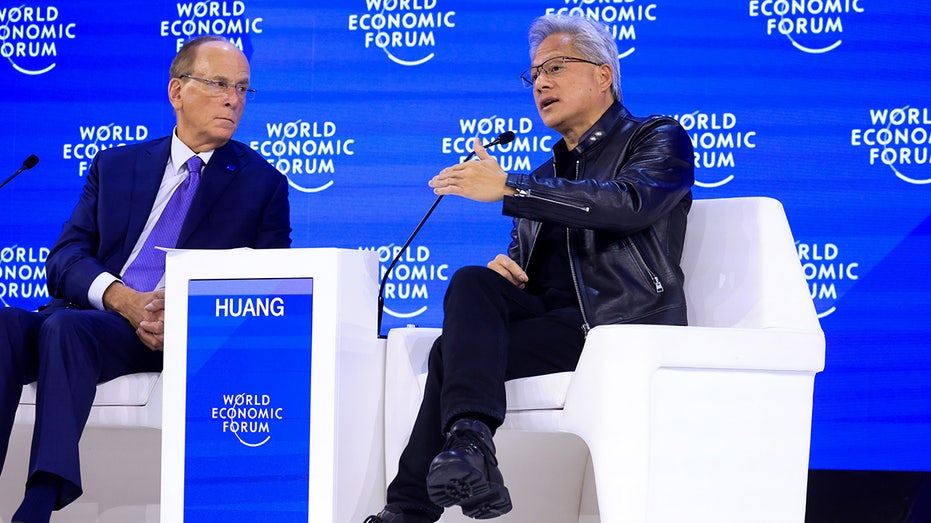
Jensen Huang speaks to Larry Fink at the World Economic Forum

Huang argued that companies like Nvidia have a built-in interest in ensuring the safety of AI. (Krisztian Bocsi/Bloomberg via Getty Images)

Trump wrote in a post on his Truth Social platform last week that “We already have tremendous CRIMINAL and REGULATORY power over these companies! There is a SICK conspiracy going on against AI and Data Centers, and the only one that is happy about it is China. WHOEVER WINS AI, WINS!”

Advertisement

The president added in a follow-up post that “President Xi, of China, just announced that China will be doing absolutely nothing to stand in the way of AI, or its future.”

Trump also dismissed concerns about AI wiping out humanity as a hoax, writing that “I am the Hoax Buster, and I’m right now breaking another Hoax – That AI is going to take over, consume, and destroy the World, and that Robots will be marching into our Cities, and getting rid of us all!”

SAM ALTMAN IDENTIFIES TWO BIGGEST RISKS FACING AI’S FUTURE

Ticker Security Last Change Change %
NVDA NVIDIA CORP. 222.27 +2.93 +1.34%

Huang is among the tech leaders who are expected to attend a state dinner Trump will host for Chinese President Xi Jinping this week, with OpenAI CEO Sam Altman and Apple Executive Chairman Tim Cook also expected to be on hand.

Advertisement

The Nvidia CEO has pushed back on Washington’s restrictions on China’s ability to purchase specialized chips used to train AI models from U.S. companies like Nvidia, arguing that China is able to access “all the chips they need” despite the restrictions.

Huang told CBS that “Every single chip company should go and serve the world, compete for the world,” adding that it’s “all about competing. America is about competing.”

GET FOX BUSINESS ON THE GO BY CLICKING HERE

He also told the outlet that he wants to discuss global standards for AI development with Xi, noting that Chinese leaders “want China to have the benefit of AI” and “want China to prosper, just as we want America to prosper.”

Advertisement
Continue Reading

Business

Pine Labs block deal: Mastercard Asia may divest 4.3% equity worth Rs 892 crore

Published

on

Pine Labs block deal: Mastercard Asia may divest 4.3% equity worth Rs 892 crore
Mastercard Asia Pacific may sell up to 49.7 million shares, representing approximately 4.3% of fintech company Pine Labs, through a block deal worth up to Rs 892.5 crore, according to reports.

The floor price for the proposed deal has been set at Rs 179.50 per share, a discount of about 7.3% to Pine Labs’ previous closing price on the NSE.

As of June 30, 2026, Mastercard Asia Pacific held 49,724,182 shares, representing a 4.31% stake in Pine Labs, according to exchange data. The proposed sale of up to 49.7 million shares is broadly equivalent to the entire stake disclosed by Mastercard Asia/Pacific as of that date.

The transaction is structured as a 100% secondary sale, with Mastercard Asia/Pacific named as the selling shareholder. Citigroup Global Markets India Private Limited is the sole placement agent for the transaction.

Advertisement

The books opened on September 21 and are scheduled to close on September 22 at around 7:30 am IST, with an option for an earlier closure. The expected trade date is September 22, while settlement is scheduled for September 23.


ALSO READ: Which NBFCs will gain the most from rate hike cycle? JM Financial lists top picks
Pine Labs shares ended Monday’s trading session at Rs 193.55 apiece on the NSE, up 0.68% from the previous close of Rs 192.25. The stock traded between Rs 191.15 and Rs 195.70 during the session.According to the transaction document, no pricing guidance will be provided until the shares are crossed on the exchanges on September 22.

Pine Labs made its stock market debut on November 14, 2025, following an initial public offering (IPO) that raised around Rs 3,900 crore.

The company’s shares listed at Rs 242 apiece on the NSE, representing a 9.5% premium to the IPO issue price of Rs 221.

The proposed Mastercard transaction is a secondary sale, meaning the proceeds from the sale will accrue to Mastercard Asia/Pacific as the selling shareholder and not to Pine Labs.

Advertisement

About Pine Labs

Pine Labs is a fintech company focused on digitising commerce for merchants, consumer brands, enterprises and financial institutions. Its technology platforms support digital payments, card issuance and value-added financial services across India and international markets, including Malaysia, the UAE, Singapore, Australia, the US and Africa.

Disclosure: This article has been written by Kumar Gaurav, who is not a SEBI-registered Research Analyst or an Investment Adviser. Gaurav and their ‘relative(s)’ (as defined under Section 2(77) of the Companies Act, 2013) do not hold any financial interest in the companies mentioned in this article as of the date of publication. The views/recommendations mentioned in this article, wherever applicable, are those of the respective SEBI-registered Research Analyst/brokerage and have been reproduced/reported with due attribution. They should not be construed as the views or recommendations of The Economic Times Digital or the journalist. Readers are advised to consider the original research report and make their investment decisions based on their own assessment. Brokerage disclaimers here

Advertisement
Continue Reading

Business

AMD briefly tops $1 trillion market cap as AI push fuels record rally, shares up 9%

Published

on

AMD briefly tops $1 trillion market cap as AI push fuels record rally, shares up 9%
Advanced Micro Devices (AMD) briefly crossed $1 trillion in market capitalisation for the first time on Monday, joining a select group of chipmakers to reach the milestone as investors bet on its growing role in artificial intelligence computing.

AMD shares were last up 9% at $610 after touching a record high of $613.92, briefly lifting the company’s valuation above $1 trillion.

The milestone capped a sharp rally for the Santa Clara, California-based company, widely considered Nvidia’s closest competitor in graphics processing units.

For live updates on US Markets, click here

Advertisement

AMD became the fourth US chipmaker to surpass a $1 trillion valuation, after Nvidia, Broadcom and Micron. Nvidia crossed the threshold in 2023 and is now the world’s most valuable company, with a market value exceeding $5 trillion.


The company has accelerated its AI product launches and expanded beyond individual chips into complete systems combining processors, networking equipment and related hardware, strengthening its ability to compete with Nvidia.
AMD is also benefiting from rising demand for central processing units used alongside graphics processors in servers running AI inference workloads. The trend has helped the company gain market share from Intel.Early last month, AMD forecast quarterly revenue above Wall Street estimates, but the outlook failed to meet elevated investor expectations, sending its shares down over 7% that day. The stock has since rallied more than 26%.

Other chip stocks also advanced on Monday. Intel jumped around 11%, Qualcomm gained 4.1%, and the broader semiconductor index rose 2.6% to a one-month high.

(Disclaimer: This article is based on inputs from agencies. These do not represent the views of The Economic Times)

Advertisement
Continue Reading

Business

Landmark NSE IPO threatens to hollow out Dalal Street’s shadow market

Published

on

Landmark NSE IPO threatens to hollow out Dalal Street’s shadow market
The landmark listing of National Stock Exchange of India Ltd. is set to deliver a major boost to the country’s primary market, but it will be a significant blow to the booming trade in unlisted shares.

The operator of the world’s busiest derivatives market accounted for roughly half of the trading volume in the shadow market, according to an estimate by trading platform UnlistedZone. Its initial public offering threatens to trigger a sharp drop in activity, forcing platforms that facilitate such transactions to find the next big draw.

As India set consecutive records in IPO proceeds the last two years, the unlisted market emerged as a venue for wealthy individuals and funds to make bet on companies in the listing pipeline. The booming interest fostered an ecosystem of online platforms and specialist brokers that specialize in connecting buyers and sellers.

NSE had been a linchpin of the growing market because of its scale, profitability, dominant position and disclosures that mirrored listed companies. The presence of smaller listed rival BSE Ltd. gave investors a valuation benchmark, while years of delays in its listing meant an unusually long trading window.

Advertisement

That helped turn a once-niche corner of India’s financial system into a mainstream investment avenue, giving rise to intermediaries that assisted investors with the regulatory approvals, documentation and transfers needed to buy shares.


“NSE was quasi-listed,” said Sandipan Roy, chief investment officer at Motilal Oswal Private Wealth. “It spawned an entire industry.”
The exchange had 231,378 shareholders ahead of its IPO, more than several listed companies. That compares with fewer than 80 shareholders it had in 2016, according to its December 2016 draft prospectus. Until last year, NSE made monthly disclosures on share transfers. Its last such release in March 2025 showed nearly 15 billion rupees ($170 million) of shares changing hands during the month.Staying relevant without NSE may prove more challenging for platforms that have mushroomed over the years. As no issuers currently offer the combination of size, familiarity and liquidity of NSE, they may have to persuade investors to trade smaller companies with typically less financial disclosure and thinner liquidity.

“We expect interest in the unlisted market to remain selective as companies emerge across sectors such as space technology, aerospace, defense, data centers and other new-age industries,” said Rajan Shah, Founder, 3A Capital Services, which operates a platform for dealing in unlisted shares.

Companies attracting market interest include Sterlite Electric Ltd, Indofil Industries Ltd, Krasny Defence Technologies Ltd, Berar Finance Ltd, Kineco Ltd, Indian Potash Ltd and Garuda Aerospace Ltd, he added.

Investing in unlisted shares hasn’t always proved profitable. Investors in some high-profile names, including HDB Financial Services Ltd. and Tata Capital Ltd., suffered losses, while those who bought NSE shares over the past year may also enter the IPO sitting on losses.

Advertisement

“There have also been instances of outsize returns in the unlisted market,” said Umesh Paliwal, co-founder, UnlistedZone. “Ultimately, entry timing and valuations are critical.”

Continue Reading

Business

Paramount reaches settlement over Warner Bros. merger

Published

on

Paramount reaches settlement over Warner Bros. merger

Paramount Skydance’s $110 billion merger with Warner Bros. Discovery will move forward as the company settled Monday with a group of state attorneys general that sought to block the deal on antitrust grounds.

The lawsuit, brought by a group led by California’s Rob Bonta, was previously set to head to trial in March and would have left the deal in limbo through mid-2027.

“We are grateful to Attorney General Bonta and his fellow AGs, as well as the WGA, for engaging in good faith to find a path forward to a resolution that serves all parties, and to Governor Newsom for his support throughout this process,” Paramount CEO David Ellison said in a statement Monday. “Our shared aim was an outcome that best serves consumers, workers and — most importantly — the creative community so vital to the art of visual storytelling.”

The acquisition will bring together two storied film studios, Paramount and Warner Bros. Discovery; a portfolio of TV networks; broadcast network CBS; and two popular streaming services in Paramount+ and HBO Max. The agreement Monday follows backlash from not only the state officials, but also the Writers Guild of America union and prominent actors and directors, who shared concerns about the effects on the U.S. film industry and creative roles.

Advertisement

Bonta detailed the terms of the agreement during a press conference Monday, but noted that “the settlement is not a vote of support for this merger.”

“It’s not a blessing of the broader merger,” he said. “Broadly speaking, we believe further consolidation in markets that are central to American economic life doesn’t serve the American economy, consumers, or competition well.”

Bonta said Paramount has agreed to increase its domestic production, including boosting its production spending in the U.S. by at least $300 million annually. The company also agreed that if a federal film credit is approved, it will ensure that 20% of its films are produced domestically in the first two years after the deal closes and 30% of all films in the three years after that. Currently, around 5% of Paramount’s film production is domestic, Bonta said. The company must also keep both the Paramount and Warner Bros. production lots in Los Angeles.

The studio will also release 30 films theatrically in its first two years and 32 in the following three years, Bonta said. Four of these films must be independent productions and Paramount must establish an independent film fund dedicated to purchasing indie films.

Advertisement

Bonta added that the settlement includes a $30 million penalty per film if Paramount falls short of these pledges, with 90% going to workers. There is also a stipulation that Paramount would be forced to divest the production company Miramax if the company fails to reach this release goal, Bonta said.

Paramount and Warner Bros. are also required to continue negotiating cable packages separately. If the company does not adhere to this clause, Bonta said it would be forced to divest a suite of cable channels.

The company must also pay $9.5 million annually for workforce training and career development in film and TV production and for film programs and community arts organizations, Bonta said.

Additionally, Paramount must establish a new board for CBS News and CNN to ensure editorial independence, he added. The combined company’s joint ownership of both of those new sources had raised alarms among some critics of the agreement.

Advertisement

“Together we’ll select a trustee to monitor Paramount’s compliance with these terms,” Bonta said. “And if they ever fail to comply with the many critical terms we have in our settlement, we can go to court.”

The deal previously won approval from U.S. and other international regulators, and Paramount had told investors it expected to close the deal by Sept. 30.

California and 11 other states filed suit in mid-July seeking to block the merger, citing antitrust concerns in film and pay TV.

In July, Paramount agreed to delay the merger until June 2027 while the legal challenge played out. That delay would have proven costly for Paramount.

Advertisement

As part of the merger agreement, Paramount agreed to a so-called ticking fee that would have kicked in after Sept. 30 and meant an additional 25 cents per share, per quarter to WBD shareholder until the transaction closed. The fee would have added an estimated $650 million per quarter in cash value to the deal.

The Writers Guild of America sued to block the merger, too, citing “specific harm to writers,” and settled its claim with Paramount on Monday. Many creatives throughout Hollywood, including actors, directors, producers and other crew members, penned open letters opposing the deal.

“We continue to believe the merger will cause damage to writers and the industry at large,” the WGA wrote in a statement Monday. “Now that the Attorneys General have settled with Paramount, however, as a nonprofit, the WGA must contend with the reality of forging ahead alone, with no backing from government enforcers, with a complex antitrust lawsuit that would cost millions of dollars to pursue through trial.”

The WGA said the guild settled its lawsuit with an agreement that Paramount prohibit writer layoffs at CBS News’ broadcast team for five years and pay $17.5 million toward the guild’s health fund, along with its attorney’s fees from the litigation.

Advertisement

Bonta said that as part of the agreement with states, Paramount must honor previously established collective bargaining agreements and bargain in good faith with unions.

California, the entertainment hub of the U.S., has suffered job losses after the industry shifted dramatically following the pandemic, as streaming has disrupted the traditional linear TV business and the theatrical film pipeline. Hollywood, as a result, is shooting fewer pilots, taking advantage of tax incentives in other states and countries and greenlighting fewer productions overall.

One big sticking point around the deal for industry insiders is the fact that mergers in the past have drastically decreased the number of films released annually. The most recent example was the 2019 merger between Disney and 21st Century Fox. In the decade before Fox was acquired, the studio released between 13 and 23 films each year, while Disney put out between nine and 13 films. Since 2019, the highest combined release from the merged company has been 16, according to data from Rentrak.

Theater owners and longtime industry players were skeptical that Paramount could deliver on Ellison’s annual 30-film promise. After all, in the past 25 years, no studio has put out more than 25 wide releases in a single year. Ellison offered three-year contracts to cinema operators and at least one exhibitor signed that contract, which allowed the cinema chain to sue Paramount for monetary compensation if it did not fulfill its promise.

Advertisement
Continue Reading

Trending

Copyright © 2025