

Business
Ford Stock Is Ripping Again. Suddenly, It’s a AI Data Center Stock.


This copy is for your personal, non-commercial use only. Distribution and use of this material are governed by our Subscriber Agreement and by copyright law. For non-personal use or to order multiple copies, please contact Dow Jones Reprints at 1-800-843-0008 or visit www.djreprints.com.


Unknown Executive
Hi everyone. Greeting, everyone. Welcome to Asia X (sic) [ AirAsia X] First Quarter Results briefing. Today here with me, I have Bo Lingam, Group CEO; Farouk Ahmad, Deputy CEO; Kar Chuan, Group CFO; Lavinia, Group Head of Finance; Amanda, Chief Commercial Officer.
The Bursa results has just been uploaded, and we would like to go through the results. But before that, I can give you some reporting structure guide. [Technical Difficulty]
So in — on 16th January, we completed the acquisition by AirAsia X of acquiring AirAsia Berhad and AirAsia Group. However, under accounting standard [Technical Difficulty] — however, under accounting standard, this is treated as a reverse accounting. For reporting purposes, AAGL (sic) [ AAAGL ] is treated as the acquirer. In the Bursa statement that you will see today, there is no comparative P&L and cash flow as it is not an apple-to-apple comparison. So therefore, we have only the first quarter 2025 comparatives for P&L and cash flow.
As for the balance sheet, the 31st December 2025 actually refers to only AAAGL, which is the Thai, Indonesia, Philippines and Cambodian entities, but excludes the original AirAsia X and AirAsia Berhad. Therefore, it does not represent the enlarged group. And at the back of this presentation, we have included the pro forma financials for your guidance in terms of when one to do the comparison. I’ll pass the presentation to Farouk.
Farouk Kamal
Hi, good evening, everybody. So I’ll just run through the presentation before we go to questions. The
Operator
Good morning, and welcome to LPA’s First Quarter 2026 Earnings Conference Call. My name is Ellie, and I will be your operator for today’s call.
[Operator Instructions] And please note that this call is being recorded. [Operator Instructions] Now I would like to turn the call over to Mr. Camilo Ulloa, Investor Relations. Please go ahead, sir.
Camilo Ulloa
Investor Relations Officer
Welcome to LPA’s First Quarter 2026 Earnings Conference Call. My name is Camilo Ulloa with LPA’s Investor Relations team. Joining me on today’s call are Esteban Gaviria, our Chief Executive Officer; and Paul Smith, Chief Financial Officer.
Before we proceed with a review of LPA’s financial and operating results, please note that the information presented during this call is intended for informational purposes only and does not constitute an offer to buy or sell any securities.
Forward-looking statements made during this call are subject to a number of risks and uncertainties, which are discussed in LPA’s filings with the SEC. Our actual results, performance and prospective opportunities may differ materially from those expressed or implied in these statements. We undertake no obligation to update or revise any forward-looking statements after this call.
We have prepared supplemental materials that we may reference during the call. We encourage you to visit our website, ir.lpamericas.com, to download these materials. Please also note that all comparisons that we will discuss during today’s call are year-over-year unless we note otherwise. Esteban will begin

Available for over a year
Meal prepping is supposed to save us time, money and stress. It is a huge trend on social media, but how can we make it work in our own real, messy lives?
Ruth Alexander meets Hannah, a busy working mum who wants help to make meal times easier, quicker and more varied. Could batch cooking be the answer?
On hand to offer advice and inspiration are Jess Rice from the US website Budget Bytes and Kevin Curry, who has around two million followers across his Fit Men Cook social media accounts.
And if you have ever wondered whether those leftovers are safe to eat, or how long you should leave hot food cooling on the kitchen counter before you freeze it, there is advice from Natalie Stanton, who trains chefs in food safety.
If you would like to get in touch with The Food Chain team, please email thefoodchain@bbc.co.uk
Producer: Lexy O’Connor
Sound engineer: Hal Haines
(Image: A food container with chicken and vegetables being opened by a woman’s hands. Credit: Getty Images)

John McGuire from Virginia’s 5th district buys Apple, Microsoft, and Nvidia stocks
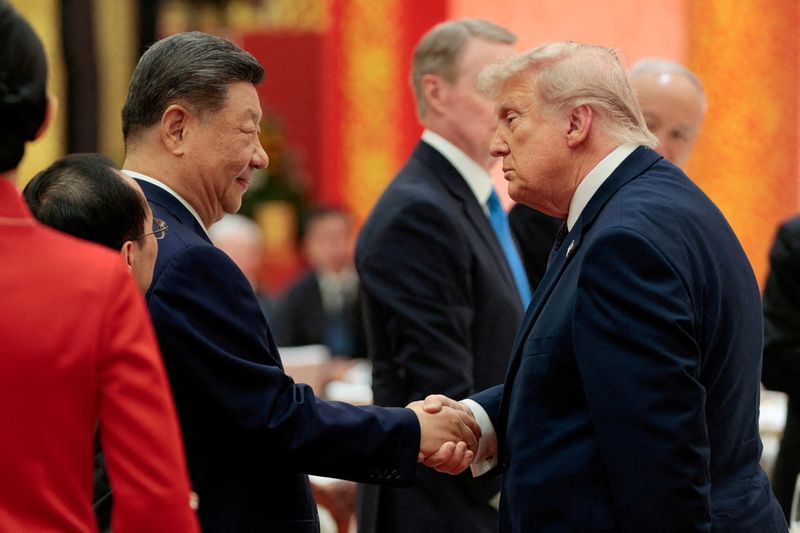

IMF says constructive US-China dialogue, reduced tensions good for world economy


With combined experience of covering technology companies on Wall Street and working in Silicon Valley, and serving as an outside adviser to several seed-round startups, Gary Alexander has exposure to many of the themes shaping the industry today. He has been a regular contributor on Seeking Alpha since 2017. He has been quoted in many web publications and his articles are syndicated to company pages in popular trading apps like Robinhood.
Analyst’s Disclosure: I/we have no stock, option or similar derivative position in any of the companies mentioned, but may initiate a beneficial Long position through a purchase of the stock, or the purchase of call options or similar derivatives in YETI over the next 72 hours. I wrote this article myself, and it expresses my own opinions. I am not receiving compensation for it (other than from Seeking Alpha). I have no business relationship with any company whose stock is mentioned in this article.
Seeking Alpha’s Disclosure: Past performance is no guarantee of future results. No recommendation or advice is being given as to whether any investment is suitable for a particular investor. Any views or opinions expressed above may not reflect those of Seeking Alpha as a whole. Seeking Alpha is not a licensed securities dealer, broker or US investment adviser or investment bank. Our analysts are third party authors that include both professional investors and individual investors who may not be licensed or certified by any institute or regulatory body.
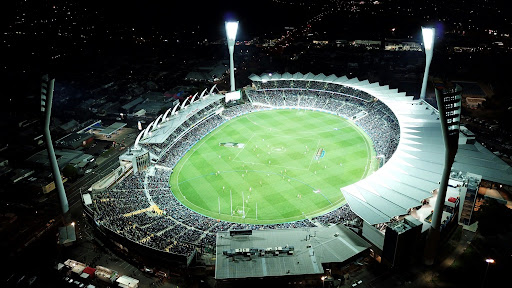
Compensation picks are one of the more misunderstood mechanisms in the AFL draft system. They sit somewhere between a consolation prize and a strategic asset. The AFL awards them to clubs that lose key players through free agency without bringing equivalent talent through the door. For supporters trying to make sense of why their club suddenly holds an extra second-round selection, or why a rival has jumped ahead in the draft order, compensation picks are usually the answer.
This article breaks down how they work, when clubs receive them, why they have become such a significant part of list management, and how clubs use them in practice.
The basic idea behind compensation picks
When a player leaves a club through unrestricted or restricted free agency, that club loses an asset without receiving anything tangible in return. Trading at least gives the losing club picks or players. Free agency does not.
To soften the blow, the AFL introduced a compensation system in 2012 alongside the free agency rules. The principle is simple enough: if you lose a meaningful player to a rival without acquiring a comparable replacement, the league hands you a draft pick to help rebuild. The pick comes from thin air, slotted into the draft order rather than taken from another club, which means no one is directly punished for the recipient’s gain.
For fans wanting to look more closely at how these picks shape draft strategy, sites covering NRL predictions & tips often track the running tally of compensation selections each off-season, since they can shift the balance of an entire draft class.
How the AFL decides the value of a compensation pick
The league does not publish a precise formula. What we know is that the AFL Football Operations department weighs several factors when determining the band a compensation pick falls into. These factors include:
- The departing player’s salary at their new club
- Their age
- Their service with the losing club
- Whether the losing club has signed a free agent of similar standing
Compensation picks are graded into bands. The bands run from first-round compensation through end-of-first-round, second-round, third-round, and fourth-round compensation. A club that loses a 26-year-old All-Australian on a million-dollar contract will receive a far higher pick than one losing a 31-year-old fringe player on a modest deal.
The compensation is also offset. If a club loses a star but signs a free agent of equal value, the compensation can be reduced or wiped out altogether. The AFL is trying to compensate net losses, not gross ones.
Restricted versus unrestricted free agents
The type of free agency matters too. Restricted free agents are players with eight years of service who fall within the top 25 percent of earners at their club. Their original club has the right to match a rival’s offer and keep them. If the offer is matched, no compensation is needed because no one has left.
Unrestricted free agents have either ten years of service, or eight years plus a salary outside the top 25 percent. Their club cannot match offers, which is where compensation picks become most relevant. The vast majority of compensation selections handed out each year stem from unrestricted free agent departures.
A few notable examples
The history of compensation picks tells the story better than any explanation can. When Lance Franklin left Hawthorn for Sydney in 2013, the Hawks received pick 19 as compensation. Hawthorn had just won a premiership and would go on to win two more, partly because their list was deep and partly because they used assets like that pick wisely.
When Tom Lynch left Gold Coast for Richmond ahead of the 2019 season, the Suns received the first selection of the 2018 national draft as compensation, valued as pick number three overall after academy bids were factored in. Gold Coast turned that pick into Jack Lukosius.
When Jeremy Cameron departed GWS for Geelong, the Giants received pick seven as compensation, which they bundled into trades to acquire other players. Each case shows the system working as intended: a club loses a major piece, and the league hands them something they can either use directly or trade.
Why compensation picks change list management
Before free agency and compensation picks existed, clubs had less flexibility to plan around player movement. A club could lose its best player and receive nothing if that player simply held out and waited for a trade that never materialised.
The current system has changed how list managers think. A club at the bottom of the ladder now has options when a star wants out. They can trade the player and try to extract a haul from a rival club, or they can let the player walk through free agency and bank on a compensation pick that might be just as valuable. The choice depends on what other clubs are willing to offer in trades, how the player feels about the destination, how the AFL is likely to grade the compensation, and where the club sits on the ladder.
This dynamic has made the trade period more interesting, not less. Clubs now bluff each other with the threat of free agency, knowing the compensation pick acts as a floor on the value they will receive.
The criticism and the counterpoint
Compensation picks are not universally popular. Some commentators argue the system favours clubs that fail to retain their best players, effectively rewarding poor list management. Others point out that compensation can be unpredictable, with the AFL’s grading process sometimes producing picks that feel either too generous or too harsh given the player involved.
The counterpoint is that without compensation, free agency would be a one-way door. Star players would walk to bigger clubs in bigger markets, and struggling clubs would have no path back. The compensation pick system is the AFL’s attempt to keep the competition balanced, even if the execution is imperfect.
What to watch for at the next trade period
Each off-season, a handful of free agent decisions tend to dominate the news cycle. Watching how clubs handle these moments tells you a lot about their list strategy. A club that quickly accepts a free agent’s departure and starts planning around the compensation pick is operating differently from one that scrambles to negotiate a trade.
Compensation picks have become part of the language of the AFL trade period. Watch the grading announcements in the weeks after free agency closes, because that is when the next year’s draft order really takes shape.

The UK economy is showing resilience – it’s worth diving into the data in more detail to understand why.

In this photo illustration Hantavirus samples are seen in Ankara, Turkiye on May 6, 2026.
Arman Onal | Anadolu | Getty Images
The U.S. Centers for Disease Control and Prevention said there are no hantavirus cases in the country as of Thursday, as it monitors 41 people for the virus.
The agency said the risk to the public remains low in the aftermath of an outbreak on a cruise ship.
The World Health Organization has reported 11 total cases of hantavirus linked to the outbreak, including three deaths.
This is breaking news. Please refresh for updates.


Fred Piard, PhD. is a quantitative analyst and IT professional with over 30 years of experience working in technology. He is the author of three books and has been investing in data-driven systematic strategies since 2010. Fred runs the investing group Quantitative Risk & Value where he shares a portfolio invested in quality dividend stocks, and companies at the forefront of tech innovation. Fred also supplies market risk indicators, a real estate strategy, a bond strategy, and an income strategy in closed-end funds. Learn more.
Analyst’s Disclosure: I/we have a beneficial long position in the shares of GOOGL, META, XOM either through stock ownership, options, or other derivatives. I wrote this article myself, and it expresses my own opinions. I am not receiving compensation for it (other than from Seeking Alpha). I have no business relationship with any company whose stock is mentioned in this article.
Seeking Alpha’s Disclosure: Past performance is no guarantee of future results. No recommendation or advice is being given as to whether any investment is suitable for a particular investor. Any views or opinions expressed above may not reflect those of Seeking Alpha as a whole. Seeking Alpha is not a licensed securities dealer, broker or US investment adviser or investment bank. Our analysts are third party authors that include both professional investors and individual investors who may not be licensed or certified by any institute or regulatory body.

10 habits to support your mental health – Positive News

AirAsia X Berhad (AAXBF) Q1 2026 Earnings Call Transcript

Stablecoin-powered neobank Fasset raises $51 million to expand across emerging markets

Manchester United reach agreement with Casemiro over contract clause amid transfer speculation

US brings back mandatory military draft registration

Steven Gerrard disagrees with Gary Neville over ‘shock’ Chelsea and Arsenal claim | Football

Asante Akyem North MP Detained in Netherlands: Alleged Financial Crime Probe Sparks National Debate

Crypto wallet search #bitcoin #crypto #cryptocurrency #bitcoinwalletlookup

Financial Accounting Marathon Financial Accounting Revision CMA Inter Dec 2025 Exams
-
 Crypto World6 days ago
HarrisX Poll Found 52% of Registered Voters Support the CLARITY Act
-

 Fashion6 days ago
Weekend Open Thread: Marianne Dress
-

 Fashion3 days ago
Coffee Break: Travel Steam Iron
-

 Fashion4 days ago
What to Know Before Buying a Curling Wand or Curling Iron
-

 Tech5 days ago
Auto Enthusiast Carves Functional Two-Stroke Engine from Solid Metal
-

 Politics3 days ago
What to expect when you’re expecting a budget
-
 Business5 days ago
Ignore market noise, India’s long-term story intact, say D-Street bulls Ramesh Damani and Sunil Singhania
-

 Politics6 days ago
Politics Home Article | Starmer Enters The Danger Zone
-

 Tech4 days ago
GM Agrees To Pay $12.75 Million To Settle California Lawsuit Over Misuse Of Customers’ Driving Data
-

 Crypto World5 days ago
PROS explodes 48% as Upbit and Bithumb listings ignite demand
-

 Crypto World4 days ago
CZ says US crypto rivals tried to block Trump pardon
-

 Sports7 days ago
Bayern Munich vs PSG UEFA Champions League SF2 live match time, streaming | Football News
-

 Entertainment6 days ago
YNW Melly Denied Bond Again Ahead Of Double Murder Retrial
-

 Tech3 days ago
GM agrees to $12.75M California settlement over sale of drivers’ data
-
Entertainment7 days ago
Hantavirus — cause of death for Gene Hackman's wife — at the center of Dutch cruise outbreak
-
Crypto World6 days ago
The Hantavirus Danger: Can a Potential Outbreak Spark a New Meme Coin Frenzy?
-

 Politics7 days ago
David Attenborough ‘Overwhelmed’ By Love Shown Ahead Of 100th Birthday
-
Tech6 days ago
The Most Exciting Apple Products In The Pipeline For 2026 And Beyond
-

 Sports6 days ago
After Waka Waka, Shakira now drops first teaser for FIFA WC 2026 song | FIFA World Cup 2022
-

 Sports7 days ago
Ibom Air Anniversary Football Tournament Begins May 9 in Uyo
You must be logged in to post a comment Login