



Editor’s note: This article is intended to provide a general overview of the ETF for educational purposes only and, unlike other articles on Seeking Alpha, does not offer an investment opinion about the ETF.
Business
Form 13G TYRA BIOSCIENCES INC For: 7 April

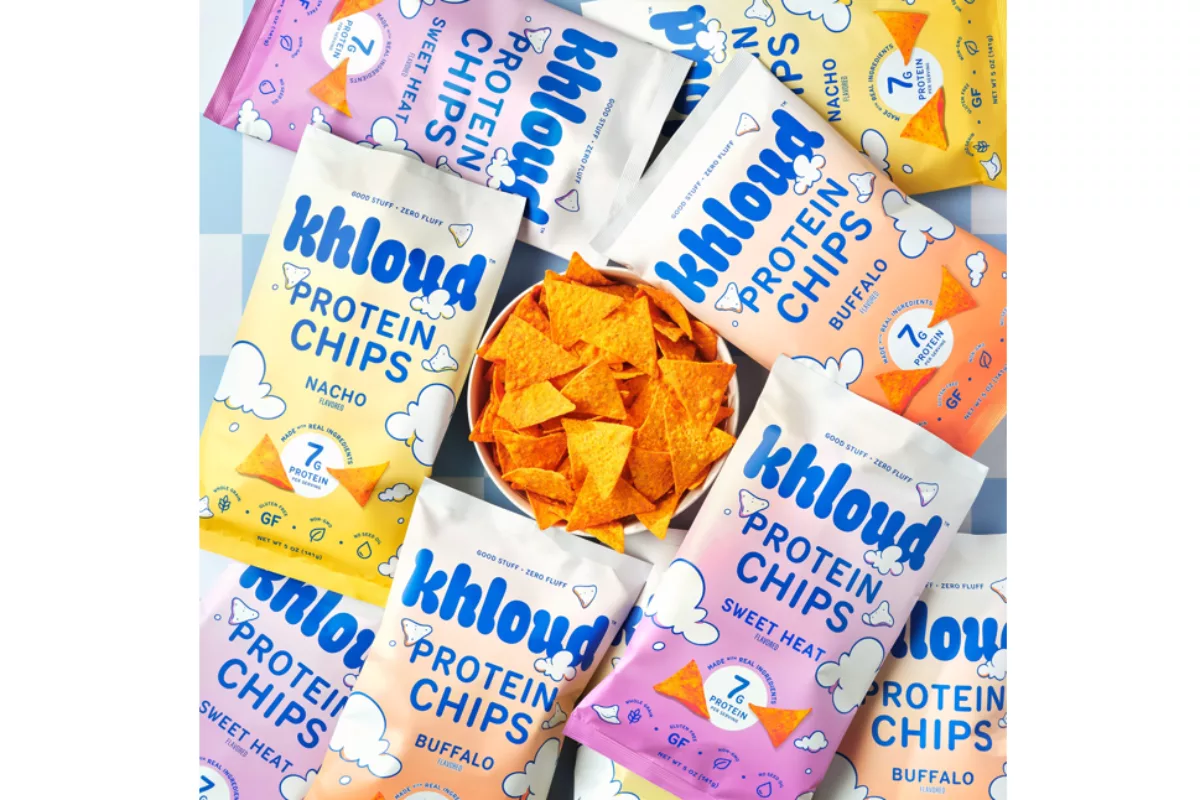

The chips are available in three flavors.
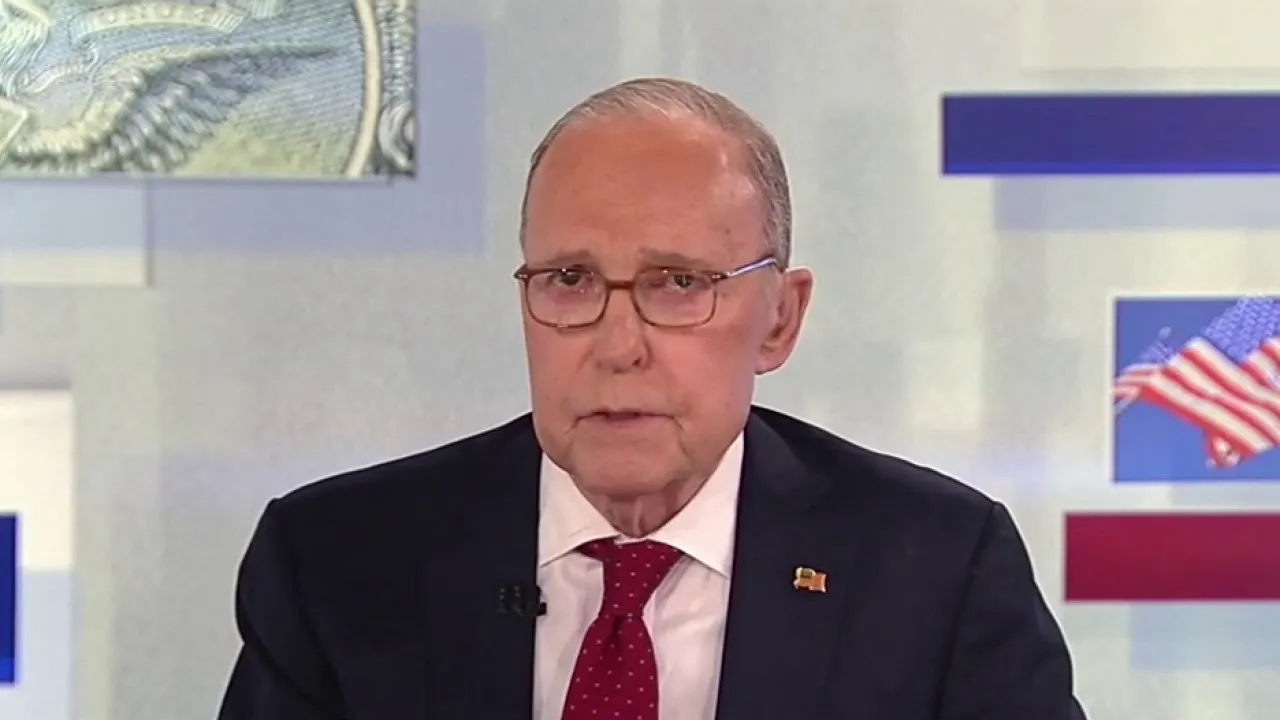
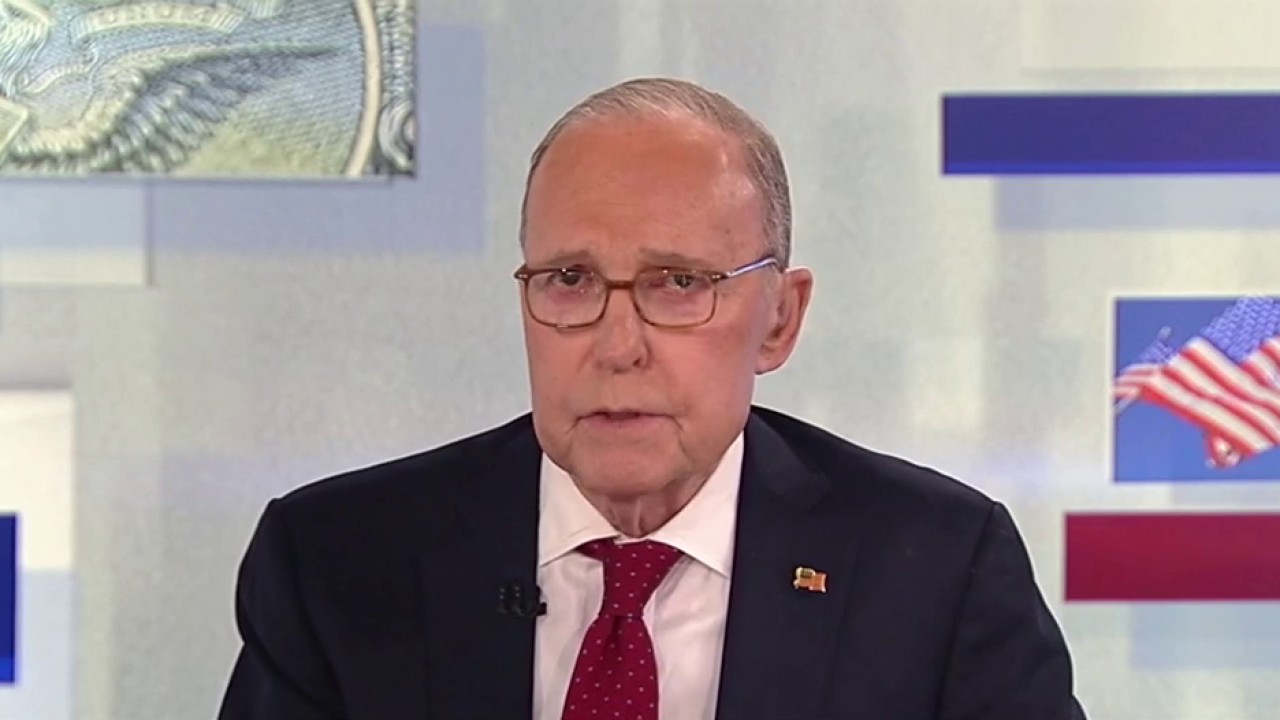
As a strong supporter of our great military’s Operation Epic Fury, and someone who has great faith in President Trump and his judgement, I do feel obliged to weigh in on the fact that any deal cobbled together too quickly runs the risk of making the next Iranian conflict more likely, not less. I’m worried that a poor deal today could mean a bigger war tomorrow. When I sat down with Mr. Trump for our interview eight weeks ago, I raised the concern that no one can ever believe anything Iran says.
As a former Reagan guy, I am always acutely sensitive to the Gipper’s phrase “trust but verify.” Over the past five decades, numerous American presidents have made deals with Iran that were never verified. International nuclear authorities have never been able to verify Iranian promises or activities. And, as Mr. Trump has said, the whole issue was boiled over with Iran’s shocking imminent nuclear threat with enriched uranium that is greater than anyone thought. And with intercontinental ballistic missile capability with a range that is longer than anyone thought. And once again, Iran is bottling up the Strait of Hormuz in an attempt for worldwide economic blackmail.
There’s so much that we don’t know yet regarding discussions that are mostly indirect. And even now it seems that Iran has cut off any communications with America. Yet just looking at the positions of the two sides, Iran wants an end to conflicts in the region, a protocol for safe passage through the Hormuz Strait, reparations and reconstruction, and lifting sanctions. That’s their position.
Former House Speaker Newt Gingrich discusses the urgency of confronting Iran’s nuclear ambitions on ‘Kudlow.’
Mr. Trump’s key points have been a complete end to all nuclear capabilities and facilities. No uranium enrichment on Iranian soil. Handing over Iran’s stockpile of enriched uranium to the international atomic energy agency, completely decommissioning and dismantling of their nuclear sites at Fordow, Isfahan, and Natanz sites. Plus a complete end to their state sponsorship of terrorism. And an end to supporting proxy terrorist groups. A dismantling of their ballistic missile programs. And reopening the Strait of Hormuz. In other words, the two sides remain monumentally far apart, as far as we know.
So, a deal looks to be impossible. A few quotes from Mr. Trump suggest that there is no deal. When reporter asked “if Iran does not meet your demands, Mr. President, are you willing to continue the war?” Mr. Trump replied: “We’ll you’ll have to watch.” The reporter followed up: “Are you committing …” Mr. Trump then responded: “The answer is yes, but you have to watch.” He added that “the entire country can be taken out in one night, and that night might be tomorrow night.” He said “we have, we have a plan, because of the power of our military, where every bridge in Iran will be decimated by 12:00 tomorrow night, where every power plant in Iran will be out of business, burning, exploding, and never to be used again. I mean, complete demolition by 12:00.”
Former U.S. special representative for Iran Brian Hook and Ronald Reagan Institute director Roger Zakheim discuss President Donald Trump’s strategy against the Iranian regime on ‘Kudlow.’
Meanwhile, any talk of ceasefires or deal extensions should be rejected. This is Iran’s game. They have been playing it for decades. They love to string things along. They are experts at playing their adversaries. They love to stall. To postpone. To argue over location. Or who is invited to the high table. They’ve been doing this for so long, and I hope that Mr. Trump doesn’t let them get away with it. I doubt that he will, because he’s a man of action and instinct. He knows that letting Iran play these games with him, he will lose international respect. He knows that if he ever walked away without reopening Hormuz, it would make him look weak. And he is never weak. Ever. He is transparently a man of his word.
In all likelihood, a few ticks of the clock after 8 P.M. Eastern time will be met by the final war push by America and presumably Israel. Mr. Trump knows that at this moment, he can change history. He can end all of Iran’s capabilities: nuclear, terrorist, missiles, Hormuz, all of it. He can bring freedom and prosperity to the Middle East and the rest of the world. He can end a scourge of civilization. He can also become one of the greatest presidents in American history.

Form DEF 14A Tempus AI Inc For: 7 April
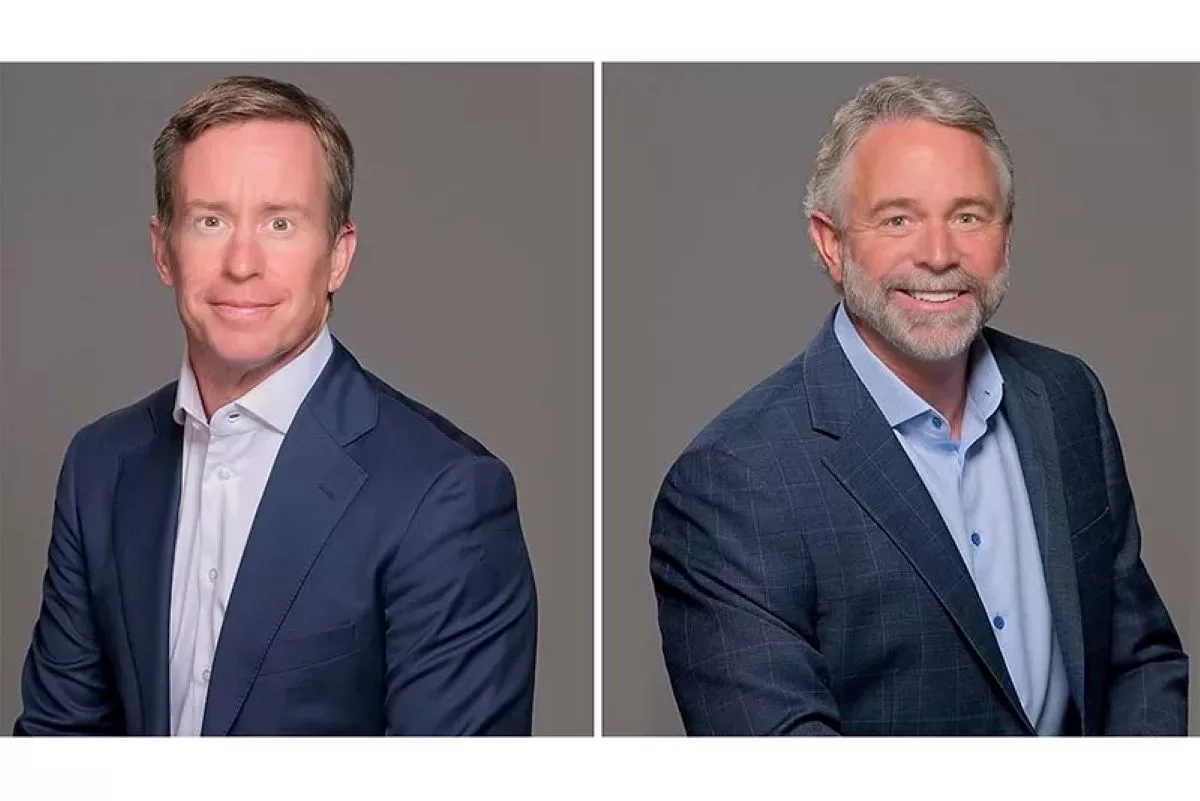

Aaron Leach to chief commercial and supply chain officer.
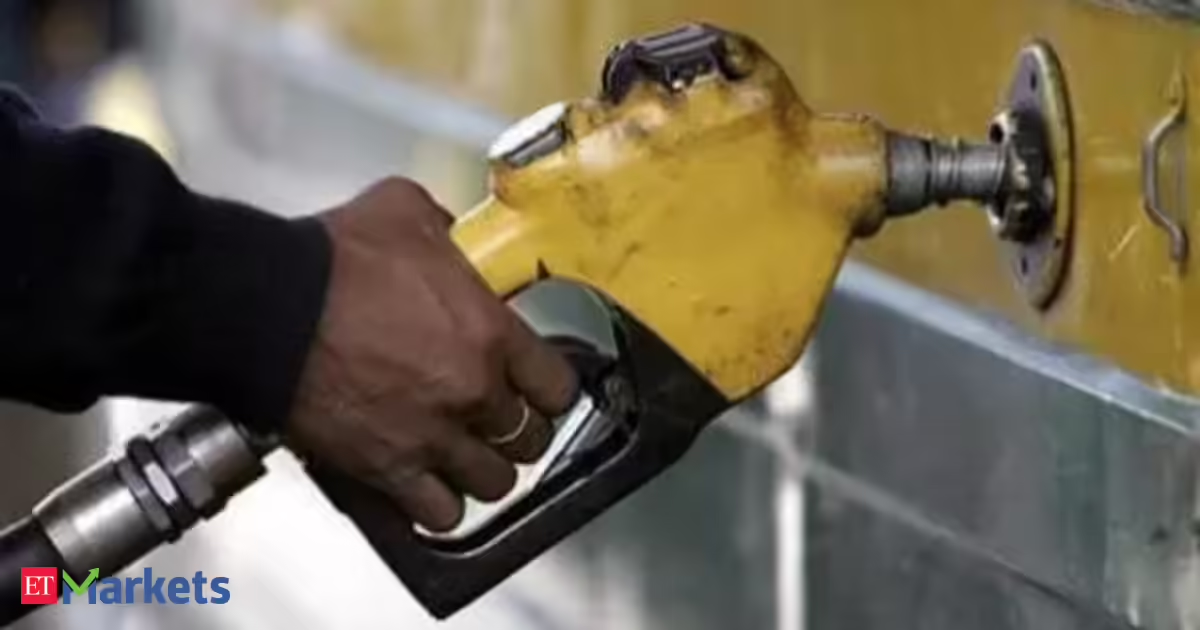
European and Asian refiners are paying record high prices of near $150 a barrel for some crude oil grades, far exceeding prices for paper futures, highlighting the worsening supply crisis from the U.S.-Israel war with Iran.
The Iran war has forced the shutdown of at least 12 million barrels per day – about 12% of world supply – from the Middle East due to Iran’s effective closure of the Strait of Hormuz. As a result, Brent oil futures reached $119.50 a barrel last month, the highest since 2022 although still short of the 2008 record high of $147.50. The nearby Brent contract is for June delivery.
Competition for supply from Asian and European refiners to replace disrupted Middle Eastern oil flows has helped to drive up the prices of replacement crudes for more immediate delivery, such as those in Europe and Africa.
As a result, some crudes are hitting records already. The outright price of North Sea Forties crude reached $146.09 a barrel on Tuesday, according to LSEG data, above the 2008 level and an all time high.
The main driver of prices such as that of Forties is “panic” over supplies, said Adi Imsirovic, a veteran oil trader. “When there is a real, physical shortage, people are not thinking about July delivery – June loading and hence June futures prices – but oil NOW.”
The price of Forties and many other cargoes around the world is linked to the physical crude benchmark called dated Brent which is trading almost $20 higher than the price of Brent futures for June delivery according to LSEG data because it reflects the price of cargoes for immediate delivery.
“At the moment, the market is scrambling for prompt, refinery-usable barrels, and stress is appearing first in the part of the benchmark that is closest to the immediate physical problem,” Morgan Stanley analysts said in a report.Prices of refined products in Europe were close to record highs on Tuesday.
Jet fuel prices in Europe hovered at $226.40 a barrel, close to a record high hit in mid-March. Diesel prices were still shy of their record highs hit in 2022, standing at $203.59 a barrel on Tuesday.
IvelinRadkov/iStock via Getty Images
Fast Facts About The JPMorgan International Value ETF
The JPMorgan International Value ETF (JIVE) is an actively managed ETF launched on September 13, 2023, with an objective of long-term capital appreciation. JIVE has a portfolio of 337 companies, a trailing 12-month yield of 2.67%, a 30-day SEC yield of 3.12%, and an expense ratio of 0.55%. Distributions are paid annually. It is quite a large and liquid ETF, with about $2 billion in assets under management (“AUM”) and an average daily dollar trading volume of $30 million. The fund’s sponsor, JP Morgan (JPM), is a leading global financial services firm with about $3.9 trillion of assets.
Strategy
As described in the prospectus by JP Morgan, the fund may invest in both developed (ex-U.S.) and emerging markets and intends to maintain geographic and sector exposures similar to those of the MSCI ACWI ex USA Value Index. Value companies are primarily identified based on price/sales, price/earnings, and price/net assets ratios. The investing process blends quantitative screens and in-depth fundamental analysis. The fund may also invest in ETFs and use derivatives for investing and hedging purposes. Exposure in certain currencies may be hedged with currency forwards from time to time, even though the fund is generally not currency-hedged.
The portfolio’s turnover rate was 46% in the most recent fiscal year. This article will use the iShares Core MSCI Total International Stock ETF (IXUS) as a benchmark. IXUS tracks the MSCI ACWI ex USA IMI Index.
The JIVE Portfolio
The portfolio is mostly invested in large- and mega-cap companies (about 75% of asset value), with notable exposure in Japan (15.3%) and the U.K. (10.7%). The geographical allocation is close to that of IXUS, although JIVE significantly downplays Canada and Taiwan.
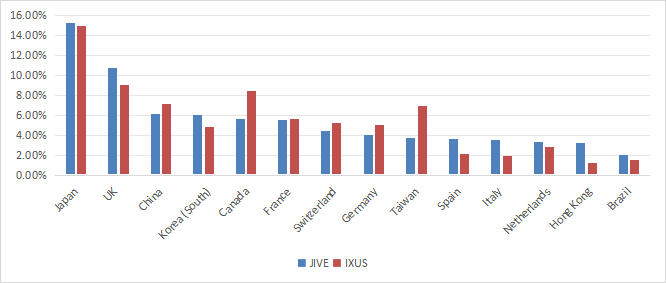
JIVE top countries, % of asset value (Chart: author; data: iShares)
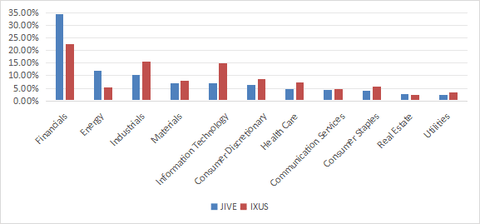
The fund has a focus on financials (34.5% of asset value), in particular banks (22.5%). The second heaviest sector (energy) weighs only 12%. Compared to the benchmark, JIVE overweights financials and energy, while it mostly downplays technology and industrials.
JIVE sector breakdown, % of asset value (Chart: author; data: iShares)
The portfolio is well-diversified, with low company-specific risk. The top 10 issuers, listed in the next table, represent 15.4% of asset value, and the largest position weighs 2.65%.
Fundamentals
In accordance with the strategy description, JIVE has strong value characteristics. It is much cheaper than IXUS based on valuation ratios and has lower growth rates, as reported in the table below.
Data source: Fidelity
Portfolio composition and fundamental metrics are given as an example from April 7, 2026. They may have changed by the time you read this.
Performance
JIVE has greatly outperformed IXUS, by 9.7% annualized from its inception to the present, with similar risk measured by maximum drawdown and volatility.
Data: Portfolio123
JIVE is 18% ahead of IXUS just over the 12 months prior to April 7, 2026, again with similar risk metrics.
JIVE Vs. Competitors
The next table compares characteristics of JIVE and five international value ETFs without currency hedges:
- Schwab Fundamental International Equity ETF (FNDF).
- Dimensional International Value ETF (DFIV).
- iShares MSCI International Value Factor ETF (IVLU).
- Avantis International Large Cap Value ETF (AVIV).
- VictoryShares International Value Momentum ETF (UIVM).
This list is not intended to be exhaustive.
* Calculated with Portfolio123 from 9/20/2023.
JIVE has the highest expense ratio and is the best performer based on total return and Sharpe ratio (a measure of risk-adjusted return) since its inception.
Takeaway
JIVE holds over 300 international value stocks with a focus on large companies. The fund has low company-specific risk, moderate country risk, but high sector risk in financials. JIVE has greatly outperformed the ex-U.S. benchmark IXUS and its closest competitors since its inception, with similar volatility. JIVE is best suited for investors seeking exposure in international value as a long-term holding or for tactical allocation.
- Pros: low company and country risks, superior risk-adjusted return.
- Cons: financial sector risk, high expense ratio.
This article answers these three main questions about JIVE:
- How is the JIVE portfolio structured?
- How does JIVE compare to a benchmark and competitors?
- What kind of strategy is JIVE best suited for?
Business
Medical Properties Trust: New Tenant Risk Meets Promising Recovery Cadence – Contrarian Buy

Medical Properties Trust: New Tenant Risk Meets Promising Recovery Cadence – Contrarian Buy

Meta: Hated Again, And That's An Opportunity
‘Barron’s Roundtable’ panelists discuss investors’ tendency to buy when stocks dip.
Goldman Sachs said on Thursday it has completed the acquisition of active exchange-traded fund provider Innovator Capital Management, expanding the Wall Street bank’s presence in the fast-growing active ETF segment.
Active ETFs are among the fastest-growing areas of asset management, attracting investors with lower costs and flexible strategies at a time when returns from some passive index products have lagged.
The bank said in December that it would acquire Innovator Capital, which managed 171 ETFs with about $31 billion in assets, in a deal worth about $2 billion.
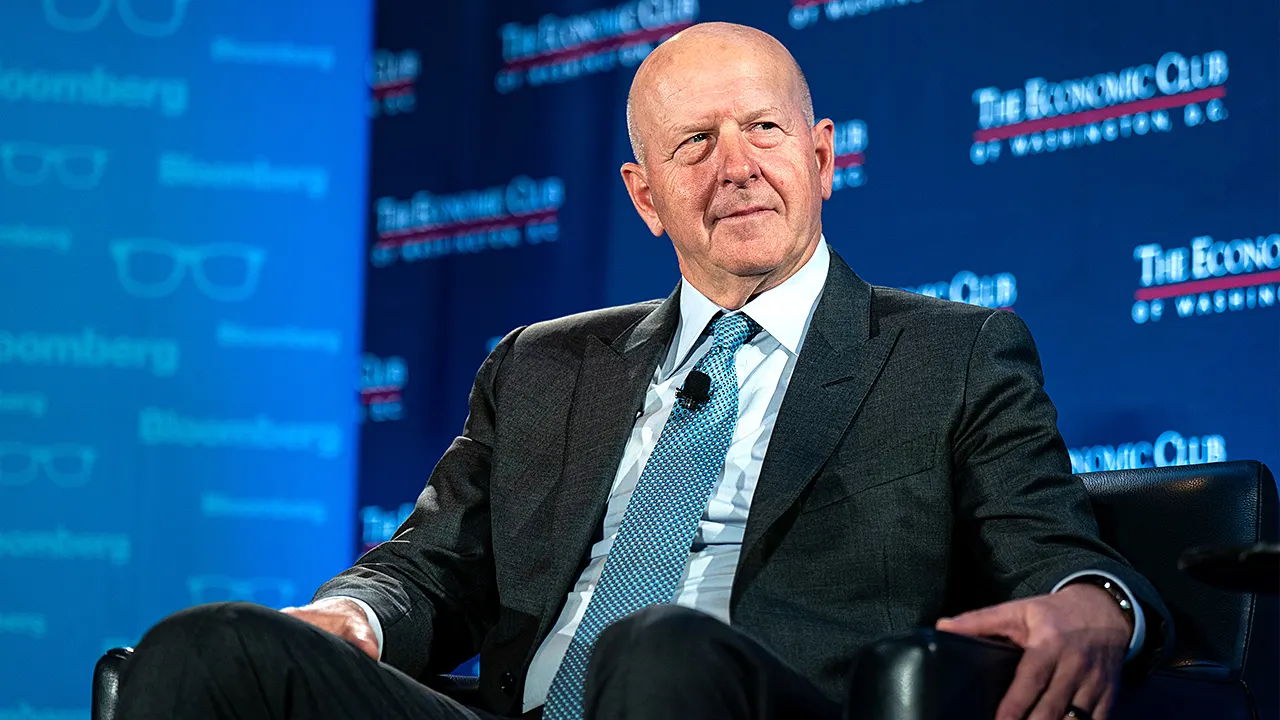
“With this acquisition, we have taken a transformative step in our commitment to provide sophisticated investment solutions that are designed to deliver specific outcomes for investors through market cycles,” Goldman Sachs Chief Executive Officer David Solomon said.
VANGUARD FUND STRIPS OUT CHINA IN EMERGING MARKETS INVESTMENT PLAY
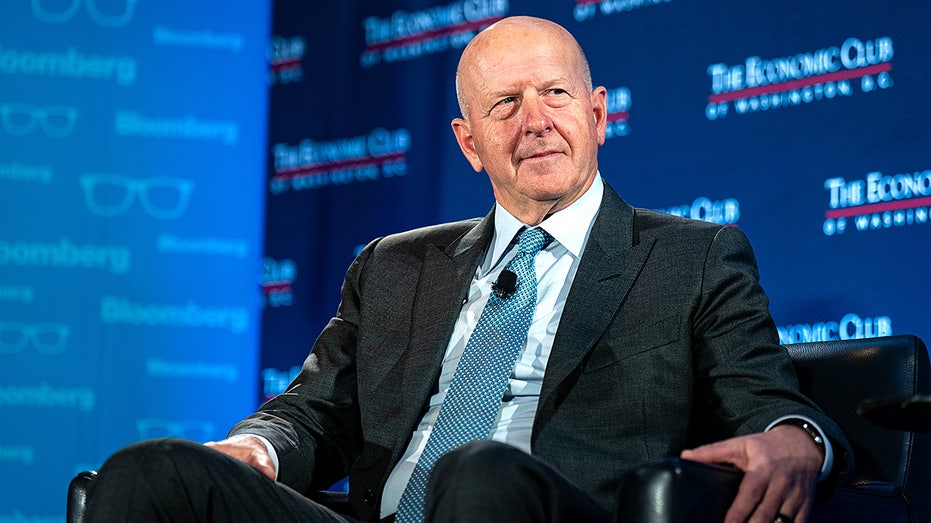
David Solomon, chief executive officer of Goldman Sachs Group Inc., speaks during an Economic Club of Washington event in Washington, D.C., on Oct. 30. (Al Drago/Bloomberg via Getty Images)
Following the deal, Innovator’s co-founders Bruce Bond and John Southard will join Goldman Sachs as advisory directors, the firm said, while Chief Investment Officer Graham Day and Head of Distribution Trevor Terrell will join as partners.
More than 70 Innovator employees will join the firm, Goldman Sachs said.
THE ETF REPORT: NEWS & ANALYSIS
Goldman Sachs Asset Management now oversees about 240 ETFs globally, with total ETF assets under supervision of $90 billion, the firm said.
A sign is displayed in the reception of Goldman Sachs in Sydney, Australia. (David Gray/Reuters)
Innovator uses a so-called defined outcome strategy, employing exchange-traded options to protect investors from market downside while capping upside to help pay for the protection.
INVESTORS BET BIG ON BOOMING DRONE ECONOMY
| Ticker | Security | Last | Change | Change % |
|---|---|---|---|---|
| GS | THE GOLDMAN SACHS GROUP INC. | 864.52 | -1.96 | -0.23% |
“What we found is a lot of advisors have clients that are in pre-retirement or in retirement. They are prioritizing capital preservation over capital appreciation,” Graham Day told Reuters.
The current size of the defined outcome market is between $70 billion and $80 billion and is growing faster than the traditional ETF space, he said.
GET FOX BUSINESS ON THE GO BY CLICKING HERE
“The traditional correlations are breaking down. So more and more investors are looking for different ways to get exposure to markets,” said Bryon Lake, Chief Transformation Officer, Goldman Sachs Asset Management.
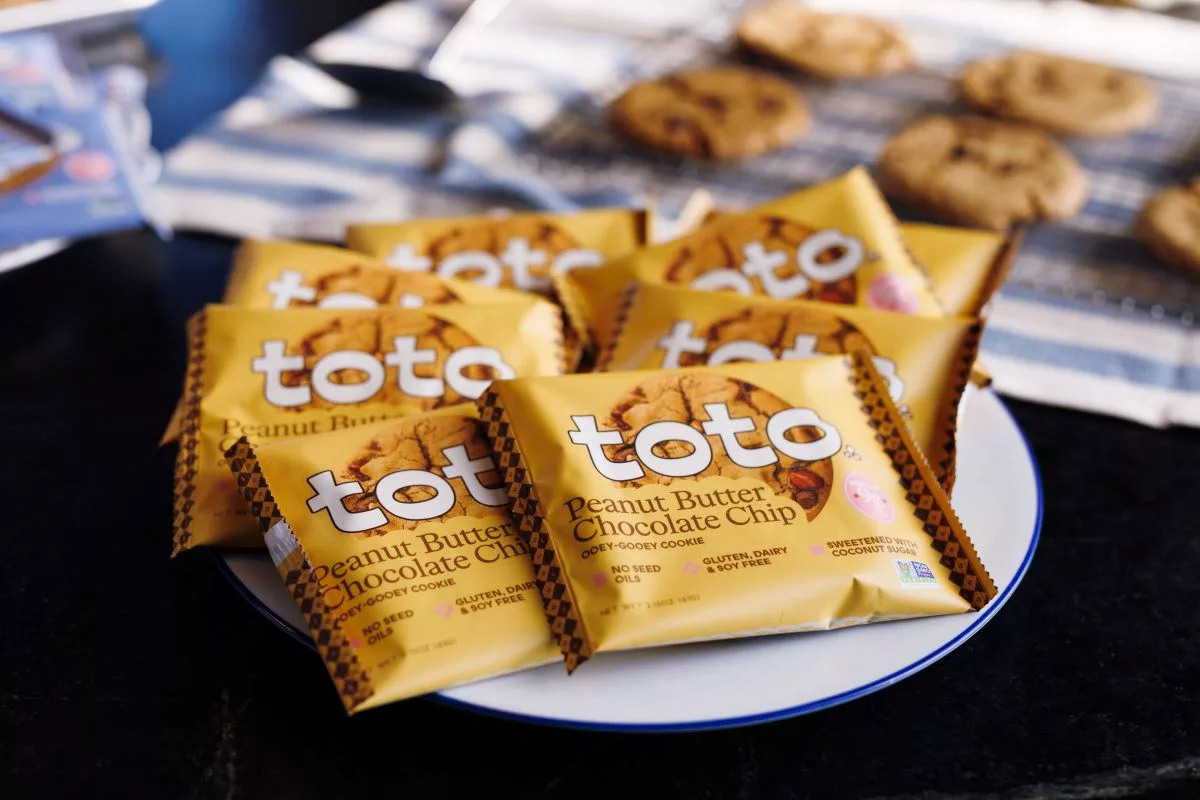

Cookie startup is updating its products, branding to reflect current consumer trends.

Crypto World3 minutes ago
BTC Accumulation Hits 4.37M as Network Activity Sends Mixed Signal

NewsBeat4 minutes ago
‘Upset’ I’m A Celebrity viewers make the same Adam Thomas demand

Business6 minutes ago
Khloud debuts protein chips


-

 NewsBeat5 days ago
Steven Gerrard disagrees with Gary Neville over ‘shock’ Chelsea and Arsenal claim | Football
-

 Business5 days ago
No Jackpot Winner and $194 Million Prize Rolls Over
-

 Fashion4 days ago
Weekend Open Thread: Spanx – Corporette.com
-

 Crypto World6 days ago
Gold Price Prediction: Worst Month in 17 Years fo Save Haven Rock
-

 Business2 days ago
Three Gulf funds agree to back Paramount’s $81 billion takeover of Warner, WSJ reports
-

 Business4 days ago
Expert Picks for Every Need
-

 Sports3 days ago
India men’s 4x400m and mixed 4x100m relay teams register big progress | Other Sports News
-

 Business6 days ago
Login and Checkout Issues Spark Merchant Frustration
-
Business3 days ago
No Jackpot Winner, Prize to Climb to $231 Million
-

 Crypto World7 days ago
Bitcoin enters the public bond market as Moody’s gives a first-of-its-kind crypto deal a rating
-
Crypto World7 days ago
Bitcoin stalls below key resistance as technical signals skew bearish
-

 Tech5 days ago
Commonwealth Fusion Systems leans on magnets for near-term revenue
-

 Politics7 days ago
Starmer’s centre has collapsed, and the left was right all along
-

 Crypto World6 days ago
Ripple rolls out enterprise crypto treasury platform for corporates
-

 Fashion1 day ago
Massimo Dutti Offers Inspiration for Your Summer Mood Board
-
 Crypto World6 days ago
Why It’s Partnering, Not Issuing
-

 Business3 days ago
Akebia Therapeutics, Inc. (AKBA) Discusses Pipeline Progress and Strategic Focus on Kidney Disease Treatments at R&D Day – Slideshow
-

 Tech7 days ago
Solo Leveling: Ranking All Sung Jinwoo Shadows by Power
-

 Tech6 days ago
Drawing Tablet Controls Laser In Real-Time
-
Sports6 days ago
Tom Pelissero Drives the Final Nail in the Coffin
You must be logged in to post a comment Login