Connect with us

Business

Former Illinois Deputy Sean Grayson, Convicted of Killing Sonya Massey, Dies in Prison at 32

Published

on

Sean Grayson

CHICAGO — Sean Grayson, the former Illinois sheriff’s deputy convicted in the fatal shooting of Sonya Massey, a case that became a flashpoint in the national debate over police use of force, died Sunday while serving a 20-year prison sentence, according to his attorney.

Grayson’s lawyer, Daniel Fultz, confirmed that his client died earlier Sunday but declined to provide additional details regarding the circumstances of his death. Grayson, 32, had been diagnosed with colon cancer before Massey’s killing, and his attorneys said at his January sentencing that the disease had since spread to his liver and lungs.

Grayson was convicted of second-degree murder in October in connection with the July 2024 shooting death of Massey, a 36-year-old Black woman who had called 911 to report a possible prowler outside her Springfield-area home. Body camera footage of the encounter showed Massey crouching in her kitchen and apologizing in the moments before Grayson shot her in the face. He was sentenced in January to the maximum 20 years in prison allowed for the conviction.

Advertisement

Only months into his sentence, Grayson sought medical release in May under an Illinois law that allows for the release of prisoners with terminal illnesses or serious medical conditions. The Illinois Prisoner Review Board denied that request last month.

Massey called 911 early on July 6, 2024, to report someone prowling outside her home. Grayson and another Sangamon County sheriff’s deputy responded to the call. Body camera video captured Grayson directing Massey to remove a pot of hot water from her stove. As she held the pot, Massey told the deputies, “I rebuke you in the name of Jesus.” Grayson then threatened to shoot her, drew his handgun and ordered her to drop the pot. Massey apologized and ducked behind a kitchen counter before Grayson fired three times, striking her in the face.

The second deputy on scene, Dawson Farley, later testified that he did not consider Massey to be a threat during the encounter and said he drew his own weapon only after Grayson had already drawn his.

Grayson was fired from the Sangamon County Sheriff’s Office following the shooting and was initially charged with first-degree murder. Jurors ultimately convicted him of the lesser charge of second-degree murder after Grayson argued during trial that he had feared Massey intended to throw the hot water at him.

Advertisement

Massey’s killing drew significant national attention and sparked protests, while also raising broader questions about how Grayson had been able to move through multiple law enforcement agencies before ultimately being hired by the Sangamon County Sheriff’s Office. In response to those questions, Illinois lawmakers passed the Sonya Massey Act, a new state law requiring law enforcement agencies to more thoroughly review an applicant’s previous employment records before hiring an officer.

The U.S. Department of Justice separately opened a civil rights investigation following Massey’s death. That investigation later resulted in an agreement between the department, Sangamon County, its sheriff’s office and other local agencies, requiring a series of policy changes to local policing and emergency response practices. According to those terms, the changes included additional training for officers on interacting with individuals experiencing behavioral health crises, along with the development of a mobile crisis response program intended to provide alternative support for situations involving mental health concerns.

Beyond the criminal case and subsequent policy reforms, Massey’s family separately reached a $10 million civil settlement with Sangamon County over the fatal shooting, according to prior reporting on the case.

Grayson’s death closes out the criminal portion of a case that had continued to draw national scrutiny well beyond his conviction and sentencing, given both the circumstances captured on body camera footage and the broader questions his hiring history raised about screening practices across law enforcement agencies. His death comes just months after he began serving his 20-year sentence and roughly one month after state officials denied his request for compassionate medical release related to his advancing cancer diagnosis.

Advertisement

As of this report, authorities have not released additional details regarding the specific circumstances of Grayson’s death within the prison system, and his attorney has not indicated whether any further statement will be issued. Massey’s case remains closely associated with broader national conversations about police accountability, officer screening practices and law enforcement interactions with individuals experiencing mental health or behavioral crises, conversations that directly informed both the Sonya Massey Act and the subsequent Justice Department civil rights agreement reached with Sangamon County following her death.

Continue Reading
Click to comment

You must be logged in to post a comment Login

Leave a Reply

Business

UK productivity growth stronger than ONS data suggests

Published

on

Public procurement rules put jobs ahead of net zero

Britain’s economy has undergone a silent productivity boom over the past two years, according to new research which suggests that official statistics have masked a dramatic improvement in output.

The Resolution Foundation, a think tank, said UK productivity has been expanding by 1.1 per cent a year since late 2024, far above the official estimate of 0.2 per cent from the Office for National Statistics.

Productivity growth, based on a worker’s output per hour, is central to ensuring long-term prosperity and rising living standards, and acts as a stabilising force on a government’s public finances.

Five times the official estimate

The think tank said the UK’s productivity growth had been “respectable” and not as “dismal” as the “flawed” measurements from the ONS suggest. Its higher estimate comes from an analysis of payroll data from HMRC and tax returns from the self employed, which it considers more reliable than official estimates.

“Britain’s dismal productivity record since the global financial crisis explains a lot of its economic stagnation and weak living standards growth, but while official figures suggest that the output of workers has worsened further in the mid-2020s, our more accurate productivity measure suggests that it has been improving in recent years,” the foundation said.

Advertisement

A separate analysis from the Centre for Economic Performance, which uses the same data sources as the Resolution Foundation, has calculated that annual productivity growth expanded at a rate of 2.37 per cent between the third quarter of 2024 and the first three months of 2026.

A survey under strain

The ONS derives its measure of productivity from its labour force survey, which has been plagued by low response rates since the pandemic and is being revamped to encourage wider participation. It expects to launch a long delayed transformed labour force survey (TLFS) next year.

The statistics agency has reported clear improvement in response levels on the existing survey following a series of interventions, with several waves close to pre-pandemic levels, and says it aims to switch its headline labour market statistics over to the TLFS in 2027.

That matters well beyond the statistical trade. Pay settlements, interest rate decisions and the fiscal headroom a chancellor believes she has all rest on estimates of how much the economy can produce.

Advertisement

Worst run since the 1800s

The UK, along with Italy, has consistently registered the worst productivity growth in the G7 group of advanced economies since the financial crisis, when rates of output per hour fell across Western economies. Average UK productivity growth was 2.1 per cent in the decade before the 2008 crash and has fallen to 0.3 per cent a year in the years since. This is the worst run since the 1800s, according to the Office for Budget Responsibility.

The fiscal watchdog has put the shortfall since the crisis at 1.5 percentage points a year compared with the pre-crisis period, with manufacturing and financial services accounting for three quarters of the decline. Business Matters has previously reported on the Bank of England’s assessment that Britain had endured its worst decade for productivity growth since the 18th century.

Economists have long pondered what is behind the UK’s productivity puzzle, with some suggesting that conventional measurements cannot capture the advances in output made in the internet and digital age.

Not artificial intelligence, and not job switching

Two explanations have been offered for the recent improvement. The first is that the introduction of artificial intelligence into sectors such as IT and financial services is boosting output per hour. The second is that the government’s increase in employment taxes has forced firms to rein back on hiring, lifting productivity in labour intensive, low pay sectors such as leisure and hospitality.

Advertisement

The Resolution Foundation said neither trend is visible in the data, and that the take-up of AI across the economy is not yet widespread enough to draw strong conclusions. That is a notable finding given how quickly small firms have adopted AI tools for quick productivity wins, and given the scale of the tax change, with employers’ national insurance contributions climbing by £28bn in the year to March 2026.

Simon Pittaway, the foundation’s principal economist, said: “Some have suggested that recent productivity gains have been driven by an early AI boom, and workers leaving low-productivity sectors like retail and hospitality. But neither explanation is borne out by the data. Instead, the UK’s productivity recovery has been achieved by the same workers, doing the same jobs, and working in the same sectors.

“This is a broad-based recovery, with 12 of 19 sectors seeing improved productivity growth in the past two years, including info and communications, retail, science, transport and health. This productivity recovery is welcome, but it needs to be sustained and built upon if it’s to lead to big improvements in living standards.”


Amy Ingham

Amy Ingham

Amy Ingham is a reporter at Business Matters, covering UK business news with a focus on breaking news, business policy, late payments and insolvency. She joined the magazine in 2026 after completing the NCTJ Diploma in Journalism at Harlow College’s journalism school. Her recent reporting includes British Steel’s nationalisation and its impact on SME suppliers, the decline in late payments by large firms, and Insolvency Service director disqualifications. Reach her at aingham@cbmeg.co.uk.

Advertisement

Continue Reading

Business

Alibaba Stock Falls As AI Push Drives $10 Billion Share Sale

Published

on

Alibaba Stock Falls As AI Push Drives $10 Billion Share Sale

Alibaba stock fell in U.S. trading after the Chinese tech giant priced a roughly $10.2 billion placement of new shares to non-U.S. investors. The move marks the latest large tech industry fundraising deal focused on AI. Alibaba Group (BABA) on Monday said it has priced 710 million new shares at 112.70 Hong Kong dollars each, according to a news release.…

Copyright ©2026 Investor’s Business Daily, LLC. All rights reserved. 87990cbe856818d5eddac44c7b1cdeb8

Continue Reading

Business

New York City targeted in lawsuit challenging Mamdani’s grocery store plans

Published

on

New York City targeted in lawsuit challenging Mamdani's grocery store plans

A coalition representing immigrant-owned grocers is targeting New York City in a lawsuit over democratic socialist Mayor Zohran Mamdani’s plans to open multiple government-owned grocery stores in the Big Apple, a government intervention that is expected to cut into the profits of regular markets.

The lawsuit was expected to be filed Monday at 8 a.m. ET, following efforts to resolve the solution out of court.

Advertisement

“Although we have not heard from you since May 2026, we are open to resolving this matter amicably with more sensible solutions to feed working class people with nutritious essential food items at affordable prices,” the Multicultural Business Coalition’s president, Kenneth Roldan, declared in a letter to City Hall, according to a New York Post report last week.

NYC TAXPAYERS COULD PAY TWICE UNDER MAMDANI’S CITY-OWNED GROCERY STORE PLAN

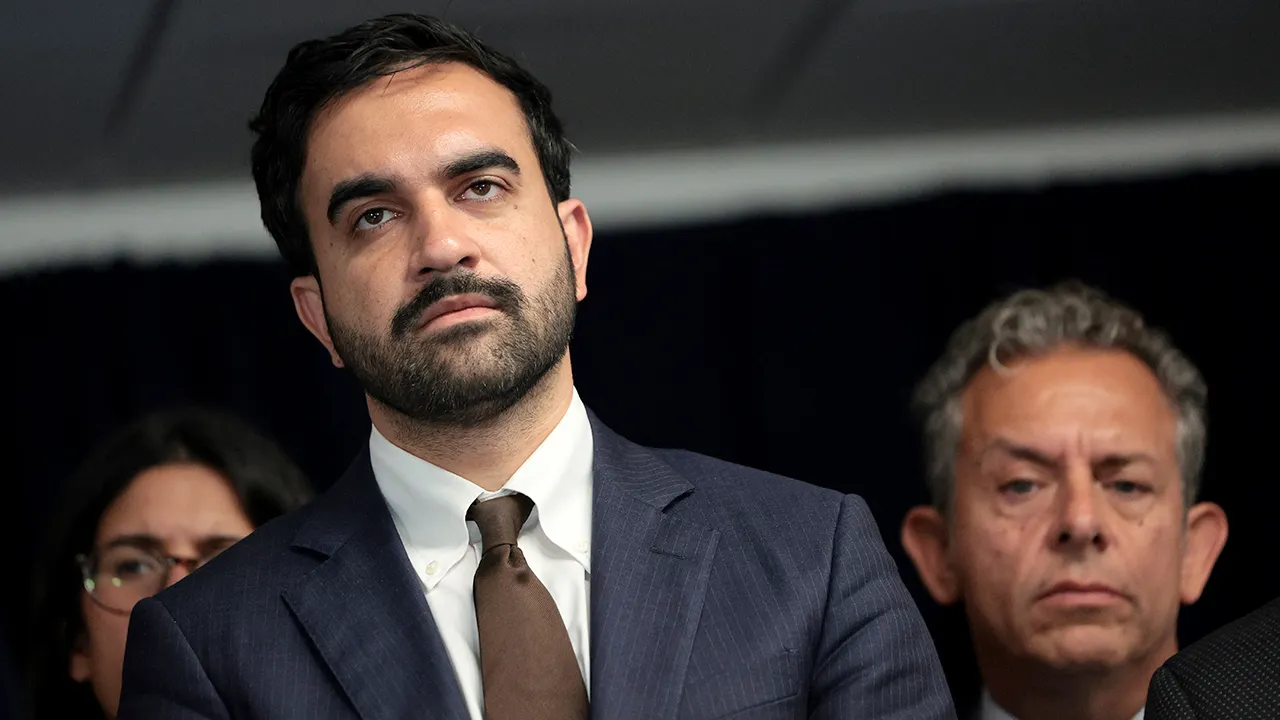
New York City Mayor Zohran Mamdani

New York City Mayor Zohran Mamdani listens as Gov. Kathy Hochul speaks during a press conference on Immigration and Customs Enforcement (ICE) actions on Aug. 12, 2026, in New York City. (Michael M. Santiago/Getty Images / Getty Images)

“We are asking the mayor to avoid litigation to sit down with us,” legal counsel for the coalition, Mark Jaffe, the president of the Greater New York Chamber of Commerce, told the outlet. “But we have to try to stop this if they won’t listen to us.”

The first of five planned government-linked grocery stores is expected to open next year, the mayor’s office announced earlier this year.

Advertisement

MAMDANI’S LUXURY-HOME TAX GETS NEW LIFE AS APPEALS COURT LIFTS ROADBLOCK IN HOMEOWNER FIGHT

“Under the model, the City will own the land and cover overhead costs like rent and construction. A private operator, selected through a request for proposals, will manage daily operations and be contractually required to pass savings directly to customers on a core basket of everyday staples,” an April news release stated.

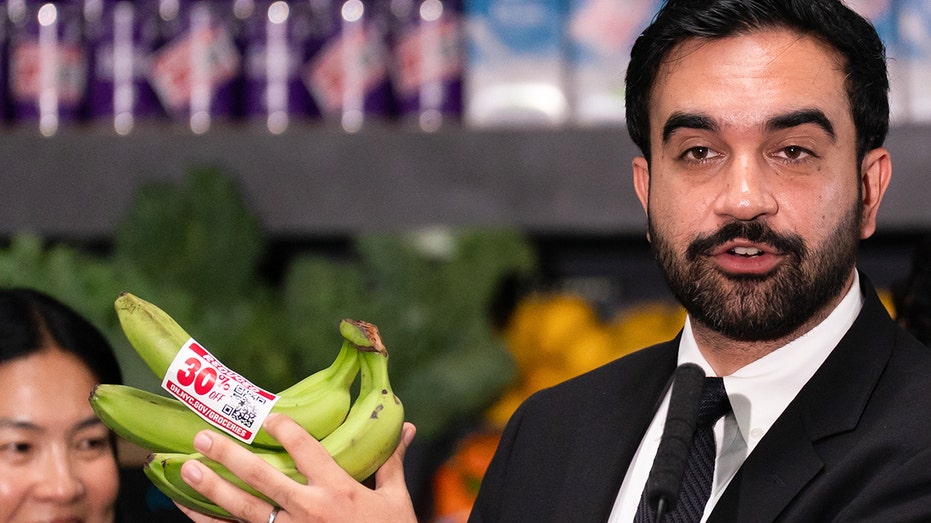
Mamdani has claimed that prices for a core basket of grocery items will be priced 30% lower than normal retail prices at the government-affiliated stores.

Advertisement

BILL ACKMAN SOUNDS ALARM ON MAMDANI’S ECONOMIC AGENDA: ‘SOCIALISM IS A DISASTER’

NYC Mayor Mamdani

Zohran Mamdani, mayor of New York, holds up bananas labeled with a 30% off sticker during an announcement of municipal grocery stores at a Campaign for Hunger community food distribution center in the Brooklyn borough of New York, on Monday, July 27, (Adam Gray/Bloomberg via Getty Images)

GET FOX BUSINESS ON THE GO BY CLICKING HERE

“This core set of goods will include all fresh produce, meat and seafood along with 20 other essential items like cheese, milk and bread. Here’s how it will work: Once a month, our five city-run grocery stores will set prices for this core set of goods at 30% below typical retail prices,” he said last month.

FOX Business’ Madison Alsworth contributed to this report.

Advertisement
Continue Reading

Business

Veezu donation to cricket club after vandals destroyed scoreboard

Published

on

Business Live

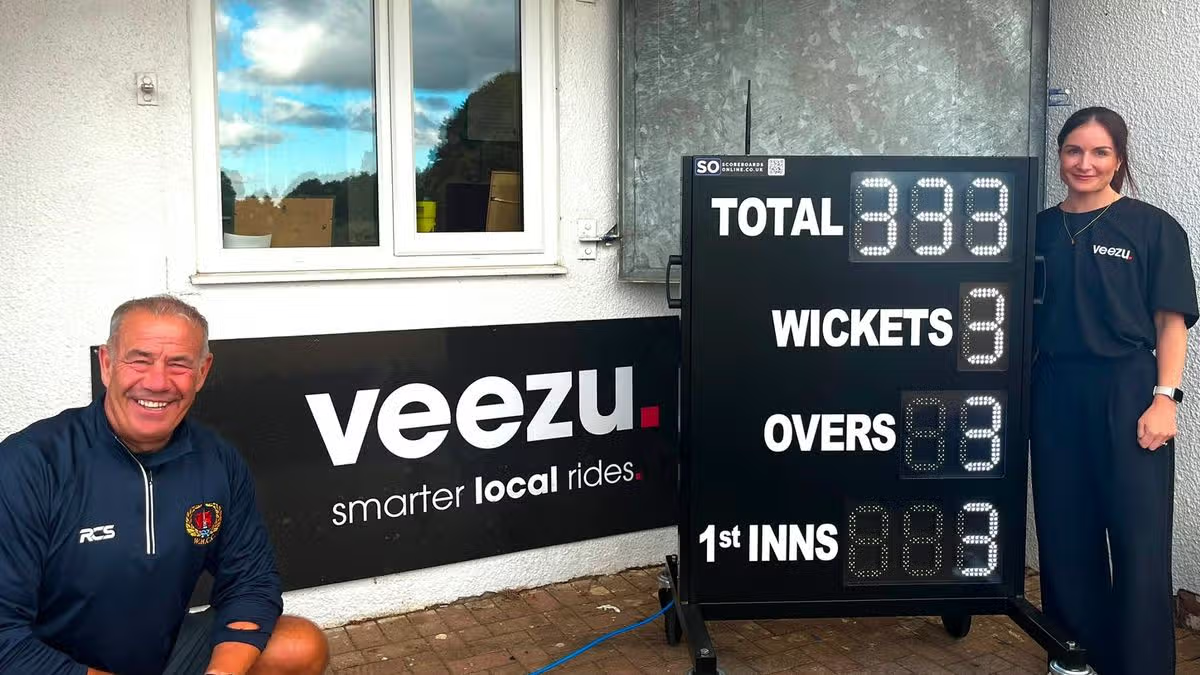
Veezu has donated £1,000 to Whitchurch-Heath Cricket Club

Private hire car venture Veezu had donated £1,000 to a Cardiff cricket club to replace equipment damaged in an arson attack at its ground.

Whitchurch-Heath Cricket Club has received a £1,000 donation after vandals targeted its facilities earlier this year, with its scoreboard set on fire and other equipment damaged. It left the volunteer-run club facing an unexpected bill to replace essential equipment.

The contribution from Cardiff headdquartered Veezu has helped Whitchurch-Heath replace the destroyed scoreboard with a new electronic model.

Advertisement

Sally Krouma, brand activation manager at Veezu, said: “When we heard what had happened at Whitchurch-Heath we wanted to see what we could do to help.

“Grassroots sports clubs play such an important role in their communities and rely on an enormous amount of hard work from volunteers.

“It was really disappointing to see the damage that had been caused, so we were very happy to provide £1,000 to help the club replace some of the equipment.”

Alastair Milburn, chair of Whitchurch-Heath Cricket Club, said: “We are incredibly grateful to Veezu for their amazing support.

Advertisement

“The damage was heartbreaking for everyone involved with the club. Our facilities and equipment have been built up through years of hard work by members and volunteers, so seeing the scoreboard destroyed by fire was particularly difficult.

“What was uplifting was the response we received from people who wanted to help. Sally contacted me almost immediately after seeing what had happened and simply asked what Veezu could do to support us.

“Their incredibly generous contribution has helped us replace the damaged scoreboard with a new electronic one, so there is now something really positive to come out of what was a very distressing and hurtful incident.

“Support like this makes a genuine difference to a community sports club and we can’t thank Veezu enough for standing alongside us when we needed it.”

Advertisement

Whitchurch-Heath Cricket Club provides cricket for players of different ages and abilities and is run with the support of volunteers from across the club.

Continue Reading

Business

Weak economy, consumer demand shifts hit Flowers Foods

Published

on

Weak economy, consumer demand shifts hit Flowers Foods

THOMASVILLE, GA. — Intensifying economic pressures, changing consumer preferences and stiffer competition translated into weaker second-quarter results at Flowers Foods, Inc. than the company had anticipated. Particular pressure on the company’s loaf bread business, including its Wonder and Dave’s Killer Bread brands, contributed to decreases in sales and profits during the period.

The setback in the second quarter has prompted Flowers to take additional cost-reduction efforts while accelerating growth initiatives. Sales and earnings guidance for the current year were lowered.

Net income in the second quarter ended July 18 totaled $40.66 million, equal to 19¢ per share on the common stock, down 30%, from $58.37 million, or 28¢ per share, in the second quarter of 2025. Sales were $1.19 billion, down 4% from $1.24 billion a year earlier. The sales decrease marked a reversal from the company’s first quarter, when Flowers Foods generated an increase of 1.1% in sales.

In the second quarter, volume dropped 5.8% while pricing/mix were up 1.8%.

Advertisement

A. Ryals McMullian, chairman and chief executive officer, pinpointed soft demand for bread as the key to the weak financial results, reflecting “ongoing pressure on household budgets, evolving consumer purchasing behavior, and continued competitive dynamics.”

The competitive dynamics were responsible for a “more difficult operating environment” than Flowers had anticipated, McMullian said.

“While we expected many of these headwinds to persist, their pace and magnitude intensified during the quarter, contributing to softer demand across much of our portfolio and results that fell short of our expectations,” he said.

Economic weakness prompted consumers to trade down to more affordable options as well as toward formats where Flowers is still building scale, McMullian said.

Advertisement

 “Those shifts were compounded by consistent promotional intensity and strong competition across pricing and assortment,” he said.

Flowers is accelerating initiatives to strengthen competitiveness, improve execution, advance innovation, and prioritize the highest-value opportunities, McMullian said. He said the efforts already are generating “tangible commercial momentum.”

“Recent progress includes new business wins, entry into new markets, and key wins in away-from-home and cake categories, which we expect to contribute meaningfully to sales as those opportunities fully ramp,” he said.

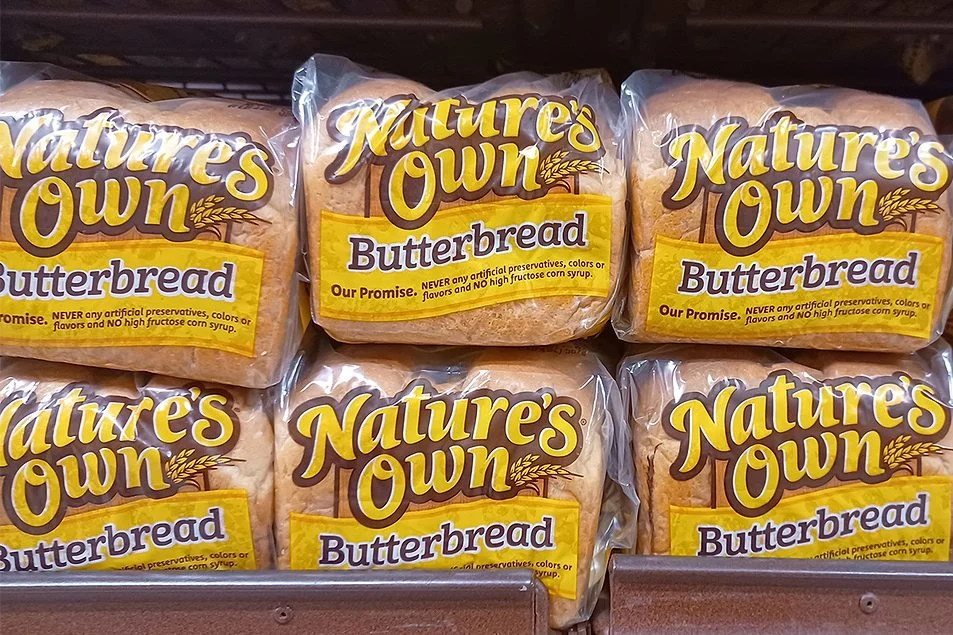
The effects of the consumer and competitive pressures McMullian cited were particularly pronounced in the loaf bread category, including the company’s major Nature’s Own and Wonder brands. In the case of Nature’s Own, mainline product sales were weak, but the brand overall benefited from strength in its Perfectly Crafted sub-brand, with sales rising more than 9%. McMullian described new sourdough and Italian herb varieties as growth drivers.

Advertisement

The relaunch of Nature’s Own, reformulated with fewer ingredients and without flour enrichment, was described by McMullian as a “a key step” in the company’s efforts to revitalize its bread business. The move was announced midway through the second quarter.

“Early feedback from customers and distribution partners has been excellent, particularly around the brand’s simpler ingredients, stronger better-for-you positioning, and Non-GMO Project verified offering at national scale,” McMullian said. “While this initiative remains in its early stages and has not yet meaningfully contributed to results, positive customer feedback and the brand’s growing presence in the better-for-you segment reinforce our confidence in Nature’s Own’s ability to extend its category leadership over time.”

To achieve success for the relaunch, McMullian said Flowers is focused on building awareness, securing displays, improving shelf communication, and supporting the brand across the full path to purchase.”

He said the marketing campaign associated with the launch featuring spokesperson John Cena has begun to “generate stronger consumer engagement and positive social media feedback.”

Advertisement

While citing Nature’s Own as brand with Wonder that was pressured during the quarter, McMullian later said the Nature’s Own brand “performed very well, gaining 30 basis points of dollar share and 20 basis points of unit share.”

“Nature’s Own Perfectly Crafted was the primary driver and continued to build momentum, increasing dollar sales and gaining 20 basis points of unit share in the quarter, helping offset some of the pressure on our overall performance in the category,” McMullian said. “During the July Fourth holiday period, we held unit share and grew dollar share during this important seasonal window.”

By contrast, Dave’s Killer Bread lost unit and dollar share during the quarter. McMullian attributed the performance to planned reductions in marketing spending, changing consumer preferences, intensifying competition and consumer price sensitivity. He said Flowers is working to improve performance through innovation, expanded distribution, and advertising.

During an analyst call Aug. 21, McMullian said marketing dollars redirected from core Dave’s Killer Bread products are shifting back.

Advertisement

“We should see more normalized levels of promo and marketing spend with DKB for the balance of the year,” he said.

Asked about the consumer shifts weighing on DKB, McMullian cited one product in particular.

“We think that it’s the growth of sourdough,” he said. “It’s pretty remarkable, actually. I mean that subsegment of the category has already grown to be a $1.3 billion subcategory, pretty tremendous growth. In DKB, we only have sourdough on the West Coast currently.”

Price sensitivity also factored into the results, he said.

Advertisement

“But I said earlier, I don’t think it’s all price,” he said. “It’s a combination of price for some consumers, but also offering and product attributes that are driving some of that decline.”

Canyon Bakehouse, the company’s gluten-free bread brand, gained both unit and dollar share, and Nature’s Own Keto gained dollar share during the quarter.  In the company’s better-for-you snacking business, McMullian said Simple Mills retail sales increased 13%, driven by strength in cookies and crackers, reinforcing the resilience and appeal of the brand.

epub_Flowers-Foods-Lead_800x800_webp.jpg

The marketing campaign associated with the launch featuring spokesperson John Cena has begun to “generate stronger consumer engagement and positive social media feedback,” said A. Ryals McMullian, chairman and chief executive officer.

| Photo: Flowers Foods, Inc.

“This performance was driven by a combination of distribution expansion, ecommerce performance, and strong velocities on core lines in the food and mass channels,” McMullian said, noting that new product launches have exceeded distribution goals, fueling optimism that the brand’s growth will accelerate in the second half of 2026.

Advertisement

Amid rumors the company’s Tastykake business may be sold, McMullian said the company “generally held share” in the snack cake category, thanks to strong results from the company’s Wonder brand.

“Wonder cake was a clear standout, gaining 60 basis points of unit share while also growing dollar share, underscoring the brand’s strong consumer relevance and the important role our cake business can play within our broader portfolio,” McMullian said. “Wonder’s continued momentum gives us a strong foundation from which to build in this category.”

Speculation about the sale of Tastykake was not addressed either in McMullian’s remarks or during the analyst call.

Asked whether pricing Flowers took earlier in the year was responsible for the downturn in sales, McMullian again said other factors may have been more important.

Advertisement

“Under-penetration in half loafs, sourdough, protein, fiber, some of these more functional attributes that consumers are looking for —that’s where our primary focus is,” he said. “Which is not to say that we’re ignoring the price equation. We are taking a hard look at that, and my initial thesis is there probably are some pockets of the portfolio where that’s a factor. But I don’t think it’s the overall driving force of our performance.”

Flowers trimmed the company’s earnings per share guidance for 2026 to 75¢ to 80¢from its earlier guidance of 80¢ to 90¢ and compared with $1.09 in 2025. The company revised its sales forecast to $5.07 billion to $5.142 billion, down from earlier guidance of $5.163 billion to $5.267 billion, and down 2.2% to 3.5% from 2026.

“Given our first-half performance and the current category environment, we are updating our full-year outlook to reflect a more cautious view for the balance of 2026,” McMullian said. “While near-term conditions remain challenging, we are confident that the actions underway will strengthen our top-line trajectory and better position our portfolio to meet evolving consumer demand.”

“We are taking targeted steps to strengthen competitiveness, sharpen execution, reduce costs, and better align resources with the opportunities that can create the greatest long-term value,” McMullian said. “Consistent with these priorities, we are executing additional cost actions designed to improve efficiency, reduce our cost base, and better align our operating structure with customer needs and current market realities. While difficult, we expect these actions to create a more agile organization and better position Flowers for profitable growth over time.”

Advertisement

Embedded in the outlook is improvements Flowers expects from its Nature’s Own relaunch, said Anthony Scaglione, chief financial officer.

“Additionally, it reflects the actions we are taking to improve performance, including cost controls, reorganization savings, targeted brand investment, innovation launches, and related execution,” Scaglione said.

The cost controls are expected to generate annualized savings over time of $20 million, including $9 million in 2026, but also will result in $6 million in one-time costs, Scaglione said.

Flowers sees longer-term headwinds for 2027, including escalating commodity ingredient and fuel costs, Scaglione said. He said the company is fully hedged for 2026 for its principal ingredients.

Advertisement

“We remain vigilant in implementing actions to help mitigate some of this risk, including expanding our hedging program and improving our price-pack architecture to better align with consumer preferences,” he said. “This work will lead to more stabilized cost inputs from a planning standpoint as well as opportunities to offer our best-selling brands in smaller loaf sizes and ensure our snack packs are appropriately sized for consumer demand.” 

Continue Reading

Business

GR to raise $110m, net profit hits $39m

Published

on

GR to raise $110m, net profit hits $39m

GR Engineering Services boss Tony Patrizi says the company will maintain an open mind regarding potential acquisition opportunities moving forward.

Continue Reading

Business

Paramount-WBD antitrust challenge may hold up more media deals

Published

on

Paramount-WBD antitrust challenge may hold up more media deals
What makes Paramount Skydance's deal for Warner Bros. Discovery so unique

Long-awaited media M&A appeared to be finally getting off the ground in recent months.

But the delay of Paramount Skydance’s $110 billion proposed acquisition of Warner Bros. Discovery has industry insiders now citing a chill on mergers and acquisitions.

Last month, Paramount agreed to put its tie-up with WBD on hold until as late as June 2027, roughly nine months past its planned closing, while an antitrust challenge brought by a group of state attorneys general heads to trial. In recent days, The New York Times reported Paramount and California Attorney General Rob Bonta, who is leading the charge against the tie-up, would begin preliminary settlement talks — which were then swiftly called off, according to the paper.

The deal had already won approval by global regulators, including from the Antitrust Division of the U.S. Department of Justice.

Advertisement

Media executives and onlookers say the threat of increased scrutiny by state regulators, as well as a monthslong process before the dust settles, could put more than just Paramount’s megamerger on ice.

“It feels like the landscape has shifted significantly in the last few weeks around larger deals and combinations,” said Jonathan Miller, a media industry veteran who currently serves as CEO of Integrated Media, which owns a portfolio of media and creator ventures.

“I think we’re going to see a lull in deals,” Miller said.

Return of regulatory uncertainty

What once felt like a regulatory environment welcoming of mergers during President Donald Trump’s second term now feels hampered by the threat that states could take up the regulatory baton.

Advertisement

U.S. companies have inked just over 7,500 deals so far this year through Aug. 20, up from 7,015 during the same period last year, according to data provider Dealogic. Collective deal value is up considerably, too, as more megadeals get across the finish line.

Media companies have been raring for some time to be part of the action as they seek to cut costs and add scale to their businesses amid the bleed of pay TV subscribers.

Besides Paramount’s takeover of WBD — which itself came months after David Ellison’s Skydance completed its acquisition of Paramount — the industry has seen announcements of combinations, spinoffs and partnerships accounting for tens of billions of dollars in media market cap.

The Roku logo is displayed at Roku headquarters on in San Jose, California, Feb. 12, 2026.

Advertisement

Justin Sullivan | Getty Images

Fox Corp. plans to acquire Roku for $22 billion. Comcast, after separating out its portfolio of cable networks into Versant, is now planning to spin off NBCUniversal — which also recently formed a partnership between its Peacock streaming service and YouTube. Netflix has also come to the negotiating table after long vowing to build rather than buy.

The future of Fox and Roku’s marriage was called into question in a recent analyst note, despite the transaction having relatively fewer antitrust concerns than Paramount-WBD. The deal got a lukewarm reception from investors in June but is nonetheless considered a strategic pivot for Fox into streaming distribution.

Bernstein analysts noted what could be a “regulatory timing risk, particularly given the ongoing PSKY-WBD process.”

Advertisement

“While we do not view [the] Roku transaction as creating meaningful horizontal or vertical concentration concerns, current regulatory developments for [the] PSKY-WBD process indicate that transaction timing can be unpredictable even when the underlying antitrust arguments appear relatively weak,” according to the Bernstein analysts’ note.

The Fox-Roku deal is expected to close in the first half of 2027.

A similar dynamic is playing out with broadcast station owners hungry for consolidation, CNBC previously reported. Nexstar Media Group’s $6.2 billion acquisition of Tegna was announced in August 2025 and formally closed in March, but a group of state attorneys general sued to unwind the agreement. A trial is slated for next year.

The Comcast-NBCU calculus

Comcast and NBCUniversal signage on the 10 Universal City Plaza building in Universal City, California, June 29, 2026.

Advertisement

Jill Connelly | Bloomberg | Getty Images

Meanwhile, Comcast’s planned separation of NBCUniversal — expected to be completed next summer — swiftly raised hopes of more M&A to come when the move was announced in June.

Both companies are well positioned and flexible to do deals once they trade as standalone entities. NBCUniversal will include the Universal movie studio, Peacock streaming business, NBC broadcast network and related assets, while Comcast will house the Xfinity-branded services including broadband and mobile.

Executives for both NBCUniversal and Comcast have previously thrown cold water on the idea that the separation was for the purpose of dealmaking, but each company will undoubtedly have more avenues for M&A once the spinoff is complete.

Advertisement

As NBCUniversal prepares for its future as a standalone company, internal discussions have revolved around partnerships, bundles and other similar opportunities with media and tech companies, people familiar with the matter said. M&A has not been a topic of discussion for the near term, although minority-stake opportunities could be on the table, according to two of the people, who spoke on the condition of anonymity to discuss internal strategy.

Michael Angelakis walks to the morning session during the Allen & Co. Media and Technology Conference in Sun Valley, Idaho, July 10, 2025.

David Paul Morris | Bloomberg | Getty Images

Incoming Comcast CEO Michael Angelakis — known in the industry as a dealmaker — said during an investor call he believed Comcast had the scale to compete, but he also didn’t dismiss future M&A. While a much-speculated combination with cable peer Charter Communications doesn’t appear to be in the cards, other opportunities in the broadband and tech industry could be attractive, one of the people said.

Advertisement

Yet executives at both of the soon-to-be separated companies are likely to avoid M&A discussions until Paramount-WBD’s process is resolved, some of the people familiar said, taking that result as an indication of what deals may or may not be doable in a more scrutinous environment.

Comcast and NBCUniversal leadership have become less inclined to consider near-term dealmaking with such potential regulatory pressure, according to those people.

For years, NBCUniversal, like Warner Bros. Discovery, has been frequently floated as a potential takeover target. The two companies have similar portfolios made up of linear TV, film production and streaming.

In the event Paramount’s marriage with WBD gets blocked by the state AGs, NBCU could look less appealing to some would-be suitors.

Advertisement

Partnership potential

A stall on media M&A could spur an uptick in partnerships and bundles, Integrated Media’s Miller said.

NBCUniversal’s Peacock deal with YouTube to effectively ingest content from NBCU into YouTube for Premium subscribers could be a model for one of those options. YouTube has long topped Nielsen’s streaming viewership list, and deals that see more of traditional media’s content embedded into the tech platform could become more commonplace.

Pavlo Gonchar | Lightrocket | Getty Images

Many in the industry have argued that creating bundles between various streaming services is the most consumer-friendly and profit-driving alternative to the current decentralized ecosystem. Peacock and Apple TV offer bundled plans, Disney offers a bundle of its various streaming services — Disney+, ESPN and Hulu — and Fox One and ESPN offer a separate bundle.

Advertisement

NBCUniversal has had conversations with various media players about potential bundles and content partnerships similar to the recently announced YouTube deal, according to one of the people familiar with the matter.

In place of M&A, media companies are also likely to focus more on deals with content creators and for intellectual property to bulk up their platforms. Media companies have been gravitating toward adding this content — along with short-form programming — to their platforms in a bid to attract younger viewers.

The economics of a deal

Paramount Skydance CEO David Ellison, left, and Warner Bros. Discovery President and CEO David Zaslav.

Caroline Brehman | Mike Blake | Reuters

Advertisement

One thing is certain: Ellison’s Paramount won’t be merged with WBD as easily as it planned.

Both Ellison and WBD CEO David Zaslav recently voiced their confidence in the deal, but the delay will be costly for Paramount. Under the terms of its agreement, Paramount will owe WBD shareholders a so-called ticking fee the longer the deal is delayed, beginning Sept. 30. The fee could amount to roughly $650 million in cash value per quarter.

Paramount last week filed to compel the suing states to post a $1.88 billion bond that it says would cover the ticking fee as well as other costs associated with the delay.

Regardless, the economics of the deal look very different if it’s completed in June of next year versus September of this year. The threat of similar holdups for other deals could infiltrate deal discussions and shift financial terms.

Advertisement

“The market-definition fight just got a price tag. A March 2027 trial date turns what had been an abstract antitrust debate into a potential billion-dollar delay cost before the court even rules,” said Mike Proulx, vice president and research director at Forrester. “The deal may still close, but the clean-close scenario is now gone.

“Paramount can still argue that the states are defining the market too narrowly,” Proulx said, “but proving that point just became much more expensive.”

Disclosure: Versant Media Group is the parent company of CNBC.

Choose CNBC as your preferred source on Google and never miss a moment from the most trusted name in business news.
Advertisement
Continue Reading

Business

Faults expose larger cable issue

Published

on

Faults expose larger cable issue

Experts are warning subsea cables have become one of the nation’s largest vulnerabilities.

Continue Reading

Business

FTSE 100 today: Stocks reverse losses as Iran sanctions loom

Published

on


FTSE 100 today: Stocks reverse losses as Iran sanctions loom

Continue Reading

Business

Prenetics Global: Marketing Mastery The Key To Robust Revenue Growth

Published

on

Prenetics Global: Marketing Mastery The Key To Robust Revenue Growth

Prenetics Global: Marketing Mastery The Key To Robust Revenue Growth

Continue Reading

Trending

Copyright © 2025