
Business
FPIs lobby for faster access to bourses with link to servers


They have urged the capital market regulator to allow them to directly link their servers with exchange systems for more efficient order execution, among other things.
The proposal – put forward by persons representing large offshore funds and custodians at a recent meeting with officials of the Securities and Exchange Board of India (SEBI) and the finance ministry – implies that buy or sell orders would flow directly from an FPI server to the exchange instead of being routed through a broker’s co-location server.
The co-location facility, which permits brokers to place their servers right next to an exchange’s matching engine, reduces latency, or tiny delays, in the time it takes for orders to travel. Such microsecond gains give a speed advantage to FPIs and large local traders using high-frequency and algorithmic trading strategies.
 Agencies
Foreign investors seek to bypass broker servers for faster, safer order execution

FPIs believe connecting directly with the exchange without an intermediary, or linking their own co-location servers placed on exchange premises with the exchange system, would help: trades would be quicker; the risk of trade information being compromised would be minimised; and paperwork to formalise a new co-location deal while switching brokers would be avoided.
The SEBI spokesperson did not comment, but a person familiar with the matter said, “SEBI is examining the proposal from FPIs. The regulator will have to consider whether such preferential treatment can be given to one category of investors, because even retail investors are using algo trading. There cannot be any disparity among different categories of investors.”
The desire of algo traders to bypass brokers runs into a statutory wall, said Sandeep Parekh, managing partner of Finsec Law Advisors. “Under the Securities Contracts (Regulation) Act, only members of a recognised stock exchange can access its trading system, and SEBI’s new algo framework deliberately makes the broker the principal accountable for every algorithm. The only lawful route to disintermediation is to stop being a client and become a member, with all the capital, registration and compliance obligations that entails,” said Parekh.
Co-location servers are often essential for algo trades, which are computer programmes that automatically execute orders when certain conditions are met. Co-location comes in handy as algo trades depend on how quickly market or macroeconomic information is analysed.
“While having a direct link to the exchange could enable FPIs to have tighter control and gain more efficiency, the tax law should ideally be amended as well to clarify that this would not risk the creation of a ‘permanent establishment’ (PE) or any additional tax liability for FPIs in India,” said Rajesh Gandhi, partner, Deloitte India.
Co-location trading accounts for 34-38% of cash market volumes and about 60% of high-frequency algo derivative trades.
While the regulator and the ministry have been hearing out FPIs following the recent sell-off, even making registration and KYC easier, they would tread carefully on sensitive matters such as direct access and co-location. “Co-location already creates some structural disparity. So, direct access without brokers can be explored for large institutions which have risk management capabilities and are willing to let SEBI inspect their systems,” said a custodian official.
“The exact outcome would depend on the operating model adopted by the FPI. While the proposal is primarily being discussed from a market infrastructure perspective, foreign investors have to evaluate potential tax implications,” said Richie Sancheti, founder, Richie Sancheti Associates.
Brokers have to follow SEBI’s order execution and risk management rules. Their systems reject algo orders that do not meet regulatory criteria. If FPIs get the access they want, their systems too must have built-in checks.

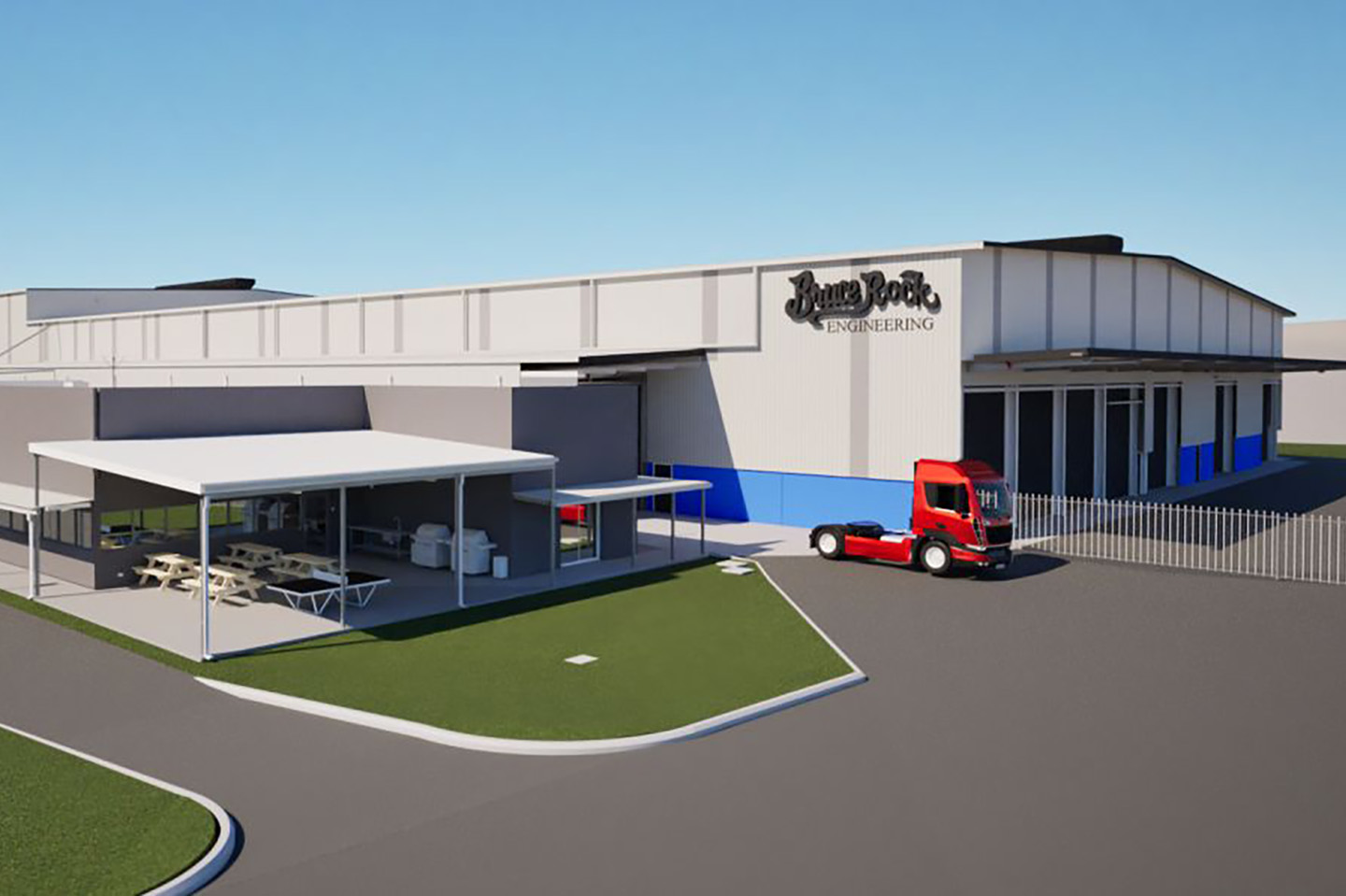
Bruce Rock Engineering has greenlit a $10 million expansion at its Wheatbelt trailer manufacturing site which will make the company’s local footprint six times larger.
The expansion will add 5,000sqm of floorspace, a new office building, and a 12-metre, 2,500-tonne press brake, reportedly the largest in Australia.
Bruce Rock Engineering plans to have the build finished early next year.
In a statement upon announcing the expansion, the company said it was proud to be investing in its hometown.
“At Bruce Rock Engineering, we’re proud of where we’ve come from and committed to where we’re going,” a company spokesperson said.
“Bruce Rock is home. It’s where we’ve built our business, our people and our reputation over more than four decades, and we’re proud to continue manufacturing here in the Wheatbelt.
“The project represents a long-term investment in our people, our community, and the future of regional manufacturing, while creating the capability and infrastructure to support the next chapter of Bruce Rock Engineering.
“Bruce Rock is where we started. It’s where we’re continuing to build.”
The company was founded by the Verhoogt family in Bruce Rock in 1980 and has kept its hometown facility despite significant statewide growth in the past decade.
BRE expanded into metals manufacturing in the 2000s via establishment of its Transbeam subsidiary, now domiciled at a 16,000sqm factory in Forrestfield.
It has also bolted on a tyre wholesaling arm, Bruce Rock Tyres, and in July this year acquired Kalgoorlie-based fire protection systems manufacturer Quitfire.
Its core business has grown naturally and via acquisitions, building a site in Port Hedland, buying D-Trans Motor Body Builders to establish a presence in Geraldton, and setting up sales offices in New South Wales and Queensland.
The company employs more than 400 people and counts close to every major trucking firm operating in WA as a customer.
That staff count has grown from about 60 in 2015, and 200 in 2021.
A multi-billion-dollar local defence pipeline has driven a “paradigm shift” in how Austal views selling its US arm, as South Korean defence giant Hanwha conducts due diligence for the $1.8 billion bid.

BlackRock High Yield V.I. Fund Q2 2026 Commentary

Earnings call transcript: Kina Securities posts softer H1 2026 growth as stock slips


Seeking Alpha’s transcripts team is responsible for the development of all of our transcript-related projects. We currently publish thousands of quarterly earnings calls per quarter on our site and are continuing to grow and expand our coverage. The purpose of this profile is to allow us to share with our readers new transcript-related developments. Thanks, SA Transcripts Team

DICK'S Sporting Goods: A 31% Selloff Was Too Much


Earnings call transcript: Liontown lifts FY 2026 profit on record revenue, shares rise

AMG Yacktman Fund Q2 2026 Commentary
Fox News real estate contributor Katrina Campins joins ‘Varney & Co.’ to discuss Florida’s housing boom, the blue state wealth exodus and why soaring luxury demand is pricing out first-time homebuyers.
Florida dominated a new list of markets attracting out-of-town shoppers for newly built homes, with outside shoppers generating more than 80% of new-construction views in several of the state’s metro areas.
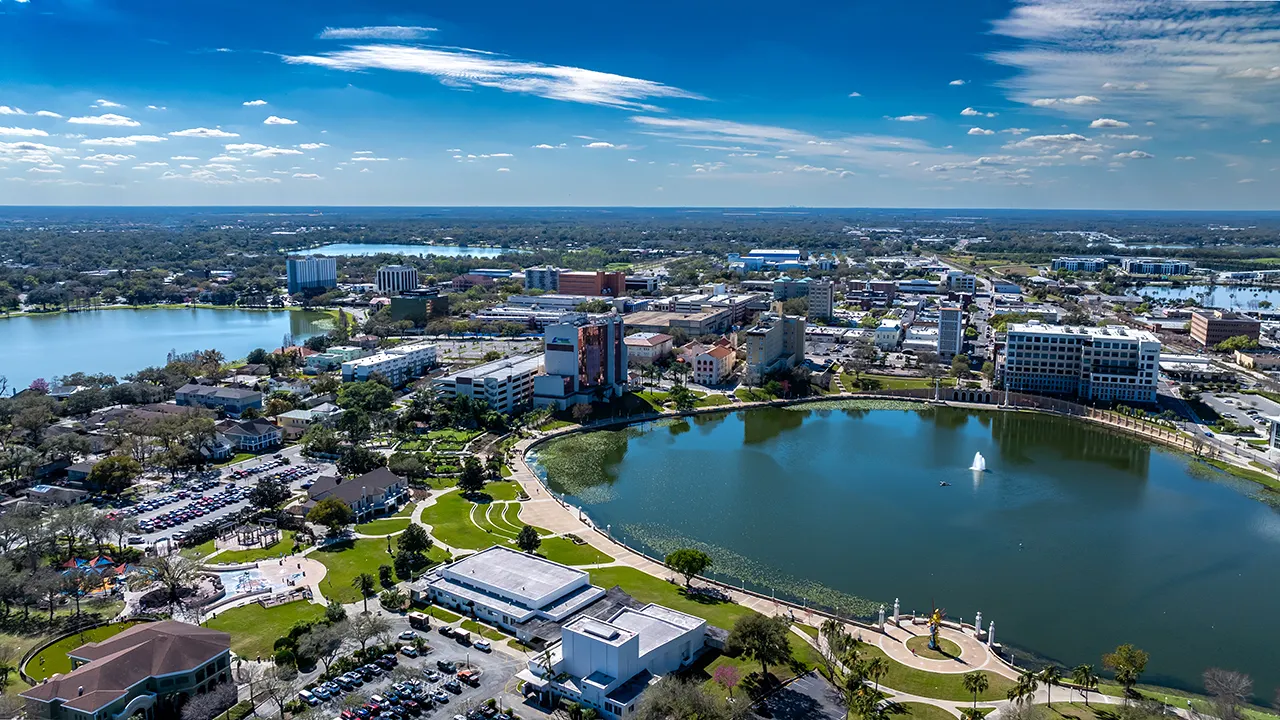
Lakeland led the nation, with out-of-town shoppers accounting for more than 83% of new-construction views during the second quarter, followed by Cape Coral at 82.4%, Port St. Lucie at 80.9% and North Port at 80.5%, according to a new Realtor.com report.
Nationwide, 67.2% of views of new-construction listings came from out-of-metro shoppers, compared with 65.4% for existing-home listings.
Durham, North Carolina, rounded out the top five at 80.2%.
FLEEING FOR THEIR FUTURES, A CALIFORNIA EXODUS UNLEASHES A FLORIDA ‘GOLD RUSH’
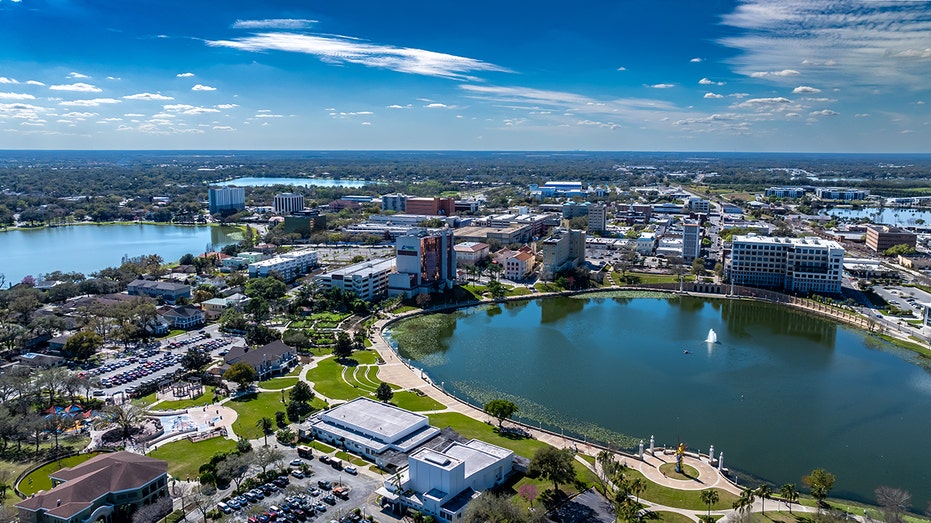
Out-of-town shoppers accounted for more than 83% of new-construction views in Lakeland, Florida. (iStock)
Deltona, Florida; Charleston and Greenville, South Carolina; Stockton, California; and Augusta, Georgia, also drew strong interest from out-of-market shoppers, the report found.
“The new builds are competitively priced in these metros, so out-of-metro buyers who maybe did not necessarily have new construction in mind find lots of new builds that fall into their price filters,” Realtor.com senior economist Joel Berner said in a statement.
Affordability and Sun Belt lifestyle are among the major factors driving out-of-market interest in those areas, according to Berner.
BILLIONAIRES AND BUSINESSES FUEL GROWING EXODUS FROM BLUE STATES
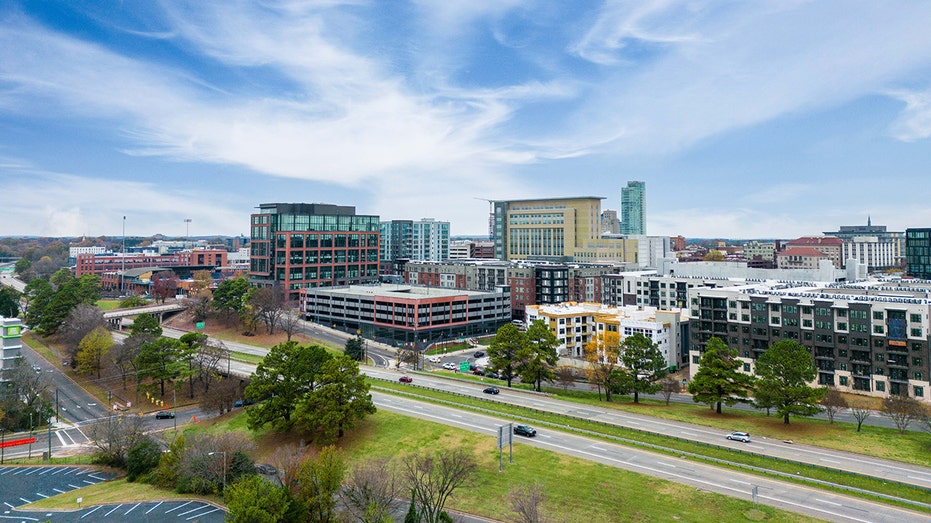
Durham, North Carolina, rounded out the top five at 80.2%. (iStock)
The difference in metro-wide median new-construction listing prices can be substantial.
Lakeland’s median new-construction listing price was $315,821 in the second quarter, compared with $1,946,685 in Miami. Many shoppers viewing homes in Lakeland came from Miami, Orlando and Tampa, the report found.
Cape Coral, meanwhile, attracted shoppers browsing from Miami, New York City and Chicago.
Brian Stephens, a real estate agent and team leader with eXp Realty in Lakeland, said builders are also attracting buyers with closing-cost assistance and mortgage-rate buy-downs.
OVER $126M IN 60 DAYS — FLORIDA REAL ESTATE TYCOONS SAY BLUE-STATE WEALTH MIGRATION IS NOW PERMANENT

Affordability and the Sun Belt lifestyle are among the major factors driving out-of-market interest in those areas. (iStock/Getty Images Plus)
“They have slightly more inventory, and they offer to pay for the buyers’ closing costs and even buy the interest rate down,” Stephens told Realtor.com. “Why purchase a resale when you can purchase a new home and get a warranty and everything is brand-new?”
GET FOX BUSINESS ON THE GO BY CLICKING HERE
Those incentives are becoming increasingly important as builders compete for buyers nationwide.
Nationally, the median asking price for a newly built home was $450,256 during the second quarter, down 0.1% from a year earlier, according to Realtor.com.

Bruce Rock Engineering commits to $10m Wheatbelt factory expansion

Jim Curtis Gives Jennifer Aniston What She’s ‘Never Had Before’

Community in ‘harder position than immediately after synagogue attack – rabbi





-

 Crypto World5 days ago
SpaceX stock could rise 75% to $240, JPMorgan says
-

 Fashion2 days ago
Weekend Open Thread: Maeve – Corporette.com
-

 Crypto World3 days ago
Bitcoin’s 22% rally now needs real demand to outlast Treasury liquidity boost
-

 Crypto World5 days ago
Warsh Jackson Hole keynote puts financial innovation first
-

 Crypto World6 days ago
A $30 Billion AI Fund Implodes, Now the SEC Is Investigating Wall Street’s Role
-

 Business3 days ago
Salesforce Stock Soars 19% as Blowout Earnings and Agentforce AI Growth Silence Software Skeptics
-

 Crypto World5 days ago
Did Trump Just Move SpaceX Stock With One Truth Social Post?
-

 Crypto World4 days ago
Elon Musk Grok Bot Promise: We Will Make You Whole if AI Loses Your Money
-

 Business5 days ago
Walmart takes aim at younger shoppers with new fashion brand
-
 NewsBeat4 days ago
Lindsay Clancy jury braces for closing arguments as judge tells court: ‘You’ve heard all the evidence’ – Live updates
-

 Business3 days ago
Apple Confirms September 9 Keynote and Reveals Its Full Pre-Order Schedule
-

 Crypto World2 days ago
Bitcoin price tests $82K resistance as Brandt stays long
-

 Business5 days ago
Thailand’s Eastern Economic Corridor Capital City (EECiti): Key Developments and Investment Opportunities
-

 Crypto World4 days ago
NVIDIA revenue hits $96.2B as AI demand doubles
-

 Business6 days ago
Moderna CEO warns China is pouring state money into mRNA technology
-

 Business2 days ago
Onto Innovation Stock: AI’s Next Bottleneck Is Yield (NYSE:ONTO)
-

 Business6 days ago
NVIDIA Stock Drops Nearly 2 Percent to $210 on Seventh Losing Day Ahead of Critical AI Earnings
-

 Business2 days ago
iPhone 18 Pro Pre-Orders Could Shift to Saturday as Apple Reportedly Avoids September 11 Anniversary
-
 Crypto World7 days ago
$92 Billion Nvidia Earnings Could Make or Break the AI Trade
-

 NewsBeat5 days ago
Trump’s trade truce with China faces test with Iran effort
You must be logged in to post a comment Login