
Business
Fragile Ceasefire Leaves Vital Oil Route Near Standstill

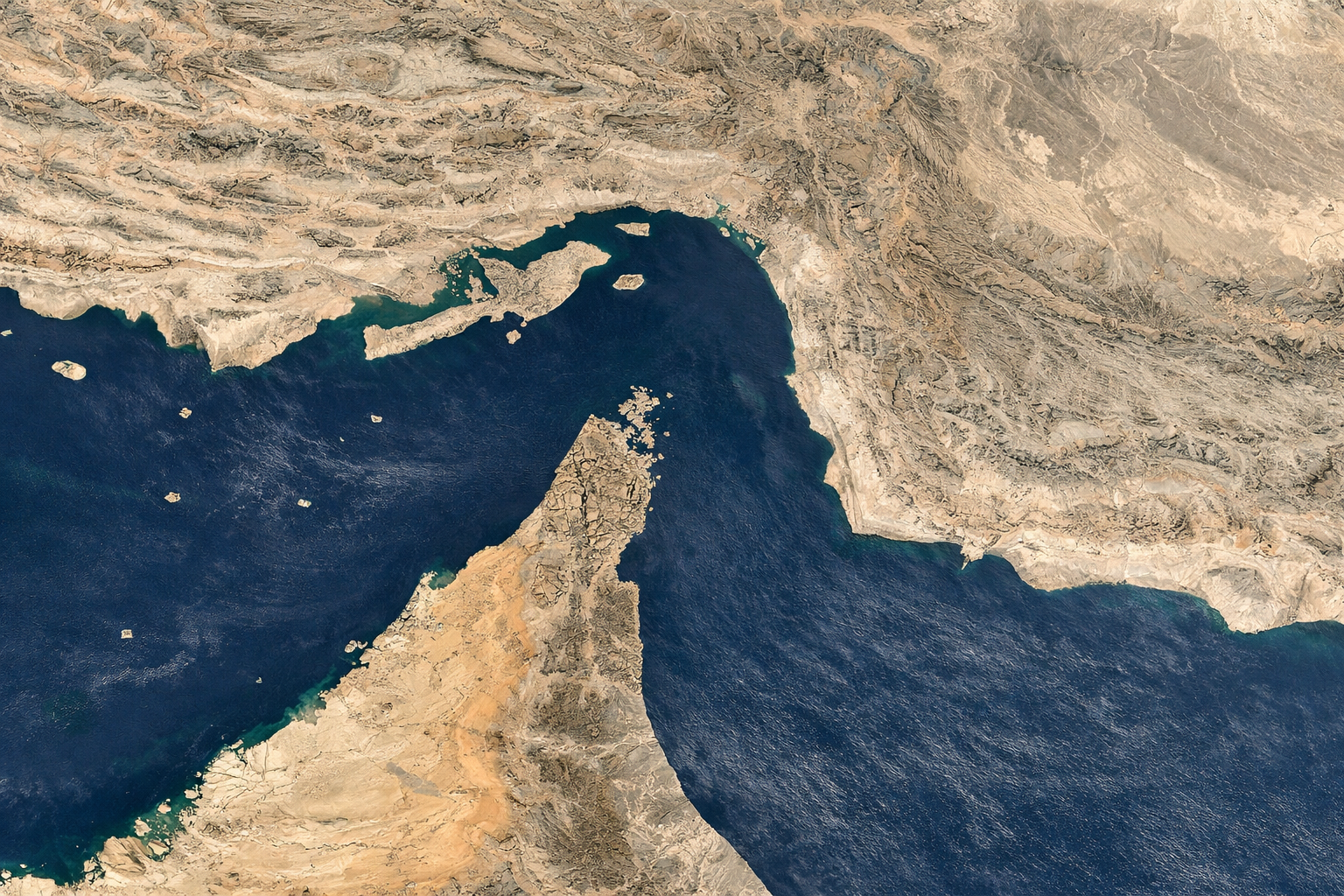
DUBAI, United Arab Emirates — The Strait of Hormuz, the narrow chokepoint through which nearly one-fifth of global oil supplies normally flow, remained effectively restricted Sunday as a fragile two-week ceasefire between the United States and Iran failed to restore full commercial shipping traffic despite official claims that the waterway is open.

Ship-tracking data showed only a handful of vessels — mostly Iran-linked tankers and bulk carriers — transiting the strategic passage in the past 24 hours, far below the pre-conflict average of about 140 ships daily. While Iran has declared the strait open with coordination required from its military forces, insurance concerns, lingering sea mines and demands for permissions or high tolls have kept most commercial operators away.
The disruption stems from a wider conflict that erupted in late February 2026 when U.S. and Israeli strikes targeted Iranian facilities. Iran responded by effectively choking off the strait, laying naval mines and warning that unauthorized vessels would be targeted. The waterway, separating Iran from Oman and linking the Persian Gulf to the Gulf of Oman, handles roughly 20% of the world’s seaborne crude oil and significant volumes of liquefied natural gas.
A ceasefire announced around April 8 was conditioned in part on Iran ensuring safe passage through the strait. President Donald Trump hailed the deal as a step toward reopening the route, even claiming U.S. forces were beginning mine-clearing operations. On April 11, U.S. Central Command announced that two Navy guided-missile destroyers — the USS Frank E. Peterson and USS Michael Murphy — had transited the strait as part of efforts to establish a safe channel and clear mines allegedly deployed by Iran’s Islamic Revolutionary Guard Corps.
Iran quickly denied the U.S. account, with officials asserting that the vessels retreated after warnings and that no foreign forces were freely operating in the area. Tehran has maintained that passage is allowed only under its military oversight, with ships required to coordinate movements and, in some reports, pay substantial transit fees exceeding $1 million per vessel.
MarineTraffic and other tracking platforms confirmed minimal activity. On Thursday following the ceasefire, just seven ships passed through compared with normal volumes. Early signs of movement emerged over the weekend, including a few supertankers — some Chinese-flagged — exiting the Gulf loaded with crude. Yet overall traffic remained below 10-15% of typical levels, with hundreds of tankers still idling in the region.
Shipping executives and analysts described a “wait-and-see” atmosphere. Major carriers including Maersk and Hapag-Lloyd warned that normal operations could take weeks or even months to resume, citing unresolved risks from uncharted mines, potential renewed hostilities and skyrocketing war-risk insurance premiums. Some vessels have reportedly made U-turns at the last moment when talks in Islamabad appeared to falter.
The economic fallout has been severe. Global oil prices, which plunged on initial ceasefire news, have climbed back toward $100 per barrel as supply disruptions persist. The closure has stranded more than 1,000 vessels inside the Persian Gulf at times, cutting off exports from major producers including Saudi Arabia, Iraq, the United Arab Emirates and Kuwait. A fifth of global oil supply has been disrupted at peak, according to market estimates.
UAE officials have been vocal about the impasse. Abu Dhabi National Oil Company CEO Sultan Ahmed Al Jaber stated bluntly that “the Strait of Hormuz is not open,” emphasizing that access remains restricted and conditioned despite diplomatic pronouncements. Regional leaders have urged unconditional reopening to stabilize energy markets and global trade.
Iran’s position has been consistent: the strait is open but under its control. Deputy Foreign Minister Saeed Khatibzadeh said vessels, including American ones, could pass provided there is no “hostile behavior” and coordination occurs with Iranian forces to avoid mines and other wartime measures. Iranian media reported instructions for ships to stay closer to its territorial waters and islands.
Peace talks in Islamabad between U.S. and Iranian delegations, described as the first direct high-level discussions since 1979, have centered heavily on the strait. Progress appears stalled, with disagreements over mine clearance responsibilities, future security guarantees and Iran’s demands related to sanctions relief and regional issues, including tensions involving Israel and Lebanon. Reports indicated talks broke down Sunday without a breakthrough, raising fears that the two-week truce could collapse.
U.S. officials, including Vice President JD Vance, have pressed for immediate and unconditional reopening. Trump posted that America was “clearing out” the strait as a service to the world, criticizing allies for not contributing more. Pentagon sources told reporters that Iran may have lost track of some mines it deployed haphazardly during the conflict, complicating safe navigation even if Tehran wanted to accelerate reopening.
The situation has broader implications for global supply chains. Fertilizer and ammonia shipments, critical for agriculture, have also been affected. Asian importers such as China, Japan and South Korea — heavily reliant on Gulf oil — face higher energy costs and potential shortages if the bottleneck persists. Some nations have begun exploring costlier alternative routes around Africa or increased reliance on overland pipelines where available.
Maritime experts warn that even limited transits carry risks. Shadow fleet vessels with opaque ownership have accounted for a disproportionate share of recent movements, often linked to sanctioned Iranian or Russian trades. Legitimate commercial operators remain wary, awaiting clearer de-mining confirmation and standardized international protocols.
Environmental and safety concerns add another layer. Unexploded mines drifting with currents could endanger fishing grounds and coastal ecosystems in Oman and the UAE. Humanitarian groups have raised alarms about potential spills from damaged tankers in a high-traffic chokepoint.
As of Sunday evening local time, live trackers showed sparse activity with a handful of bulk carriers and a few tankers moving, predominantly outbound from Iranian ports. No major uptick in non-Iranian commercial traffic was evident, suggesting caution still dominates despite diplomatic assurances.
The 2026 Strait of Hormuz crisis has underscored the vulnerability of global energy security to geopolitical flashpoints. For decades, the international community treated the passage as a vital, largely uncontested waterway. The recent conflict has rewritten those assumptions, with Iran demonstrating its ability to weaponize geography even amid military setbacks.
Looking ahead, full restoration of traffic will likely require a more durable agreement addressing mine clearance — possibly involving multinational efforts — insurance frameworks, and confidence-building measures. Until then, the world’s most critical energy artery remains a high-stakes bargaining chip rather than a reliable trade route.
Oil markets, shipping firms and governments continue to monitor developments hour by hour. With the two-week ceasefire window narrowing and talks faltering, the coming days could determine whether the strait returns to something approaching normalcy or slides back into deeper disruption.
For now, on this Sunday in April 2026, the Strait of Hormuz is technically “open” under Iranian terms but remains far from freely navigable, leaving global energy flows constrained and prices elevated.


Check out what’s clicking on FoxBusiness.com.
First son Barron Trump’s new beverage venture has announced its first two flavors ahead of its planned launch, now set for May.
SOLLOS Yerba Mate, headquartered near Mar-a-Lago, revealed the news in a LinkedIn post last week.
“Introducing our 12-pack: Pineapple + Coconut,” the company said. “Launching May 2026.”
The announcement comes after the 19-year-old, the youngest son of President Donald Trump, was listed as a director of the Palm Beach, Florida-based beverage company, according to January SEC filings in Florida and Delaware.
BARRON TRUMP LINKED TO BEVERAGE COMPANY BASED NEAR MAR-A-LAGO

Barron Trump’s new beverage venture has announced its first two flavors ahead of its May launch. (Mike Segar/Reuters / Reuters)
The product will be available for purchase online at sollos.com, the company said.
The company also shared videos showcasing the design of its new beverage packaging ahead of launch.
In one video, light blue cans featuring “SOLLOS” in bold lettering over an orange-and-yellow sun graphic appear to move through a factory during mass production.
Another clip shows packaging for the 12-pack, including a light blue box with yellow graphic accents.
A LOOK AT THE TRUMP FAMILY’S BUSINESS EMPIRE
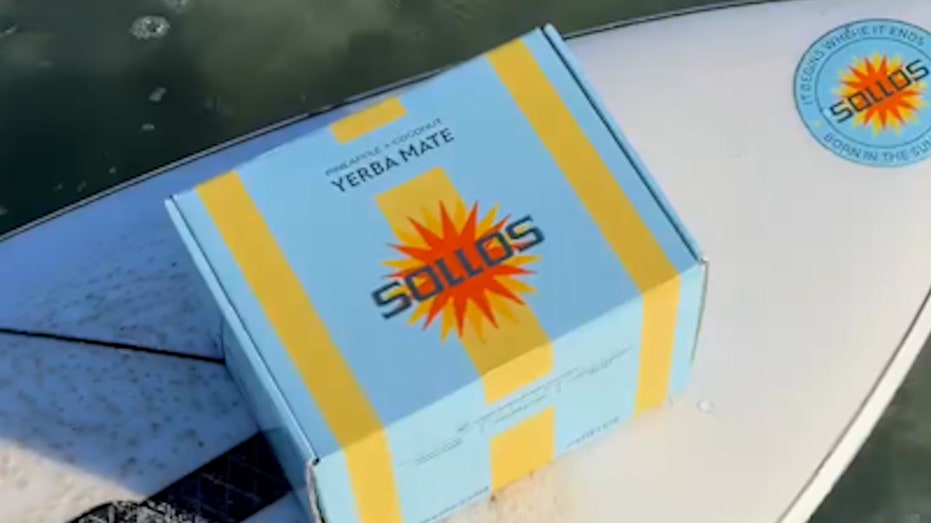
SOLLOS Yerba Mate launches a 12-pack pineapple and coconut beverage line. (SOLLOS Yerba Mate/LinkedIn / Fox News)
Yerba mate, a caffeinated herbal tea native to South America, has recently gained popularity in the U.S. as an alternative to coffee.
SOLLOS was previously announced as a beverage brand designed to complement life in the “Sunshine State,” with branding centered on the sun.
“SOL,” meaning sun in Spanish, represents sunrise and the beginning of the day, the company said. “LOS,” spelled backwards from “SOL,” represents sunset. The startup emphasized that the name is intended to capture the full cycle of the sun, reflecting the idea that “It Begins Where It Ends.”
HERE’S HOW MUCH TRUMP ACCOUNT BALANCES COULD GROW OVER TIME

Light blue cans, featuring the logo “SOLLOS,” move through a factory line. (SOLLOS Yerba Mate/LinkedIn / Fox News)
According to SEC filings dated Jan. 23, SOLLOS raised $1 million through a private placement and lists at least five partners.
Barron, a student at New York University’s Stern School of Business, along with four others named in the SEC filing, are listed as executive officers and members of the company’s board of directors.
Others involved in the company include Spencer Bernstein, Rudolfo Castello, Stephen Hall and Valentino Gomez, some of whom attended the same high school as Barron.
GET FOX BUSINESS ON THE GO BY CLICKING HERE
Bernstein, a Villanova University student who previously attended Oxbridge Academy in Palm Beach with Trump, was listed as an executive officer.
“I’ve decided to postpone my final semester at Villanova University to focus on something I’ve been building for the past 8 months,” Bernstein previously posted on LinkedIn.
“Since the end of last school year I have been working alongside my co-founder, Stephen Hall, and a few close friends on SOLLOS Yerba Mate, a lifestyle beverage brand built around clean + functional ingredients.”
Hall, now a student at the University of Notre Dame who also attended Oxbridge Academy, was listed as an executive officer and director.
FOX Business’ Sophia Comptom contributed to this report.

Analysis-Protracted Iran war narrows BOJ’s rate hike options

US stock futures slide over 1% after Iran ceasefire talks fall through

The Tourism Authority of Thailand emphasizes sustainable growth by promoting premium experiences and prioritizing safety. After welcoming 9.31 million visitors in early 2026, Thailand projects a total of 30 to 34 million arrivals by the end of the year.
Emphasizing Quality in Tourism
Bangkok, 8 April 2026 – The Tourism Authority of Thailand (TAT) is committed to The New Thailand vision, focusing on Value over Volume to ensure sustainable and meaningful growth. Despite global economic uncertainties, Thailand aims to sustain its competitiveness and recalibrate its 2026 international tourism outlook. TAT is implementing targeted measures to enhance high-value experiences, expand quality market segments, and ensure safety and reliability through the Trusted Thailand framework. This approach not only reinforces confidence but also aligns with evolving traveler priorities through the “Healing is the New Luxury” concept, bolstering Thailand’s reputation as a resilient and competitive destination.
Strengthening Resilience Amid Global Challenges
Building on its 2025 performance, Thailand continues to leverage tourism in economic recovery amidst global challenges like economic uncertainty and regional competition. While international arrivals are gradually recovering, changing travel behaviors and cautious spending underline the need to focus on quality growth and greater value per trip. In the first quarter of 2026, Thailand welcomed 9.31 million international visitors, with China leading, followed by Malaysia, Russia, India, and South Korea. Long-haul markets, including the UK and the US, also contributed significantly to a diversified market mix, supporting sustained tourism growth.
Projected Growth and Future Outlook
For 2026, TAT anticipates international arrivals around 30–34 million, taking into account global fluctuations such as travel demand, air connectivity constraints, and energy price volatility. Domestically, 206 million trips are expected, with total tourism revenue projected to be approximately 2.58 trillion Baht. The strategy acknowledges anticipated easing of geopolitical tensions in the Middle East within months. By aligning with global conditions, TAT is poised to maintain Thailand’s position as a preferred travel destination, focusing on quality growth and ensuring economic resilience through enhanced traveler experiences.
Source : TAT refocuses on value over volume as 2026 tourism outlook is recalibrated
Other People are Reading

Dollar strengthens as peace talks falter, US blockade of Iran’s ports to begin
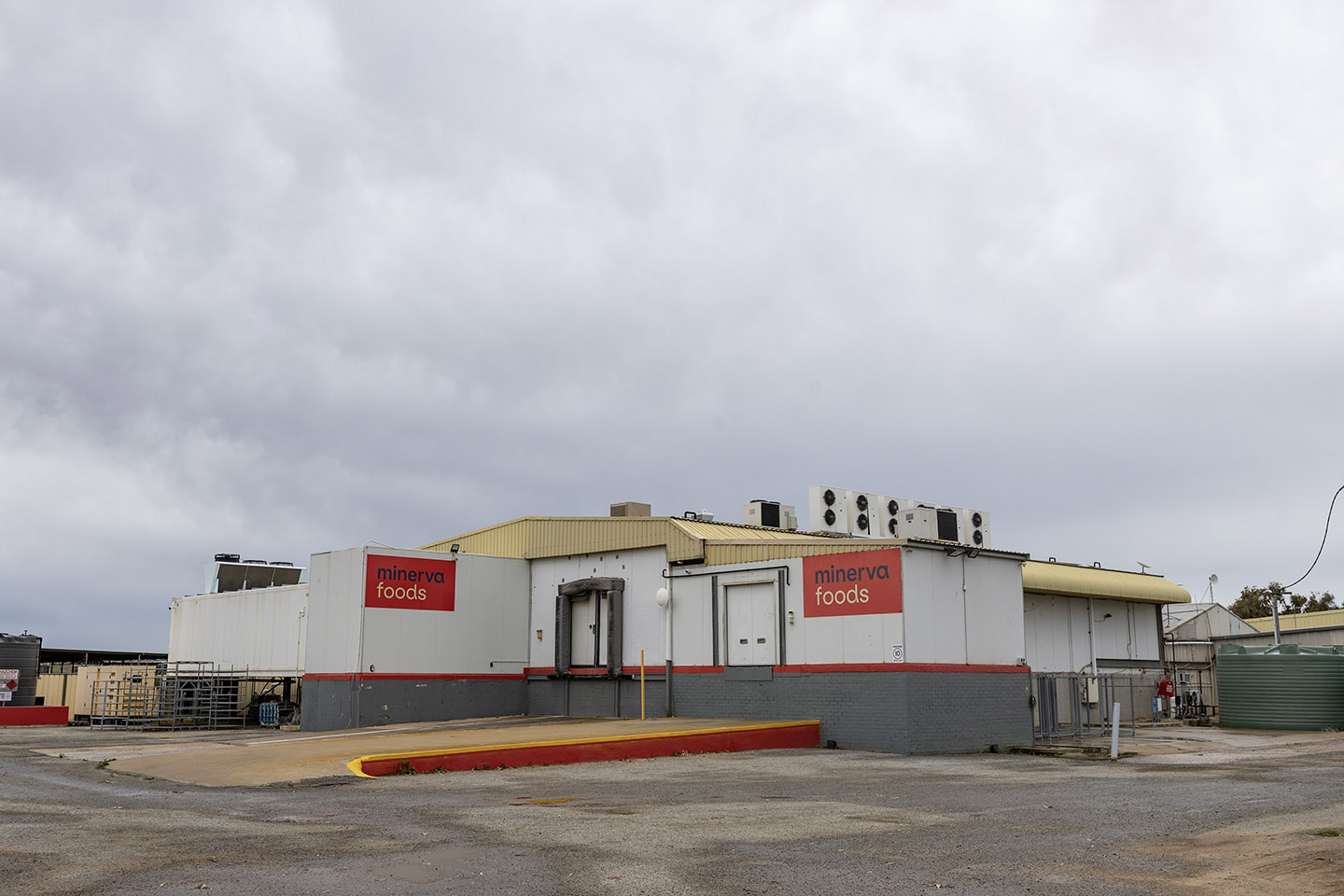
The foreign owner of two mothballed abattoirs has put both facilities up for sale and will exit WA after two years of radio silence about its future.
CrowdStrike: A Wing And A Prayer
The failure of negotiations at the weekend has raised concerns that the global energy crisis will deepen.
Business
Keiko Fujimori leads Peru’s presidential vote with 16.6%, shows early exit poll from Ipsos Peru


Keiko Fujimori leads Peru’s presidential vote with 16.6%, shows early exit poll from Ipsos Peru
Oil prices jump above $100/barrel after Trump orders Hormuz blockade

Yaya Mayweather Reacts To Jayda Cheaves & Dess Dior Fight

Teni – Money (Lyrics)

Primark launches app so shoppers can check stock in stores


-

 Politics2 days ago
US brings back mandatory military draft registration
-

 Fashion2 days ago
Weekend Open Thread: Veronica Beard
-

 Tech5 days ago
How Long Can You Drive With Expired Registration? What Florida Law Says
-
 Sports2 days ago
Man United discover Nico Schlotterbeck transfer fee as defender reaches Dortmund agreement
-

 Politics10 hours ago
World Cup exit makes Italy enter crisis mode
-

 Crypto World4 days ago
Canary Capital Files SEC Registration for PEPE ETF
-

 Fashion7 days ago
Massimo Dutti Offers Inspiration for Your Summer Mood Board
-

 Business2 days ago
Tesla Model Y Tops China Auto Sales in March 2026 With 39,827 Registrations, Beating Cheaper EVs and Gas Cars
-

 Fashion5 days ago
Let’s Discuss: DEI in 2026
-

 Crypto World4 days ago
Bitcoin recovers as US and Iran Agree a Ceasefire Deal
-

 Politics3 days ago
Malcolm In The Middle OG Turned Down ‘Buckets Of Money’ To Appear In Reboot
-
 NewsBeat2 hours ago
Pep Guardiola and Gary Neville agree over Arsenal title problem that benefits Man City
-

 Business3 days ago
OpenAI Halts Stargate UK Data Centre Project Over Energy Costs and Copyright Row
-

 Tech7 days ago
Italian court says Netflix must refund customers up to $576 over price hikes
-

 Business1 day ago
Ireland Fuel Protests Enter Day 5 as Blockades Spark Shortages and Government Prepares Support Package
-

 Tech7 days ago
Haier is betting big that your next TV purchase will be one of these
-

 Tech7 days ago
Gamer Restores the Original PlayStation Portal From Two Decades Ago
-

 Tech7 days ago
The Xiaomi 17 Ultra has some impressive add-ons that make snapping photos really fun
-

 Tech7 days ago
Samsung just gave up on its own Messages app
-

 Tech7 days ago
Save $130 on the Samsung Galaxy Watch 8 Classic: rotating bezel, sleep coaching, and running coach for $369
You must be logged in to post a comment Login