




Connect with us
DAPA Banner

Business

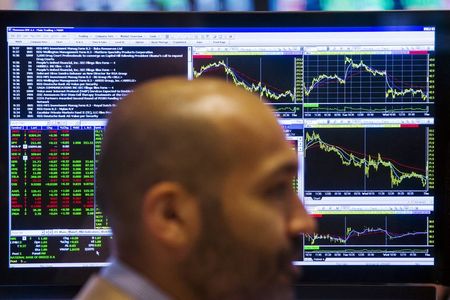
Oil jumps above $100 after US-Iran talks end without a deal

Published

on

Oil jumps above $100 after US-Iran talks end without a deal

The failure of negotiations at the weekend has raised concerns that the global energy crisis will deepen.

Continue Reading
Click to comment

You must be logged in to post a comment Login

Leave a Reply

Business

Why Historical Forex Data Is the Foundation of Serious Trading

Published

on

Why Historical Forex Data Is the Foundation of Serious Trading

In the world of currency trading, few resources are as powerful – or as underappreciated – as historical price data. Whether you are a retail trader experimenting with your first algorithm or a seasoned professional running a multi-currency portfolio, your ability to make informed decisions depends heavily on understanding what markets have done in the past. Forex historical data is not merely an archive of price movements; it is the raw material from which trading strategies are built, tested, and refined.

What Is Forex Historical Data?

Forex historical data refers to recorded time-series information about currency pair prices — typically including the open, high, low, and close (OHLC) for a given time interval, as well as trading volume where available. This data can range from tick-by-tick records (capturing every individual trade) to daily or weekly summaries spanning decades. The granularity and time horizon of the data you need depends entirely on your trading approach.

Scalpers and high-frequency traders require ultra-granular tick data with millisecond timestamps. Swing traders typically work with hourly or 4-hour candles. Long-term macro traders may only need daily or weekly closes going back ten to twenty years. In each case, the underlying principle is the same: to understand the future probability of price movements, you must first study the past.

Why Historical Data Matters

The most immediate use case for historical data is backtesting — the process of applying a trading strategy to past market conditions to see how it would have performed. Without rigorous backtesting, a trader is essentially flying blind, relying on intuition or theoretical reasoning alone. Historical data transforms strategy development into a quantifiable, reproducible process.

Advertisement

“Backtesting with high-quality historical data is not a guarantee of future success — but trading without it is nearly a guarantee of inconsistency.”

Beyond backtesting, historical data supports a wide range of analytical functions. It allows traders to identify recurring seasonal patterns — for instance, the tendency of certain currency pairs to exhibit higher volatility during specific months. It enables the calibration of risk management parameters, such as appropriate stop-loss distances based on historical average true range. And it provides the empirical grounding for statistical models that attempt to forecast future price distributions.

Common Pitfalls: Data Quality and Survivorship Bias

Not all historical data is created equal. One of the most dangerous mistakes a trader can make is to backtest with low-quality, adjusted, or incomplete data. Missing ticks, incorrect timestamps, and interpolated prices can produce dramatically misleading backtest results — a phenomenon sometimes called “garbage in, garbage out.”

Survivorship bias is another subtle trap. If your historical dataset only includes currency pairs that are still actively traded today, you may be excluding periods of extreme illiquidity or crisis-related behavior that could stress-test your strategy in ways clean data never would. Rigorous data sourcing means accounting for these edge cases from the start.

Advertisement

Where to Source Quality Historical Forex Data

The market for historical forex data has matured significantly over the past decade. Traders today have access to a range of free and premium sources, each with different levels of granularity, accuracy, and coverage.

Free sources such as Histdata.com offer minute-level OHLC data for major pairs going back to the early 2000s — a solid starting point for strategy development. MetaTrader platforms also allow users to export historical candle data directly from their brokers, though quality varies widely depending on the data feed.

For institutional-grade tick data with precise timestamps and bid/ask spreads, paid providers are generally necessary. One of the most reputable sources in the industry is the Swiss forex broker Dukascopy, which offers comprehensive tick-level historical data through its JForex platform and publicly accessible data center. The data spans over a decade for most major and minor pairs and is widely regarded as among the cleanest available for retail use.

Other notable premium sources include Refinitiv (formerly Thomson Reuters), Bloomberg Terminal, and True Tick, all of which cater primarily to professional and institutional users. For algorithmic traders building in Python, Quandl and Polygon.io also provide structured forex data via API.

Advertisement

Practical Considerations for Working with Historical Data

Once you have sourced your data, working with it effectively requires some technical groundwork. Most professional traders store and process historical data using relational databases or time-series databases such as InfluxDB or TimescaleDB, which are optimized for high-frequency temporal queries.

Data normalization is equally important. Different sources use different conventions for timestamps (UTC vs. local broker time), decimal precision, and handling of weekends or holidays. Before any analysis, it is essential to clean and align your dataset — a process that is often more time-consuming than the analysis itself.

Traders using Python can leverage libraries such as Pandas for data manipulation and Backtrader or Zipline for backtesting. Those preferring a more visual workflow may find platforms like TradingView or QuantConnect offer sufficient built-in historical data for strategy testing, though with less flexibility for custom research.

The Long View

Markets are not static. Regimes change, correlations shift, and volatility patterns evolve with macroeconomic cycles. A strategy that performed brilliantly from 2010 to 2015 may be entirely unsuited to the environment of 2025. This is precisely why maintaining access to long, high-quality historical datasets is an ongoing commitment — not a one-time task.

Advertisement

The traders and institutions that consistently outperform over long time horizons are invariably those who treat data as infrastructure. They invest in its quality, update it continuously, and stress-test their assumptions against the full spectrum of market history — including the crises, the anomalies, and the quiet periods that reveal a strategy’s true character.

In trading, as in most empirical disciplines, the past is not a perfect predictor of the future. But it remains our best available lens through which to examine it.

Continue Reading

Business

Markets likely near bottom range; stay invested: Devina Mehra

Published

on

Markets likely near bottom range; stay invested: Devina Mehra
In a recent conversation with ET Now, Devina Mehra, Founder and CMD of First Global, maintained a steady and measured stance on equity markets, reiterating her earlier view that markets are likely sitting in a broader bottoming zone and that investors should continue to stay invested rather than attempt aggressive timing.

“We are around the bottom range”: long-term positioning unchanged

Responding to whether current levels offer a buying opportunity or if investors should wait for deeper corrections, Mehra said her view has remained consistent over the past several months.

“My view has been consistent. So, last month on your channel or on your Hindi channel I had said that the market is somewhere around the bottom range, I do not know whether it will start moving in two weeks or two months or whatever, but we are definitely around the bottom range. And my advice was that whatever is your equity allocation, remain invested. So, never have 100% in equity… whatever is your equity allocation, it was time to be invested then and it is time to be invested now as well.”

Advertisement

She added that while she does not make index forecasts, probability suggests a better year ahead. “Overall, while I do not give index projections, in probability terms I think 2026 will be a better year than 2025…”


She also flagged sentiment as a contrarian indicator, noting that periods of fear tend to be more constructive than euphoric phases.
“When making money appears very-very easy… that is usually the worst time to get out of the market.”No fixed themes, but sector rotation continues
On identifying long-term themes, Mehra said her investment process is not based on multi-year forecasts but on a quarterly re-evaluation of opportunities.

“We look at everything from base zero every quarter. The question we ask is: if we had cash today, where would we be invested?”

She pointed to past calls in capital goods and recent overweight positions in autos, auto components, and pharma.

“You are right, we identified capital goods in October 2021… last couple of years we have been overweight auto components and autos… pharma and healthcare we have been consistently overweight.”

Advertisement

While pharma saw consolidation in 2025, she said the overall stance remains constructive.

She also highlighted selective exposure to banking, including PSU banks, while maintaining that the portfolio remains diversified across FMCG and chemicals.

Power sector emerging as a key area of interest
One sector showing improving visibility is power, both generation and equipment.

“One sector which has begun to look better is power including the power equipment and power utilities and I suspect part of it is to do with data centre spending because data centres are extremely power intensive.”

Advertisement

Earnings outlook: mixed but not negative
Addressing concerns around earnings growth and valuation, Mehra cautioned against over-reliance on index-level PE multiples, arguing that sector composition changes make long-term comparisons misleading.

“Looking at aggregate markets, it is usually not very meaningful if you talk about the Nifty PE… you are not comparing apples to apples.”

She noted that valuations across many sectors are not stretched versus historical averages. “It is not as if that we are very-very stretched on the valuation side.”

On earnings, she acknowledged near-term disruptions but remained broadly constructive.

Advertisement

“Overall, I am not negative on the earning trajectory. Probably I would have expected a better acceleration, but for this geopolitical conflict…”

She added that commodity price shocks could create second-order effects across sectors.

Oil shock manageable, not structural disruption
On rising crude prices amid geopolitical tensions, Mehra said the situation is not unprecedented and can be absorbed over time.

“We have lived with $100 oil almost two decades ago… it is not something unprecedented or something we cannot navigate.”

Advertisement

However, she acknowledged that India being an oil importer will feel macro and corporate-level impact depending on duration of price pressures.

“It might settle down somewhere in the middle but I do not think it is like an absolute disaster.”

IT sector: not dead, but evolving cautiously
On the IT services sector, Mehra pushed back against extreme bearish narratives, noting that the industry has repeatedly adapted through structural shifts.

“The obituary of the IT services industry in India has been written many-many times.”

Advertisement

She highlighted AI-related risks but stressed execution uncertainty and the continued need for human intermediation in enterprise systems.

“No CTO is going to hand over the keys of the kingdom to an AI product company.”

At the same time, she acknowledged a key macro risk lies in employment generation rather than corporate profitability alone.

“If the employment part slows down, that is more of a question mark for the economy as a whole.”

Advertisement

Valuations still not compelling enough for aggressive positioning
Despite some cooling in valuations, Mehra said the sector does not yet warrant a large overweight stance. “We are close to market weight, but it is still not at a stage where I can say that I want to make a big bet on it.”

She concluded that any meaningful business upcycle may take time to play out.

“The business itself will take time but I am saying that it will appear, it may not be exactly next month.”

Advertisement
Continue Reading

Business

Chaozhou Three-Circle Group targets $1 billion Hong Kong listing

Published

on


Chaozhou Three-Circle Group targets $1 billion Hong Kong listing

Continue Reading

Business

At Close of Business podcast May 4 2026

Published

on

At Close of Business podcast May 4 2026

Sam Jones and Nadia Budihardjo discuss WA diving-turned-robotics company Dredge Robotics.

Continue Reading

Business

Greene King pub chain to sell 150 sites amid ‘unprecedented’ costs

Published

on

Business Live

The pub chain is one of the UK’s largest and is also a major brewer, producing Greene King IPA, Old Speckled Hen and Belhaven beers

Greene King pub exterior with patrons enjoying outdoor seating on a sunny day, highlighting the venues lively atmosphere.

Greene King pub exterior with patrons enjoying outdoor seating on a sunny day

Greene King’s chief executive has attributed the firm’s decision to place 150 pubs up for sale to the “unprecedented” costs currently battering the hospitality industry.

Advertisement

The pub giant, one of Britain’s largest chains, unveiled plans to put up to 150 pubs on the chopping block in March, with chief executive Nick Mackenzie telling City AM the move was driven by escalating costs and “changing consumer behaviour”.

The company, which also brews Greene King IPA, Old Speckled Hen and Belhaven beers, intends to move 300 pubs into a separate unit, with half set to become leased or tenanted venues and the remaining half earmarked for sale.

Presenting the Chinese-owned pub firm’s annual results, Mackenzie said: “Long-term permanent reform from government is essential to ensure that unprecedented costs do not hold back the enormous potential of the sector.”

He told City AM the disposal of pubs formed part of a routine review of the Greene King estate, but that the chain chose to act ahead of the curve in response to a shifting economic climate, as reported by City AM.

Advertisement

He pointed the finger at “the cost environment that our industry has faced for the last five years, which is increased employment costs, increased cost of goods through events like the Ukraine war and now obviously what’s happening in Iran and the general economy”.

Mackenzie also turned his fire on business rates, after changes to the tax at last year’s Budget sent bills rocketing for thousands of pubs and left Chancellor Rachel Reeves forced into a £300m concession.

Labour committed to business rates reform in its manifesto but has yet to deliver wholesale change to the tax.

The pub boss said: “Business rates are unbalanced for our sector so we want the reform that was promised, and the fundamental reform is to rebalance the level of business rates taxation that our sector pays.”

Advertisement

Mackenzie, who sits on the government’s hospitality advisory board, said he is urging Labour to cut taxes on beer and reconsider its rollout of guaranteed hours rules for workers on zero-hour contracts.

Last month, several prominent trade bodies cautioned the government that its current proposals to clamp down on zero-hour contracts would cause youth unemployment to spike.

As consumer confidence slides to its lowest point in more than two years, Mackenzie said he is “worried” Brits may rein in non-essential spending such as trips to the pub.

Yet Mackenzie is hopeful the World Cup this summer will give Greene King’s revenues a lift, as the government commits to allowing pubs to stay open later. Greene King reported a 3.6 per cent rise in revenue to £2.5bn last year, posting an operating profit of £94m, a significant turnaround from a £16m loss the previous year.

Advertisement
Nick Mackenzie called for "long-term permanent reform" to the costs facing pubs

Nick Mackenzie called for “long-term permanent reform” to the costs facing pubs

The pub giant is currently constructing a new £40m brewery in Bury St Edmunds, which is due to open next year. The firm channelled £10m into its London estate this year, with notable sites including the Blue Posts in Soho and The Railway Tavern on Liverpool Street among those to benefit.

Greene King runs approximately 2,600 pubs across Britain, of which 840 are directly managed, with the remainder operating under franchise or tenancy arrangements.

Established by Benjamin Greene in Bury St Edmunds in 1799, Greene King was once listed on the London Stock Exchange before being taken private by Hong Kong billionaire Li Ka-Shing’s CK Asset Holdings in a £2.7bn deal in 2019.


Advertisement
Continue Reading

Business

BorgWarner: Time To Change The Thesis (Rating Downgrade)

Published

on

BorgWarner: Time To Change The Thesis (Rating Downgrade)

BorgWarner: Time To Change The Thesis (Rating Downgrade)

Continue Reading

Business

Microsoft FY Q3 2026: Multi-Model Mirage, Copilot Momentum

Published

on

Microsoft FY Q3 2026: Multi-Model Mirage, Copilot Momentum

Microsoft FY Q3 2026: Multi-Model Mirage, Copilot Momentum

Continue Reading

Business

Large and midcaps better placed than smallcaps in current phase: Shibani Sircar Kurian

Published

on

Large and midcaps better placed than smallcaps in current phase: Shibani Sircar Kurian
Markets may be swinging between optimism and caution, but beneath the volatility lies a framework that seasoned investors are using to stay grounded. According to Shibani Sircar Kurian of Kotak AMC while uncertainty remains elevated due to global developments, valuations and historical trends provide a degree of comfort.

“So, yes, of course, we are navigating volatility at this point in time, and we do not know how long this volatility lasts… markets typically bottom out before the actual end of the war scenario.”

She pointed out that recoveries after crises are usually driven first by valuation re-rating before earnings catch up.

“When the markets start to recover, the initial leg… is led by multiples rerating, and then earnings have to flow through.”

Advertisement

On valuations, she noted that current levels are reasonable but not deeply attractive.


“Today… the Nifty is trading at about 19 times on a one-year forward, which is slightly below its long-term averages… valuations are reasonable… but not in deep value territory.”
Given this backdrop, the strategy remains cautious but opportunistic.“We will use market corrections to add to equities, but near-term volatility is something that we will have to navigate.”

Banking Sector Stands Out
Among sectors, banking has emerged as a clear outperformer this earnings season, with strong balance sheet growth and stable asset quality.

“The banking sector has seen fairly good numbers… both across balance sheet as well as earnings.”

Credit growth has picked up across segments, supporting expansion. “Credit growth has started to pick up… across industry as well as retail credit.”

Advertisement

Importantly, concerns around bad loans have not materialised.

“The fear of asset quality deterioration clearly has not played out… credit costs are well under control.” With interest rates stabilising, margins could also improve going ahead.

“We do expect… net interest margins also stabilise… and therefore there would likely be a pickup in earnings for FY27.” She added that valuations in the sector remain favourable. “Valuations are clearly on your side… banks, both private and PSU… we are positive on.”

Telecom: Improving Fundamentals
The telecom sector, after years of disruption, is seeing a more stable phase driven by consolidation and gradual tariff hikes.

Advertisement

“This has been a sector where consolidation has played out…” Profitability is improving as users shift to higher-paying plans.

“ARPU expansion has taken place at a gradual pace, and that is aiding profitability.” The outlook remains constructive for leading players.

“Some of the top players are fairly well placed… improvement in profitability is continuing.”

Private Banks Preferred
While both PSU and private banks look attractive, Kurian indicated a slight preference for private sector lenders. “We are overall positive on the banking sector; however… a slight preference for the private sector banks…”

Advertisement

The reason lies in valuation comfort relative to historical averages.

“The multiples are significantly below their long-term averages… the slight preference… is because of the valuation differential.”

Outlook: Stay Selective, Use Volatility
The broader message is clear—markets may remain volatile, but not directionless. With earnings expectations largely intact and valuations reasonable, corrections could offer opportunities for disciplined investors.

For now, the approach remains simple: stay selective, watch global cues closely, and use dips to gradually build exposure.

Advertisement
Continue Reading

Business

Earnings call transcript: Sacyr Q1 2026 shows strong growth, mixed stock response

Published

on


Earnings call transcript: Sacyr Q1 2026 shows strong growth, mixed stock response

Continue Reading

Business

Wheaton Precious Metals: Its Peers Offer More Bang For Your Buck (NYSE:WPM)

Published

on

Wheaton Precious Metals: Its Peers Offer More Bang For Your Buck (NYSE:WPM)

This article was written by

Gold Mining Bull is a gold analyst with more than a decade of investing experience in commodities, hard assets (gold and silver miners), exploration companies, oil and gas producers, MLPs, and more.

Analyst’s Disclosure: I/we have a beneficial long position in the shares of RGLD either through stock ownership, options, or other derivatives. I wrote this article myself, and it expresses my own opinions. I am not receiving compensation for it (other than from Seeking Alpha). I have no business relationship with any company whose stock is mentioned in this article.

Seeking Alpha’s Disclosure: Past performance is no guarantee of future results. No recommendation or advice is being given as to whether any investment is suitable for a particular investor. Any views or opinions expressed above may not reflect those of Seeking Alpha as a whole. Seeking Alpha is not a licensed securities dealer, broker or US investment adviser or investment bank. Our analysts are third party authors that include both professional investors and individual investors who may not be licensed or certified by any institute or regulatory body.

Advertisement
Continue Reading

Trending

Copyright © 2025