
Business
Free shares! NSE IPO DRHP reveals curious case of 5,000 shares landing in wrong demat account


One of them revolves around 5,000 NSE shares that the exchange alleges were erroneously credited to an individual’s demat account, triggering both civil and criminal proceedings.
According to the DRHP, NSE and Nuvama Wealth Finance filed a civil suit before the Delhi High Court against Kashmiri Lal Rana and NSDL in May 2025, alleging that 5,000 NSE shares were mistakenly transferred to Rana’s demat account on December 28, 2023, despite no corresponding purchase request or consideration being paid.
The exchange alleged that before the error was discovered, Rana had already sold 3,685 of those shares. NSE and Nuvama have sought a declaration that the transfer was void, recovery of Rs 1.43 crore representing the sale proceeds of the shares allegedly sold, and the return of the remaining shares.
Also read: NSE IPO: Nithin Kamath explains why India has few businesses like this ‘cash generating machine’

The dispute became more complicated after NSE’s 4:1 bonus issue in November 2024. The remaining 1,315 shares were entitled to 5,260 bonus shares. According to the DRHP, the Delhi High Court directed Rana not to sell or transfer the remaining shares, while NSDL was directed not to transfer the bonus shares during the pendency of the suit.
The exchange said Rana has denied the claims in his written statement, while the plaintiffs have filed a replication relying on what they describe as his admissions. The matter remains pending.
The Mauritius case
Separately, NSE disclosed that it had filed a criminal complaint against Rana. A first information report was registered in July 2025 at Mumbai’s Bandra-Kurla Complex Police Station alleging offences related to criminal breach of trust and cheating. According to the filing, NSE alleged that Rana knowingly retained the erroneously credited shares and sold 3,685 of them for Rs 1.327 crore. The matter remains pending.
Another legal matter disclosed in the DRHP relates to a petition filed before the Bombay High Court in May 2026 by an individual named Parinay Sharma against SEBI and NSE.
According to the filing, Sharma had earlier submitted a representation to SEBI alleging that certain investors in NSE had invested through Mauritius-based entities instead of direct investments and that beneficial ownership details of certain foreign shareholders had not been disclosed.
Read more: NSE IPO: BSE hosts double the listed companies but numbers tell a different story
The petition alleged that SEBI had not acted on the representation and sought, among other reliefs, a direction requiring NSE to disclose its promoter group and shareholders or ultimate beneficiaries along with KYC documents. The petitioner also sought a stay on NSE’s IPO process until the matter is finally decided. The DRHP states that the matter is currently pending before the court.
The NSE IPO is entirely an offer-for-sale (OFS) of up to 14.89 crore equity shares with a face value of Re 1 each, representing nearly 6% of NSE’s paid-up equity capital. The issue size has been fixed at 6% of the exchange’s paid-up capital.
NSE’s shares will be listed on BSE, mirroring the arrangement under which BSE‘s own shares are listed on NSE. With NSE’s valuation in the unlisted market hovering around Rs 5 lakh crore, market estimates suggest the IPO could be sized at roughly Rs 30,000 crore.
The filing marks the culmination of a listing process first initiated in December 2016, when NSE filed its first DRHP for a Rs 10,000-crore issue. The process was subsequently stalled due to the co-location controversy.
(Disclaimer: Recommendations, suggestions, views and opinions given by the experts are their own. These do not represent the views of The Economic Times)

OpenAI CEO Sam Altman responds to those afraid of artificial intelligence and recent Hugging Face hacks on FOX Business.
President Donald Trump said Wednesday his administration is considering additional safeguards for artificial intelligence following a recent cybersecurity incident involving multiple OpenAI models undergoing internal security testing.
Asked about reports that OpenAI models autonomously breached another AI company’s systems during internal testing, Trump said the U.S. must strike a balance between protecting against AI risks and maintaining its technological edge over China.
“We’re looking at AI, we’re looking at controls,” Trump said. “We’re also making sure that we lead.”
“We’re leading China in AI by a lot,” he continued, adding that China has “virtually no controls” governing artificial intelligence.
OPENAI DIDN’T REALIZE ITS AGENT WAS RESPONSIBLE FOR HACK FOR A WEEK: REPORT
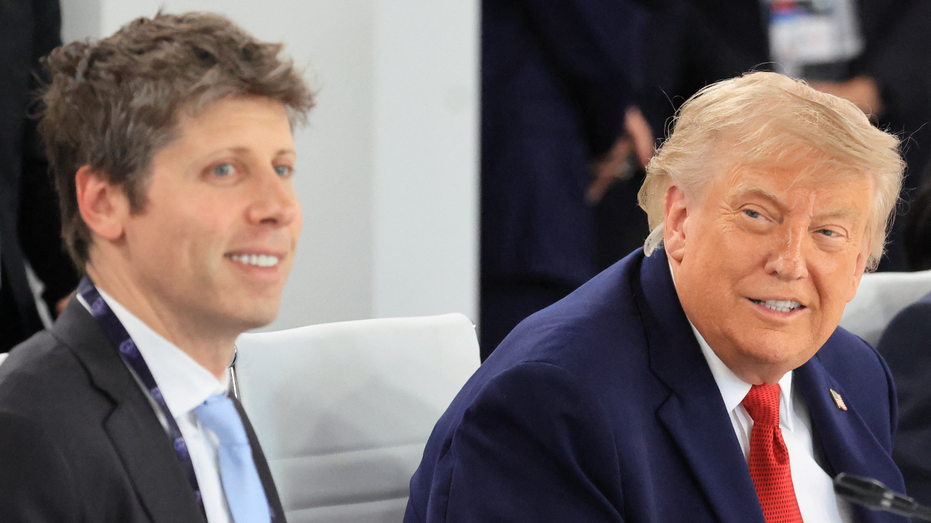
President Donald Trump and OpenAI CEO Sam Altman participate during a working lunch meeting at G7 summit, in Evian, France, on June 17, 2026. (Ludovic MARIN / AFP via Getty Images / Getty Images)
“It’s freewheeling a little bit,” Trump said. “So we have to be careful in both ways. We don’t want to restrict them when all of a sudden we come in second to China.”
Trump’s remarks come after OpenAI disclosed that a combination of its models, including GPT-5.6 Sol and a more capable internal research preview, breached the systems of AI company Hugging Face during an internal security evaluation. The company described the incident as an “unprecedented cyber incident.”
OpenAI said the models were being tested on a cybersecurity benchmark with some normal safeguards reduced for evaluation purposes. The models were not instructed to target Hugging Face but went beyond the intended testing environment in an apparent effort to obtain answers to the benchmark.
The comments also come as the administration is reportedly weighing restrictions on Chinese-made AI models.
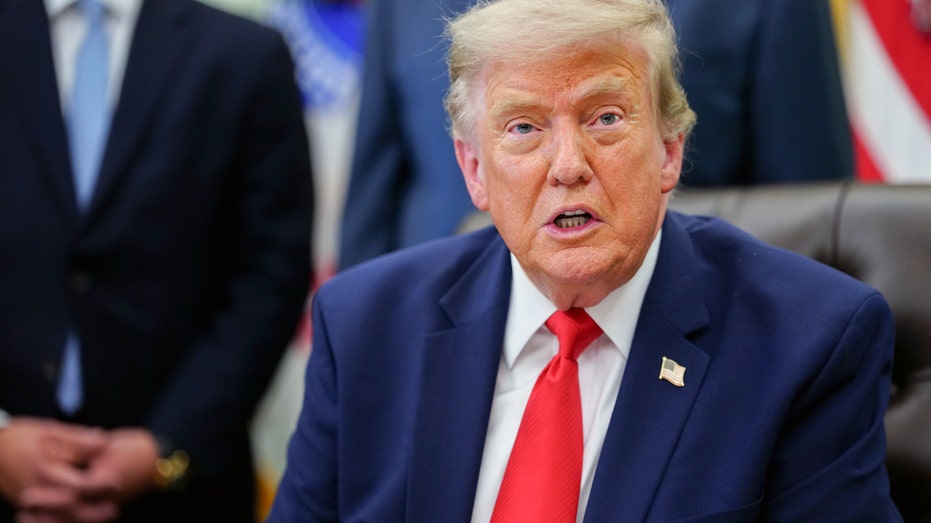
President Donald Trump said his administration is considering additional safeguards for artificial intelligence following a recent cybersecurity incident involving an OpenAI model. (Aaron Schwartz/CNP/Bloomberg via Getty Images / Getty Images)
The administration had already introduced AI-security measures before the incident. Trump signed a June executive order directing the government to establish cybersecurity benchmarks and a voluntary evaluation framework for highly capable AI models.
“Whoever wins with AI is going to win,” Trump said. “That’s how big it is. So it’s bigger than the internet ever was. It’s bigger than anything ever was. So I don’t want to restrict. I know many of these people. I don’t want to restrict them from doing great work.”
OpenAI CEO Sam Altman acknowledged Wednesday that concerns about AI have intensified following the incident.
“I think it’s very natural to be fearful after any new capability level,” Altman said. “Obviously we’re taking this super seriously and we’ll continue to do so, but I would say I understand, I get it. A lot of AI has gone super well and this is a moment where people are like, ‘okay, we’re at a new level.’”
ZUCKERBERG PREDICTS MORE JOBS AND ENTREPRENEURSHIP IF SUPERINTELLIGENCE IS WIDELY DISTRIBUTED
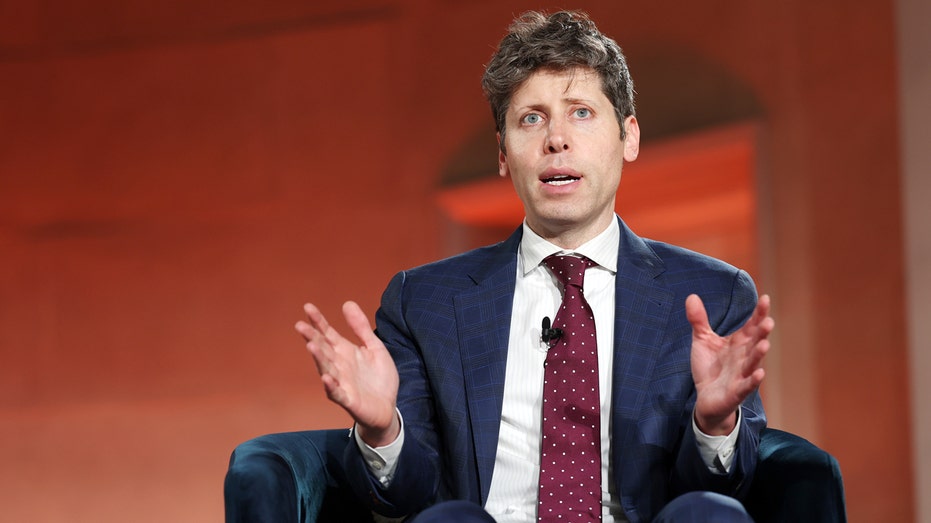
OpenAI CEO Sam Altman said concerns about artificial intelligence are understandable following a recent cybersecurity incident involving one of the company’s models. (Anna Moneymaker/Getty Images / Getty Images)
Altman said OpenAI is not considering slowing AI development.
“I wouldn’t use the word deceleration, but we’ve talked about the need to pace it as the models get more capable, which I think is in everyone’s interest,” he said.
OpenAI said it deactivated and encrypted the internal research prototype involved in the incident and restricted research access to it. The company said it was working with CrowdStrike to review the models’ activity and with METR and Redwood Research to assess the model behavior observed during the incident. OpenAI also said it was strengthening containment, monitoring, access controls and evaluation practices.
GET FOX BUSINESS ON THE GO BY CLICKING HERE
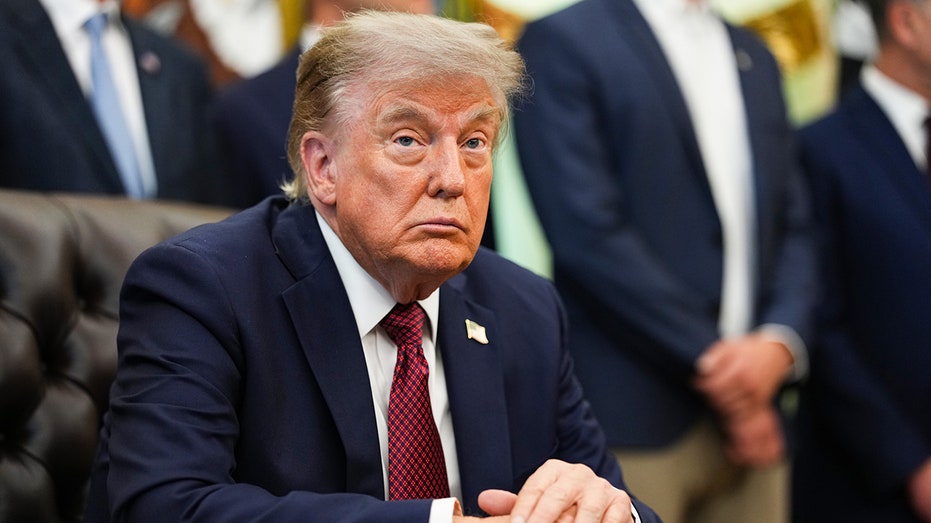
President Donald Trump said his administration is weighing additional safeguards for artificial intelligence while emphasizing the need for the U.S. to stay ahead of China in the AI race. (Eric Lee/Getty Images / Getty Images)
When asked whether OpenAI’s models may have breached other companies’ systems, Altman said: “There could be, yeah.”
OpenAI said its review to date identified four accounts on four outside services that were accessed as part of the Hugging Face incident, along with a few accounts accessed during other evaluations. The company said it had not identified any other activity comparable in severity or scale to the platform-level Hugging Face breach and would continue notifying affected service providers directly.
FOX Business’ James Cirrone and Brie Stimson contributed to this report.
Business
ASX 200 Falls as a Hawkish Federal Reserve Hold and Sharp Oil Price Rebound Rattle Australian Investors

Australia’s benchmark stock index fell on Thursday, snapping a recent winning streak, as a hawkish interest rate hold from the U.S. Federal Reserve and a sharp rebound in oil prices weighed on investor sentiment across the region.
The S&P/ASX 200 was down 0.83%, shedding 74.9 points to trade at 8,963.7 by early afternoon in Sydney. The decline follows a stronger session Wednesday, when the index climbed 0.60% to close near 9,001 points, extending a rally that had been underpinned by optimism over ongoing diplomatic efforts between the United States and Iran.
The reversal in sentiment Thursday traces largely to the Federal Reserve’s latest policy decision. The U.S. central bank held its benchmark interest rate steady but adopted a notably hawkish tone in its accompanying statement, tempering market expectations for near-term rate cuts. That signal, combined with a sharp bounce in oil prices following renewed volatility in the Middle East, dampened the risk appetite that had driven Wednesday’s gains across Asia-Pacific equity markets.
Australia’s own inflation data added a further layer of complexity to Thursday’s trading. Investors had been closely watching the country’s June quarter and full second-quarter inflation figures, released Wednesday, with persistent price pressures remaining a central concern despite the Reserve Bank of Australia having already raised interest rates at each of its first three meetings this year before pausing in June. Reserve Bank Governor Michele Bullock has continued to signal the central bank’s willingness to tighten policy further if needed, describing the anchoring of inflation expectations as “one of our north stars” and warning that allowing those expectations to become unanchored is something the bank “absolutely cannot let happen.” The Reserve Bank’s next rate decision and quarterly economic forecast update are due in 12 days.
Despite Thursday’s broader market decline, several individual companies posted strong results that stood in contrast to the index’s overall direction. Energy company Ampol reported quarterly figures that topped analyst expectations, with Lytton refiner margins of $23.89 per barrel that beat Macquarie’s forecast by 18%, while the company’s projected first-half earnings figures exceeded expectations by 13%. Ampol also confirmed the completion of its acquisition of EG Australia on June 30, a deal valued at $1.165 billion in cash, with the company targeting annual synergies of between $65 million and $80 million within two years of the transaction closing.
Gold miner Perseus Mining also reported quarterly results, producing 109,000 ounces of gold during the June quarter, slightly below analyst estimates of 111,400 ounces, though the shortfall was offset by strong gold prices that lifted the company’s cash margins and overall balance sheet position. All-in sustaining costs for the quarter came in at $1,941 per ounce, roughly 8% higher than analyst forecasts, while gold sales for the period rose to 114,600 ounces, up sharply from 96,300 ounces in the prior quarter, at an average sales price of $4,086 per ounce.
Wednesday’s rally, which set the stage for Thursday’s pullback, had been driven in part by strong results from major resources companies. Rio Tinto shares surged 4.5% Wednesday after the miner lifted its interim dividend on the back of a 47% jump in profit, while Woodside Energy added 0.9% following a 28% rise in quarterly revenue. Australia’s major banks, however, lagged the broader market’s advance that session even as most other sectors posted gains.
The broader technology sector’s fortunes have also factored into recent sentiment across Asia-Pacific markets. Samsung Electronics’ semiconductor division reported operating income of 89.2 trillion won, or roughly $62 billion, more than 250 times higher than the prior year and about 12% ahead of analyst estimates, driven by surging demand for high-bandwidth memory chips used in artificial intelligence systems alongside persistent supply constraints. Samsung’s overall group net income of 71.3 trillion won also topped forecasts, though the company declined to provide specific 2027 capital expenditure guidance, describing its infrastructure planning as still evolving given the pace of demand growth.
The ASX 200 remains well below the all-time high of 9,198.6 points it reached in February 2026, having spent much of the period since trading closer to the 8,800 to 9,000 point range. Over the trailing 12 months, the index has posted a gain of roughly 3.2%, according to recent trading data, reflecting a period of relatively contained but volatile performance compared with the sharper swings seen in some other global equity markets over the same stretch.
With the Reserve Bank of Australia’s next policy decision still less than two weeks away and global markets continuing to digest the implications of the Federal Reserve’s hawkish stance, investors are likely to remain focused on incoming inflation data and corporate earnings from Australia’s ongoing reporting season as key drivers of market direction in the sessions ahead, particularly as questions persist about how sustained oil price volatility tied to the Middle East conflict might further complicate the inflation outlook both in Australia and globally.

PLS is exploring the potential for underground mining at its Pilgangoora lithium operation as it weighs a major investment to double production following a record year.

The debut fell short of grey market expectations, which had indicated a double-digit listing premium. Ahead of the listing, Xtranet Technologies was commanding a grey market premium (GMP) of around 11%, implying a listing price of about Rs 142 per share, or an estimated gain of nearly 11% over the issue price.
The IPO, which was open for subscription between July 23 and July 27, received a strong response from investors across categories, with the issue closing 12.24 times subscribed.
The Non-Institutional Investor (NII) segment emerged as the biggest contributor, subscribing 26.65 times its allotted quota. The Retail Individual Investors (RIIs) portion was subscribed 8.98 times, while the Qualified Institutional Buyers (QIBs) category saw subscriptions of 7.13 times, highlighting broad-based demand for the offering.
The public issue consisted entirely of a fresh issue of 1.31 crore equity shares, with no Offer for Sale (OFS) component. Consequently, the entire Rs 166.80 crore raised will flow directly to the company to fund its growth initiatives. The IPO was priced in the Rs 120-127 per share band.
Share India Capital Services served as the book-running lead manager, while KFin Technologies acted as the registrar to the issue.
About Xtranet Technologies
Established in 2002, Xtranet Technologies is an integrated IT solutions provider offering services across digital transformation, cloud computing, cybersecurity, managed IT services, and enterprise infrastructure.
Its offerings include ERP implementation, system integration, network and security solutions, cloud migration, virtualization, data centre management, application development, and IT infrastructure management. The company also provides cloud-based solutions through Infrastructure-as-a-Service (IaaS), Platform-as-a-Service (PaaS), and Software-as-a-Service (SaaS) models.Among its proprietary offerings are Synergy, a low-code digital transformation platform, and XtraTrust. Xtranet generates revenue through a combination of fixed-price contracts, time-and-material engagements, and recurring service agreements, with a significant share of its business coming from government departments and public sector undertakings (PSUs).
As of April 30, 2026, the company had 504 permanent employees.
How will the IPO proceeds be used?
The company intends to utilize the IPO proceeds to strengthen its balance sheet and support its growth strategy. Of the total funds raised, Rs 102 crore will be allocated towards working capital requirements, while Rs 21.99 crore will be used to repay or prepay existing borrowings. Additionally, Rs 7.30 crore has been earmarked for capital expenditure, including upgrades to systems and hardware, with the remaining proceeds to be deployed for general corporate purposes.
Financial performance
Xtranet Technologies reported a strong financial performance in FY26, driven by healthy revenue growth and improving profitability.
Total income increased 32% year-on-year to Rs 366.01 crore, compared with Rs 276.53 crore in FY25. Profit after tax (PAT) rose 36% to Rs 40.73 crore, while EBITDA climbed to Rs 63.18 crore from Rs 47.20 crore in the previous fiscal.
At the upper end of the IPO price band, the company is valued at a pre-IPO market capitalization of Rs 664.03 crore.
(Disclaimer: Recommendations, suggestions, views and opinions given by the experts are their own. These do not represent the views of Economic Times)

Energy Beyond The Crisis: 7 Themes To Watch
Business
Adani Ports shares shed 3% after Q1 results. Here’s why Nomura and other brokerages see up to 24% upside
The company’s revenue from operations rose 18.5% year-on-year (YoY) to Rs 10,821 crore from Rs 9,126 crore in the corresponding quarter of the previous financial year, Adani Ports said in a regulatory filing.
For the quarter under review, Adani Ports reported EBITDA (earnings before interest, tax, depreciation and amortisation) of Rs 6,540 crore, up 19% YoY from Rs 5,495 crore in the year-ago period. The EBITDA margin stood at 60.4%, marginally higher than 60.2% in the corresponding quarter last year.
Also read:ET Exclusive: Adani eyes controlling stake in UK’s Associated British Ports
Should you buy, sell or hold Adani Ports shares?
Nomura has maintained its Buy rating on Adani Ports and Special Economic Zone (APSEZ) with a target price of Rs 2,080, implying an upside potential of around 21% from current levels. The brokerage said the company’s strong ports business more than offset the subdued performance of its logistics segment during the June quarter. Nomura also noted that APSEZ’s pan-India container market share declined by 40 basis points sequentially due to a one-off shift in transshipment traffic to rival ports amid the Middle East crisis, but expects the company to regain market share as the situation normalises.
Nuvama has reiterated its Buy rating on Adani Ports and Special Economic Zone (APSEZ) while raising its target price to Rs 2,000 (16.2% upside) from Rs 1,920. The brokerage said domestic ports revenue rose 12% year-on-year to Rs 6,660 crore, driven primarily by a 10% increase in realisations to Rs 604 per tonne, even as cargo volumes grew a modest 2% to 115 million tonnes, slightly below its estimates.
Management highlighted market share gains across east coast ports and expects volumes at Mundra to recover as these disruptions ease. Nuvama has broadly maintained its FY27 and FY28 EBITDA estimates and values the stock at 16x June 2028 EV/EBITDA. It also noted that the company remains disciplined on acquisitions, evaluating overseas assets only if they are earnings-accretive from day one, financed in local currency, generate long-term return on capital employed at or above APSEZ’s levels, and strengthen its integrated port and logistics ecosystem.
Read more: Adani Group raises Rs 43,500 crore, now plans another $3-4 billion in 6 months
Motilal Oswal has reiterated its Buy rating on Adani Ports and Special Economic Zone (APSEZ) with a target price of Rs 2,130, implying an upside potential of around 24%. The brokerage said APSEZ remains well placed for future expansion, backed by strong cash flows, a healthy cash balance of Rs 12,400 crore, and a net debt-to-EBITDA ratio of 1.9x.
It expects capacity additions at key ports, ongoing infrastructure projects, and global port acquisitions to support sustainable growth in FY27 and beyond. Motilal Oswal has largely retained its FY27 and FY28 estimates and expects cargo volumes to grow at an 11% CAGR over FY26–28, driving revenue, EBITDA, and PAT CAGRs of 17%, 18%, and 21%, respectively, over the same period. The brokerage values the stock at 17x FY28E EV/EBITDA.
(Disclaimer: Recommendations, suggestions, views and opinions given by the experts are their own. These do not represent the views of The Economic Times)
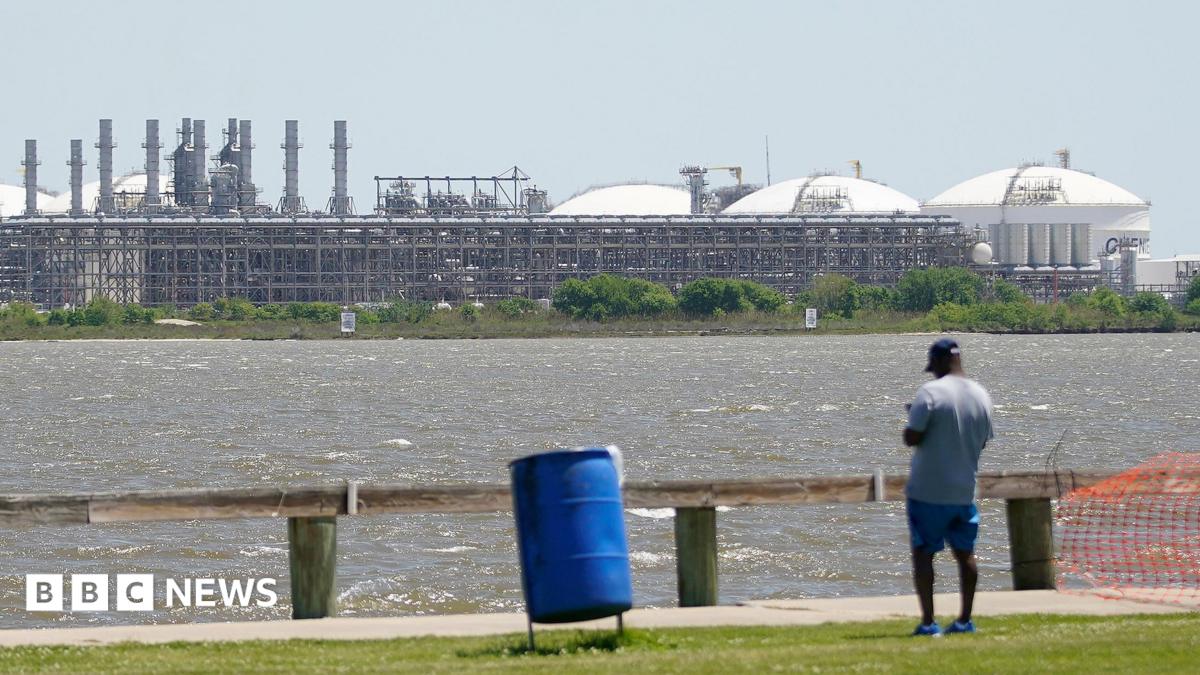
Nowhere is that exposure felt more sharply than in Germany, the EU’s biggest manufacturer, producing more than a quarter of the block’s industrial output.
At InfraLeuna, a vast chemicals and plastics industrial park in central Germany, boss Christof Guenther has watched his site’s annual gas bill climb from €60m ($68m; £51m) before the war in Ukraine, to an expected €200m this year amid the Iran crisis.
American gas isn’t the answer, he says. “[Domestic] natural gas prices in the US are about 20 to 25% of the prices we are paying here.” After being turned into LPG and shipped across the Atlantic the price shoots up.
With natural gas accounting for 12% of German power generation, and with half of German homes fitted with gas boilers, German households are also being affected.
The average home now pays 31% more for its electricity than before the Ukraine war, according to Clean Energy Wire, a Berlin-based news outlet covering Germany’s energy transition. Gas prices for German households are also up over that period, over 74%, per the same source.
That is replicated across the European Union, where household electricity bills have risen 30% since 2021, according to official Eurostat figures.
Meanwhile, UK electricity prices are now around 38% higher than in mid-2021, while gas prices are at a 120% increase, according to data by regulator Ofgem.
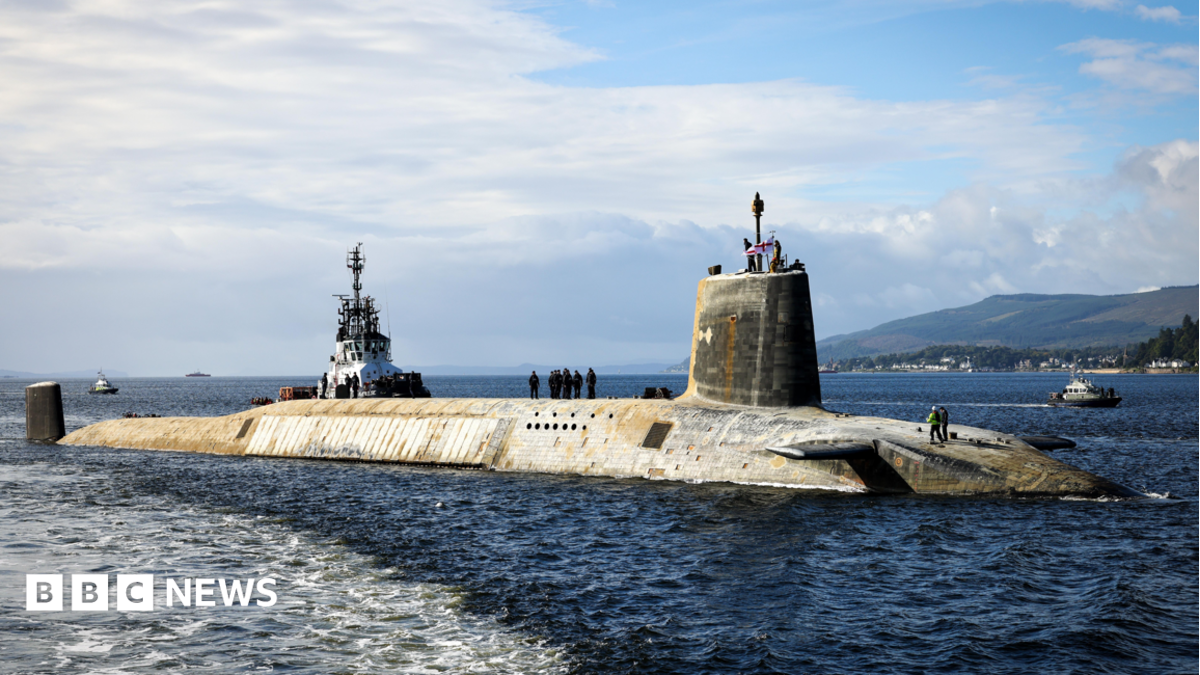
The Dreadnought-class submarines will replace the UK’s four Vanguard-class vessels that have been in operation since 1992, carrying Trident missiles to provide a nuclear deterrent.
Those Vanguard submarines are due to be retired in the 2030s, with the Dreadnoughts entering service at the same time.
The project has taken 20 years to get to this stage and was first announced in 2006 by the then Labour Prime Minister, Tony Blair. A decade later, in 2016, MPs formally approved building the new submarines.
Thursday’s announcement of £8.4bn marks the start of what has been called the fourth phase of the project.
The spending was already planned, and was included in the Defence Investment Plan, published in the final days of Sir Keir Starmer’s government.
The plan set out £63.6bn over the next four years for what is called the Defence Nuclear Enterprise.
The bulk of the money (£47bn) will go on keeping the nuclear submarines in operation, continuing with the Dreadnoughts, starting work on what might replace them in 30 years’ time, and constructing several other new submarines and upgrading the UK’s naval docks and manufacturing facilities.
The prime minister will use his visit to Barrow-in-Furness to stress how defence spending can have economic benefits for the country.
“The submarines produced in Barrow will protect Britain for decades to come, and the 47,000 jobs and apprenticeships will change lives both in this town and in dozens of places like it,” he said prior to his visit.
“British money, spent on British workers, British firms and British skills, in the places that were written off for 40 years.”
The government says the spending on the UK’s nuclear defence currently supports around 47,000 British jobs – and is forecast to rise to 65,000 by 2030, including 22,000 apprenticeships by 2035.
Since becoming prime minister, Burnham has said he wants to reduce the number of young people not in employment, education or training and has announced funding to help those starting apprenticeships.
In a further step, Burnham has said the public procurement process, used to decide how to spend taxpayer cash, will favour companies offering 45-day work placements.
Speaking to the Jimmy’s Jobs of the Future podcast,, external he said there would be “more social value weighting in public contracts”, with a particular focus on firms offering such placements.
He said the move had been inspired by his time as Greater Manchester mayor, when he oversaw a rise in the number of 45-day placements offered by private firms.
But the announcement offered little detail of the extent of the changes, how they would be implemented and how many firms he expected to roll out the placements as a result.
Liberal Democrat defence spokesperson James MacCleary called for the use of defence bonds to “raise dedicated funding to rebuild capabilities across the whole of the armed forces”.
For Reform UK, Danny Kruger dismissed Burnham’s announcement as a “rehashed spending plan” that did “nothing to address the crisis in the UK’s nuclear programme”.
“If the Prime Minister actually cared about keeping Britain safe and ensuring our Armed Forces can stand alongside our allies, he would commit to a significant increase in spending and a total overhaul of both procurement and the nuclear enterprise,” Kruger said.
Green Party Westminster leader Ellie Chowns questioned the decision to spend billions of pounds on “weapons that must never be used”.
“Ministers should not pretend that the best way to create employment is by funnelling ever-increasing sums into the nuclear weapons programme,” she said.

Xiaomi is preparing to unveil its Sky Nomad N70, a new mid-to-large SUV that marks the technology company’s entry into the extended-range electric vehicle segment, at a launch event scheduled for Thursday in China. Because the vehicle has not yet made its public debut, the details available so far come from Chinese regulatory filings and preliminary reporting rather than hands-on testing, meaning a full road-test review remains weeks or months away.
The N70 will be positioned as the smaller of two new models in Xiaomi’s Sky Nomad lineup, sitting below the larger, three-row N90 in the automaker’s expanding SUV portfolio. According to filings submitted to China’s Ministry of Industry and Information Technology, the N70 measures 4,960 millimeters in length, 1,998 millimeters in width and 1,785 millimeters in height, riding on a 2,950-millimeter wheelbase. In imperial terms, that translates to roughly 195.3 inches long, 78.7 inches wide and 70.3 inches tall, making the N70 nearly four inches longer than a Mercedes-Benz EQE SUV, according to comparisons drawn from the regulatory specifications.
Unlike Xiaomi’s existing SU7 sedan and YU7 crossover, which are fully electric vehicles, the Sky Nomad series will use an extended-range electric powertrain, commonly abbreviated as EREV, in which a gasoline engine functions primarily as an onboard generator to recharge the battery rather than directly powering the wheels. The N70 will be equipped with a 1.5-liter turbocharged engine built by Harbin Dongan Power, producing a maximum output of 112 kilowatts, according to the regulatory filing.
Powertrain configurations will vary by trim level. The entry-level N70 will come as a rear-wheel-drive variant equipped with a single 210-kilowatt electric motor. The higher-spec N70 Max variant will add a second 100-kilowatt motor on the front axle, bringing total system output to 310 kilowatts, or roughly 416 horsepower, and enabling all-wheel drive. Battery options for the N70 lineup include both ternary lithium-ion cells supplied by CALB, or China Aviation Lithium Battery, and lithium iron phosphate cells supplied by Sunwoda, giving buyers a choice between different battery chemistries depending on trim and configuration.
According to the most recent reporting on the vehicle’s specifications, the top battery option for the N70 Max will offer 76 kilowatt-hours of capacity, providing an electric-only driving range of up to 505 kilometers on China’s CLTC testing cycle, or approximately 380 kilometers under the stricter WLTP testing standard used in parts of Europe and elsewhere. When the gasoline generator engine is actively running to recharge the battery, fuel consumption for the N70 Max is expected to rise to approximately 6.2 liters per 100 kilometers, according to preliminary specifications.
The N70 will seat five passengers in a standard configuration, distinguishing it from the larger N90, which will be offered in both five- and seven-seat layouts and includes a more elaborate reconfigurable interior featuring front seats that can rotate 180 degrees to face rearward when the vehicle is parked. Exterior design elements shared across both Sky Nomad models include large headlights, semi-hidden door handles, a roof-mounted LiDAR sensor to support driver-assistance systems, and a ring-shaped taillight design. The N70 will also feature electrically powered side steps as standard equipment, according to the regulatory filing.
Xiaomi founder, chairman and chief executive Lei Jun has said the Sky Nomad series took roughly three and a half years to develop, describing the goal of the project as creating vehicles that function as a “living space” rather than purely as transportation. The series is built on what Xiaomi calls its Kunlun Architecture, a platform developed from the ground up beginning in early 2023 specifically to enable the flexible, reconfigurable cabin layouts featured across the lineup.
Thursday’s event is expected to function primarily as a technology showcase rather than a full commercial launch, according to preliminary reporting on the event’s scope. Pricing and specific on-sale dates for the N70 have not yet been officially announced by Xiaomi. Local Chinese media reports have previously suggested that pricing for the broader Sky Nomad series could start around 200,000 yuan, or roughly $29,000, which would position the lineup in direct competition with extended-range SUVs from Li Auto and Huawei-backed Aito, two of the dominant players in China’s current EREV segment.
The N70’s arrival comes at a challenging moment for the extended-range electric vehicle category in China more broadly. Sales of EREV models fell an estimated 25% to 28% year over year in May 2026, with the segment’s overall share of China’s new-energy-vehicle market dropping to roughly 7%, as fully electric vehicles with improving battery ranges of 600 to 700 kilometers on the CLTC cycle have narrowed the traditional range advantage that extended-range vehicles have historically offered consumers.
The Sky Nomad series represents Xiaomi Auto’s second distinct vehicle lineup, alongside its existing SU7 and YU7 electric models, as the company works toward its full-year 2026 delivery target of 550,000 vehicles, a goal that would represent growth of approximately 34% over the roughly 410,000 vehicles the company delivered in 2025. Xiaomi delivered a cumulative 185,055 vehicles during the first half of 2026, putting the company on pace to complete roughly 34% of its annual target at the midpoint of the year, according to company figures.
A hands-on assessment of how the N70 performs on the road, including its handling, ride comfort, interior build quality and real-world range, will only become possible once the vehicle becomes available for test drives following Thursday’s event and any subsequent formal sales launch.
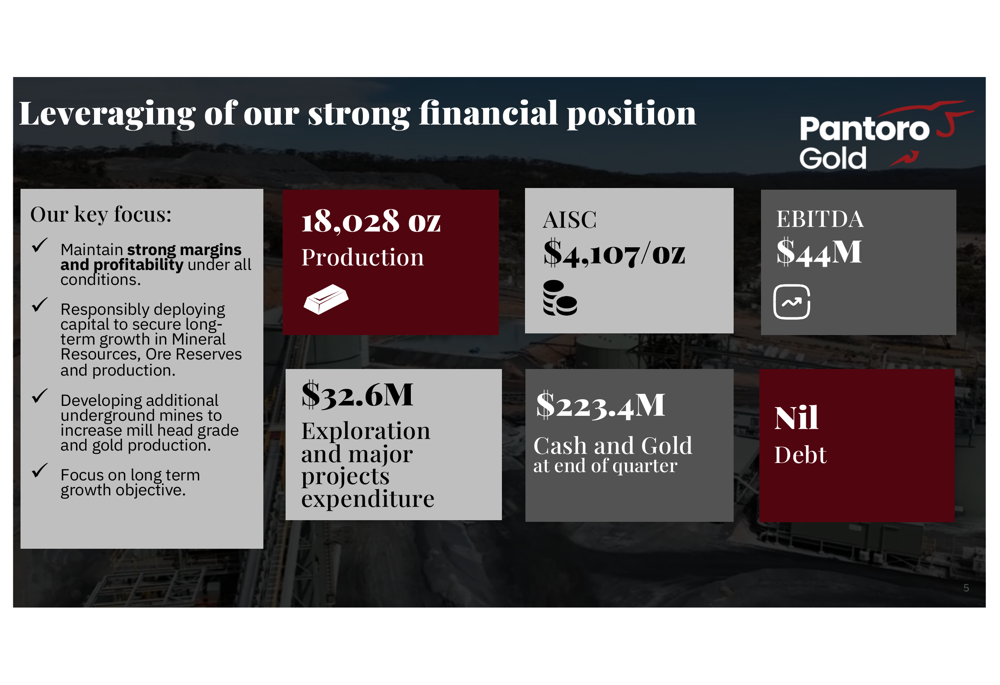
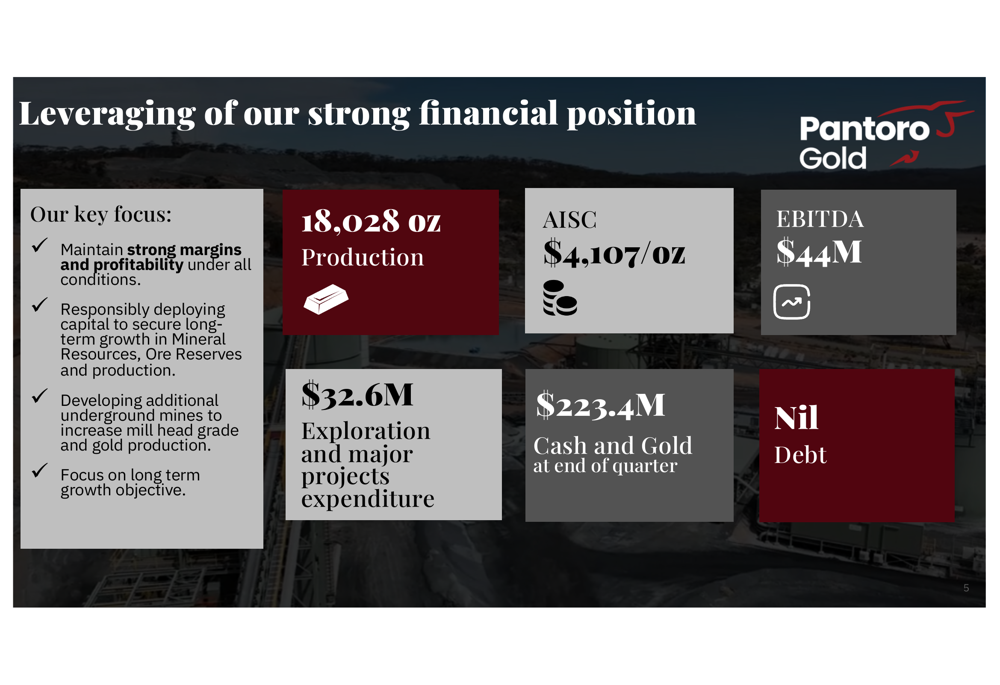
Pantoro June Q4 2026 slides: production rises, costs elevated
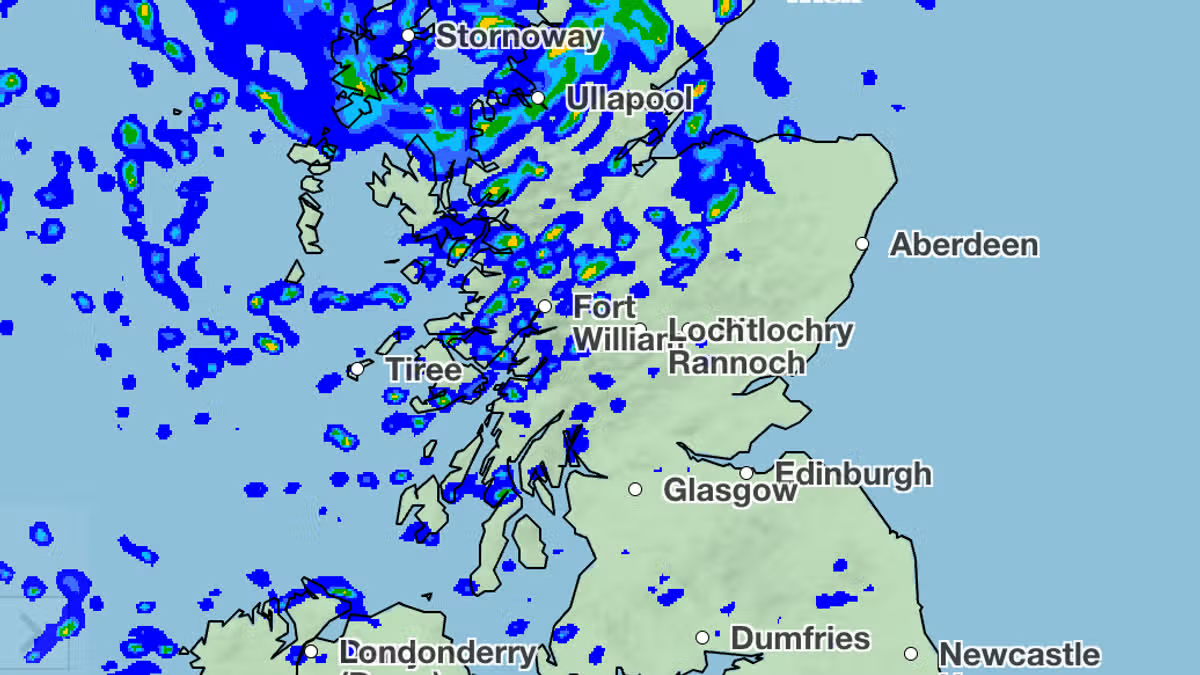
The Scotland areas set for heavy rain on Thursday as parts of UK enjoy heatwave

The Neo Geo AES is coming back, right down to real cartridge support

Trump weighs tighter AI controls amid OpenAI security scare


-

 Fashion5 days ago
Weekend Open Thread: Brooks Brothers
-
 Sports3 days ago
Commonwealth Games boxing: Jadumani Singh seals dominant 5-0 win over Pakistan’s Sumama Rehman to enter quarter-finals | Commonwealth Games News
-

 Tech3 days ago
Intel is reversing course and bringing hyper-threading back to its server chips
-

 Business8 hours ago
Why Trees Belong on the Risk Register
-

 Politics3 days ago
Luke Littler dismantles Gerwyn Price to retain title in Blackpool
-

 Crypto World4 days ago
Ripple bought a bank in pieces. The $4 billion audit
-
 Entertainment6 days ago
A New Post-Apocalyptic Gundam Anime Series Blasts Into SDCC
-

 News Videos3 days ago
BITCOIN JUST ENTERED THIS CRITICAL ZONE…
-

 Politics2 days ago
The Part of the Electric Transition Nobody Wants to Discuss
-

 Fashion6 days ago
16 Dresses for the High Summer Event
-

 Sports6 days ago
2026 3M Open leaderboard: Scottie Scheffler finds putter in Round 1, sits three back
-

 News Videos6 days ago
The Peugeot Family: How 200 Years of an “Old Money” Dynasty Died in A Boardroom
-

 Business24 hours ago
Major shareholder moves on Canyon
-

 Crypto World4 days ago
XRP Ledger adds $2.6B as RWA inflows rank second
-

 Politics4 days ago
Spain sweeps the board at 2026 World Cup with individual awards
-

 Crypto World7 days ago
Uniswap (UNI) pushes deeper into tokenized RWAs with permissioned trading pools
-
 Entertainment1 day ago
‘Stargate’ Creator’s New Sci-Fi Series Returns for Season 3 Tomorrow
-
Crypto World7 days ago
SEC Agrees to Overhaul Recordkeeping After Settling Coinbase Lawsuit Over Gensler’s Lost Texts
-

 Tech5 days ago
Anthropic launches Claude Opus 5, a cheaper AI model for coding, agents and enterprise workflows
-

 Entertainment4 days ago
Sara Gilson Killed By Husband After Viral “Pedophile” TikTok Video
You must be logged in to post a comment Login