LONDON — The FTSE 100 index climbed modestly in early trading Wednesday, rising about 0.11 percent to around 10,510 as investors weighed ongoing geopolitical developments in the Middle East and mixed signals from global markets following a sharp drop the previous day.
FTSE 100 Edges Higher in Early Trading as UK Stocks Show Modest Gains Amid Global Tensions
The blue-chip index stood at 10,509.99, up 11.90 points from Tuesday’s close of 10,498.09. It traded in a range between 10,516.44 and 10,478.92 by 8:45 a.m. BST, according to data from the London Stock Exchange. The modest rebound came after the index fell more than 1 percent Tuesday amid renewed uncertainty over U.S.-Iran ceasefire talks and fluctuations in oil prices.
Analysts described the early movement as cautious, with traders monitoring developments after President Donald Trump extended a ceasefire with Iran while keeping a U.S. naval blockade in place. The Strait of Hormuz, a vital chokepoint for global oil supplies, remains a focal point, with any escalation capable of pushing energy costs higher and pressuring inflation-sensitive sectors.
Utilities and energy-related stocks provided some support in early deals. SSE and Centrica were among early gainers, reflecting resilience in defensive sectors amid broader uncertainty. Consumer stocks showed mixed performance, while mining and financial names traded with limited direction as commodity prices stabilized somewhat after recent volatility.
The FTSE 100 has been on a roller-coaster ride in recent sessions. It closed Tuesday at 10,498.09 after shedding 110.99 points, or 1.05 percent, extending a pullback from levels above 10,600 seen earlier in the week. The index hit an intraday high of 10,634.96 on Tuesday but could not hold gains as concerns over Middle East tensions weighed on sentiment.
Advertisement
Broader context shows the FTSE 100 has delivered solid performance in 2026 so far, building on strong gains in 2025 that marked its best year since 2009. The index breached the psychologically important 10,000 level in early January and reached all-time highs near 10,935 in February. Year-to-date returns stand around 4 percent, though recent sessions have reflected heightened sensitivity to oil prices and geopolitical risks.
Market participants point to several factors influencing the UK benchmark. The heavy weighting toward energy giants such as Shell and BP means the index often moves in tandem with crude oil prices. Brent crude has fluctuated in recent days amid reports of partial reopening of shipping lanes in the Strait of Hormuz and diplomatic maneuvering between Washington and Tehran.
A weaker pound has also provided a tailwind for the FTSE 100, which derives roughly three-quarters of its revenues from overseas markets. Exporters and multinational firms benefit when sterling depreciates, boosting the sterling value of foreign earnings. However, persistent UK inflation concerns — with recent data showing headline CPI rising to 3.3 percent in March — have tempered expectations for aggressive Bank of England rate cuts.
Economists note that the UK economy continues to grapple with stagflation-like conditions, combining subdued growth with elevated price pressures. Gross domestic product growth for 2025 was revised upward slightly to 1.4 percent, but business investment has shown weakness. Unemployment remains relatively low at 4.9 percent, yet wage growth has moderated, offering limited relief to squeezed household budgets.
Advertisement
Corporate earnings season has added another layer of nuance. Recent reports from major FTSE 100 constituents have been mixed. Retailers like Tesco have highlighted consumer resilience in some areas, while others face margin pressures from higher energy and import costs. Defense stocks, including BAE Systems, have benefited from increased global security spending, contributing to the index’s resilience at times.
Pharmaceutical heavyweights such as AstraZeneca and GSK have faced headwinds from sector-specific challenges, including regulatory scrutiny and patent cliffs, though they continue to underpin the index with steady dividend payouts. The FTSE 100’s attractive dividend yield, projected around 3.3 percent for 2026 with record payouts expected near £88 billion, continues to draw income-focused investors.
Analysts at firms like AJ Bell have forecast further upside for the index, potentially reaching 10,750 by year-end, driven by profit growth of around 14 percent and ongoing share buybacks. However, they caution that commodity price swings, monetary policy decisions and geopolitical flashpoints could derail progress.
International developments have dominated headlines. Trump’s Truth Social posts asserting Iran’s financial collapse and demand to reopen the Strait of Hormuz have fueled market swings. Limited commercial shipping has resumed through the waterway, but the ongoing U.S. blockade restricts Iranian oil exports, keeping energy markets on edge.
Advertisement
European peers showed varied performance Wednesday morning. The pan-European STOXX 600 edged higher, while Germany’s DAX and France’s CAC 40 traded with modest gains as investors assessed the latest Iran-related news. Wall Street futures pointed to a cautious open in New York, with focus on upcoming U.S. economic data and corporate earnings.
In London, mid-cap stocks in the FTSE 250 were slightly firmer, gaining around 0.3 percent in early action. The more domestically focused index often amplifies movements in UK-specific economic indicators such as house prices and retail sales.
Trading volume remained moderate as many participants awaited further clarity on Middle East diplomacy. Pakistan and Oman have reportedly served as intermediaries in indirect talks, though deep divisions persist over Iran’s nuclear program, sanctions relief and regional proxy activities.
Bank of England officials have signaled a data-dependent approach to interest rates. With inflation above target and growth fragile, markets price in limited easing over the coming months. Gilt yields have remained relatively stable, providing some support to rate-sensitive sectors.
Advertisement
Looking ahead, investors will watch for fresh corporate updates and macroeconomic releases. Key earnings from remaining FTSE 100 names could influence sentiment, particularly in banking, mining and consumer goods. Any breakthrough or setback in U.S.-Iran negotiations would likely trigger sharp moves in oil prices and, by extension, the FTSE 100.
The index’s composition — tilted toward value sectors rather than high-growth technology — has helped it outperform some global peers during periods of volatility but has also capped upside when risk appetite surges elsewhere. In 2026, financials, miners and energy stocks have been primary drivers of gains, while defensives like utilities and pharmaceuticals have offered ballast.
Broader UK equity market capitalization stands near record levels, reflecting confidence in British companies despite domestic challenges. Foreign ownership remains high, with international investors attracted by relatively cheap valuations compared to U.S. benchmarks.
As trading progressed past the 8:45 a.m. mark, the FTSE 100 held its modest advance. Traders noted that sustained gains would require easing of geopolitical risks and positive cues from commodity markets. A resolution or meaningful de-escalation in the Middle East could unlock further upside, while renewed tensions might test recent support levels near 10,400-10,500.
Advertisement
The session underscores the FTSE 100’s role as a barometer for both UK economic health and global risk sentiment. With the nation preparing for its 250th anniversary celebrations in 2026, market stability could play a supporting role in broader confidence.
Analysts remain broadly constructive on UK equities for the remainder of the year, citing dividend growth, buyback activity and potential valuation rerating if inflation cools and rates ease. However, they stress the need for vigilance on external shocks, particularly those involving energy security and international trade.
By mid-morning, the index hovered near its early high, with individual stock movements reflecting sector rotations. Gains in utilities and select consumer names offset softness in more cyclical areas sensitive to oil and global growth concerns.
The modest 0.11 percent uptick at 8:45 a.m. BST reflects a market seeking direction amid crosscurrents of diplomacy, energy dynamics and domestic fundamentals. Whether the early gains hold through the full session will depend on incoming news flow and shifts in investor risk appetite.
Trump Media & Technology Group on Tuesday named an interim chief executive as Devin Nunes stepped aside, marking a leadership transition at the parent of Truth Social following recent board departures and steep financial losses in 2025.
The company appointed longtime advisor Kevin McGurn as interim CEO effective immediately, succeeding Nunes, who has led the company since 2022. McGurn brings more than two decades of experience across media, telecommunications and advertising technology, according to the company.
Advertisement
The leadership shift comes as Trump Media continues to report significant losses relative to its revenue. The company posted a net loss of more than $712 million in 2025 – on roughly $3.7 million in revenue, according to its annual filing with the Securities and Exchange Commission.
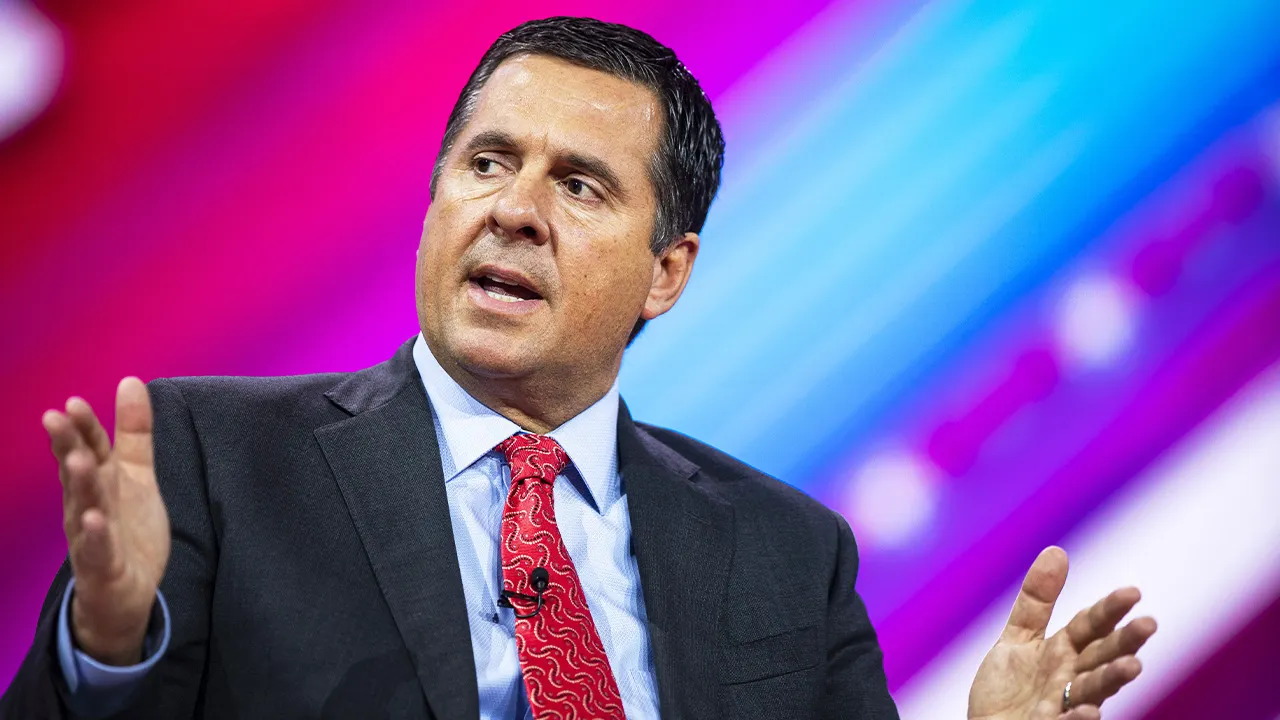
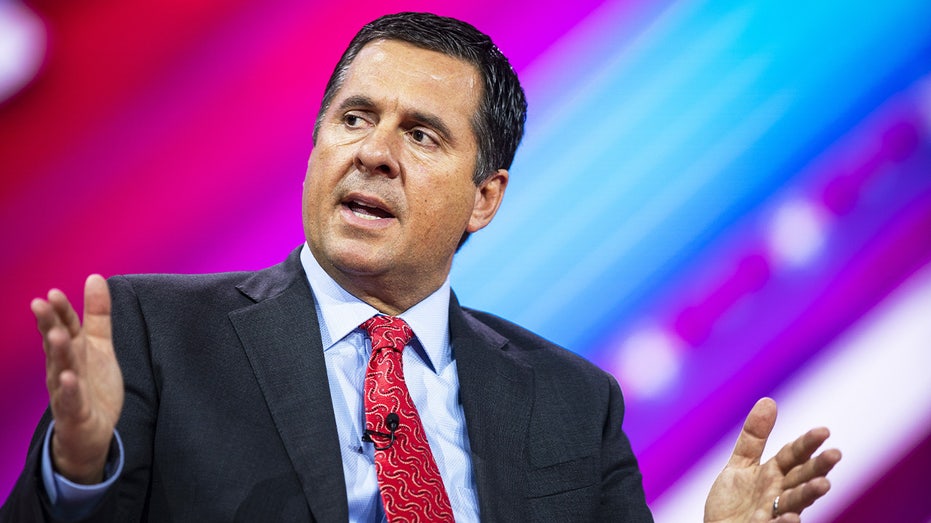
Devin Nunes served as CEO of Trump Media since 2022. (Al Drago/Bloomberg via Getty Images)
Financial disclosures show expenses far outpaced revenue, including more than $576 million in operating costs. A substantial portion of the losses was tied to write-downs and losses related to digital assets, highlighting the company’s exposure to volatile investment areas.
“I want to thank Devin Nunes for his dedicated service to the Company over the past four years, and congratulate Kevin McGurn on his appointment as Interim CEO,” Donald Trump Jr., a board member, said in a statement.
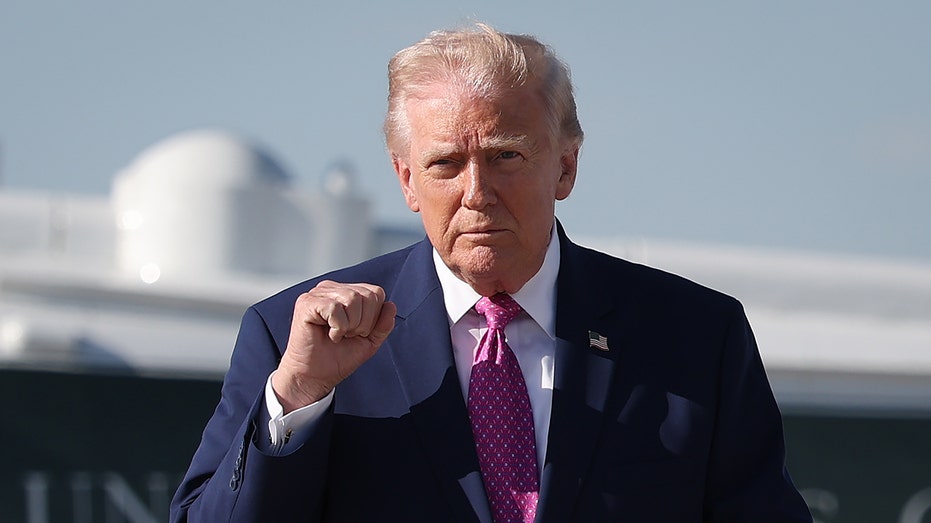
President Donald Trump walks toward reporters before answering questions prior to boarding Air Force One on April 10, 2026. (Win McNamee/Getty Images)
Nunes said the transition comes as the company enters a new phase, adding it was “an appropriate time” for McGurn to take over leadership while he shifts focus to other roles, including serving as chairman of the president’s Intelligence Advisory Board.
The leadership change follows a series of recent board departures disclosed in regulatory filings. Former U.S. Trade Representative Robert Lighthizer resigned from the board in March, and director Eric Swider stepped down earlier this month. The company said in both cases the exits were not due to any dispute with management.
Trump Media is the parent company of Truth Social. (iStock)
Trump Media, which operates the Truth Social platform along with its streaming service Truth+ and fintech brand Truth.Fi, has sought to expand beyond social media into areas including financial services and digital assets as it looks to grow its business.
The company has framed the leadership transition as part of its next phase, with McGurn expected to guide operations and strategic initiatives moving forward.
Royal Mail has put a £500 million price tag on rescuing its battered reputation for on-time delivery, unveiling a five-year recovery plan that will see Saturday second-class post wound down from May and thousands of part-time posties asked to take on full-time hours.
The pledge marks the first substantive operational reset under Czech billionaire Daniel Kretinsky, whose EP Group completed its £3.5 billion take-private of parent group International Distributions Services last year, lifting Britain’s letters monopoly off the London Stock Exchange after more than a decade as a quoted company.
Under the blueprint, the 510-year-old postal operator will spend £100 million a year creating the equivalent of 3,000 full-time delivery roles, achieved largely by persuading roughly 6,000 part-timers to lift their average week to 35 hours. The company has secured trade union backing for the package, no small feat in a business that has weathered some of the most bruising industrial disputes in recent British corporate history.
The numbers behind the overhaul lay bare just how far standards have slipped. Against a regulatory benchmark of delivering 93 per cent of first-class mail the next day, Royal Mail is currently managing 77 per cent, leaving nearly one letter in four arriving late. Second-class performance is little better, with 91 per cent landing on doormats within three days against a target of 98.5 per cent.
Ofcom has already softened the rulebook in the wake of the Kretinsky takeover, easing the universal service obligation to permit non-first-class items to be delivered on alternate days and trimming the regulatory targets to 90 per cent for next-day first-class and 95 per cent for three-day second-class. Royal Mail says it will hit those revised thresholds within twelve months of the new regime bedding in.
Advertisement
For SME owners and finance directors who have long complained that unreliable post is gumming up invoicing, contract delivery and customer correspondence, the proof will be in the doormat. The company’s own diagnosis pinpoints “completion rates of delivery routes” as the central failure, with an estimated 8 per cent of rounds either under-resourced or too unwieldy to be finished within the working day. A targeted shake-up of working practices is planned at the weakest performers among Royal Mail’s 1,200 delivery offices, with fresh recruitment focused on Oxford, Cambridge and London, where staff shortages have been most acute.
The pay backdrop is also instructive. Posties hired since 2022 are on the equivalent of £27,200 a year, around £1,800 below the £29,000 paid to longer-serving colleagues, a two-tier structure that has fuelled retention difficulties and which the move to fuller hours is designed, in part, to mitigate.
Alistair Cochrane, chief executive of Royal Mail, struck a contrite note. “We recognise our service hasn’t always been the standard our customers rightly expect and we’re determined to do better,” he said. His chairman went further when grilled by MPs in recent weeks, with Mr Kretinsky telling a parliamentary inquiry: “We are sorry for every letter that has arrived late,” before describing operations as “not perfect but not catastrophic”.
The political optics matter. The universal service obligation, baked in when David Cameron’s coalition floated Royal Mail in 2013, has been the convenient scapegoat for years of underperformance. With Ofcom now having loosened that corset, the excuses are wearing thin. Of Royal Mail’s 130,000-strong workforce, 80,000 are front-line delivery staff, and it is on their rounds that Mr Kretinsky’s £500 million bet will ultimately stand or fall.
Advertisement
For Britain’s small businesses, many of which still rely on the post for everything from cheques to compliance documents, the message from Mount Pleasant is one of cautious optimism. Whether the new owners can succeed where successive management teams have stumbled remains the open question.
Amy Ingham
Amy is a newly qualified journalist specialising in business journalism at Business Matters with responsibility for news content for what is now the UK’s largest print and online source of current business news.
LOS ANGELES — With less than two months until the 2026 FIFA World Cup kicks off on American soil, organizers are grappling with unexpectedly sluggish ticket sales for the host nation’s opening match, as high prices appear to be deterring fans from snapping up seats for the United States men’s national team’s June 12 clash against Paraguay at SoFi Stadium.
2026 FIFA World Cup
An internal document dated April 10 and distributed to local organizers showed only 40,934 tickets purchased for the marquee Group D opener, according to a report by The Athletic. That figure lags behind other matches at the same venue, including 50,661 tickets sold for Iran versus New Zealand three days later. SoFi Stadium has a listed World Cup capacity of 69,650, leaving a significant number of seats potentially available just weeks before the tournament begins.
FIFA has not publicly disputed the sales numbers but has declined to provide detailed clarification on whether the figures include hospitality packages or other non-general admission tickets. The governing body announced Tuesday a fresh round of ticket inventory for all 104 matches would go on sale starting Wednesday at 8 a.m. PDT, signaling an effort to boost demand across the board.
When tickets first went on general sale in October following the draw, the U.S.-Paraguay match was priced as the third-most expensive fixture of the entire tournament, behind only the final and one semifinal. Category 1 tickets carried a price tag of $2,730, Category 2 tickets $1,940 and Category 3 tickets $1,120. Those premium prices have remained frozen even as other matches saw adjustments or stronger uptake.
Fans and analysts have pointed to the steep costs as the primary culprit. Many supporters expressed sticker shock on social media and forums, with some opting instead for resale markets where secondary prices have also softened in recent weeks. American Outlaws, the largest U.S. supporters group, voiced frustration over pricing that they say prices out average families and dedicated fans.
Advertisement
The slow sales contrast sharply with the excitement surrounding the expanded 48-team tournament co-hosted by the United States, Canada and Mexico. The U.S. opener was billed as a glamorous curtain-raiser in the glittering SoFi Stadium, home to the NFL’s Los Angeles Rams and Chargers. Yet demand has not matched the hype, raising questions about FIFA’s pricing strategy and a possible miscalculation of the USMNT’s domestic drawing power for a group-stage game against a relatively modest opponent like Paraguay.
Paraguay, ranked outside the top 20 by FIFA, does not bring a large traveling fan base to Los Angeles, further limiting organic demand. In contrast, matches featuring larger diaspora communities or more attractive matchups have moved tickets faster in some host cities.
Broader ticket sales for the 2026 World Cup have shown uneven patterns. While high-profile later-stage games and certain group fixtures with strong international interest have performed well, several opening-round matches — including some not involving host nations — have also lagged. FIFA has responded by launching additional sales phases and introducing new inventory, but critics argue the organization has been reluctant to lower prices on premium categories for high-visibility U.S. games.
The situation highlights ongoing challenges for soccer in the United States. Despite growing popularity of Major League Soccer, the English Premier League and domestic interest in the USMNT during major tournaments, filling massive NFL-caliber venues for every match remains difficult. The USMNT has historically drawn strong crowds for friendlies and Gold Cup games in smaller or mid-sized stadiums, but scaling that enthusiasm to 70,000-seat arenas at premium pricing has proven tougher.
Advertisement
U.S. Soccer Federation officials have expressed confidence that sales will accelerate as the tournament nears and excitement builds. “We’re focused on delivering an unforgettable experience for fans,” a spokesperson said, noting that hospitality and corporate packages may account for some of the discrepancy in reported general sales figures.
Still, the optics are not ideal for a host nation less than 60 days from its opening match. Resale platforms show thousands of tickets listed for the U.S.-Paraguay game, with some Category 1 seats trading below face value in recent days. That secondary market activity suggests FIFA may need to consider further incentives or adjustments to avoid a half-empty stadium for one of the most anticipated games of the group stage.
The pricing controversy is not isolated. Earlier sales phases were marred by website glitches, long virtual queues and frustration over dynamic pricing elements. FIFA has defended its approach by noting that average ticket prices across the tournament remain comparable to or lower than recent World Cups when adjusted for inflation and venue scale. However, the premium positioning of the U.S. opener has drawn particular backlash.
Local organizers in Los Angeles, including representatives from SoFi Stadium and regional tourism bodies, are monitoring the situation closely. A strong turnout for the opener could set a positive tone for the dozens of matches scheduled across California and other U.S. venues. Conversely, visible empty seats could dampen the atmosphere and generate unfavorable headlines as the tournament launches.
Advertisement
The USMNT, under coach Mauricio Pochettino, enters the World Cup with rising expectations after solid performances in recent qualifying and friendlies. Players and staff have avoided commenting directly on ticket sales, focusing instead on on-field preparations. Captain Tyler Adams emphasized the importance of fan support, saying, “Having the home crowd behind us from the first whistle will be massive.”
Paraguay coach has downplayed any advantage from potential lower attendance, calling the match a historic opportunity regardless of the crowd size.
As FIFA pushes the new sales phase, attention turns to whether lower-category tickets or promotional bundles can move the needle. Some analysts suggest that bundling with other group-stage matches or offering family packages could help, though FIFA has given no indication of major price reductions on the flagship U.S. game.
The broader 2026 World Cup ticketing picture remains mixed. Matches in cities with large immigrant communities from participating nations have generally sold better, while neutral or less glamorous fixtures have faced similar headwinds. Overall sales have reached millions of tickets, but the flagship U.S. opener’s performance has stood out as a concern.
Advertisement
With the tournament fast approaching, FIFA faces pressure to fill venues and create the electric atmosphere expected of soccer’s biggest event on home soil for the United States. The coming weeks will reveal whether pent-up demand or last-minute buying surges can close the gap, or if pricing strategy will leave a notable void in SoFi Stadium on June 12.
For now, the slow movement of tickets for the USMNT’s World Cup debut serves as an early test of how effectively the world’s most popular sport can captivate American audiences when ticket costs reach thousands of dollars per seat.
British businesses racing to embed artificial intelligence into their products risk leaving millions of disabled consumers behind unless they bring them into the design process from the outset, according to fresh research from the Business Disability Forum (BDF).
A poll of 1,032 disabled UK adults, conducted with Opinium, found that two in five (40%) believe designing, developing and testing AI products with disabled people is the single most effective way to make the technology genuinely accessible. The same survey identified more user-friendly interfaces (38%), better information about how AI can support disabled users (37%) and stronger onboarding support (36%) as further priorities.
For SMEs in particular, many of whom are weighing how, and how quickly, to integrate AI into customer-facing tools, the findings carry a clear commercial message. Roughly one in four people in the UK will experience disability at some point in their lifetime, representing a significant share of the consumer base and the workforce. Building products that fail to accommodate that audience is, increasingly, a competitive liability as well as an ethical one.
The research suggests considerable optimism about what the technology can deliver. More than a third of disabled adults said AI tools could help by improving communications (38%) and online experiences (34%). Other anticipated benefits included better access to healthcare information (33%), education (32%), digital content (32%), support for independent living (31%), improved customer experience (25%) and better access to employment (24%).
That optimism, however, is tempered by significant scepticism. One in five disabled UK adults (20%) said they did not believe AI products would help them at all, while a further 18% said they simply did not know, a sizeable trust gap that businesses will need to close if they want adoption to follow investment.
Advertisement
A parallel Opinium poll of 2,000 UK adults found broadly similar attitudes across the wider population, with 34% agreeing that co-designing AI products with disabled users would improve accessibility, evidence that inclusive design is increasingly viewed as a mainstream expectation rather than a niche concern.
Lara Davis, communications director at Business Disability Forum, said the stakes were considerable. “There is the potential for AI products and tools to make a radical and positive difference to disabled people’s lives, but there is also the risk that disabled people could be left behind,” she said. “With AI developing at pace and one in four people experiencing disability at some point in their lives, this is not an issue that we can afford to overlook.”
Davis urged firms to “actively consult with their disabled consumers to make sure they are involved in the design, development and testing of AI products”, alongside providing better access to information and advice about the technology more generally.
Lucy Ruck, who leads BDF’s Tech Taskforce, was equally direct. “AI has the capacity to transform lives, but only if we get inclusion right from the start,” she said. “Making sure that disabled people are active participants in shaping this technology isn’t just the right thing to do, it’s how we build AI that genuinely serves everyone.”
Advertisement
The forum has set out four recommendations for businesses and developers. They are urged to involve disabled people throughout the AI lifecycle, on the basis that inclusive design removes barriers for everyone, not only disabled consumers. They should publish clear information about the accessibility features of their AI products, in formats tailored to differing communication needs. Compatibility with assistive technology, on which many disabled users rely daily, must be tested rather than assumed. And ethical judgement and meaningful human oversight should be built into both the tools themselves and the content they generate, with inclusive training data used to reduce bias and stereotype.
For SME founders and product leaders, the message is one that has been heard before in other waves of digital transformation: retrofitting accessibility is invariably more expensive, and less effective, than designing it in from the start.
Jamie Young
Jamie is Senior Reporter at Business Matters, bringing over a decade of experience in UK SME business reporting.
Jamie holds a degree in Business Administration and regularly participates in industry conferences and workshops.
When not reporting on the latest business developments, Jamie is passionate about mentoring up-and-coming journalists and entrepreneurs to inspire the next generation of business leaders.
FOX Business’ Lauren Simonetti gives the latest market check and reports on Anheuser-Busch’s earnings success.
FIRST ON FOX – Anheuser-Busch is increasing its U.S. investment to $600 million over two years, expanding brewery capacity, worker training and veteran hiring as the beer giant leans further into domestic manufacturing, Fox News Digital learned.
“Anheuser‑Busch is doubling down on investing in our U.S. operations because we see strong, long-term growth opportunities right here at home,” Anheuser-Busch CEO Brendan Whitworth exclusively told Fox News Digital. “When we invest in our U.S. operations and expand training for our people and opportunities for our veterans, we strengthen communities and drive real economic prosperity.”
Advertisement
“This $600 million investment is about advancing American manufacturing, strengthening our supply chain, and creating lasting careers and a brighter future for U.S. workers,” Whitworth added.
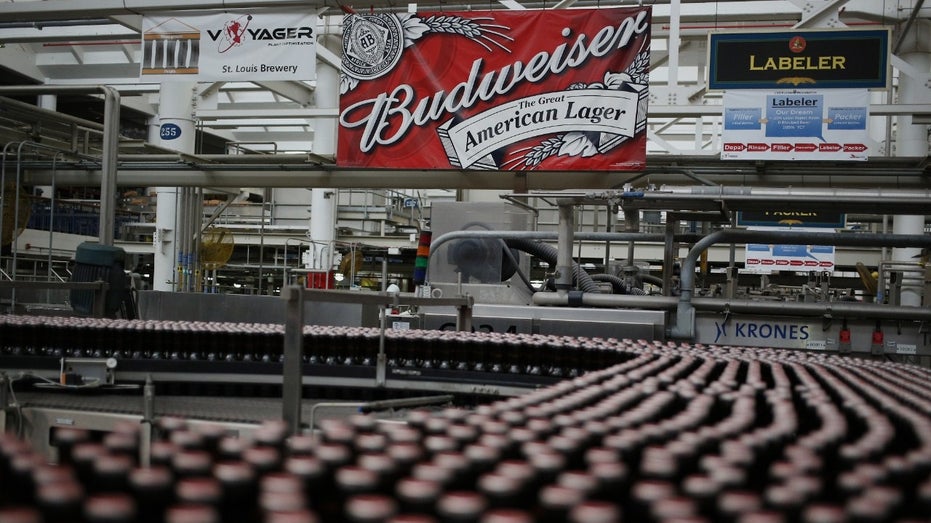
Anheuser-Busch announces a $600 million U.S. investment to boost domestic production. (Getty Images / Getty Images)
The company said the expansion will increase manufacturing capacity and invest in workforce development through 15 new training centers and veteran programs. The move aligns with broader industry and government efforts to boost domestic production and rebuild the manufacturing workforce, echoing calls from the Trump administration.
Anheuser-Busch will spend the $600 million over two years, from 2025 through 2026, focusing on brewery upgrades, technology, and production capacity. The Wednesday announcement expands upon a $300 million investment announced in 2025.
Advertisement
Stocks In This Article:
The company said it makes 99% of the beer it sells in the U.S. domestically, including Michelob ULTRA, Busch Light, Budweiser, and Bud Light.
The initiative aims to upskill 90% of its workforce over five years, training employees in digital systems, mechanical and electrical skills, and management systems.
“This $600 million investment is about advancing American manufacturing, strengthening our supply chain, and creating lasting careers and a brighter future for U.S. workers,” Whitworth said. (Anheuser-Busch)
“By strengthening our manufacturing operations, we are creating sustainable careers – not just jobs – and investing in the people who are vital to our success,” said Whitworth in a press release viewed by Fox News Digital.
Advertisement
“We are proud to continue building the next generation of manufacturing leaders through our new technical training centers while also providing new opportunities in the workforce for our nation’s veterans,” he added.
Anheuser-Busch is expanding veteran partnerships to help service members transition into the workforce. A new “SmartResume” platform will translate military skills and experience for employers.
Anheuser-Busch is expanding veteran partnerships to help service members transition into the workforce. (iStock / iStock)
The announcement follows the Trump administration’s continued push of “America First” policies creating indirect incentives for companies and reshaping trade policy for domestic production.
Advertisement
“This is yet another example of the Trump effect. Thanks to President Trump’s unwavering commitment to rebuilding American industry, companies are investing in the United States, expanding manufacturing, creating good-paying jobs, and driving a new era of prosperity for the American people,” White House spokesperson Liz Huston told Fox News Digital.
Trump has also signed various executive orders and actions to revitalize American manufacturing, recently signing a proclamation to strengthen tariffs imposed on imported steel, aluminum, and copper imports to help Americans compete and companies to build factories in the U.S..
Life insurer SBI Life on Wednesday reported a marginal decline in its standalone profit to Rs 805 crore in the fourth quarter. The profit was down about 1% over the previous year quarter. Net premium income, meanwhile, increased 16% year-on-year (YoY) to Rs 27,684 crore.
SBI Life retained its leadership in the private market across key metrics during FY26, with a 25.5% market share in Individual New Business Premium and 22.9% share in Individual Rated Premium.
The company reported annualized premium equivalent (APE) of Rs 24,270 crore, marking a 13% increase, while Individual New Business Sum Assured surged 61% to Rs 4.46 lakh crore, indicating strong traction in protection-led offerings.
Persistency ratios also improved, with 13-month and 49-month persistency rising by 53 basis points and 107 basis points, respectively.
Advertisement
Value of New Business (VoNB) stood at Rs 6,670 crore, up 12% YoY, with margins at 27.5%, reflecting stable profitability despite a shifting product mix. Embedded value grew 15% to Rs 80,790 crore, while operating return on embedded value came in at 19.7%. Assets under management increased 9% to Rs 4.9 lakh crore, and the solvency ratio remained robust at 1.90.
Live Events
MD and CEO Amit Jhingran said the life insurance industry saw improved momentum during FY26, supported by regulatory measures and a shift towards protection-oriented products. He noted that GST exemption on individual policies improved affordability and aided demand. The company maintained a balanced product mix across ULIPs, participating, and non-participating savings products, while the participating and retail protection segments saw strong growth. SBI Life continued to focus on a balanced growth strategy, strengthening its product portfolio, expanding distribution, and improving operational efficiencies while maintaining prudent risk management. The company reiterated its commitment to improving insurance penetration and delivering long-term value.Also read: Pahalgam anniversary: How the 2025 terror attack triggered Rs 3 lakh crore defence boom and created 3 multibagger stocks
On the business front, Individual New Business Premium rose 13% to Rs 29,780 crore, while protection new business premium stood at Rs 4,622 crore. Gross Written Premium grew 19% to Rs 1.01 lakh crore, driven by a 20% rise in new business regular premium and a 19% increase in renewal premiums.
(Disclaimer: Recommendations, suggestions, views and opinions given by the experts are their own. These do not represent the views of The Economic Times)
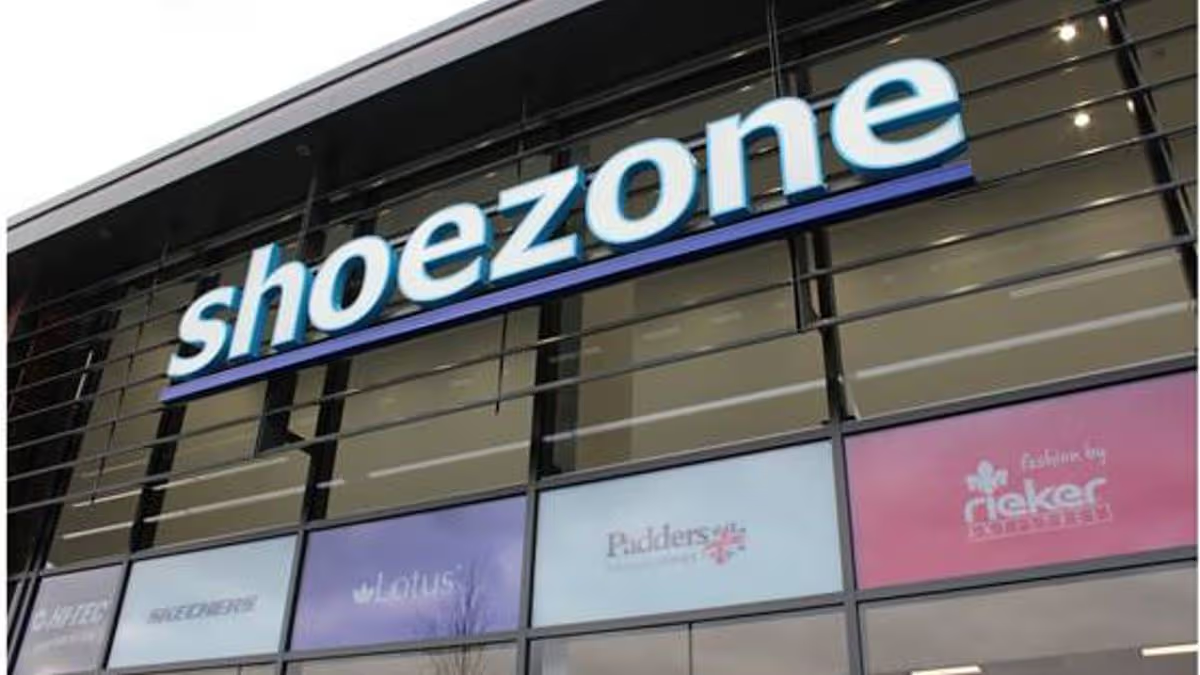
Shoe Zone said it had seen ‘challenging trading conditions’
Retailer Shoe Zone has warned it is poised to report an annual loss, citing the Iran conflict and the UK’s recent budget challenges for eroding consumer confidence.
Advertisement
The high street chain, which operates 259 shops and employs over 2,000 people throughout the UK, said the Middle East turmoil was also driving up expenses such as shipping and logistics, which is expected to hit its financial performance.
Shares in the company tumbled by more than a fifth, falling 22%, during Wednesday morning trading as Shoe Zone announced it anticipates swinging to an underlying pre-tax loss of between £1 million and £2 million for the year ending October 3, compared with earlier forecasts of £1 million in profits.
The Leicester-based Shoe Zone said its first quarter had experienced “challenging trading conditions, principally due to a continued weakening in consumer confidence, following on from the Government’s last two budget announcements, and the geo-political issues in the Middle East”.
It added: “These macroeconomic factors have increased customer caution, leading to lower footfall, less discretionary spend and additional costs such as container prices and transportation costs, with a resultant reduction in revenue and profit.”
Advertisement
Budget clothing chain Primark disclosed on Tuesday that it had witnessed softer trading in April as strain from the Middle East conflict dampened consumer sentiment. Shoe Zone has previously condemned “highly adverse” Government policies amid worsening trading difficulties that have driven its share price to its lowest point in over five years.
The retailer revealed profits plummeted by more than two-thirds to £3.3 million in the year to last September, while store sales fell 10.3% as it closed a net total of 28 shops over the period.
The group recently warned that Government policies had damaged consumer confidence and caused business costs to soar.
Shoe Zone operates 53 smaller-format high street stores alongside 206 larger outlets.
Advertisement
The company sells approximately 13.3 million pairs of shoes annually at an average price of around £13.00.



























































You must be logged in to post a comment Login