
Business
GameStop Shares Dip Slightly as Ryan Cohen Acquisition Buzz Keeps Meme Stock Volatile in 2026

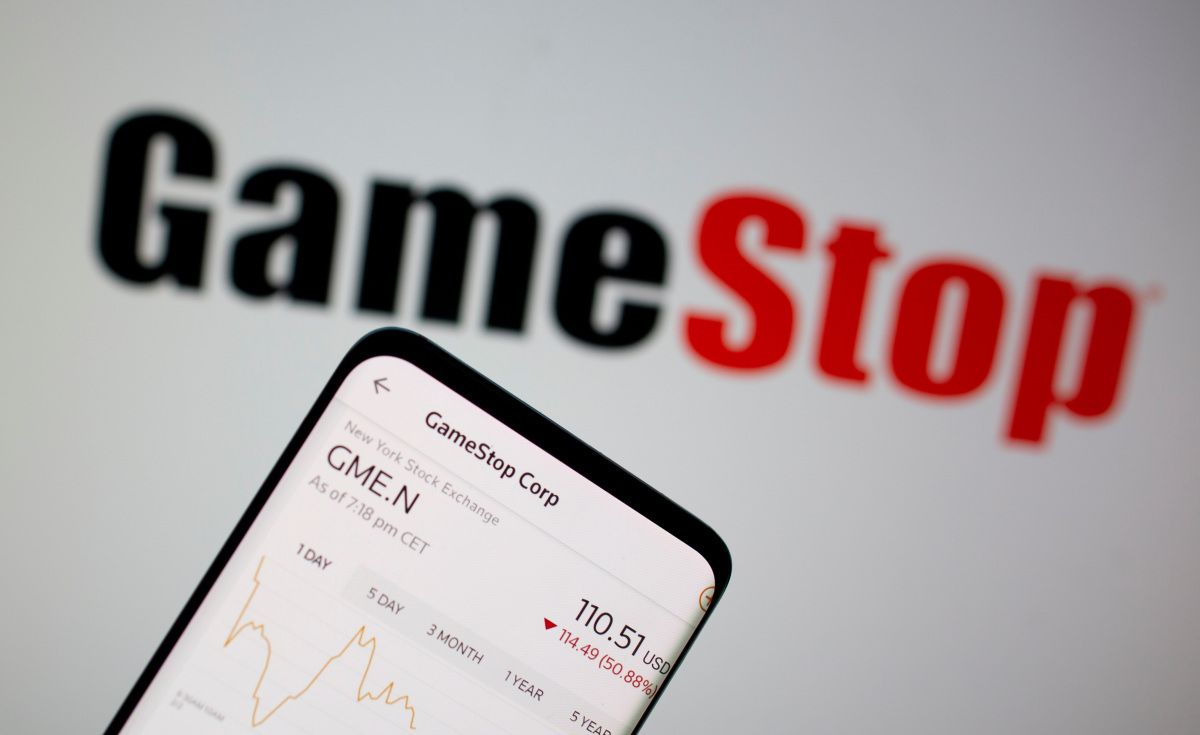
NEW YORK — GameStop Corp. shares traded near $23.12 in afternoon action Monday, down $0.24 or 1.01%, as the video game retailer continued to draw intense investor attention amid speculation over CEO Ryan Cohen’s plans for a major acquisition and the company’s massive cash reserves.

The stock has shown resilience in early 2026, up roughly 15-20% year-to-date despite ongoing declines in core retail sales. Trading remained relatively light on the post-holiday Monday, with volume below recent averages, reflecting the meme stock’s sensitivity to news flow rather than broad market moves.
GameStop’s transformation under Cohen has shifted focus from traditional brick-and-mortar video game sales to a potential holding company model. The company ended fiscal 2025 with a “fortress” balance sheet boasting approximately $8.83 billion in cash and equivalents, providing significant dry powder for strategic moves.
In late March 2026, GameStop reported fourth-quarter and full-year results. Net sales for the fourth quarter fell to $1.104 billion from $1.283 billion a year earlier, missing some expectations. However, gross profit rose 6.4% to $386.8 million, operating income increased to $135.2 million, and adjusted net income showed strength. For the full fiscal year, net income reached $418.4 million compared with $131.3 million previously.
Cohen, who also serves as chairman, has signaled ambitious plans. In interviews, he described pursuing a “very, very, very big” acquisition of a larger consumer or retail company that could prove “transformational.” Analysts and investors speculate the deal could deploy a substantial portion of the cash pile and aim to elevate GameStop’s market value toward $100 billion over time.
The board granted Cohen a landmark performance-based stock option award in January 2026 — entirely “at-risk” compensation tied to ambitious market capitalization targets starting at $20 billion and scaling up to $100 billion. Cohen has put his own capital behind the vision, purchasing additional shares in early 2026, including blocks worth millions at average prices around $21.
Short interest and retail investor enthusiasm remain key drivers of volatility. While the intense 2021 short squeeze has cooled, GME continues to rank among meme stocks with dedicated online followings. Year-to-date performance has outpaced several other former meme names, fueled by acquisition rumors and Cohen’s conviction signals.
Core retail operations face ongoing challenges. Revenue has declined as consumers shift toward digital downloads and new console cycles mature. The company has reduced its physical store footprint while exploring e-commerce, collectibles and potential new ventures. Bitcoin holdings have also been noted as a diversifying asset on the balance sheet.
Wall Street coverage remains limited and mixed. Some analysts maintain “Hold” ratings with price targets near $26, citing the cash hoard and optionality from Cohen’s strategy. Others highlight risks: declining sales trends, execution challenges in any large acquisition, and the stock’s history of sharp swings driven by sentiment rather than fundamentals.
Options activity shows mixed sentiment, with notable interest in both calls and puts reflecting uncertainty over the next catalyst. The 52-week range has spanned roughly $19.93 to $35.81, underscoring persistent volatility.
Supporters view Cohen’s Chewy background and activist roots as assets for reinventing GameStop beyond gaming retail. Critics argue the company risks overpaying in a deal or failing to stem core business erosion while chasing growth. Regulatory notes include a recent FTC settlement related to reporting matters.
As of early April 2026, no specific acquisition target has been confirmed. Cohen has canceled some interviews citing inability to discuss “monumental” plans, adding to speculation. A special shareholder meeting expected around March or April was anticipated to address aspects of the performance award.
For long-term holders from the pre-2021 era, the stock remains dramatically higher than levels a decade ago, though far below 2021 peaks near $86 (split-adjusted). Recent performance has been more measured, with sideways trading punctuated by rumor-driven spikes.
GameStop’s story continues to captivate retail investors on platforms where community sentiment can influence short-term price action. The combination of a strong balance sheet, activist-style leadership and legacy brand keeps it on watchlists despite shrinking traditional revenue.
Looking ahead, investors await any updates on acquisition talks, first-quarter results later in 2026, and progress on strategic initiatives. Cohen’s all-at-risk compensation structure aligns his incentives closely with significant value creation, raising stakes for the coming months.
The broader market environment, including interest rates, consumer spending and tech/AI trends, could indirectly affect any pivot GameStop attempts. For now, the stock trades as a high-conviction, high-risk name where news on Cohen’s “big” plans could trigger sharp moves in either direction.
GameStop, founded in 1984 and headquartered in Grapevine, Texas, operates hundreds of stores across the U.S. and internationally, selling video games, consoles, accessories and collectibles. Under Cohen since 2021, it has raised capital, strengthened its balance sheet and reduced debt while exploring diversification.
Monday’s modest decline occurred against a backdrop of broader market caution, with the S&P 500 showing limited movement. GME’s price action remains largely detached from traditional retail metrics, driven instead by narrative and anticipation.
As April trading continues, all eyes remain on Grapevine for the next chapter in GameStop’s evolution from meme stock darling to potential diversified powerhouse — or the risks that come with such ambition.

In such a dynamic environment, becoming a successful trader requires more than just luck—it demands discipline, adaptability, and a deep understanding of market behavior. Drawing insights from market experts and aligning them with current conditions, here are the key principles every trader should follow.
1. Respect Market Volatility, Don’t Fight It
The current market phase is marked by sharp swings. For instance, indices like the Sensex and Nifty have shown rapid fluctuations—rising one day and falling sharply the next due to global cues and geopolitical developments.
Successful traders understand that volatility is not a threat but an opportunity. Instead of predicting every move, they focus on reacting correctly. Accepting uncertainty is the first step toward consistent trading performance.

2. Focus on Risk Management Above All
One of the most important lessons from seasoned traders is simple: protect your capital first.In today’s market, where even large-cap stocks have seen significant valuation erosion and sudden corrections, risk management becomes critical.
This means:
Using stop-loss orders
Avoiding over-leveraging
Limiting exposure to a single trade
A trader who survives market downturns is better positioned to benefit from future opportunities.
3. Follow the Trend, Not Emotions
Markets are currently influenced by macro factors like oil price shocks, inflation concerns, and global conflicts.
In such conditions, emotional trading can be dangerous. Many beginners try to “catch the bottom” or “sell at the top,” but professionals focus on trend-following strategies.
If the market is showing weakness (like sustained corrections or lower highs), it’s wiser to stay cautious rather than aggressively bullish.
4. Stay Updated with Macro and Global Developments
Unlike earlier times, today’s markets are deeply interconnected with global events.
For example:
Rising crude oil prices impact inflation and corporate earnings
Geopolitical tensions affect foreign investor sentiment
Currency fluctuations influence export-oriented sectors
These factors have already led to cautious outlooks from global institutions and significant foreign capital outflows.
A successful trader keeps an eye not just on charts, but also on global news and economic indicators.
5. Avoid Overtrading in Uncertain Markets
When markets become unpredictable, the temptation to trade frequently increases. However, overtrading often leads to losses.
Experts emphasize patience—waiting for high-probability setups rather than chasing every market move.
In fact, periods of consolidation and volatility often reward disciplined traders more than aggressive ones.
6. Build a Strong Trading Psychology
Trading is as much psychological as it is analytical. Fear and greed are amplified in volatile markets like the current one.
A successful trader:
Accepts losses as part of the process
Avoids revenge trading
Stays consistent with strategy
Mental discipline is what separates long-term winners from short-term speculators.
7. Think Long-Term While Trading Short-Term
Even though short-term volatility dominates headlines, India’s long-term growth story remains intact due to strong domestic demand and economic resilience.
This dual perspective is crucial:
Trade short-term movements with discipline
Invest long-term with conviction
Balancing both helps traders stay grounded during market turbulence.
Key Takeaways
The stock market in 2026 is a classic example of opportunity wrapped in uncertainty. While volatility driven by global factors may persist in the near term, it also creates fertile ground for skilled traders.
Success in trading today is not about predicting the future—it is about managing risk, controlling emotions, and adapting to ever-changing market conditions. Those who master these principles will not only survive volatile markets but thrive in them.
Business
Mcap of four of top-10 most valued firms surges by Rs 2.20 lakh cr; Reliance biggest winner

Last week, the BSE benchmark Sensex climbed 249.29 points or 0.32 per cent.
“Markets ended the week with marginal gains, reflecting a volatile and range-bound trading environment amid mixed global and domestic cues,” Ajit Mishra – SVP, Research, Religare Broking Ltd, said.
The week began on a positive note, supported by easing geopolitical tensions and steady progress in Q4 earnings, which lifted initial sentiment, he said.
The week began on a positive note, supported by easing geopolitical tensions and steady progress in Q4 earnings, which lifted initial sentiment, he said.
However, gains were gradually capped by rising crude oil prices, weak cues from Asian markets, and persistent foreign institutional investor (FII) outflows, Mishra added.
However, gains were gradually capped by rising crude oil prices, weak cues from Asian markets, and persistent foreign institutional investor (FII) outflows, Mishra added.
While Reliance Industries, Bharti Airtel, Tata Consultancy Services (TCS) and Bajaj Finance were the gainers from the pack, HDFC Bank, State Bank of India, ICICI Bank, Larsen & Toubro, Hindustan Unilever and Life Insurance Corporation of India (LIC) faced a combined erosion of Rs 1.24 lakh crore from their valuation.
Reliance Industries added Rs 1,39,655.8 crore taking its market valuation to Rs 19,36,303.30 crore.
Bharti Airtel’s valuation surged Rs 43,503.51 crore to Rs 11,49,222.13 crore.
The market valuation of TCS jumped Rs 27,569.83 crore to Rs 8,94,933.95 crore and that of Bajaj Finance climbed Rs 9,432.32 crore to Rs 5,83,123.13 crore.
However, the market capitalisation (mcap) of ICICI Bank eroded by Rs 45,364.62 crore to Rs 9,04,980.78 crore.
The valuation of State Bank of India dropped Rs 30,922.57 crore to Rs 9,85,829.96 crore.
The mcap of HDFC Bank diminished by Rs 20,951.31 crore to Rs 11,87,274.17 crore and that of Hindustan Unilever edged lower by Rs 18,420.79 crore to Rs 5,28,799.01 crore.
The valuation of LIC declined by Rs 8,222.49 crore to Rs 5,04,798.07 crore and that of Larsen & Toubro dipped by Rs 178.83 crore to Rs 5,51,993.05 crore.
Reliance Industries remained the most valued domestic firm followed by HDFC Bank, Bharti Airtel, State Bank of India, ICICI Bank, TCS, Bajaj Finance, Larsen & Toubro, Hindustan Unilever and LIC.
Business
10 Largecap stocks with strong upside potential of up to 50%! Do you own any? – Largecap stocks surge
Analyst forecasts offer more than just numbers, they provide a strategic view of future market potential. For investors seeking the next big opportunity, a closer look at BSE large-cap stocks reveals several promising contenders.
Based on consensus estimates from Trendlyne, a number of largecap stocks are projected to deliver strong returns over the next 12 months. This anticipated “upside” represents the average expected gain over the coming year, offering a data-driven benchmark for investors targeting high-potential opportunities. In this analysis, we spotlight 10 standout largecap stocks expected to deliver gains in the 30% to 50% range over the year ahead.

Japan targets Australian critical minerals to counter China supply risks

Russia’s Primorsk port hit as Ukraine launches wave of drone strikes

Merck: All The Focus On The Pipeline

Will airlines simply pass on higher fuel prices to consumers?

Melco Resorts: Q1 2026 Earnings Confirms Our Bullish Case
LEO: Tax-Free Yield And Measured Duration Exposure

Week Ahead: RBA Hike, U.K. Local Elections, And U.S. Employment Report
How to become a successful trader in today’s volatile stock market

7 Critical Crypto Mistakes Every New Investor Must Avoid in 2026

Minister Warns Starmer Rivals As Leadership Tensions Rise

Manchester United reach agreement with Casemiro over contract clause amid transfer speculation

US brings back mandatory military draft registration

Steven Gerrard disagrees with Gary Neville over ‘shock’ Chelsea and Arsenal claim | Football


-

 Tech6 days ago
Register Renaming | Hackaday
-

 Politics5 days ago
Drax board avoid their own AGM, accused of greenwashing & environmental racism
-

 Tech6 days ago
Why Blue Badges Disappeared From Toyota Hybrids
-

 Tech6 days ago
Images of Samsung’s rumored smart glasses have leaked
-
 Sports7 days ago
IPL 2026: Ruturaj Gaikwad registers slowest fifty of the season, enters all-time unwanted list | Cricket News
-
 Tech2 days ago
Trump’s 25% EU auto tariff breaches Turnberry Agreement that also covers semiconductors and digital trade
-

 Fashion4 days ago
Kylie Jenner’s KHY Enters a New Era with ‘Born in LA’
-

 Business4 days ago
Most Commercial Energy Audits Miss the Real Losses
-

 Crypto World5 days ago
CFTC’s AI will review U.S. crypto registration applications, chairman tells CoinDesk
-

 Business6 days ago
(VIDEO) Charlize Theron Climbs Times Square Billboard to Promote New Netflix Thriller ‘Apex’
-

 Business4 days ago
Barclay Brothers Avoid Bankruptcy: HSBC Drops High Court Petitions After IVA Deal
-
 Sports2 days ago
Paul Scholes issues Marcus Rashford reality check as agreement emerges over Man United star
-
 Entertainment6 days ago
Alicia Keys Calls Out Music Industry ‘Boys Club’
-
 Business4 days ago
Tesla Officially Registers Elon Musk’s Stock: What Investors Need to Know
-

 Tech5 days ago
Get Ready for More Brain-Scanning Consumer Gadgets
-

 Tech7 days ago
Dyson Vacuums And The Curse Of Cooked Capacitors
-
Crypto World5 days ago
Robinhood Phishing Scam Exploits Gmail Dot Feature to Bypass Security
-

 Crypto World7 days ago
Only 3% of traders drive Polymarket’s accuracy, not the crowd, study finds
-

 Entertainment5 days ago
Sister Wives: Janelle Posts New Scary Warning
-

 Crypto World5 days ago
Gmail Dot Trick Underpins Robinhood Phishing, Sending Real-Looking Emails
You must be logged in to post a comment Login