Connect with us
DAPA Banner
DAPA Coin
DAPA
COIN PAYMENT ASSET
PRIVACY · BLOCKDAG · HOMOMORPHIC ENCRYPTION · RUST
ElGamal Encrypted MINE DAPA
🚫 GENESIS SOLD OUT
DAPAPAY COMING

Business

GameStop Stock Dips 0.31% to $22.48 Amid Ongoing eBay Takeover Developments

Published

on

Shares of GameStop were volatile after the company reported mixed earnings

NEW YORK — GameStop Corp. (NYSE: GME) shares traded at $22.48, down 0.07 or 0.31%, in early trading on Thursday, May 21, 2026, as the video game retailer continued to navigate market reaction to its recent proposal to acquire eBay.

The stock closed at $22.55 on May 20, up 2.04% for the session with volume of approximately 6.32 million shares. It has fluctuated within a 52-week range of $19.93 to $35.81.

GameStop, led by Chairman and CEO Ryan Cohen, has been actively pursuing strategic initiatives. In early May 2026, the company made a $56 billion non-binding proposal to acquire eBay, which eBay’s board rejected. Cohen has continued to increase GameStop’s stake in eBay, raising it to 6.6% from about 5%.

The company has faced volatility tied to these developments. Shares rose on speculation around the potential deal but pulled back after eBay’s rejection. Cohen has publicly criticized eBay’s leadership, calling it “run by a bunch of losers” with “perverse financial incentives.”

Advertisement

GameStop reported fiscal fourth-quarter and full-year 2025 results on March 24, 2026. For the quarter ended Jan. 31, 2026, net sales were $1.104 billion compared to $1.283 billion in the prior year. Adjusted net income was $291.4 million.

For the full fiscal year, net sales totaled $3.630 billion. The company has been shifting focus toward collectibles and technology initiatives while managing its traditional video game retail business.

GameStop’s next earnings report for the first quarter of fiscal 2026 is scheduled for June 9, 2026. Analysts expect adjusted earnings per share around $0.04 to $0.08.

The company has maintained a strong cash position and no long-term debt. It has used its balance sheet for share buybacks in the past and strategic investments. Ryan Cohen, who previously founded Chewy, has driven efforts to transform GameStop beyond traditional brick-and-mortar retail.

Advertisement

Market capitalization stood near $10 billion in recent sessions. The stock has shown meme-stock characteristics with high short interest and retail investor attention, though volatility has moderated compared to 2021 peaks.

GameStop operates hundreds of stores across the U.S. and internationally, selling video games, hardware, collectibles and merchandise. It has expanded into e-commerce and launched initiatives in digital assets and technology partnerships.

Analysts have mixed views on the company’s long-term strategy. Some see potential in Cohen’s activist approach and diversification efforts, while others question the viability of major acquisitions like eBay amid competition from Amazon and specialized platforms.

Trading volume on May 21 remained active in early sessions. The broader market context included mixed performance in retail and technology sectors.

Advertisement

GameStop has approximately 120,000 employees and continues to adapt to industry shifts toward digital downloads and subscription services. It has emphasized customer experience with events, collectibles growth and store modernization.

The company’s investor relations page directs inquiries about the eBay proposal to a dedicated email. No new updates on the proposal were announced on May 21.

Short interest and options activity remain elevated for GME, typical of its trading profile. The stock continues to attract attention from both institutional and retail investors.

GameStop has not provided new guidance beyond its most recent earnings release. Management has focused on operational efficiency, inventory management and exploring new revenue streams.

Advertisement

Investors will monitor developments around the eBay situation, upcoming earnings and any further strategic moves by leadership. The June 9 earnings call is expected to provide more insight into Q1 performance and full-year outlook.

The stock’s performance reflects ongoing speculation around GameStop’s transformation efforts and potential activist campaigns. Shares have traded in a relatively narrow range in recent weeks compared to historical volatility.

Continue Reading
Click to comment

You must be logged in to post a comment Login

Leave a Reply

Business

Trump Invests $1M-$5M in Kura Sushi USA Chain With 27 California Locations

Published

on

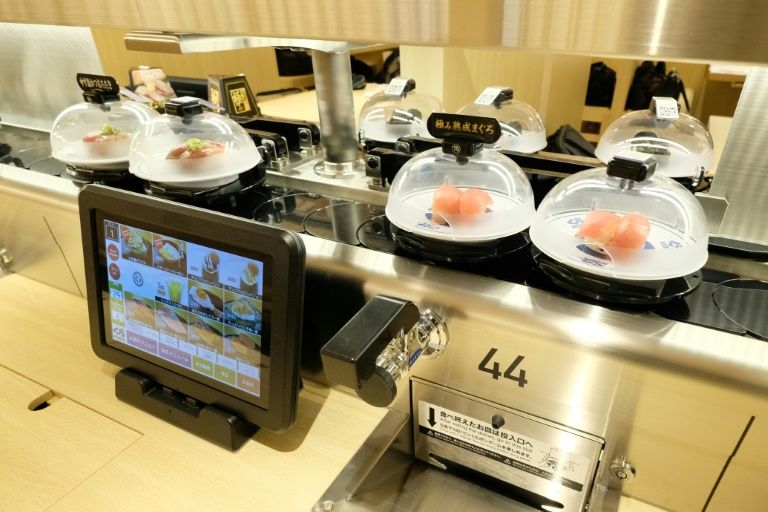
Japanese restaurant chain Kura Sushi plans to install cameras above its conveyor belts to monitor customers

NEW YORK — President Donald Trump purchased between $1 million and $5 million worth of shares in Kura Sushi USA Inc. on Feb. 2, 2026, according to financial disclosures released on May 14, 2026.

Kura Sushi USA operates the Kura Revolving Sushi Bar chain, known for its conveyor-belt system that delivers sushi plates to customers. The company is the U.S. subsidiary of Japan’s Kura Sushi Inc. and is listed on Nasdaq under the ticker KRUS.

The investment was part of a broader portfolio of stock trades executed in the first quarter of 2026. Trump’s disclosures also included significant positions in major technology companies such as Nvidia, Amazon and Apple, with total trades estimated between $220 million and $750 million during the period.

Kura Sushi USA had 27 locations in California as of May 2026, with additional sites in other states. Northern California restaurants include locations in San Francisco’s Stonestown Galleria, Cupertino and Berkeley. The chain has expanded using automation and technology to enhance the dining experience.

Advertisement

Shares of Kura Sushi USA rose following the disclosure of Trump’s stake. The stock gained more than 6% on the day the filing became public, with the Japanese parent company also seeing gains of up to 5.4%.

Trump has publicly expressed dislike for raw fish and sushi in the past. Despite this, the investment proceeded through third-party financial advisers managing his portfolio. A spokesperson for the Trump Organization stated that neither Trump nor his family members participate directly in day-to-day investment decisions.

Kura Sushi USA focuses on fresh ingredients prepared without artificial additives, following the Japanese parent company’s “muten” philosophy. The revolving sushi concept originated in Japan in 1977, and the U.S. operation has grown steadily since its establishment in 2008.

The company has outlined plans for further U.S. expansion, emphasizing technology and automation. It operates more than 90 locations nationwide as of May 2026, with additional sites in development.

Advertisement

The disclosure comes from the U.S. Office of Government Ethics. Presidents are required to file periodic financial reports detailing assets, investments and transactions. The forms use ranges rather than exact figures for privacy and reporting purposes.

Kura Sushi USA shares a name similarity with some Japanese technology firms, leading to occasional confusion in market commentary, though the company is strictly a restaurant operator.

The investment has drawn attention due to Trump’s known preferences and the relatively small size compared to his other holdings. Analysts noted it as one of the more unusual entries in his first-quarter portfolio.

Kura Sushi USA reported steady growth prior to the disclosure. The chain emphasizes interactive dining with touch-screen ordering and plate-counting systems that reward customers. It has introduced promotions such as Hello Kitty collaborations to attract families and younger diners.

Advertisement

The broader restaurant industry has faced challenges with labor costs and consumer spending, but conveyor-belt concepts have maintained appeal through efficiency and novelty. Kura Sushi continues opening new locations while refining its model.

No official comment from the White House addressed the specific investment in Kura Sushi. The Trump Organization maintains that all investments are handled independently to avoid conflicts of interest.

The disclosure reignited discussions about presidential investments and potential conflicts. Similar scrutiny has followed previous administrations regarding business holdings during terms in office.

Kura Sushi USA’s parent company in Japan holds a majority stake in the U.S. operation. The brand has expanded aggressively in the American market, targeting malls and urban centers with high foot traffic.

Advertisement

Financial filings show Trump executed more than 3,700 trades in the first quarter through advisers. The portfolio mix includes technology, defense and other sectors alongside the restaurant investment.

Industry observers will monitor how the investment performs and whether it signals any broader interest in consumer or restaurant stocks. Kura Sushi USA continues normal operations across its California and national locations.

The company’s California presence includes both standalone restaurants and mall-based outlets. Popular items feature fresh tuna, salmon and specialty rolls delivered via the signature conveyor system.

This marks one of several notable investments disclosed in Trump’s latest ethics filing. The full document details assets and transactions required for transparency during his presidency.

Advertisement
Continue Reading

Business

Stop Blaming Young People for Britain’s Jobs Crisis

Published

on

Stop Blaming Young People for Britain's Jobs Crisis

Britain’s largest online retailer has waded into one of the most uncomfortable debates in Westminster and the boardroom: who, exactly, is to blame for almost a million young people sitting outside the labour market?

The answer, according to Amazon’s UK country manager John Boumphrey, is not the young people themselves.

In a candid interview with the BBC’s Big Boss series, Boumphrey said the prevailing narrative that Generation Z lacks motivation, resilience or grit simply does not square with what his managers see on the warehouse floor. “We have to stop blaming young people,” he said, arguing that the education system is no longer “producing young people who are ready for work”.

Coming from the man who runs an operation employing 75,000 people across roughly 100 UK sites — half of them recruited straight out of school, college or unemployment — the intervention will sting employers who have spent the past 18 months grumbling about a “soft” younger workforce.

A million reasons to pay attention

The numbers behind Boumphrey’s comments are sobering. Almost a million 16- to 24-year-olds in the UK are now classified as NEET — not in education, employment or training — a figure that has hovered uncomfortably close to seven-figure territory for more than a year, according to the Office for National Statistics. At the same time, the headline unemployment rate ticked up to 5 per cent in the three months to March, from 4.9 per cent a month earlier.

Advertisement

For SME owners, who account for the lion’s share of first jobs in Britain, the picture is grimmer still. Hospitality has retrenched, graduate schemes have thinned and entry-level vacancies in retail have collapsed, leaving fewer of the rungs school leavers traditionally use to climb into work. Business Matters has tracked the trend through the year, including in our recent report on how the NEET rate is closing in on the one-million mark.

Boumphrey’s argument is that the diagnosis matters. “I think too often you read about young people that somehow they lack motivation, they lack resilience, they lack the will to develop skills,” he said. “That is not our experience. We work with some individuals who are probably furthest from work and that’s where we actually see the biggest transformation.”

The case for compulsory work experience

His proposed remedy is unfashionably practical: make a stint of work experience mandatory for every over-16 in the country.

He argues that even a single week on a real shop floor, in a logistics hub or in an office teaches the soft skills schools struggle to deliver. “If you get a T-level student, they come in for a week, they understand the value of teamwork, of communication and problem solving,” he said. “It’s not a motivation problem, it’s a system problem, and that requires a system response.”

Advertisement

The T-level itself, introduced in 2020 and structured around a mandatory industry placement of at least 315 hours, has been quietly absorbed by larger employers but remains a foreign concept to many smaller firms. As Business Matters has set out before, T-levels carry real upside for SME employers willing to host a placement, not least because they create a low-risk pipeline of pre-trained recruits.

The Amazon paradox

The irony, Boumphrey concedes, is that his own business cannot find enough of the workers it needs. Amazon has just over 100 premises in the UK, including 30 fulfilment centres, and is on course to add several more on the back of its £40bn UK expansion programme. Yet roles built around its newer robotic infrastructure — mechatronics engineers, robotics technicians, maintenance specialists — sit stubbornly unfilled.

“When Amazon introduced robots into its warehouses there was some concern they would replace people,” he said. “Actually, the reverse happened. We ended up employing more people. Mechatronics engineers, people who can actually maintain the robots, people who are technicians, they’re not roles that exist. We can’t find enough people to fill those roles.”

His proposed fix is regional and collaborative: business, local authorities and further education colleges sitting around the same table to map skills gaps in each travel-to-work area, rather than relying on a one-size-fits-all national curriculum.

Advertisement

Tax, scale and the political subtext

The Amazon UK boss could hardly avoid the perennial question of tax, given the group’s scale and its political profile. He claimed the company contributed “more than £5.8bn” in the UK last year and insisted Amazon pays “all the tax we’re meant to pay”. The wider contribution, he argued, must also be measured in the 75,000 jobs the company underwrites.

Amazon now accounts for roughly 30 per cent of all online sales in the UK and, earlier this year, overtook Walmart as the world’s largest company by annual revenue. That scale gives Boumphrey a louder microphone than most when he tells policymakers and fellow employers that the country’s youth jobs problem is structural, not generational.

For SME owners watching from the sidelines, the takeaway is uncomfortable but useful. The labour market is not short of young people who want to work. It is short of pathways that prepare them to do so — and, increasingly, short of employers prepared to build those pathways themselves.


Amy Ingham

Amy is a newly qualified journalist specialising in business journalism at Business Matters with responsibility for news content for what is now the UK’s largest print and online source of current business news.

Advertisement

Continue Reading

Business

Franco family expands Bullsbrook footprint with $15m sale

Published

on

Franco family expands Bullsbrook footprint with $15m sale

The $15 million purchase brings the family’s Bullsbrook portfolio to 150 hectares of land, following the reveal of Abadeen’s plans to deliver 3,000 lots in the area.

Continue Reading

Business

Government borrowing higher than expected in April

Published

on

Government borrowing higher than expected in April

Borrowing, the difference between spending and income from taxes, was £24.3bn last month.

Continue Reading

Business

South West firms pause investment plans as Iran war uncertainty bites

Published

on

Business Live

Higher fuel costs and supply chain pressures are among the challenges facing businesses

Bath City Centre

Bath City Centre(Image: Bath Chronicle)

Mid-sized businesses across the South West are reducing or pausing investment amid the global political uncertainty being caused by the Middle East conflict, according to new research.

Nearly three quarters of the businesses questioned in the survey by advisory firm BDO said supply chain pressures and higher energy and fuel costs were among the biggest challenges they faced.

The bi-monthly survey of companies with revenues of between £10m and £500m found material delays and costs, stock shortages and suppliers folding were a top concern for more than half (51 per cent) of leaders in the region.

Nearly three in five (59 per cent)of South West firms questioned said they intended to halt or reduce investment as they waited for the situation in the Middle East to stabilise.

Advertisement

As a result, the region’s companies are considering steps such as increasing customer costs (46 per cent) and reducing or not paying a bonus (46 per cent), BDO said.

More than two-fifths of the region’s business leaders are also looking to prioritise UK-based suppliers (41 per cent), and a further 36 per cent are considering onshoring or nearshoring, in a move that could provide a boost to South West manufacturing.

Andrea Bishop, regional managing partner at BDO in the South West, said: “The mid-market is vital to the South West and wider UK growth. Instead of focusing their sights on expansion, they are struggling to absorb the latest economic shock in an uncertain global and political backdrop.

“Mounting pressures around energy, fuel costs and supply chains, which were issues affecting businesses even before the conflict in Iran, are only adding to the sustained feeling of uncertainty amongst regional business leaders.”

Advertisement

According to BDO, South West business leaders are looking to the government for extra support in case of further escalation. Popular policy or support measures for the next 12 months include transport and fuel cost relief; measures to reduce employment costs; and dedicated supply disruption support such as grants for businesses materially impacted.

“The government must ensure it listens to the wants and needs of South West business leaders in this crucial segment,” Ms Bishop added.

“Addressing these challenges head on could be the key to providing the stability needed to reignite the region’s economic growth.”

Advertisement
Continue Reading

Business

Opinion: Breaking down the whats and whys

Published

on

Opinion: Breaking down the whats and whys

OPINION: WA could learn from planners in other states when it comes to managing growth.

Continue Reading

Business

Chancellor backs major housing and transport plans for South West and admits region has been ‘held back’ for ‘too long’

Published

on

Business Live

Rachel Reeves has agreed to proposals by mayor Helen Godwin announced at UKREiif

A CGI of the Brabazon New Town

A CGI of Brabazon New Town(Image: YTL)

The chancellor has backed new plans to create a mayoral development zone across north Bristol and South Gloucestershire after admitting the West Country has “had its potential held back” for “too long”.

Rachel Reeves made the comments at UK regeneration summit UKREiiF as the West of England mayor set out major proposals to grow the local economy and tackle the housing crisis by building tens of thousands of homes.

Mayoral development zones identify places with substantial growth potential and can be followed by the establishment of mayoral development corporations (MDCs) – statutory bodies set up by regional mayors to deliver regeneration and development in their areas.

There are currently nine MDCs in other parts of the country, including the London Legacy Development Corporation, which has overseen the regeneration of Stratford following the 2012 London Olympic Games, delivering 12,000 new homes.

Advertisement

The South West zone would cover the region’s emerging new town – Brabazon – and the West Innovation Arc, in South Gloucestershire and north Bristol.

“For too long the West of England has been denied investment,” the chancellor said.

“That’s why alongside mayor Helen Godwin, we’re backing a new mayoral development zone, meaning new homes and better transport links, boosting the region’s economy and giving the West of England an ambitious vision for the future.”

Chancellor Rachel Reeves has backed plans for a West of England mayoral development zone

Chancellor Rachel Reeves has backed plans for a West of England mayoral development zone(Image: Weca)

Ms Godwin has been banging the drum for the South West at the Leeds-based conference this week amid the publication of a new £17bn investment prospectus for the region.

Advertisement

“It’s time to make the most of devolution and more quickly deliver the right homes in the right places, to help tackle the housing crisis,” she said.

“Our region’s first mayoral development zone designation will be a major moment in making that vision a reality, and realising our enormous and exciting further potential as a place.”

The announcement comes just weeks after the English Devolution and Community Empowerment Act became law, and as the region’s political leaders look to use what powers they have to grow the West’s economy.

According to the West of England Combined Authority (Weca) any MDC would be developed through significant local and political engagement.

Advertisement

“We have so much to be proud of across the area shortlisted to become one of the government’s new towns, with our new Bristol Brabazon train station opening later this year ahead of the new Aviva Arena,” Ms Godwin said.

“Working together, this part of the West of England – with the right transport investment to connect the Science Park, Bristol Parkway station, and Brabazon – can deliver 40,000 new homes and the same number of new jobs over the longer-term.”

Housing secretary Steve Reed said the region’s first mayoral development zone would make “a huge difference” to people’s lives.

“It means working families across the West of England can truly benefit from real change – with thousands more affordable homes, well-paid jobs and greater transport links between communities,” he said.

Advertisement

When Bristol Brabazon train station opens this year, it will strengthen the connections between the West Innovation Arc growth zone and the Central Bristol and Bath growth zone’s Bristol Temple Quarter and Bath Riverside Innovation District.

Brabazon Park with views of the lake and YTL Live entertainment complex

Brabazon Park with views of the lake and YTL Live entertainment complex(Image: Handout)

Maggie Tyrrell, leader of South Gloucestershire Council, said the non-statutory designation presented “a real opportunity” to focus significant investment in homes, jobs, transport and other infrastructure.

“However, it will be vital that this is delivered in close partnership with the council and our communities, with the right infrastructure, strong local input, and clear governance,” she said.

With nearly £1bn already invested in Brabazon as part of its multi-billion-pound planned investment to transform the former Filton Airfield, YTL UK Group has secured planning permission for 6,500 new homes, three new schools and a major park, where more than 500 residents have already moved in.

Advertisement

Colin Skellett, chief executive of YTL UK Group, added: “We welcome the announcement of the MDZ as this will be key to unlocking the wider investment in the West Innovation Arc.

“Brabazon is fast becoming the most exciting multi-purpose destination in the West.”

This week, Bromford Flagship LiveWest (BFL) – a UK provider of affordable homes – and YTL Developments unveiled a new strategic partnership.

Robert Nettleton, chief executive of BFL, said: “Brabazon and the West Innovation Arc has enormous potential and demonstrates what can be achieved when regional leaders and housing providers work together around a shared vision for long-term growth.”

Advertisement

The news of the MDZ follows South Gloucestershire Council discussing the potential options to support the delivery of the emerging new town earlier in May, and comes ahead of an item at the mayor and council leaders’ next meeting on June 5.

Continue Reading

Business

Opinion: Real work starts after a win

Published

on

Opinion: Real work starts after a win

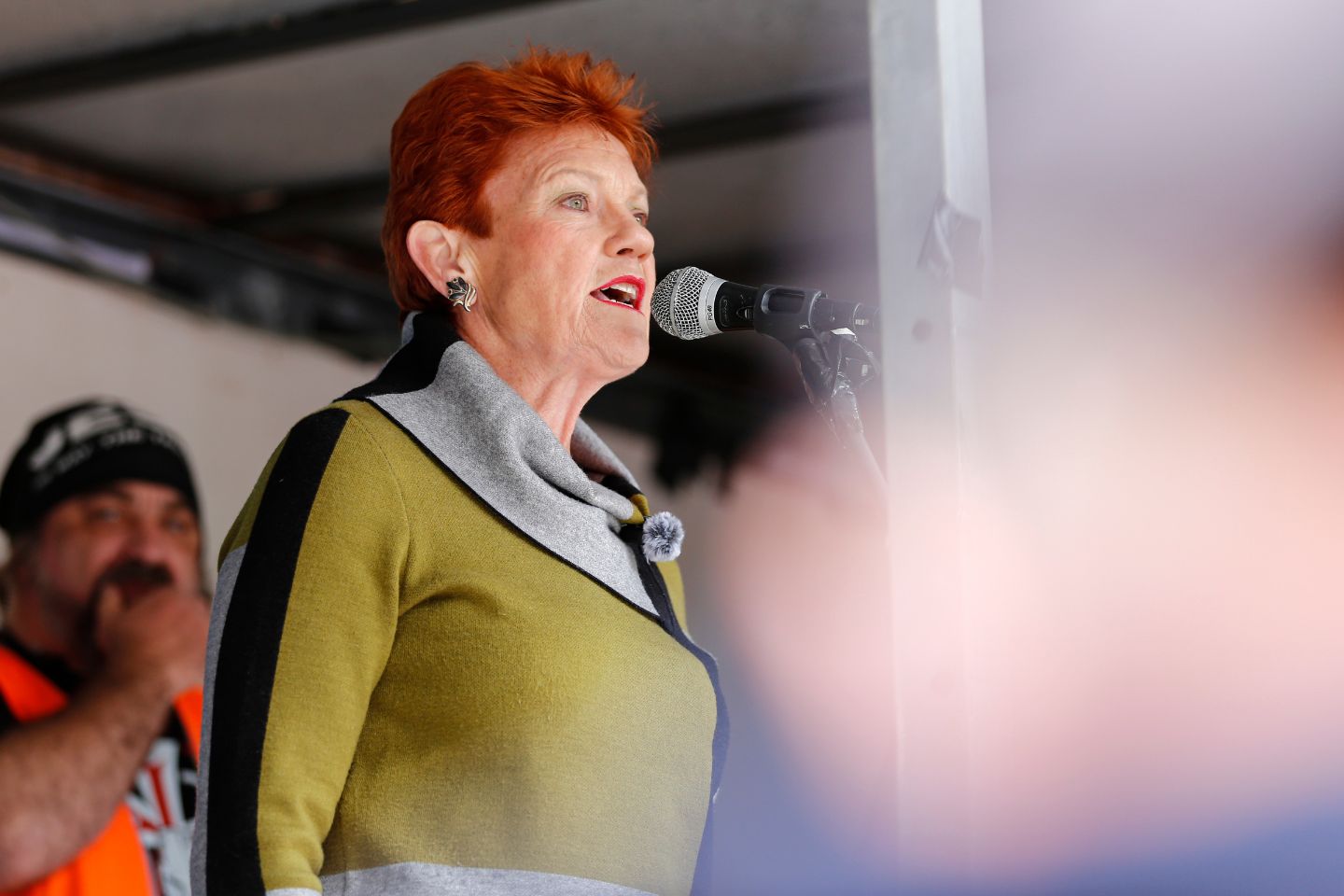
OPINION: Corralling a bunch of unhappy campers is an ongoing issue for Australia’s populist far-right party.

Continue Reading

Business

American Coastal Insurance: Fundamentals, Technicals Warrant A Buy (Rating Upgrade)

Published

on

American Coastal Insurance: Fundamentals, Technicals Warrant A Buy (Rating Upgrade)

American Coastal Insurance: Fundamentals, Technicals Warrant A Buy (Rating Upgrade)

Continue Reading

Business

InPost says FedEx-led $9 billion buyout offer to run from May 26 to July 27

Published

on

InPost says FedEx-led $9 billion buyout offer to run from May 26 to July 27


InPost says FedEx-led $9 billion buyout offer to run from May 26 to July 27

Continue Reading

Trending

Copyright © 2025