
Business
‘Ghost Job’ Ads Are Getting So Bad That Lawmakers Want to Ban Them


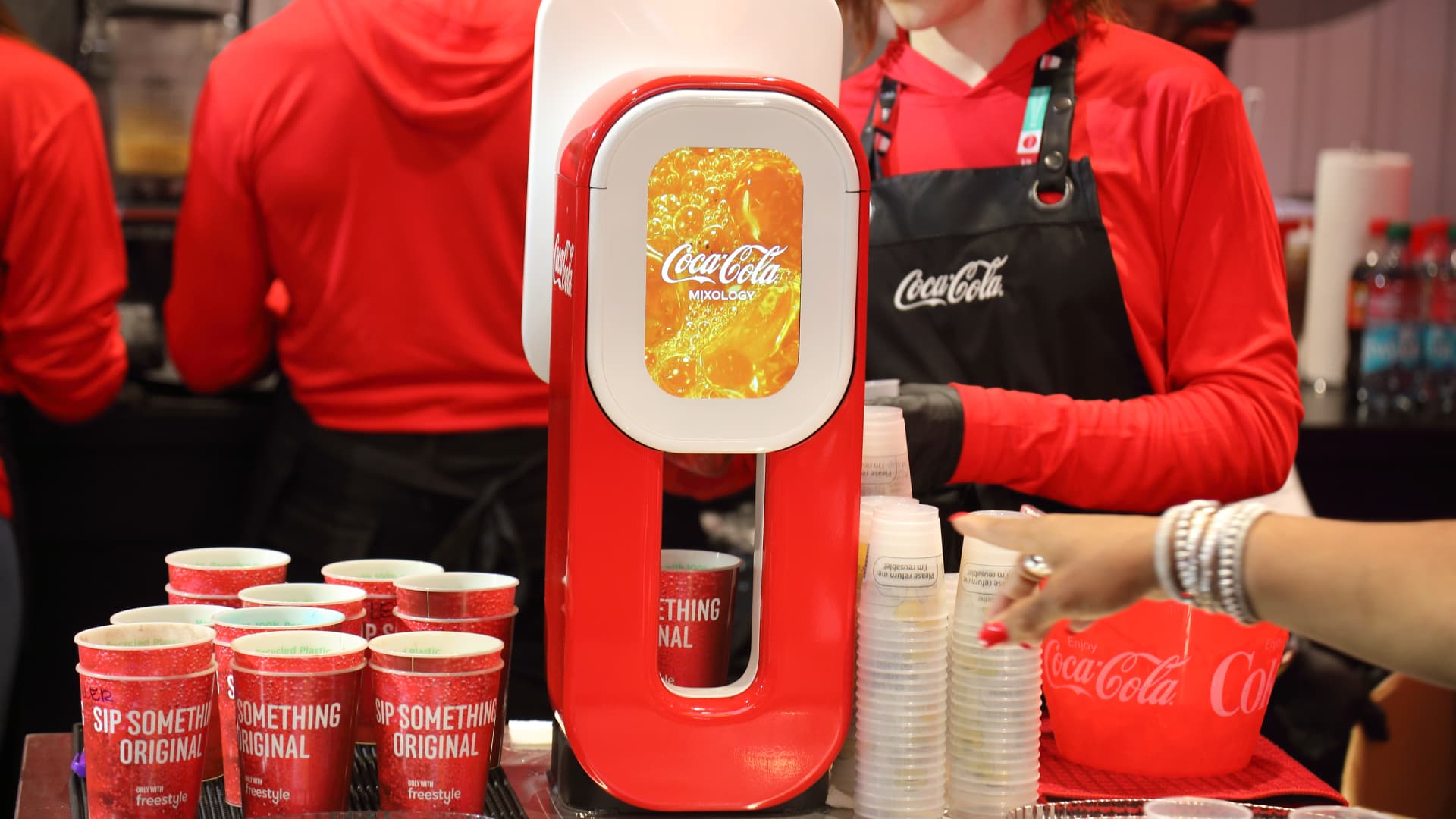
Coca-Cola used its new Mixology dispenser to make refreshers at the National Restaurant Association show.
Source: Coca-Cola
ATLANTA — Coca-Cola is branching out into new customizable drinks and trend-driven equipment as consumers — and food service operators — increasingly want more options.
Tucked away in an anonymous office park not far from its global headquarters here, Coke has been working on a flood of innovation at its secretive labs, including a way for its Freestyle drink dispensers to make dirty sodas, which combine pop with flavored syrups, cream or other ingredients. In partnership with AMC Theatres, it is testing a Micro Matic dispenser that can make brightly colored refreshers. And Coke has more white-label beverage options on the way, like an energy drink that can be customized by color and flavor.
For many restaurants, handcrafted drinks like refreshers or iced coffee have become an important way to drive traffic and sales, even as diners broadly cut their spending. In the second quarter of this year, beverage servings at restaurants outpaced both servings of food alone and food with beverages, according to Circana data. When consumers are away from home, a drink often represents more than hydration, particularly for Generation Z.
“Oftentimes these beverages are an opportunity to take a break, get some energy or protein, have a treat, at a lower price point,” David Portalatin, Circana senior vice president and food service industry advisor, told CNBC.
From McDonald’s to Wendy’s, longtime Coke customers have been expanding their beverage offerings to meet the shift in consumer behavior and boost their profit margins. As operators seek to add more drinks to their menus, Coke must add more convenient beverage options — or risk losing sales to a competitor.
“It’s our job to ensure that we’re providing unique experiences and beverages because it’s not a bonus now with consumers — it’s the norm, they expect it,” said Megan Tallman, Coke’s vice president of dispensed equipment and innovation for its North American business. “When you think about Gen Z, they are okay paying $10 for a drink that is craveable and that they can show on their Instagram or on TikTok, which is helping our customers drive margin and also beverage attachment.”
Beyond Freestyle
This July, Coca-Cola’s Freestyle drink dispenser celebrated its 17th anniversary.
“Honestly, if you fast forward to today, Freestyle is more relevant today than probably it was over a decade ago,” Tallman said, crediting the machine’s dozens of flavors.
Even with the variety it offers, Coke is still trying to evolve to keep up.
In the time since the Freestyle was introduced, the number of specialty beverage chains has exploded, offering customers nearly unlimited ways to customize their drinks, from sugar content to toppings. Market research firm Technomic tracks more than 100 different chains, with more than 41,000 locations across the U.S. combined, selling everything from coffee to juice to boba.
Ever since Freestyle began popping up in restaurants and movie theaters, the dispensers have poured more than 67 billion 8-ounce servings of beverages; Coke has been able to track them all, thanks to the equipment’s real-time data collection. That data is coming in handy now.
Inside its Equipment Innovation Center in Atlanta, a massive television screen displays real-time data showing what drinks dispensed by the Freestyle are trending, what time of day and where — from the region to the type of business. AHA sparkling water, for example, is trending up at office buildings and hospitals.
Insights from Freestyle dispensers also help the company discover new drinks that it can launch in grocery stores, like the limited-time Coca-Cola Orange Cream, which combines its namesake soda with vanilla and orange syrup.
“If we see that the flavors that we’re offering to consumers in food service are actually resonating — it’s the largest testing platform out there,” Tallman said.
But Coke has more ideas in store.
First is the Freestyle Mini, which initially launched in Europe. Intended for bars and restaurants with limited space, the dispenser holds up to 16 drink options, more than double the choices available in a traditional soda gun. Coke unveiled the new smaller machine at the National Restaurant Association Show in Chicago this spring, but the company has not yet sold it to customers in the U.S.
The Coca-Cola Freestyle Mini offers more drink options than the traditional soda gun found behind the bar.
Coca-Cola
And then there are other equipment ideas that aren’t as far along, inspired by Coke’s desire to branch out into dirty soda, refreshers and coffee.
To automate dirty soda, Coke has created a prototype that adds a dairy module to the classic Freestyle dispenser. Utah-based chain Swig takes credit for its invention of the dirty soda, although the trendy drink has now spread far and wide, from KFC restaurants to grocery store shelves.
The trend has helped to change soda’s image from a tired, mass-market drink to a handcrafted beverage that can be a treat.
“Gen Z is the first generation raised to believe that nothing you consume is neutral, so everything is either helping you or costing you,” said Matthew Greer, food, agribusiness and beverage analyst for Truist. “So, traditional soda does nothing for me, and it gives me 40 grams of sugar, so that fails the test.”
The rise of a dirty soda is boon for Coke, because pop is still its number one category. Coke’s sparkling soft drinks business, which houses soda brands like Sprite, Schweppes and Fanta, still accounts for 69% of the company’s overall unit case volume, even as other ventures like coffee and dairy-based beverages have grown. Coke’s namesake soda alone accounted for 47% of global unit case volume and 42% of U.S. unit case volume in 2025, according to a company filing.
Coke’s prototypical dispensed dirty soda comes with a preprogrammed recipe, allowing for little customization but eliminating mess. The prototype, which took roughly three weeks to create, keeps the recognizable drip down the sides of the cup, giving the dirty soda its trademark visual appeal.
Refreshing its offerings
Beyond the Freestyle, Coke is also testing Micro Matic “mixology” dispensers to make refreshers and iced coffee drinks.
Starbucks created the refresher back in 2012 to appeal to non-coffee drinkers who wanted a boost, especially in the afternoon, when traffic to its cafes slowed. Customers can pick their bases, flavors and even caffeine level. Refreshers now represent about $2 billion in annual sales for Starbucks.
Other restaurant chains, such as Panera Bread to Dunkin’, have taken note. Refreshers can be found on 8.1% of menus at national restaurant chains, according to Datassential.
“It’s almost, I think, a compliment, the fact that our Refresher business is being imitated in so many places,” Starbucks CEO Brian Niccol said on the company’s earnings conference call in late April.
For its part, Coke is hoping to make its mark on the refresher category — whatever that means.
“There’s no real definition for what a refresher is, so we’re trying to take a stand on what that can be and what function that we believe it should deliver to the guest,” said Sarah Kate Sims, director of dispensed innovation for Coca-Cola North America.
To Sims, a refresher is a “healthier” beverage that delivers some kind of pick-me-up without a traditional coffee caffeine base, instead using a green tea or a natural coffee extract as a base. And a refresher must look good, too, she said.
“So that’s what I’m working on for next year,” Sims said.
Inside ‘The Vault’
Coke’s innovation efforts aren’t restricted to equipment either. Across the parking lot from its Global Equipment Platforms office is “The Vault,” where the company tests new drinks.
“We bring a lot of our top customers here to showcase our innovation and mixology, but also to collaborate and problem-solve and tackle the biggest challenges in the business,” said Caroline Zambataro, collaboration architect at Coke.
One of those customers is Whataburger. Coke worked with the Texas-based burger chain for about 18 months on its line of “Whatafreshers,” which launched in July.
In some cases, consumers might not even realize that they are drinking a Coke product. For example, the company considers itself a “pioneer” of premium lemonade after launching a white-label version more than a decade ago.
More than 40,000 bubbler dispensers carry the drink, according to Tallman. That number includes Wendy’s, which sells it under “Dave’s Craft Lemonade,” after founder Dave Thomas.
Megan Tallman, vice president of dispensed equipment and innovation for Coca-Cola’s North American business.
Source: Coca-Cola
These days, lemonade is a popular base for a lot of refreshers and other brightly colored drinks. So, too, is Sprite, which ranked fifth among U.S. carbonated soft drink brands by 2025 sales volume, according to Beverage Digest.
But Coke is also working on a new blank slate for handcrafted beverages: a colorless, relatively unflavored energy drink that comes in frozen or liquid form. The company plans to launch the beverage with food service operators in the first half of 2027.
Energy drinks are a much smaller category than sparkling beverages, but the segment has the highest expected growth projections for the next 10 years, according to Tallman.
“We believe this solution really meets many consumers because more female consumers are interested in energy if it’s a handcrafted solution,” Tallman said.
Starting with Celsius, the conversation around energy drinks has changed, widening their audience and the number of occasions where they can be consumed, Truist’s Greer said. Rather than a beverage that you buy at the gas station for a pick-me-up, now energy drinks can become a part of some consumers’ workout routines.
Coke’s take on energy drinks will be designed to be served by employees to “limit consumption,” according to Tallman. A 12-ounce serving of Coke’s version contains 106 milligrams of caffeine, roughly the same amount as the same size can of Red Bull and half of the caffeine content of a Celsius can. Excessive caffeine consumption has become a liability concern after Panera Bread’s Charged Lemonade was named in at least two wrongful death lawsuits.
A golden opportunity
Broadly, Coke has been fielding more inquiries from food service partners these days about customizable drinks, according to Melinda Pritchett, director of innovation for Coke’s North American business.
“If you’re looking at what McDonald’s is doing with the handcrafted beverages, all of our customers are saying, ‘We should be in that as well,’” she said.
As the largest U.S. restaurant chain by system sales, McDonald’s playbook is often replicated elsewhere. In May, the fast-food giant expanded its McCafe menu in the U.S. to include refreshers and crafted sodas, including Coke’s Sprite and Hi-C, as part of its broader strategy to lean into beverages.
“In the U.S., [drink] sales are ahead of plan. Guest checks are higher, and we’re seeing new occasions emerge throughout the day,” McDonald’s CEO Chris Kempczinski said on the company’s earnings conference call earlier in August. “We’ve also seen strong food attachment rates on these orders.”
But the drink launch arrived during what was otherwise a lackluster quarter for McDonald’s U.S. business, which reported same-store sales growth of just 0.8%. The company has replaced its U.S. president in the hopes of accelerating its domestic division.
On Monday, McDonald’s further expanded its beverage options with the Red Bull Dragonberry Energizer. Red Bull is privately owned, with no connection to Coke. The chain’s choice to partner with a competitor rather than using an energy drink affiliated with Coke, like Monster, has sparked speculation about the state of the companies’ more than 70-year-long relationship.
“We have a fantastic and very long-standing partnership with McDonald’s, and that’s intact, right? We continue to be very happy with that partnership,” Coke CEO Henrique Braun said on the company’s earnings conference call in late April, answering an analyst question about the partnership. “… We do respect the decisions on other choices about their relationships with other companies.”
Ultimately, the most important part of any business relationship is the effect on sales.
When testing a new beverage with a food service partner, Coke tracks a couple of different performance metrics, like “incremental volume.” In other words, would a customer buy one of the new refreshers even if they wouldn’t otherwise buy a drink?
A survey of several dozen U.S. McDonald’s franchisees conducted by Kalinowski Equity Research found that more than half of operators said the specialty drinks are performing in line with their expectations.
“They are selling great, but most of it is a trade-off from other beverages,” one anonymous franchisee said in the survey. “Not many new transaction counts.”
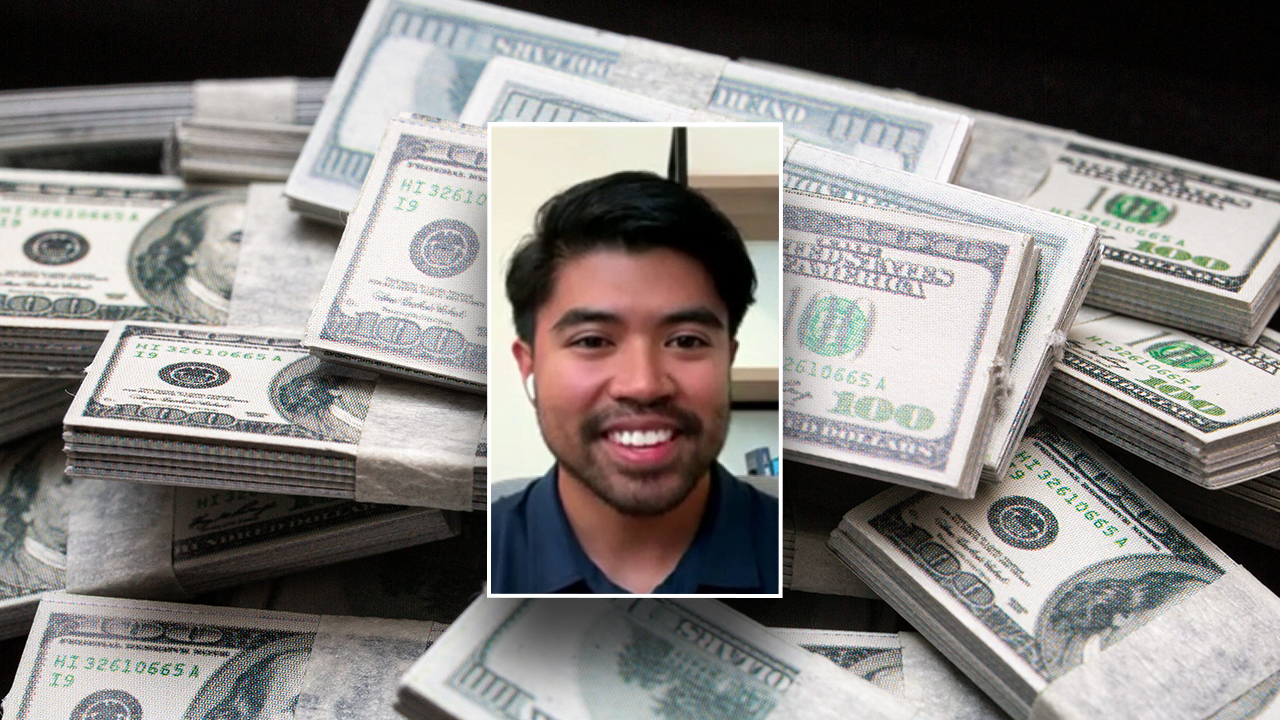
‘The Frugal Rich’ founder JC Rodriguez weighs in the financial value of college degrees and the power of young investing. Rodriguez shares key wealth-building insights for the next generation.
Building wealth may have less to do with looking rich and more to do with resisting the pressure to spend like you’re rich.
“The Frugal Rich” founder JC Rodriguez joined FOX Business’ Stuart Varney on “Varney & Co.” to discuss the habits he has observed among everyday millionaires, along with saving, investing and how young people can approach major financial decisions.
Financial influencer JC Rodriguez discusses the spending habits that America’s everyday millionaires have in common. (Romain Costaseca / Getty Images)
Rodriguez said a common trait among the wealthy people his content has spotlighted is a deliberate approach to spending, particularly when it comes to impressing others.
“We have spotlighted America’s everyday millionaires in our content and what we found is amongst America’s wealthy is they all have this aspect of frugality within their life that they’re always living… They’re very intentional about how they spend their money and they don’t care to impress others,” Rodriguez said.
Financial influencer Lydia Paternoster discusses money rules for young adults, homeownership and the mistakes that can derail wealth building on ‘Varney & Co.’
That same focus on intentional money management can begin well before someone reaches millionaire status. Rodriguez encouraged people to consistently direct part of their paycheck toward savings or investments, even when the amount is relatively small.
YOUNG MILLIONAIRE REVEALS THE WEALTH-BUILDING LESSONS HE LEARNED FROM BILLIONAIRES
“We always encourage people to pay yourself first. Whenever you get your paycheck, just set up an automation to move money from your checking into your high-yield savings account or into your brokerage account if you want to start investing… No matter where you are on your financial journey or your income, you can still just start off with $50, $100 towards saving and investing,” he said.
Financial influencer Angelo Castillo discusses his viral videos sharing investment advice with Gen Z. He breaks down his portfolio strategy, index funds and using AI for financial planning.
For those beginning to invest, Rodriguez also drew a distinction between long-term investing and activities he characterized as speculative, including sports betting and prediction markets.
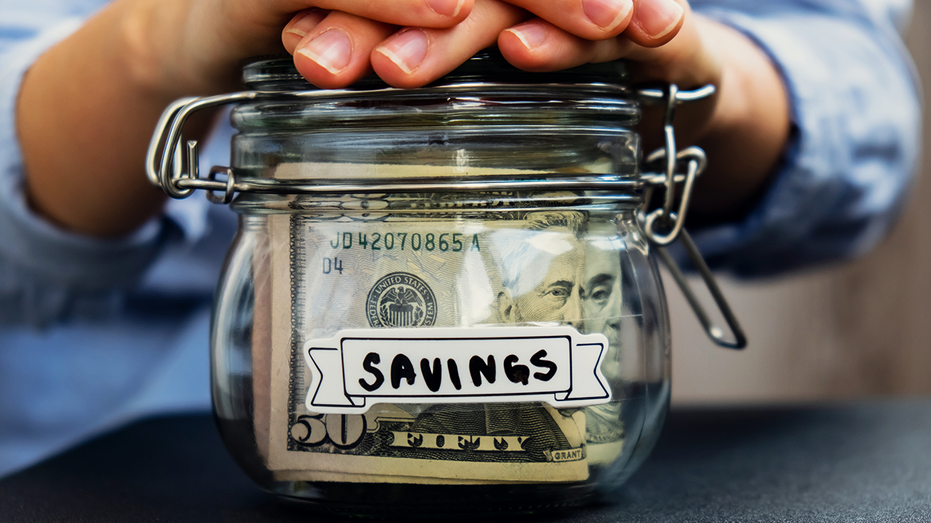
Financial influencer encourages Americans to consistently set aside money for saving and investing. (Anastasiia Yanishevska / Getty Images)
“I believe in good old low-cost, diverse index funds as a place to begin your investing journey… A lot of times prediction markets might be the fun thing to do, but isn’t the best approach to invest your money,” Rodriguez said.

Supernus Pharmaceuticals closed out 2025 with record revenue of $719 million. Five months later, on Aug. 3, it agreed to fold into a larger company altogether, striking an all-stock merger with Indivior Pharmaceuticals.
Four Growth Products Take Over
Supernus reported full-year 2025 revenue of $719 million, up 9 percent from 2024, with fourth-quarter revenue of $211.6 million, up 21 percent. Four products the company calls its growth drivers, Qelbree, GOCOVRI, ONAPGO and ZURZUVAE, combined for $521.8 million, up 40 percent from 2024.
Qelbree, the company’s ADHD treatment, brought in $304.7 million for the year, up 26 percent. GOCOVRI, for dyskinesia tied to Parkinson’s disease, added $146.8 million, up 12 percent. ONAPGO, a Parkinson’s motor-fluctuation therapy approved and launched in early 2025, generated $17.3 million in its first partial year. ZURZUVAE, a postpartum depression treatment that came with Supernus’s July 2025 acquisition of Sage Therapeutics, contributed $53 million in collaboration revenue for the roughly five months Supernus has owned it, including $32.8 million in the fourth quarter alone, an increase of about 187 percent over the same period a year earlier.
Chief Executive Jack Khattar said, “We made significant progress in 2025 against our strategic objectives, with record total revenues, including strong growth in combined revenues of our four growth products, the successful acquisition of Sage Therapeutics, Inc., and the U.S. Food and Drug Administration’s approval and launch of ONAPGO for Parkinson’s disease.”
The Legacy Business Keeps Shrinking
Trokendi XR and Oxtellar XR, the anti-seizure medications that once anchored Supernus’s business, fell to a combined $83.1 million in 2025 from $162.7 million in 2024, as generic competition ate into both products. Oxtellar XR alone dropped 59 percent for the year. Supernus told investors to expect the same two products to bring in just $40 million to $50 million combined in 2026, alongside a broader forecast of $840 million to $870 million in total revenue, a projected gain of 17 percent to 21 percent. ONAPGO is expected to more than double its 2025 total, to a range of $45 million to $70 million. The company ended 2025 with $308.6 million in combined cash and marketable securities, down from $453.6 million a year earlier after funding the Sage purchase.
A Merger That Roughly Triples the Company’s Size
Supernus disclosed the Indivior deal alongside its second-quarter 2026 results. Under the terms, Supernus shareholders will receive 1.5401 Indivior shares for each share they hold, leaving Indivior’s existing shareholders with about 56.5 percent of the combined company and Supernus shareholders with about 43.5 percent on a fully diluted basis. Indivior shareholders will also receive a $1 billion special cash dividend before the deal closes, funded by a $650 million term loan from Citibank plus cash on the combined balance sheet.
The combined company will keep the Supernus name and its SUPN ticker, headquartered in Rockville, Maryland, with Khattar staying on as chief executive and Indivior director Tony Kingsley chairing an eight-person board split evenly between the two companies. Management projects $2.2 billion in pro forma net revenue, $888 million in adjusted EBITDA and $125 million in annual cost synergies, with net debt of roughly $878 million and a net leverage ratio under 1x. The deal is expected to close in the fourth quarter of 2026, pending shareholder and regulatory approval.
Khattar said, “This merger brings together two complementary organizations with a shared vision of improving the lives of people living with central nervous system diseases.” Indivior Chief Executive Joe Ciaffoni said, “Bringing our two organizations together is intended to deliver greater value to the patients, healthcare communities, and stockholders we serve.”
The Market’s Mixed Verdict
Supernus shares jumped as much as 16 percent intraday on the announcement before settling to close up 3 percent on Aug. 3. The stock gave that back the next day, falling 6 percent on Aug. 4, a decline that landed on the same day as Supernus’s second-quarter earnings call and reflected investor uncertainty over how the exchange ratio and the special dividend redistribute value between the two shareholder bases. That reaction fits a pattern common after merger announcements: cost-savings estimates like management’s $125 million synergy target tend to get discounted until a deal closes and integration is underway.
Where Armistice and Other Holders Stand
Armistice Capital held 2.764 million Supernus shares as of a Feb. 17, 2026, filing, 4.82 percent of the company, a position down 2.54 percent from the prior quarter. That filing predates the Indivior announcement by more than five months and reflects Armistice’s holdings as of Dec. 31, 2025, before any merger-related trading.
Other large holders moved in different directions during the same period. BlackRock reported 8.7 million shares, 14.7 percent of the company, in a Feb. 12, 2026, filing, down 21 percent from its prior position. Vanguard held 6 million shares, 10.49 percent, essentially flat, in a Jan. 29, 2026, filing. State Street increased its stake 1.45 percent, to 2.2 million shares, or 3.82 percent, while Dimensional Fund Advisors cut its position 5.9 percent, to 2.7 million shares, or 4.7 percent. Supernus counted 339 institutional owners holding a combined 56.7 million shares as of the most recent filings compiled on Fintel.
A Wave of Consolidation in CNS-Focused Drugmakers
The Supernus-Indivior combination follows a run of deals joining companies focused on the central nervous system, where drugmakers with single approved therapies have increasingly sought scale by combining pipelines and commercial infrastructure rather than building both from scratch. Supernus itself followed that pattern in July 2025, when it acquired Sage Therapeutics to bring ZURZUVAE into its own portfolio rather than developing a competing postpartum depression treatment.
Armistice manages more than $3.6 billion across 323 positions as of its most recent quarterly filing, and a name like Supernus sits alongside a portfolio of similar single-catalyst and multi-catalyst biopharmaceutical bets. Its Supernus stake had already declined before the Indivior announcement, a data point that predates the deal rather than a reaction to it. The company’s next scheduled catalyst is the shareholder vote on the merger, expected ahead of a fourth-quarter close, with the combined entity’s first full quarter of results likely to arrive sometime in 2027.

BofA says CTA Treasury shorts stable, euro short-cover risk rises
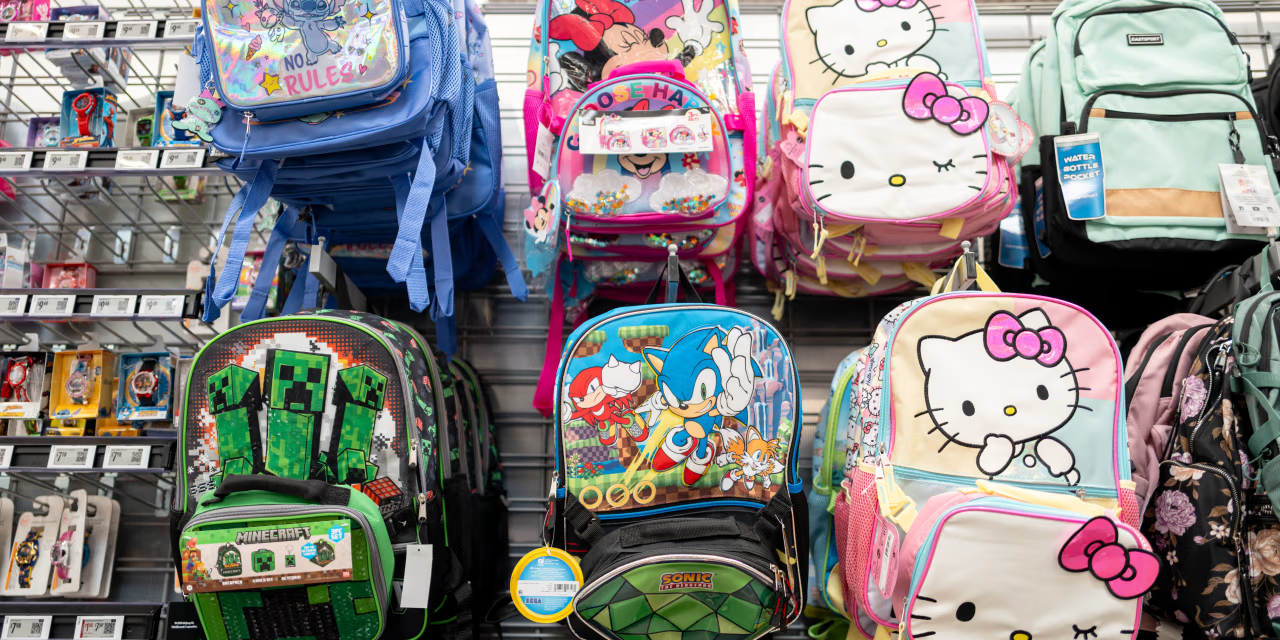

Today’s lesson: What the critical back-to-school season tells us about the state of the consumer, and in turn the economy.
Spending on K-12 and back-to-college combined is expected to hit a record of nearly $147 billion, according to the National Retail Federation. But in what may be a sign of the strains shoppers are under, they’re searching for cheaper goods and supplies. We’re still early in the season but we found this week that two of the nation’s biggest retailers, Walmart and Target, are racing to accommodate them.
Copyright ©2026 Dow Jones & Company, Inc. All Rights Reserved. 87990cbe856818d5eddac44c7b1cdeb8


Vishal Jadaun is the founder of Tickzen, a company that develops quantitative research tools, valuation frameworks, and stock analysis models for investors. With a background in computer science and a self-directed approach to investing, he evaluates companies primarily through financial statements, SEC filings, earnings reports, and management disclosures rather than market narratives or third-party opinions.His research on Seeking Alpha focuses on post-earnings and fundamental analysis of industrial, logistics, and technology companies. His process emphasizes separating one-time accounting items from underlying operating performance, assessing balance-sheet strength, and building independent estimates of intrinsic value.
Analyst’s Disclosure: I/we have no stock, option or similar derivative position in any of the companies mentioned, and no plans to initiate any such positions within the next 72 hours. I wrote this article myself, and it expresses my own opinions. I am not receiving compensation for it (other than from Seeking Alpha). I have no business relationship with any company whose stock is mentioned in this article.
Seeking Alpha’s Disclosure: Past performance is no guarantee of future results. No recommendation or advice is being given as to whether any investment is suitable for a particular investor. Any views or opinions expressed above may not reflect those of Seeking Alpha as a whole. Seeking Alpha is not a licensed securities dealer, broker or US investment adviser or investment bank. Our analysts are third party authors that include both professional investors and individual investors who may not be licensed or certified by any institute or regulatory body.

What drove gold higher this week?
Weaker dollar
The rally was supported by a softer US dollar and efforts by the US Treasury Department to keep longer-term yields under control. The dollar was headed for a weekly decline, making dollar-priced commodities more affordable for holders of other currencies.
US Treasury’s bond buyback move
The US Treasury has announced that it will double the size of buybacks of longer-dated Treasury securities over the next quarter to at least $4 billion per operation. Treasury Secretary Scott Bessent has also said the government could increase the repurchases further.
The move is aimed at helping keep longer-term Treasury yields under control. This is supportive for gold as lower bond yields reduce the opportunity cost of holding the non-yielding asset. Gold can also benefit if the move puts pressure on the US dollar, as a weaker dollar makes the metal cheaper for buyers holding other currencies.
Hopes of the US Fed holding rates
Traders are now pricing in a 67% chance that the Fed will keep rates unchanged next month, while the probability of a hike stands at 33%, according to the CME FedWatch Tool.

While gold is typically seen as a hedge against inflation, higher interest rates tend to reduce bullion’s appeal because it is a non-yielding asset.
Can gold hit record high again?
The recent pullback may have created an opportunity for investors to gradually start accumulating gold, according to Jefferies’ Global Head of Equity Strategy Christopher Wood and billionaire hedge fund manager John Paulson. Both suggest that the precious metal could be at the beginning of a long-term bull run.”As people lose faith in paper currencies, gold as an alternative will continue to grow,” Paulson said in an interview with CNBC. Paulson, whose bet against subprime mortgages became one of the most profitable trades in Wall Street history, turned his attention to gold in 2009.
He argued that fiscal and monetary stimulus following the financial crisis would eventually weaken the US dollar. Since then, gold prices have roughly quadrupled, crossing the $5,000 threshold before pulling back.
Paulson said demand for bullion is continuing to broaden, led by central banks adding to their reserves alongside rising interest from the private sector.
“Gold is becoming the most apt reserve currency in the world, replacing fiat currencies,” Paulson said in an interview with CNBC. “The demand from central banks, for instance, has continued to grow, as has the private sector.”
However, Paulson believes investors could benefit more from owning gold mining companies than bullion itself, particularly companies with large undeveloped reserves. “I think the greatest way to invest is to invest in early-stage gold stocks,” he said.
Christopher Wood, in his Greed and Fear report, said investors should once again begin accumulating gold and gold mining stocks after an extended pause.
Wood draws a parallel with the dot-com bust, arguing that when the Nasdaq-led technology sector drove the market lower, the bear market had by late 2000 spread beyond technology to other sectors as it became clear that the unwinding of the dot-com boom would affect the broader economy.
He believes a similar scenario could unfold if the AI capex boom implodes, which he says would happen if credit issues come to the fore.
This comes despite the broadening of the US equity market since the AI capex boom and the related increase in wealth effect in the US stock market, which have been among the main drivers of US economic growth over the past three years, along with easy fiscal policy.
The World Gold Council echoes this view. At current levels, gold prices are broadly aligned with a global backdrop of moderate growth, cooling but still elevated inflation, and expectations of further, but limited, central bank tightening. Under these conditions, gold is likely to remain relatively rangebound, within a range of ±5%.
However, the stage could be set for a possible breakout. On the upside, clear catalysts such as a worsening economy, a renewed geopolitical shock, a shift towards lower interest-rate expectations or a wave of dip buying could reignite gold’s momentum and push prices back towards US$4,500/oz or above. If the signals are strong, gold could move even higher.
(Disclaimer: Recommendations, suggestions, views and opinions given by the experts are their own. These do not represent the views of The Economic Times)

Taxi fares could go up by 8% in order to help drivers combat a rise in fuel prices and the cost of living.
The North Tyneside Hackney Carriage Association (NTHCA) has urged North Tyneside Council to approve an increase in fares, resulting in an average cost per mile of £5.52 for a three-mile journey.
The proposed rises apply to hackney carriages, which can be hailed on the street or at a taxi rank and not vehicles that can be pre-booked.
However Labour councillor John O’Shea said he wanted to look at a more “balanced arrangement, not the 8% that has been suggested” as residents in North Tyneside were “suffering as well with the cost of living”.
The NTHCA’s main reason for the request, alongside the cost of living, was due to high fuel prices and vehicle parts soaring in costs.
Extra charges, including fines for car theft, have been proposed to rise from £125 to £130, and charges for dogs and other animals, except service dogs, to rise from £3 to £4, according to the Local Democracy Reporting Service.
Councillors have voiced concerns about the proposed hike, particularly regarding North Tyneside’s elderly residents.
O’Shea said: “I just don’t think we have got the right balance.
“I notice that the taxi trade has had significant uplifts in fuel and insurance and things like that, so they’ve been suffering for a little while.”
He added there were “residents in North Tyneside who have been suffering as well with the cost of living”.
“My suggestion to the director of public health is to look at a balanced arrangement, not the 8% that has been suggested.”
The taxi fare proposals, pending approval from the director of public health, would be made public for at least 14 days and would open to objections.
Follow BBC North East on X, external, Facebook, external, Nextdoor and Instagram, external and listen to Radio Newcastle on BBC Sounds.

Hua Hin, a historically royal retreat in Thailand, is being repositioned as a world-class destination emphasizing tranquility, royal heritage, and quality tourism, with improved international air connectivity and strategic branding initiatives.
Discovering Hua Hin: Thailand’s Silent Beach Pioneer
Nestled south of Bangkok, alongside a stretch of sandy shoreline meeting the Gulf of Thailand, lies Hua Hin. This town quietly crafted the concept of a modern Thai beach holiday, not seeking the attention sought by Phuket or Pattaya. Hua Hin’s allure dates back nearly a century to its founding. Today, the Thai government is eager to share this hidden gem with the global audience, hoping to elevate its status as a premier destination.
Evolution from Royal Retreat to Global Icon
Hua Hin’s story began in 1834 when farmers, fleeing drought, settled along its coast, naming it Samo Riang. The coalescence of Hua Hin’s rise as a royal retreat began with the Southern Railway’s completion in 1911, linking the area to Siam’s aristocracy. With the encouragement of Prince Purachatra Jayakara, it transformed into a cherished escape. King Rama VII’s summer palace, Klai Kangwon, was finalized by 1929, cementing its place as a royal retreat. Today, the historic Railway Hotel survives as the Centara Grand Beach Resort & Villas, a nod to its prestigious past.
Embracing Hua Hin’s Future: Activities and Ambitions
Hua Hin is launching a significant initiative to redefine itself as a prestigious global hub. The government’s strategy emphasizes its serene ambiance, distinguished royal legacy, and appeal among discerning visitors. Key to this transformation is improving air connectivity, including expanding Hua Hin Airport and forging new international routes. Complementing the government’s efforts, tourism authorities focus on high-value visitors, marketing the locale’s balance of night markets, beachfront jazz festivals, and cultural landmarks like Wat Huay Mongkol. Hua Hin blends leisure and cultural richness, aspiring to welcome all explorers into its evolving narrative.
Source : Hua Hin is Where Royal Legacy Meets the Gulf of Thailand

Wordle players tackling Saturday’s puzzle have a five-letter word to solve for Aug. 22, 2026, marking game number 1,890 in the New York Times’ daily word-guessing franchise. Below are hints for those hoping to solve the puzzle themselves, followed by the full answer for anyone ready to check their work or simply looking to keep a winning streak intact.
Wordle challenges players to guess a five-letter word within six attempts, with the game providing color-coded feedback after each guess: green tiles indicate a correct letter in the correct position, yellow tiles indicate a correct letter in the wrong position, and gray tiles indicate a letter that does not appear in the word at all. The game has remained a fixture of daily online routines since its viral rise in early 2022, prized by fans for its simplicity, its once-a-day format, and the shareable emoji grids players post to compare results without spoiling the actual answer for others.
For those seeking hints before the full reveal, here is what today’s puzzle offers. Today’s Wordle answer contains just one of the five vowels, meaning players should expect a word built primarily around consonants. There are no repeated letters anywhere in the word, ruling out any double-letter combinations. The word begins with the letter “P,” a starting consonant that narrows the field considerably compared with more commonly used opening letters.
For players still working through the puzzle, one additional descriptive hint: today’s word refers to a small shellfish with ten legs and a long tail, commonly eaten as seafood and often confused with a similar, larger crustacean that shares a similar body shape.
Spoiler warning: The full answer to today’s Wordle follows below.
Today’s Wordle answer for Saturday, Aug. 22, 2026, puzzle number 1,890, is PRAWN.
The word refers to a shellfish that can be eaten, characterized by ten legs and a long tail, and commonly found on menus worldwide, particularly in dishes originating from coastal and Southeast Asian cuisines. The word’s single vowel, “A,” combined with the relatively distinctive consonant cluster of “P,” “R,” “W” and “N,” likely made the puzzle a moderate challenge for players who opened with guesses heavily weighted toward the game’s most frequently appearing letters, such as “E,” “A,” “R,” “O” and “T,” given that several of those common letters, including “E,” “O” and “T,” do not appear in today’s answer at all.
Yesterday’s Wordle answer, for puzzle number 1,889 on Aug. 21, was TRACE. That word shares three letters, “R,” “A” and “T,” with today’s answer, though arranged in a different configuration, offering an interesting point of overlap for players tracking recent trends in the game’s letter patterns across consecutive days.
For players looking to improve their overall Wordle strategy going forward, puzzle experts commonly recommend starting with words that contain a strong mix of frequently used vowels and consonants, since doing so maximizes the amount of information gained from the very first guess, regardless of what the day’s specific answer turns out to be. Commonly recommended opening words include ABOUT, ADIEU and IDEAL, each of which is frequently cited among puzzle solvers for its efficient coverage of common vowels and consonants across the English language.
Wordle has continued to draw a dedicated daily audience despite now being several years removed from its initial 2022 viral breakout, when the game rapidly spread across social media as players shared their daily results using the now-familiar green, yellow and gray emoji grid format. The New York Times acquired the game from its original creator, software engineer Josh Wardle, shortly after it first gained widespread popularity, and has continued operating it as a free daily puzzle within its broader suite of games, which also includes Connections, the Mini Crossword and other daily word and logic puzzles.
For players who missed today’s puzzle or are looking to track their performance over time, Wordle resets at midnight local time each day, meaning the same puzzle and answer apply to all players regardless of time zone, though the exact moment a new puzzle becomes available will vary depending on where a given player is located relative to their own local midnight.
Players hoping to avoid spoilers for future puzzles are generally advised to be cautious when browsing daily hint and answer coverage, since many outlets, including this one, structure their coverage with hints presented first and the full answer revealed only after an explicit spoiler warning, allowing readers to stop reading at whatever point suits their own preference for either solving independently or checking their work against the confirmed daily solution.
Article 2: NYT Connections
NYT Connections Answers and Hints for August 22, 2026: Solving Puzzle Number 1,168 Without Spoilers Now
Fans of the New York Times’ popular word-grouping game Connections have a fresh puzzle to work through for Saturday, Aug. 22, 2026, marking game number 1,168 in the daily franchise. Below are hints organized by difficulty level, followed by the complete answer set for anyone ready to check their work.
Connections challenges players to sort 16 words into four groups of four, with each group sharing a hidden theme or connection. The puzzle assigns a color-coded difficulty level to each category: yellow represents the most straightforward group, followed by green, then blue, with purple reserved for the trickiest and most conceptually deceptive category of the day. Players are allowed up to four incorrect guesses before the puzzle ends and the full solution is revealed automatically. The game, created by New York Times puzzle editor Wyna Liu, launched in beta in June 2023 and has since grown into the second-most-played puzzle in the Times’ games lineup, trailing only Wordle itself in overall popularity.
According to Tom’s Guide, which rates each day’s puzzle difficulty on a five-point scale using its own Connections Companion tool, Saturday’s puzzle scored a relatively low 1.3 out of 5, indicating an easier-than-average solve compared with earlier in the week.
Here are hints for each of today’s four categories, presented from easiest to hardest.
The yellow group, the most straightforward of the day, centers on a set of common workshop tools used for cutting and shaping wood. One hint offered by puzzle solvers described it simply as “handy,” a nod to tools used to drive nails, carve wood and smooth surfaces.
The green group focuses on a specific category of fruit, distinguished by compound names that each begin with a different descriptive word attached to the same base term. One clue offered for this category noted that “summer makes them sweeter,” pointing toward warm-weather produce.
The blue group centers on settings commonly found on an adjustable garden hose nozzle, the kind used to water plants or wash a car, with each answer representing a different spray pattern. A hint circulating among puzzle solvers specifically noted, “Don’t forget to water the plants.”
The purple group, traditionally the most conceptually challenging category each day, links four well-known cultural references that all share a common trailing word. According to hints shared by solvers, the connection draws from entertainment and pop culture more broadly, spanning references from television, film and music. One clue pointed players toward well-known “Girls” references, comparing the category to groups like Destiny’s Child or the ensemble cast of the sitcom “Living Single.”
Spoiler warning: The full answer set for today’s Connections puzzle follows below.
The complete answers for NYT Connections puzzle number 1,168, published Saturday, Aug. 22, 2026, are as follows:
Yellow Group — Carpentry Tools: CHISEL, HAMMER, PLANE, SAW
Green Group — Kinds of Melon: BITTER, MUSK, WATER, WINTER
Blue Group — Garden Hose Settings: CONE, JET, MIST, SHOWER
Purple Group — ___ Girls of Pop Culture: GILMORE, GOLDEN, MEAN, SPICE
The purple category proved to be the day’s trickiest grouping precisely because its connecting word, “Girls,” follows each answer rather than preceding it, and because two of the four words carried plausible alternative meanings that could easily mislead solvers. GOLDEN could reasonably be read as a descriptor tied to age or color, while MEAN might just as easily be interpreted as either “average” in a mathematical sense or “unkind” in a personal one, rather than immediately calling to mind the 2004 teen comedy film “Mean Girls.” GILMORE and SPICE, by contrast, tended to be recognized more quickly by solvers given their strong and specific associations with the television drama “Gilmore Girls” and the pop group Spice Girls, respectively.
Several of the puzzle’s other categories also included deliberate decoys designed to mislead solvers into premature groupings. The words PLANE and JET, for instance, could easily tempt players into forming an aviation-themed group together, when in fact PLANE belonged to the carpentry tools category and JET belonged to the garden hose settings group instead. Similarly, CONE might initially suggest an ice cream treat or a traffic cone to many solvers, rather than its actual role as a specific spray pattern setting found on garden hose nozzles.
For players hoping to preserve a winning streak or avoid accidentally spoiling the puzzle for themselves, Connections resets at midnight local time each day, consistent with the New York Times’ broader approach to its daily puzzle offerings, meaning today’s puzzle and its answers will remain the same for all players regardless of time zone, while a fresh puzzle becomes available starting at each individual player’s local midnight.

Coca-Cola innovation labs test dirty sodas, refreshers

Bitcoin and Ether bears get decimated amid 'squeeze-led' rally and Musk's X wants to pay creators in stablecoins: Crypto week in 5 stories

NBC’s 4-Part Sci-Fi Masterpiece Is Ready To Become a Weekend Binge





-

 Fashion18 hours ago
Weekend Open Thread: Madewell – Corporette.com
-

 Business4 days ago
SMA Solar Technology AG (SMTGY) Q2 2026 Earnings Call Transcript
-

 Tech4 days ago
Qwen3.8-27B runs frontier-class coding agents and reasoning locally, no cloud API required
-

 Crypto World5 days ago
OCC Greenlights Trump Family Crypto Firm for Trust Charter
-
 Tech7 days ago
Every fusion startup that has raised over $100M
-

 Crypto World5 days ago
NAVI Prime launches institutional lending framework on Sui
-

 News Videos2 days ago
Don’t Leave Your Financial Future To Chance | August 19, 2026
-

 Crypto World6 days ago
Data of 54K Wallet Users Leaked, Clarity Odds Just 10%: Hodler’s Digest, Aug. 16
-
 NewsBeat3 hours ago
The ‘Lucky Dip Gang’ causing carnage for clicks: After five thugs were killed speeding in the wrong direction on a motorway, GUY ADAMS investigates a sick new trend… and why police aren’t even allowed to pursue them
-

 Politics6 days ago
Britain is facing a housing disaster
-

 Tech6 days ago
What are the rumors about the AirPods Pro 4?
-

 Business7 days ago
Stephen Curry Trade Rumors Persist as Warriors Insist Superstar Remains Committed to Golden State
-
 Business6 days ago
Rebel Creamery files Chapter 11 with $23.8M Van Leeuwen judgment on appeal
-
 Crypto World5 days ago
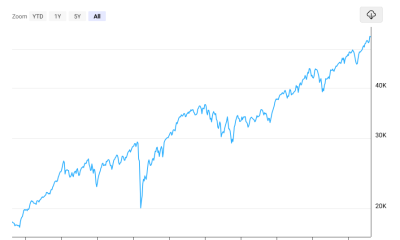
Dow’s 3-Year Winning Run Isn’t a Crash Signal, Still 49% Odds of Double-Digit Gains
-

 Business7 days ago
(VIDEO) Frozen 3 First Look Reveals Anna’s Wedding, Olaf’s New Love Interest And A Mysterious Villain
-

 Business4 days ago
Stock Market Today: Tech Futures Slide As Treasury Yields Jump; Nvidia, Micron, Sandisk Sell Off
-

 Fashion7 days ago
Fashion Bomb Daily On the Scene: The 2026 MVAAFF x ESPN White Party on Martha’s Vineyard
-

 Tech7 days ago
DeepSeek’s innovative harness treats everything as a plug-in
-
 Tech6 days ago
OpenAI’s new ChatGPT feature logs your keystrokes and stores them in plain text
-

 Politics7 days ago
Andy Burnham’s I’m Not Listening Tour
You must be logged in to post a comment Login