

Business
Gold, Art, Private Markets, and the Governance Needed to Manage Risk


Family offices in 2025 and beyond face a more complex investment environment than at any point in recent decades.
Rising geopolitical uncertainty, persistent inflation, and the digital transformation of financial markets have prompted leading family offices to rethink their asset allocation frameworks. Gold, art, private equity, and private credit are commanding larger allocations, while governance and human capital strategies are becoming as important as the investment decisions themselves.
Quick Summary
The most resilient future family office structures combine diversified alternative allocations with robust human capital programmes and data-driven decision-making. In 2025, the top alternative asset classes for family offices are private equity, private credit, gold and commodities, art and collectibles, and infrastructure.
Top picks for alternative investment strategies:
- Best overall: Multi-alternative mandate with dedicated governance committee
- Best for inflation hedge: Gold and commodity allocation of 5-10% of AUM
- Best for uncorrelated returns: Art and collectibles allocation through a specialist advisory
- Best for long-term returns: Private equity fund-of-funds with co-investment rights
- Best value: Private credit with floating-rate instruments
“The family offices that will thrive in the next decade are those that invest as seriously in their people and governance as they do in their portfolios.” (Campden Wealth Global Family Office Report 2024)
Comparison Table (Last updated: April 2026)
| Asset Class | 2024 Average Allocation (Family Offices) | Expected Return (5yr) | Liquidity | Key Risk | Last Verified |
| Private equity | 18% of AUM | 12-15% net IRR | Illiquid | Market cycle, manager | Apr 2026 |
| Private credit | 11% of AUM | 8-12% net IRR | Semi-liquid | Credit default | Apr 2026 |
| Gold and commodities | 5% of AUM | 4-8% annually | Liquid | Price volatility | Apr 2026 |
| Art and collectibles | 3% of AUM | 6-10% annually | Illiquid | Valuation, liquidity | Apr 2026 |
| Infrastructure | 8% of AUM | 8-11% net IRR | Illiquid | Regulatory, political | Apr 2026 |
| Hedge funds | 6% of AUM | 6-9% net returns | Semi-liquid | Strategy, fees | Apr 2026 |
How to Build an Alternatives Allocation for Your Family Office
The starting point for any alternatives strategy is the family office’s investment policy statement (IPS). The IPS should define maximum illiquidity tolerance, minimum return expectations, and ESG or ethical exclusions. Without a documented IPS, alternatives allocations risk being opportunistic rather than strategic.
Human capital is an equally critical variable. The future family office requires professionals who can evaluate complex, illiquid investments, manage manager relationships, and conduct ongoing monitoring across a diverse portfolio. According to the Agreus Group 2024 Compensation Report, the median salary for a family office investment analyst in Singapore is SGD 120,000-180,000 per annum, while a CIO commands SGD 500,000-800,000.
Data resilience is the third pillar. Family offices managing diversified alternatives portfolios must invest in reporting technology that aggregates data across custodians, fund administrators, and direct holdings. Real-time consolidated reporting is no longer a luxury; it is a governance requirement for responsible stewardship of multi-generational wealth.
Families new to alternatives should begin with a fund-of-funds or a managed account with an established manager, before progressing to direct deals or co-investments as internal expertise develops.
Q: How are family offices building and retaining human capital to ensure continuity and leadership across generations?
Human capital is the most underdiscussed risk in family office management. A portfolio of alternatives, private equity, and tokenised assets is only as good as the team managing it, and talent in the family office sector is scarce, competitive, and mobile.
The most successful future family office structures approach talent with the same rigour applied to investment selection. This means: formal job descriptions and reporting lines (not informal family relationships), compensation benchmarked annually against the Agreus Group or equivalent surveys, and career development plans that give investment professionals a visible pathway within the organisation.
Retention is the harder challenge. Family offices compete with private equity firms, hedge funds, and banks for the same talent pool, and cannot always match base compensation. The most effective retention tools are co-investment rights (giving professionals exposure to the upside of deals they originate), a genuine meritocratic culture, and the intellectual freedom that a family office offers relative to a large institution.
For generational continuity specifically, the transition from a founder-led to a professionally managed family office is a critical inflection point. Families that plan for this transition five to ten years in advance, by building institutional processes that are not dependent on any single individual, consistently navigate it more smoothly than those who treat succession as a single event rather than a multi-year programme.
The 7 Best Alternative Investment Strategies for Family Offices in 2025
- Private Equity: Core Alternatives Allocation
Best for: Family offices with 7+ year investment horizons seeking return premium over public markets
Quick Facts
- Global private equity AUM reached USD 5.8 trillion in 2024 (Preqin, 2025) | Top-quartile PE funds delivered 15-18% net IRR over 10 years | Family offices represent 10% of global PE LP capital
Pros
- Illiquidity premium over public equities
- Access to high-growth companies before IPO
- Co-investment opportunities reduce fee drag
Trade-offs
- 10-year lock-up periods | Capital calls require liquidity planning
Source: Preqin Global Private Equity Report 2025
Last verified: April 2026
- Private Credit: Floating-Rate Yield Enhancement
Best for: Family offices seeking income above investment-grade fixed income
Quick Facts
- Global private credit AUM exceeded USD 2.1 trillion in 2024 (Preqin, 2025) | Average net yields: 10-12% in senior secured, 12-15% in mezzanine | Default rates for senior secured private credit: 1.2% in 2024 (S&P, 2024)
Pros
- Floating-rate instruments provide natural inflation protection
- Senior secured structures offer downside protection
- Semi-liquid structures (3-5 years) suit medium-term planning
Trade-offs
- Illiquidity relative to investment-grade bonds | Credit underwriting expertise required
Source: Preqin Global Private Debt Report 2025; S&P Global 2024
Last verified: April 2026
- Gold and Commodities: Inflation Hedge and Safe Haven
Best for: Family offices seeking portfolio protection against inflation and geopolitical risk
Quick Facts
- Gold reached an all-time high of USD 3,100/oz in April 2026 (Bloomberg, April 2026) | Average family office gold allocation: 4-6% in 2024 | Gold has delivered a 10-year annualised return of 9.2% in USD terms (World Gold Council, 2024)
Pros
- Negative correlation to equities in risk-off periods
- Liquid: can be held via ETFs, futures, or physical bullion
- Creditor-proof store of value for estate planning
Trade-offs
- No income yield
- Storage costs for physical gold | Currency effects can dilute returns
Source: World Gold Council Annual Return Data 2024; Bloomberg April 2026
Last verified: April 2026
- Art and Collectibles: Uncorrelated Returns and Cultural Legacy
Best for: Family offices seeking uncorrelated returns and intergenerational wealth transfer vehicles
Quick Facts
- Global art market reached USD 65 billion in 2024 (Art Basel/UBS, 2025) | Blue-chip art indices delivered 7.6% annualised returns over 10 years (Artprice, 2024) | Art is increasingly used as collateral for private bank lending
Pros
- Low correlation to traditional financial markets
- Cultural and aesthetic value alongside financial return
- Can be lent to museums for reputational benefits
Trade-offs
- Illiquid with transaction costs of 15-25% (auction house commissions) | Valuation opacity requires specialist advisers
Source: Art Basel/UBS Art Market Report 2025; Artprice Global Index 2024
Last verified: April 2026
- Infrastructure: Inflation-Linked Long-Duration Returns
Best for: Family offices with 10+ year horizons seeking stable, inflation-linked cash flows
Quick Facts
- Global infrastructure fundraising reached USD 120 billion in 2024 (Preqin, 2025) | Infrastructure assets delivered 9.8% net IRR over 10 years on average | Singapore’s infrastructure fund market includes MAS-regulated core infrastructure funds
Pros
- Inflation-linked cash flows from regulated assets
- Government concessions provide revenue visibility
- Low correlation to equity market cycles
Trade-offs
- Very long lock-up periods (10-15 years) | Political and regulatory risk in emerging markets
Source: Preqin Global Infrastructure Report 2025
Last verified: April 2026
- Build Human Capital as a Core Strategic Asset
Best for: Family offices preparing for generational leadership transitions
Quick Facts
- Staff retention in Asian family offices is the top operational challenge cited by 61% of respondents (Campden Wealth, 2024) | Average tenure of family office investment professionals: 3.2 years | Structured talent development programmes reduce turnover by 25% (Mercer, 2024)
Pros
- Institutional knowledge retained across generations
- Investment quality improves with experienced teams
- Strengthens governance and compliance capabilities
Trade-offs
- Competitive compensation required to attract institutional-quality talent | Cultural integration of external professionals takes time
Source: Campden Wealth 2024; Mercer Talent Strategy Report 2024
Last verified: April 2026
- Invest in Data Resilience and Portfolio Analytics
Best for: Family offices managing complex, multi-asset, multi-custodian portfolios
Quick Facts
- 68% of family offices cite reporting fragmentation as a top operational risk (Family Office Exchange, 2024) | Implementation costs for integrated FO platforms: USD 100,000-500,000 | Real-time consolidated reporting platforms reduce monthly close time by 40-60%
Pros
- Single view of all assets, liabilities, and risk exposures
- Supports regulatory reporting in multiple jurisdictions
- Enables faster, more informed investment decisions
Trade-offs
- Significant upfront investment and implementation timeline | Requires data governance policies to maintain quality
Q: How are family offices developing an entrepreneurial mindset and data resilience strategies to future-proof their wealth across generations?
The future family office that will thrive across multiple generations is not simply a wealth preservation vehicle; it is an entrepreneurial organisation that treats capital deployment as an active, innovation-driven discipline. This means cultivating an internal culture where new ideas are welcomed, investment theses are challenged rigorously, and the next generation is empowered to pursue conviction-driven opportunities, not just inherit a static portfolio.
Data resilience is the operational backbone of this entrepreneurial mindset. A family office managing diversified alternatives across multiple custodians and jurisdictions is operationally vulnerable if its data infrastructure cannot keep pace with portfolio complexity. The failure modes are well documented: reconciliation errors between custodians, delayed identification of margin calls or covenant breaches, and an inability to produce consolidated performance reporting for the family council.
Building data resilience means investing in an integrated portfolio management platform, establishing data governance policies that define how information is collected, stored, and verified, and conducting annual operational risk reviews. Families that treat technology infrastructure as a strategic asset, rather than a back-office cost, are significantly better positioned to make fast, well-informed investment decisions and to onboard new asset classes such as tokenised securities as they mature into mainstream allocations.
Source: Family Office Exchange Technology Survey 2024
Last verified: April 2026
Best for Specific Use Cases
Best for Inflation Protection
Gold allocation of 5-10% combined with infrastructure and private credit with floating-rate features.
Best for Uncorrelated Returns
Art and collectibles with a specialist advisor, targeting blue-chip works with a 5-10 year hold horizon.
Best for Long-Term Return Premium
Private equity fund-of-funds with co-investment rights, diversified across geography and vintage year.
Best for Income Generation
Senior secured private credit with 3-5 year duration, targeting 10-12% net yield.
Best for Human Capital Development
Structured talent programme with competitive compensation benchmarking, mentorship, and career development plans.
FAQs
How much should a family office allocate to alternative assets?
There is no universal answer, but the Campden Wealth 2024 Global Family Office Report found that top-performing family offices allocated an average of 46% of AUM to alternatives, compared to 38% for the broader survey group. The appropriate allocation depends on the family’s liquidity needs, investment horizon, and risk tolerance, and should be documented in the investment policy statement.
Is art a mainstream investment for family offices?
Art is not mainstream in the sense of being held by all family offices, but it is a well-established allocation for UHNW families. The Art Basel/UBS 2025 Art Market Report estimates that collectors with net worth above USD 50 million allocate an average of 5-7% of their wealth to art and collectibles. Professional art advisers and specialist art finance products from private banks make the asset class more accessible.
How should family offices approach talent retention given competitive markets?
Retention requires a combination of competitive compensation (benchmarked annually against the Agreus Group or equivalent surveys), career development pathways, and a strong organisational culture. Family offices that offer co-investment rights or profit-sharing arrangements to senior investment staff report significantly higher retention rates, according to a 2024 Mercer study.
Where can I learn more about the future of family offices?
DBS Private Banking publishes the Future of Family Offices series, which covers emerging trends, governance best practices, and investment insights for family offices in Asia. Visit the DBS Future of Family Offices page for access to the latest research and events.
Learn more about DBS Private Banking family office services at https://www.dbs.com/private-banking/wealth-planning/future-of-family-offices-series.page
This article is for informational purposes only. It does not constitute financial, legal, or investment advice. Readers should verify all information with qualified professionals and consult official regulatory sources before making any financial or wealth management decisions.
Last updated: April 2026



New tool can be applied to ingredients, cuisines and nutrition.

Customers shop for eggs at an H-E-B grocery store on May 11, 2026 in Austin, Texas.
Brandon Bell | Getty Images
Egg prices are finally cooling in a welcome shift for consumers.
But now a new challenge is sending producers scrambling: they have too many eggs at a time when their input costs are rising.
As the market swings from last year’s avian flu-driven shortage to a growing oversupply, producers say lower grocery store prices are masking the squeeze from cost inflation.
“A year ago, all anybody could talk about was how expensive eggs were because a lot of birds were unfortunately lost,” said Thomas Flocco, CEO of egg producer Pete & Gerry’s.
“We now have an oversupply situation, which is why you’re seeing in some cases a dozen eggs below a dollar,” Flocco said.
Egg prices fell 44.7% year-over-year in March 2026, according to Bureau of Labor Statistics data, marking a sharp reversal from last year’s spike during the bird flu outbreak. The downturn follows a period of flock rebuilding, which industry officials say left producers wary of renewed shortages.
The price collapse is creating new pressure on margins at a time when producers can least afford it. Costs for inputs like feed, which spiked in 2022 and 2023, have been elevated for years, and now fuel prices have also spiked due to the war in Iran.
“All of those cost pressures are finding their way into our cost structure,” Flocco said. “About half of the cost of a dozen premium eggs is feed. Diesel is an immediate impact. We have to drive to get those eggs.”
American Egg Board President and CEO Emily Metz echoed those concerns, nothing that feed, fuel and labor costs “did not disappear” and continue to weigh on producers even as consumer demand returns and wholesale prices weaken.
The protein bump
The good news for producers is that demand is strong, according to Flocco, as shoppers increasingly prioritize protein in their diets.
More than four in 10 Americans say they are more focused on protein than they were five years ago, according to a new survey commissioned by Pete & Gerry’s. It also found two-thirds of Americans said they eat eggs weekly specifically for their protein, and many view whole foods like eggs as more nutritious than processed alternatives.
Shoppers seeking eggs at the grocery store lately have found them plentiful and at good prices. But for producers, even that strong demand has not been enough to negate oversupply.
“What we’re seeing in the market today is much more about supply recovery and timing shifts than any fundamental change in consumption,” said Sherman Miller, CEO of Cal-Maine Foods, the largest egg distributor in the U.S., in April.
Metz also said the current price weakness is not demand related.
“[Prices] reflect supply growing faster than demand can absorb, driven by flock recovery following [avian influenza], small farm growth and improved productivity,” said Metz.
That has not stopped President Donald Trump from taking credit for the drop in egg prices as he tries to promote affordability ahead of the midterm elections this fall.
“We got the prices down, way down,” Trump said Thursday. “Lower than it was four years before.”

Yoshinari Endo
Managing Executive Officer
Good evening, and good afternoon to everyone. My name is Endo. Thank you very much for taking the time to join us today despite your busy schedule. As of this April, I took over the CFO role from my predecessor, Mr. Okada. As the new CFO, I intend to continue contributing to the enhancement of corporate value while placing great importance on dialogue with capital market participants. So I look forward to our continued relationship.
I would like to get right into the details, but before that, I will briefly explain how we are disclosing the financial results for this period.
As explained at the IFRS briefing held last September, Tokio Marine Holdings have transitioned its accounting standards to IFRS at the end of fiscal year ’25, and we have revised the definitions of KPIs such as adjusted net income accordingly. Since this financial reporting timing is a transitional period, we will explain results for fiscal ’25 using JGAAP-based accounting and figures according to old definitions to announce the fiscal ’26 forecast, we will be using IFRS-based accounting and newly defined figures.
Additionally, we have revised our presentation material format. We have referenced materials from European peers who have already adopted IFRS, materials, which I believe you are all familiar with, with the aim of presenting our performance in a more simple and easy-to-understand manner. Detailed data is available in the Group Supplemental Data in Excel format available on our website, and we hope that you will find it useful.
Apologies for the lengthy introduction. Please turn to Page 1 of the material. Here, we are presenting our core KPIs, EPS and ROE. To allow you


Company’s application center built to support demand for high-protein, prebiotic products.

CUPERTINO, Calif. — Apple is preparing the iPhone 18 Pro and iPhone 18 Pro Max for a September 2026 launch alongside its first foldable iPhone, according to multiple supply chain and analyst reports. The flagship Pro Max model is expected to feature incremental design refinements, a more advanced camera system and improved performance while retaining the core 6.9-inch display size from its predecessor.
The devices will mark Apple’s continued focus on premium hardware amid a shifting release schedule. Bloomberg has reported that the Pro models and foldable will arrive in fall 2026, with standard iPhone 18 variants potentially delayed to spring 2027.
Design rumors indicate the iPhone 18 Pro Max will closely resemble the iPhone 17 Pro Max, with a triple-lens rear camera system on a raised plateau. Dummy units leaked in April 2026 showed a slightly thicker camera bump to accommodate potential new components, with the overall device expected to be marginally thicker and heavier than the current Pro Max to support a larger battery.
The front display is rumored to feature a reduced Dynamic Island cutout. Reports suggest the notch housing Face ID sensors and the front camera could shrink by around 25%, measuring approximately 14.98 mm wide compared to previous generations. Some early speculation about fully under-display Face ID has been tempered by later reports indicating the feature may be delayed.
Color options are a point of interest. Sources point to a new “Dark Cherry” finish as the signature hue for the Pro lineup, described as a deep wine-like red. Other expected colors include Light Blue, Dark Gray and Silver. Apple is reportedly forgoing a black option for a second consecutive year. Bloomberg’s Mark Gurman has reported testing of a deep red variant.
Camera Upgrades Center on Variable Aperture
The most significant camera rumor involves a variable aperture mechanism for the main 48-megapixel Fusion lens on at least one Pro model, likely the Pro Max. This feature, similar to DSLR lenses, would allow dynamic adjustment of light intake and depth of field. Korea’s ETNews reported in April 2026 that supply chain production for the variable aperture system had begun. Analyst Ming-Chi Kuo previously indicated the upgrade would arrive on iPhone 18 Pro models.
The rear camera system is expected to maintain 48-megapixel resolution across main, ultrawide and telephoto lenses, with the periscope telephoto offering around 4x optical zoom. The thicker camera array in dummy units, with lenses protruding further and increasing in diameter, supports the variable aperture implementation.
Additional camera enhancements under consideration include improved telephoto performance, though specifics remain limited in current reporting.
Performance: A20 Pro Chip and Efficiency Gains
Powering the iPhone 18 Pro Max will be Apple’s A20 Pro chip, manufactured on a 2-nanometer process node by TSMC. This represents an advancement over the A19 Pro in the current generation, promising better speed, efficiency and AI capabilities. Reports suggest all iPhone 18 models, including Pro variants, could feature 12GB of RAM.
Apple is also expected to introduce its in-house C2 modem, succeeding previous iterations and potentially improving connectivity, including satellite features, while helping control costs.
Display technology may see refinements with LTPO+ panels for enhanced power efficiency and battery life. The 6.9-inch Super Retina XDR display on the Pro Max is expected to retain 120Hz ProMotion refresh rates.
Battery Life Improvements Anticipated
One of the more concrete upgrades involves battery capacity. The iPhone 18 Pro Max is rumored to pack a cell in the 5,100-5,200 mAh range, up from approximately 5,088 mAh in the iPhone 17 Pro Max. Leaker Digital Chat Station and other sources have pointed to the increase, tied to the slightly thicker chassis. This would support longer usage times despite more demanding processing and camera features.
The added thickness and weight — potentially approaching 243 grams — represent a trade-off for capacity, according to reports analyzing dummy units.
Pricing Strategy Expected to Hold Steady
Analysts Jeff Pu of GF Securities and Ming-Chi Kuo have indicated Apple plans an “aggressive pricing strategy,” likely holding starting prices at $1,099 for the iPhone 18 Pro and $1,199 for the Pro Max with 256GB storage. This approach would absorb costs associated with higher RAM and new components to maintain competitiveness.
Storage tiers are expected to mirror current models, ranging from 256GB to 1TB or higher options.
Context Within Apple’s 2026 Lineup
The iPhone 18 Pro Max arrives as part of a broader strategy that includes Apple’s first foldable iPhone, often referred to as iPhone Ultra or iPhone Fold. This device is expected to feature a clamshell design with a roughly 5.5-inch outer display and 7.8-inch inner panel, targeting a premium price above $2,000. Production challenges with the hinge have been noted, but reports suggest a September announcement remains on track, with possible shipping delays into late 2026.
The split launch schedule reflects Apple’s efforts to manage supply chains and differentiate product tiers.
Current rumors are based on supply chain leaks, dummy unit photos, analyst notes and media reports as of May 2026. Apple has not commented on unreleased products, and final specifications could change before the official unveiling, typically held in early to mid-September.
Industry observers anticipate the Pro models will emphasize camera flexibility, processing power and battery endurance as key differentiators in a mature smartphone market. The variable aperture system, if implemented, would represent a notable first for iPhone photography, offering users more creative control akin to dedicated cameras.
As development continues, further details on software integration with iOS 27, Apple Intelligence enhancements and exact material finishes are expected to emerge in the coming months. Supply chain activity is already ramping up, signaling Apple’s commitment to these features for the 2026 flagship.
Business
Rigetti Computing RGTI Stock Surges on $100M US Government Quantum Deal Amid 2026 Growth Push

NEW YORK — Rigetti Computing Inc. shares jumped more than 30% on May 21, 2026, following the announcement of a letter of intent with the U.S. Department of Commerce for up to $100 million in funding to advance superconducting quantum computing research.
The Berkeley, California-based company, listed on Nasdaq under the ticker RGTI, develops full-stack hybrid quantum-classical computing systems. As of mid-morning trading on May 22, 2026, shares traded around $22, within a 52-week range of approximately $10.30 to $58.15.
Rigetti signed the letter of intent with the Department of Commerce under the CHIPS Act for funding over three years. The agreement includes the department receiving an equity stake in Rigetti matching the funding amount. The funds target research and development projects addressing scaling and technical challenges in superconducting quantum computers.
“We are honored that the U.S. government is seeking to partner with Rigetti to accelerate the pace of quantum computing commercialization and to bolster U.S. leadership in this revolutionary field,” Rigetti CEO Subodh Kulkarni said in the May 21 announcement. “This investment will allow us to tackle key scaling bottlenecks more rapidly and get us closer to utility-scale quantum computing.”
Q1 2026 Financial Results
Rigetti reported first-quarter 2026 revenue of $4.4 million, compared to $1.5 million in the first quarter of 2025, representing a 193% year-over-year increase. The revenue beat analyst expectations around $4.1 million and was driven primarily by on-premises Novera quantum processing unit deliveries and government and research contracts.
Gross margin for the quarter stood at 31%, compared to approximately 30% in the prior-year period. Operating loss totaled $26.0 million, versus $21.6 million in Q1 2025. Operating expenses rose to $27.3 million from $22.1 million, reflecting continued investment in research and development, engineering, fabrication and system integration.
On a GAAP basis, the company recorded net income of $33.1 million, or a diluted loss per share of $0.06, primarily due to a $53.7 million non-cash gain from the fair value adjustment of derivative warrant liabilities. On a non-GAAP basis, excluding stock-based compensation and fair value adjustments, Rigetti reported a net loss of $14.7 million, or $0.04 per diluted share.
The company ended the quarter with a strong cash position supporting its roadmap. Rigetti has highlighted progress on its 108-qubit system, with general availability noted in recent updates.
Analyst Outlook and Valuation
As of May 2026, analysts maintain a Moderate Buy consensus rating on RGTI. The average 12-month price target stands around $29 to $31, with individual targets ranging from a low of $15 to a high of $40.
For full-year 2026, analysts estimate revenue of approximately $21.3 million to $23.6 million, representing a significant increase from 2025 levels. Revenue estimates for 2027 reach around $44 million.
Technology Roadmap and Milestones
Rigetti has outlined a roadmap targeting quantum advantage in the coming years. The company achieved record quarterly revenue in Q1 2026 tied to system deliveries, including Novera QPUs. It continues development of higher-qubit systems, with plans for scalable superconducting architectures.
In January 2026, Rigetti secured an $8.4 million order from India’s Centre for Development of Advanced Computing for a 108-qubit quantum system. Earlier, in September 2025, the company announced purchase orders totaling about $5.7 million for two Novera systems, with deliveries expected in the first half of 2026.
Rigetti has pursued international expansion, including plans to invest up to $100 million in the United Kingdom for a UK-based quantum system with over 1,000 qubits in the next three to four years.
Partnerships and Industry Context
The company maintains collaborations with ecosystem partners, including work on error mitigation and correction. Strategic agreements, such as the one with Quanta Computer announced in early 2025, involve mutual investments exceeding $100 million each over five years to accelerate development and commercialization.
Rigetti operates in a competitive quantum computing sector alongside companies like IonQ and D-Wave. Broader government interest in quantum technologies, including reports of a $2 billion initiative involving equity stakes, has driven recent sector-wide stock movements.
Stock Performance
RGTI shares have shown significant volatility. The stock posted strong year-to-date and one-year gains through May 2026, though it has traded well below its 52-week high. Market reactions to quarterly results have varied, with shares declining after the Q1 2026 report before rebounding on the government funding news.
Rigetti’s business remains in a growth phase with ongoing net losses on an operating basis. Revenue has been described as lumpy due to the timing of system deliveries and contracts. The company continues to invest heavily in research and development to advance its hardware and error-correction capabilities.
Risks and Forward Outlook
Company filings and reports note execution risks related to technical challenges in scaling quantum systems, competition, and dependency on government and research contracts for near-term revenue. Profitability on a non-GAAP basis remains a focus as operations scale.
Rigetti is scheduled to participate in industry events, including a fireside chat at the Canaccord Genuity Virtual Quantum Symposium in May 2026. Further details on its three-year roadmap and system deployments are expected in upcoming updates.
As of May 2026, Rigetti’s market capitalization stood around $5 billion following recent trading activity. The company has emphasized its position in hybrid quantum-classical computing as demand for advanced computing capabilities grows across research, government and potential commercial applications.
This report is based on company announcements, financial filings and analyst data available through May 22, 2026. Quantum computing remains an emerging field with long development timelines, and actual results may differ from projections.

Why is Navitas Semiconductor stock surging today?
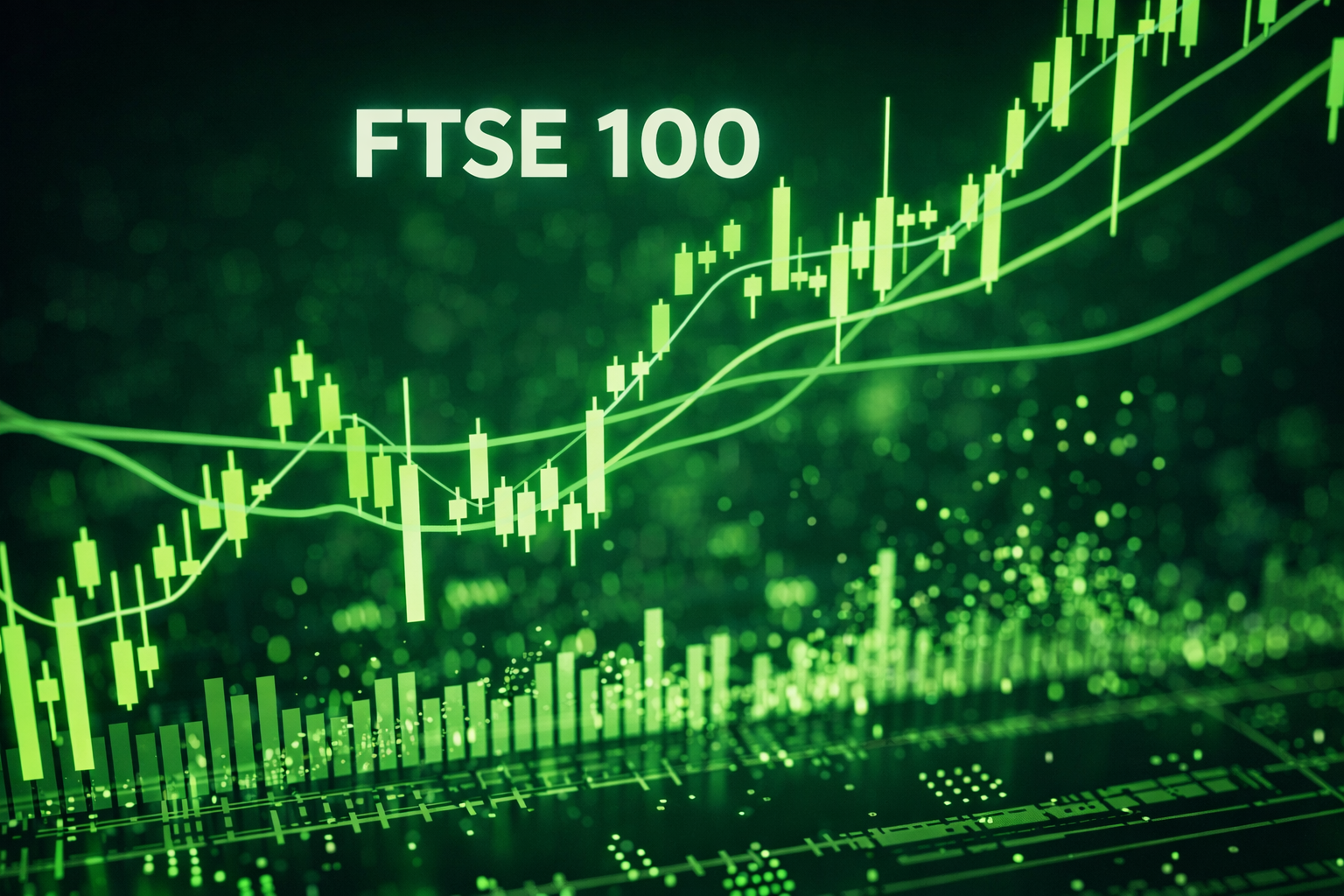
LONDON — The FTSE 100 rose 0.16% to 10,460.46 on May 22, 2026, extending gains amid strength in energy stocks as the blue-chip index moved to end a four-week losing streak.
The benchmark closed the previous session at 10,443.47. It traded in a range between 10,435.53 and 10,497.22 during the session, according to data from the London Stock Exchange. Trading volume and broader market activity reflected ongoing investor focus on commodity prices and central bank expectations.
The index has shown resilience in 2026 after posting strong performance in 2025, when it gained nearly 22%, its best annual return since 2009. The FTSE 100 crossed the 10,000-point mark for the first time in January 2026 and reached an all-time high closing level of 10,910.55 on Feb. 27, 2026.
Sector and Stock Movements
Energy stocks led gains on May 22 amid higher oil prices linked to geopolitical developments in the Middle East. BP rose 2.92%, Shell increased 2.32% and Centrica gained 2.53%. Other risers included Tesco and British American Tobacco.
Miners and industrial names showed mixed performance. Antofagasta fell 4.94% and Persimmon dropped 3.66%. Housebuilders faced pressure amid broader market dynamics.
Financial stocks provided support, with several banking and insurance names contributing to the positive close. The FTSE 250, which includes more domestically focused companies, rose 0.57% on the day.
Economic and Geopolitical Context
Data released earlier in the week eased expectations for an imminent Bank of England rate hike, providing relief to investors. UK retail sales and borrowing figures remained in focus as the central bank monitored inflation pressures.
Geopolitical developments involving the U.S. and Iran influenced commodity markets, with higher oil prices supporting energy producers while raising inflation concerns. The closure of the Strait of Hormuz has been cited in reports as a factor driving energy costs.
The FTSE 100’s composition, with significant exposure to international revenue streams from mining, energy and financial sectors, has helped it outperform some global peers in recent periods. The index derives a substantial portion of earnings from outside the UK.
Year-to-Date and Historical Performance
Through mid-May 2026, the FTSE 100 has recorded gains of around 3% to 5% year-to-date, building on its 2025 performance. This contrasts with periods of underperformance in prior years relative to U.S. indices.
The index remains below its February 2026 peak but has recovered from recent monthly lows. Over the past 12 months, it has posted gains exceeding 19% according to some tracking data.
Analyst and Market Commentary
Reports indicated the FTSE 100 was positioned to snap a four-week losing streak as rate hike fears moderated. Pre-open trading on May 22 showed positive sentiment amid U.S.-Iran peace hopes.
Sector rotation has favored financials, miners and energy names in 2026. These areas benefited from rising metals prices, expectations of stronger global growth and anticipated interest rate adjustments.
Broader Market Environment
European equities traded mixed on the day, with the STOXX 600 showing limited movement. The German DAX declined 0.5%. U.S. markets were monitored for signals on Federal Reserve policy and corporate earnings.
UK gilt yields and currency movements influenced trading. The pound’s level affected multinational earnings translation for FTSE 100 companies.
Constituent Highlights
Among notable movers, Croda International and Games Workshop featured in daily risers on specific corporate developments. BT Group showed gains in some sessions amid sector activity.
On the downside, companies such as Convatec Group and Auto Trader reported pressure following business updates and results that missed expectations in prior sessions.
The FTSE 100 includes 100 of the largest companies by market capitalization on the London Stock Exchange. Its constituents are reviewed quarterly, with adjustments impacting index weighting.
Outlook Factors
Market participants continue to watch oil prices, Middle East diplomacy and UK economic indicators. The Bank of England’s next policy decision remains a key event. Corporate earnings from major FTSE 100 firms will provide further direction in coming weeks.
The index’s long-term trajectory reflects its heavy weighting toward cyclical and commodity-linked sectors. Historical data shows the FTSE 100 began in 1984 at a base level of 1,000.
As of May 22, 2026, the FTSE 100’s market capitalization for constituents stood at approximately £2.48 trillion. The index serves as a primary gauge of UK large-cap equity performance.
This report compiles market data, index movements and corporate announcements available through May 22, 2026. All figures are subject to final closing values and revisions by data providers.
Business
Airports of Thailand to increase international passenger service fees starting June 20, 2026

AOT will increase the Passenger Service Charge for international departures from 730 to 1,120 Baht starting June 20, 2026, to fund airport improvements and service enhancements.
New Passenger Service Charge for International Flyers
The Airports of Thailand Public Company Limited (AOT) will increase the Passenger Service Charge (PSC) for international travelers from 730 Baht to 1,120 Baht, starting 20 June 2026. This change affects both Thai and foreign passengers flying internationally from AOT’s six managed airports: Suvarnabhumi, Don Mueang, Chiang Mai, Mae Fah Luang Chiang Rai, Phuket, and Hat Yai. Meanwhile, the PSC for domestic flights remains at 130 Baht per person.
Impact on Ticket Pricing
The PSC is automatically included in airfare during ticket purchase, sparing travelers from separate payments at airports. Tickets bought after 20 June 2026 will incorporate the revised PSC, while tickets purchased before this date will not be impacted. AOT emphasizes that this adjustment aids airport operations and the development of infrastructure as travel demand grows globally.
Investments in Airport Enhancements
The additional funds from the increased PSC will support various improvements, such as airport expansion, enhanced passenger amenities, and automated systems. These upgrades aim to boost convenience, reduce queue times, and enhance operational efficiency. Passengers with ticket pricing inquiries are advised to contact their airline or booking agent for further assistance.
Source : Airports of Thailand to raise international passenger service charge from 20 June 2026
Other People are Reading

EAST RUTHERFORD, N.J. — New York Giants defensive lineman Roy Robertson-Harris tore his Achilles tendon during Thursday’s organized team activity workout and is expected to miss the entire 2026 NFL season, a source told ESPN.
The injury occurred early in the indoor practice session at the Quest Diagnostics Training Center as the team worked inside due to rain. Robertson-Harris, who was taking first-team reps, reached for the back of his right leg before leaving the field.
The 32-year-old veteran was entering his 10th professional season and his second year with the Giants. He started all 17 games in 2025, recording 35 tackles, including three for loss, and six quarterback hits.
Robertson-Harris signed a two-year, $9.25 million contract with New York prior to the 2025 season. He has appeared in 134 career games with 79 starts across stints with the Chicago Bears, Jacksonville Jaguars, Seattle Seahawks and Giants. His career totals include 246 tackles and 19 sacks.
Impact on Defensive Line Rebuild
The injury represents a setback for the Giants’ defensive line, which underwent significant changes after the team traded All-Pro defensive tackle Dexter Lawrence II to the Cincinnati Bengals last month. Robertson-Harris was viewed as one of the primary remaining veterans in the interior rotation.
In response to the Lawrence trade, the Giants signed several veteran defensive linemen following the 2026 NFL Draft, including DJ Reader, Shelby Harris and Leki Fotu. The team also selected Bobby Jamison-Travis in the sixth round out of Auburn and is counting on second-year player Darius Alexander.
Coach John Harbaugh addressed the defensive line construction earlier in May. “I’m very happy about it,” Harbaugh said. “I felt like it was part of our process. It’s not that we wouldn’t have drafted a defensive tackle or signed one sooner if they had become available or kept Dexter if that was something we could do. Those were all things that were on the table. But as it went, I thought we did a good job of kind of responding to the situation as it unfolded, and now we feel really good about our group in there. It looks good to me. I’m excited about it. I think we have the guys we need.”
This marks the second Achilles tear for a Giants player in the past week. Undrafted rookie cornerback Thaddeus Dixon also suffered the injury during recent workouts.
Career and Role With Giants
Undrafted out of UTEP in 2016, Robertson-Harris developed into a reliable rotational and starting defensive lineman. He played primarily as a defensive end in the Giants’ 3-4 scheme in 2025, often aligning in the B-gap or as a 5-technique. At 6-foot-7 and 300 pounds, he provided size and experience in the trenches.
His 2025 season with the Giants marked a career high in starts. Prior to joining New York, he spent time with the Seahawks in 2024 and earlier stints in Chicago and Jacksonville.
Current Giants Defensive Line Depth
With Robertson-Harris sidelined, the Giants’ interior defensive line group includes newly signed veterans Reader, Harris and Fotu. Darius Alexander, who showed flashes as a rookie in 2025, is expected to see an expanded role along with sixth-round pick Jamison-Travis. Other depth pieces include Sam Roberts, Chauncey Golston and additional practice squad candidates.
The team has emphasized building depth through free agency and the draft following the Lawrence trade. General Manager Joe Schoen and Harbaugh have focused on creating competition and versatility across the defensive front.
Broader Offseason Context
The Giants are in the early stages of the 2026 offseason program under new head coach John Harbaugh. OTAs continue this week with voluntary sessions focused on installation and conditioning. The team recently agreed to a multiyear extension with Schoen.
Injuries during the spring program are not uncommon across the NFL, but Achilles tears typically require 9 to 12 months of recovery, making a 2026 return highly unlikely for Robertson-Harris.
The defensive line was already transitioning after the departure of Lawrence, a cornerstone player. The group now relies more heavily on recent additions and developing talent as the team prepares for the 2026 season.
Historical Giants Injury Notes
Achilles injuries have affected several NFL players in recent years, often impacting veteran linemen due to the demands of the position. The Giants have managed multiple significant injuries during previous offseasons while continuing preparations for training camp, which begins in late July.
Robertson-Harris’ absence adds urgency to the evaluation of younger players and potential future roster moves. The Giants hold additional depth at other positions but must navigate the loss in their front seven as they install Harbaugh’s defensive scheme.
As of May 22, 2026, the Giants have not issued an official statement on the injury beyond practice observations. Further medical evaluations will confirm the timeline, though sources indicate a season-ending prognosis.
The team continues OTA sessions with remaining defensive linemen taking increased reps. Preseason games begin in August, providing additional opportunities to assess the revamped unit.
This development comes as the Giants focus on building around quarterback Jaxson Dart and integrating new defensive pieces. The organization has prioritized depth and competition throughout the roster during the Harbaugh era’s start.

‘dangerous clown show’ or a wake-up call for traditional sport?

MattsonIQ delivers industry insights through AI

MSTR Shares Drop as Strategy Insiders Offload Stock Holdings


-

 Crypto World7 days ago
BloFin War of Whales 2026 Grand Prix opens registration for $5M trading championship
-

 Fashion7 days ago
Weekend Open Thread: Theory – Corporette.com
-

 Crypto World7 days ago
E-Estate Announces 1 Year Live: Washington DC Summit as Real Estate Tokenization Enters Its Next Phase
-

 Tech7 days ago
Google reimburses Register sources who were victims of API fraud
-

 Sports7 days ago
Napoleonic enters 2026 Doomben 10,000 field via Abounding withdrawal
-
 Crypto World7 days ago
BeInCrypto 100 Institutional Awards Nomination: KAST for Best Digital Assets Neobank and Best Digital Assets Fintech
-
 Crypto World7 days ago
Bitcoin Battles US Bond Nerves With BTC Price Dip Toward New May Lows
-

 Crypto World7 days ago
ICE and CME urge US regulators to curb Hyperliquid energy trading
-

 Fashion6 days ago
On the Scene at Gucci’s Cruise Show in New York City: Mariah Carey, Kim Kardashian, Lindsay Lohan, Iman, and More!
-
 Crypto World7 days ago
Wall Street’s Boldest Gold Prediction Has Russians Rushing to Buy
-

 Crypto World7 days ago
IREN closes $3 billion convertible notes deal amid AI infrastructure expansion
-

 Fashion6 days ago
Trending Western Style Vests Perfect for Summer
-

 Politics6 days ago
Watch: far-right flag-fanatics run over victim, attack locals – Setup By the Left wing for your entertainment
-

 Crypto World22 hours ago
Blockchain.com files with SEC for U.S. IPO
-

 Fashion6 days ago
Amazon Sundays: Memorial Day Hosting
-

 Crypto World7 days ago
Crypto Market Structure Bill Clears Committee; Senate Vote in Focus
-

 Entertainment5 days ago
Off Campus Easter Eggs Explained: Characters, Stories, More
-

 Crypto World7 days ago
BeInCrypto 100 Institutional Awards Nomination: KuCoin for Leader in Digital Asset Adoption and Best Trading Infrastructure
-

 Politics7 days ago
UK’s top intelligence body warns Mandelson files being withheld by government
-
 Crypto World7 days ago
Enphase Energy (ENPH) Stock Rockets 32% This Week: What’s Fueling the Rally?
You must be logged in to post a comment Login