

Business
Gold Climbs Back Toward $4,200 as Weak Jobs Report Hammers Rate Hike Odds and Dollar Slides Friday


Gold futures climbed sharply Friday morning, approaching $4,200 per ounce and extending a two-day recovery that has erased a significant portion of the month-long selloff driven by the escalation of the U.S.-Iran conflict and its knock-on effect on inflation expectations and Federal Reserve policy pricing.
The August gold contract was trading at $4,179.30 as of 9:45 a.m. EDT, up $53.60, or 1.30%, on the session, building on Thursday’s 1.47% advance and pushing the metal toward a level it has not closed above since early June. The gains came on an abbreviated pre-holiday session ahead of the Fourth of July weekend, with U.S. equity markets already closed for the day and trading volume in commodity markets running below normal as market participants wound down for the long weekend.
Gold climbed toward $4,200 an ounce on Friday, extending gains from the previous session as weaker-than-expected U.S. jobs data prompted traders to scale back bets on Federal Reserve rate hikes. The U.S. economy added just 57,000 jobs in June, the fewest in four months and well below forecasts of 110,000, while the unemployment rate stood at 4.2%.
That followed a report on Wednesday showing private-sector job growth also came in below expectations. Fed funds futures now imply roughly a 50% chance of a September rate hike, down from 67% before the latest employment data.
That shift in rate expectations is directly consequential for gold, which competes with interest-bearing assets for investment capital. When the probability of higher rates falls, the opportunity cost of holding non-yielding gold declines, making the metal more attractive to institutional and retail investors simultaneously. Treasury yields have fallen meaningfully over the past two days in response to the jobs data, providing the mechanical backdrop for gold’s recovery even before considering the metal’s safe-haven and inflation-hedge dimensions.
Meanwhile, gold drew additional support from lower oil prices and easing inflation concerns as commercial shipping through the Strait of Hormuz continued to recover amid progress in U.S.-Iran talks.
The commodity price channel matters here beyond oil’s direct effect. When crude oil prices fall, headline inflation expectations ease, which in turn reduces the urgency for the Federal Reserve to tighten further. Lower inflation expectations narrow the real yield advantage that interest-bearing assets hold over gold, again supporting the metal’s price. The combined effect of a weak jobs report, falling oil prices and reduced rate hike probability has created a rare triple tailwind for gold heading into the holiday weekend.
Friday’s move is a recovery trade set against a backdrop of a dramatic 2026 so far for precious metals. Gold surged past $5,100 per ounce in January 2026, marking a record high that captivated investors worldwide. The metal had gained an extraordinary 64% throughout 2025, breaching both the $3,000 and $4,000 thresholds for the first time in history.
Gold entered 2026 in spectacular fashion, surging to an all-time high of $5,595 per ounce on January 29, 2026. By the end of the first half, however, the picture had changed materially. The U.S.-Iran military conflict that escalated in late February 2026 proved paradoxically bearish: rising oil prices supercharged inflation expectations, prompting markets to price out Fed rate cuts and even assign a roughly 50% probability to at least one rate hike by year-end.
The roughly 24% peak-to-trough decline from the January all-time high to the recent floor near $4,170 per ounce represents one of the more significant corrections in gold’s multi-year bull run, even as the metal remains substantially higher than it traded just one year ago, when prices were closer to $3,303 per ounce. The correction is also the kind of volatility that both major investment banks and independent analysts have flagged as characteristic of a market processing genuinely conflicting macro signals rather than one experiencing a fundamental breakdown in its long-term demand thesis.
Wall Street’s longer-term outlook for gold remains constructive despite the correction. “Structurally, EM central bank diversification — following the 2022 freezing of Russia’s reserves — remains the anchor of our $4,900 per ounce end-2026 forecast,” said Lina Thomas, a Goldman Sachs researcher. The bank also noted that a recent World Gold Council survey said a record 45% of the 76 central banks surveyed between February and May expect to increase their own gold reserves over the next 12 months.
JPMorgan has gone further, forecasting prices per ounce to average $6,000 by the final quarter of 2026. Greg Shearer, head of Base and Precious Metals at JPMorgan, has described the metal as stuck in technical no-man’s land, trading above the 200-day moving average while capped below the 50-day moving average, but noted that the structural demand case, led by central bank diversification away from dollar assets, remains intact.
Precious metals have plummeted since the war in Iran began in late February, with gold prices falling by roughly 24%. Year to date, bullion is down more than 6% after reaching a record high in late January.
That year-to-date decline sits alongside a 25% gain over the trailing 12 months, a combination that reflects just how sharp the January peak was and how significant the subsequent correction has been in absolute dollar terms even as the longer-term uptrend remains intact.
The holiday weekend’s compressed trading environment means the next major price catalyst for gold will likely arrive when markets reopen Monday, July 6, when investors will be assessing the full weight of this week’s employment data, any new developments from the Doha negotiations between U.S. and Iranian officials, and whether the momentum built during Thursday and Friday’s sessions translates into sustained buying or represents merely a short-covering bounce ahead of the Fourth of July break.

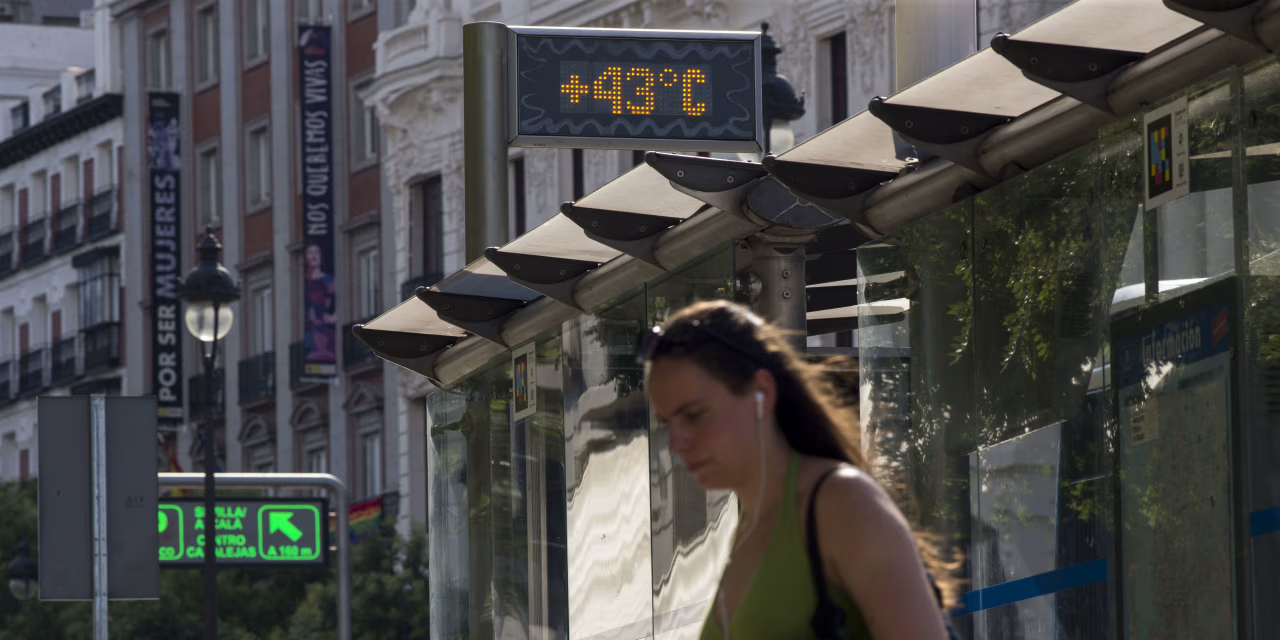

Heat waves are underscoring how global warming has become a here-and-now issue for economists.
Temperatures are rising ahead of the July 4 weekend, with 100-degree highs—feeling hotter due to the humidity—forecast for various parts of the central and Eastern U.S. Areas home to more than 150 million people were covered by National Weather Service heat alerts as of midweek.
Copyright ©2026 Dow Jones & Company, Inc. All Rights Reserved. 87990cbe856818d5eddac44c7b1cdeb8


Heat wave disrupts Fourth of July events across eastern US


Death toll of Venezuela earthquakes rises to 2,645
Brazil stocks higher at close of trade; Bovespa up 0.74%
Business
Apple’s Foldable iPhone Surge Saves the S&P 500 From a Chip Rout as Weak Jobs Report Divides Wall Street

NEW YORK — Apple’s stock surged nearly 5% Thursday, adding roughly $182 billion in market capitalization in a single session and single-handedly preventing what would have been a much sharper decline for the broader S&P 500, as a weak June jobs report, an ongoing chip sector pullback and lingering Middle East uncertainty sent most of the rest of the technology market lower heading into the Fourth of July holiday weekend.
The S&P 500 managed to finish essentially flat on the day, down just 0.2% by midday before recovering ground, while the Dow Jones Industrial Average climbed 0.7% and the Nasdaq Composite declined 0.8%. Eight of the 10 largest market capitalization moves in the S&P 500 on Thursday were negative, including sharp declines for Tesla and Micron Technology. Without Apple’s contribution, analysts noted, the broader index would have recorded a considerably more painful session.
The catalyst for Apple’s surge was a Bloomberg report indicating the company had instructed its parts suppliers to prepare for a large-scale rollout of foldable iPhones this fall, with the expected production target for 2026 now rising to approximately 10 million units, up from earlier forecasts of 7 to 8 million. That order volume increase signals Apple’s confidence that consumer demand for its first foldable smartphone will exceed initial projections. Alongside the foldable, Apple is reportedly preparing roughly 70 million iPhone 18 Pro and Pro Max units, setting up what the company expects to be one of the most commercially significant product launches in its recent history.
The foldable iPhone news came at an opportune moment for Apple investors who have been watching the stock navigate a difficult stretch defined by supply chain pressures, memory chip cost increases and publicly disclosed price hikes on its Mac and iPad lineups. The prospect of a new form factor capable of driving a significant upgrade cycle among the company’s existing customer base gave investors a concrete growth narrative to focus on heading into the back half of 2026.
The rest of the day told a very different story for much of the technology sector. Tesla fell 7.4% even as the company reported June vehicle deliveries that came in 18% above analyst estimates, a counterintuitive reaction that market observers attributed almost entirely to profit-taking following a 13% price surge over the prior four trading sessions. Micron Technology, similarly near all-time highs after its extraordinary year-to-date run of more than 300%, declined 5.8%, weighed down in part by a price-fixing lawsuit related to older memory types that circulated through the financial news cycle during the session. Both moves contributed to the Nasdaq’s underperformance, though neither Tesla nor Micron is a component of the Dow, which helps explain the divergence between the blue-chip index’s gain and the tech-heavy Nasdaq’s decline.
The macro backdrop for Thursday’s session was defined by the June nonfarm payrolls report, which landed well below expectations. The Labor Department reported 57,000 new positions added in June, against economist forecasts of 110,000. May’s payroll numbers were revised downward as well. The unemployment rate edged lower to 4.2% from 4.3%, a technically positive reading but one that contradicts the weak hiring figure and reflects a falling labor force participation rate rather than broad employment strength. Treasury yields declined in response to the soft data, as bond market investors recalibrated expectations toward a Federal Reserve that would face reduced pressure to raise interest rates given the cooling labor market.
The geopolitical dimension of Thursday’s session involved the Strait of Hormuz, where the vessel backlog waiting to transit the critical waterway fell to 380 ships from 485 earlier in the week. However, only five ships actually passed through the strait in the preceding 24 hours, underscoring how far the shipping situation remains from normal despite diplomatic progress. U.S. and Iranian negotiators wrapped up the latest round of talks in Doha claiming what participants described as positive momentum, though no concrete breakthroughs have been announced. The next scheduled discussion will follow funeral proceedings for Iran’s late Supreme Leader, which are expected to conclude by July 9, a timeline that introduces additional uncertainty about when the substantive diplomatic work can resume.
Oil prices continued falling Thursday despite the limited physical improvement in Hormuz traffic, suggesting markets are pricing in future progress rather than current conditions. Gold and Bitcoin rallied simultaneously for the second consecutive session, a combination that some market participants described as unusual and potentially significant. The SPDR Gold Shares fund rose 2.1% while the iShares Bitcoin Trust ETF gained 2.6%. When investors move into both traditional and digital safe-haven assets at the same time, it typically signals a broad underlying uncertainty rather than a specific sectoral rotation.
The broader week produced a pattern analysts have flagged as the dominant theme of 2026’s market: a clear rotation from high-flying technology and semiconductor growth names into steadier, more traditionally valued sectors including financials and industrials. The Dow outperforming the Nasdaq by 1.5 percentage points on Thursday alone illustrated that rotation in concentrated form. The chip sector’s two-day decline followed an 82% first-half gain across semiconductor stocks broadly, making some degree of consolidation not only expected but arguably overdue. The speed of the correction, however, has surprised even observers who anticipated a pullback after the sector’s extraordinary run.
With U.S. markets closed Friday for the Independence Day holiday, which falls on Saturday this year, investors have a long weekend to reassess their positions before trading resumes Monday. The Fourth of July closure also pushed the jobs report to Thursday rather than its usual Friday slot, making this week’s already compressed four-day schedule feel even more event-dense than typical pre-holiday periods.
Monday’s reopening will bring investors back to a market still processing a complicated set of signals: Apple’s foldable iPhone optimism colliding with a softening labor market, an ongoing diplomatic standoff in one of the world’s most important shipping lanes, a chip sector finding its footing after an extraordinary first half, and a Federal Reserve whose next move remains genuinely uncertain in a way that it has not been for much of the past several months. Whether Apple’s foldable iPhone story can maintain the momentum it generated Thursday, or whether the broader rotation out of technology names continues to dominate, will likely define the market’s first week of July trading when it resumes after the holiday break.
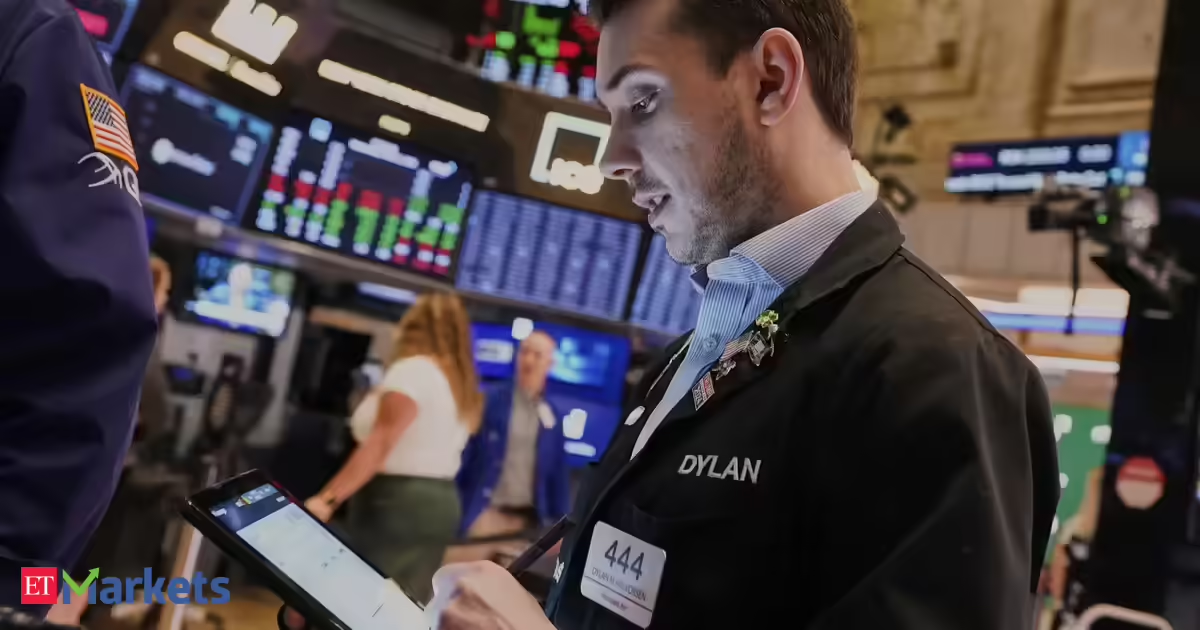
The closure applies to major US stock exchanges, including the New York Stock Exchange and Nasdaq, as well as the bond market. The bond market also ended trading early on Thursday, closing at 2 pm Eastern Time ahead of the long holiday weekend.
The holiday schedule follows the standard US market convention under which Independence Day is observed on the preceding Friday when July 4 falls on a Saturday. As a result, investors will have a three-day weekend before trading resumes with regular hours on Monday.
While stock and bond markets are shut, cryptocurrency markets continue to operate around the clock without interruption. Most commercial banks remain open on Friday, although some branches may operate with modified hours depending on the institution. Postal and delivery services largely maintain normal operations on Friday before adjusting schedules for the holiday on Saturday.
The market closure comes after investors digested the June U.S. employment report, which influenced expectations for the Federal Reserve’s interest-rate path heading into the holiday weekend.

US financial markets will remain closed on Friday, July 3, in observance of the Independence Day holiday, as July 4 falls on a Saturday this year. Trading in equities and bonds will resume on Monday, July 6.
The closure applies to major US stock exchanges, including the New York Stock Exchange and Nasdaq, as well as the bond market. The bond market also ended trading early on Thursday, closing at 2 p.m. Eastern Time ahead of the long holiday weekend.The holiday schedule follows the standard US market convention under which Independence Day is observed on the preceding Friday when July 4 falls on a Saturday. As a result, investors will have a three-day weekend before trading resumes with regular hours on Monday.
While stock and bond markets are shut, cryptocurrency markets continue to operate around the clock without interruption. Most commercial banks remain open on Friday, although some branches may operate with modified hours depending on the institution. Postal and delivery services largely maintain normal operations on Friday before adjusting schedules for the holiday on Saturday.
The market closure comes after investors digested the June U.S. employment report, which influenced expectations for the Federal Reserve’s interest-rate path heading into the holiday weekend.
The shortened trading week was marked by heightened attention to economic data and monetary policy expectations. Investors assessed the latest labor market figures alongside signs of moderating inflation, with market participants recalibrating expectations for the timing and extent of future Federal Reserve interest-rate decisions. Trading volumes also tended to thin out ahead of the extended holiday weekend as many institutional investors wrapped up positions before the market closure.
Looking ahead, investors will return to a calendar packed with corporate earnings announcements and fresh economic indicators that could shape sentiment in the second half of the year. Market participants will continue to monitor inflation trends, labor market conditions and comments from Federal Reserve officials for clues on the central bank’s policy trajectory, while developments in global trade and geopolitics are also expected to remain in focus.


I am an individual investor with over 12 years of research experience in financial markets, with a strong focus on dividend investing and long-term portfolio building. Over time, my main goal has been to create a retirement-style portfolio for myself and my family, centered on stability, reliable income, and steady compounding over the long run. My approach is disciplined and quality-focused. I look for strong companies with simple and understandable business models, consistent cash flows, and a proven ability to pay and grow dividends over time. For me, long-term consistency matters far more than short-term gains or speculative opportunities. I am particularly interested in sectors such as consumer staples, healthcare, financials, industrials, and selected technology companies that have reached a stage where they can support stable and growing shareholder returns. I prefer businesses with durable competitive advantages, responsible management teams, and a strong track record of capital allocation. While I do not hold formal financial certifications or institutional affiliations, I have spent more than a decade actively studying and following markets. My experience is built on reading financial reports, analyzing earnings results, and tracking macroeconomic trends over time. This hands-on learning process has helped me develop a consistent and long-term-oriented investment framework. My motivation for writing on Seeking Alpha is to share my perspective on dividend investing and long-term wealth building. I hope to contribute useful, research-based ideas for investors who are also focused on building sustainable income portfolios. At the same time, I value being part of a community where ideas are shared and challenged, as this helps refine my own thinking and improve my investment approach over time.
Analyst’s Disclosure: I/we have no stock, option or similar derivative position in any of the companies mentioned, and no plans to initiate any such positions within the next 72 hours. I wrote this article myself, and it expresses my own opinions. I am not receiving compensation for it (other than from Seeking Alpha). I have no business relationship with any company whose stock is mentioned in this article.
Seeking Alpha’s Disclosure: Past performance is no guarantee of future results. No recommendation or advice is being given as to whether any investment is suitable for a particular investor. Any views or opinions expressed above may not reflect those of Seeking Alpha as a whole. Seeking Alpha is not a licensed securities dealer, broker or US investment adviser or investment bank. Our analysts are third party authors that include both professional investors and individual investors who may not be licensed or certified by any institute or regulatory body.
Business
Lamborghini Unveils the Urus SE Performante Hybrid SUV and Calls It the Fastest Super SUV in the World

MILAN — Lamborghini revealed a new high-performance hybrid version of its best-selling Urus SUV Wednesday, calling the vehicle the fastest super SUV in the world and cementing the Italian automaker’s strategic bet on plug-in hybrid technology over the all-electric future it briefly considered before abandoning earlier this year.
The Urus SE Performante is a plug-in hybrid electric vehicle combining a 4-liter twin-turbocharged V-8 gasoline engine with an electric motor to produce 812 horsepower and approximately 738 foot-pounds of torque. Lamborghini says the combination accelerates from zero to 100 kilometers per hour, roughly equivalent to zero to 60 miles per hour, in 3.3 seconds and achieves a top speed of 312 kilometers per hour, or 194 miles per hour, figures the company says justify its “fastest super SUV” claim.
Lamborghini Chief Executive Stephan Winkelmann framed the new model as a defining moment for the brand.
“It is very important. It’s a game changer,” Winkelmann told CNBC in an interview accompanying the reveal.
The Performante designation signals that this is not simply a refreshed Urus with modest upgrades but a more aggressive, track-informed variant of the vehicle. The exterior reflects that intent, with a larger grille and hood scoops that distinguish it visually from the standard Urus SE lineup, alongside interior improvements that Lamborghini said will be detailed closer to the vehicle’s U.S. market arrival. The company declined to specify pricing for the Performante at this stage, pointing to closer alignment with the American market launch as the appropriate moment for that disclosure. The base 2026 Urus SE starts at approximately $250,000 to $280,000 depending on configuration, providing a rough baseline from which the Performante’s premium can be estimated.
The Urus has been the commercial engine of Lamborghini’s modern success since its introduction nearly a decade ago. Winkelmann said the model represents approximately 50% of the brand’s global sales annually, with total Lamborghini deliveries nearing 11,000 vehicles last year. That commercial weight makes every iteration of the Urus a strategically significant decision for a company that remains small by automotive industry standards but generates revenues entirely disproportionate to its unit volume.
The new Performante arrives against the backdrop of a significant strategic pivot Lamborghini announced in March, when Winkelmann confirmed the company was abandoning its previously stated plans for a fully electric model. The reversal came after Lamborghini assessed customer sentiment and concluded that demand for a pure electric Lamborghini among its target buyers was not materializing at the pace the company had initially anticipated.
“By observing the market … we saw that the acceptance curve of EVs for our type of customers is not increasing, and that therefore we decided to move away from a full-electric car into a plug-in hybrid,” Winkelmann said in a previous interview.
Wednesday’s Urus SE Performante reveal translates that strategic position into a specific product. Lamborghini is not simply walking away from electrification; it is choosing a form of electrification, the plug-in hybrid architecture, that it believes better suits both the performance expectations and the purchasing preferences of the ultra-luxury SUV buyer. The plug-in hybrid format preserves the visceral qualities of a high-displacement combustion engine while layering electric motor torque on top to improve both performance and, in lower-demand scenarios, efficiency. For a customer spending a quarter of a million dollars on an SUV, the argument is that a PHEV delivers the best of both worlds without forcing a compromise that a purely electric powertrain would require in the form of charging infrastructure, range anxiety or the absence of the combustion soundtrack that defines much of the Lamborghini ownership experience.
Winkelmann was careful when asked whether Lamborghini might eventually return to gasoline-only powertrains, declining to rule out the possibility in a characteristically measured response.
“Never say never,” he said when the question was put to him directly.
The Lamborghini announcement arrived shortly after rival Ferrari drew intense public criticism for the reveal of its first fully electric vehicle, the Ferrari Luce, in late May. The Luce’s reception was described as backlash-heavy, with a segment of Ferrari’s enthusiast community expressing vocal opposition to an electric vehicle from a brand historically defined by its naturally aspirated engine sounds and driving character. Winkelmann declined to comment directly on the Luce or the reaction it received when asked previously, but offered a broader perspective on the philosophy behind Lamborghini’s own approach.
“Innovation is paramount to success,” Winkelmann said. However, he added a qualification that implicitly addressed the controversy surrounding Ferrari’s EV: innovation should not be made for innovation’s sake or forced upon customers against their preferences.
Lamborghini is a subsidiary of Volkswagen AG, the German automaker that also controls Audi, Porsche and Bentley, among other brands. The broader Volkswagen Group has been navigating its own complex relationship with electrification across its various marques, with some brands pushing aggressively toward EV lineups while others, including Porsche, have sought to maintain hybrid options alongside expanding battery-electric ranges. Lamborghini’s EV pullback reflects the reality that the ultra-luxury end of the automotive market has behaved differently from the broader industry in its adoption of electric vehicles, with buyers at the extreme high end of the price spectrum showing greater resistance to the transition than some analysts had predicted when the EV investment wave peaked several years ago.
For now, Lamborghini’s roadmap is clearly focused on extracting maximum performance from the hybrid architecture while preserving the brand’s identity as a builder of viscerally exciting, extreme-performance vehicles. The Urus SE Performante, with its 812-horsepower output, 3.3-second sprint capability and 194-mile-per-hour ceiling, represents the current apex of that strategy, offering performance numbers that would have been considered extraordinary from any vehicle in any category just a few years ago.
Pricing and a formal U.S. launch timeline for the Urus SE Performante are expected to be announced closer to the vehicle’s arrival at American dealerships.


I am an avid investor with a major focus on small cap companies with experience in investing in US, Canadian, and European markets. My investment philosophy to generating great returns on the stock market revolves around identifying mispriced securities by understanding the drivers behind a company’s financials, and ultimately, most often revealed by a DCF model valuation. This methodology doesn’t limit an investor into rigid traditional value, dividend, or growth investing, but rather accounts for all of a stock’s prospects to determine the risk-to-reward.
Analyst’s Disclosure: I/we have no stock, option or similar derivative position in any of the companies mentioned, and no plans to initiate any such positions within the next 72 hours. I wrote this article myself, and it expresses my own opinions. I am not receiving compensation for it (other than from Seeking Alpha). I have no business relationship with any company whose stock is mentioned in this article.
Seeking Alpha’s Disclosure: Past performance is no guarantee of future results. No recommendation or advice is being given as to whether any investment is suitable for a particular investor. Any views or opinions expressed above may not reflect those of Seeking Alpha as a whole. Seeking Alpha is not a licensed securities dealer, broker or US investment adviser or investment bank. Our analysts are third party authors that include both professional investors and individual investors who may not be licensed or certified by any institute or regulatory body.
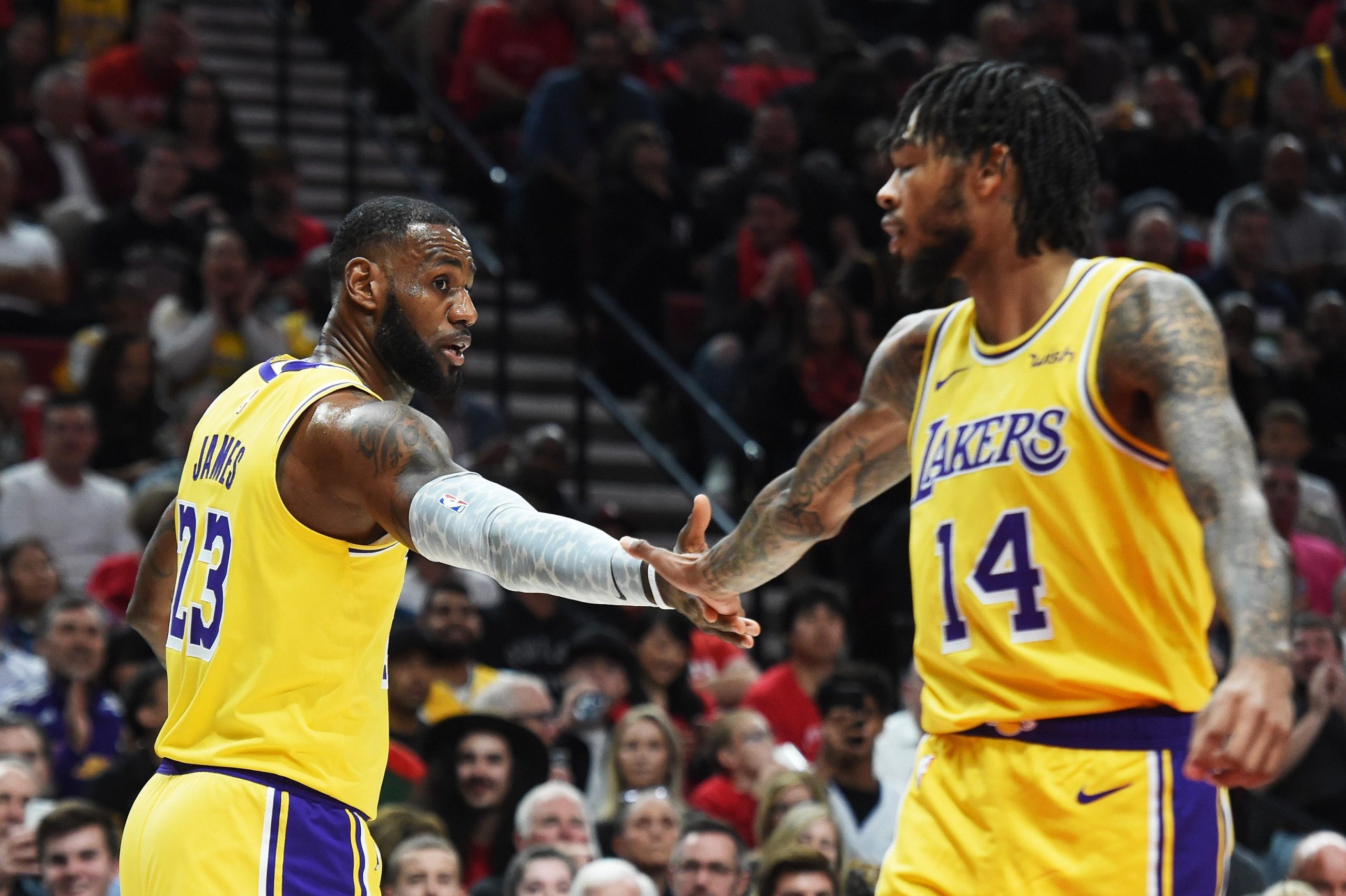
The NBA offseason has already produced more blockbuster moves in one week than most leagues see in an entire year, and yet the rumor mill shows no sign of slowing down. From LeBron James’ still-unresolved free agency to whispers about Jayson Tatum’s availability and Nikola Jokic’s uncertain future in Denver, here are the ten storylines dominating NBA circles as the holiday weekend arrives.
1. LeBron James remains unsigned with no timeline in sight. ESPN reported that 12 teams contacted Rich Paul when free agency opened Tuesday, underscoring just how wide the market is for a 41-year-old who has told the league he is willing to accept the veteran’s minimum if it means playing for the right team at the right time. Paul has said he will survey all interested parties and bring options back to James before any decision is made. Golden State remains the most frequently cited destination given the Warriors’ openly stated pursuit, but the Cavaliers, Heat, 76ers, Timberwolves and Nuggets have all been linked in various reports. James has no reported timetable for his decision, prompting Bleacher Report to note simply that everyone should plan the July 4 weekend accordingly.
2. The Celtics received calls on Jayson Tatum too, and shut them all down. ESPN’s Shams Charania confirmed on Get Up that multiple teams called Boston about Tatum’s availability in the weeks surrounding the Jaylen Brown trade. “They shut those down completely,” Charania said. But the mere existence of those calls, combined with the relatively modest return the Celtics accepted for Brown, has fueled widespread speculation among league observers about the franchise’s long-term direction and whether anyone in Boston’s front office is truly untouchable.
3. Jalen Duren’s free agency has drawn serious interest from multiple teams including the Sacramento Kings. The Detroit Pistons hold his restricted free agency rights, which means they can match any offer sheet he signs. According to Chris Haynes, the Kings have been pursuing a sign-and-trade scenario to land the 22-year-old center, whose athleticism and rim protection appeal to contenders looking to upgrade the middle. Detroit, which came off a 60-win season and is focused on continuity, would likely match a reasonable offer, but Sacramento’s interest suggests the market for Duren could push his price into territory that gives the Pistons a decision to make. The Knicks are separately pursuing New Orleans Pelicans center Yves Missi to replace Mitchell Robinson, who agreed to a three-year, $47.4 million deal to join the Celtics.
4. Nikola Jokic’s future with the Denver Nuggets is increasingly uncertain. League sources have suggested that Jokic has not yet committed to signing an extension with Denver, leaving the franchise in a complicated position as it tries to respond to what has already been a difficult offseason. The Nuggets have made relatively modest moves so far, signing veteran guard Tyus Jones to a one-year deal, and Bleacher Report suggested the franchise will need to do something more ambitious if it wants to persuade the three-time MVP to stay long-term. One report indicated Jokic could be drawn to a situation alongside LeBron James if the right scenario materialized elsewhere.
5. The Golden State Warriors are still pursuing Anthony Davis despite Wizards resistance. Yahoo Sports’ Kevin O’Connor reported the Warriors’ plan involves acquiring Davis from Washington while using the roster flexibility created by Draymond Green’s player option declination to pursue LeBron James simultaneously. Washington general manager Will Dawkins has publicly stated the organization intends to keep Davis and that the two sides plan to discuss an extension in August. However, the persistent nature of Golden State’s interest, combined with Jimmy Butler’s presence as a potential trade chip and the franchise’s access to draft capital, means the rumor has not fully dissipated despite the Wizards’ stated position.
6. The Lakers made their first major post-LeBron move by acquiring Walker Kessler. Los Angeles completed a sign-and-trade with the Utah Jazz, securing the rim-protecting center on a four-year, $130 million deal with a player option in the fourth year, sending unprotected first-round picks in 2031 and 2033, along with first-round swaps in 2028 and 2030, to Utah. Jaxson Hayes simultaneously agreed to a two-year, $12 million deal with the Jazz. The Lakers also added guard Collin Sexton on a two-year, $19 million deal and are finalizing the addition of Quentin Grimes, suggesting the franchise is not simply waiting for James’ decision but actively rebuilding its roster in parallel.
7. Anfernee Simons ended up in Philadelphia despite interest from six other teams. The 76ers secured the former Portland Trail Blazers guard on a two-year, $12.3 million deal including a player option, adding a ball-handling and shooting option to the Jaylen Brown arrival. HoopsHype reported that six teams, including Golden State, Miami, Denver, Dallas and Indiana, all registered interest in Simons before he ultimately chose Philadelphia, illustrating the ripple effects of the Jaylen Brown trade reshaping Philadelphia’s backcourt almost immediately after it was announced.
8. The Celtics pivoted quickly after the Brown trade to sign Mitchell Robinson. Despite the controversy surrounding how Brown’s departure was handled, Boston wasted little time shoring up the frontcourt, agreeing to a three-year, $47.4 million deal with Robinson, the 28-year-old center who averaged 8.8 rebounds and 1.2 blocks per game last season for the Knicks. The signing keeps Boston in Eastern Conference contention around Jayson Tatum and the returning Kristaps Porziņģis.
9. Norman Powell returned to the Los Angeles area by way of the Chicago Bulls. The former Trail Blazer and Raptors wing agreed to a two-year, $45 million deal with Chicago, a surprising landing spot for a player who had been linked to contending teams throughout the early free agency period. His departure from Portland created additional roster space for the Trail Blazers, who are now working through how to integrate newly acquired Ja Morant alongside Damian Lillard.
10. Kyle Lowry will retire as a Toronto Raptor. Sportsnet’s Michael Grange reported Thursday that the 20-year NBA veteran will sign a ceremonial one-day contract to officially retire with the Raptors next week, closing the book on one of the most decorated Canadian basketball careers in league history. Lowry’s retirement announcement came the same week that his former teammate Kawhi Leonard agreed to return to Toronto, a confluence of old Raptors history and new Raptors present that gave Canada’s NBA market something to celebrate on both ends of the basketball timeline.
Heat Waves Are Becoming a Chronic Drag on the Economy

Cardi B Scores Five-Figure Victory Against Blogger Tasha K

Want To Keep Fit? The Best Exercises For Women’s Longevity, By Age


-

 Tech6 days ago
Claude Code turned every engineer into three. Now companies need more product thinkers
-

 Crypto World4 days ago
Strategy authorizes up to $1.25B in Bitcoin sales under new capital plan
-

 Politics9 hours ago
The House | “Reframing the debate from a binary discussion of winners and losers”: Yuan Yang reviews ‘We Are Not Machines’
-

 News Videos5 days ago
MAJOR BITCOIN & MARKET UPDATE!!!! (MUST WATCH ASAP!!!)
-

 Tech4 days ago
Anonymous researcher drops 0-day ‘exploitarium’ repo
-

 Tech6 days ago
Bluekit phishing kit adopts browser-in-the-middle for login theft
-

 Crypto World6 days ago
Coinbase, Circle Deepen Crypto Stock Losses Despite Resilient S&P 500
-

 Business4 days ago
Australia treasurer says alleged access of prime minister’s bank data ’incredibly concerning’
-

 Crypto World7 days ago
Kraken's xStocks Opens Bending Spoons IPO Registration to EEA Retail
-

 Tech6 days ago
Russian hackers now target Signal backup recovery keys
-
 Business4 days ago
The AI boom won’t burst all at once. It will pop in ‘rolling bubbles’: Macquarie
-

 Sports2 days ago
Broncos roster: OL Ben Powers (No. 74) entering final year of contract
-

 NewsBeat3 days ago
Presenter Caroline Flack’s brother Paul Flack dies aged 55
-

 Tech6 days ago
Silicon Valley paid to kill AI regulation, now it wants the rules back
-

 Fashion3 hours ago
Weekend Open Thread: High Hopes
-

 Crypto World2 days ago
Binance stock trading tops $1B in first month after launch
-

 Tech6 days ago
OpenAI mulls delaying IPO over valuation concerns
-
 NewsBeat2 days ago
New exhibition reflects five decades of movement between island of Ireland and GB
-

 Crypto World2 days ago
Alibaba-affiliate Ant Group enters the humanoid robot market with 12 deals
-
 News Videos3 days ago
How to Build INSANE Live Financial Dashboards With Claude
You must be logged in to post a comment Login