
Business
Hayden Panettiere’s Top 5 Most Popular Movies, From ‘A Bug’s Life’ to the ‘Scream’ Franchise

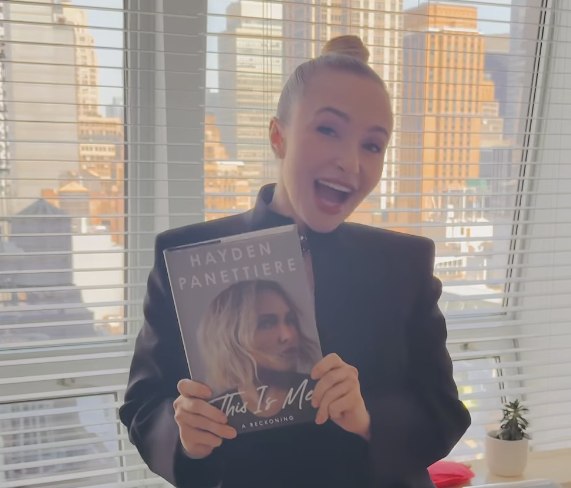
Following the death of actress Hayden Panettiere at age 36, fans have been revisiting the film career that ran alongside her more prominent television roles on “Heroes” and “Nashville.” While Panettiere became best known to audiences through television, several of her film credits reached significant commercial and cultural popularity throughout her career. Here are five of her most widely recognized movies.
1. “A Bug’s Life” (1998)
Panettiere’s earliest brush with major box office success came before she was even 10 years old, when she voiced the character Dot in Pixar’s second animated feature film. Released in 1998, “A Bug’s Life” became a major commercial hit for the studio, introducing Panettiere’s voice to millions of moviegoers years before she became a recognizable on-screen presence. The film remains one of the most widely seen credits of her entire career, given its enduring popularity as a staple of late-1990s family animation.
2. “Remember the Titans” (2000)
Panettiere appeared alongside Denzel Washington in this biographical sports drama, which tells the story of a newly integrated high school football team in Virginia in 1971. Playing Sheryl Yoast, the young daughter of assistant coach Bill Yoast, Panettiere featured in what became one of the most commercially successful and enduringly popular sports films of its era. “Remember the Titans” has remained a frequently watched and referenced film in the decades since its release, cementing it as one of Panettiere’s most widely recognized credits.
3. “Ice Princess” (2005)
Panettiere starred in this Disney sports drama centered on competitive figure skating, one of several family-oriented films she took on during her teenage years as she built her profile ahead of her breakout television role. The film found a lasting audience among younger viewers and has remained a recognizable part of Disney’s mid-2000s family film slate, contributing to Panettiere’s visibility as a rising young star during that period of her career.
4. “Scream 4” (2011)
Panettiere joined the long-running horror franchise as Kirby Reed, a sharp, horror-savvy character who quickly became a fan favorite among the film’s ensemble cast. Released as the franchise’s fourth installment after more than a decade away from theaters, “Scream 4” reintroduced the Ghostface killer to a new generation of horror audiences while drawing longtime fans back to the series. The film performed well commercially and introduced Panettiere to a broad audience of horror moviegoers who had not necessarily followed her earlier television work.
5. “Scream VI” (2023)
More than a decade after her franchise debut, Panettiere reprised her role as Kirby Reed in “Scream VI,” surprising fans who had believed the character had died at the end of “Scream 4.” The film became one of the franchise’s most successful entries at the box office, and Panettiere’s unexpected return generated significant promotional buzz and fan excitement ahead of its release. Her reappearance was widely covered by entertainment outlets as one of the film’s key selling points, making “Scream VI” one of the most prominent and recent film credits of her career.
Beyond these five films, Panettiere’s broader filmography included a range of other notable credits that also found audiences over the years, including Disney’s animated feature “Dinosaur,” the family comedy “Racing Stripes,” the teen romantic comedy “I Love You, Beth Cooper,” and the television movie “Amanda Knox: Murder on Trial in Italy,” in which she portrayed the American college student wrongfully convicted, and later acquitted, in the 2007 murder of her roommate in Italy.
Panettiere’s film career often ran in parallel with her more widely recognized television work, including her breakout role as Claire Bennet, an indestructible cheerleader, on NBC’s “Heroes,” which aired from 2006 to 2010, and her later role as country singer Juliette Barnes on the ABC and CMT drama “Nashville,” which earned her two Golden Globe nominations during its six-season run from 2012 to 2018.
Panettiere began her acting career as an infant, appearing in television commercials before she was 1 year old, and had her first television role on the soap opera “One Life to Live” around age 4. That early start placed her among the most experienced child performers of her generation by the time most of her peers had barely begun their acting careers, laying the foundation for the multi-decade career that followed across both film and television.
Panettiere’s death was confirmed Sunday by her representative in a statement provided to media outlets, in which her father, Skip Panettiere, described his daughter as “an incredible light and a force of nature” to everyone who knew her and to the audiences who had followed her work for nearly three decades. Authorities in Greenville, South Carolina, where Panettiere was found unresponsive at an apartment complex, have said their preliminary investigation found no signs of foul play, though a specific cause of death has not yet been publicly released pending further examination.
As tributes and retrospectives continue to circulate following her death, Panettiere’s film work, spanning family animation, sports drama, teen comedy and horror, has drawn renewed attention from fans and critics alike, reflecting a career defined by range and longevity across genres that began before she had even started elementary school and continued through her final theatrical release in 2023.

Business
Before Her Death, Hayden Panettiere Spoke Candidly About Trauma, Motherhood and Mental Health Struggles

In the months before her death at age 36, actress Hayden Panettiere had spoken with unusual candor about the traumas that had shaped her life, from a childhood spent performing catastrophe on screen to her adult struggles with addiction, postpartum depression and an abusive relationship.
Panettiere, known for her roles in “Heroes” and “Nashville,” was found unresponsive in an apartment in Greenville, South Carolina, and was pronounced dead at the scene on Sunday, police said. A cause of death has not yet been established, but authorities said there were no signs of foul play.
Her death came just months after the publication of her memoir, “This Is Me: A Reckoning,” a book in which she said she wanted to be “brutally honest” about “every aspect of my life, from childhood to now.” Speaking to The Independent in May, Panettiere described the process of writing the book. “I had to learn not to be afraid of what people would think about it. Or if they would judge me,” she said.
Panettiere began performing as an infant, when her mother, former soap opera actress Lesley Vogel, started bringing her to commercial auditions. She went on to voice Princess Dot in the 1998 Pixar film “A Bug’s Life” and appeared in soap operas as a young child. In her memoir, Panettiere wrote about how the traumatic storylines she portrayed as a child actor shaped her early understanding of attention and love. “Grown-ups gave me positive attention when — as an actor — I failed, got sick, screamed and cried, killed, grieved, and suffered,” she wrote. “Is it any wonder why I’ve faced so many real struggles in my life? I’ve often wondered whether — unintentionally — I’ve brought on my traumas because I’m wired to think they’re good for me.”
Panettiere achieved mainstream fame in 2006 for her role as a superpowered cheerleader on NBC’s “Heroes,” a breakthrough that prompted her entire family to relocate to Los Angeles. Speaking to Jay Shetty on his podcast “On Purpose,” Panettiere described the strange dynamics that success brought to her family life as a teenager. “My mum bought an apartment for me when I was 16 and my whole family lived in it. So again, it was just that very strange, uncomfortable feeling of the role reversal and desperately wanting to still feel like the kid and still feel like I had parents to lean on,” she said. She described her mother as functioning primarily as her manager throughout her childhood, a dynamic that shaped how she understood approval. “She was my boss, that’s how I saw her. Even if she was the most supportive person when I did what I was supposed to do and did it well and was the one cheering me on, it did feel like it was what I had to do to get her love,” Panettiere said.
In 2014, at age 25, Panettiere welcomed her daughter, Kaya, with her then-partner, former professional boxer Wladimir Klitschko. The birth itself was medically traumatic; Panettiere told the outlet Momé in July that she experienced severe hemorrhaging following delivery, requiring seven blood transfusions and surgery. She said that when she was finally able to see her newborn daughter after the operation, she “felt nothing.” “I had always heard that mums feel an instant rush of love, but I didn’t — and I had no idea why,” she told Momé. After attempting to self-medicate with alcohol, Panettiere eventually sought professional help and received a diagnosis of postpartum depression, which she first spoke about publicly in 2015 on the talk show “Live with Kelly and Michael.”
Panettiere later described the broad and often misunderstood spectrum of postpartum depression symptoms, pushing back against narrow public assumptions about the condition. “When they tell you about postpartum depression, you think about, ‘Okay, I feel negative feelings towards my child, I want to injure my child, I want to hurt my child,’” she said. “I’ve never ever had those feelings and some women do, but you don’t realise what broad of a spectrum you can really experience that on, and it’s something, I think, that needs to be talked about and women need to know that they’re not alone.” She added that public skepticism toward the condition compounded its difficulty. “There’s a lot of misunderstanding and I feel like there’s a lot of people out there who think that it’s not real, that it’s not true, that it’s something that’s made up in their mind. It’s something that’s completely uncontrollable and it’s really painful and scary,” she said. Panettiere also told Shetty that cosmetics brand Neutrogena ended a decade-long endorsement deal with her after she spoke publicly about her postpartum depression, citing a morality clause in her contract. “Of all the things I had been caught doing, that being the thing where they drew the line, was shocking to me,” she said.
On the set of “Nashville,” Panettiere said the storylines written for her character, Juliette Barnes, closely mirrored what she was privately experiencing at the time, including struggles tied to pregnancy, substance use and early motherhood. “I was suffering from debilitating anxiety and an addiction I couldn’t shake, and I had to live through it twice. First at home, as Hayden, and then in front of millions as Juliette,” she wrote in her memoir. She told Shetty the boundary between herself and her character became difficult to distinguish. “I didn’t know where Juliette ended and Hayden began,” she said. “I couldn’t come up to air from it.” To manage her anxiety and panic attacks during that period, she said she turned to substances. “I was self-medicating and looking for relief at the bottom of a bottle … I needed to self-numb,” she said.
When Panettiere and Klitschko separated in 2018, their daughter, then 2 years old, began living full time in Ukraine with her father. Panettiere was in the midst of her struggles with substance abuse at the time. “It wasn’t a decision I made lightly, nor was it a decision I even wanted to make,” she told Momé. “I was going through a really challenging time in my life … I knew I needed to be able to put her first so that I could get the help I needed and be the mum she needed me to be.” She said she remained close to her daughter despite the distance. “I love my daughter, and I’m so proud of the young woman she is becoming. I talk to her all the time, and I feel so connected to her,” she said.
Panettiere also spoke to Shetty about the difficulty of leaving an abusive relationship, describing the sustained effort required to fully end contact. “At one point I thought I had gotten out of it and gotten away from it,” she said. “Abusers, they weave themselves like weeds into your life and there’s always something that they left behind. There’s always something they have to come back for, there’s always something that they find to keep that connection, keep you on the hook.” She said she initially believed she could manage the separation alone before recognizing she needed outside help. “I thought I was capable of doing it by myself but I needed an incredible amount of support and back-up in order to make sure that there was no way for him to find his way back in,” she said.
Panettiere’s final Instagram post, shared July 27, showed a photo of her with photographer Randall Slavin, captioned simply, “Good times and good friends.” In her memoir, she described herself as an “optimist to the core” who resisted being defined by tragedy, despite the many hardships she experienced throughout her life, including the sudden death of her younger brother, actor Jansen Panettiere, in 2023. “One thing I know from my 36 years in the public eye is this: Life is a process that evolves day by day, year by year and — like it or not — you are engaged in a cycle of growth until the moment you take your last breath,” she wrote.
This story discusses sensitive topics including postpartum depression, addiction and domestic abuse. If you or someone you know is struggling with any of these issues, support is available. In Australia, contact Lifeline on 13 11 14, Beyond Blue on 1300 22 46 36, or 1800RESPECT for domestic violence support. In the United States, you can call or text 988 for the Suicide and Crisis Lifeline, or contact the National Domestic Violence Hotline at 1-800-799-7233.


The company is launching a Red Bull-fueled beverage option.


The product contains 12 grams of plant protein per serving.

Starbucks (SBUX) is currently trading with a very low implied volatility rank which means options on the coffeehouse chain are cheap compared to the last 12 months. That could mean it’s a good time to look at a breakout trade such as a long strangle. A long strangle is constructed through buying an out-of-the-money call and an out-of-the-money put. The…
Copyright ©2026 Investor’s Business Daily, LLC. All rights reserved. 87990cbe856818d5eddac44c7b1cdeb8


Startup aims to bridge meat snacks and salty snack aisles.

Most recently was with Dairy Management Inc.

We’ve all looked up and seen the white lines trailing behind aircraft in the sky.
Known as contrails, these icy clouds contribute to climate change, and scientists have been trying to work out how to stop them.
Now, a £5m UK trial will test whether AI can help, by predicting where warming contrails are likely to form and getting planes to avoid those areas.
It will focus on the Shanwick Oceanic airspace in the eastern half of the North Atlantic corridor which accounts for approximately 5% of global contrail warming.
The 30-month Operation Blue Skies project brings together Google, the UK government, the Met Office, air traffic control provider National Air Traffic Services (NATS) and researchers at the University of Cambridge and Imperial College London.
Contrails – also known as vapour trails – are made when the hot exhaust from aircraft engines meets the cold air at high altitude, creating ice crystals.
Many disappear quickly, but in particularly cold and humid conditions they can persist and spread, forming clouds which trap heat that would otherwise escape from the Earth.
Dr Paul Hodgson, Google’s technical lead for the operation, told the BBC’s Tech Life programme his five-year-old has a more colourful description for the white lines – “sky graffiti”.
“We think that contrail warming is responsible for something like a third of all aviation climate warming,” he said.
Dr Hodgson acknowledged there was uncertainty around the precise figure, but said scientists were confident it was “either quite a large problem or a very large problem”.
The project also comes as the government backs expansion of UK airports, raising the wider question of whether tech solutions can sufficiently reduce aviation’s environmental impact as demand for flying grows.
Google is also one of many big tech companies spending billions on new data centres – the giant, power-hungry banks of computer chips which power AI – which environmentalists are concerned will contribute even more to climate change.

Speaking at the 22nd Motilal Oswal Annual Global Investor Conference in Mumbai, Agrawal said there is a high probability of Nifty hitting 50,000 anytime before 2035.
Raamdeo Agrawal’s Nifty math: 3 scenarios
Agrawal’s timeline hinges on a single assumption: Nifty earnings compounding at roughly 12% a year, in line with an expected 11% nominal GDP growth rate. From there, the path to 50,000 splits three ways depending on the multiple the market is willing to pay. If the P/E multiple holds steady at 20–21x, the Nifty target of 50,000 will take roughly 8 years. If the multiple expands to around 24x, it will take roughly 6 years and if the multiple compresses to around 18x, which is below the ten-to-twenty-year historical average, then the journey to 50k will take roughly 9 years.
For the near term, Agrawal pointed to an earnings recovery already underway. “Nifty earnings growth of around 12% is a reasonable expectation,” he said, adding that current-quarter growth looks stronger still, in the 16–20% range.
Underpinning the bull case is what Agrawal called an “unprecedented” surge in retail market participation. Demat accounts in India have grown from roughly 40 million to 234 million as of last month, with 2.9 million added in that single month alone, a pace he said is “likely unmatched anywhere in the world.”

Mutual fund folios rose about 19%, from 55 million to 74 million, over the past year. Monthly SIP flows have crossed ₹31,000 crore, and equity mutual fund AUM has compounded at roughly 30% a year over the past decade, climbing from about ₹4 lakh crore to about ₹86 lakh crore.
Agrawal likened the moment to a structural shift in the US four decades ago: “This feels like India’s ‘401(k) moment’ — comparable to when U.S. retail investors began participating heavily in markets in the early 1980s.” The U.S. now sees roughly $750 billion a year in 401(k) contributions flowing into stocks and bonds; India’s expanding demat base, he said, is becoming the domestic equivalent.Also Read |Equity investments should give about 15% annual returns over next 5 years: Raamdeo Agrawal
FII selling overdone
The retail boom is unfolding even as foreign institutional investors pull back sharply. FIIs sold about $18 billion of Indian equities last year and roughly $25 billion more in the first half of this year, Agrawal said while calling it a marked reversal for a group that, aside from 2022, had historically stayed committed to Indian markets.
Domestic flows have more than offset the exodus: from just $5–10 billion a year around 2020 to roughly $90 billion annually more recently, including $54 billion in the first half of this year alone.
“FIIs have oversold India,” Agrawal said, noting that India’s weight in global allocation benchmarks like MSCI sits at only around 7–8%, underweight relative to its economic size. He argued that even if foreign selling continues, or simply stops, “domestic demand alone is strong enough to sustain a healthy market”, a dynamic he said keeps valuations structurally elevated.
A Bigger Bet: India’s Path From $4 Trillion to $16 Trillion
Agrawal framed the Nifty call within a much larger economic thesis. India crossed $1 trillion in GDP around 2007–08; the journey since has been uneven as the $2 to $4 trillion stretch took ten to eleven years, delayed by demonetization and COVID. But Agrawal projects the economy now moving from $4 trillion to $8 trillion in about seven years, and to $16 trillion within another seven to eight years after that.
“India is a multi-trillion-dollar opportunity,” he said, arguing that the jump from $4 trillion to $16 trillion represents a fundamentally different scale of opportunity than the earlier climb from $1 trillion to $4 trillion.
He tied this to savings: over the last seventeen years, India saved a cumulative $15 trillion; over the next seventeen, minimum cumulative savings are projected at $47 trillion, with $1.3 trillion saved last year alone.
Agrawal situated his India and Nifty forecasts inside a broader global wealth thesis drawn from a 2002 book, The Wealthy World, written by a finance professor who Agrawal said correctly anticipated the scale of global financial wealth creation decades in advance — from $13 trillion in 1980 to a projected $6,000 trillion by 2050.
“There is no absolute upper limit to financial wealth creation,” Agrawal said, “not for a country, and, increasingly, not even for a single corporation.”
He pointed to Nvidia and Apple, each having touched roughly $5 trillion in market value, as evidence that corporations are now rivaling, and in some cases surpassing, the size of nations. Global market capitalization has risen from about $200 billion in 1950 to roughly $164 trillion today, against a global GDP of about $120 trillion — a market-cap-to-GDP ratio that has climbed from 0.2–0.3 to about 1.3 over 75 years.
India’s own market-cap-to-GDP ratio now sits at 1.2–1.3x, up from well below 1x historically, with market cap around ₹500 lakh crore against GDP of ₹360–370 lakh crore. India’s share of global market capitalization has risen from about 2% a decade ago to about 3% today, among the very few major markets, alongside the U.S., Taiwan and South Korea, to have gained global share over that period.
Earnings, Profitability and the AI Wildcard
Corporate profit as a share of India’s GDP has recovered to about 5.7%, up from a low of 1.7% around 2019–20, though still well below its 2000 peak of 6.2% and further behind the near-double-digit levels seen in the US. Agrawal suggested artificial intelligence could push that ratio higher still, as “the return on capital may increasingly outpace the return on labor.”
“I think we shouldn’t focus too much on the Nifty number itself,” Agrawal said, adding that the real takeaway is that the world is getting wealthier and India is getting wealthier faster than almost anywhere else.
His conclusion: it’s “highly probable that Nifty reaches 50,000 sometime before 2035” — with the exact timing, he acknowledged, ultimately hinging on policy execution and how India navigates whatever “potholes” lie ahead.
(Disclaimer: Recommendations, suggestions, views and opinions given by the experts are their own. These do not represent the views of The Economic Times)

Disney and ABC have filed a lawsuit to stop the Trump administration from launching an early licence renewal process, arguing that the network is being unfairly targeted over its editorial content.
“Government censorship is deeply un-American,” the lawsuit says. “This case concerns the Administration’s sustained effort to do just that.”
The lawsuit says the Federal Communication Commission – the government’s media regulator – is being pressured to renew broadcast licences years early. It alleges the push stems from complaints from, and under the direction of, President Donald Trump.
FCC chairman Brendan Carr has said that the renewal requests were focused on “public interest”, not retaliation.
“If broadcasters don’t like that, that’s okay,” Carr told CNBC in July.
“They can become a cable channel, they can become a podcast, they can stream online. But if you want to uniquely be on the public’s airwaves, you have to comply with those obligations.”
The BBC has contacted the FCC for comment.
Disney and its eight owned-and-operated TV stations are plaintiffs in the lawsuit filed on Tuesday against FCC and its chairman.
The FCC ordered licence renewals for the Disney-owned ABC stations in April.
Disney previously had been under investigation for its alleged diversity, equity, and inclusion (DEI) practices and for ABC’s daytime talk show, The View.
But the notice for early renewal of licence from the FCC came a day after ABC’s late-night host Jimmy Kimmel made a joke about first lady Melania Trump.
In the lawsuit, Disney calls the order by the FCC “unprecedented”, saying that before then the commission had not called for early renewal in over 50 years.
“Acting through the Federal Communications Commission, the Administration has waged a retaliatory campaign against ABC for a single reason: it disapproves of what ABC broadcasts,” the lawsuit says.
It cites Trump’s own social media posts as evidence, including one in which Trump complained about ABC’s coverage of him being “almost 100% negative”.
In the same social media post, Trump also questioned whether their broadcast licences should “be terminated”, and answered his own question: “I say, Yes!”.
Under pressure from FCC chairman Carr, Disney pulled Kimmel off air in September 2025, after he made remarks about the murder of conservative activist and Trump ally, Charlie Kirk.
But Kimmel was quickly returned to his role after widespread public backlash over alleged free speech violations, including from Republican Senator Ted Cruz.
The FCC gave ABC and Disney 30 days to file applications, which, according to plaintiffs in the lawsuit, “ordinarily take months to prepare”.
The lawsuit also notes that the FCC has never demanded early renewal applications from a group of stations commonly owned by a single broadcast network.
ABC and Disney have requested a “speedy hearing” from the court and a temporary restraining order.


Product developers are using predictive modeling to prototype specific product attributes.

Before Her Death, Hayden Panettiere Spoke Candidly About Trauma, Motherhood and Mental Health Struggles

What Is Double Jeopardy, and Why Are Luigi Mangione’s Lawyers Claiming It?

Vikings Bring 4 Players to Town to Compete for a Roster Spot, Onboard a New OLB





-

 Fashion4 days ago
Weekend Open Thread: Ann Taylor
-
 NewsBeat7 days ago
Communication cards help banking customers access services or report scams
-
 Sports5 days ago
This U.S. Amateur is a glimpse into golf’s future in more ways than you think
-

 Sports4 days ago
Birmingham 2026: Day 6 Timetable for Irish Athletes
-
 NewsBeat3 days ago
Myanmar says over 300,000 Rohingya refugees verified for repatriation as exodus enters ninth year
-

 Tech4 days ago
11 Ways to Rank Your Videos
-

 Politics3 days ago
SEQ Code: The Three Letter Boarding Pass Code That Could Give You The Worst Seat
-
 Entertainment6 days ago
Keke Palmer Subtly Hints At Sean Evans Drama With Cryptic Post
-

 Fashion7 days ago
Coffee Break: The Fonteyn Jane Flat
-

 Tech7 days ago
Zoom Screen-Sharing Bug Let People Fully Take Over Other Devices On A Call
-

 Fashion7 days ago
Should you refinance your debt? Pros, cons, and real numbers
-
 Crypto World7 days ago
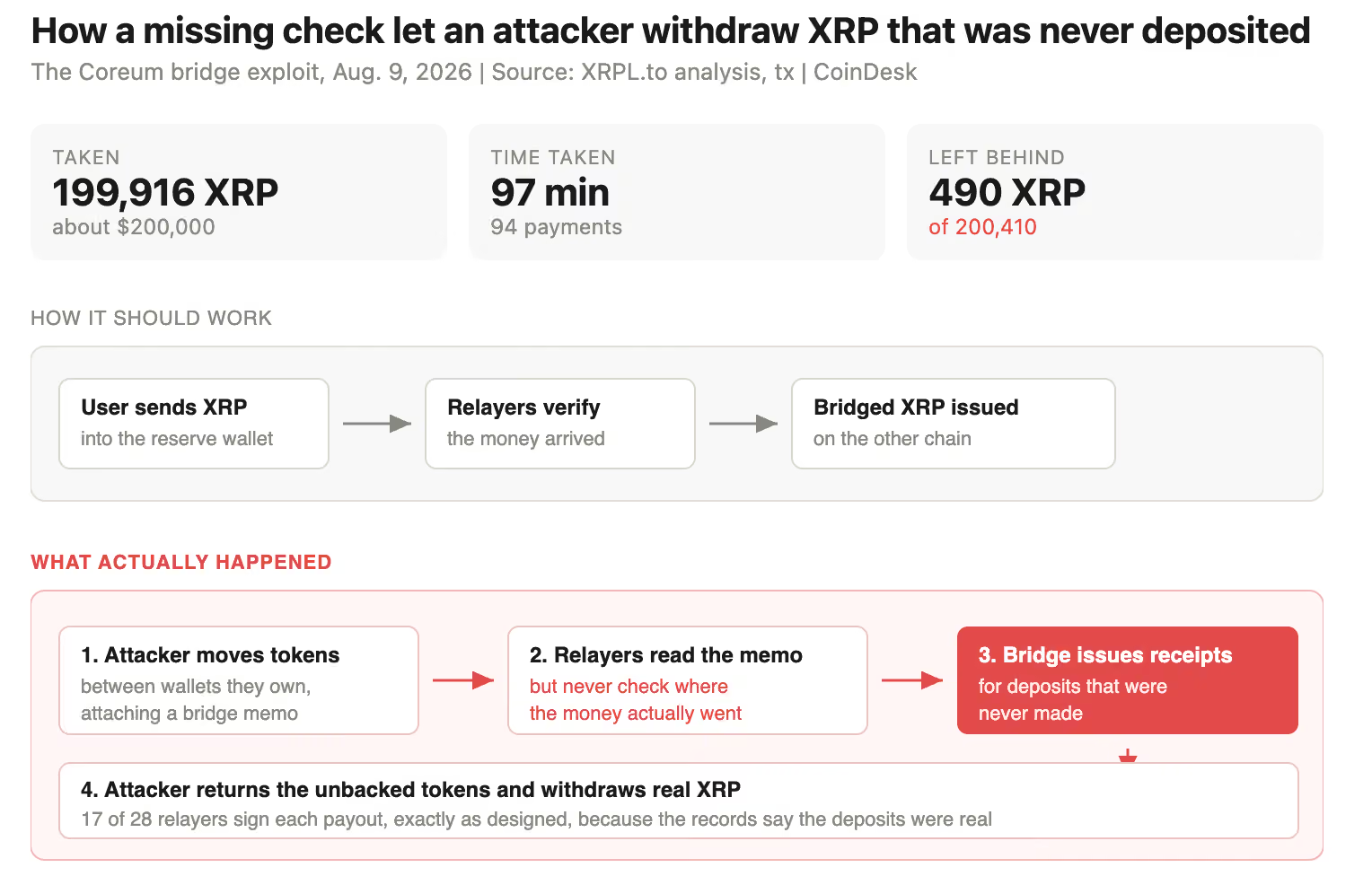
XRP bridge drained after software mistook fake deposits for real ones
-
 Tech5 days ago
DeepSeek Harness launches as open source rival to Claude Code, alongside V4-Pro on API with higher prices
-

 Sports6 days ago
DeQuan Jones in ‘high spirits’ after successful leg surgery
-

 Crypto World6 days ago
Perplexity AI Predicts an XRP Scenario Few Analysts Are Discussing
-

 Tech7 days ago
SpaceXAI’s Grok Bot turns agents into persistent digital coworkers that can operate your apps for $120-per-month
-
 Entertainment6 days ago
2026’s Most Ambitious Fantasy Movie Officially Scores Sequel Update
-

 Politics6 days ago
How Average Are You In The UK?
-

 Business7 days ago
Evolv Technologies Holdings, Inc. (EVLV) Q2 2026 Earnings Call Transcript
-
 NewsBeat6 days ago
‘Regret is a major theme of my work’: Matt Haig on finding acceptance
You must be logged in to post a comment Login