


















The Public Accounts Committee says the Government is “unable to articulate” a plan for the future of British Steel, which is costing the taxpayer an estimated £1.3m per day following nationalisation

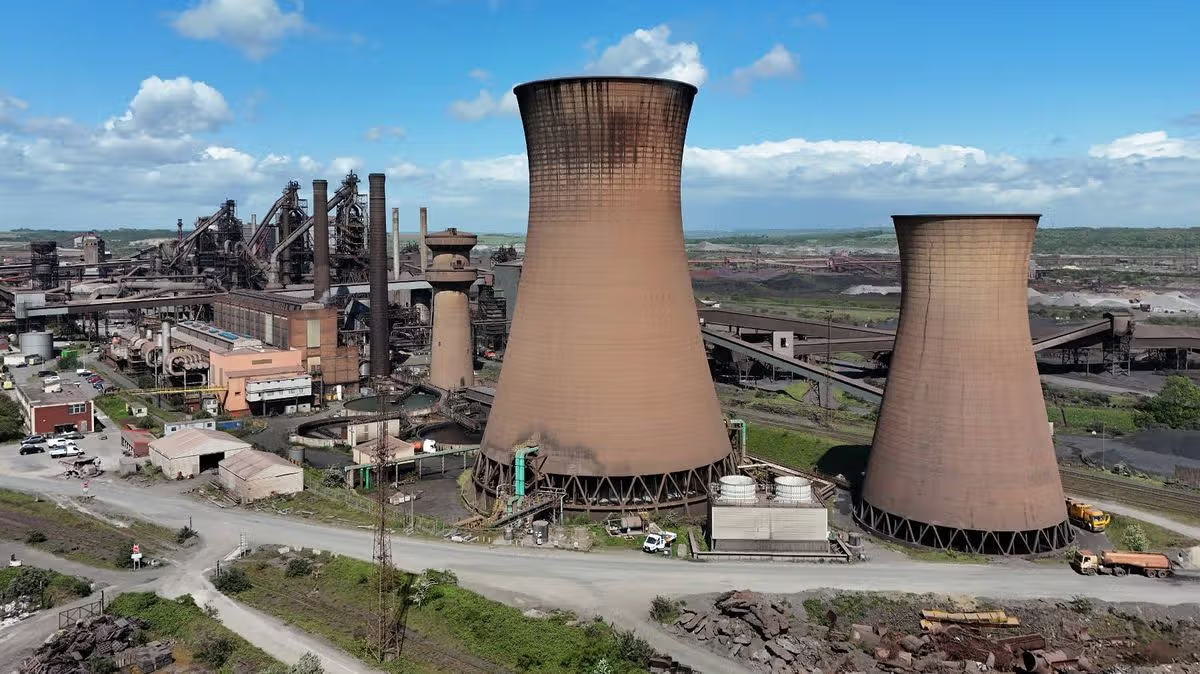
General view of the British Steel works in Scunthorpe.(Image: Joe Giddens/PA Wire)
An influential group of MPs has demanded the Government publish a clear strategy for British Steel, outlining how the company will achieve financial sustainability and what role it will play in the nation’s economy. The Public Accounts Committee (PAC) has warned that ministers lack a credible plan for the firm they rescued from collapse last year, which is currently costing taxpayers an estimated £1.3m per day.
A new report from the cross-party group commends the Government’s intervention to preserve the Scunthorpe blast furnaces — the UK’s last remaining virgin steel-making operation — but warns that the move failed to address the company’s underlying unprofitability. It states: “Over a year later, the Government is unable to articulate what business model or decarbonisation pathway puts the company on a sustainable footing.”
British Steel was fully nationalised two months ago, with total expenditure on the company estimated to have surpassed £640m by the end of June. By June 18, the Department for Business, Innovation, Science and Trade had provided £555m in funding for working capital, covering costs including raw materials and workers’ salaries.
Committee members warn that the Government continues to fund the operation “without a clear end date in sight” and with no estimates of the ultimate bill to the public purse. In recent days, seasoned chief executive Alan Lovell has been appointed as British Steel chair to spearhead a turnaround of the struggling business.
The PAC has also urged the Department to outline how it will engage workers, trade unions and local stakeholders — including North Lincolnshire Council — in decisions regarding the company’s future, including potential options for the Scunthorpe site. It noted that the unions and the council had put forward a compelling argument for continued investment at the steelworks, reports Grimsby Live.
Clive Betts, deputy chair of the Public Accounts Committee, welcomed the Government’s rapid intervention to rescue British Steel but emphasised the move was “just the beginning”. He added: “Having brought British Steel onto the taxpayers’ books, it is now up to government to explain its plan for its future. Unfortunately, beyond simply propping up the company with public money, the government was not able to outline such a plan to our inquiry.
“The reality is that British Steel is unable to wash its own face, and government is now in charge of making sure it gets onto a sustainable financial footing for the future. Government must continue to work hand in glove with North Lincolnshire Council and the three trade unions representing British Steel workers to bring about a just, managed transition to a successful low-carbon future for the company.
“We also require assurances that the startling levels of funding British Steel is currently receiving do not come at the expense of the wider sector. The recent move from the government to acquire Speciality Steel emphasises the point that Government can’t spend all its money supporting British Steel, when clearly there will be a need to support other parts of the industry.
“We similarly expect to see no further complacency from Government at small firms going out of business due to its steel tariff regime. We have seen admirable short-term support from the Government in steel on a number of fronts, but in the long-term, our report must serve as a challenge to the administration as we ask once again: what’s the plan?”.
A Government spokesperson responded: “We welcome the PAC’s report and will review the recommendations. Securing the long-term future of the UK steel sector is in our national interest. While this will require both public and private investment, we’ve taken the first step towards securing steelmaking by securing British Steel’s future through public ownership and appointing a new Board and Chair this month.
“Taxpayer value for money remains a central consideration in our assessment of the future of the site, and we are also backing the communities that rely on it through our Steel Strategy to build a sustainable, competitive and decarbonised steel sector for the years ahead.”





































You must be logged in to post a comment Login