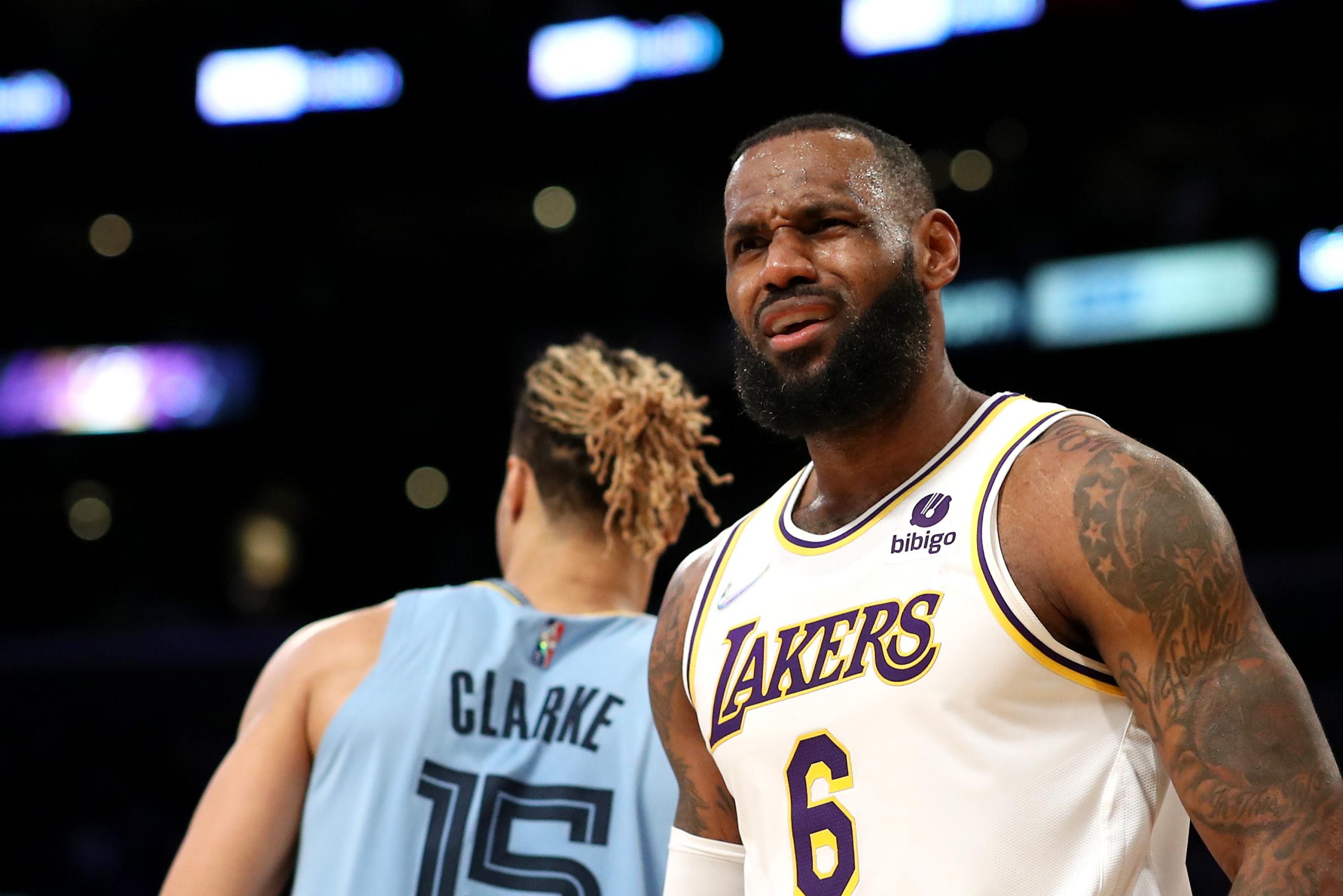
BOSTON — Boston Celtics great Cedric Maxwell has weighed in on one of basketball’s most enduring debates, declaring that Los Angeles Lakers superstar LeBron James deserves a place among the NBA’s all-time top five players.
Maxwell, a two-time NBA champion with the Celtics, made his comments during a recent appearance on FanDuel’s “Run It Back.” He pushed back against skepticism from some in his generation, citing James’ remarkable longevity, on-court achievements and off-court professionalism as reasons he cannot be excluded from the elite group.
“LeBron James one of my favorite players because of the longevity and what he’s done,” Maxwell said.
“He is one of the top players of all-time. So, I don’t think that you can have five greater players in the NBA than LeBron James and what he’s done for the league and how he’s really handled himself,” Maxwell added.
The endorsement from the Celtics legend carries particular weight given the historical rivalry between Boston and James’ teams. Maxwell’s perspective stands out in discussions often dominated by comparisons to legends from earlier eras such as Michael Jordan, Magic Johnson, Larry Bird and Kareem Abdul-Jabbar.
James, now in his 40s, continues to defy age as he enters another season with the Lakers. The four-time NBA champion, four-time MVP and four-time Finals MVP became the league’s all-time leading scorer in 2023 and has shown no signs of slowing down significantly. His ability to maintain elite production while adapting to new teammates and systems has fueled arguments for his place in the pantheon.
Maxwell highlighted James’ consistency and character as key factors.
“A guy who has been no trouble, won championships, and you think about the personnel that have been around him and other personnel that have been around him – you don’t have that with LeBron,” Maxwell said.
This assessment underscores a broader shift in how some former players view James’ career. While debates about the greatest of all time remain subjective, Maxwell’s comments reflect appreciation for sustained excellence over more than two decades. James has led teams to the NBA Finals with three different franchises — the Cleveland Cavaliers, Miami Heat and Lakers — demonstrating versatility rarely seen in the sport’s history.
The 21-time All-Star’s statistical dominance is unparalleled in many categories. Beyond the scoring record, he ranks high on the all-time lists for assists and steals. His playoff performances, including multiple comebacks from 3-1 deficits, have cemented his reputation as one of the most clutch performers the game has produced.
Off the court, James has built a significant business empire and maintained a relatively scandal-free public image, which Maxwell noted as part of his legacy. This professionalism has allowed him to remain a global ambassador for the NBA while navigating the intense scrutiny that comes with being one of the league’s faces for over 20 years.
The timing of Maxwell’s remarks adds interest as the NBA offseason continues. Speculation around James’ future, including reports of teams like the Golden State Warriors showing interest, keeps him in the headlines even as he prepares for what could be another competitive chapter with the Lakers.
Maxwell’s viewpoint contrasts with those who argue that players like Wilt Chamberlain, Bill Russell or Kobe Bryant might edge James out due to era-specific achievements or stylistic preferences. Yet the Celtics alum focused on tangible contributions and durability.
James’ career trajectory includes four championships, but also notable individual honors that span different phases of his evolution. From his early days as a high school phenom in Akron, Ohio, to leading the Heat to back-to-back titles and delivering a long-awaited championship to Cleveland in 2016, his resume features moments that transcended basketball.
Analysts and fans continue to dissect these accomplishments. Some emphasize rings, while others point to advanced metrics showing James’ efficiency and impact on winning. His high usage rates combined with low turnover percentages over extended periods highlight a level of basketball IQ that has only improved with experience.
For Maxwell, who won titles with the Celtics in 1981 and 1984, the respect for James appears rooted in an understanding of the physical and mental demands of the modern NBA. The league today features a faster pace, greater emphasis on three-point shooting and more rigorous travel and recovery schedules compared to previous decades.
James has not only adapted but thrived, often playing heavy minutes in both regular season and postseason while maintaining MVP-caliber production. His influence extends to player empowerment, as his decisions in free agency helped reshape how stars approach their careers.
The broader conversation about the top five typically includes Jordan, often ranked first by many, followed by a mix of Abdul-Jabbar, Johnson, Bird and others. Inserting James requires displacing one of these icons, a proposition that sparks passionate disagreements among fans and media.
Maxwell’s comments may not settle the debate, but they add a credible voice from a champion of a previous generation. His willingness to elevate James speaks to the cross-era respect that the Lakers forward has earned through consistent performance.
As James approaches the twilight of his playing days, these discussions are likely to intensify. Whether he adds to his championship tally or not, his place in history appears secure according to observers like Maxwell. The longevity Maxwell praised has allowed James to rewrite records while remaining a focal point for his team.
Lakers fans and NBA followers alike will watch closely as the next season unfolds. James’ leadership continues to be a cornerstone for a franchise with championship aspirations. His work ethic and preparation have become benchmarks for younger players entering the league.
Maxwell’s endorsement also reflects evolving criteria for greatness. In an era of superteams, load management and expanded playoffs, measuring impact requires nuance. James’ ability to elevate teammates and sustain excellence amid constant change stands out.
The Celtics-Lakers rivalry, one of the NBA’s most storied, adds another layer. Maxwell’s comments bridge that divide, offering praise from a Boston icon for a player who has frequently faced off against Celtics teams in the playoffs.
Basketball historians will continue weighing these arguments for years. For now, Maxwell has made his position clear: LeBron James belongs in the conversation with the greatest to ever play the game.
His perspective contributes to a rich tapestry of opinions that keep NBA discourse vibrant. As the league prepares for another season, James remains a central figure whose legacy continues to grow.












































You must be logged in to post a comment Login