

Business
How American Owners Took Over the Premier League


When Malcolm Glazer completed his takeover of Manchester United in 2005, he became the first American ever to own a Premier League club.
Twenty years on, he looks less like an outlier than an opening act. Heading into the 2025-26 season, thirteen of the league’s twenty clubs carried at least some American money on their share registers, and around half were majority-controlled by US individuals, families or private equity groups. The world’s richest football league has quietly become one of the most coveted assets in American sport.
That surge of cross-Atlantic capital has reshaped far more than the boardroom. It has fed a vast commercial machine around every fixture — broadcasting, sponsorship and the tightly regulated betting market that now sits alongside the UK game, where supporters comparing licensed bookmakers can find out more through comparison sites such as Betiton. For business observers, though, the sharper question is why so much American money has landed on English football in the first place — and what Britain’s new football regulator intends to do about it.
The rise of American owners in the Premier League
The trajectory is stark. Before the Glazers, the English top flight had never had an American owner; today US investors are spread the length of the table. Stan Kroenke, whose sprawling empire also takes in NFL, NBA and NHL franchises, controls Arsenal. Fenway Sports Group, led by John Henry, owns Liverpool. Aston Villa’s V Sports vehicle is co-led by the American financier Wes Edens. And the pace has quickened sharply in recent years: Todd Boehly’s consortium bought Chelsea for £4.25bn in 2022, Bill Foley’s Black Knight group took full control of Bournemouth later that year, and Dan Friedkin — already the owner of Roma — completed a takeover of Everton in 2024, moving the club into a new riverside stadium for this season. Most of those thirteen American stakes have been built since 2008.
Why US investors keep buying English football
For a business audience, the logic is not hard to follow. America’s major leagues — the NFL, NBA, MLB and NHL — are closed shops. There is no promotion or relegation, the number of teams is fixed, and incumbent owners rarely sell. Buying into the NFL, football-finance analysts point out, can cost somewhere between $5bn and $10bn, pricing out all but a handful of buyers. English football offers an alternative: global reach, an open pyramid and, crucially, valuations that still look modest by American standards.
Newcastle United is the clearest illustration. Ranked by Forbes among the most valuable clubs in the Premier League and inside the top twenty worldwide, the club was recently valued at less than the Columbus Blue Jackets — the lowest-valued franchise in the NHL — despite carrying several times the social-media following and playing in a stadium nearly three times the size. To American investors, that gap reads as opportunity: a globally recognised brand they believe has been run conservatively and, in the industry’s phrase, left unsweated. The Premier League’s international broadcasting income, still climbing, is the engine they are buying into.
Ticket prices, the Super League and the fan backlash
The influx has not been universally welcomed. American ownership has coincided with steep rises in ticket prices, and supporters’ groups have pushed back hard. The Arsenal Supporters’ Trust has characterised the trend as a model of squeezing ever more revenue out of fans, and organised protests have flared at Manchester United, Liverpool and Everton across the past two seasons. The deepest wound remains the 2021 European Super League, when six English clubs — several of them American-owned — tried to break away into a closed competition, only to retreat within days amid a furious backlash from supporters and government alike.
Beneath the anger lies a wider argument about where football’s money ends up. While billions flow through the top flight, the grassroots game continues to scrap for funding — a contrast that critics of the modern ownership model return to again and again.
What the new football regulator means for owners
The politics of all this have now hardened into law. The Football Governance Act 2025 received Royal Assent in July 2025 and created an Independent Football Regulator with statutory powers over the top five tiers of the English men’s game. For prospective owners — American or otherwise — the most consequential change is a new suitability test that scrutinises the source and sufficiency of their funds, alongside their honesty, integrity and competence. Every club will also need an operating licence to compete from the 2027-28 season, and will have to seek the regulator’s approval before relocating a stadium, altering its badge or primary colours, or borrowing against its ground.
The regulator, led by a former Financial Conduct Authority director, has signalled an interventionist stance and has already agreed to share information with the FCA. Its remit runs from club-level financial soundness to the heritage of the game itself — a direct response to years of collapses, mismanagement and the Super League affair. For US investors accustomed to lightly regulated, closed leagues at home, English football is about to become a more closely policed place to own a business.
What happens next
None of this looks likely to stem the flow of American money in the near term; the underlying maths that makes English clubs attractive has not changed. What is changing is the environment around the assets: tighter regulation, more assertive supporters and a commercial ecosystem — broadcasting, sponsorship and the regulated betting market tracked by comparison platforms such as Betiton — that keeps expanding in value. For the new wave of American owners, the challenge is no longer simply buying into the Premier League. It is proving they can run it in a way that fans, and now a regulator, will accept.


Thornburg Investment Management is a privately owned global investment firm that offers a range of multi-strategy solutions for institutions and financial advisors. A recognized leader in fixed income, equity, and alternatives investing, the firm oversees mutual funds, institutional accounts, separate accounts for high-net-worth investors, and UCITS funds for non-U.S. investors. Thornburg was founded in 1982 and is headquartered in Santa Fe, NM. Note: This account is not managed or monitored by Thornburg Investment Management, and any messages sent via Seeking Alpha will not receive a response. For inquiries or communication, please use Thornburg Investment Management’s official channels.
Business
Is ChatGPT Down Today? OpenAI Outage Reports Surface for Hundreds of Users as Trackers Show Mixed Signals
Some ChatGPT users reported trouble accessing OpenAI’s flagship chatbot early Sunday, with a tracking account estimating hundreds of affected users, though independent monitoring services showed the platform largely operational as of midday, illustrating the recurring gap between scattered complaints and confirmed, large-scale outages.
A post from the tracking account @status_is_down flagged the reported issue at 5:45 a.m. Sunday, asking followers whether they were also experiencing problems with ChatGPT or OpenAI more broadly. The scale and specific cause of Sunday’s disruption remained unclear as of publication.
Independent status trackers offered a mixed but largely reassuring picture of the platform’s overall health at the time. StatusGator, a service that monitors thousands of cloud services in real time, reported OpenAI as operational as of its most recent check Sunday morning, noting 23 user-submitted reports of outages over the prior 24-hour period, a volume within the range the service typically treats as background noise rather than a confirmed widespread failure. A separate check by the same tracker roughly seven hours earlier had similarly found OpenAI operational, logging 16 user-submitted reports in that window, with the tracker noting that an earlier smaller spike in complaints had already been resolved by that point.
UptimeRobot, which independently pings ChatGPT’s servers every five minutes from multiple global locations, reported no anomalies in its most recent automated check as of Saturday afternoon, finding no unusual response times or error codes. The service says it only flags ChatGPT as experiencing an outage after three separate confirmation checks from different global locations all detect a problem, a method designed to filter out issues tied to a single user’s device or local network rather than the platform itself.
OpenAI’s own official status page showed a mixed picture as well. The page referenced an issue affecting some users encountering 403 errors when loading or using ChatGPT conversations on iOS, an issue the company said it was investigating and would provide updates on as more information became available. It was not immediately clear whether that specific issue was connected to the broader outage reports referenced in Sunday’s social media post, or whether it represented a separate, narrower technical problem affecting only a subset of iOS users.
ChatGPT has a well-documented history of periodic outages since its 2022 public launch, with several notable incidents disrupting service for large numbers of users worldwide. In April 2026, ChatGPT experienced a partial outage that began around 10 a.m. Eastern time and left thousands of users globally unable to access the service, with reports on outage-tracking site Downdetector peaking at more than 8,700 in the United Kingdom and roughly 1,900 in the United States. OpenAI confirmed the “partial outage” at the time, later stating it had deployed a fix and was “monitoring the recovery” of the service, with most users regaining access within about 90 minutes.
That April incident affected a range of ChatGPT features, with user polling at the time indicating that difficulty accessing old conversations was the most commonly reported problem, ahead of separate complaints about being unable to sign in altogether. Additional outages have periodically affected specific ChatGPT features, including image generation, custom GPTs and the company’s Codex coding tool, according to tracking by outlets that monitor the platform’s status regularly. OpenAI has generally responded to such incidents with brief, limited public statements acknowledging that it is “investigating” a given issue, without always providing detailed explanations of the underlying cause, a pattern outside observers have noted as a recurring characteristic of the company’s outage communications.
Beyond individual outages, ChatGPT has also faced broader questions about reliability given its widespread integration into third-party products and services. Because a large number of businesses now rely on OpenAI’s underlying API to power customer-facing tools such as chatbots and automated support systems, disruptions to OpenAI’s core infrastructure can cascade into outages for companies that have built products on top of the platform, temporarily leaving their own customers without service until OpenAI resolves the underlying issue.
Users experiencing trouble with ChatGPT on Sunday were encouraged by outage-tracking services to rule out simpler explanations before assuming the platform itself was down. UptimeRobot’s guidance recommends trying to access chatgpt.com from a different browser, device or network, such as a mobile hotspot, along with disabling any active VPN, clearing the device’s DNS cache, or restarting a home router. If the site loads normally through one of those alternate methods, the tracker notes, the underlying problem is more likely local to the user’s own device or network rather than a confirmed platform-wide ChatGPT outage.
The service also cautions that even when its automated checks confirm a genuine outage, that does not necessarily mean every user is affected equally. Some disruptions are regional rather than global, some affect only specific features such as image generation or file uploads rather than the core chat function, and some manifest as unusually slow performance rather than a complete failure to load, complicating efforts by any single user to determine whether what they are experiencing reflects a broader technical problem or an isolated glitch.
As of Sunday, OpenAI had not issued a public acknowledgment specifically addressing the outage reports referenced in the morning social media post, and the company’s official status page did not reflect an active, company-confirmed incident tied to that specific report at the time of publication. The gap between individual user complaints and a formally confirmed platform-wide outage remains a common pattern across major online services broadly, with outage trackers generally relying on report volume crossing defined thresholds within short windows, combined with geographic clustering of those reports, before classifying an issue as a confirmed outage rather than a collection of unrelated, isolated problems.
The situation remains fluid, and further updates may emerge from OpenAI or independent outage-tracking services as the day progresses. Users continuing to experience access problems are advised to check OpenAI’s official status page directly for the most current information on any active incidents affecting the platform.

Southeast Asia’s soccer ambitions are rising, driven by AFF-led competitions, growing fan engagement, and commercial partnerships with Hyundai, Shopee, and MSIG. With expanding tournaments, youth development, and improved national team performances, ASEAN nations increasingly believe qualifying for the FIFA World Cup is becoming achievable through sustained investment and unity.
Key Points
- Southeast Asia’s soccer ambitions are rising, driven by the AFF’s flagship ASEAN Hyundai Cup (30th anniversary) plus new competitions under the ASEAN United FC platform, spanning men’s, women’s, and youth soccer.
- Commercial partners like Hyundai, Shopee, and MSIG are investing beyond sponsorship, boosting fan engagement, grassroots programs, and youth development, with the 2024 Championship reaching 541 million viewers.
- On-field progress (Indonesia, Vietnam, Philippines) fuels AFF’s belief that collective effort across stakeholders can deliver Southeast Asia’s first men’s World Cup qualifier.
A Growing Regional Ambition
For decades, qualifying for the FIFA World Cup has remained an elusive goal for Southeast Asia, but growing belief now suggests it may be within reach. With over 700 million people and passionate fans, ASEAN nations have seen rising quality in domestic and regional soccer, larger crowds, and stronger competitiveness in Asia.
This progress stems from a long-term strategy led by the ASEAN Football Federation (AFF), supported by partner Sportfive. AFF president Khiev Sameth credits decades of investment in competitions, youth development, coaching, and governance—anchored by the ASEAN Hyundai Cup, now marking its 30th anniversary as the region’s flagship tournament.
Commercial Growth Powers the Game
Sustaining major tournaments requires more than ambition—it demands sustainable commercial backing. The AFF unified its four flagship competitions under the ASEAN United FC platform, allowing sponsors to engage audiences across multiple events year-round, a model Sportfive’s Seamus O’Brien says has accelerated regional development.
The results are striking: the 2024 ASEAN Championship drew 541 million broadcast viewers and a potential reach of 19.6 billion. This growth has attracted major brands like Hyundai, Shopee, and MSIG, whose involvement now extends beyond traditional sponsorship into fan engagement, digital campaigns, and community programs that strengthen the sport’s commercial and cultural value.
Investment Beyond the Pitch
While sponsorship cannot guarantee World Cup qualification, it strengthens the broader soccer ecosystem—supporting grassroots programs, youth pathways, and women’s soccer. MSIG, for instance, backs clinics and an all-girls escort program, reflecting the sport’s role as what CEO Clemens Philippi calls “a unifying force” across the region.
On-field progress reinforces this optimism: Indonesia has narrowed the gap with Asia’s traditional powers, while Vietnam and the Philippines reached the 2023 Women’s World Cup. AFF president Khiev Sameth emphasized that achieving the ultimate goal will require collective commitment from associations, clubs, governments, and fans, stating that unity and shared purpose can help Southeast Asia “earn its place on football’s greatest stage.”
Source : Global brands behind ASEAN soccer’s World Cup ambition – Sports – The Jakarta Post
Other People are Reading


Equity Research Analyst with a broad career in the financial market, covered both Brazilian and global stocks. As a value investor, my analysis is primarily fundamental, focusing on identifying undervalued stocks with growth potential. Feel free to reach out for collaborations or to connect!
Analyst’s Disclosure: I/we have no stock, option or similar derivative position in any of the companies mentioned, and no plans to initiate any such positions within the next 72 hours. I wrote this article myself, and it expresses my own opinions. I am not receiving compensation for it (other than from Seeking Alpha). I have no business relationship with any company whose stock is mentioned in this article.
Seeking Alpha’s Disclosure: Past performance is no guarantee of future results. No recommendation or advice is being given as to whether any investment is suitable for a particular investor. Any views or opinions expressed above may not reflect those of Seeking Alpha as a whole. Seeking Alpha is not a licensed securities dealer, broker or US investment adviser or investment bank. Our analysts are third party authors that include both professional investors and individual investors who may not be licensed or certified by any institute or regulatory body.


Michael Kramer is the founder of Mott Capital Management – and is a long-only investor who focuses on macro themes and studies trends and options activities to identify and assess entry and exit points for investments in his long-term focused thematic growth strategy. He is a former buy-side trader, analyst, and portfolio manager with 30 years of experience tracking market technicals, fundamentals, and options.Michael Kramer leads the investing group Reading the Markets, where he helps a devoted following of members to better understand what is driving trading and where the market is likely heading, both the short and long-term. Features of the investing group include: daily written commentary and videos analyzing the driving factors behind price action; general macro trend education to help members make well-informed decisions based on market conditions, interest rates, currency movements and how they all interact; chat for questions and community dialogue; and regular Zoom videos sessions to discuss current ideas and answer questions. The level of access RTM subscribers and the expertise of the source are unprecedented given that the subscription price is a fraction of similar technical coaching and mentoring services. Learn more.
Analyst’s Disclosure: I/we have a beneficial long position in the shares of MSFT, AMZN, AAPL, GOOGL either through stock ownership, options, or other derivatives. I wrote this article myself, and it expresses my own opinions. I am not receiving compensation for it (other than from Seeking Alpha). I have no business relationship with any company whose stock is mentioned in this article.
This report contains independent commentary to be used for informational and educational purposes only. Michael Kramer is a member and investment adviser representative with Mott Capital Management. Mr. Kramer is not affiliated with this company and does not serve on the board of any related company that issued this stock. All opinions and analyses presented by Michael Kramer in this analysis or market report are solely Michael Kramer’s views. Readers should not treat any opinion, viewpoint, or prediction expressed by Michael Kramer as a specific solicitation or recommendation to buy or sell a particular security or follow a particular strategy. Michael Kramer’s analyses are based upon information and independent research that he considers reliable, but neither Michael Kramer nor Mott Capital Management guarantees its completeness or accuracy, and it should not be relied upon as such. Michael Kramer is not under any obligation to update or correct any information presented in his analyses. Mr. Kramer’s statements, guidance, and opinions are subject to change without notice. Past performance is not indicative of future results. Neither Michael Kramer nor Mott Capital Management guarantees any specific outcome or profit. You should be aware of the real risk of loss in following any strategy or investment commentary presented in this analysis. Strategies or investments discussed may fluctuate in price or value. Investments or strategies mentioned in this analysis may not be suitable for you. This material does not consider your particular investment objectives, financial situation, or needs and is not intended as a recommendation appropriate for you. You must make an independent decision regarding investments or strategies in this analysis. Upon request, the advisor will provide a list of all recommendations made during the past twelve months. Before acting on information in this analysis, you should consider whether it is suitable for your circumstances and strongly consider seeking advice from your own financial or investment adviser to determine the suitability of any investment.
Seeking Alpha’s Disclosure: Past performance is no guarantee of future results. No recommendation or advice is being given as to whether any investment is suitable for a particular investor. Any views or opinions expressed above may not reflect those of Seeking Alpha as a whole. Seeking Alpha is not a licensed securities dealer, broker or US investment adviser or investment bank. Our analysts are third party authors that include both professional investors and individual investors who may not be licensed or certified by any institute or regulatory body.
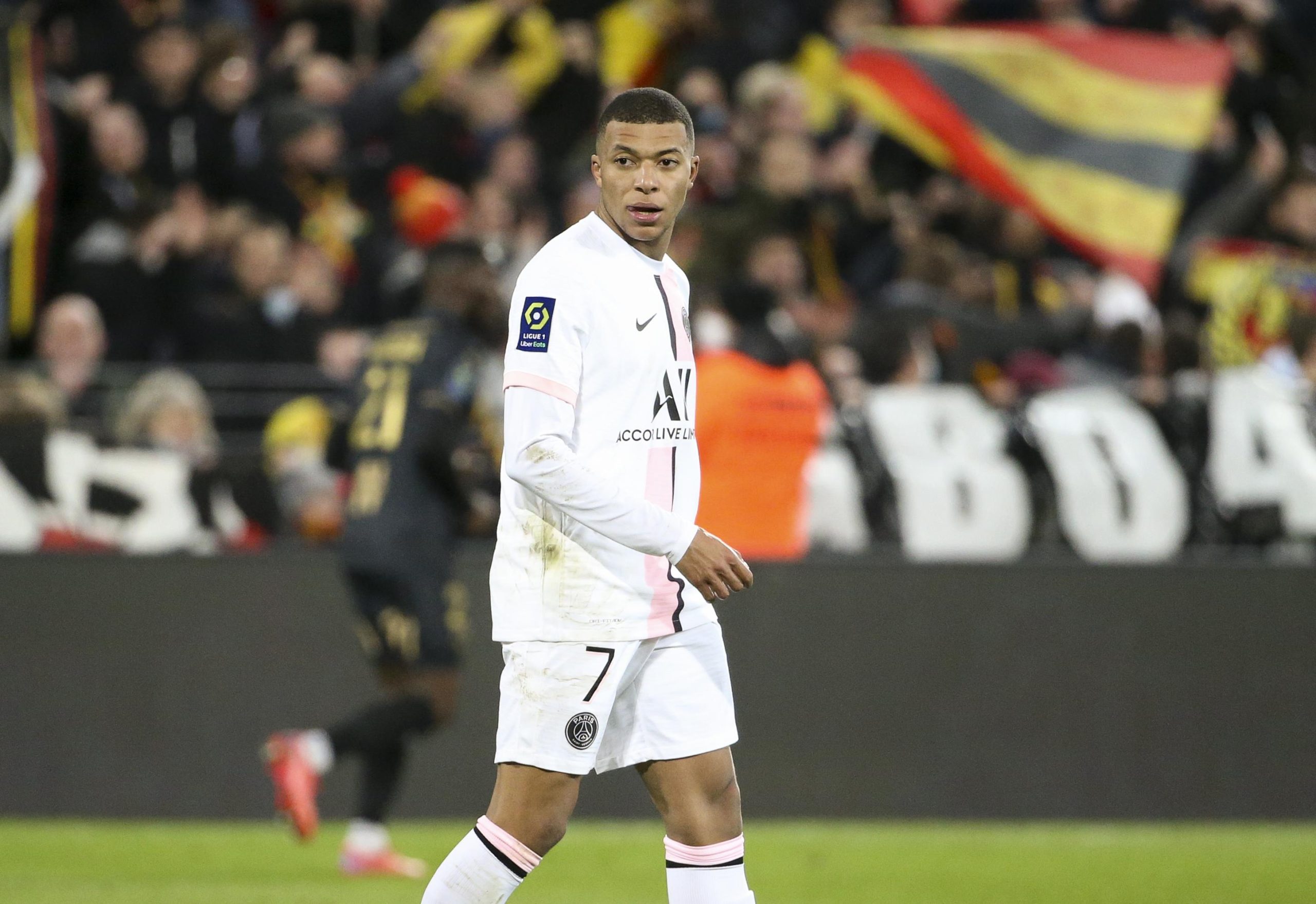
The 2026 FIFA World Cup semifinal bracket is officially set, with France, Spain, England and defending champion Argentina emerging from a dramatic quarterfinal round to claim the tournament’s final four spots, each team now two victories away from lifting the trophy.
What began as a 48-nation field has been narrowed to those four semifinalists following a quarterfinal round played across the United States from July 9 through July 11. France advanced with a 2-0 win over Morocco at Gillette Stadium in Foxborough, Massachusetts. Spain edged Belgium 2-1 at SoFi Stadium in Inglewood, California. England overcame Norway 2-1 after extra time at Hard Rock Stadium in Miami Gardens, Florida, thanks to a two-goal performance from Jude Bellingham. And Argentina defeated Switzerland 3-1 after extra time at Arrowhead Stadium in Kansas City, with goals from Alexis Mac Allister, Julián Álvarez and Lautaro Martínez overcoming an early equalizer from Switzerland’s Dan Ndoye.
The semifinals will unfold on back-to-back days next week. France meets Spain on Tuesday, July 14, at AT&T Stadium in Arlington, Texas, with kickoff set for 3 p.m. Eastern time. England faces Argentina the following day, Wednesday, July 15, at Mercedes-Benz Stadium in Atlanta, also kicking off at 3 p.m. Eastern. Both venues feature retractable roofs, a design consideration expected to help manage conditions during the peak of the U.S. summer heat.
The two semifinal winners will advance to the World Cup final, scheduled for Sunday, July 19, at MetLife Stadium in East Rutherford, New Jersey, a venue FIFA has referred to during the tournament as New York New Jersey Stadium. That match is also set to kick off at 3 p.m. Eastern time. The two semifinal losers will instead meet in the tournament’s third-place match, scheduled for Saturday, July 18, at Hard Rock Stadium in Miami Gardens, the day before the final.
As with every match in the World Cup’s knockout stage, neither semifinal can end in a draw. Should either July 14 or July 15 match remain level after 90 minutes of regulation play, the teams will proceed to two 15-minute periods of extra time. If the score remains tied after extra time, the match will be decided by a penalty shootout, the same format used to resolve any deadlocked knockout-stage contest throughout the tournament.
France’s path to the semifinals has been built on a mix of individual brilliance and squad depth throughout the knockout rounds, with the quarterfinal win over Morocco continuing a run that has positioned Les Bleus among the tournament favorites. Spain, meanwhile, needed a tightly contested win over Belgium to advance, extending a run that has featured some of the tournament’s most technically polished attacking football. Both sides now meet in what many analysts have flagged as one of the most anticipated matchups of the tournament’s closing stages, pitting two of European football’s traditional heavyweights against each other with a place in the final on the line.
England’s path to Atlanta came with significantly more late drama. Norway, appearing in its first World Cup since 1998, took an early lead through Andreas Schjelderup before Bellingham equalized in first-half stoppage time and then struck again three minutes into extra time to complete his two-goal display and send Thomas Tuchel’s side through. The victory pushed England into their third World Cup semifinal since lifting the Jules Rimet Trophy 60 years ago in 1966, following previous semifinal losses to West Germany in 1990 and Croatia in 2018.
Argentina’s route to the semifinals required a similarly grueling extra-time effort against Switzerland. Lionel Messi did not find the scoresheet himself but recorded an assist on Mac Allister’s opening goal in the 10th minute, his 10th career World Cup assist, before Switzerland equalized in the second half to force the match into extra time. Álvarez and Martínez ultimately delivered the decisive goals in the second period of extra time, sending Argentina through as it continues its bid to defend the title it won in Qatar in 2022.
In the United States, both semifinals will be broadcast on FOX in English and on Telemundo in Spanish, with streaming available through the FOX One and FOX Sports apps for English-language coverage and Peacock for the Spanish-language broadcast. Fans outside the U.S. will need to account for time zone differences when planning to watch; a 3 p.m. Eastern kickoff corresponds to 8 p.m. in London and 9 p.m. across much of Central Europe.
Both semifinal matchups carry significant historical and competitive weight beyond simply determining the tournament’s finalists. A France-Spain semifinal brings together two nations with a combined five World Cup titles between them, while an England-Argentina matchup pits a side chasing its first World Cup title since 1966 against the two-time defending champion looking to become the first nation to win back-to-back titles since Brazil accomplished the feat in 1958 and 1962.
Star power will also be on full display across both matches. Messi, playing in what is widely regarded as his final World Cup appearance at age 39, continues to lead Argentina’s pursuit of a second consecutive title, while Bellingham has emerged as the singular attacking force behind England’s run, having now scored in each of the team’s past two knockout matches. On the other side of the bracket, France and Spain both feature deep rosters stacked with players from some of Europe’s most prominent club sides, setting up a semifinal many analysts have described as a genuine toss-up given the overall strength of both squads.
With the semifinal matchups now locked in and just over two weeks remaining in the tournament, attention across the sport is expected to shift toward Dallas and Atlanta as France, Spain, England and Argentina prepare for a pair of matches that will determine which two nations advance to compete for the sport’s ultimate prize in New Jersey on July 19.
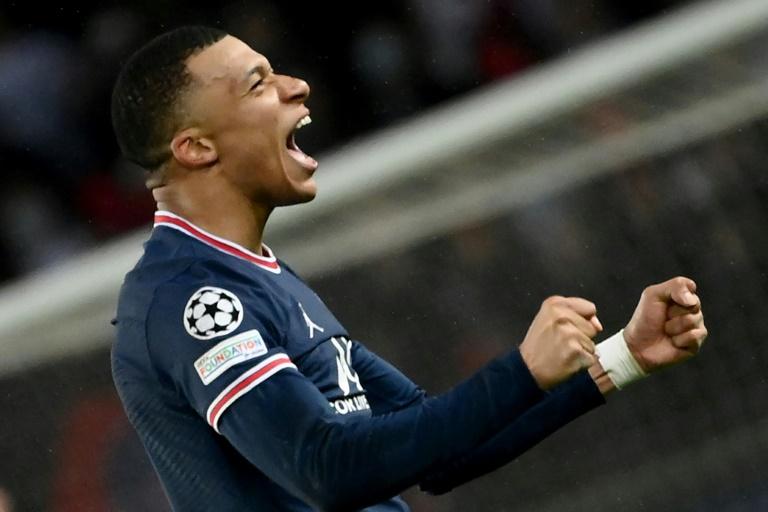
With the 2026 World Cup down to its final four teams, the race for the tournament’s adidas Golden Boot has narrowed into one of the tightest scoring battles in recent memory, led by a pair of the sport’s most decorated forwards and rounded out by a mix of established stars and breakout performers. Here is a look at the five leading forwards in the tournament heading into next week’s semifinals.
Kylian Mbappé currently sits atop the standings with eight goals, tied with Lionel Messi but holding the edge on FIFA’s assist tiebreaker after providing three helpers compared with Messi’s one. Mbappé reclaimed the lead with a goal in the 59th minute of France’s 2-0 quarterfinal win over Morocco, part of a run in which he has scored in all but one of France’s matches at this tournament, including multiple goals in three separate games. The French forward has now scored 20 career World Cup goals, one behind Messi’s all-time record of 21, and is chasing a second consecutive Golden Boot after winning the award at the 2022 tournament, a feat no player in World Cup history has ever accomplished twice. Playing alongside a deep France attack that also features Ousmane Dembélé, Désiré Doué and Michael Olise, Mbappé enters the semifinal against Spain as the tournament’s outright goal-scoring pace-setter.
Lionel Messi remains level with Mbappé at eight goals, a total he reached with a left-footed volley against Egypt in the round of 16, a match in which he also picked up an assist. Messi opened the tournament with a hat trick against Algeria and became the first player in the 2026 World Cup to reach seven goals with an early strike against Cabo Verde. Now 39 years old, Messi has never won a World Cup Golden Boot despite becoming the tournament’s all-time leading scorer, having been edged out by Mbappé’s final hat trick during the 2022 final. In Argentina’s quarterfinal win over Switzerland, Messi did not add to his goal tally but recorded his 10th career World Cup assist, extending his tournament-long emphasis on facilitating for teammates even as his own scoring pace has held steady.
Erling Haaland ranks third with seven goals, sitting one behind the co-leaders after a two-goal performance against Brazil helped push Norway into the quarterfinals. Haaland reached that tally despite not playing in Norway’s final group-stage match, and he later scored the winning goal against the Ivory Coast in the round of 32 before contributing both of Norway’s goals in the team’s 2-1 win over Brazil in the round of 16. Speaking to reporters after an earlier match against Senegal, Haaland offered a simple explanation for his prolific scoring pace. “It’s my specialty to score goals,” Haaland said. “I’m just really good at scoring goals.” Haaland’s tournament ultimately ended in the quarterfinals following Norway’s extra-time loss to England, closing the book on his Golden Boot bid for this cycle, though his seven-goal haul across four matches still ranks among the tournament’s most efficient scoring runs.
Harry Kane rounds out the group of established stars with six goals, a tally he built with an opening double against Croatia before a header against Panama made him England’s all-time leading World Cup scorer, surpassing Gary Lineker’s previous mark. Kane added two more goals in a comeback win over DR Congo in the round of 32 and converted a penalty in England’s dramatic 3-2 win over Mexico in the round of 16. While Kane himself did not score in England’s extra-time quarterfinal win over Norway, teammate Jude Bellingham’s two-goal performance in that match has kept England’s broader attacking output within range of the tournament’s scoring leaders as the team advances to face Argentina in the semifinals.
Rounding out the top five is France’s Ousmane Dembélé, who has emerged as one of the tournament’s standout attacking performers with five goals. Dembélé produced a first-half hat trick during the group stage and added a decisive fifth goal in France’s 2-0 quarterfinal win over Morocco, a strike that sealed the result and pushed France into the semifinals. His emergence as a consistent scoring threat alongside Mbappé has given France arguably the tournament’s most dangerous overall attacking group, one that has produced both the most goals and the most shot attempts of any remaining team in the competition.
FIFA’s tiebreaker rules for the Golden Boot could prove decisive given how tightly bunched the leading scorers remain. If two or more players finish the tournament level on goals, assists serve as the first tiebreaker, followed by total minutes played, with the player who has featured for less time ranked ahead. Should every tiebreaker remain equal, FIFA rules allow multiple players to share the award, an outcome that has never previously occurred in men’s World Cup history.
With Mbappé and Messi both still active heading into the semifinals, both retain a realistic path to finishing as the tournament’s outright top scorer, while Haaland and Kane’s runs illustrate how difficult it remains to sustain a scoring pace deep into a 48-team tournament format that rewards players from teams capable of advancing through all eight possible matches. Historically, the Golden Boot has not always gone to a player from the eventual champion, with past winners including England’s Gary Lineker in 1986, Croatia’s Davor Šuker in 1998 and Brazil’s Ronaldo in 2002 all claiming the individual honor despite their teams falling short of the title.
With France facing Spain and Argentina facing England in next week’s semifinals, at least two of the tournament’s top-five scorers, Mbappé and Messi, will have a chance to add to their totals before the race is settled. The Golden Boot will officially be awarded following the July 19 final at MetLife Stadium in New Jersey, once every remaining match of the tournament has been played.
Business
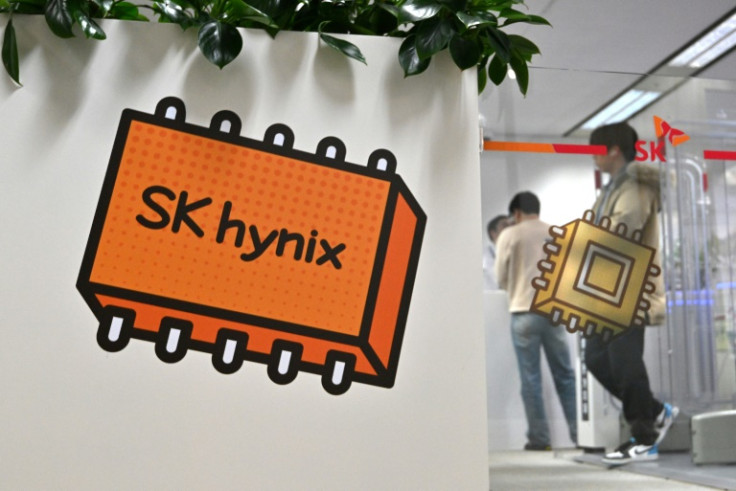
10 Things to Know About SK Hynix’s Historic US Nasdaq IPO Listing as Regular Trading Officially Begins Monday
AFP
South Korean memory chipmaker SK Hynix completed its historic debut on the Nasdaq last week, and regular trading under its permanent ticker begins Monday, marking a milestone moment for the AI-driven memory boom that has transformed the once-overlooked semiconductor sector. Here are 10 key things to know about the listing.
- The offering was the largest-ever US equity listing by a foreign company. SK Hynix priced its American depositary shares at $149 apiece, raising approximately $26.5 billion, a figure that topped Alibaba’s previous record of $25 billion set in 2014. The deal ranks as the world’s second-largest stock sale on record, trailing only Elon Musk’s SpaceX, which went public roughly a month earlier.
- Shares surged on their first day of trading. The stock opened at $170 on Friday, July 10, and closed the session up roughly 13% at $168.01, giving US investors their first real-time confirmation of strong demand for a direct stake in the AI memory boom. Institutional orders during the offering’s bookbuilding process reportedly exceeded available shares by more than seven times.
- Trading tickers are changing this week. Shares traded Friday under the temporary “when-issued” ticker SKHYV, and are scheduled to convert to the company’s permanent ticker, SKHY, when regular trading begins Monday, July 13, according to Nasdaq’s official trader notice.
- Each American depositary share represents a fraction of the company’s Korean-listed stock. The offering consisted of 177.9 million ADSs, with each ADS representing one-tenth of a full share of SK Hynix’s common stock as traded on the Korea Exchange, a structure designed to make the shares more accessible and affordable to individual US investors.
- SK Hynix Chairman Chey Tae-won expressed emotional pride in the listing. Speaking with CNBC’s Kristina Partsinevelos on the day of the debut, Chey described the moment in personal terms. “It’s a kind of dream, and now it’s a dream come true,” Chey said. He added that demand from customers has consistently outpaced the company’s expansion plans, telling CNBC that even after SK Hynix announced it would double production capacity within five years, customers responded that the increase still wouldn’t be enough. “All my customers said that, ‘Well, that’s not enough, man, and, well, we need more,’” Chey said.
- The company’s valuation has climbed dramatically over the past year. SK Hynix’s stock has risen more than sevenfold over the past 12 months, pushing its overall market capitalization to roughly $1 trillion and making it South Korea’s second most valuable company behind only Samsung Electronics. That surge has been driven almost entirely by soaring demand for high-bandwidth memory, or HBM, chips used in artificial intelligence accelerators such as those produced by Nvidia.
- SK Hynix dominates the global HBM market. According to the company’s securities filing with US regulators, SK Hynix holds a 56.4% share of the global high-bandwidth memory market, ahead of rivals Samsung and Micron Technology, positioning it as the primary beneficiary of surging AI infrastructure spending among the world’s three major memory producers.
- Proceeds will fund a major expansion, including new US manufacturing. SK Hynix has said it will use funds raised through the offering to finance new factories and equipment. That includes a $4 billion advanced packaging plant under construction in West Lafayette, Indiana, scheduled for completion in 2028, which will handle a key step in HBM production involving the connecting and stacking of individual chips into larger systems. The company could also receive up to $458 million in funding through the US CHIPS and Science Act, along with up to $570 million in additional federal loans.
- The bulk of SK Hynix’s expansion remains centered in South Korea. Despite its new US manufacturing footprint, the majority of the company’s planned capital investment will continue to take place domestically, including a cluster of chip fabrication plants in Yongin, South Korea, expected to cost roughly $390 billion, according to figures cited by CNBC.
- Analysts are watching potential inclusion in the Nasdaq 100 Index as a key catalyst. SK Hynix chose to list on the Nasdaq specifically to position itself for inclusion in the Nasdaq 100, with the market widely expecting that inclusion to occur during the index’s routine rebalancing this December, according to TradingKey. Korea Investment & Securities has estimated that resulting passive investment flows, from funds tracking the index through vehicles such as the QQQ exchange-traded fund, could account for roughly 2% of the company’s total outstanding ADR shares, representing a meaningful source of guaranteed future demand independent of broader market sentiment.
Beyond those 10 headline facts, the listing carries broader significance for the memory chip industry as a whole. SK Hynix’s annual revenue nearly tripled between 2023 and 2025, reaching approximately $65 billion, and analysts polled by data provider LSEG expect that figure to more than triple again in 2026 to roughly $235 billion, reflecting the scale of the ongoing AI-driven memory shortage. More than three-quarters of the company’s revenue currently comes from RAM products, including HBM, while its NAND flash storage business, marketed under the Solidigm brand in the US, also holds the leading global market share in that category.
Some analysts have cautioned that the memory industry has historically been prone to boom-and-bust cycles, even as demand for AI infrastructure appears to be reshaping longer-term expectations. Chey has pushed back on that concern, arguing that current demand reflects a structural shift rather than a temporary spike tied to a single technology cycle. “The AI agent, physical AI robot, actually that needs a lot of memory chips,” Chey told CNBC, pointing to a broadening range of AI-driven applications he believes will sustain elevated demand for memory products well beyond the current wave of data center buildouts.
With regular trading now underway under the SKHY ticker, investors and analysts are expected to closely monitor whether the stock can sustain its early premium relative to its Korean-listed shares, and whether the broader memory rally that has powered SK Hynix’s extraordinary run over the past year continues to hold through the remainder of 2026.
Business
Nvidia or SK Hynix Stock in 2026? Comparing Two AI Chip Giants as Analysts Weigh Risks and Rewards
Investors looking to add AI infrastructure exposure to their portfolios now face a fresh choice: Nvidia, the dominant maker of AI accelerator chips, or SK Hynix, the memory supplier that just completed a historic Nasdaq debut and now sits alongside Nvidia as one of the most closely watched names in the AI chip supply chain. Each offers a different way to play the same underlying boom, and analysts say the right choice depends heavily on an investor’s risk tolerance and time horizon.
Nvidia remains the clear leader in accelerated computing, commanding the largest share of the AI chip market and continuing to roll out new hardware platforms at a rapid pace. The company’s latest generation GPU platform, Vera Rubin, has generated what analysts describe as extremely strong demand. Nvidia’s dominance is reinforced by its CUDA software platform, which has built an entrenched ecosystem of developers and created a competitive moat that rivals such as AMD and Broadcom have struggled to fully close, even as they continue gaining incremental market share.
SK Hynix, by contrast, occupies a different but increasingly critical position in the same supply chain. The South Korean memory maker controls roughly 56% to 58% of the global market for high-bandwidth memory, or HBM, the specialized memory that sits alongside AI accelerator chips and feeds them data fast enough to keep up with processing demands. SK Hynix has served as Nvidia’s largest HBM supplier throughout the current AI buildout, a relationship Nvidia chief executive Jensen Huang has publicly reinforced. “SK Hynix has been Nvidia’s largest memory partner and will continue to be our largest memory partner,” Huang said when the two companies signed an expanded multiyear technology partnership.
On valuation, the two stocks currently sit at very different levels. Prior to its ADR debut, SK Hynix traded at roughly 4.8 times forward 12-month earnings estimates, according to data from LSEG cited by CNBC, compared with an industry median of nearly 30 times and rival Micron Technology’s roughly 6.6 times. Nvidia, while not directly cited alongside those specific figures, has historically traded at a significant premium to memory makers given its dominant market position and higher profit margins, reflecting the market’s willingness to pay up for the company widely seen as the primary beneficiary of AI infrastructure spending.
SK Hynix’s growth metrics have been extraordinary in their own right. In its most recent quarter, the company reported revenue growth of 198% to about $35 billion, a record level, with net income soaring 398% and operating margin reaching 72%. SK Hynix’s South Korea-listed shares climbed roughly 222% so far this year and as much as 800% over the past twelve months, pushing the company’s market capitalization to approximately $1 trillion and making it South Korea’s second most valuable listed company behind only Samsung Electronics.
Analysts remain broadly favorable on SK Hynix following its Nasdaq listing. Of 37 analysts tracking the stock, 35 currently rate it a buy, according to data from Investing.com. UBS has raised its price target for the Korean shares, citing long-term supply agreements that lock in a substantial share of expected volume and pricing. Former Wedbush analyst Dan Ives has grouped SK Hynix together with Micron and Samsung Electronics as what he called the “golden jewels” of the AI revolution, arguing that recent stock weakness across the sector has overlooked persistent underlying demand for high-bandwidth memory and tight industry supply.
Investment writer Edward Sheldon, writing for The Twelfth Magpie, offered a direct comparison of the two companies’ respective strengths, noting that SK Hynix’s close relationship with Nvidia and its dominant HBM market position give it a compelling growth case at a lower valuation multiple than Nvidia carries. He noted that both stocks currently look inexpensive relative to their projected growth rates, though he cautioned that memory remains a more cyclical business than Nvidia’s core accelerator chip franchise.
That cyclicality represents the central risk cited across nearly every analysis of SK Hynix specifically. Memory has historically moved through pronounced boom-and-bust cycles, with periods of shortage and elevated pricing eventually giving way to oversupply and sharp price corrections once manufacturers expand capacity to meet demand. SK Hynix’s own stock has already demonstrated that sensitivity this year, dropping roughly 12% in a single session in late June amid reports that Nvidia might trim production of an upcoming chip platform, before rebounding in the weeks that followed. CNBC’s Kristina Partsinevelos captured the industry’s most persistent caveat succinctly: “The longer term risk, though, is that memory has never really met a supercycle that didn’t eventually crash.”
Nvidia, by comparison, has generally been viewed by analysts as less exposed to that specific boom-bust pattern given its software ecosystem and its position at the center of AI compute demand more broadly, though the company carries its own set of risks, including intensifying competition from AMD, Broadcom and custom chip efforts by major cloud providers, along with a valuation that assumes continued rapid growth in AI infrastructure spending industrywide.
Both companies also face questions about the durability of current elevated pricing. Partsinevelos noted that no significant new HBM supply is expected to come online before late 2027, a dynamic that should help keep memory prices and SK Hynix’s margins elevated in the near term, while also raising the stakes for what happens once that new supply eventually arrives. Passive investment flows could also provide a near-term tailwind for SK Hynix specifically, with some analysts estimating the stock could see as much as $14 billion in passive buying as it becomes eligible for inclusion in major indices such as the Nasdaq 100 later this year.
Ultimately, the choice between Nvidia and SK Hynix comes down to what kind of AI exposure an investor is seeking. Nvidia offers a bet on the continued dominance of a single company at the center of the entire AI accelerator market, with a software moat that has proven difficult for competitors to replicate. SK Hynix offers a more targeted, higher-growth bet on the memory bottleneck specifically, at a comparatively lower valuation, but with greater historical exposure to cyclical swings in pricing and demand.
As with any investment decision, analysts generally recommend that individual investors weigh their own risk tolerance, time horizon and overall portfolio diversification, and many suggest consulting a licensed financial adviser before making decisions based on any single company’s growth story, regardless of how compelling the underlying numbers may currently appear.


Pythia Research focuses on multi-bagger stocks, primarily in the technology sector. Our approach combines financial analysis, behavioral finance, psychology, social sciences, and alternative metrics to assess companies with high conviction and asymmetric risk-reward potential. By leveraging both traditional and unconventional insights, we aim to uncover breakout opportunities before they gain mainstream attention. Our multidisciplinary strategy helps us navigate market sentiment, identify emerging trends, and invest in transformative businesses poised for exponential growth. We don’t just follow the market—we anticipate where disruption will create the next big winners.Markets don’t move purely on fundamentals; they move on perception, emotion, and bias. We lean into that reality. Investor behavior, anchoring to past valuations, herd mentality during rallies, panic selling from recency bias, creates persistent inefficiencies. These moments of mispricing often mark the start of a breakout, not the end of one.Rather than avoid psychological noise, we analyze it. When the crowd sees volatility, we assess whether it’s driven by emotion or fundamentals. Status quo bias can keep investors blind to companies redefining their category. Fear of uncertainty can delay recognition of businesses with clear but unconventional growth paths. We look for these disconnects.Our process blends deep research with signals others miss: sudden shifts in narrative, early social traction, founder-driven vision, or underappreciated momentum in developer or user adoption. These are often the precursors to exponential moves, if you catch them early.We focus on conviction plays, not safe bets. Each opportunity is evaluated for Risk/Reward profile: limited downside, explosive upside. We believe that the best returns come from understanding where belief is lagging reality.
Analyst’s Disclosure: I/we have a beneficial long position in the shares of SNDK, MU either through stock ownership, options, or other derivatives. I wrote this article myself, and it expresses my own opinions. I am not receiving compensation for it (other than from Seeking Alpha). I have no business relationship with any company whose stock is mentioned in this article.
Seeking Alpha’s Disclosure: Past performance is no guarantee of future results. No recommendation or advice is being given as to whether any investment is suitable for a particular investor. Any views or opinions expressed above may not reflect those of Seeking Alpha as a whole. Seeking Alpha is not a licensed securities dealer, broker or US investment adviser or investment bank. Our analysts are third party authors that include both professional investors and individual investors who may not be licensed or certified by any institute or regulatory body.

Mark Grace dishes on playing Pebble Beach with Bill Murray

Them! 4K UHD Review: Nuclear Testing Has an Ant Problem

The Cambridgeshire school that students are ‘immensely proud’ to be part of


-

 Fashion6 days ago
Open Thread: What Great Books Have You Read Recently?
-

 News Videos6 days ago
Whats Hidden Inside This Cash Register? #treasure #reselling #money
-

 Fashion2 days ago
Weekend Open Thread: Nutriplenish Leave-In Conditioner
-

 Fashion3 days ago
Loro Piana Fall 2026 Enters Houston’s Art Scene
-
 Tech5 days ago
Anthropic’s new “J-lens” reveals a silent workspace inside Claude that mirrors a leading theory of consciousness
-

 Crypto World6 days ago
$1,000 Credit Alert! BlockDAG X Exchange Pre-Registration Now Officially Open, Polkadot Dips & Zcash Rebounds
-

 Business6 days ago
AXT Shares Jump Nearly 14% as Semiconductor Materials Maker Rebounds on AI-Linked Indium Phosphide Demand
-

 Sports5 days ago
Joshua Pacio ‘more complete’ ahead of ONE rematch vs Malachiev
-
 Sports3 days ago
2026 Genesis Scottish Open Thursday TV coverage: Round 1
-

 News Videos6 days ago
Best Time to Enter Small Caps Right Now? Another Bull Run? | Financially Free
-
 Crypto World6 days ago
SK hynix (000660.KS) Stock Dips as $28B Nasdaq ADR Offering Drives AI Memory Expansion
-

 Tech5 days ago
Anthropic brings Claude Cowork to mobile and web as usage data shows most users aren’t coding
-

 News Videos6 days ago
Avoid entering in FOMO #bitcoin #cryptocurrency #trading #scalping
-

 Sports2 days ago
Super Eagles star Moses Simon opens up on Liverpool transfer regret
-
Sports5 days ago
We have punished the disrespect
-

 Crypto World6 days ago
Binance lists Strategy’s STRC stock as company expands Bitcoin funding
-

 Tech3 days ago
Character.AI enters the microdrama arena with its own productions, but there’s a twist
-
 Tech6 days ago
9 Best Keyboards (2025), Tested and Reviewed
-
 Business6 days ago
Enbridge: AI Tailwind Priced In (Rating Downgrade)
-

 News Videos5 days ago
“What’s going on?!” Carl Froch discusses Floyd Mayweather Jr financial issues
You must be logged in to post a comment Login