Old electronics have a talent for making themselves invisible. The laptop that got replaced two years ago is still in the office, the printer that stopped cooperating is in the garage and the desktop tower is somewhere in a closet behind things you haven’t touched since you moved in. None of it is being used, none of it is going away on its own, and the vague intention to deal with it keeps getting deferred because dealing with it feels complicated. It isn’t. Most major retailers and manufacturers run free take-back programs that handle old tech responsibly, and using them typically requires nothing more than a short drive and a few minutes of prep.
Major retailers such as Best Buy and Staples have become drop-off hubs for digital junk. You can walk into a store with a dead PC or a clunky old scanner and hand it over for free, regardless of where you bought it. Some of these places will even give you a discount on new gear or a trade-in credit just for helping them reclaim the heavy metals and plastics that don’t belong in a landfill. It’s the easiest way to recover your storage space without feeling like a jerk for tossing electronics in the trash.
The only real “work” on your end is making sure you aren’t handing over your entire life history along with the hardware. Before you dump a device, you need to do a legitimate data wipe — not just drag files to the trash can. A 10-minute factory reset or a dedicated drive-scrubbing tool ensures your old tax returns and saved passwords don’t become someone else’s property. Stop acting like you’re going to “fix” that laptop from 2015 and let a professional recycler break it down for parts instead.
What to do before you recycle your old computer
Wherever you take or mail in your items to be recycled, you’ll want to protect your data by removing it as best you can. One way to do this is to perform a factory reset on your computer. Our guide walks you through the process.
Where to recycle your old printers and computers
Some retail stores will accept computers and printers for recycling, but it’s not always a free service. Policies vary by company.
Apple
You can recycle your old Apple computers, monitors and peripherals, such as printers, for free at an Apple store, but there’s a costly catch. According to the Apple Free Recycling program, you must purchase a qualifying Apple computer or monitor to receive this service. Need another option? A third-party company called Gazelle buys old MacBooks to recycle them. After accepting Gazelle’s offer, you print a prepaid label or request a prepaid box and ship the machine to them.
Best Buy generally accepts up to three household items per household per day to be recycled for free, including desktop computers and printers, as well as other items ranging from e-readers to vacuum cleaners. While three is the limit for most items, there’s a higher limit for laptops — Best Buy will take five of those per household per day. Note that rules for dropping off monitors vary by state, and it’s not always free to do so. Best Buy also offers a mail-in recycling service for select items, but that’s also not free. A small box that holds up to 6 pounds costs $23, while a large box (up to 15 pounds) costs $30. One CNET editor recently lugged in an old, nonworking tube TV-VCR combo for e-cycling, and was happy to pay $30 to be rid of it.
Office Depot
Office Depot and OfficeMax merged in 2013. The retailers offer a tech trade-in program both in-store and online, where you may be able to get a store gift card in exchange for your old computers and printers. If the device has no trade-in value, the company will recycle it for free. Office Depot also sells e-waste recycling boxes that you can fill with electronics to be recycled and then drop off at the stores, but they aren’t free. The small boxes cost $8.39 and hold up to 20 pounds, the medium ones cost $18.29 and hold up to 40 pounds, and the large boxes cost $28 and hold up to 60 pounds.
Staples
You can bring your old desktop computers, laptops, printers and more to the Staples checkout counter to be recycled for free, even if they weren’t purchased there. According to a Staples rep, the retailer also has a free at-home battery recycling box, which has led customers to recycle thousands of batteries per week, up from an earlier average of 50 per week. Here’s a list of everything that can be recycled at Staples.
Advertisement
Watch this: Give Your Old Phone a Second Life: The Right Way to Recycle and Reuse It
Where to find electronics recycling centers
If you don’t live near a major retailer or would rather take your computers and printers to a recycling center, you can locate places near you by using search tools provided by Earth911 and the Consumer Technology Association.
Earth911
Use the recycling center search function on Earth911 to find recycling centers near your ZIP code that accept laptops, desktops and printers. Note that the results may also turn up places that accept mobile phones and not computers or printers, so you may have to do a little filtering.
Greener Gadgets
Consult the Consumer Technology Association’s Greener Gadgets Recycle Locator to find local recycling centers in your area that will take old items. The search function also allows you to filter the results to separately hunt for places that take computers versus printers.
Apple TV‘s adaptation of Cape Fear saw a chilling finale recently, and it was as grisly as we’d expected it to be. Over the past few weeks we’ve followed Javier Bardem’s take on Max Cady, delivering a performance so scary it’s left some of us sleeping with the lights on.
Cady was particularly unhinged in Cape Fear‘s finale, which saw him killing his own family and taking the Bowdens hostage in one final altercation.
It’s an important moment in the series and allows Cady to have a do-over by setting up a mock trial, once again including attorney couple Tom and Anna who were responsible for sending him to prison in the first place.
Advertisement
Latest Videos FromTechRadar
But what went down, and should we be expecting a Cape Fear season 2? Here’s everything you need to know.
Who died in the Cape Fear season finale?
(Image credit: Apple TV)
Max Cady kills his half-sister Crystal, his father Robert, and Crystal’s apparent son Luke in the season finale. He wanted to eliminate the whole family after what happened to him, as it was revealed that Crystal killed Max’s former wife Melissa, the crime that he was wrongfully sentenced for instead.
Advertisement
By killing the family he believes betrayed him, Cady hopes to achieve peace, but instead he ends up with just another tragedy when he finds out who Luke really was. As it happens, when Crystal murdered Melissa, she didn’t kill her unborn baby and instead took him to raise as her own child.
So Luke is Cady’s biological son, who he murdered in a rage thinking he was actually the son of his half-sister instead. This cruel twist is a shocking one, creating even more pain for Cady.
Sign up for breaking news, reviews, opinion, top tech deals, and more.
Advertisement
What happened to Max Cady?
(Image credit: Apple TV)
After Cady broke into the Bowden family home, they manage to get free and Anna stabs Cady. She’s given the opportunity to kill him, but doesn’t, saying that they should “let him die in a cage”.
We don’t see Cady after this point, but it’s assumed he’s arrested and sent to back to prison. But Cady’s fate could be explored in season 2, if one is greenlit by Apple TV. Right now, though, we assume he’s gone.
His presence still lingers, however, because the final scene of Cape Fear shows that the Bowdens are still looking over their shoulder, assuming he’s lurking somewhere in the shadows.
Advertisement
Who is Natalie’s father?
(Image credit: Apple TV)
The family twists don’t stop there, as Tom and Anna’s daughter Natalie is also going through an identity crisis. Throughout the series it was always assumed that Natalie’s father was Anna’s ex Paul, and that Tom stepped up as a step-parent after he and Anna got together.
As it happens, Natalie’s father could actually be Cady, as he and Anna have a history. Natalie’s real father is not revealed to us, but she does receive an envelope at the end of the finale which includes DNA results. We don’t get to see these, leaving her true roots a mystery for now.
Advertisement
It is likely we will never know the answer, but Natalie is seen walking over to join the family in the finale’s barbecue scene, implying she has made peace with having Tom as a parental figure.
What might happen in Cape Fear season 2?
(Image credit: Apple TV)
Even though this story has been wrapped up, there are still loose ends that could well be explored if Cape Fear comes back for season 2. Cady’s fate is one of them, of course, especially if he manages to escape once again.
Or, we could take a look at the Bowden family and how they recover from what happened to them. Especially Natalie, and the mystery around who her father is. But right now, nothing has been set in stone and this could be the end of Nick Antosca’s take on Cape Fear.
ExfilSquad claims 135,000 contact records weeks after hitting the Department for Education
Advertisement
The Police National Legal Database (PNLD) is the latest UK public sector outfit to admit that cybercriminals made off with its data, including the names and work email addresses of police officers, justice staff, government partners, and customers.
The legal lookup service relied upon by police forces and criminal justice agencies across the UK said it discovered the “data security incident” on July 26 and is investigating alongside specialist cybersecurity firms and the National Crime Agency.
According to the PNLD, the leaked information includes the names, organizations, and work email addresses of police officers, police staff, criminal justice professionals, government partners, and customers. It insists there is “no evidence” that passwords or other authentication data were compromised.
The breach also affected Ask the Police, a public-facing legal advice website operated by PNLD. There, the fallout appears limited to the names and email addresses of people who previously submitted questions through the service.
Advertisement
That’s about where the explanation ends. PNLD has yet to say how attackers got in, when the data was stolen, how many people were affected, or whether anyone tried to shake it down before the information appeared online. West Yorkshire Police, which operates PNLD, did not immediately respond to The Register’s questions.
However, the breach appears linked to the same extortion crew that last week claimed responsibility for a similar breach of the Department for Education (DfE). The group, which calls itself “ExfilSquad,” currently lists both the PNLD and DfE among its latest victims on its dark web leak site, seen by The Register.
For PNLD, the crooks claim to have lifted a 1.9 GB dataset containing roughly 135,000 law enforcement contact records, including names, email addresses, and police force areas. The DfE listing boasts of around 600,000 parent and staff contact records, plus another 7,000 from its Turing Portal. The education department confirmed last week that more than 607,000 records had indeed been exposed.
The DfE has confirmed that the compromised information was limited to customer service contact details from its Customer Help Portal and Turing Scheme, and said no other departmental data had been accessed.
Advertisement
Like most cyber-extortion outfits, ExfilSquad doesn’t exactly do understatement. Its leak site warns victims that once data appears there, it is “NEVER leaving the public eye,” before suggesting any ransom would amount to little more than a rounding error compared with the legal bills that might follow.
The DfE and PNLD’s confirmations don’t validate everything ExfilSquad posts on its leak site. It also lists Microsoft as a victim, alleging a 13 GB haul containing millions of records, password hashes, internal support tickets, and access permissions.
Having two organizations confirm breaches claimed on its leak site makes ExfilSquad harder to ignore. Whether the gang’s other boasts are equally well founded, or simply the usual cybercrook embellishment, remains to be seen. ®
Updated to add at 1517 UTC, August 3:
Advertisement
The North East Regional Organised Crime Unit told The Reg it is investigating the breach. It told us “No ransom demand has been received.” It also confirmed some numbers, stating the data of around 114,000 PNLD subscriber was involved.
It added: “This involves the names, work email addresses and work organisation of police officers and other criminal justice partners. There are also around 21,000 email addresses of members of the public who have previously used ‘Ask the Police’. There is no evidence to suggest that passwords or other security credentials have been compromised.”
Many small businesses already tap into AI for market research, image and video creation, copywriting, and idea exploration.
Although this single-prompt approach is helpful, it has its limits. Enter AI agents.
Unlike traditional AI, which typically operates within a silo, AI agents can make decisions and take multi-step actions to achieve a predefined goal.
Advertisement
I caught up with Sachin Puri, CEO of Bluehost, to get his thoughts on how AI agents are reshaping how small businesses operate, where the biggest opportunities are, and which risks small businesses should be aware of when using them.
Interview with:
Interview with:
Sachin Puri
Interview by:
Interview by:
Owain Williams
Advertisement
Why has Bluehost decided that now is the time to roll out AI agents to its users?
While interest in AI is high, only 16% of SMBs are using AI agents today.Sachin Puri, CEO of Bluehost
The technology has finally matured beyond generating content and answering questions. AI agents can now understand context, orchestrate workflows, interact with business systems, and complete real business tasks. That makes them practical for small businesses, not just large enterprises with dedicated AI teams.
At the same time, the internet itself is evolving toward an Agentic Web, where rather than just assist people, AI Agents increasingly discover businesses, evaluate products, complete transactions, and interact with other agents on behalf of customers. Small businesses want to participate in that future, but most don’t know where to begin. Our research found that while interest in AI is high, only 16% of SMBs are using AI agents today, with complexity and the lack of SMB-focused solutions being the biggest barriers.
We believe that over time, participating in this new AI-driven economy won’t simply be an advantage; it will become a competitive necessity.
Our role at Bluehost is to make that transition simple. We’ve taken what we’ve learned from deploying AI across our own business and packaged it into purpose-built AI agents that are practical, affordable, and designed specifically for entrepreneurs. Our goal is to help small businesses compete and thrive in the Agentic Era, without requiring them to become AI experts
Most website builders now offer AI tools such as page, image, and content creators; how are AI agents different from these?
We are moving from AI that helps entrepreneurs create things to AI that helps them run their business.Sachin Puri, CEO of Bluehost
Most AI tools in website builders today are generative. You ask for a page, an image, or a piece of copy, and the tool creates that individual asset. Those capabilities are valuable, but they’re largely point solutions. The business owner is still responsible for connecting the dots, coordinating multiple applications, and deciding what happens next.
That’s the problem we’re trying to solve.
Advertisement
Today, millions of entrepreneurs have become the integrators across dozens of applications and workflows. They spend their evenings, weekends, and early mornings moving information between systems, following up with customers, updating websites, managing inventory, booking appointments, and coordinating work that software still can’t do on its own. That’s time they could be spending with their families, serving customers, or creating value through their craft.
AI agents are fundamentally different. They don’t just generate content; they work toward a business outcome. They understand the goal, use business context, orchestrate multiple steps across applications, interact with data, and complete work on the owner’s behalf.
Sign up to the TechRadar Pro newsletter to get all the top news, opinion, features and guidance your business needs to succeed!
Take website creation as an example. Instead of generating one page at a time, an AI agent can understand the business, create a complete on-brand website, optimize it for search, publish it, and continue improving it over time. But the bigger opportunity begins after launch.
Advertisement
An AI Store Agent can monitor products, inventory, orders, and sales trends, then recommend or take actions to improve performance. An AI Front Desk Agent can answer customer questions using the business’s own knowledge, qualify leads, check real-time calendar availability, and book appointments automatically.
That’s the shift we believe matters. We are moving from AI that helps entrepreneurs create things to AI that helps them run their business.
We believe every small business will eventually have a digital workforce of AI agents working alongside its human workforce. The entrepreneur remains in control, but instead of acting as the integration layer between disconnected software, they become the conductor of a team—both human and digital—focused on growing the business.
Advertisement
You recently announced the launch of GatorClaw AI agent builder. What is this? Can small businesses use it? If so, how can they get the most out of it?
GatorClaw is our intuitive AI agent builder for businesses that want to go beyond using AI and start creating AI-powered workflows of their own.
While we’ll offer purpose-built AI agents for common business needs, we also recognize that every business has unique processes. GatorClaw gives entrepreneurs the flexibility to build AI agents tailored to how they operate.
It’s a visual platform built on the OpenClaw ecosystem that makes it incredibly simple to build, connect, deploy, and manage AI agents without assembling the underlying infrastructure or writing complex code, and without needing to be a developer or an AI expert. If you can build a website, you could build an AI agent. Running on Bluehost VPS, GatorClaw lets entrepreneurs automate sophisticated workflows through an intuitive visual experience.
Advertisement
For example, an agent could detect a new inquiry in Gmail, qualify the lead, summarize the customer’s needs, update a CRM, and notify the right person, all automatically.
My advice is to start with one repetitive process that consumes meaningful time and has clear rules. Measure the outcome, build confidence, and then expand from there. Every business is unique, and over time we believe every business will have a digital workforce of AI agents tailored to its own needs.
Where do you think the biggest opportunities currently are for small businesses when it comes to using AI agents?
AI agents excel at repeatable tasks that follow a defined business workflow. They can orchestrate both simple and complex processes, interact with business applications and data, and complete work across multiple systems. That’s where their real power lies. For small businesses, this means offloading repetitive administrative work so owners can focus on serving customers, growing their business, and doing what they do best.
Advertisement
When we asked small business owners where they would deploy AI agents first, repetitive marketing and sales tasks topped the list, including website and SEO updates, managing social media and digital advertising, and booking customer appointments.
Take the Bluehost AI Front Desk Agent as an example. The agent acts as a 24/7 receptionist and sales assistant, answering customer questions using the business’s own website and knowledge base, qualifying leads, and booking appointments directly into the business’s Google Calendar. The agent is trained on the business’s own content and is connected to real-time systems; therefore, it behaves more like a knowledgeable team member than a generic chatbot.
For small businesses with limited staff, that’s the real opportunity, not replacing people, but giving every entrepreneur a digital workforce that helps them accomplish more with the team they already have.
Advertisement
Most small businesses gain a competitive advantage by building real, human relationships with customers. How can they ensure that using AI agents doesn’t negatively impact that?
Small businesses don’t have to incorporate AI Agents into every workflow.
In fact, doing so would probably erode some of the customer trust they’ve built up. The trick is knowing where AI can streamline your work and where it’s likely to create complications. For example, using agentic AI to offload administrative marketing, sales, and operational work gives small businesses more time to spend with customers.
Use AI agents for efficiency, and not for relationship-building.
Advertisement
Are AI agents really like trusted employees? Can you set them a task and just let them get on with it unmonitored?
To some extent, you can treat AI agents like trusted employees, but inexperienced ones, at least early on. Sachin Puri, CEO of Bluehost
To some extent, you can treat AI agents like trusted employees, but inexperienced ones, at least early on.
If you train them on a specific task and a clearly defined role, they will complete it and get the basics right. As your confidence in the technology grows, you can deploy them for more complex tasks.
They will learn from your data and workflows and be tuned to your business’s voice and tone. Early on, this will require some handholding and monitoring, always with humans-in-the-loop on the escalation path.
There is also an important difference between a general-purpose agent and one purpose-built for a specific small-business job. With a general-purpose agent, the owner may need to define the workflow, write detailed instructions, connect tools, and establish guardrails.
Advertisement
At Bluehost, we do much of that upfront work. We identify common small-business processes and build specialized agents around them, so the owner is not starting from a blank page.
In Bluehost AI Store, for example, specialized agents monitor products, orders, inventory, customers, payments, and sales channels. A coordinating agent brings those signals together, identifies what needs attention, and presents the owner with a prioritized action plan. The owner can also manage the store through simple conversation rather than navigating complex eCommerce systems.
That does not mean owners should disengage completely.
AI can monitor activity, flag problems, recommend actions, and handle clearly defined tasks, but people should remain involved in decisions affecting customers, finances, or brand reputation. The goal is an appropriate level of trust versus blind trust. You start with a focused, lower-risk process, review the results, and give the agent more autonomy as it demonstrates reliability.
Advertisement
What happens if an AI customer service agent answers a question incorrectly, such as quoting at half the actual cost or booking an appointment at the wrong time? Who pays for that mistake – Bluehost or the business owner?
No AI system should be presented as incapable of making a mistake.Sachin Puri, CEO of Bluehost
That is exactly why customer-facing AI needs more than a generic model and a chat interface. It should be trained on authoritative business information, connected to current systems, given clear boundaries, and monitored like any other customer-facing channel.
With Bluehost AI Front Desk Agent, our team helps configure and train the agent using the business’s own website, documents, policies, and brand guidelines. Its Google Calendar integration uses real-time availability, which helps reduce scheduling errors. Businesses can also review performance, update information, and retrain the agent as prices, policies, or availability change.
No AI system should be presented as incapable of making a mistake. Bluehost is responsible for providing a reliable platform and implementation support, while the business is responsible for keeping its source information accurate and deciding what the agent is authorized to communicate or do.
Advertisement
What other risks should small businesses be aware of when using AI agents?
The risks are manageable, but businesses should look at both the security of the technology and how the agent is configured.
Agents should run on reliable, secure infrastructure, but infrastructure is only one part of the equation. Businesses also need to understand what information the agent can access, where that data is processed, and what actions it is authorized to take. An agent should have only the access and permissions required for its specific job.
Accuracy matters as well. An agent relies on the business information and systems connected to it, so outdated pricing, policies, inventory, or availability can lead to incorrect results. The best approach is to start with a focused, lower-risk use case, keep sensitive or consequential actions behind appropriate approvals, and expand the agent’s responsibilities as it demonstrates reliability. Purpose-built agents can reduce risk because the workflows, integrations, and guardrails have already been designed around a defined business need.
Advertisement
Do you believe that AI agents are going to kill traditional drag-and-drop website builders?
AI agents probably won’t kill traditional website-building tools in general. In fact, drag-and-drop website builders that enable an AI management layer will see acceleration and continue to provide efficiency for small business owners.
In professional settings, though, replacing website builders is just one facet of what AI agents could accomplish. Our hope is that once small businesses realize that AI agents can make website creation more efficient, they’ll be curious about what else these tools can do.
Agentic technology can also automate marketing and sales tasks, scheduling, routine emails, vendor invoicing, employee onboarding, database management, and reports and analytics, among other tasks.
Advertisement
AI agents won’t “kill” the traditional methods, but small businesses might find that deploying agents is a better option in almost every case and frees up time to focus on essential tasks to grow the business.
With many business leaders rolling back on AI tools due to unforeseen costs, will AI tools like the ones you are rolling out remain available and affordable for small businesses in the coming years?
Bluehost is committed to keeping our tools as affordable as possible, both now and over the next few years. We are doing this following two paths:
Pre-packaging AI Solutions with a fixed monthly price so that businesses know exactly what they will be paying without fear of overruns.
For customers who want to experiment more and with newer models and workflows, we are working on solutions that will deliver Tokens and Credits at very compelling economics.
We understand the needs of SMB customers like very few in the industry and so this two-pronged approach is a design principle of our new Agentic offerings.
Advertisement
We are working on quite a few AI and Agentic innovations focusing on the needs of SMBs.
We talk to small business owners every day and deeply understand their challenges, pain points, and needs. We are building Agents to help our SMB customers better run their business operations. Please stay tuned over the coming weeks and months as we unveil more purpose-built offerings for SMBs.
Cybersecurity startup Horizon3 has raised a $250 million Series E at a $2 billion valuation, more than tripling its valuation in 14 months. The San Francisco-based firm drew backing from returning investors NightDragon and NEA.
The funding arrives as two major AI research labs disclosed last week that their models had breached systems outside their intended scope. Horizon3, which has spent six years building AI specifically designed to probe networks for vulnerabilities in a controlled, authorized manner, is riding growing enterprise demand. With AI-driven attacks accelerating, enterprises are rushing to stress-test their defenses at scale, a gap that traditional security vendors have largely left unfilled.
Matt Hartley, the company’s chief revenue officer, said that its NodeZero platform has two core strengths: It can test live systems without shutting down operations, a capability other AI-powered tools have struggled to deliver reliably, and it scans an entire infrastructure continuously rather than once a year, examining the full network rather than just 2-3%.
The company approached $100 million in annual recurring revenue last year with 120% year-over-year growth,and expects to accelerate growth this year, Hartley said.
Advertisement
AI tools have made it easier for attackers to develop new exploits quickly, forcing security teams to handle threats faster than they can fix them. Horizon3 spent roughly $100 million in R&D building automated systems designed to stay predictable and controllable, Hartley said. That’s significant given recent breaches at AI labs, which raised questions about whether any AI system can truly remain contained.
“It’s also making people a lot more careful about how they deploy AI,” Hartley said. “We’re getting a lot of questions today around: can you detect AI? Of course we can. But I think a lot of organizations that rushed to deploy AI across the enterprise are now thinking twice about the ramifications of those deployments; what if my own security team gets too aggressive, could there be unintended consequences? So a lot of organizations are moving into what I’d call a bold new world, which is exactly why you need consistent, predictable testing from a company like Horizon3, to know how to strengthen your own defenses against real-world exploits.”
In a statement, Horizon3 has run 310,000 production security tests with zero disruptions, establishing what it calls ‘AI Hackers’, fully autonomous penetration testing.
The real competition isn’t other software vendors; it’s the existing model, according to Hartley. Most companies hire human security firms to run annual tests and those won’t disappear, he continued. What’s shifting is what clients demand after signing up: Instead of sampling 5% of infrastructure once yearly, they now want to scan everything monthly or weekly, tracking whether they’re actually getting safer.
Advertisement
Horizon3’s founders, Snehal Antani and Anthony Pelletier, met while serving at Joint Special Operations Command, where they saw firsthand how resource constraints made continuous security testing difficult. They founded Horizon3 to automate those repetitive assessments.
With the funding, Horizon3 is expanding internationally,including new offices in Amsterdam (in June 2026), Australia, and Singapore, while building a partner network and maintaining substantial R&D spending.
Strategic investors now include Singapore’s EDBI, defense contractor SAIC, and Qualcomm, signaling that the vulnerability they’re addressing extends well beyond any single sector.
Horizon3 has roughly 7,200 to 7,300 customers, ranging from managed service providers serving small businesses to Fortune 10 enterprises. The company claims an addressable market of tens of billions of dollars, a figure that aligns with industry estimates of the broader cybersecurity market, valued at $271.9 billion in 2025 and projected to reach $663.2 billion by 2033, according to Grand View Research.
Advertisement
When you purchase through links in our articles, we may earn a small commission. This doesn’t affect our editorial independence.
Universal Music Group will give paying subscribers in India three days of exclusive access to selected new releases before making them available through ad-supported streaming tiers. Is this a local experiment, or a preview of what could eventually reach North America and Europe?
Beginning at the end of August 2026, new releases from major domestic and international UMG artists will be available exclusively to paying streaming subscribers in India for their first 72 hours. Once that window expires, the same music will become available through participating ad-supported streaming services. UMG has not announced a more specific launch date.
UMG’s enormous global roster includes Taylor Swift, The Weeknd, Ariana Grande, Billie Eilish, Kendrick Lamar, Lady Gaga, Sabrina Carpenter, Olivia Rodrigo, Drake, Post Malone, and major Indian artists such as Badshah and Hanumankind.
Advertisement
For American, Canadian and European readers, the most important detail is also the simplest: this has only been announced for India.
There is currently no 72-hour UMG release window scheduled for the United States, Canada, the United Kingdom or the European Union.
Sir Lucian Grainge, Chairman and CEO of Universal Music Group (UMG)
UMG Chairman and CEO Sir Lucian Grainge announced the plan during the company’s second-quarter earnings call on July 30.
Under the new model:
Advertisement
New music from major UMG domestic and international artists will debut first for paid subscribers in India.
Listeners using ad-supported tiers will have to wait 72 hours.
After the three-day window expires, the releases will become available through the participating free tiers.
The policy begins at the end of August 2026, although UMG has not provided an exact date.
The policy does not currently apply outside India.
This is not an advance release that lets paying customers hear music before its official launch. The music is being released on schedule, but listeners using free streaming tiers in India will receive it three days later.
That distinction matters. Paid subscribers are not receiving something early. Free listeners are being made to wait.
Advertisement. Scroll to continue reading.
Which Streaming Platforms Are Participating?
UMG has only said that the policy will apply across “participating global and regional streaming services” in India. It has not published a list of participating platforms.
That means reports naming Spotify, YouTube Music, JioSaavn, Amazon Music, Apple Music or other individual services as confirmed participants are getting ahead of the available information.
Advertisement
Services offering both paid and ad-supported tiers could theoretically restrict UMG’s new releases to their paying customers for the first 72 hours. Apple Music is already an ad-free subscription service, so there is no free Apple Music tier that would need to be delayed. However, UMG has not confirmed Apple Music or any other individual service as part of the rollout.
Why Is Universal Music Doing This?
India has an enormous streaming audience, but only a relatively small percentage pays for music.
According to an EY and FICCI report, India had approximately 178 million online music streamers in 2025, but only 14.4 million paid subscriptions. In other words, roughly 8% of the country’s streaming audience was paying.
Indian listeners generated an estimated six trillion music streams during 2025, but paid streams represented fewer than 3% of that total. Subscription revenue increased 37% to ₹10.3 billion, demonstrating that the paid market is growing quickly, but still has an enormous amount of room to expand.
Advertisement
UMG sees that gap as both a problem and a very large opportunity.
The company says the subscriber-first window will create a healthier music economy, generate improved compensation for artists and songwriters, and encourage deeper fan engagement. There is some truth to that argument because paid subscriptions generally generate more predictable and valuable revenue than free streams supported by advertising.
But let us not pretend this is being done entirely out of artistic charity.
UMG wants more people paying every month, and making impatient fans wait for major releases is a direct way to test how many will open their wallets.
Advertisement
That objective became even more obvious following UMG’s second-quarter results. Total subscription revenue increased strongly, but underlying subscription growth excluding the recently acquired Downtown Music business came in at 6.7% at constant currency. Advertising-supported streaming revenue excluding Downtown increased only 1.7%, while market-share pressure also weighed on performance.
As we explained in our Friday report, consumers are streaming more music than ever. UMG’s problem is that not enough of that increased activity is turning into the level of revenue and profit growth investors expect.
Advertisement. Scroll to continue reading.
The 72-hour window is one attempt to close that gap.
Advertisement
Universal Music Has Already Tried This Strategy in China
Grainge presented India’s new release model as an extension of a strategy UMG previously pursued in China.
Beginning in 2019, UMG worked with Chinese streaming services to move more domestic and international music behind subscription paywalls. China subsequently became the world’s fourth-largest recorded music market, with revenue increasing 20.1% in 2025. Premium subscriptions and additional paid fan experiences were significant contributors to that growth.
That does not prove that paywalls alone created China’s growth. Increased smartphone adoption, economic development, licensing enforcement, local artist investment and improved streaming services also played important roles.
However, UMG clearly views China as evidence that a market dominated by free listening can be pushed toward paid subscriptions without destroying overall consumption.
Advertisement
India is the next test.
Could This Come to the United States, Canada or Europe?
It is possible, but nothing has been announced.
Grainge said UMG wants India to follow China’s path and that the company believes other “high-potential markets” could do the same. He did not identify the United States, Canada, the United Kingdom or any European country as the next target.
North America and Western Europe are also very different from India. Paid streaming is already well established in those markets, which means a three-day window may convert fewer new subscribers while creating considerably more consumer backlash.
Advertisement
But release windowing is hardly foreign to Western streaming services.
In 2017, UMG and Spotify reached an agreement allowing Universal artists to restrict selected new albums to Spotify Premium subscribers for two weeks, while singles remained available to free users.
UMG’s more recent global agreement with Spotify also calls for new paid subscription tiers, expanded offers and deeper monetization of artist fandom. It does not establish a new 72-hour release window, but it shows that UMG continues to view paid access, premium features and tiered availability as central to its “Streaming 2.0” strategy.
Advertisement. Scroll to continue reading.
Advertisement
A broader rollout is therefore technically and commercially possible. It is just not confirmed.
The most likely path would be additional tests in markets where free listening remains dominant, rather than an immediate blanket rollout across the United States, Canada and Europe. UMG could also use the concept selectively for major artists, specific platforms or future premium subscription packages.
Much will depend on what happens in India.
If the policy converts a meaningful number of free listeners into paying subscribers without driving them toward piracy, unofficial uploads or competing platforms, UMG will have a reason to expand it. If listeners simply wait three days or find the music elsewhere, the experiment will have created annoyance rather than recurring revenue.
Advertisement
The Bottom Line
UMG’s new policy does not prevent Indian listeners from hearing new music for free. It makes them wait 72 hours while paying subscribers receive immediate access.
For now, the change applies only to India and only through participating services that have yet to be publicly identified. Nothing has been announced for the United States, Canada or Europe.
Three days may not sound like much. But in a music business obsessed with release-week engagement, social media momentum and turning every possible listener into a subscriber, UMG is about to find out how much fans will pay to avoid being late.
Taiwanese silicon biz believes it can take up to 20% of $80B market with upcoming ASIC chips
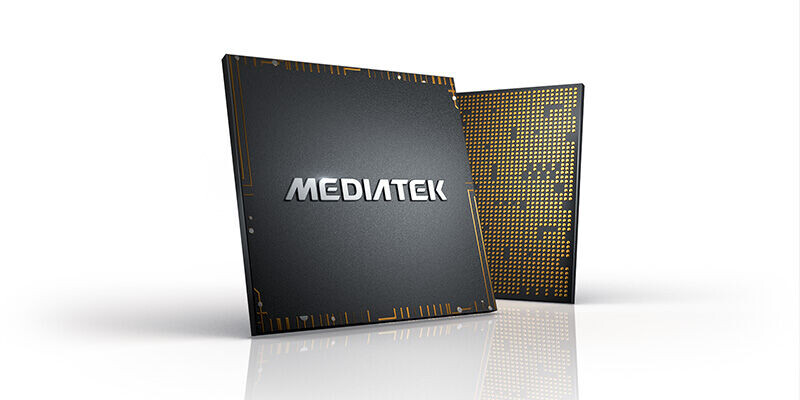
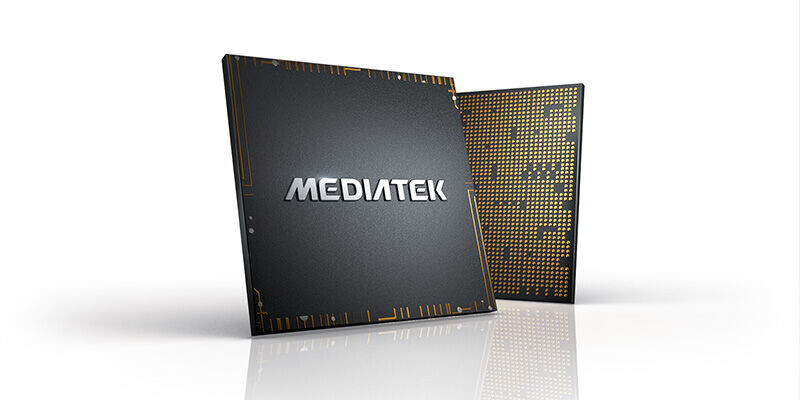
Taiwanese chipmaker MediaTek is lining up $5 billion in financing to expand into AI datacenter silicon, targeting a slice of a market it expects to be worth up to $80 billion next year.
The fabless chip producer is perhaps best known for its Arm-based smartphone and Chromebook chipsets, plus wireless silicon for Wi-Fi products. But the firm is the latest to see a “compelling growth opportunity” in the market for compute to power AI and so-called agentic AI in particular.
Advertisement
MediaTek is targeting application-specific integrated circuits (ASICs) rather than GPUs and reckons it can capture 15 to 20 percent of the market.
The company’s board has also approved $5 billion in financing to secure supply chain capacity and fuel an expansion from AI ASIC chips to full-scale systems and platforms, MediaTek stated.
Chief exec Dr Rick Tsai spelled it out during an analyst call for the company’s Q2 2026 earnings.
“Recently, the release of increasingly capable frontier AI models, together with the rapid transition toward agentic AI, has become a key driver of compute demand across both cloud and edge AI,” he stated.
Advertisement
“Agentic AI, which executes a series of actions, including planning, reasoning, execution, and self-correction, further increases workloads. This represents a compelling growth opportunity for MediaTek, as we are well-positioned to support both the scaling of AI datacenters and the proliferation of agentic AI experiences across a broad range of edge devices.”
MediaTek says that its first ASIC family has been developed in “close partnership with major US cloud service provider customers,” and is scheduled to enter production in the fourth quarter of this year. A second AI accelerator design is also progressing well and aims to offer a step up in compute performance.
The chip biz expects its AI datacenter ASIC revenue to exceed $2 billion in 2026, scaling substantially next year, primarily driven by increasing customer demand for its technology, which boasts optimized performance for TCO and performance per watt at scale, Tsai claims.
“With close collaboration with our advanced packaging partner, the yield and reliability of the second ASIC are on track for high-volume production in 2028. We’re confident in capturing additional market share when this ASIC ramps up,” Tsai told analysts.
Advertisement
But MediaTek will be facing competition from rivals such as Broadcom and Marvell, which already design ASICs for the AI market, and even Google, which announced plans to start selling its custom tensor processing units (TPUs) to some customers earlier this year.
According to a Bloomberg Intelligence report from January, the market for AI ASICs is projected to expand at a 27 percent compound annual rate to reach $118 billion by 2033, and grow from just 8 percent of the total AI accelerator arena in 2024 to 19 percent in 2033.
MediaTek reported Q2 revenue of NT$152.18 billion ($4.68 billion), up just 1.2 percent year-on-year, but operating income was down by 22 percent to NT$22.87 billion ($705 million). ®
This type of QD-OLED arranges pixels in a way that’s different from LCD, which can cause issues when viewing small text. You may notice “color fringing” visible as an odd burst of green or purple filling the negative space between letters.
The AW2726DM just isn’t a sharp display, and it’s not great for viewing small text. As mentioned, it has a resolution of 2560 x 1440—or 1440p. This provides a pixel density of about 110 pixels per inch. By comparison, a standard 27-inch 4K monitor delivers about 165 pixels per inch.
However, sticking to 1440p feels like the right call for a monitor at this price point. As PC gamers likely know, increasing a game’s render resolution from 1440p to 4K comes with a huge performance penalty, and midrange GPUs struggle to handle demanding games at 4K.
Advertisement
Still, it’s QD-OLED, and all QD-OLED panels have two things going for them: Incredible contrast and superb color performance.
You might be familiar with OLED’s contrast advantage if you’ve bought a TV sometime this decade. OLED pixels are self-emissive, meaning the pixels themselves create light. That’s different from an LCD panel, which requires a backlight that shines through the pixels. OLED’s self-emissive technology provides a lot more control over how the image is lit, and the result is an image with far more contrast and depth than what LCD can achieve.
Samsung’s QD-OLED also uses quantum dots, a very cool tech that requires its own article to explain. Quantum dots generally provide great color, and the AW2726DM is no exception, as it reaches 98 percent of DCI-P3 and 94 percent of AdobeRGB. Those numbers are close to the top of what’s available from any monitor in 2026, regardless of price.
Advertisement
In the real world, the contrast and color translate to a vivid, realistic image with a sense of depth you won’t find from LCD alternatives. Games generally look colorful, rich, and alluring.
Brightness Gets the Boot
While the AW2726DM’s image quality is good, it makes one major sacrifice to achieve a lower price. It’s not very bright.
Alienware lists the AW2726DM’s maximum brightness at 200 nits. My review sample was just above that with a sustained maximum SDR brightness of 202 nits. For comparison, a more expensive OLED monitor (like the MSI MPG 271QR X50) can deliver 300 nits or more. I mostly used the monitor at about 60 percent of its maximum brightness, as the room where I view it doesn’t receive much direct sunlight. However, I had to up the brightness to 100 percent in peak afternoon sun if I left my curtains open.
The low SDR brightness has implications for HDR performance, too. The AW2726DM supports HDR, but it’s not VESA HDR–certified, and it promises just 400 nits of peak HDR brightness. In my testing, HDR brightness was no higher than SDR when the entire display was lit, and I recorded a maximum possible brightness of 398 nits when just 10 percent of the display was lit. For comparison, leading OLED monitors can deliver over 300 nits full-screen and over 1,000 nits in the 10 percent window. The AW2726DM can appear brighter in HDR than in SDR, but gamers who enjoy a lot of HDR titles will find the monitor underwhelming.
For a brand that’s stuck to safer updates for most of its annual updates, Samsung’s odd new passport-shaped foldable was a surprisingly risky move–and it seems like that gamble is paying off. Early demand suggests the company may have underestimated just how many buyers wanted something different.
According to a BusinessPost report, the Galaxy Z Fold 8 is selling at roughly three times the pace of the Galaxy Z Fold 7 during the comparable early sales period. Demand has reportedly caught Samsung off guard, leaving the company working to increase production and get more units into stores.
Samsung hasn’t shared exact sales figures for each model, so the threefold comparison should still be treated as an early report. Other signs point in the same direction, however. The Galaxy Z Fold 8 reportedly sold out through Samsung’s online store and several carriers in some markets, pushing estimated deliveries into the second week of August.
Nadeem Sarwar / Digital Trends
Samsung saw this coming, but was still caught off guard
Samsung had already made a sizeable bet on its new design before launch. A Korean supply-chain report placed planned Galaxy Z Fold 8 production at 2.8 million units, compared with 2 million Galaxy Z Fold 8 Ultra units. The company had previously raised its early production forecast for the wide model by around 200,000 to 300,000 units. But even this larger allocation seems to have fallen short.
The wider foldable has also reportedly beaten the Fold 8 Ultra during preorders despite Samsung producing 40% more units of the cheaper model. The Ultra remained easier to find while several Fold 8 configurations disappeared from online and carrier inventories.
Advertisement
Broader preorder numbers provide another encouraging sign. Samsung’s three new foldables collected more than 271,000 preorders in India within 72 hours. Last year’s Fold 7 and Flip 7 required 15 days to reach a similar combined total. Those figures cover the entire lineup rather than isolating the Fold 8, though they show demand accelerating across Samsung’s foldable business.
Nadeem Sarwar / DigitalTrends
Samsung’s odd new shape may be exactly what buyers wanted
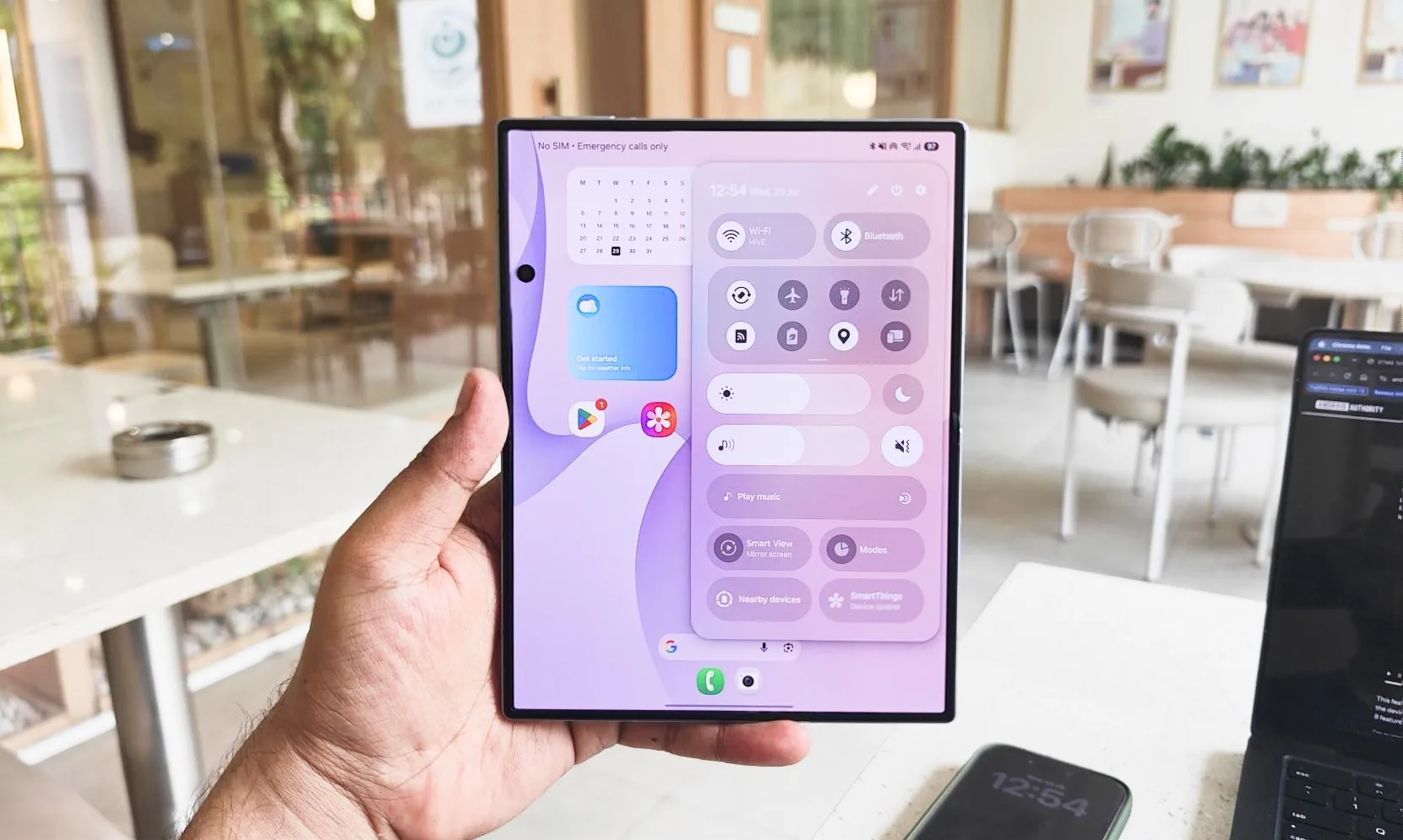
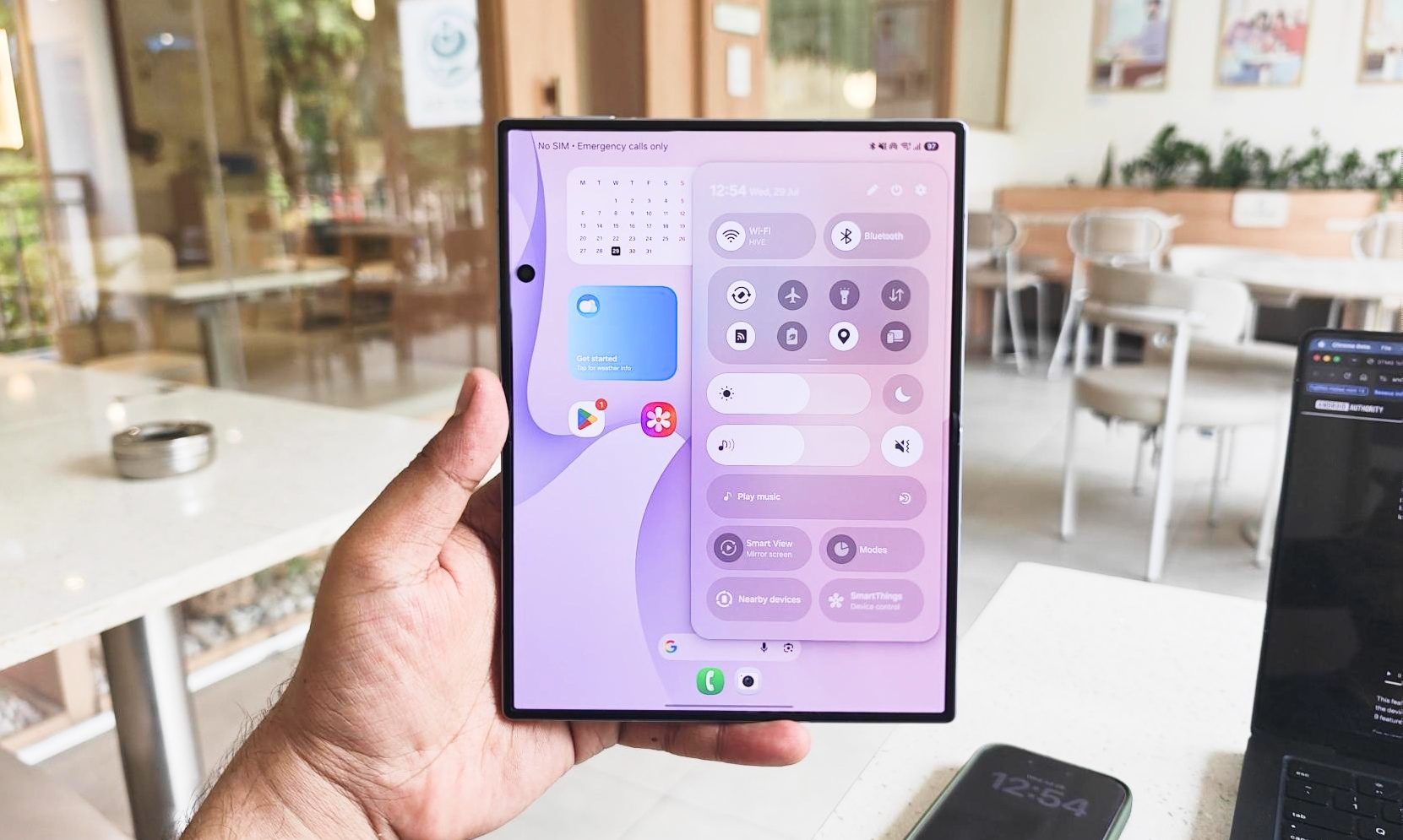
The Galaxy Z Fold 8 abandons the tall proportions of the Fold 7 for a 5.5-inch 10:16 cover screen and a 7.6-inch 4:3 inner display. It weighs 201 grams and starts at $1,899.99, placing it $200 below the Fold 8 Ultra. However, it comes with its own set of compromises.
Samsung’s wide foldable has a smaller battery (compared to the Ultra) and also falls behind in camera versatility. Replacing the Z Fold 7’s 200MP triple camera module with two 50MP shooters on the back, dropping the telephoto lens entirely. Although the Fold 8 Ultra is technically the direct successor to the Fold 7, making the reported sales comparison slightly unconventional.
August is upon us, and there is about a month left until Apple’s end-of-year product releases start. The iPhone 18 Pro and folding iPhone are coming, but there’s a lot more on the docket.
Apple has a historically busy schedule of announcements, launches, and major events, and 2026 is no exception. However, while the first half has already been packed with launches, the second half of the year is always busier.
This is chiefly because Apple tends to hold many of its major launches in the fall, making it the busiest period of its calendar.
While the bulk of events that matter will be product launch-related, not everything will be hardware being prepped for sale.
Advertisement
Though Apple’s very regular with its scheduling, it doesn’t telegraph specific dates far in advance for most events. However, it’s not hard to make an educated guess where appropriate.
What follows is a schedule of when you can expect important events to occur before 2027 arrives, and what should emerge from them.
September 1: John Ternus becomes CEO
John Ternus will inherit the role of CEO on September 1. He will be taking over the position from Tim Cook, who will move to a new executive chairman role.
This is the only event on this list with a definitive date, as Apple indicated it was transitioning between CEOs back in April. The aim was to give the company a smooth leadership change, giving Ternus and the entire organization a chance to prepare and gradually shift over.
Advertisement
John Ternus [left] with Tim Cook [right] – Image Credit: Apple
While this isn’t an event that will directly impact consumers in the short term, it is a major one for Apple itself. The CEO sets the tone for future projects and product changes, affecting the company years down the road.
Based on the long tenures of Steve Jobs and Tim Cook, Ternus can easily be in the same role for a decade or more.
Apple has already made some changes to its structure, including quite a few hardware team alterations. But there will probably be more reshuffles in the months after Ternus takes the reins, as he sets things up for his turn in the saddle.
Advertisement
Early September: iPhone 18 Pro and iPhone 18 Pro Max
The first major event in the Ternus era will happen only a few weeks later. It is also the biggest one for the company.
Typically held in the second week of September, the event is known for Apple’s iPhone launches. It’s a major presentation, since it will show off the iPhone 18 generation and other hardware.
The main launches will be the iPhone 18 Pro and iPhone 18 Pro Max, but crucially not the iPhone 18. Apple is expected to be splitting up the iPhone 18 generation, delaying the non-Pro models until early 2027.
It’s a decent idea, as it does allow Apple to concentrate its promotion on the higher-end devices that tend to sell more in the holiday shopping season. It also reduces the strain on the Apple supply chain as mass production for those models can happen later.
Advertisement
iPhone 17 Pro in a case. The iPhone 18 Pro should look very similar.
The iPhone 18 Pro line will be largely similar to the iPhone 17 Pro generation in terms of construction and appearance. The camera bump could be a tiny bit bigger this time around, but aside from new colorways like dark cherry, they should be practically the same.
As usual for Apple, the main changes are internal, with the use of the A20 Pro chip bringing massive performance improvements. Some schematic leaks also show that changes to the packaging will help the chip run cooler for longer, which will reduce the instances of thermal throttling.
The C2 modem is also a good bet for the inbound model.
Advertisement
Sadly, another good bet is a change in cost, as the iPhone temporarily escaped the June price rises of other products. Analysts believe that the iPhone 18 Pro will be more expensive this fall, possibly costing consumers up to $300 more than the iPhone 17 Pro counterparts.
Early September: iPhone Fold/Ultra
The iPhone Fold has been a long-rumored device, but it seems that it will be finally making its debut this fall. That is, barring anything that can delay it further.
Even if there is a delay, it could just be one that affects the ship date, not the unveiling. It’s possible that Apple can introduce it in September but actually put it on sale months later.
This happened for the iPhone X, which was shown in September 2017 but couldn’t be preordered until late October and then actually shipped in early November.
Advertisement
As for what to actually expect from the iPhone Fold, you could end up calling it something different for a start.
There have been rumors of Apple potentially using the Ultra name for the iPhone Fold, following its usage elsewhere in its empire.
A render of what the iPhone Fold could look like – Image Credit: AppleInsider
You can expect it to have two displays, with an external 5.3-inch screen always in view. The internal screen can be unfolded, book style, to reveal a 7.8-inch display.
Advertisement
One that will be supported by a hinge that has been the subject of so many rumors of delays and technical difficulties. The screen, too, has also been talked about a lot, as Apple is keen to eliminate any creasing issues with the model.
Around the back, on the side that doesn’t have a screen, is anticipated to be a dual-camera system with 48MP sensors. Both displays should also have front-facing versions, with the exterior using a punch-hole style and the internal potentially using an under-display system.
Powering the arrangement will be an A20 Pro chip, as you would expect for such a high-end device.
As for how much it will cost, early estimates put it at between $2,000 and $2,500, later rising to as high as $2,900. With the current RAM and SSD crisis in play, it’ll probably be at the higher end of that range.
Advertisement
Early September: Apple Watch Series 12, Apple Watch Ultra
When it comes to things Apple could launch alongside the iPhone, it’s best to look at items that could either be bought as an accessory to it. Or at least for things that can be announced quickly.
The Apple Watch Series 12 fits both categories neatly, for better or for worse.
For a start, the rumors are that Apple isn’t going to make a major update to the design at all. Externally, it will seem that the Apple Watch Series 12 will resemble the Apple Watch Series 11 closely.
Apple Watch Series 11, which the Series 12 will probably look like.
Advertisement
While the most plausible rumor involves borrowing a watch face from the Apple Watch Ultra, it may still gain some new hardware. One leaker said in early July that there would be a new health sensor added via a fluoroelastomer band.
We don’t know what that sensor will do, but it could involve muscle movement sensing or hydration.
The other Apple Watch update could be for the Apple Watch Ultra, which would bring it up to version 4. The rumors have pointed to a redesign and the inclusion of new sensors, albeit again without saying what they are for.
As it stands, new Apple Watch models are always a decent bet for a September event launch.
Advertisement
Early September: iPad mini 8
You can usually expect there to be some form of iPad representation in the fall. However, with rumors saying an iPad or iPad Air refresh won’t arrive until 2027, the honor falls to the iPad mini.
The eighth-generation model is anticipated to have a major glow-up this time around. Alongside the usual upgrade to a new chip, possibly the A20, it’ll have a new display, too.
iPad mini, sans OLED
Repeated rumors and even a code leak have indicated that OLED is on the way for Apple’s smallest iPad. The rumors say it will have an 8.4-inch LTPS rear panel with hybrid OLED.
Advertisement
However, while it will have a brighter and fancier screen, it won’t necessarily be Pro level. It is reportedly having a refresh rate capped at 60Hz, meaning it won’t have ProMotion.
Like any other hardware coming out in 2026, pricing for the model is unclear. The current non-OLED model was increased to $599, and an OLED edition will certainly put the price even higher.
September/October: Smart home push
One thing that has repeatedly been discussed throughout the year is the smart home, and Apple’s plan for it. However, while a bunch of things are expected to surface this fall, it may not necessarily take place in September.
Apple often spreads its launches in successive months, with an October event frequently being used for overflow hardware. Rarely, this also includes November.
Advertisement
Since the September event will include the significant iPhone Fold launch, which will consume a lot of event time, there’s a probability that repeatedly-delayed smart home items will be pushed to October.
As for what Apple will announce as part of this push, there are three products rumored to be on the way.
An early artist’s rendition of the Home Hub – Image Credit: AppleInsider
The simplest update is the HomePod mini. Expected to cost consumers $129, its refinements will chiefly be processing-based, so it can support Siri AI.
Advertisement
The second is Apple TV, as in the hardware not the streaming service. Again, little is known about the change, aside from a $199 price tag and that all-important chip update for Siri AI.
The element that everyone’s eyes will be focused on is the tentatively-named Home Hub. An all-new device, it’s said to consist of a seven-inch-square screen on a half-dome base, and will be the center of your smart home network.
It may not even be a table-based screen, either. There’s been talk of it having magnetic capabilities, possibly to attach to different mounting points.
The display will facilitate communications with others, including an in-home intercom system and FaceTime. It will also be used for notifications, scheduling with calendars and reminders, and other household tasks.
Advertisement
It’ll naturally handle smart home devices, too, acting as a central control point for everything from HomePods to smart locks, to security cameras.
September: Operating Systems
Since WWDC, Apple has been holding developer beta testing of its next generation of operating systems. Since it releases them to coincide with the introduction of new products, you can anticipate the beta tests ending and the public getting to use the final releases.
While there are many changes in iOS 27, iPadOS 27, macOS 27 Golden Gate, watchOS 27, tvOS 27, and visionOS 27, the biggest is Siri AI. Apple’s major overhaul of its digital assistant, designed to compete with other AI rivals like ChatGPT and Claude.
September/October: AirPods Pro, sans cameras
An obvious accessory to the iPhone would be AirPods. Therefore, you would expect there to be a new version launching alongside the new smartphone models.
Advertisement
However, this is where things get a bit difficult to determine.
Apple has long been working on AirPods Pro with cameras, providing users with AI features similar to smart glasses, complete with computer vision elements. Except without the frames and the glass.
AirPods Pro in a charging case
While Apple was close to getting them out the door in 2026, the production schedule works against that from happening. It’s more likely they will come out in 2027.
Advertisement
That said, there has been a report or two indicating another product in the range may see a launch in 2026. On August 2, it was claimed that a device codenamed B790 was further along in development at the same time as the camera-equipped versions.
That particular model is expected to launch as early as 2026, if claims about Apple’s internal roadmap are true.
As for what this other model will bring, it’s probably going to be a general improvement to the current versions, rather than adding cameras to the mix.
October: MacBook Pro
Apple habitually makes its Mac announcements separate from the iPhone ones, usually in a second event one month later. While there is always a small chance of a September launch, it’s more likely for an October event to occur.
Advertisement
The most likely introduction in the MacBook Pro lineup is a new entry-level 14-inch MacBook Pro. There’s not a massive amount to expect here, except for the usual spec-bump update to the M6 generation.
Expect a very short M6 MacBook Pro generation.
It’s an interesting release, since the M6 is believed to have a very short generational lifespan. Apple’s apparently keen to move to the M7 quickly, which promises massive AI processing improvements.
As for how short, Apple’s teeing up multiple MacBook Pro and iPad Pro launches for early 2027 using the M7 range.
Advertisement
There is a small chance of something exciting happening in the MacBook Pro space, though. The long-awaited shift to an OLED MacBook Pro is finally going to happen as part of a major refresh.
However, we don’t know if that will take place in late 2026, or if it will slip to early 2027. The conventional wisdom on this is for it to arrive in the fall, coinciding with other major launches.
October: Desktop Macs
There’s a strong possibility of a Mac mini update this fall, since it is usually associated with the low-end chip updates of Apple Silicon. Rumors in March also said it was a possibility, as well as a macOS Tahoe leak shared with AppleInsider hinting at a summer update.
That summer refresh has probably translated into a fall update. As usual, you can probably expect a spec-bump update to M6 for the Mac mini.
Advertisement
An M5 Ultra Mac Studio is a very real possibility
There have also been rumblings about an update to the 24-inch iMac. Again, a spec-bump update to M6 is anticipated, as well as some color changes.
One product that may not make it to M6 just yet is the Mac Studio. In July, Apple was reportedly testing the Mac Studio with M5 Max and M5 Ultra chips.
If true, it would bring a fitting end to the M5 generation.
Companies including the Commonwealth Bank of Australia, Microsoft Corp., Uber Technologies Inc. and Hyatt Hotels Corp. are using automated chat and phone systems to handle work that previously required humans. In some cases, they’ve already wiped out sizable chunks of their customer service operations, together representing thousands of workers.
The specter of automation has long loomed over the call center industry, which employs millions worldwide from the U,S, to India to the Philippines. But until recently, generative artificial intelligence wasn’t good enough to move the needle. Now, AI advancements — and pressure on executives to show they’re embracing the new technology — have prompted corporations to deploy the tools more widely. Customer service employment in the U.S. is declining and will likely continue to do so as more tasks are automated, Forrester analyst Kate Leggett wrote in a report earlier this year. While it’s impossible to determine the future job losses, she estimated that almost half of customer service roles will be affected by 2030.
Globally, the steepest job cuts are expected to hit countries like the Philippines, where many Western companies have outsourced their most easily automated work. Salespeople at multiple tech companies told Bloomberg that they routinely pitch call center AI tools as a way of lowering labor costs, undercutting a common industry claim that AI is primarily a way to help workers become more productive rather than kill their jobs… Commonwealth Bank of Australia, the nation’s largest lender, has shed hundreds of workers from its chat support line as it wove AI into the system, according to people familiar with the work. This amounted to tens of millions of dollars in savings per year, one of the people said…
Advertisement
Microsoft is both one of the largest vendors and adopters of customer service automation tools. This has helped the software giant trim its customer service workforce — a mix of contractors and full-time staff — from about 50,000 to 40,000 in recent years, according to a person familiar with the operations. “If something happened with little Johnny’s Xbox in the middle of the night, we can now solve that with AI,” Judson Althoff, who runs Microsoft’s sales and service operations, said in an interview. Althoff said in April that AI is saving the company about $750 million per year in customer service costs. More complex problems still require human support, but the company is constantly expanding what can be fixed automatically, he said in the interview. Two examples from the article:
Last year Hyatt fired 30% of its in-house customer support staff for the Americas, according the hotel-industry news site Hotel Dive.
Last week Bloomberg reported Uber had cut 10% of its customer service jobs as part of effort to “embrace artificial intelligence,” according to the article. “Today, Uber pushes users to submit support requests through their apps, where they’re met with an AI chatbot.”





























































You must be logged in to post a comment Login