

Business
How The Middle East Crisis Ripples Across Thailand

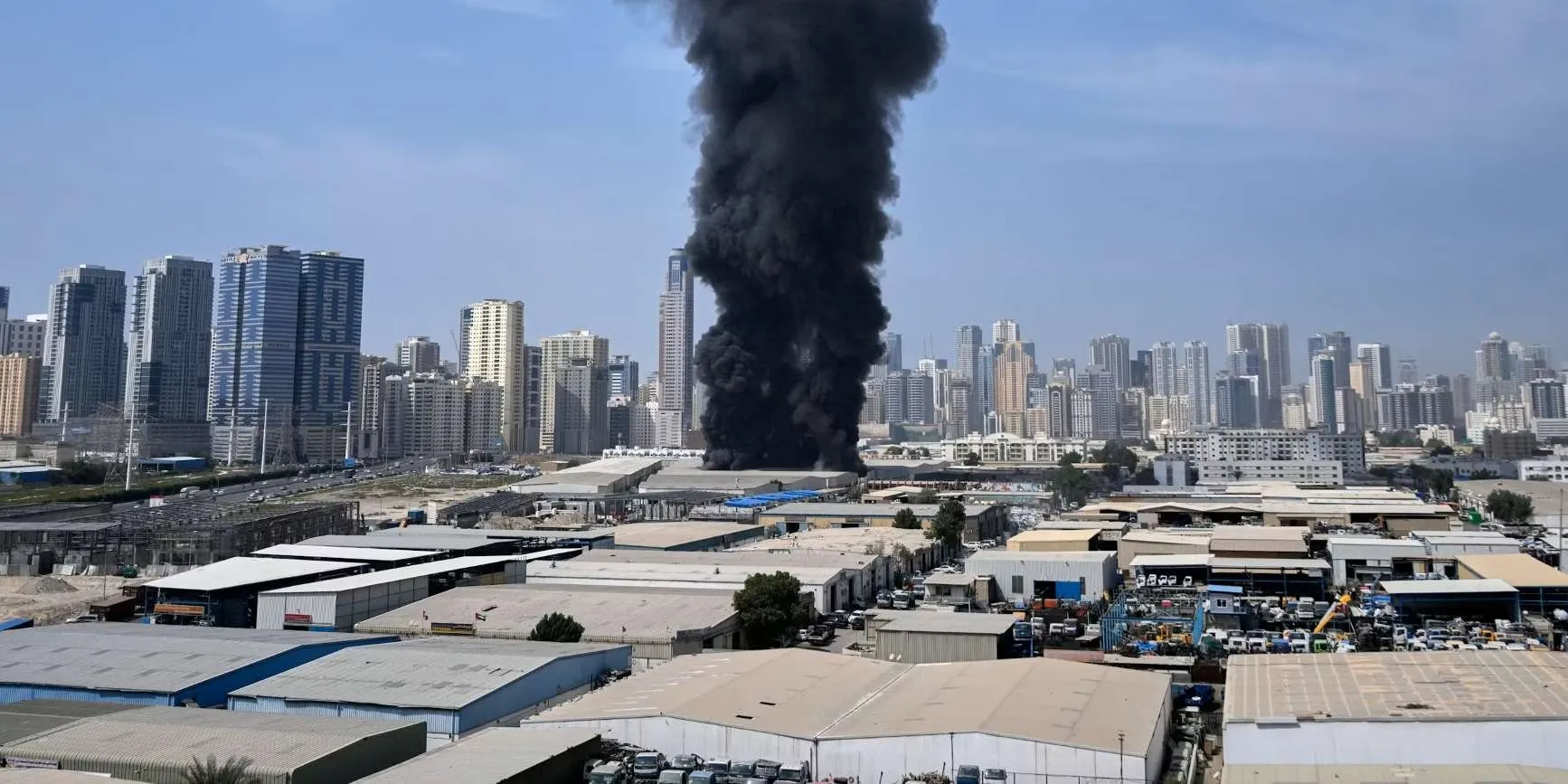
The intensifying conflicts in the Middle East, especially near the Strait of Hormuz and the broader implications for regional stability, are reverberating worldwide. Although geographically distant, Thailand is increasingly experiencing the far-reaching impacts of this unrest. The crisis has brought a challenging dynamic to Thailand’s crucial tourism recovery efforts. The Thai government, under the leadership of Prime Minister Anutin Charnvirakul, is addressing the situation as a significant economic threat, demonstrated by the establishment of an Economic War Room.
The Energy Squeeze: The Strait of Hormuz Chokepoint
Thailand’s primary vulnerability is its deep reliance on imported energy. Over 50% of Thailand’s crude oil imports originate from the Middle East. The potential for the total closure of the Strait of Hormuz—the maritime artery for roughly 20% of the world’s petroleum and 25% of LNG—remains the single biggest “black swan” risk facing the Thai economy.
Thailand is particularly affected by rising oil prices, as indicated by Nomura’s analysis. The country has the highest net oil imports in Asia, accounting for 4.7% of its GDP. Consequently, a 10% increase in oil prices can lead to a deterioration in the current account by approximately 0.5 percentage points of GDP according to a CNBC report.
- Fuel Prices and the Inflation Anchor: While global oil benchmarks had previously trended downward, a prolonged blockade would trigger an existential price spike. The Thai Ministry of Energy has identified Wednesday, March 4, 2026, as a potential critical inflection point. If global diesel prices breach $100 per barrel, the government’s ability to manage domestic retail prices via the Oil Fuel Fund will be severely compromised.
- Supply Contingencies: To brace for immediate shocks, Thailand maintains approximately 60 to 61 days of oil reserves. The government has already instructed the suspension of oil exports and ordered coal-fired and hydroelectric plants to run at maximum capacity to conserve natural gas.
Logistics, Exports, and the Shipping Cost Ripple
Thailand’s outward-facing economy is being throttled by the disruption of critical maritime corridors. The “collateral damage” is evident in the form of spiraling logistical costs. This surge in expenses count strain businesses reliant on exports, diminishing their competitiveness in global markets. Additionally, delays in shipping may cause supply chain bottlenecks, further exacerbating the economic strain. As a result, policymakers are under pressure to seek alternative trade routes and bolster domestic industries to mitigate the impact of these disruptions.
- Freight Rates and Surcharges: The cost of shipping goods from Thailand to Europe and parts of the Middle East has surged. Major Thai export categories—including automotive parts, machinery, and canned food products—are bearing the brunt of these non-negotiable increases.
- Financial Relief and Trade Pivots: In response, the Export-Import Bank of Thailand (EXIM Bank) launched an emergency relief package. This includes a 365-day debt moratorium and a 20% interest rate reduction on current loans for exporters who can prove financial impact from the crisis. Simultaneously, the Ministry of Commerce is aggressively pivoting towards “safe-haven” markets in South Asia, Latin America, and within the ASEAN region.
The Human and Economic Toll: Labor and Tourism
The crisis has a profound human dimension for Thailand, touching the lives of tens of thousands of its citizens working abroad. The Labor Stalemate: Thailand has over 77,000 workers in the Middle East, primarily in Israel, the UAE, and Saudi Arabia. The Ministry of Labor has established specialized “War Rooms” to coordinate emergency communications and potential evacuations. A large-scale repatriation would not only be a logistical nightmare but would cause a severe loss of remittance income to Thailand’s provincial economies.
Flight Cancellations and Delays: Impacts on Tourism
Flight cancellations and delays have recently emerged as a significant challenge for the Thai tourism sector. As of early March 2026, escalating tensions in the Middle East have triggered a wave of disruptions, particularly impacting long-haul travel and transit hubs. These disruptions have caused a ripple effect, leading to decreased tourist arrivals and affecting local businesses reliant on international visitors. Airlines are struggling to adjust their schedules, while travelers face uncertainty and inconvenience. The Thai government and tourism authorities are now exploring measures to mitigate the impact, including promoting domestic tourism and diversifying source markets to reduce dependency on long-haul travelers.
Scope of Disruptions (March 2026)
Military actions in the Middle East starting in late February 2026 led to several countries closing their airspace, forcing airlines to reroute or cancel flights.
- Flight Statistics: Between February 28 and March 1, 2026, 134 flights were affected across Thailand’s major airports.
- Key Hubs Impacted: * Suvarnabhumi (BKK): Recorded 59 cancellations.
- Phuket (HKT): Recorded 36 cancellations.
- Others: Don Mueang and Chiang Mai airports reported minor disruptions.
- Affected Carriers: Major Middle Eastern airlines including Emirates, Qatar Airways, Etihad, and Gulf Air, as well as Thai AirAsia X (specifically its Riyadh route) and El Al Israel, have had to adjust schedules or suspend services.
Economic and Arrival Impact
The disruptions have hit Thailand’s recovery goals, specifically targeting high-spending markets.
- Arrival Shortfall: The Tourism Authority of Thailand (TAT) estimates that March arrivals will drop to 2.8 million, missing the original 3 million target. The loss is largely attributed to a decrease of 150,000 visitors from the Middle East, Europe, and the Americas.
- Long-Haul Vulnerability: Approximately 50% of long-haul trips to Thailand rely on Middle Eastern transit hubs. These bookings have seen significant cancellations for the month of March.
- Revenue Risk: Travelers from the Gulf Cooperation Council (GCC) and Israel are among the highest spenders, averaging 100,000 THB per trip. A prolonged conflict could see an 80% plunge in arrivals from these regions.
Industry & Government Response
To mitigate the “collateral damage” to the tourism image, both the public and private sectors have mobilized support.
- Tourism Crisis Monitoring Centre: The TAT activated this center on March 1 to track developments and provide real-time information to travelers.
- Airport Support: Airports of Thailand (AOT) has set up dedicated assistance zones at Suvarnabhumi and Phuket, providing drinking water, extra seating, and staff to assist with rerouting.
- Private Sector Flexibility: * Hotels in Phuket, Samui, and Phang Nga are offering flexible rebooking and waiving cancellation fees for those with proof of flight disruption.
- Special “stranded traveler” packages and discounted room rates are being offered to the thousands currently unable to return home.
Outlook for 2026
This prolonged ambiguity has also led to increased costs and disrupted supply chains, forcing companies to explore alternative routes and methods. Stakeholders are urging for clearer communication and timely updates from authorities to better navigate the challenges and mitigate potential losses.
- Operational Shifts: Thai Airways has rerouted its European flights to bypass contested airspace. While this ensures safety, it has led to longer flight durations and increased operational costs.
- Market Diversification: There is an urgent call for the government to accelerate diversification into short-haul markets (like India and Southeast Asia) to fill the gap left by long-haul disruptions.
- Fuel Costs: Beyond immediate cancellations, there is growing concern that rising aviation fuel prices will lead to a surge in airfares, potentially dampening travel sentiment for the remainder of the year.
- The knock-on impact could spread to energy, pushing oil prices higher and directly raising transport costs and the cost of living.
- A sharp slowdown in tourism from the situation could reduce Thailand’s GDP by around 0.5–0.8%.
The Middle East crisis is no longer a distant, localized issue for Thailand; it has become an immediate economic reality. The Thai government, led by Prime Minister Anutin Charnvirakul, is treating the situation as a serious economic threat, evidenced by the activation of an Economic War Room.
While Thailand attempts to maintain its 2026 inflation forecast of roughly 0.3%, the true cost of this “collateral damage” will be defined by the duration and intensity of the Middle Eastern conflicts. Until stability returns to the region, Thailand’s economic growth remains tethered to global events far beyond its control.
The persistent instability jeopardizes not only Thailand’s inflation targets but also the critical sectors of trade, tourism, and energy prices, all of which are vital to the nation’s economic resilience. Policymakers must urgently consider contingency measures and diversify economic dependencies to cushion the impact of prolonged geopolitical tensions. In the face of ongoing global uncertainties, Thailand’s capacity to adapt and take proactive measures will be essential in preserving its economic stability and ensuring sustainable long-term growth.
Other People are Reading

Business
Nektar Therapeutics (NKTR) Presents at TD Cowen 46th Annual Health Care Conference – Slideshow

Nektar Therapeutics (NKTR) Presents at TD Cowen 46th Annual Health Care Conference – Slideshow

Form 4 Columbia Sportswear Company For: 6 March

Shares of Airbnb Inc. (NASDAQ: ABNB) declined about 2% in midday trading Friday, March 6, 2026, falling to around $132.93-$133 from Thursday’s close near $135.85, reflecting a modest pullback after recent gains tied to robust fourth-quarter results and upbeat guidance for accelerated growth in 2026.

The San Francisco-based home-sharing platform opened near $133.89 and traded in a range from lows around $130.98 to highs of $133.90-$134.52, with volume approaching 1-5 million shares by mid-morning. The dip comes amid broader market caution from geopolitical tensions and rising energy costs, though Airbnb’s fundamentals remain solid following its February earnings report.
Airbnb released fourth-quarter and full-year 2025 results on February 12, 2026, posting revenue of $2.78 billion — up 12% year-over-year and beating analyst expectations by about 2.3%. Gross booking value surged 16% to $20.4 billion, while nights and experiences booked grew 10%, marking the strongest quarterly growth in over two years despite tough comparisons.
Adjusted EBITDA reached $786 million, delivering a 28% margin, and the company achieved positive net income. Earnings per share came in at $0.56 (adjusted figures varied), slightly missing some estimates of $0.65-$0.67, but the top-line beat and strong bookings overshadowed the miss.
CEO Brian Chesky highlighted momentum from product innovations like flexible payment options, eco-tourism focus and expansions into new markets such as Japan and India. “Healthy demand” across regions drove the acceleration, with gross bookings showing particular strength.
Guidance fueled optimism: First-quarter 2026 revenue is projected at $2.59 billion to $2.63 billion (14-16% growth), topping Wall Street’s $2.54 billion consensus. For the full year, Airbnb anticipates at least low double-digit revenue growth — aligning with or exceeding analyst views of around 10%. Management emphasized scalable profitability, with forecasts pointing to operating income nearing $3 billion in 2026.
The results sparked a rally, with shares rising as much as 17.5% in the weeks following the report before recent softening. Analysts responded positively: Mizuho raised its price target to $175 from $156 in early March, citing sustained demand and innovation. Consensus targets hover around $144-$149, implying 8-12% upside from current levels, with highs up to $200 and lows near $107. Ratings lean Buy, with 34-50 analysts tracking the stock.
Airbnb’s market capitalization stands around $80-82 billion. The stock trades at a forward P/E in the mid-20s, reasonable for a growth-oriented travel tech name with expanding margins. Year-to-date in 2026, performance has been mixed but positive overall, with shares up roughly 10-15% from January lows near $100, though down from February highs near $144.
The company continues investing in AI for personalized recommendations, dynamic pricing and host tools, alongside expansions like Airbnb Experiences and co-hosting features. Challenges include regulatory pressures in some cities, competition from hotels and short-term rental platforms, and macro sensitivity to consumer spending amid inflation.
Despite headwinds, Airbnb’s asset-light model — no property ownership — supports high margins and cash flow. Free cash flow remains strong, funding share repurchases and growth initiatives without debt reliance.
Analysts see 2026 as pivotal for Airbnb, with gross bookings momentum, user growth and profitability scaling key watchpoints. Expansion into emerging markets and AI-driven efficiencies could drive faster-than-expected gains.
As trading continues, the modest decline appears technical rather than fundamental. With earnings next expected in late April 2026, investors eye sustained demand signals amid travel recovery and economic uncertainty.
Airbnb’s blend of network effects, brand strength and innovation positions it well in the evolving travel landscape, though near-term volatility persists.


Financial analyst by day and a seasoned investor by passion, I’ve been involved in the world of investing for over 15 years and honed my skills in analyzing lucrative opportunities within the market.I specialize in uncovering high quality dividend stocks and other assets that offer potential for long term-growth that pack a serious punch for bill-paying potential. I use myself as an example that with a solid base of classic dividend growth stocks, sprinkling in some Business Development Companies, REITs, and Closed End Funds can be a highly efficient way to boost your investment income while still capturing a total return that follows traditional index funds. I created a hybrid system between growth and income and manage to still capture a total return that is on par with the S&P.
Analyst’s Disclosure: I/we have a beneficial long position in the shares of DGRO either through stock ownership, options, or other derivatives. I wrote this article myself, and it expresses my own opinions. I am not receiving compensation for it (other than from Seeking Alpha). I have no business relationship with any company whose stock is mentioned in this article.
Seeking Alpha’s Disclosure: Past performance is no guarantee of future results. No recommendation or advice is being given as to whether any investment is suitable for a particular investor. Any views or opinions expressed above may not reflect those of Seeking Alpha as a whole. Seeking Alpha is not a licensed securities dealer, broker or US investment adviser or investment bank. Our analysts are third party authors that include both professional investors and individual investors who may not be licensed or certified by any institute or regulatory body.
SlateStone Wealth chief market strategist Kenny Polcari discusses Wall Street’s oil dilemma on ‘Varney & Co.’
Gas prices moved higher Friday as the conflict with Iran continued to roil global energy markets, pushing crude oil sharply upward and raising concerns about fuel supplies.
The national average price for regular gasoline rose to $3.32 per gallon on Friday, up from $3.25 on Thursday and $2.98 a week ago, according to AAA. Analysts say the increase reflects a surge in crude oil prices as geopolitical tensions intensify in the Middle East.
U.S. crude settled at $90.90 per barrel on Friday, a 12.2% jump on the day.
“Gasoline prices have been following crude prices higher as the closure of the Strait of Hormuz impacts supplies,” Andy Lipow, president of Lipow Oil Associates, told FOX Business in an email.
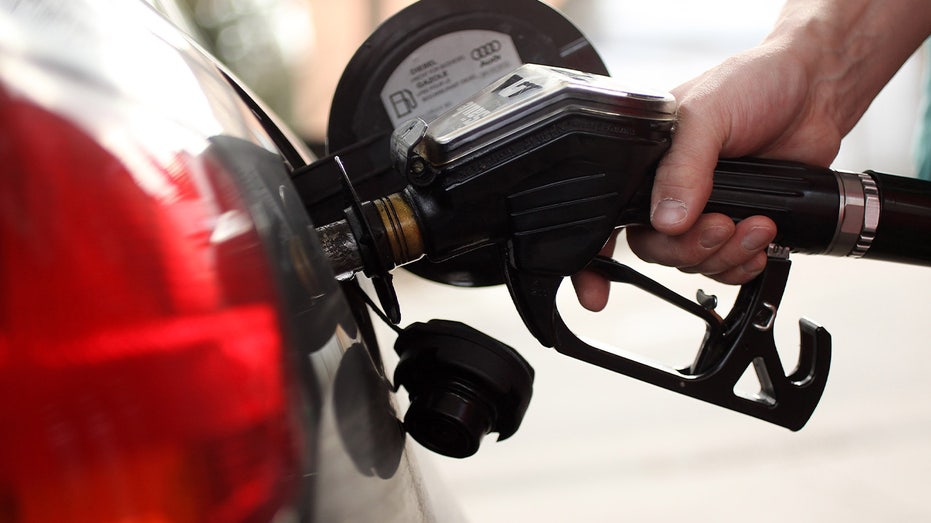
A gas station attendant pumps diesel into a car at a filling station (Sean Gallup/Getty Images / Getty Images)
Oil markets have been on edge since the U.S. and Israel launched strikes on Iran last Saturday. Iran has since moved to block tanker traffic in the Strait of Hormuz — a critical shipping lane that handles roughly 20% of global oil flows, according to Reuters.
Lipow said the disruption has prevented tankers from loading in Iraq, Kuwait and Saudi Arabia, forcing some production shut-ins.
Missile strikes have also hampered refinery operations in Israel, Bahrain and Saudi Arabia, tightening global gasoline and diesel supplies. Additional pressure is coming from China, which is limiting exports of refined petroleum products, according to Lipow.
“All this is leading to higher gasoline prices and the national average is likely to hit $3.50 per gallon [very] soon,” Lipow said.
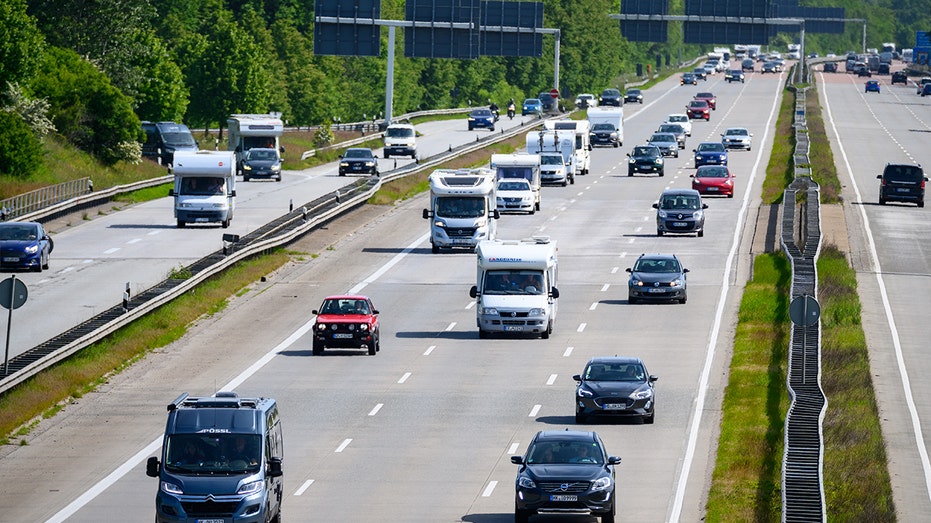
Cars are pictured driving on the highway. (Jonas Walzberg/picture alliance via Getty Images / Getty Images)
FOX Business contributor Phil Flynn said futures markets suggest pump prices could continue rising in the near term, depending on how events unfold.
“We’re going to probably see some increases right now,” Flynn told FOX Business. “That may slow if we get good news out of Iran.”
Flynn noted that while prices have climbed quickly, the spike has not yet reached the levels seen during past geopolitical crises.
“I’m hopeful that we see the peak of gasoline next week,” Flynn said. “The reason why I say that is I have a lot of confidence in the US military and Israel, and I really think Iran is on its last legs right now.”
MAJOR TECH COMPANIES BACK TRUMP PLEDGE TO PAY MORE FOR DATA CENTER ELECTRICITY AHEAD OF SIGNING

A navy vessel is seen sailing in the Strait of Hormuz, a vital waterway through which much of the world’s oil and gas passes on March 1, 2026. (Sahar AL ATTAR / AFP via Getty Images / Getty Images)
GET FOX BUSINESS ON THE GO BY CLICKING HERE
President Donald Trump told Reuters on Thursday he was not concerned about the rise in prices.
“I don’t have any concern about it,” Trump told Reuters. “They’ll drop very rapidly when this is over, and if they rise, they rise, but this is far more important than having gasoline prices go up a little bit.”

Rising heating oil prices are hitting Northern Ireland harder than the rest of the UK – here’s everything you need to know.

Sionna Therapeutics chief legal officer sells shares for $347,018

Unum Group board approves amendments to corporate bylaws

Apple unveiled the MacBook Neo on March 4, 2026, its most affordable laptop ever at a starting price of $599, drawing widespread acclaim in early hands-on reviews for delivering premium aluminum construction, a vibrant Liquid Retina display and solid everyday performance powered by the A18 Pro chip — all while undercutting competitors in the sub-$600 category.

The 13-inch MacBook Neo, available for pre-order immediately and shipping March 11, targets students, first-time Mac buyers and budget-conscious users who want the Mac experience without the $1,099+ price tag of the refreshed M5 MacBook Air. Education pricing drops it to $499, positioning it aggressively against Chromebooks and entry-level Windows laptops.
Apple’s press release highlighted the Neo’s durable aluminum enclosure in four eye-catching colors — blush, indigo, silver and a new citrus — alongside a 13-inch Liquid Retina display with 2,408×1,506 resolution, 500 nits brightness and support for 1 billion colors. It supports up to 16 hours of battery life, a 1080p FaceTime HD camera with dual mics, side-firing speakers with Spatial Audio, the Magic Keyboard and a large Multi-Touch trackpad running macOS Tahoe with full Apple Intelligence features.
The core innovation lies in the processor: the A18 Pro, borrowed from the 2024 iPhone 16 Pro lineup, features a six-core CPU (two performance cores, four efficiency cores) and five-core GPU. Apple claims it’s up to 50% faster for everyday tasks like web browsing and up to 3x faster for on-device AI workloads — such as photo effects — compared to the bestselling PC with the latest Intel Core Ultra 5.
Hands-on impressions from outlets like CNET, PCMag, Ars Technica and Daring Fireball emphasized the Neo’s surprising quality for the price. Reviewers described it as feeling “every bit like a MacBook” with solid aluminum build, a comfortable (though non-backlit) keyboard using the same mechanism as recent models, a responsive trackpad and surprisingly good side-firing speakers. The display earned praise for crispness and outdoor usability at 500 nits, matching the MacBook Air.
CNET called it a “premium laptop for $599” with “just the right feature mix,” noting its nearly Air-like thinness and fun color options that make it stand out. PCMag dubbed it “2026’s breakout budget laptop,” highlighting how it fills the gap left by the discontinued low-end M1 Air while offering better value than expected.
Ars Technica noted the Neo preserves Apple’s premium feel despite compromises: base model includes 8GB unified memory and 256GB storage (no Touch ID), with a $699 option adding Touch ID and 512GB. It has two USB-C ports (one USB 3, one USB 2), a 3.5mm jack and lacks True Tone or Force Touch trackpad. The A18 Pro, while capable for browsing, streaming, light editing and AI tasks, trails the M5’s 10-core CPU and up to 10-core GPU in heavier workloads.
Daring Fireball’s John Gruber called the $599 price (or $499 education) a “slam dunk,” arguing it’s vastly superior to typical budget Windows or Chromebooks. He praised the bright display, good speakers and overall polish, suggesting the Neo could dominate the sub-$1,000 segment.
Comparisons to the M5 MacBook Air (starting $1,099 with 512GB and 16GB RAM) show clear trade-offs: the Air offers superior performance for demanding tasks, Wi-Fi 7, a slightly larger 13.6-inch screen and more ports. Yet reviewers like 9to5Mac argue the Neo suits “most people” for common uses — web, email, streaming, schoolwork and light creative hobbies — especially with Apple Intelligence integration.
Critics noted potential limitations: 8GB RAM may feel constrained for multitasking or future-proofing, and the A18 Pro’s efficiency shines in battery life but lacks the M-series’ raw power for pro apps. Some questioned longevity versus higher-end models, though Apple’s ecosystem and software updates mitigate concerns.
The launch generated buzz as Apple’s boldest entry-level play in over a decade, challenging Chromebooks head-on while maintaining Mac quality. Early sentiment across forums and YouTube leaned positive, with many calling it a “reincarnation” of the classic budget Mac ethos.
As pre-orders roll in and full reviews emerge post-March 11 launch, the MacBook Neo appears poised to reshape the budget laptop landscape, offering accessible Apple silicon performance and premium design at an unprecedented price point.

Form 4 AleAnna Inc For: 6 March

Nektar Therapeutics (NKTR) Presents at TD Cowen 46th Annual Health Care Conference – Slideshow

MiniMed (MMED) IPO Falls Flat as Medtronic (MDT) Spinoff Debuts Below Price

1 Year After Ending, Taylor Sheridan’s Best ‘Yellowstone’ Spin-Off Dominates Streaming as Divisive Sequel Debuts


-

 Politics4 days ago
Alan Cumming Brands Baftas Ceremony A ‘Triggering S**tshow’
-

 Tech6 days ago
Unihertz’s Titan 2 Elite Arrives Just as Physical Keyboards Refuse to Fade Away
-

 NewsBeat6 days ago
Abusive parents will now be treated like sex offenders and placed on a ‘child cruelty register’ | News UK
-
Business10 hours ago
Form 8K Entergy Mississippi LLC For: 6 March
-
 NewsBeat6 days ago
Dubai flights cancelled as Brit told airspace closed ’10 minutes after boarding’
-
Sports7 days ago
The Vikings Need a Duck
-
 NewsBeat7 days ago
The empty pub on busy Cambridge road that has been boarded up for years
-

 NewsBeat5 days ago
‘Significant’ damage to boarded-up Horden house after fire
-

 Tech2 days ago
Bitwarden adds support for passkey login on Windows 11
-

 Fashion6 hours ago
Weekend Open Thread: Ann Taylor
-

 Entertainment5 days ago
Baby Gear Guide: Strollers, Car Seats
-
 Sports1 day ago
499 runs and 34 sixes later, India beat England to enter T20 World Cup final | Cricket News
-
Politics6 days ago
FIFA hypocrisy after Israel murder over 400 Palestinian footballers
-
 NewsBeat6 days ago
Emirates confirms when flights will resume amid Dubai airport chaos
-

 NewsBeat4 days ago
Is it acceptable to comment on the appearance of strangers in public? Readers discuss
-

 Tech6 days ago
Viral ad shows aged Musk, Altman, and Bezos using jobless humans to power AI
-

 Video5 days ago
How to Build Finance Dashboards With AI in Minutes
-

 Fashion5 days ago
On the Scene at the 57th Annual NAACP Image Awards: Teyana Taylor in Black Ashi Studio, Colman Domingo in Yellow Sergio Hudson, Chloe Bailey in Christian Siriano, and More!
-

 Business3 days ago
Guthrie Disappearance Enters Fifth Week as Family Visits Memorial
-
 NewsBeat5 days ago
Ukraine-Russia war latest: Belgium releases video showing forces boarding Russian shadow fleet oil tanker