Connect with us

Business

How to fix the huge underfunding of rail in Wales

Published

on

Business Live

Architect of the South Wales Metro rail project Professor Mark Barry of Cardiff University on addressing rail underfunding in Wales

buildings visible in the distance.

Andy Burnham has to address underfunding of rail in Wales.(Image: WalesOnline/Rob Browne)

Some £94bn was invested in rail enhancements across Great Britain in the period 2009 to 2025.

Of that total, some £44bn was for HS2, while UK Government rail enhancement expenditure in Wales was just circa £1.2bn – a meagre 1.3%.

Advertisement

While rail is not devolved, to get projects realised, the Welsh Government funded £1.4bn – more than the UK Government total – giving a £2.6bn of rail enhancements in Wales over that 16-year period.

So, in effect the Welsh Government has had to use funding meant for health, education to make up the UK Government shortfall.

Had Wales received just a 5% population share – an a more equitable settlement may need to be higher for good reason – then we would have seen circa £3.4bn more from the UK Government over that 16-year period and receiving an additional £200m per financial year.

Under the current arrangements this funding dysfunction is set to persist, with an estimated £80bn to £120bn of rail enhancements likely in England for the period from 2025 to 2040.

Advertisement

To note, the £14bn of political commitments to further rail investment in Wales, while welcomed, is just that – a political statement. The UK Government Treasury in the last spending review, allocated just £300m to Wales versus £34bn for England. The next comprehensive spending review will be the acid test.

For me, this constitutional dysfunction is undefendable and needs to be addressed.

So, should we devolve rail?

Clearly, we have a problem. The systemic underfunding has had and continues to have, a very substantive impact on Welsh Government finances. However, as I am sure previous Welsh Government ministers have found, Wales has limited leverage in any negotiations with Treasury and the Department for Transport ( DfT). Furthermore, in my view, any deal has to go beyond just a 5% population share.

Advertisement

One key point I also like to restate, and this often gets lost in translation, the current unfair funding position, via the Barnett Formula – is not just about HS2, butrail funding. The way Barnett works currently (and this could be changed) means that just focusing on HS2 undercooks the amount of underspend in Wales very significantly as making HS2 “England only” will only change the comparability factor from 33% to about 52%.

A previous letter from Mark Drakeford on this matter showed a £431m gap (for the period 2016/17-2024/25) if HS2 was defined as “England only” under the current non-devolved arrangements. However, this figure would be circa £1.5bn if rail was fully devolved. Furthermore, Barnett allocations have also been squeezed given HS2 has also resulted in reductions elsewhere in the DfT budget, reducing the scale of Barnett adjustments in any case.

What happens if rail is devolved and what are the key issues to address?

If, as it should, rail is fully devolved, then any future changes to the DfT budget could be subject to a more equitable Barnett adjustment and a 90% plus Barnett comparability figure. In so doing, the more challenging issue is how the block grant should be adjusted to reflect these new devolved powers. How should it be calculated?

Advertisement

And how does this impact future Barnett adjustments? This does not necessarily need to be related to the population, other factors are relevant, for example: The Wales and Borders Route is circa 10% of the UK rail network (and circa 8% of the track) and includes some sections in England (Marches Line, Severn Tunnel).

Should the Severn Tunnel be included? This a piece of UK strategic cross-border infrastructure that may merit different treatment.

The Network Rail (NR)Wales and Borders Route has supported the UK economy for 200 years.

Its condition, one might argue, is more depreciated than other parts of the UK network, and that depreciation has been built up over those 200 years – not the last 25 since devolution.

Advertisement

It is more exposed to unsighted issues and liabilities and to the need to mitigate climate change impact. For example, it is understood that on the CVL, rain intensity measurements (which are monitored) have already exceed expectations for 2040 in 2025. Rainfall intensity and the susceptibility to unsighted issues is an increasing challenge – and one with ongoing costs implications.

Based on this, it could be argued 5% of UK expenditure may not be a sufficient basis to calculate a block grant adjustment; rather it may form the baseline for a more protracted and bespoke negotiation.

Just looking at the comprehensive spending review publications last year and combining the committed annual expenditure to HS2 and NR, one can see a total of £23bn. With a 5% allocation for Wales and an adjustment to the block grant would be circa £1.1bn per annum, while 10% would be circa £2.3bn.

Wales is supposed to be part of an equitable union where more nuance can and should be applied in situations like this.

Advertisement

Also, if Welsh Government did take full responsibility for rail it would have to fund not only the full costs and enhancement to the Core Valley Lines (CVL) and Wales and Borders Route, but operations, maintenance and renewal (OMR). OMR for the Core Valley Lines and NR Wales and Borders Route is currently £400-500m per year. One might include the entire Marches line given its strategic importance to Wales and the reality that Welsh Government are much more likely to invest to enhance the Marches line than the DfT. If I was living in Shrewsbury or Hereford, I would get behind this.

GB Railways

The UK Rail industry and ecosystem is going through its biggest upheaval in 30 years as part of the GB Railways Bill. This is a generational opportunity to get it right. However, that bill falls a long way short of what Wales needs.

The bill needs a radical overhaul and include the full devolution of rail powers and funding to Welsh Government (and a NR Wales and Borders organisation subordinate to and eventually to merge with, Transport for Wales to create a vertically integrated organisation like GBR in England). This needs to be accompanied by a block grant adjustment and bespoke Barnett arrangement (or ideally a new funding mechanism) that reflects and accommodates the considerations I set out above

Advertisement

An interim alternative to a fully devolved settlement would be for Welsh Government to agree with the UK Government a dedicated line in the DfT budget for Wales rail enhancements (separate from the current England and Wales rail network enhancement programme) that is more proportional and transparent, which is not the case currently. A minimum of £450m a year is a reasonable ask, which is circa 5% of the current annual enhancement total (circa £9bn to10nn) across Great Britain.

The Welsh Government is making the case for a fair funding deal. If new Prime Minister Andy Burnham is serious about constitutional reform, and taking power out of Whitehall, this should be centre stage for his new government. If not, then he will rightly be accused of engaging in performative politics.

So, show us what you are about Andy and let’s fix it once and for all.

Advertisement
Continue Reading
Click to comment

You must be logged in to post a comment Login

Leave a Reply

Business

(VIDEO) Gulf Disturbance Invest 97L Could Become Tropical Storm Edouard Before Reaching Texas Coast

Published

on

Gulf Disturbance Invest 97L Could Become Tropical Storm Edouard Before

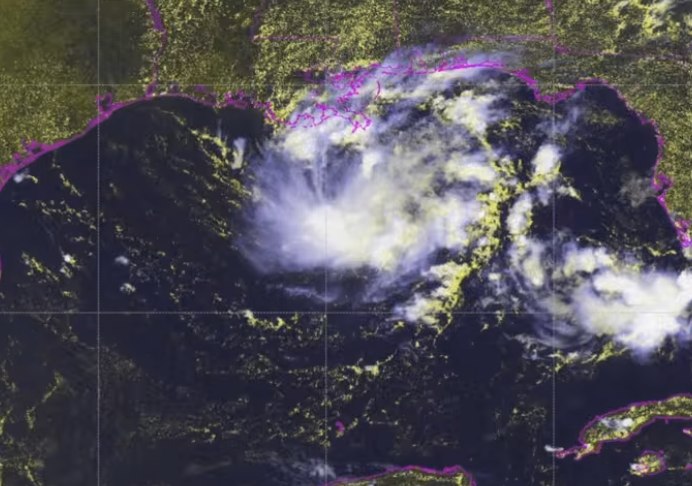
MIAMI — The National Hurricane Center is monitoring two areas of potential tropical development in the Atlantic basin, with a disturbance in the northern Gulf carrying increasingly high odds of strengthening into a short-lived tropical depression or tropical storm before reaching the Texas or Louisiana coast as soon as Monday night.

The system, designated Invest 97L, was located roughly 100 to 125 miles south of the southeastern Louisiana coast as of Monday morning, according to the National Hurricane Center. As of the agency’s latest advisory, the disturbance carried a 70% chance of development over both the next 48 hours and the next seven days, an increase from the 30% to 50% odds forecasters had assigned the system over the weekend as it became better organized. An Air Force Reserve reconnaissance aircraft, commonly known as a hurricane hunter, was scheduled to investigate the low-pressure area Monday morning to gather more detailed data on its structure.

Forecasters say the disturbance is expected to drift slowly west-northwest across the northern Gulf before potentially strengthening into a short-lived tropical depression or tropical storm as it approaches the upper Texas or southwestern Louisiana coast late Monday or early Tuesday. If the system’s maximum sustained winds reach 39 mph, it would be named Tropical Storm Edouard, the fifth named storm of the 2026 Atlantic hurricane season. The National Hurricane Center has said tropical storm watches or warnings could be issued for portions of the Gulf Coast later Monday as the system continues to organize.

Advertisement

Regardless of whether the disturbance officially strengthens into a named storm, forecasters say its primary threat will be heavy rainfall rather than strong winds. The National Hurricane Center said the system is expected to bring locally heavy rain to portions of the upper Texas and southwestern Louisiana coasts over the coming days, with rainfall totals of up to 2 inches expected in some areas and higher localized amounts possible. Southern Louisiana has been placed under a marginal risk for heavy rainfall, raising the potential for flash flooding, particularly given recent dry conditions in the region. Forecasters covering the Houston area have said the system could bring an uptick in showers and storms by Tuesday and Wednesday as it moves inland, with the potential for rainfall totals to climb further depending on how the system tracks once it makes landfall.

Separately, the National Hurricane Center is also tracking the remnants of former Tropical Storm Dolly, which are producing showers and thunderstorms stretching from Hispaniola eastward to the northern Leeward Islands. That system is moving west to west-northwest at roughly 20 to 25 mph, and forecasters say strong upper-level winds are expected to prevent redevelopment over the next couple of days. The National Hurricane Center has given Dolly’s remnants a near-zero chance of redevelopment over the next 48 hours and just a 20% chance over the next seven days. Even without redeveloping into a formal tropical system, forecasters say the moisture associated with Dolly’s remnants could reinforce an already wet pattern across South Florida later this week as the disturbance approaches the southern Bahamas or the Florida Straits. Should either the Gulf system or Dolly’s remnants develop into a named storm, the next name after Edouard on this year’s Atlantic storm list would be Fay.

The Atlantic hurricane season is now moving into its historical peak period, which arrives around Sept. 10 and spans the stretch from mid-August through mid-October, when ocean temperatures are typically at their warmest and atmospheric conditions are often more conducive to tropical development. So far this season, the Atlantic has produced four named storms, Arthur, Bertha, Cristobal and Dolly, but no hurricanes. By comparison, the climatological average season has typically produced its sixth named storm and first hurricane, generally forming around Aug. 11, by this point on the calendar, putting the 2026 season somewhat behind its typical pace in both named storm activity and hurricane formation.

Forecasters have cautioned that a slower-than-average start to the season does not determine how active the remainder of it will be. With the Atlantic entering its peak window for tropical activity, meteorologists say conditions can shift quickly, and it takes only one significant landfalling storm to make a season consequential regardless of how quiet its earlier months may have been. Residents along the Gulf Coast, particularly in southeast Texas and southwestern Louisiana, are being urged to monitor forecast updates closely in the coming days as Invest 97L continues its approach toward the coastline.

Advertisement
Continue Reading

Business

Lessons in entrepreneurship

Published

on

Lessons in entrepreneurship

OPINION: Recent research provides insight into the benefits, or otherwise, of startup incubator or accelerator programs.

Continue Reading

Business

Oil Gains After First U.S. Strikes in Weeks on Iranian Targets

Published

on

Oil Gains After First U.S. Strikes in Weeks on Iranian Targets

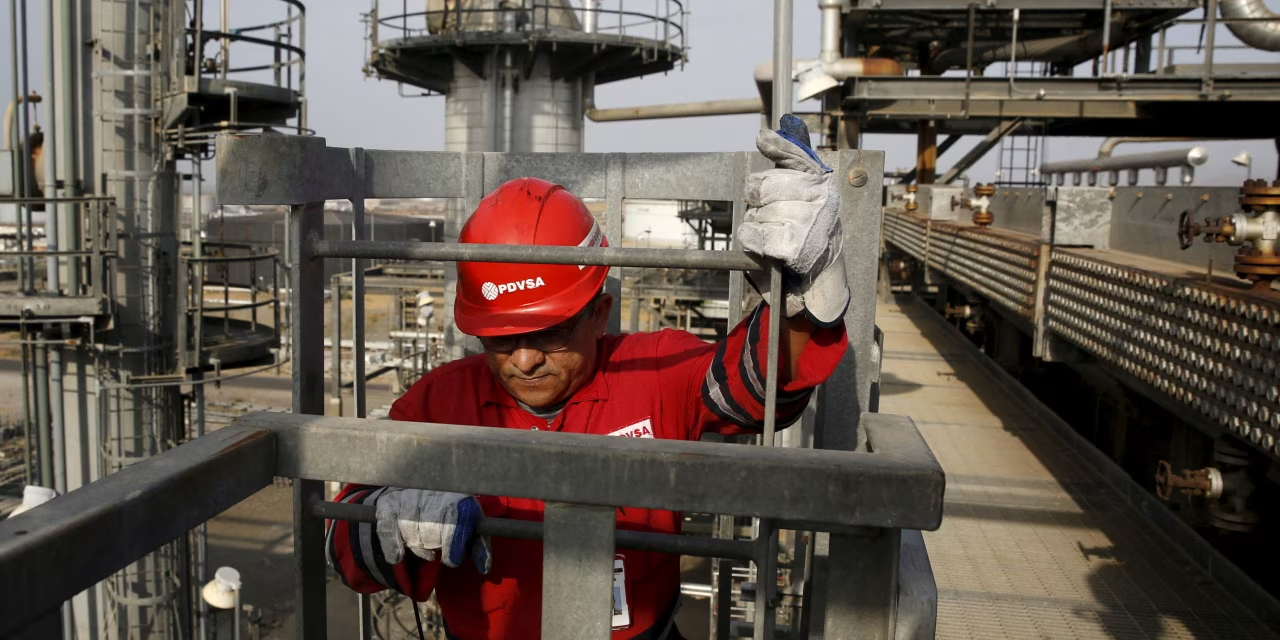
0815 ET – Oil futures rise after the U.S. attacked Iranian rocket launchers, renewing military action in the Persian Gulf for the first time in weeks. “The longer geopolitical uncertainty and supply disruptions continue, the tighter the market gets, keeping upward pressure on crude,” Nikos Tzabouras of Tradu says in a note. But the U.S. may have limited appetite for broader military action with its shift in focus to economic measures against Tehran and its enablers, he adds. Although below prewar levels, crude is finding its way out of the Middle East and with lower consumption the market could return to balance, he adds. WTI is up 3.4% at $86.21 a barrel, and Brent is 3.1% higher at $90.85. (anthony.harrup@wsj.com)

Oil Rises as U.S.-Iran Tensions Escalates

0933 GMT – Oil prices rise as renewed fighting between the U.S. and Iran revives concerns over crude flows through the Strait of Hormuz. November Brent rises 3.4% to $91.08 a barrel, while October WTI gains 3.3% to $86.19 a barrel. U.S. forces struck Iranian missile launchers on Larak Island, prompting retaliation from Tehran and renewed fears over safe passage through the key Gulf shipping route. Recent disruptions have shown how quickly uncertainty around Hormuz can feed back into oil prices, say ING commodity strategists Warren Patterson and Ewa Manthey. (farhan.rafid@wsj.com)

Copyright ©2026 Dow Jones & Company, Inc. All Rights Reserved. 87990cbe856818d5eddac44c7b1cdeb8

Continue Reading

Business

Weekly Commentary: Money Matters

Published

on

Weekly Commentary: Money Matters

Weekly Commentary: Money Matters

Continue Reading

Business

High-Protein Products Need More Than Protein

Published

on

High-Protein Products Need More Than Protein

Consumer demand continues to reshape product development across nearly every food category. According to the International Food Information Council’s (IFIC) 2025 Food & Health Survey, 70% of Americans say they actively try to consume protein,* making it the most sought-after nutrient for the fifth consecutive year. Whether it’s bars, beverages, breads, snacks or frozen meals, manufacturers continue to respond with products that help consumers meet their protein goals.

As consumers increase protein intake, many aren’t getting enough fiber. In fact, Americans average only about 16 grams of fiber per day – which is well below the recommended daily intake. At the same time, higher-protein diets often replace foods that have traditionally contributed fiber, widening what nutrition experts commonly refer to as the “fiber gap.”

For food manufacturers, that gap represents an opportunity. Consumers aren’t simply looking for more protein. They’re looking for foods that help them feel satisfied and contribute to their overall wellness with more complete nutrition.

Why Fiber Matters in a High-Protein Diet

Advertisement

While high-protein foods are well-established for building and maintaining muscle, they often lack a sufficient amount of dietary fiber. Without adequate fiber, consumers who shift to eating more protein may experience digestive discomfort and gut issues, making these diets difficult to sustain.

Boosting fiber alongside protein helps keep digestion moving while also contributing to satiety. Pairing protein with fiber allows manufacturers to create foods that help consumers stay fuller longer while delivering the nutritional balance they’re increasingly seeking.

That combination is becoming even more important as GLP-1 medications reshape eating habits. An estimated 22 million U.S. adults have used GLP-1s. Because these medications suppress appetite, users eat significantly less and are advised to prioritize protein to help preserve lean muscle mass. As portion sizes become smaller, nutrient-dense protein + fiber companion foods are becoming essential and creating opportunities for manufacturers. 

FBN-GrainMillers-Meatballs-635.jpgPhoto: Shutterstock/DronG

Adding Fiber Without Compromising Quality

Not all fiber performs the same way. Understanding the differences allows formulators to select fiber ingredients that positively impact both nutrition and product performance.

Advertisement

Soluble fiber dissolves in liquid and forms a gel-like consistency. Nutritionally, it is associated with supporting healthy blood sugar levels and heart health. In food applications, soluble fibers are commonly used for thickening, stabilization and emulsification.

Insoluble fiber does not dissolve in water. Instead, it aids digestive regularity by adding bulk to the digestive system. In formulations, insoluble fiber is used for water binding, moisture management, breakage control and overall texture — making it particularly valuable across bakery, snack and added-protein applications.

These distinctions make insoluble fiber well suited to address the technical challenges that arise when adding fiber to high-protein foods. 

Depending on the ingredient and inclusion level, fiber can introduce grittiness, heaviness or dryness. It can also negatively affect dough texture and finished product appearance. For food manufacturers looking to achieve a “high fiber” or “good source of fiber” label claim, the challenge is developing a higher-fiber formulation without compromising the sensory qualities consumers expect.

Advertisement

Oat Fiber Delivers Nutrition and Functionality

To do this, formulators increasingly turn to insoluble oat fiber. Unlike other fiber sources that can turn gummy or introduce off-flavors, oat fiber boosts nutrition with minimal impact on the sensory profile.  

Grain Millers Oat Fiber stands out as a choice for formulations. Produced through a natural process without the use of chemical agents, it allows for a clean, simple ingredient declaration. It features exceptionally high fiber and very few calories, and its light color and neutral taste ensure easy integration without disrupting product flavor or appearance. Grain Millers Oat Fiber is gluten-free and available in organic options, creating possibilities for premium product positioning and maximum shelf appeal.

Beyond its nutritional profile, oat fiber provides functional benefits across multiple food categories.

Advertisement
  • Breads and tortillas – helps maintain softness and pliability while reducing cracking.
  • Cereals and snacks – improves structure, enhances crunch and helps minimize the dry, “cardboard-like” texture that can sometimes accompany high-protein formulations.
  • Meat products – improves moisture retention, helping products stay juicy.
  • Reduced-calorie foods – serves as a bulking ingredient, adding volume and enhancing satiety without contributing significant calories.
FBN-GrainMillers-Tortillas-635.jpgPhoto: Shutterstock/Andrey Starostin

Looking Ahead

High protein continues to attract consumers, but it’s also creating a new opportunity for product innovation. More and more, as consumers continue choosing protein-rich foods, they’ll expect those products not to provide only protein. They’ll expect foods that support digestive health, promote satiety and offer a more complete nutritional profile.

For manufacturers, that means looking at elements other than just protein content and understanding how fiber ingredients can enhance both nutrition and product performance. Pairing protein with fiber to meet evolving consumer expectations will help companies differentiate their products in a crowded marketplace.

To learn more about Grain Millers’ oat fiber ingredients or connect with our technical services team, visit grainmillers.com/oat-fiber

Advertisement
Continue Reading

Business

AXT: Correction Has Provided An Opportunity For Speculative Investors – Buy (NASDAQ:AXTI)

Published

on

Nebius Is Priced For Flawless Delivery

This article was written by

I am mostly a trader engaging in both long and short bets intraday and occasionally over the short- to medium term. My historical focus has been mostly on tech stocks but over the past couple of years I have also started broad coverage of the offshore drilling and supply industry as well as the shipping industry in general (tankers, containers, drybulk). In addition, I am having a close eye on the still nascent fuel cell industry.I am located in Germany and have worked quite some time as an auditor for PricewaterhouseCoopers before becoming a daytrader almost 20 years ago. During this time, I managed to successfully maneuver the burst of the dotcom bubble and the aftermath of the world trade center attacks as well as the subprime crisis.Despite not being a native speaker, I always try to deliver high quality research to followers and the entire Seeking Alpha community.

Analyst’s Disclosure: I/we have no stock, option or similar derivative position in any of the companies mentioned, and no plans to initiate any such positions within the next 72 hours. I wrote this article myself, and it expresses my own opinions. I am not receiving compensation for it (other than from Seeking Alpha). I have no business relationship with any company whose stock is mentioned in this article.

Seeking Alpha’s Disclosure: Past performance is no guarantee of future results. No recommendation or advice is being given as to whether any investment is suitable for a particular investor. Any views or opinions expressed above may not reflect those of Seeking Alpha as a whole. Seeking Alpha is not a licensed securities dealer, broker or US investment adviser or investment bank. Our analysts are third party authors that include both professional investors and individual investors who may not be licensed or certified by any institute or regulatory body.

Advertisement
Continue Reading

Business

Macmahon lands $38m contract

Published

on

Macmahon lands $38m contract

Michael Finnegan-led Macmahon Holdings will play a key role in progressing the Central Tanami gold project towards a potential development decision next year.

Continue Reading

Business

SBDC chief seeks red-tape reduction

Published

on

SBDC chief seeks red-tape reduction

Business advocacy head sets out his vision for the state’s economic backbone.

Continue Reading

Business

Business groups urge Swinney to scrap ‘ineffective’ food price cap plan

Published

on

A rescuer digs through wreckage

The SRC said the policy also risked forcing small shops which are not covered by the proposed legislation to be uncompetitive.

“Scottish consumers benefit from the most affordable food prices in western Europe,” MacDonald-Russell added.

“We know food price inflation is a problem, but the best model to deal with it is the one we have right now and price caps are going to make that worse.

“It is giving a false promise that it is going to be able to help with something.

Advertisement

“In reality, there is as good a chance it is going to make the overall cost of a shopping basket higher, because the cost of the scheme as well as the cap have to be absorbed by businesses.”

It is thought the proposals would require changes to the UK Internal Markets Act of 2020, which was brought in after Brexit to prevent trade barriers and regulatory divergence between England, Scotland, Wales, and Northern Ireland as powers returned from the EU.

The Scottish Government said helping people with the cost of living was a “top priority”.

A spokesperson added: “Ministers have welcomed engagement with stakeholders, including retailers, food producers and farmers on proposals for food price controls.

Advertisement

“A consultation will launch shortly for further views.”

Continue Reading

Business

Thailand’s OECD Bid Is Colliding With Its Oligopoly Problem

Published

on

Thailand's OECD Bid Is Colliding With Its Oligopoly Problem

Key Points

Thailand’s bid to join the OECD by 2028 highlights a structural problem: wealth concentration driven by weak competition enforcement rather than taxation gaps. Major conglomerates dominate telecommunications, energy, retail and other sectors, converting market dominance into personal fortune, as illustrated by the 2023 True-DTAC merger that avoided regulatory scrutiny through legal classification.

The same conglomerate names recur across emerging sectors like virtual banking and data centers, reflecting what some scholars describe as hierarchical capitalism unlike the conditional state support seen in South Korea or Taiwan. The OECD’s 2025 review identified regulatory ambiguities enabling this pattern. Genuine reform requires clarifying the Trade Competition Commission’s jurisdiction rather than focusing solely on redistribution policies.

Thailand’s journey to join the OECD by 2028 involves rethinking its approach to inequality. Policymakers must broaden their perspective beyond taxation and welfare. They need to integrate competition policy as a core strategy to tackle inequality effectively. This shift requires fostering a fairer market environment where small and medium-sized enterprises can thrive, ensuring that economic growth benefits all segments of society.

These are not the same problem, and the failure to distinguish between them is a large part of why so little has changed.

Advertisement

The uncomfortable reality is this: Thailand’s wealthiest households are not simply outearning everyone else. In many cases, they are the same conglomerates that dominate the industries they operate in, from telecommunications and energy to beverages, retail and airport concessions, with too little regulatory friction to prevent market dominance from converting directly into personal fortune. 

In markets with few genuine competitors, the winners do not just accumulate wealth. They tend to keep it, almost regardless of how well they actually perform.

Telecom offers the clearest illustration.

In 2023, True Corporation and DTAC, then Thailand’s second and third largest mobile operators, completed a merger that reduced the number of major carriers from three to two. That alone warranted serious scrutiny. Instead, the deal fell into a regulatory gap. 

The Trade Competition Commission does not oversee telecom mergers, and the sector’s dedicated regulator, the National Broadcasting and Telecommunications Commission, determined that the transaction did not technically qualify as an “acquisition.” 

Advertisement

The two companies had described it as an “amalgamation,” a legal distinction that placed the deal outside the commission’s approval authority. Rather than being approved or rejected, the merger was simply acknowledged, with conditions attached. No regulator with clear authority ever rendered a formal judgment on it.

The consequences followed a predictable pattern. True Corporation’s average revenue per user has risen since the merger, while cheaper mobile plans have become harder to find. That outcome is not incidental. It is what tends to happen when competitive pressure is removed and no regulatory body is positioned to notice or respond.

This is a pattern, not an isolated case.

True Corporation is partly owned by Charoen Pokphand Group, Thailand’s largest conglomerate, with interests spanning agriculture, food, retail, automobiles and telecommunications. Its leaders, the Chearavanont brothers, rank near the top of the country’s rich list. Close behind is Sarath Ratanavadi of Gulf Development, which is also the principal shareholder behind AIS, the country’s other major mobile carrier. Add Charoen Sirivadhanabhakdi’s beverage business and the Srivaddhanaprabha family’s airport duty-free operations, and a small number of firms account for a striking share of the country’s concentrated wealth.

This is not merely a matter of historical accumulation. It is recurring in the industries that will shape Thailand’s coming decade. When virtual banking licenses were approved in mid-2025, the successful applicants included CP Group, two of the country’s established banks and PTT, the state oil company. When the Board of Investment approved data center projects in early 2026, five of the seven were linked to True Corporation, Gulf Development or AIS. The names change little, even as the frontier does.

Advertisement

Why this matters more than the inequality figures alone

The figures themselves are stark. Thailand’s wealthiest one percent hold roughly a third of national wealth, and the next nine percent hold close to another third, leaving the bottom half of the population with approximately 3.5 percent. 

But figures of this kind tend to invite responses centered on taxation or redistribution. That response misses the underlying mechanism. If weak competition enforcement is the root cause, redistributing income after the fact addresses a symptom while leaving the structure that produces the imbalance largely untouched.

Some scholars trace this dynamic to the Prayuth Chan-o-cha era, arguing that Thailand has drifted toward a form of hierarchical capitalism in which a small circle of conglomerates now effectively shapes national economic direction. 

The comparison with South Korea and Taiwan is instructive. Large firms in those economies also received substantial state support, but that support came with defined expectations: industrial upgrading, export performance, alignment with long-term national strategy. Thai conglomerates have often gained comparable scale and protection without equivalent obligations attached.

Advertisement

What genuine reform would require

The OECD’s 2025 review identified concrete, addressable weaknesses: opaque procedures for selecting Trade Competition Commission board members, unclear investigative rules and, most consequentially, ambiguous jurisdiction between regulators. 

That last weakness is precisely what allowed the True-DTAC merger to escape meaningful review. When a transaction can avoid scrutiny simply by being classified under the right legal term, the underlying law is not functioning as intended.

Thailand does not need a campaign against large enterprise. It needs a Trade Competition Commission with clear, enforceable jurisdiction over sectors, such as telecommunications, that currently fall outside its reach through regulatory ambiguity. It needs transparent oversight of who gains control of emerging markets, including virtual banking and data infrastructure, before those markets settle around the same handful of family-controlled firms. And it needs to stop treating OECD accession as a matter of technical compliance, when the more difficult obstacle is a political economy that has, for years, quietly determined who is permitted to compete and who is simply positioned to collect the returns.

Address the competition problem, and the wealth problem begins to correct itself. Leave it unaddressed, and Thailand may join every international body it seeks membership in without the underlying concentration shifting at all.

Advertisement
Continue Reading

Trending

Copyright © 2025