East Yorkshire Hydraulics, founded nearly 50 years ago, has been acquired by the son of one of its founders
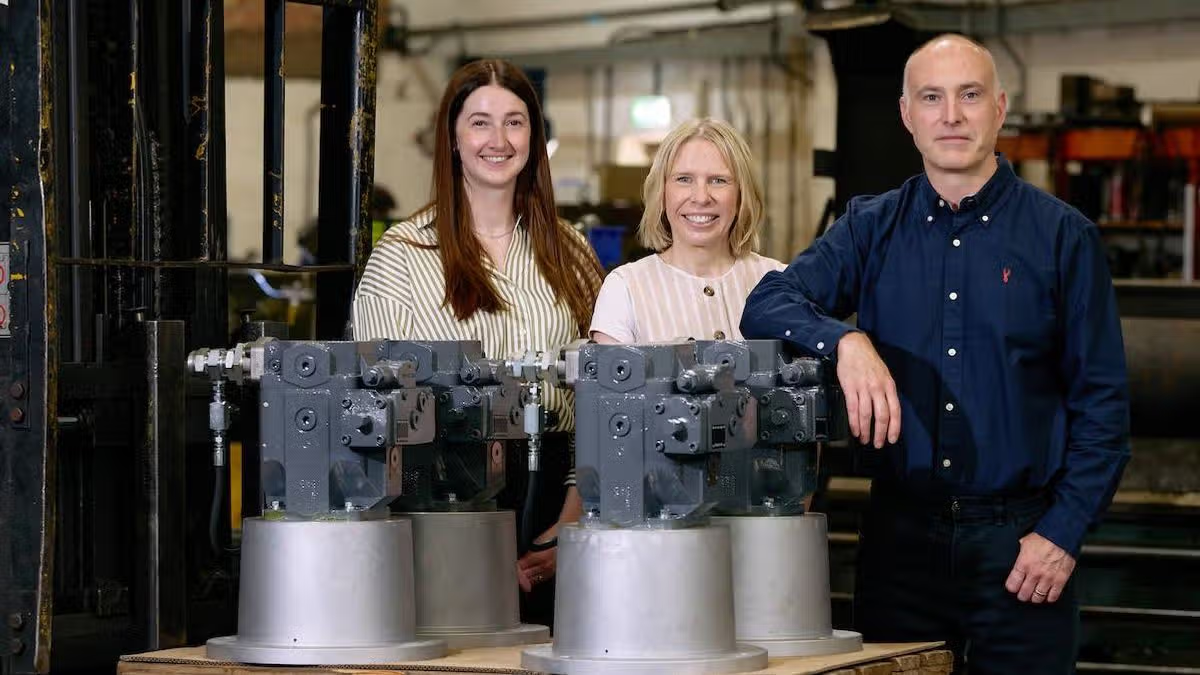
Pictured L-R Rebecca Pickering (Mercia), Sarah Newbould (British Business Bank), Andy Kirby (Managing Director- East Yorkshire Hydraulics Ltd)(Image: Shaun Flannery Photography Ltd)
A family-run business in Hull established nearly half a century ago is eyeing future growth after being acquired by the son of one of its founders. East Yorkshire Hydraulics, which has its head office on Harpings Road, was set up in 1979 to specialise in the design, installation and repair of hydraulic units across a range of industries.
Over the decades, the firm has expanded its client base to encompass sectors spanning steelmaking and aerospace through to power generation, and it also operates as a service centre for accumulator inspection and certification. Now the company, which currently has a workforce of 18, has secured a six-figure loan from NPIF II – Mercia Debt Finance, managed by Mercia as part of the Northern Powerhouse Investment Fund II (NPIF II), to drive expansion following a buyout.
The deal sees Andrew Kirby take control of the company, having first got involved with the company more than 35 years ago, lending a hand during his school holidays. His father, Barrie Kirby, and fellow engineer John Williams co-founded the firm in the 1970s, and the transaction allows Mr Williams to step down and retire.
Barrie Kirby, meanwhile, will continue in a part-time capacity. The funding will also strengthen the company’s working capital and facilitate investment in new equipment.
Advertisement
Andrew Kirby, managing director, said: “East Yorkshire Hydraulics has built a track record for expertise and reliability. It’s an honour to be taking over the business and I hope one day to pass on the legacy to my own sons.”, reports Hull Live.
“Demand for hydraulic systems has increased in recent years as high energy costs encourage businesses to improve efficiency by replacing older hydraulic systems. We have also won new work after Brexit as companies have sought out UK suppliers.
“The business is now well placed across all sectors and the loan will help us to move forward and target new areas such as renewable energy.”
Rebecca Pickering of Mercia Debt added: “Barrie and John have built a respected and profitable business over the years and Andrew, who himself has years of experience with the company, is ideally placed to take over the reins. We are pleased to support it as it enters an exciting new chapter in its history.”
Advertisement
Sarah Newbould, Senior Investment Manager at the British Business Bank, said: “Through NPIF II, we’re pleased to support the next stage of East Yorkshire Hydraulics’ journey, helping to preserve a successful heritage family business while enabling continued investment in its people and long-term growth.
“Advanced manufacturing plays a vital role in driving innovation and regional economic prosperity, and this investment reflects NPIF II’s commitment to supporting businesses that contribute to the UK’s Modern Industrial Strategy and strengthen the country’s industrial base.”
The five-storey office scheme will house 1,600 staff
Amy Woodward, Local Democracy Reporter
08:47, 07 Jul 2026Updated 08:52, 07 Jul 2026
JP Morgan CGI(Image: Local Democracy Reporting Service)
JP Morgan’s office expansion is pressing ahead in Bournemouth, despite reservations regarding the effect on parking provision and sustainable travel.
Advertisement
The five-storey office and multi-storey car park development is intended to accommodate 1,600 employees returning to on-site working, and forms part of the firm’s long-term commitment to its Bournemouth operations.
The decked car park will provide 118 spaces, alongside 614 cycle parking spaces.
At a planning committee meeting on July 6, Laura Batstone, managing director and site lead at JP Morgan, said: “we recognise the concerns raised around potential parking pressures on surrounding residential streets and we are committed to being a good neighbour and maintaining a good dialogue with residents.
“If concerns do arise in the future we would welcome the opportunity to hear them directly and work constructively with the local community and council to find solutions.”
Advertisement
Neighbouring ward councillor for Queen’s Park and Charminster Sharon Carr-Brown said: “I welcome the granting of this application; JPMorganChase is a very valued employer locally. Work still needs to be done to ensure that the residents of my ward don’t suffer more parking misery as a result of it, though.
“I argued that increased parking protections and enforcement should be a part of any agreement and this has gone some way to that but the key will be building an ongoing working relationship between the community, ward councillors and the bank.
“Any travel plan must have residents’ input and it needs to be well before the new building is in use. If parking changes are needed, that will take time and so work on that must start as soon as possible. I look forward to working with JPMorganChase to represent residents’ views and establish a relationship so that any issues can be ironed out quickly.”
Fellow Queen’s Park and Charminster Ward Councillor Alasdair Keddie said: “We welcome JP Morgan as an employer in the area, we simply ask that travel and parking mitigation is open, fair and adequately balances the needs of our residents against the economic benefits of the development.”
Advertisement
JP Morgan has pledged to improve its existing travel strategy. Ms Batstone said: “we are proud of our existing travel plan but recognise there is scope to do more a strengthened travel plan will continue to reduce reliance on single occupancy car travel.
“This includes investment in cycling facilities, our existing shuttle bus network and public transport infrastructure and exploring a partnership with Beryl Bikes.”
The committee approved the application by five votes to one, with one abstention.
ATLANTA — Defending champion Argentina faces Egypt on Tuesday in a World Cup Round of 16 matchup at Mercedes-Benz Stadium, known as Atlanta Stadium for the tournament, with kickoff set for 12 p.m. Eastern time in a contest that pairs Lionel Messi against Mohamed Salah for the first time on soccer’s biggest stage.
In the United States, the match is airing live on FOX, with Spanish-language coverage available on Telemundo. Viewers without traditional cable access can stream the game through any service that carries FOX, including DirecTV, which offers a five-day free trial, Fubo, which offers a one-day free trial, Sling and Hulu + Live TV. The match is also streaming live on FOX One, the tournament’s official streaming platform, which carries a three-day free trial before converting to a $19.99 monthly subscription. Peacock serves as the official Spanish-language World Cup streaming platform for viewers who prefer that option.
International viewers have a range of free-to-stream options depending on their location. According to FourFourTwo, the match is available without a subscription through ITV in the United Kingdom, RTÉ Player in Ireland, SBS On Demand in Australia, CazéTV on YouTube in Brazil, NOS in the Netherlands, RTBF and VRT in Belgium, SRF, RTS and RSI in Switzerland, and TRT in Turkey. English-language commentary is available through the ITV, RTÉ Player and SBS On Demand broadcasts specifically. Viewers located outside of these regions can access a stream from an eligible country using a reputable VPN service, which creates a secure connection that allows a device to appear as though it is located in a different country for streaming purposes.
Advertisement
Argentina enters Tuesday’s match in strong form, having won five consecutive matches across all competitions heading into the fixture. The team went undefeated through the group stage, opening with a 3-0 win over Algeria before beating Austria 2-0 and Jordan 3-1. In the Round of 32, Argentina needed extra time to see off tournament surprise Cape Verde, ultimately prevailing 3-2 behind goals from Lisandro Martinez and an own goal from Cape Verde’s Diony Borges. Messi scored in that match as well, extending his personal tournament record with his 20th career World Cup goal. He currently sits tied with Norway’s Erling Haaland and France’s Kylian Mbappe atop the tournament’s Golden Boot standings, each with seven goals.
Argentina’s confirmed starting lineup features goalkeeper Emiliano Martinez behind a back line of Nahuel Molina, Cristian Romero, Lisandro Martinez and Nicolas Tagliafico, with a midfield of Alexis Mac Allister, Rodrigo De Paul, Leandro Paredes and Enzo Fernandez supporting a front line of Julian Alvarez and Messi. Argentina head coach Lionel Scaloni has publicly criticized the tournament’s tightening recovery windows between knockout matches, expressing frustration over the physical toll the schedule has placed on his squad following the grueling extra-time win over Cape Verde. The team also enters with some fitness concerns, as Enzo Fernandez, Facundo Medina and Molina were each on restricted training schedules over the weekend following the previous match.
Egypt’s confirmed lineup includes goalkeeper Mostafa Shobeir behind a defense of Mohamed Hany, Karim Hafez, Ramy Rabia and Yasser Ibrahim, with a midfield built around Emam Ashour, Marwan Attia and Mohanad Lasheen, supporting a front line featuring captain Salah alongside Mostafa Ziko and Haissem Hassan. Egypt head coach Hossam Hassan faces his own selection concerns at left-back, with Hafez reportedly managing an injury sustained during the Australia match and alternate option Ahmed Fatouh already considered doubtful for selection heading into Tuesday’s fixture.
Tuesday’s match marks just the second all-time meeting between the two nations, with their only previous encounter coming in a March 2008 friendly that Argentina won 2-0 in Cairo. Argentina is chasing back-to-back World Cup titles, a feat no nation has accomplished since Brazil won consecutive championships in 1958 and 1962. For Egypt, simply reaching this stage of the tournament has already been described as a historic achievement for both the country and the broader African continent, given the 92-year gap since the program’s only previous World Cup knockout-round appearance.
The match is being played in a climate-controlled, indoor environment at Mercedes-Benz Stadium, with outside temperatures expected to reach approximately 86 degrees Fahrenheit at kickoff and climb to around 90 degrees by the final whistle, alongside humidity levels ranging from roughly 59 percent early in the match to 51 percent by its conclusion, conditions that will have no direct impact on play given the stadium’s retractable roof and climate systems.
The winner of Tuesday’s match will advance to face the winner of the separate Round of 16 fixture between Switzerland and Colombia, also being played Tuesday, in a quarterfinal matchup scheduled for Saturday, July 11, in Kansas City. Analysts and betting markets have generally favored Argentina to advance, citing the team’s depth, tournament experience and Messi’s continued individual excellence, while noting that Egypt’s disciplined defensive structure and Salah’s creative influence give the Pharaohs a genuine path to another significant upset should they replicate the composure shown during their penalty shootout win over Australia.
Advertisement
Fans looking to follow the match without access to a livestream can also track live scores, statistics and play-by-play updates through outlets including Goal.com and Yahoo Sports, both of which are providing minute-by-minute coverage of the contest as it unfolds Tuesday afternoon in Atlanta.
Most SMEs don’t set out to run a reactive maintenance operation. It happens gradually — a delivery van gets serviced when something goes wrong, a growing fleet outpaces the informal system that worked fine with two vehicles, and before long, the business is spending more on emergency repairs than it would have spent maintaining the fleet properly from the start
Nobody decided this was the strategy. It just became the default.
The businesses that avoid this trap aren’t the ones with the biggest maintenance budgets. They’re the ones that understood, early, that vehicle costs go far beyond the purchase price and the odd repair bill — and that the difference between planned and reactive maintenance compounds significantly over a fleet’s lifetime.
Key Takeaways
The purchase price of a commercial vehicle typically represents only 20-30% of its total cost of ownership over five to seven years.
Preventive maintenance reduces the total cost of ownership by 15-25% compared to reactive, breakdown-driven approaches.
Unplanned downtime can cost several hundred pounds per vehicle, per day, once lost productivity and emergency repair premiums are factored in.
The in-house versus outsourced maintenance decision has a genuine break-even point tied to fleet size, not just preference.
SMEs that track total cost of ownership by vehicle, rather than relying on instinct, consistently make better replacement and procurement decisions.
Why the Purchase Price Is the Smallest Number That Matters
It’s an easy trap for a growing business: budgeting for a new van or truck based on the purchase price, then being caught off guard by how much the vehicle actually costs to run. Industry data consistently shows that acquisition costs represent only a fraction of what a commercial vehicle costs over its working life — the majority accumulates through fuel, maintenance, insurance, and depreciation across years of operation. A complete guide to calculating fleet total cost of ownership breaks down every cost category that belongs in that calculation, and the hidden expenses that traditional budgeting routinely misses.
This matters most for SMEs specifically because there’s less room for error. A large logistics operator can absorb a poorly-timed replacement decision across a fleet of hundreds. A business running five or ten vehicles feels every one of those decisions directly on the bottom line.
The Maintenance Model Decision Most SMEs Get Backwards
One of the most consequential decisions a growing fleet operator makes is whether to build in-house maintenance capability or outsource it to third-party garages — and the right answer genuinely depends on fleet size, not just preference or convenience. Smaller operations often achieve better economics through outsourcing, since the overhead of facilities, equipment, and technician training rarely pays for itself below a certain vehicle count. Larger fleets eventually cross a threshold where in-house investment starts to make financial sense. A comparison of in-house versus outsourced fleet maintenance costs walks through exactly where that threshold tends to fall and the hidden overhead costs that catch growing businesses off guard when they build maintenance capability too early.
Advertisement
The businesses that get this decision wrong in either direction pay for it — either through the inflated cost of outsourcing at a scale where in-house made more sense, or through the overhead of building a maintenance department before the vehicle count justified it.
What Reactive Maintenance Actually Costs
The appeal of reactive maintenance is that it feels cheaper in the short term — nothing gets spent until something breaks. The reality is closer to the opposite. Emergency repairs carry premium labour rates, expedited parts costs, and towing fees that planned service simply doesn’t. Add in the lost productivity from a vehicle unexpectedly out of service, and the true cost of a single breakdown routinely runs several times higher than the same repair performed on a planned schedule.
For an SME running a lean fleet, this gap matters more than it does for a large operator with redundancy built in. A single van down for a week isn’t a rounding error — it’s a direct hit to delivery capacity, customer commitments, and revenue that a spare vehicle or extra driver would normally absorb.
Building a Maintenance Approach That Scales With the Business
Track total cost of ownership per vehicle, not just the purchase price, from the moment a vehicle joins the fleet.
Revisit the in-house versus outsourced maintenance decision every time the fleet grows by a meaningful increment, rather than assuming the original setup still makes sense.
Budget maintenance as a fixed, planned operating cost rather than a reactive expense that competes with other priorities when it comes up.
Calculate the real cost of downtime for your specific business — lost deliveries, missed commitments, coverage costs — not just the repair invoice.
Review vehicle-level maintenance data quarterly to catch cost trends before they become replacement-timing surprises.
The Bottom Line
Fleet maintenance rarely feels like a strategic priority for a growing SME until a breakdown forces the issue. The businesses that scale their vehicle operations smoothly are the ones that treated maintenance as a planned, tracked cost from early on — understanding that the sticker price was never the real number that mattered, and that the difference between reactive and proactive maintenance compounds directly into the bottom line.
Folarin Balogun of the United States shoots during the FIFA World Cup 2026 Round Of 16 match between USA and Belgium at Seattle Stadium on July 6, 2026 in Seattle, Washington.
Mb Media | Getty Images Sport | Getty Images
As the FIFA World Cup captures massive global audiences, media companies are preparing to pay billions for the rights to the next two men’s tournaments.
Advertisement
Netflix,Disney and Alphabet’s YouTube are all interested in challenging Fox for the U.S. broadcast rights to the 2030 and 2034 World Cup, according to people familiar with the matter.
Amazon, which currently owns UEFA Champions League rights in the U.K., and Apple, which owns global MLS rights, could also enter the mix, further fueling a potential bidding war for the rights.
Discussions between FIFA and potential media partners are expected to begin sometime in the next three months, according to people familiar with the matter.
FIFA has alerted media companies during preliminary talks, which began earlier this year, that English- and Spanish-language U.S. rights are likely to be sold together, rather than separately as they have been for previous Cups including 2026, according to the people, who asked not to be named because the discussions are private.
Advertisement
Fox paid $485 million for the English-language rights for this year’s tournament, hosted across North American cities, according to The Athletic. NBCUniversal’s Telemundo paid $600 million for the Spanish-language rights, according to people familiar with the matter.
Executives at various media companies are budgeting between $1.5 billion and $2 billion for the U.S. rights to each tournament across languages, said the people. The last time FIFA negotiated a deal, with Fox and Telemundo, was in 2011. Four years later, FIFA extended that deal through 2026.
Get the CNBC Sport newsletter directly to your inbox
The CNBC Sport newsletter with Alex Sherman brings you the biggest news and exclusive interviews from the worlds of sports business and media, delivered weekly to your inbox.
FIFA won’t sell global rights to the tournament, because different countries have regulations that mandate the World Cup must be sold over the air. But U.S. rights will be coveted, with major viewership and advertising opportunities.
Netflix, Disney and YouTube all view the World Cup as a potential major boost for their streaming services, according to the people familiar.
Disney could also air games on ESPN and ABC, which could be appealing to FIFA as the broadcast on Fox has seen strong ratings this year. FIFA has already shown interest in Netflix by awarding it the Women’s World Cup in 2027 and 2031.
Spokespeople for FIFA, Netflix, YouTube and Disney declined to comment.
Advertisement
Selling one package
Selling the English- and Spanish-language rights as a single package could help FIFA garner a higher price, driving up bids from eager media partners looking for big ratings. The combined TV audiences for U.S. games in recent weeks have rivaled NFL playoff games.
It could also help eliminate some tensions between rival media companies airing the same games.
Though Telemundo bought only the Spanish-language rights through 2026, it has claimed some unknown population of English speakers watching games in the U.S. via the Peacock streaming service, dampening Fox’s World Cup reach.
Peacock charges just $10.99 per month, while Fox’s streaming service, Fox One, costs $19.99 per month.
Advertisement
Telemundo also signed actor Owen Wilson, who isn’t Latino or known for speaking Spanish, as a spokesperson for the Spanish-language coverage of the World Cup, blurring the lines for an American audience that speaks both English and Spanish.
If English- and Spanish-language games are sold together, NBCUniversal isn’t likely to compete for the rights at a price nearing $2 billion, according to people familiar with the matter. That would remove Telemundo as a future partner.
Comcast announced last month it intends to spin out NBCUniversal, putting more investor focus on its future finances. NBCU already pays billions per year for the NFL’s “Sunday Night Football” and NBA basketball. An NBC spokesperson declined to comment.
Leaving U.S. time zones
Both the 2030 and 2034 World Cup are in less appealing time zones for U.S. TV viewership than this year’s World Cup, which is taking place in the U.S., Mexico and Canada.
Advertisement
The 2030 World Cup will take place in Morocco, Portugal and Spain, where there is a five- or six-hour time difference with the U.S. Eastern time zone. The 2034 World Cup will be hosted by Saudi Arabia, where the time difference is even more dramatic.
Still, the outsized ratings for this year’s World Cup will likely drive the price significantly higher.
Last week’s U.S. victory over Bosnia and Herzegovina was the most-watched soccer telecast in English-language history, averaging more than 26 million viewers, according to Fox Sports.
Another 9.8 million viewers watched the game on either Telemundo or Peacock.
Advertisement
Monday night’s game between the U.S. and Belgium will likely report even higher ratings. While Nielsen ratings haven’t been released, the combined English and Spanish audiences for the U.S.-Belgium game averaged 47.9 million viewers, according to estimates from AdImpact.
Even non-U.S. games have drawn big audiences. More than 11 million viewers watched Portugal vs. Croatia on Fox, making it the most-watched non-finals game in U.S. history that didn’t involve the U.S. team.
The S&P 500 ended lower on Tuesday, weighed down by losses in Micron Technology and other chipmakers due to mounting doubts about the sustainability of Wall Street’s AI-driven rally. Chip stocks in Asia and the United States dropped after memory chip giant Samsung Electronics’ blowout earnings report failed to satisfy investors with sky-high expectations.
Micron and Sandisk both fell, pulling the PHLX chip index lower. Adding to worries about high-flying chipmakers, Reuters reported that Chinese startup DeepSeek is developing its own AI chip, a push that could reduce its dependence on Nvidia and Huawei chips.
According to preliminary data, the S&P 500 lost 34.07 points, or 0.45%, to end at 7,503.36 points, while the Nasdaq Composite lost 310.06 points, or 1.19%, to 25,811.10. The Dow Jones Industrial Average fell 140.30 points, or 0.26%, to 52,915.61.
Tuesday’s chip selloff marked the latest bout of volatility among memory chipmakers and other AI-related stocks as investors worry that sharp gains related to the buildout of AI data centers may have left the shares too pricey.
Advertisement
“The story of today is the story of the last few weeks, and that’s rotation after the blistering run in the AI buildout, semis and memory. Expectations have gotten to be almost impossible to beat for these companies,” said Zachary Hill, head of portfolio management at Horizon Investments in Charlotte, North Carolina. Another test of the appetite for chip stocks looms on Friday, when South Korean giant SK Hynix’s U.S. listing starts trading on the Nasdaq. Elon Musk’s SpaceX fell in its first day of trading as part of the Nasdaq 100 index, and after a wave of brokerages initiated coverage on the stock.
Live Events
The Dow ended lower after hitting an all-time high earlier in the session. Oil prices rose following reports of attacks on vessels near the Strait of Hormuz. Fiserv climbed after media reports that the firm had held discussions with U.S. banks including JPMorgan and Bank of America to sell its payments infrastructure business handling debit card transactions. U.S. Federal Reserve watchers will get another glimpse into how new Chair Kevin Warsh steers the central bank when it releases the minutes of its latest meeting on Wednesday, the first of his tenure.
OpenTheBooks CEO John Hart joins Varney & Co. to discuss long-term Social Security and Medicare deficits as fiscal pressures mount.
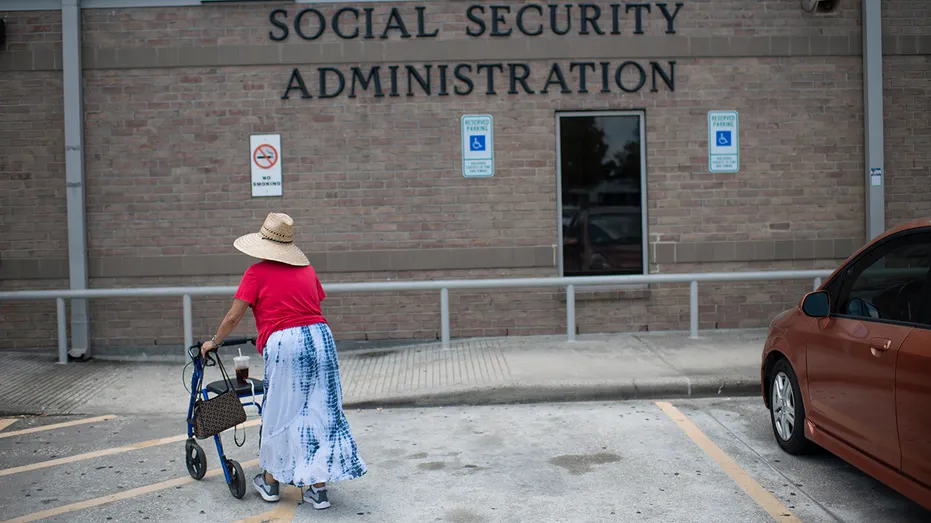
Some Social Security beneficiaries will receive two checks this July as a quirk in the calendar shifted the payment timeline for an adjacent month.
The Social Security Administration (SSA) ordinarily disburses payments for Supplemental Security Income (SSI) on the first day of a given month. The SSI program provides monthly payments to certain older adults who have little or no income, as well as to disabled individuals, which differentiates it from Social Security’s standard retirement benefits.
Advertisement
When the first of the month falls on a weekend or a federal holiday, SSI payments for that month are made on the last business day of the preceding month to ensure that beneficiaries have received their funds before the new month begins, and they face potential expenses.
Due to the way the 2026 calendar falls, two SSI payments will go out in July – one went out last week on July 1, while another will go out on Friday, July 31, for the month of August because Aug. 1 falls on a Saturday.
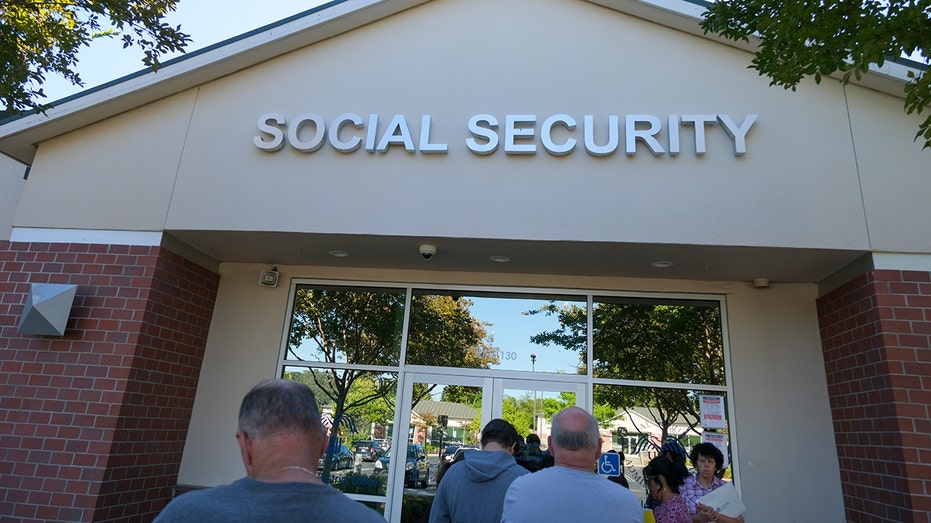
Some Social Security beneficiaries will receive two months of benefit checks in July due to a calendar quirk. (Getty Images/stock)
The 2026 calendar will cause this dynamic to play out two more times this year for SSI payments.
Advertisement
Both October and December will see a pair of SSI payments go out to beneficiaries due to November 1 falling on a weekend and January 1 being a federal holiday on a Friday.
SSA adjusts payment dates for Supplemental Security Income (SSI) benefits based on the calendar and when the start of the month falls. (Stefani Reynolds/Bloomberg via Getty Images)
SSI payments are typically made via direct deposit, though beneficiaries without bank accounts or who want to receive the funds through a different mechanism can get them on Direct Express cards.
SSA moved to discontinue paper checks at the end of the federal government’s last fiscal year in September following a Trump administration order earlier in 2025 that mandated all federal payments transition to electronic transfers, such as direct deposit to bank accounts or transfers to debit cards.
Most Social Security benefits are paid via direct deposit. (Mark Felix/The Washington Post)
Data from the SSA showed that as of last September, more than 68 million Americans were receiving Social Security benefits and of that figure, around 390,000 or 0.6% were receiving paper checks.
The SSA website offers methods by which beneficiaries can enroll in direct deposit through the My Social Security platform, or by phone through either the SSA or the Treasury Department’s electronic payment solution center.
























































You must be logged in to post a comment Login