Connect with us
DAPA Banner
DAPA Coin
DAPA
COIN PAYMENT ASSET
PRIVACY · BLOCKDAG · HOMOMORPHIC ENCRYPTION · RUST
ElGamal Encrypted MINE DAPA
🚫 GENESIS SOLD OUT
DAPAPAY COMING

Business

‘I spent $6,000 on a World Cup trip but was left stranded at the gate’

Published

on

A woman with shoulder-length blonde hair talks into a microphone

But experts say the platforms cannot hide behind software glitches.

“I blame StubHub 100%,” said Scott Friedman, co-founder of the Ticket Talk Network, who has already compiled more than 600 consumer complaints from this tournament alone.

“Fifa is no angel. Their ticket tech is absolutely terrible. It’s like software out of 1999,” he added.

While StubHub maintains that it strictly prohibits speculative ticketing on its platform, industry watchdogs and frustrated users widely believe the practice remains rampant.

Advertisement

Some sellers are also feeling the crunch. One seller in Austin told the BBC he lost $2,600 after listing a legally purchased Fifa Marketplace ticket on StubHub. Though he sold it for $1,200 and sent it to the platform’s auto-generated e-mail address, StubHub cancelled the sale for “non-fulfilment” – withholding his payout and charging him a $1,400 penalty fee.

For the average consumer, fighting back against a big corporation can seem like an impossible uphill battle.

Bradford Clements, an attorney who currently represents clients with over $2.4m in claims against StubHub, the majority of which are not related to the World Cup, notes that the company’s complex dispute process often forces regular fans seeking redress to give up entirely.

“People don’t understand that StubHub’s name of their game is to intimidate you, defer you, and deny you,” Clements told the BBC, also citing legal dispute notices that were mailed to the company but returned.

Advertisement

StubHub declined to comment on Clements’ accusation.

It remains unclear how many people have had problems with tickets bought on StubHub or other ticket resale sites. Hundreds of fans have been complaining online, while one report suggested thousands have had their tickets cancelled.

A StubHub spokesperson said it was increasing its capacity to source replacement tickets for affected customers and that every order was backed by its FanProtect Guarantee, meaning that if customers don’t get the tickets they ordered, or comparable or better replacement ones, they will get a refund.

However, the fine print means little to fans who are out thousands in non-refundable travel.

Advertisement

As the World Cup moves into the high-stakes rounds, industry watchdogs warn the cancellation crisis may intensify, leaving more families stranded outside stadium gates with little to show for an experience meant to last a lifetime.

Additional reporting by Osmond Chia

Continue Reading
Click to comment

You must be logged in to post a comment Login

Leave a Reply

Business

Woodside's Tony O'Neill exits board

Published

on

Woodside's Tony O'Neill exits board

Woodside Energy director Tony O’Neill has resigned after two years on the company’s board.

Continue Reading

Business

Merck Shares Decline as Pharmaceutical Giant Faces Market Rotation and Pipeline Developments

Published

on

Neuren Pharmaceuticals Shares Surge 36% on Positive European Opinion for

NEW YORK — Merck & Co. Inc. shares fell more than 2 percent Tuesday, closing at $125.37 as investors rotated out of certain pharmaceutical names amid broader market shifts and company-specific considerations.

The 2.44 percent decline, or about $3.13 per share, reflected typical sector volatility as the pharmaceutical industry navigates patent cliffs, regulatory developments and pipeline investments. Merck, known for its oncology portfolio and vaccines, has maintained a strong position despite periodic pressures.

Keytruda, Merck’s flagship cancer treatment, continues driving significant revenue. The PD-1 inhibitor has achieved blockbuster status, with expanding approvals across multiple indications. However, eventual patent expiration remains a long-term focal point for investors.

The company’s recent performance has shown resilience in core areas. Oncology sales have provided stability, while vaccine franchises like Gardasil contribute to diversified revenue. Animal health operations through Merck Animal Health add further balance.

Advertisement

Tuesday’s trading occurred against a backdrop of sector rotation. Technology and growth stocks attracted capital, while some defensive healthcare names faced mild pressure. Merck’s movement aligned with peers experiencing similar dynamics.

Merck has pursued strategic acquisitions and licensing deals to bolster its pipeline. Recent transactions aim to complement existing strengths in oncology and expand into new therapeutic areas. Integration and development timelines influence investor sentiment.

Regulatory milestones remain critical. Approvals for new indications or formulations can drive upside, while clinical trial outcomes introduce variability. Merck’s research and development spending supports a robust pipeline addressing significant medical needs.

Analysts monitor Merck’s ability to offset potential revenue losses from maturing products. Diversification efforts and operational efficiency help mitigate risks associated with patent expirations.

Advertisement

The pharmaceutical sector faces ongoing policy debates around drug pricing and innovation incentives. Merck advocates for balanced approaches that support research while ensuring patient access.

Global operations expose Merck to currency fluctuations, supply chain dynamics and varying regulatory environments. Strong performance in key markets has helped offset challenges elsewhere.

Tuesday’s decline contributed to a mixed session for healthcare stocks. Broader indices showed varied performance as economic data and corporate earnings influenced sentiment.

Merck’s dividend remains attractive for income-focused investors. Consistent payouts reflect the company’s financial strength and commitment to shareholder returns.

Advertisement

Capital allocation priorities include research investment, strategic transactions and return of capital. Management balances growth initiatives with prudent financial management.

The company’s commitment to corporate responsibility encompasses access to medicines, environmental sustainability and diversity initiatives. These efforts align with stakeholder expectations in the healthcare industry.

Tuesday’s close at $125.37 left Merck shares in a range reflecting balanced views on near-term prospects. Valuation metrics incorporate growth projections and risk factors.

Longer-term, Merck’s pipeline and commercial execution will determine trajectory. Successful launches and label expansions could support revenue stability.

Advertisement

Industry analysts project continued demand for innovative therapies. Merck’s focus on oncology, vaccines and animal health aligns with global health priorities.

Competitive dynamics in pharmaceuticals require ongoing innovation. Merck invests significantly in research to maintain leadership positions.

Tuesday’s session highlighted typical market fluctuations. Merck’s fundamentals remain solid despite share price movement.

Investors will monitor upcoming earnings and clinical updates for additional insights. Guidance parameters often influence expectations in the sector.

Advertisement

Merck plays a vital role in addressing unmet medical needs. Its products impact millions of patients worldwide through treatments and preventive measures.

The company’s history of scientific advancement supports its reputation. Discoveries in multiple therapeutic areas have contributed to public health improvements.

As Merck navigates the evolving pharmaceutical landscape, focus remains on delivering value through innovation and execution. Tuesday’s trading reflected ongoing assessment by market participants.

Broader economic factors, including interest rates and healthcare policy, influence sector performance. Merck’s defensive characteristics provide some insulation from cyclical pressures.

Advertisement

The stock’s movement Tuesday contributed to sector narratives around rotation and valuation. Pharmaceutical companies with strong pipelines often command premiums.

Merck continues emphasizing patient-centric approaches and scientific rigor. These principles guide development and commercialization strategies.

Tuesday’s decline represents one session in a longer-term story. Merck’s trajectory depends on successful pipeline advancement and market conditions.

Investors maintain varied outlooks based on risk tolerance and time horizons. Dividend yield and growth potential appeal to different strategies.

Advertisement

The pharmaceutical industry remains essential to healthcare systems globally. Merck’s contributions through research and medicines support its strategic importance.

As markets assess opportunities, Merck stands as a established player with diversified operations and forward-looking investments.

Continue Reading

Business

Macro headwinds are behind us; largecaps poised to outperform: Prashant Jain

Published

on

Macro headwinds are behind us; largecaps poised to outperform: Prashant Jain
India’s equity markets are entering a more constructive phase as macroeconomic headwinds begin to fade, according to Prashant Jain, CIO, 3P Investment Managers who believes large-cap stocks are well positioned to outperform amid improving economic conditions and more reasonable valuations.

Speaking to ET Now, Jain said the combination of stronger domestic fundamentals, improving external balances, and stable valuations has strengthened his outlook for Indian equities. While he remains optimistic about the broader market, he believes opportunities are emerging selectively across sectors, particularly in large-cap banking and information technology.

Macro environment turns supportive
Jain believes India has moved past the macro challenges that weighed on investor sentiment over the past few years. He pointed to a healthier balance of payments outlook, supportive measures taken by the Reserve Bank of India, and a shift in equity ownership from foreign investors to domestic institutional investors as key positives.”I am quite constructive on the markets. The macro challenges that India was facing are clearly behind us. The balance of payments in the current year should be materially positive because of both external factors and the steps the RBI has taken. Valuations are reasonable, and stocks have moved into very strong hands from foreigners to domestic institutional investors. Multiples are reasonable, so I am actually quite constructive on these markets,” he said.

IT sector presents value despite near-term challenges
The recent correction in IT stocks, particularly following weak guidance from some mid-tier companies, has created value, Jain said. While pricing pressures remain a concern, he does not expect Indian IT companies to witness a structural decline in business.
He believes the current pricing environment is cyclical and could improve as enterprises increase technology spending to adopt artificial intelligence.”There is value, in my opinion, and I do not think these businesses are going to melt away. Even in the current deflationary environment, toplines are not negative. They are holding on, maybe flattish or with very low growth. As enterprises adopt AI, they will need to spend more, and I do not think IT budgets are likely to degrow,” he said.

However, he cautioned that Indian IT stocks continue to face valuation pressure from cheaper global peers.

Advertisement

“The challenge is that similar businesses outside India are trading at 20-30% lower multiples. That will continue to pose a headwind for Indian IT stocks until there is some change in sentiment,” he said.

Potential triggers could revive IT sentiment
Despite the valuation gap with global peers, Jain believes several factors could unlock value in Indian IT stocks over time.

“When you are getting good value, it is very hard to forecast how that value will unlock itself. Maybe earnings turn out slightly better than expected, foreign selling stops, domestic investors continue to support these companies, or some companies announce buybacks. Any of these could become a trigger,” he said.

Avoids specific view on ER&D companies
Asked about engineering research and development companies, which have seen mixed commentary amid slowing European auto demand, Jain chose not to offer a stock-specific opinion.

Advertisement

“Let me not comment specifically on ER&D names. I do not think I would be able to do justice there,” he said.

Large private banks offer compelling value
Jain is particularly constructive on large private sector banks, arguing that the sector has been weighed down by prolonged foreign institutional selling despite improving fundamentals.

He noted that credit growth has strengthened, valuations have become attractive, and the unwinding of long-held foreign positions appears to be nearing completion.

“Over the last one or two years, value has clearly emerged in large private banks. Credit growth has inched up sharply, and as FCNR(B) dollars come in, it will be positive for banks. The sector has massively underperformed because foreigners have been reducing positions, but at current valuations I would be quite constructive,” he said.

Advertisement

Largecaps likely to outperform as foreign selling eases
While small and mid-cap stocks have staged a recovery from recent lows, Jain believes large-cap companies currently offer better value. He expects improving macro conditions and easing foreign selling to benefit the large-cap segment over time.

“As a category, largecaps are offering better value. They have borne the maximum brunt of foreign selling, and as macro conditions improve and foreign selling abates, largecaps should outperform smallcaps,” he said.

At the same time, he acknowledged that opportunities continue to exist in the broader market.

“After the correction in small and midcaps over the last two years, value is emerging on a stock-specific basis. It is going to be a stock picker’s market,” he said.

Advertisement

Strong economy could lift large-cap earnings
Jain dismissed concerns that earnings growth will remain confined to smaller companies, arguing that India’s underlying economy remains robust. He cited healthy demand conditions, strong credit growth, rising GST collections, and supportive nominal GDP trends as reasons why large-cap earnings could also accelerate.

“The underlying economy is doing extremely well. Credit growth, GST numbers and demand conditions point to a very robust economy. We could see some acceleration in earnings growth even in the large-cap space,” he said.

No clear view on real estate
While acknowledging that the real estate sector remains important, Jain said he does not track it closely enough to offer a meaningful opinion.

“It is a good space, but I do not track it very closely. So, let me not comment on that,” he said.

Advertisement

Consumer discretionary preferred over staples
Jain drew a clear distinction between consumer staples and consumer discretionary businesses, arguing that the former faces slower growth and increasing competitive pressures despite its strong business quality.

He believes discretionary consumption offers better long-term growth opportunities, although investors must remain disciplined on valuations.

“Consumer staples are highly penetrated and will continue to exhibit slow growth. They are also facing increasing competition from organised retail, D2C brands and private labels. The businesses are excellent, but valuations remain demanding relative to likely growth,” he said.

Instead, he prefers businesses linked to discretionary spending.

Advertisement

“I would be more inclined towards the consumer discretionary space than the consumer staples space,” he said.

He added that the discretionary universe is broad, covering automobiles, airlines, consumer durables, building materials, food delivery, cosmetics and apparel retail, making stock selection critical.

“It is a very diverse category. The attempt should be to have a realistic view of what growth is sustainable over the long term and what is already priced in. My preference would be to do more work in that space than in the staples space,” he said.

Outlook
Jain’s investment outlook remains firmly constructive. He believes improving macroeconomic conditions, healthier valuations and resilient domestic liquidity are creating an attractive backdrop for equities. While he sees selective opportunities across sectors, his preference currently lies with large-cap companies, private sector banks, and select consumer discretionary businesses, while viewing stock selection as the key driver of returns in the small- and mid-cap universe.

Advertisement
Continue Reading

Business

Reabold awards share options to executives as 2025 bonus

Published

on


Reabold awards share options to executives as 2025 bonus

Continue Reading

Business

Mizuho raises Robinhood stock price target to $130 on global growth

Published

on


Mizuho raises Robinhood stock price target to $130 on global growth

Continue Reading

Business

Shreddies and Cheerios maker given green light for major Wiltshire factory expansion

Published

on

Business Live

The £66m investment is expected to secure 190 jobs and create 40 new ones

Cereal Partners UK will expand the site in Staverton near Trowbridge

Cereal Partners UK will expand the site in Staverton near Trowbridge(Image: Cereal Partners UK)

The maker of Shreddies and Cheerios has been given the go-ahead for a major expansion of its Wiltshire factory.

Cereal Partners UK was granted permission by the council this week for a £66m extension of its Staverton plant near Trowbridge. The investment is expected to secure 190 existing roles at the site and create 40 new jobs.

Advertisement

Cereal Partners UK has been a major employer in Wiltshire for nearly 30 years, producing well-known breakfast cereals such as Shredded Wheat and Shreddies in the county.

Wiltshire Council said the investment would “enhance the site’s capacity and efficiency” and allow the company to respond more effectively to changing consumer demand while supporting its future growth.

The Staverton expansion comes 15 months after Cereal Partners UK confirmed production at its plant in Bromborough, on the Wirral, would end and be re-located to Wiltshire under plans.

Councillor Helen Belcher, cabinet member for economic development, said: “This is a positive development for Wiltshire, representing a significant investment in the local economy. It secures existing jobs at the Staverton site while also creating opportunities for future employment as the business grows.

Advertisement

“Cereal Partners UK has been an established part of the local economy for many years, and this investment demonstrates continued confidence in Wiltshire as a place to do business.

“Enhancing the facility’s capacity and efficiency will help support the company’s long-term sustainability while contributing to economic growth in the Trowbridge area.”

Cereal Partners UK is part of Cereal Partners Worldwide, which was formed in 1990 as a joint venture between Nestlé S.A. and American food giant General Mills.

The UK division has established itself as the second largest manufacturer, with over 25 per cent of a market that’s worth more than £1.3bn.

Advertisement

Its brands include Shredded Wheat – first introduced more than a century ago – and Shreddies, which was first produced in 1953.

Continue Reading

Business

Citizens raises Liberty Media Formula One stock price target on strong demand

Published

on


Citizens raises Liberty Media Formula One stock price target on strong demand

Continue Reading

Business

Qualcomm Stock Slips After Musk Denies SpaceX AI Device Used Snapdragon Chips, Wiping Out Day’s Gains

Published

on

In a battle to gain foothold of the emerging hands-free driving market, Qualcomm tops Magna's bid to buy Veoneer.

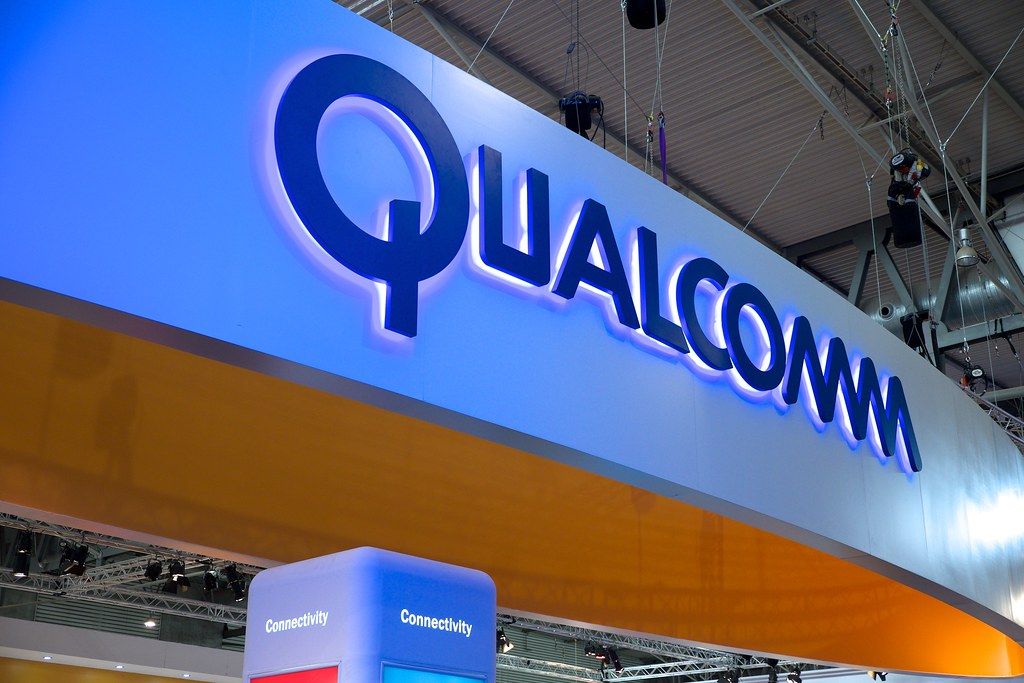
Qualcomm shares closed lower Tuesday after an unusual sequence of intraday events left the stock down more than 1.5% on the day, whipsawed by a Wall Street Journal report suggesting SpaceX had built a prototype device using its Snapdragon chips, followed by a swift denial from Elon Musk that wiped out a sharp midday rally and sent the stock back into negative territory before the closing bell.

Shares of the San Diego-based wireless chipmaker closed at $181.92, down $2.87, or 1.55%, marking the fourth consecutive session of losses for a stock that has been under sustained pressure from a combination of investor rotation out of technology names, removal from key Russell growth indexes and lingering questions about how quickly the company can ramp its newly announced data center chip business. The stock fell an additional 17 cents to $181.61 in after-hours trading.

The Wall Street Journal reported during Tuesday’s session that SpaceX had a prototype of a handset-like device, sending Qualcomm shares sharply higher in intraday trading as investors speculated the Snapdragon chip family could be central to any consumer device produced by the world’s most valuable startup. The gains evaporated when Musk called the WSJ story “utterly false,” denying that any such device relied on Qualcomm components.

The episode added another layer of volatility to a stock that has already endured a dramatic round trip in 2026. Qualcomm reached an all-time high of $259.92 on May 29, propelled by a well-received investor day at which the company laid out an aggressive diversification strategy built around artificial intelligence and data center chips. The stock has since fallen more than 30% from that peak, closing Tuesday roughly $78 below its all-time high even as the company’s fundamental business and long-term targets have not materially changed in the weeks since.

Advertisement

Qualcomm’s 2026 Investor Day, held in late June, was the defining corporate event for the stock in recent months. The company unveiled its new Dragonfly C1000 data center central processing unit, revealed a strategic multi-generation supply agreement with Meta Platforms as the first major customer for the new chip, and told analysts it was targeting more than $15 billion in data center AI revenue by fiscal 2029, up from a smaller initial estimate, as part of a broader goal of reaching $40 billion in non-handset chip revenue by the same year. That $40 billion figure represented nearly double the company’s prior projection for non-smartphone revenue and came alongside a forecast for $18 in adjusted earnings per share by fiscal 2029.

Morgan Stanley, which had previously maintained a cautious stance on the stock, turned less pessimistic following the investor day, raising its price target while describing the data center chip ambition as a potentially significant long-term growth driver even while maintaining a neutral rating overall. Bank of America raised its target to $220 from $195, UBS lifted its target to $235 from $170 and RBC Capital raised its estimate to $250 from $175 following the same event. Benchmark maintained a buy rating with a $300 price target. Mizuho raised its target to $210 from $170. The average 12-month price target across analysts covering the stock now sits at approximately $215, implying meaningful upside from current levels.

Those targets were set before Qualcomm’s stock declined so sharply from its May highs, a retreat driven in part by a broader rotation out of semiconductor and technology names that has pressured many high-multiple chip stocks in June. Qualcomm was also removed from several Russell growth and defensive indexes, reducing automatic buying pressure from passive and index-tracking institutional investors who had previously been required to hold shares in proportion to the company’s index weighting.

The company’s most recent quarterly results, covering the fiscal second quarter, showed continued momentum in its diversification strategy even as the broader handset market remained subdued. Qualcomm reported revenue of $10.60 billion against analyst estimates of $10.59 billion, with adjusted earnings per share of $2.65 beating the consensus estimate of $2.55 to $2.56. Automotive revenue surged 38% year-over-year to $1.3 billion, while Internet of Things revenue grew 9% to $1.7 billion, both segments central to the company’s push to reduce its dependence on smartphone chip sales, which have faced pressure from customers, including Samsung and Apple, exploring alternatives to the Snapdragon lineup for some of their devices.

Advertisement

Google reportedly selected MediaTek rather than Qualcomm or Broadcom to help build its next-generation TPUv9 artificial intelligence chip, known internally as Triggerfish, according to reporting from GF Securities, a development that dampened some of the enthusiasm surrounding Qualcomm’s data center ambitions even as the company has sought to position itself as a credible alternative to Nvidia’s dominant GPU-centric approach to AI inference computing.

Qualcomm’s next earnings report is scheduled for August 5, when the company is expected to provide its first detailed guidance update since the investor day and give analysts a clearer read on how the Meta Platforms supply agreement and the Dragonfly C1000 data center chip are progressing toward meaningful commercial revenue. Third-quarter guidance for automotive revenue pointed to 50% year-over-year growth, suggesting that segment at least remains on a sharply positive trajectory even as the data center opportunity requires more time to develop.

The stock’s current price-to-earnings ratio of approximately 13.7 times trailing earnings has drawn attention from value-oriented investors who view the multiple as low relative to the growth profile the company is projecting for 2029, particularly if the data center chip program delivers even a fraction of the revenue targets management outlined at the investor day. The company also maintains a 23-consecutive-year streak of dividend increases, with its current yield of approximately 1.94% providing income support for holders waiting for the stock’s recovery from its post-peak slide.

Advertisement
Continue Reading

Business

Welsh firms report a rise in confidence shows new Lloyds research

Published

on

Business Live

While up the headline confidence level for Wales is below the UK as a whole

Lloyds Bank

Lloyds Banking Group.(Image: PA)

Business confidence in Wales rose in June but remains below the UK as a whole, shows latest research from Lloyds Bank

Its business barometer shows companies in Wales reported higher confidence in their own trading outlook month-on-month, up 13 points at 48%. When taken alongside their optimism in the economy, up five points to 16%, this gives a headline confidence reading of 32% (up from 23% in May). For the UK as a whole overall confidence was down 3% to 44%.

Advertisement

elsh firms reported strong customer demand (89%) as the key driver of confidence in their own trading outlook A net balance of 20% of businesses in the country also expect to increase staff levels over the next year, up two points on last month. Business confidence in Wales now sits below the 12-month average of 42%, with its highest figure of 76% in July last year.

Looking ahead to the next six months, Welsh businesses identified their top target areas for growth as introducing new technology such as AI or automation (52%), entering new markets (36%) and investing in their team, for example through training (33%).

Nathan Morgan, area director for Wales at Lloyds, said: “It’s encouraging to see confidence among Welsh businesses rise this month, with firms feeling more positive about their own trading outlook and the wider economy.

“That optimism is being backed by clear plans for growth, with businesses looking to embrace new technology, enter new markets and invest in their teams.

Advertisement

“With hiring intentions also edging up, there are positive signs of momentum across Wales. We’ll continue to support Welsh businesses as they adapt and pursue new opportunities.”

Business confidence rose across six of the 12 UK regions and nations in June, with the south west of England seeing the biggest improvement on May, up 22% jump to 44%. The East Midlands had the highest headline confidence reading of 56%.

On the UK position, Amanda Murphy, chief executive for Lloyds Business and Commercial Banking, said: “Confidence has edged down this month, and that reflects what we’re hearing directly from businesses. Many are still dealing with a mix of higher costs, uncertain demand and a wider global backdrop that feels difficult to read. That is weighing on decision making, particularly for firms that are focused on the UK market and have fewer ways to offset those pressures.

“However, this is not a picture of businesses stepping back altogether. Trading outlook remains relatively steady and we continue to see firms looking for new opportunities, even if investment plans have become more cautious. Businesses have shown over time that they can adapt in tough conditions, but for many the priority is managing costs and maintaining stability rather than pushing for growth.

Advertisement
Continue Reading

Business

U.S. Stocks Rise to Cap Best Quarter in Years

Published

on

U.S. Stocks Rise to Cap Best Quarter in Years

U.S. stocks advanced to close out a blockbuster quarter, marked by sharp gains in the technology sector on expectations for strong spending for artificial intelligence. The S&P 500 and Nasdaq logged their best quarterly performances since 2020.

The Dow Jones Industrial Average rose 136.46 points, or 0.26% to 52319.20 on Tuesday. The S&P 500 rose 58.93 points, or 0.79%, to 7499.36, while the Nasdaq Composite gained 393.58 points, 1.52% to 26213.72. According to preliminary data, there were 1285 advancing issues and 1477 declining issues on the NYSE.

Copyright ©2026 Dow Jones & Company, Inc. All Rights Reserved. 87990cbe856818d5eddac44c7b1cdeb8

Continue Reading

Trending

Copyright © 2025