
Business
Qualcomm Stock Slips After Musk Denies SpaceX AI Device Used Snapdragon Chips, Wiping Out Day’s Gains

Qualcomm shares closed lower Tuesday after an unusual sequence of intraday events left the stock down more than 1.5% on the day, whipsawed by a Wall Street Journal report suggesting SpaceX had built a prototype device using its Snapdragon chips, followed by a swift denial from Elon Musk that wiped out a sharp midday rally and sent the stock back into negative territory before the closing bell.
Shares of the San Diego-based wireless chipmaker closed at $181.92, down $2.87, or 1.55%, marking the fourth consecutive session of losses for a stock that has been under sustained pressure from a combination of investor rotation out of technology names, removal from key Russell growth indexes and lingering questions about how quickly the company can ramp its newly announced data center chip business. The stock fell an additional 17 cents to $181.61 in after-hours trading.
The Wall Street Journal reported during Tuesday’s session that SpaceX had a prototype of a handset-like device, sending Qualcomm shares sharply higher in intraday trading as investors speculated the Snapdragon chip family could be central to any consumer device produced by the world’s most valuable startup. The gains evaporated when Musk called the WSJ story “utterly false,” denying that any such device relied on Qualcomm components.
The episode added another layer of volatility to a stock that has already endured a dramatic round trip in 2026. Qualcomm reached an all-time high of $259.92 on May 29, propelled by a well-received investor day at which the company laid out an aggressive diversification strategy built around artificial intelligence and data center chips. The stock has since fallen more than 30% from that peak, closing Tuesday roughly $78 below its all-time high even as the company’s fundamental business and long-term targets have not materially changed in the weeks since.
Qualcomm’s 2026 Investor Day, held in late June, was the defining corporate event for the stock in recent months. The company unveiled its new Dragonfly C1000 data center central processing unit, revealed a strategic multi-generation supply agreement with Meta Platforms as the first major customer for the new chip, and told analysts it was targeting more than $15 billion in data center AI revenue by fiscal 2029, up from a smaller initial estimate, as part of a broader goal of reaching $40 billion in non-handset chip revenue by the same year. That $40 billion figure represented nearly double the company’s prior projection for non-smartphone revenue and came alongside a forecast for $18 in adjusted earnings per share by fiscal 2029.
Morgan Stanley, which had previously maintained a cautious stance on the stock, turned less pessimistic following the investor day, raising its price target while describing the data center chip ambition as a potentially significant long-term growth driver even while maintaining a neutral rating overall. Bank of America raised its target to $220 from $195, UBS lifted its target to $235 from $170 and RBC Capital raised its estimate to $250 from $175 following the same event. Benchmark maintained a buy rating with a $300 price target. Mizuho raised its target to $210 from $170. The average 12-month price target across analysts covering the stock now sits at approximately $215, implying meaningful upside from current levels.
Those targets were set before Qualcomm’s stock declined so sharply from its May highs, a retreat driven in part by a broader rotation out of semiconductor and technology names that has pressured many high-multiple chip stocks in June. Qualcomm was also removed from several Russell growth and defensive indexes, reducing automatic buying pressure from passive and index-tracking institutional investors who had previously been required to hold shares in proportion to the company’s index weighting.
The company’s most recent quarterly results, covering the fiscal second quarter, showed continued momentum in its diversification strategy even as the broader handset market remained subdued. Qualcomm reported revenue of $10.60 billion against analyst estimates of $10.59 billion, with adjusted earnings per share of $2.65 beating the consensus estimate of $2.55 to $2.56. Automotive revenue surged 38% year-over-year to $1.3 billion, while Internet of Things revenue grew 9% to $1.7 billion, both segments central to the company’s push to reduce its dependence on smartphone chip sales, which have faced pressure from customers, including Samsung and Apple, exploring alternatives to the Snapdragon lineup for some of their devices.
Google reportedly selected MediaTek rather than Qualcomm or Broadcom to help build its next-generation TPUv9 artificial intelligence chip, known internally as Triggerfish, according to reporting from GF Securities, a development that dampened some of the enthusiasm surrounding Qualcomm’s data center ambitions even as the company has sought to position itself as a credible alternative to Nvidia’s dominant GPU-centric approach to AI inference computing.
Qualcomm’s next earnings report is scheduled for August 5, when the company is expected to provide its first detailed guidance update since the investor day and give analysts a clearer read on how the Meta Platforms supply agreement and the Dragonfly C1000 data center chip are progressing toward meaningful commercial revenue. Third-quarter guidance for automotive revenue pointed to 50% year-over-year growth, suggesting that segment at least remains on a sharply positive trajectory even as the data center opportunity requires more time to develop.
The stock’s current price-to-earnings ratio of approximately 13.7 times trailing earnings has drawn attention from value-oriented investors who view the multiple as low relative to the growth profile the company is projecting for 2029, particularly if the data center chip program delivers even a fraction of the revenue targets management outlined at the investor day. The company also maintains a 23-consecutive-year streak of dividend increases, with its current yield of approximately 1.94% providing income support for holders waiting for the stock’s recovery from its post-peak slide.


The latest inflow marks a sharp reversal from the preceding months, when Foreign Portfolio Investors (FPIs) withdrew Rs 49,340 crore in June, Rs 32,963 crore in May, Rs 60,847 crore in April and a massive Rs 1.17 lakh crore in March, according to data from the Central Depository Services (India) Ltd (CDSL).
Prior to the four-month selling spree, FPIs had invested Rs 22,615 crore in Indian equities in February.
Despite the turnaround in July, foreign investors have pulled out a net Rs 2.54 lakh crore from Indian equities so far in 2026, way more than the Rs 1.66 lakh crore withdrawn during the whole of 2025.
Market experts attributed the renewed foreign investor interest to relatively stable domestic markets, reasonable large-cap valuations, improving earnings prospects and a more favourable global environment.

V K Vijayakumar, Chief Investment Strategist at Geojit Investments, said excessive volatility in markets such as South Korea and Taiwan, coupled with concentration risk in the “chip trade”, is prompting FPIs to look for relatively stable markets like India.
The stability of the rupee and fair valuations of India’s large-cap stocks are other factors facilitating renewed FPI inflows into the country, he added.Vedant Gupte, Co-Founder and CEO of investment platform Trackk, said improving earnings prospects also strengthened investor sentiment, with June quarter results showing signs of recovery across key sectors.
IT stocks, in particular, witnessed a sharp re-rating as better-than-expected earnings helped ease concerns over the impact of artificial intelligence on the sector’s growth prospects, he said.
At the same time, easing pressure from the US dollar and expectations that US interest rates are near their peak have improved the investment environment for emerging markets, Gupte added.
Foreign investor interest was not limited to equities, with the debt market continuing to attract significant inflows during the month.
FPIs invested Rs 29,212 crore in debt through the general route and another Rs 3,033 crore through the fully accessible route in July.
Going forward, the trajectory of foreign flows is likely to be influenced by both global developments and domestic triggers.
Pabitro Mukherjee, Deputy Vice President-Research at Bajaj Broking, said investors in the coming month will closely track crude oil price movements and developments in the ongoing US-Iran geopolitical tensions.
On the domestic front, the Q1FY27 earnings season and the RBI’s monetary policy scheduled for August 5 will remain in focus, he added.
Life after Orban: Hungary Inc digs in as new political era takes hold

PepsiCo CEO Ramon Laguarta discusses how the food and beverage giant is seeing massive paybacks after slashing consumer prices on ‘The Claman Countdown.’
Nearly 23,000 pounds of Ukrop’s Homestyle Foods baked spaghetti and chicken cobbler products are being recalled over concerns they may be contaminated with metal slivers, federal regulators said.
The U.S. Department of Agriculture’s Food Safety and Inspection Service (FSIS) said the recalled products were sold in Virginia, North Carolina and West Virginia, as well as through Department of War commissaries and online sales.
According to FSIS, the products may be contaminated with a foreign material, specifically metal slivers.
The recall was initiated after a customer found a piece of metal in one of the products.
FROZEN BURRITOS SOLD AT COSTCO PROMPT PUBLIC HEALTH ALERT OVER UNDECLARED ALLERGEN
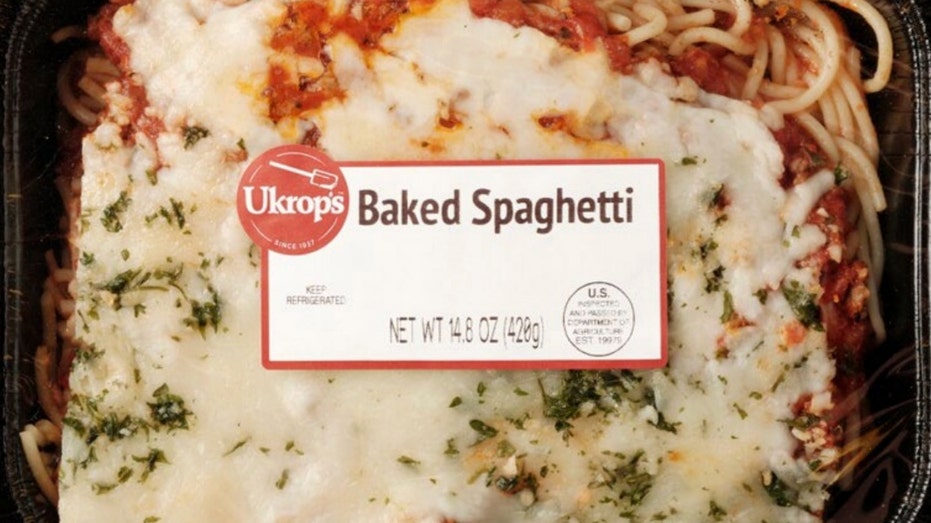
Ukrop’s Baked Spaghetti products are being recalled after federal regulators said they may be contaminated with metal slivers. (U.S. Department of Agriculture / Unknown)
“The problem was discovered after the establishment received a consumer complaint regarding a metal piece found in a fully cooked product,” FSIS said in its recall announcement.
No injuries have been confirmed, according to FSIS.
“Anyone concerned about an injury should contact a healthcare provider,” the agency said.
PUBLIX EXPANDS FROZEN BERRY RECALL AMID E COLI OUTBREAK THAT SICKENED 12

Ukrop’s Chicken Cobbler products are included in a recall over concerns they may contain metal slivers, according to federal regulators. (U.S. Department of Agriculture / Unknown)
The recall affects products manufactured between July 1 and July 29, 2026.
The recalled products include 62.4-ounce bulk pans and 4.8-ounce single-serving trays of Ukrop’s Baked Spaghetti, along with 48-ounce family-size pans and 11.6-ounce single-serving trays of Ukrop’s Chicken Cobbler.
All affected products carry “best by” dates ranging from July 8 through Aug. 5.
Consumers who purchased the recalled products, including those stored in freezers, should throw them away or return them to the place of purchase for a full refund.
CLICK HERE TO DOWNLOAD THE FOX NEWS APP

Federal regulators announced a recall of nearly 23,000 pounds of Ukrop’s baked spaghetti and chicken cobbler products over concerns they may contain metal slivers. (Alfio Giannotti/REDA/Universal Images Group via Getty Images / Getty Images)
The recall comes after Rich Products Corp. recalled thousands of cases of its Farm Rich Pizza Cheese Crunchers in June because the frozen snacks may have contained metal pieces.
More than 160,000 pounds of the frozen snacks were recalled across 21 states, according to the U.S. Food and Drug Administration.
FOX Business’ Brie Stimson contributed to this report.
A Credibility Gap at the Fed: Why Bond Yields Are Surging

AI creates two-speed UK jobs market as demand shifts to senior tech roles

UBS explains what it would take for gold prices to turn higher in 2H26

To the Editor:
The reshoring of supply chains and enhancement in domestic manufacturing will also be needed to support ongoing growth in the automotive, defense, and semiconductor industries (“Beyond AI: 10 Ways to Cash In on the Global Building Boom,” Cover Story, July 23). Large foreign corporations like Taiwan Semiconductor Manufacturing and Samsung Electronics are focusing on expanding their onshore semiconductor footprint in the U.S. to avoid 100% tariffs on imported semiconductors and complying with changing global trade regulations.
Business
Q1 earnings this week: Infosys, Eternal, Bajaj Auto among 573 companies set to announce June quarter results

These companies will announce their first quarter earnings between August 3 (Monday) and August 8 (Saturday). This comes after Sun Pharma, Maruti Suzuki, Bajaj Finserv, ITC and several other companies released their quarterly results on Friday.
August 3 (Monday)
Realty player DLF is set to report its Q1 FY27 results on Monday. EV scooter maker Ather Energy and power company Torrent Power will also announce their June-quarter earnings, along with Jindal Stainless, UPL, Sundaram Finance, KEI Industries and GSK Pharma.
August 4 (Tuesday)
Telecom major Bharti Airtel is scheduled to announce its first quarter earnings on Tuesday, along with Bharti Hexacom. Stock exchange BSE and Nykaa-parent FSN E-Commerce are also on the list. Other major companies which are scheduled to announce their Q1 results on Tuesday include FMCG major Marico, Fevicol maker Pililite Industries, NHPC and MCX India.
August 5 (Wednesday)Pharma major Biocon will report its June-quarter earnings on Wednesday. Paint-maker Berger Paints will also announce its results. Other key companies on the earnings calendar include Cummins India, GE T&D India, Aurobindo Pharma, Navin Fluorine and Neuland Labs.
August 6 (Thursday)
Zudio and Westside-parent Trent will announce its Q1 earnings on Thursday, along with FMCG major Britannia Industries and two wheeler-maker Hero MotoCorp. Other notable names announcing June quarter earnings on Thursday include Samvardhana Motherson International, Lupin, Premier Energies, Emcure Pharma and Blue Star.
August 7 (Friday)
India’s largest public sector lender State Bank of India (SBI) is all set to announce its June earnings on Friday. Jewellery major Titan Company will also announce quarterly earnings on this day. Other notable companies include Hindalco Industries, ABB Power, PFC, Godrej Consumer Products, Oil India and Ramco Cements.
Also read |Jio Financial Services sets record date for dividend. Check details
August 8 (Saturday)
Anant Raj will announce its Q1 earnings on Saturday, winding up the Q1 earnings cycle for the week. The following week will see several companies including Info Edge, Hindustan Copper, Tata Motors and Lenskart release their quarterly results.
Market outlook
Looking ahead, the sustainability of the domestic market recovery will depend on the easing of global uncertainties, stability in crude oil prices, and a broadening of earnings growth beyond a handful of sectors, said Vinod Nair, Head of Research at Geojit Investments. He further said that investors will closely track U.S. labour market data in the coming week, while domestically, the RBI’s policy decision and PMI releases will provide key cues on growth and inflation trends.
“We continue to favour a gradual accumulation of quality companies with strong earnings visibility,” according to the analyst.
(Disclaimer: Recommendations, suggestions, views and opinions given by the experts are their own. These do not represent the views of The Economic Times)


I have a masters degree in Analytics from Northwestern University and a bachelors degree in Accounting. I have worked in the investment arena for over 10 years starting as an analyst and working my way up to a management role. Dividend investing is a personal hobby and I look forward to sharing my thoughts with the Seeking Alpha community.
Analyst’s Disclosure: I/we have a beneficial long position in the shares of ZTS, BR, ACN, SBAC, PAYX, DRI, PEP, NEE, MKC either through stock ownership, options, or other derivatives. I wrote this article myself, and it expresses my own opinions. I am not receiving compensation for it (other than from Seeking Alpha). I have no business relationship with any company whose stock is mentioned in this article.
Seeking Alpha’s Disclosure: Past performance is no guarantee of future results. No recommendation or advice is being given as to whether any investment is suitable for a particular investor. Any views or opinions expressed above may not reflect those of Seeking Alpha as a whole. Seeking Alpha is not a licensed securities dealer, broker or US investment adviser or investment bank. Our analysts are third party authors that include both professional investors and individual investors who may not be licensed or certified by any institute or regulatory body.
Business
Nuvama initiates coverage on KPR Mill and 2 other textile stocks, sees up to 35% upside. Here’s why
According to Nuvama’s thematic report titled ‘Textiles – The Loom Turns Toward India’, the brokerage highlighted that the global textile market, which is currently valued at around $1.6 trillion, is witnessing its largest sourcing shift in two decades. With China’s share of US apparel imports having nearly halved over the past decade, alternative manufacturing hubs like India, Vietnam, and Bangladesh are competing for the surrendered market share.
Nuvama has issued ‘Buy’ calls on shares of KPR Mill, Indo Count Industries, and Sanathan Textiles, backing their aggressive capacity expansion plans and integrated business models:
Nuvama on KPR Mill share price
As India’s largest listed garment manufacturer with an annual capacity of 204 million pieces, KPR Mill is fully integrated from cotton yarn to garmenting. Nuvama views it as a direct play on global garmenting tailwinds, having consistently maintained 88–98% utilisation levels through its expansion phases.
It has fixed a target price of Rs 1,276 apiece for the stock, implying an upside potential of 21.5% over the stock’s previous closing price.
Nuvama on Indo Count Industries share price
As the world’s largest bed-linen manufacturer by capacity, Indo Count is pivoting from commodity bed linen toward high-margin, value-added segments such as branded and utility bedding, bolstered by its US manufacturing footprint.
Nuvama has a target price of Rs 541 per share, implying nearly 35% upside from the stock’s previous closing price.
Nuvama on Sanathan Textiles share price
A value-added polyester yarn maker, Sanathan provides a pure-play expression of the global shift toward Man-Made Fibre (MMF). Backed by Quality Control Orders (QCO) and anti-dumping duties on Chinese imports, Nuvama projects the company’s volume to compound at 23%.
The brokerage has a target price of Rs 585 per share, implying more than 23% upside from the stock’s previous closing price.
What lies ahead?
Nuvama highlights that the structural opportunity for Indian textile exporters is driven by supply-side realignment rather than rapid demand acceleration, as global trade remains broadly flat.
Key tailwinds supporting Indian exporters include tariff parity and FTA access, inventory normalisation and government policy alignment.
Nuvama, in its report, added that while yarn spinning is capital-intensive and subject to raw material cycles, garment manufacturing and specialised textiles have better asset turnover and higher Return on Capital Employed (ROCE). With trade access, policy incentives, and global buyer behaviour aligning simultaneously for the first time since 2005, Indian textile majors are well-positioned for sustained multi-year growth.
Also read | Peter Lynch does not like the AI trade; here’s why he says ‘Know what you own’
(Disclaimer: Recommendations, suggestions, views and opinions given by the experts are their own. These do not represent the views of The Economic Times)

‘The Rookie’ Season 9 Officially Confirms the Biggest Chenford Change To Date

Fantasy baseball: Curtis Mead traded to Red Sox
FPIs reverse 4-month selling trend with Rs 20,200 cr inflow in July


-
 Sports6 days ago
Commonwealth Games boxing: Jadumani Singh seals dominant 5-0 win over Pakistan’s Sumama Rehman to enter quarter-finals | Commonwealth Games News
-

 Business3 days ago
Why Trees Belong on the Risk Register
-

 Fashion2 days ago
Weekend Open Thread: Wit & Wisdom
-

 Tech6 days ago
Intel is reversing course and bringing hyper-threading back to its server chips
-

 Politics1 day ago
Meta enters AI-training agreement with far-right ‘propaganda rag’ Newsmax
-

 Politics6 days ago
Luke Littler dismantles Gerwyn Price to retain title in Blackpool
-

 Crypto World16 hours ago
MicroStrategy Post-Earnings CLARITY Act Push Could Add New Catalyst for Its Stock
-

 Politics5 days ago
The Part of the Electric Transition Nobody Wants to Discuss
-
 Entertainment4 days ago
‘Stargate’ Creator’s New Sci-Fi Series Returns for Season 3 Tomorrow
-

 News Videos6 days ago
BITCOIN JUST ENTERED THIS CRITICAL ZONE…
-

 Business4 days ago
Major shareholder moves on Canyon
-

 Crypto World7 days ago
XRP Ledger adds $2.6B as RWA inflows rank second
-

 Politics7 days ago
Spain sweeps the board at 2026 World Cup with individual awards
-

 News Videos3 days ago
Bitcoin Enters the 3rd Stage of the Bear Market
-
Crypto World1 day ago
XRP Ledger v3.3.0 brings five institutional features
-

 Crypto World4 days ago
Kraken Enables Retail Access to Jersey Mike’s IPO via Tokenized Shares
-

 Tech5 days ago
New macOS Sequoia & Sonoma security updates for older Macs
-

 News Videos4 days ago
Claude: Build Financial Dashboards in Minutes (2026)
-

 Politics3 days ago
Luke Littler’s dominance sparks GOAT debate
-

 Sports2 days ago
Seema Kaliramna Wins Discus Throw Bronze, Takes India’s CWG Medals Tally To 17
You must be logged in to post a comment Login