Connect with us

Business

Improving Customer Experience Through Integrated Contact Centre Platforms

Published

on

Improving Customer Experience Through Integrated Contact Centre Platforms

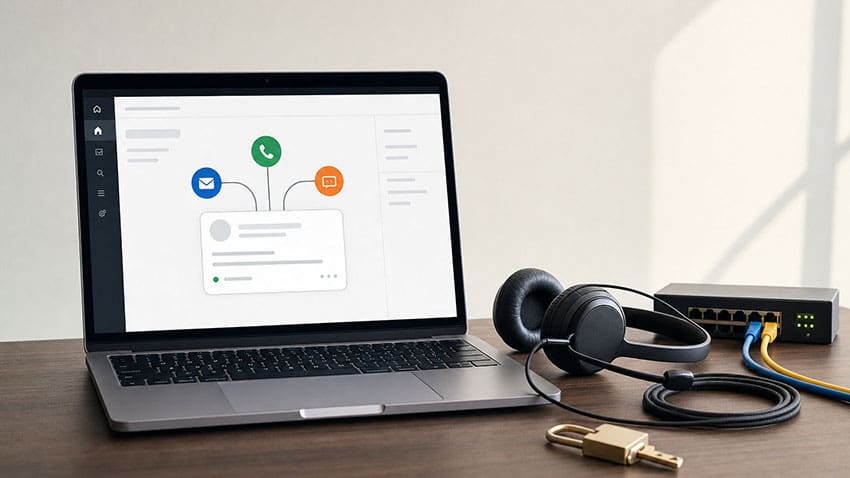
Integrated contact centre platforms offer the potential for more streamlined service, faster resolutions, and fewer handoffs for customers. Many companies are evaluating these technologies to improve both satisfaction and business outcomes.

Delivering an effective customer journey relies not just on brand promises but on responsive, coherent operational design. As expectations increase for quick, consistent support across multiple channels, businesses are assessing how modern platforms can meet these requirements. Contact centre as a service solutions, frequently chosen for their flexibility, play a significant role in supporting integrated approaches that help minimise friction and support organisational priorities. Understanding what genuine integration means, and how it can impact outcomes, remains important for decision makers seeking operational improvements.

Customer experience as a driver of operations

Customer experience is closely linked to tangible operational metrics such as retention, revenue, and cost-to-serve. When customers receive prompt responses and achieve first-time resolution, they are more likely to remain loyal and recommend the business.

Consistency in handling queries, regardless of communication channel, further increases satisfaction. High rates of unresolved contacts or repeated requests can drive up service costs and affect trust in the organisation.

Responsive service is not simply a branding concern; it affects operational figures, such as repeat contact rates and average handle times. Operational inefficiency can result in longer queue times and increased frustration, directly influencing customers’ perception of an organisation.

Advertisement

Cyber security reseller services are now often included within contact centre systems to help improve data protection and support consistent service delivery. Balancing information security with smooth customer interactions has become an essential operational consideration.

Defining integration in modern contact centres

Integration involves more than connecting channels at a basic level. In a modern contact centre, it includes bringing together voice, email, chat, Customer Relationship Management (CRM), ticketing, and workforce management tools into a unified system.

This lessens the chances of customers having to repeat themselves or experience multiple handoffs between agents. When an agent can see interaction history, preferences, and recent tickets in one place, each contact is more efficient and relevant.

Integrated workflows remove data silos, allowing processes to operate across departments and platforms smoothly. This supports root-cause analysis of recurring issues, so teams can proactively address underlying service challenges.

Advertisement

Technological integration also provides adaptability, as platforms designed for interoperability can accommodate new business needs without the need for ongoing replacement or extensive staff retraining.

Customer experience gains and measurable outcomes

One advantage of integration is improved first-contact resolution, where customer issues can be resolved during the first interaction, reducing the need for follow-up. This minimises customer effort and can lead to higher satisfaction scores.

Faster call routing and user-friendly self-service tools may lead to shorter waiting times. When agents have immediate access to customer details and prior interactions, conversations are more relevant and tailored to individual requirements.

Providing consistent service across channels ensures customers receive comparable support whether they reach out by phone, email, or chat. Reducing handoffs between teams prevents confusion and helps move queries towards resolution efficiently.

Advertisement

Integrated performance reporting enables organisations to identify and address recurring customer challenges, adding clear value to their platform investments.

Operational changes, risks, and best practices

For managers and team leaders, integration creates new visibility into live performance metrics. Real-time dashboards can display queue lengths, abandonment rates, and agent availability, making resource planning and workload management more straightforward.

Clearer reporting enables targeted coaching, helping teams lower average handle time and improve quality scores. However, without careful planning, integration initiatives can lead to fragmented data or difficulty with user adoption.

Managing data quality and compliance is essential as platforms gather more personal information. Implementing robust access controls and keeping customer records accurate across interconnected systems are key for reliable operations.

Advertisement

Successfully deploying integrated contact centre solutions involves reviewing current customer journeys and finding friction points. Organisations benefit from phased integrations, comprehensive training, and adjusting processes using insights from metrics such as first-contact resolution, average handle time, and customer effort. Avoiding excessive tool complexity and maintaining clear reporting responsibilities are also important for long-term results.

Advertisement
Continue Reading
Click to comment

You must be logged in to post a comment Login

Leave a Reply

Business

Italy stocks lower at close of trade; Investing.com Italy 40 down 0.29%

Published

on


Italy stocks lower at close of trade; Investing.com Italy 40 down 0.29%

Continue Reading

Business

The August Jobs Report Won't Move Warsh

Published

on

The August Jobs Report Won't Move Warsh

The August Jobs Report Won't Move Warsh

Continue Reading

Business

TSX movers: VersaBank jumps 10% as corporate catalysts lift top gainers

Published

on


TSX movers: VersaBank jumps 10% as corporate catalysts lift top gainers

Continue Reading

Business

Lockheed Martin Space UK strengthens commitment to North East

Published

on

Business Live

The agreement builds on the firm’s £15m investment in the North East Space Skills and Technology Centre

Left to right: Robert Lightfoot, President of Lockheed Martin Space with Professor Andy Long, Vice-Chancellor and Chief Executive of Northumbria University.

Left to right: Robert Lightfoot, President of Lockheed Martin Space with Professor Andy Long, Vice-Chancellor and Chief Executive of Northumbria University.(Image: North News & Pictures Ltd)

Lockheed Martin Space UK has reinforced its commitment to the North East following the signing of a Master Research Agreement with Northumbria University. The agreement creates a framework for long-term collaboration on space research and innovation, building on the manufacturer’s previously announced £15m investment in the North East Space Skills and Technology Centre (NESST),.

The Master Research Agreement – the latest milestone in a growing strategic partnership between the two organisations – is designed to create a flexible structure through which Lockheed Martin Space UK and Northumbria University will collaborate on an evolving portfolio of research projects, while ensuring appropriate intellectual property protections.

Advertisement

Through its £15m investment, Lockheed Martin is helping to establish NESST as a centre for space innovation, skills development and technology advancement in the North East. It includes a £7.5m research and development programme which forms a key part of the commitment, supporting research that will accelerate innovation, strengthen regional capabilities, while helping to develop the next generation of space talent.

NESST is expected to open later this year and achieve full operating capability in early 2027.

Robert Lightfoot, President of Lockheed Martin Space, said: “This agreement is another example of Lockheed Martin delivering on its long-term commitment to the North East and to the future of the UK’s space sector. By combining Northumbria University’s outstanding research expertise with Lockheed Martin’s global experience and technology leadership, we can accelerate innovation in critical space capabilities while creating opportunities for skills development, collaboration and economic growth.

“From our investment in NESST and collaborative research programmes to our Space Camp initiative, which has inspired young people across the region for the past four years to pursue technical paths, we are proud to be helping establish the North East as a centre of excellence for space research, technology and talent development.”

Advertisement

A Memorandum of Understanding (MoU) was signed earlier this year between North East Mayor Kim McGuinness and Lockheed Martin UK to align investment, skills development and supply chain growth, bringing a more coordinated public-private approach to regional economic development across the region.

Professor Andy Long, Vice-Chancellor and Chief Executive of Northumbria University, said: “This agreement represents a significant step forward in our partnership with Lockheed Martin and reflects Northumbria’s growing reputation as a leading university for research, innovation and enterprise.

“Through NESST and our wider collaboration, we are creating opportunities for researchers, students and industry to work together on technologies that will help shape the future of space exploration, communications and resilience.”

Like this story? For more deals news you can visit our dedicated page for the latest news and analysis here.

Advertisement
Continue Reading

Business

Poland stocks higher at close of trade; WIG30 up 1.29%

Published

on


Poland stocks higher at close of trade; WIG30 up 1.29%

Continue Reading

Business

Welsh retailers report a fall in shopping numbers

Published

on

Business Live

Foofall levels in August were down on a year earlier shows new research from the Welsh Retail Consortium

A woman holding shopping bags

A shopper.(Image: Anna Mardo via Getty Images)

Retailers in Wales experienced a fall in shoppers in August with the Welsh Government being urged to provide targeted support for the hard-pressed sector.

Latest research from the Welsh Retail Consortium show that footfall on the high street, shopping centres and retail parks, was down 1.3% compare to August 2025. In July it was flat on a year earlier.

Advertisement

In England there was a year-on-year fall of 2.1% and in Scotland a decline of 0.1%. Northern Ireland experienced a 2.8% rise. The only other rises in the nations and regions of the UK were in the east of England, up 1.9%, and the west Midlands, 0.7% The biggest decline, 4.9%, was seen in London.

In August footfall, defined as someone entering a shop, at Welsh shopping centres decreased by 1.7% and in retail parks by 0.3%.

Footfall in Cardiff decreased by 1.9%.

Head of the Welsh Retail Consortium, Sara Jones, said: “The heat may have stayed, but Welsh footfall cooled. August’s 1.3% fall shows that good weather alone is not enough to bring shoppers back when confidence remains under pressure. While this is a much softer decline than some of the sharper drops seen earlier in 2026, it shows that consumer confidence remains fragile.

Advertisement

“After a flat July, August’s return to negative territory is a reminder that good weather alone is not enough to bring people back into our town and city centres – retailers still need sustained support to drive footfall, boost spending and help Welsh high streets thrive.

“With members returning to the Senedd this month and the new town centres task force (set up by the Welsh Government and chaired by Simon Gibson) now in place, this must be a moment for action, not delay.

“Welsh high streets need practical support that tackles the pressures retailers face every day – from business rates and parking to public transport, safety, vacant units and investment in town centre regeneration. The task force must listen to businesses and deliver at pace, with clear commitments that help rebuild confidence, boost footfall and give retailers the conditions to invest and grow.”

Andy Sumpter, head of consulting and analytics for Europe at Sensormatic, which carried out the research for the Welsh Retail Consortium, said: “August saw Welsh retail footfall remain under pressure, with total visits down -1.3% year-on-year. While still in negative territory, this was a stronger performance than the wider UK, highlighting a degree of resilience despite the challenges facing retail.

Advertisement

“Above-average temperatures may have continued to influence shopper behaviour, although conditions were less extreme than July’s record-breaking heat. While all retail destinations remained negative, Retail parks proved the most resilient at -0.3%, while retailers within Shopping Centres fell -1.7%, suggesting consumers remained selective about where and how they shopped.

“With the crucial golden quarter fast approaching, retailers will take some encouragement from Wales’ performance. However, with inflation now at a two-year high and household budgets remaining under pressure, the focus remains on converting footfall into meaningful spend during the industry’s most important trading period.”

Continue Reading

Business

Benny Blanco Says Therapist-Made ‘Ideal Partner’ Checklist Led Him To Wife Selena Gomez In Podcast Reveal

Published

on

Benny Blanco

Music producer Benny Blanco has revealed he worked with a therapist to draw up a detailed checklist describing his “ideal partner” before eventually finding love with pop star Selena Gomez, with being “age-appropriate” topping the list of qualities he sought.

Blanco, 38, discussed the process during an appearance on “The Mel Robbins Podcast,” which aired Thursday, offering new detail on how a period of intentional self-reflection ultimately led him to Gomez, 34, whom he married in California in September 2025. The couple first went public with their relationship in December 2023 and announced their engagement roughly a year later.

Blanco told Robbins he had approached his therapist directly out of frustration with his previous romantic history, expressing a clear desire to understand what had prevented him from finding a lasting relationship.

“I really wanna find the right partner, and I’m doing something wrong. I can’t find the person that I’m gonna spend the rest of my life with, and I want to do that,” Blanco recalled telling his therapist.

Advertisement

In response, his therapist encouraged him to write out a specific list of qualities he wanted in a future partner. According to Blanco, the first item on that list was being “age-appropriate,” a quality he said he now views as essential compatibility.

“Then the second thing on my list was, someone who’s nice,” Blanco said. “Nice, caring, compassionate, like someone who’s a nice person.”

Blanco said he also prioritized finding someone with a generally positive outlook, along with the willingness to actively address personal struggles rather than simply enduring them.

“I wanted someone who woke up generally happy,” Blanco said. “And if they were sad, they were doing something about it. Like they were going to therapy, they were taking medicine if they need to, they were doing yoga. They were actively trying to change things.”

Advertisement

Blanco offered a lighter moment during the discussion, joking that his list avoided overly specific physical criteria.

“I want their like left toe longer than their right,” Blanco said, mocking the kind of narrow physical preference his checklist deliberately excluded. Instead, he emphasized that the list focused on broader personal qualities that served as a filtering mechanism for potential partners.

“These were like broad things, and if it didn’t meet those first five or six things, I couldn’t even pursue,” Blanco said.

Blanco also detailed the long and unusual timeline of his relationship with Gomez, noting that the two had known each other for years, through periods of professional collaboration, before their romance eventually developed.

Advertisement

“We first met about 15 years ago. We worked together five or six years after that, and then again five or six years after that, and had a casual friendship during the time. Then we started dating a few years after that,” Blanco said.

Blanco’s account builds on similar comments he and Gomez have made in past interviews about the deliberate, reflective approach he took toward dating before their relationship began. In an earlier joint appearance on the “On Purpose with Jay Shetty” podcast, Blanco described feeling that he had been searching for a partner in the wrong ways before ultimately deciding to get intentional about what he wanted.

“Before I met her, I was just another guy in L.A. trying to find the right person,” Blanco said during that earlier appearance. “I think I was maybe looking in all the wrong places.”

Blanco added during that same conversation that his broader goal extended beyond simply finding a romantic partner, describing a desire to build a family and a genuinely reciprocal relationship.

Advertisement

“I want to start a life, I want to have a family, I want someone who feels like my other half. I want it to be a real give-and-take, that perfect yin and yang,” Blanco said.

Gomez has echoed similar sentiments about the relationship in her own separate interviews. Speaking with The Hollywood Reporter, she described her relationship with Blanco as the “safest I’ve ever felt” in a romantic partnership. In a separate interview with Interview magazine, Gomez explained how a five-year period of being single before meeting Blanco helped prepare her for a healthier relationship dynamic.

“That time alone helped me appreciate someone like Ben,” Gomez said. “He gets so weirded out when I say this, but honestly, 10 years ago I couldn’t have accepted the kind of unconditional love and patience he gives me now.”

Blanco and Gomez, whose relationship became public in December 2023 following years of professional collaboration in the music industry, have continued to speak openly about their partnership across multiple public appearances since their engagement was announced. The couple collaborated on a joint album, “I Said I Love You First,” which they announced together in a press release after previously discussing their engagement publicly.

Advertisement

Blanco has also spoken separately about his desire to become a father, telling InStyle in an earlier interview that he hopes to have children with Gomez.

“I love kids; I love being an uncle,” Blanco told the outlet at the time. “I want to be a dad, though, God willing. I’m just dreaming and praying every day.”

Blanco’s latest comments on “The Mel Robbins Podcast” add further public detail to a relationship that has drawn significant media attention given both partners’ prominence in the entertainment industry, with Blanco’s Grammy-nominated production career spanning collaborations with numerous major recording artists, and Gomez’s decades-long career spanning music, television and film.

The therapist-guided checklist Blanco described reflects a broader cultural trend toward more deliberate, self-aware approaches to dating and relationship formation, one that has gained increasing visibility in recent years as public figures have grown more open about discussing therapy and personal growth work as part of their romantic journeys. Blanco’s willingness to detail the specific process that led him to Gomez offers fans additional insight into a relationship that، since becoming public in 2023, has evolved from a long-standing professional friendship into marriage, following what both partners have described as years of mutual respect and collaboration that ultimately deepened into romance at what they’ve each characterized as the right moment in both of their lives.

Advertisement
Continue Reading

Business

August Jobs Report: Labor Market Concerns Fade As Hiring Rebounds

Published

on

August Jobs Report: Labor Market Concerns Fade As Hiring Rebounds

August Jobs Report: Labor Market Concerns Fade As Hiring Rebounds

Continue Reading

Business

Consumers changing their approach to buying bread

Published

on

Consumers changing their approach to buying bread

WASHINGTON — A longtime US household staple, bread is undergoing a consumer shift as shoppers gravitate from traditional white/wheat loaves to other category segments, new research from the Grain Foods Foundation (GFF) shows.

A GFF-commissioned survey of 1,043 US adults by market research and polling firm Ipsos found that consumers have become more diverse in their bread product selections, exhibiting a rising preference for artisan and sourdough varieties and sharpening their focus on ingredients and nutrition. Titled “Consumer Perspectives on Bread,” the study also revealed shoppers increasingly have branched out in bread formats beyond conventional loaf slices.

“Bread’s story is being shaped as much by media and dietary conversations as by what’s on the shelf, and independent, best-in-class insights have never mattered more,” said Erin Ball, executive director of the Grain Foods Foundation. “Consumer Perspectives on Bread gives our industry a clear, credible picture of where bread stands with today’s shopper as well as where it’s headed.”

Of the polled households’ primary bread purchasers, 53% said they purchased traditional sandwich bread in the past three months, compared with 22% buying artisan bread, 14% alternative bread formats and 11% better-for-you bread offerings.

Advertisement

Among specific bread items purchased in that time frame, tortillas/wraps led the field, with 71% of respondents buying them. Next were rolls (57%), sliced wheat/whole wheat sandwich bread (53%), sliced white sandwich bread (50%), sourdough bread (45%), artisan sliced bread (37%), baguette bread (31%), grains and seeds traditional sliced bread (30%), sandwich thins and flatbreads (23%) and ciabatta (20%).

Other varieties bought by at least 10% of those surveyed included rye/pumpernickel European-style bread (19%), high-protein/keto bread (14%), ancient grain loaves (12%) and focaccia (12%).

Still, traditional white/wheat sliced sandwich bread stood as the top bread purchase for the three-month period, cited by 78% of consumers polled. Interestingly, however, 72% of traditional bread primary purchasers said they bought tortillas/wraps during that time span, and 59% bought rolls.

“Traditional sliced sandwich bread remains the primary anchor for households, but its core buyers are actively diversifying with alternative formats like tortillas/wraps and rolls,” the GFF study said.

Advertisement
GFF-bread-study_chart_JPG.jpgSource: Sosland Publishing Co.

Consumption evolves

Bread consumption has stayed relatively level among consumers. Sixty-seven percent said they’ve eaten about the same amount of bread over the past year, compared with 18% reporting they eat less and 15% saying they eat more, according to the GFF/Ipsos research.

“Overall bread consumption remains largely flat, indicating that growth in the bakery aisle is a battle for share rather than increased volume,” the report said.

But changes in bread consumption clearly show a growing consumer predilection for artisan and better-for-you items, the study noted. For example, over the past year, 46% of respondents said they were eating more high protein/keto bread versus 46% eating about the same and 8% eating less, for a net shift of 38% — the sharpest of the varieties in the research. Next in terms of a net shift toward eating more were boule/batard (27%), sourdough (17%), sprouted grain (16%), ancient grain loaves (14%), sliced grains and seeds (11%), sandwich thins and flatbreads (4%), artisan-style sliced (3%), tortillas/wraps (2%) and focaccia (2%).

Sliced wheat/whole wheat bread and rye/pumpernickel showed no net shift in consumption. Meanwhile, 12% of those surveyed said they eat more sliced white bread versus 61% eating about the same and 27% eating less, for a negative net shift of 15%. Other varieties showing a net shift toward less consumption included rolls (-10%), ciabatta (-8%) and baguette (-4%).

Advertisement

“While traditional sliced white and wheat loaves remain flat or decline, many have actively increased their intake of functional, seeded and fermented breads and artisan types like sourdough,” the GFF study said.

Nevertheless, bread remains a “resilient staple” and a “nutritional anchor,” the report noted. Among respondents, 59% agreed bread and bread products are an affordable way to eat nutritiously, while 39% agreed that a good meal isn’t complete without bread or another bread product.

Changes in choice

But many of the consumers polled also agreed with the following: bread with visible grains/seeds is significantly better for health than traditional white bread (62%), sourdough bread is better for gut health/digestion than regular bread (53%), traditional sliced bread is boring compared to other bakery options (50%), artisan or grainy breads have less added sugar than traditional white bread (48%) and a standard loaf is too much to finish before it goes bad (28%).

Advertisement

In addition, 43% said they worry about carbs/weight gain and are trying to limit bread intake. Yet 36% said they are looking for a new bread type as their household’s staple, and 62% like to use alternative breads, such as wraps, to make different kinds of sandwiches.

“Despite nearly half actively limiting their intake due to carb and weight fears, a majority still view bread as an affordable way to eat nutritiously, highlighting the category’s enduring relevance for today’s shopper,” the study said.

On the health and nutrition front, whole wheat (36%) and simple/clean label (35%) topped the list of “healthy bread descriptors” that catch consumers’ eyes when shopping for bread, the research found, with “clean label” defined as bread with recognizable ingredients and/or five ingredients or less. Other descriptors appealing to respondents included high fiber (30%), low/no added sugar (24%), high protein (19%), sourdough starter/naturally fermented (19%), visible seeds (16%), ancient grains (14%), low calorie (14%) and sprouted grains (9%).

“Consumers define healthy and high-quality bread through foundational health cues, prioritizing whole wheat, clean labels and high fiber over niche diet claims,” the report said.

Advertisement

Those descriptors, along with sensory experience, also play into consumers’ “must-haves” when shopping for bread. Price, cited by 50% of consumers polled, was a top-three must-have when choosing bread, but more respondents cited taste (86%) and texture (55%). Other factors considered most important when bread shopping included clean ingredients (40%), shelf life (38%), healthier than other options (36%), loaf size (32%), visual appeal (28%), specific nutritional benefits (24%), low/no added sugar (24%), brand familiarity (18%), low carbs (15%) and low calorie (14%).

“While price is important, taste, followed by texture, are the ultimate ‘must haves’ that dictate the (bread) purchase decision,” the GFF study said.

Continue Reading

Business

Stock Market Screens Like This One Capture Shifts In Market Leadership

Published

on

Stock Market Screens Like This One Capture Shifts In Market Leadership

It’s exciting to see shifts in stock market leadership. Because with it usually comes a new round of breakouts, especially when the stock indexes are on strong uptrends. Selling pressure started to build in the Nasdaq composite in mid-August, but support held at the 50-day moving average. The index jumped Thursday as software stocks soared, helped by a bullish earnings…

Copyright ©2026 Investor’s Business Daily, LLC. All rights reserved. 87990cbe856818d5eddac44c7b1cdeb8

Continue Reading

Trending

Copyright © 2025