Connect with us
DAPA Banner
DAPA Coin
DAPA
COIN PAYMENT ASSET
PRIVACY · BLOCKDAG · HOMOMORPHIC ENCRYPTION · RUST
ElGamal Encrypted MINE DAPA
🚫 GENESIS SOLD OUT
DAPAPAY COMING

Business

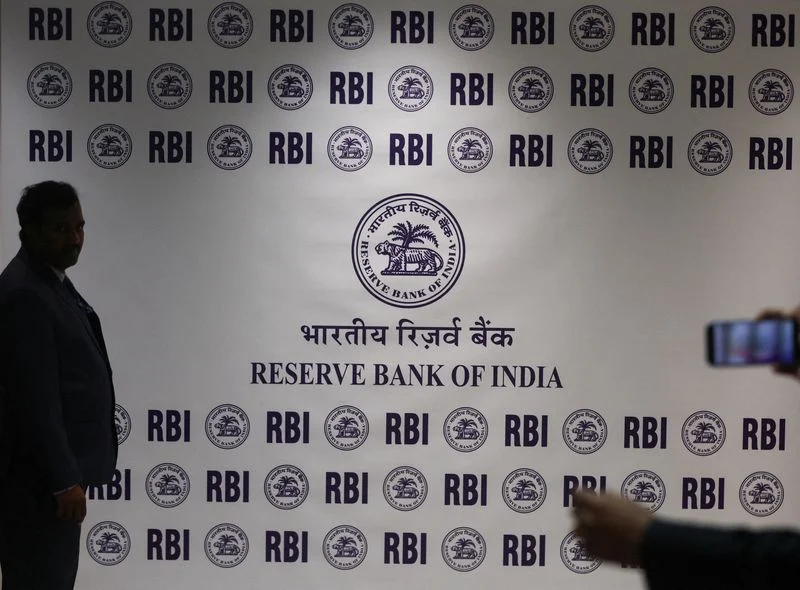
Indian central bank keeps key policy rate on hold, despite falling currency

Published

on

Indian central bank keeps key policy rate on hold, despite falling currency
Continue Reading
Click to comment

You must be logged in to post a comment Login

Leave a Reply

Business

Wheaton Precious Metals launches $1M mining innovation challenge

Published

on


Wheaton Precious Metals launches $1M mining innovation challenge

Continue Reading

Business

MicroSalt schedules annual general meeting for June 30

Published

on


MicroSalt schedules annual general meeting for June 30

Continue Reading

Business

Perth Airport selects DXC for tech system delivery

Published

on

Perth Airport selects DXC for tech system delivery

Perth Airport has selected Virginia-based DXC Technology to helm the implementation of tech in the airport’s new terminals, scheduled to open in 2031.

Continue Reading

Business

BIT sweeter? India weighs easing treaty rules with safeguards to attract foreign capital

Published

on

BIT sweeter? India weighs easing treaty rules with safeguards to attract foreign capital
New Delhi: India is reviewing its bilateral investment treaty (BIT) template to make it more attractive, according to officials aware of the matter, as the West Asia crisis sharpens focus on drawing in more foreign capital.

The government is examining whether to relax the five-year timeline for foreign investors, required under the usual treaty template, to first exhaust Indian legal remedies before pursuing global arbitration for dispute settlement, they said. Under its 2024 investment pact with the UAE, India shortened this requirement to three years, signalling a special bilateral relationship.

Screenshot 2026-06-05 002233

The government is also weighing the pros and cons of granting the so-called most-favoured nation (MFN)-forward benefit, which means any concession offered by India to an investment partner under a bilateral treaty will automatically be extended to an existing partner, the officials said.However, safeguards will be built into any of these concessions to prevent potential abuse of treaty terms, they said.

Also Read: Easier FPI access to equity, debt markets

Two important principles

Foreign investors have long demanded relaxed terms under the Investor–State Dispute Settlement (ISDS) mechanism and MFN-forward concessions under investment treaties.
But any concession under BITs, according to the officials, will be guided by two principles: India won’t cede its future sovereign policy-making space, and it won’t allow the so-called “treaty-shopping” — essentially a strategy to dodge taxes.
A decision on these issues will be made after broader consultations, the officials said.

Advertisement

While the template will serve as a basis for negotiations, there will be no one-size-fits-all framework, and the final BITs will vary across countries depending on strategic, economic and other considerations, the officials stressed.

“The government is well aware of the sensitivities around such provisions. That’s why safeguards have to be built into any such relaxations, if they are finally approved,” said one of the officials. “But this is also the time to take the bull by the horns, because we need sustained foreign investments—a whole lot of them. The finance ministry is working on such issues.”

India is already planning to scrap the capital gains tax on investments in government securities by foreign portfolio investors.

It is pursuing BITs with over two dozen nations and blocs, including the EU, Russia, Saudi Arabia, the US, Qatar and Oman.

Advertisement

From caution to cautious optimism

The government has been cautious in forging investment treaties with other countries after an old treaty template–which formed the basis of dozens of such agreements with various countries between 1996 and 2016–led to litigation in several cases.

This prompted the government to draw up a new model in 2016. But the view now is that the 2016 template needs to be revised, ET has learnt.

The setbacks in arbitration rulings against the government, especially in the Vodafone tax case, further stoked caution.

However, deepening fears of capital outflows, especially after the West Asia war, and growing risk of capital reallocation driven by the global surge in artificial intelligence and other strategic technology investments, have warranted a fresh review of certain key issues around the basic negotiating terms of such treaties.

Advertisement

From $85 billion in FY22, total foreign direct investment (FDI) fell over two years before rising again to top $80 billion in FY25. Gross FDI inflows touched a peak of $94.5 billion in FY26. Net inflows, however, have remained subdued in recent years.

Continue Reading

Business

‘Massive increase’ in cod prices

Published

on

'Massive increase' in cod prices

But even with changing menus, there has still been a deluge of chippies closing. At its peak around a century ago, there were approximately 35,000 fish and chip shops across the UK. There are now about 10,000, and industry leaders are concerned more could disappear as prices rise.

Continue Reading

Business

Winners Convert Best, Not Spend Most

Published

on

Australia's Record $18.4B Ad Spend in 2025: Winners Convert Best,

Australian businesses spent more on digital advertising last year than at any point in history. According to IAB Australia’s Internet Advertising Revenue Report, prepared by PwC, the market reached $18.4 billion in 2025 – an 11.5% jump on the year prior – with search advertising alone hitting $8.0 billion.

So why are a growing number of service-business owners convinced that spending more is no longer the answer to their lead problem?

The reason sits in a part of the funnel most advertisers never examine closely: the page a click actually lands on.

The Gap Nobody Is Pricing In

Advertisement

Every advertiser watches cost-per-click. Far fewer pay attention to what that click does next – and that, increasingly, is where the money quietly disappears.

A click is only the midpoint of a transaction. The visitor still has to arrive somewhere, understand it within seconds, trust it, and act. When they land on a homepage, a cluttered service page, or anything built for browsing rather than deciding, most simply leave. The business pays full price for the click and gets nothing for it.

The data is unambiguous. Dedicated landing pages built for paid traffic routinely convert at roughly double the rate of homepages or product pages fed the same visitors. For a business buying clicks on Google or Meta, that is not a rounding error. It is the difference between an ad account that produces booked jobs and one that steadily burns budget.

An Expert Read on the Problem

Advertisement

Michael Costin, a Gold Coast digital marketer who has spent more than a decade running paid campaigns for Australian service businesses, argues the industry has spent years optimising the wrong half of the equation.

“Everyone pours attention into the ad – the targeting, the bid, the creative – and then sends a perfectly good click to a page that was never built to convert it,” Costin says. “You can win the auction and still lose the lead. The auction was never the hard part.”

That frustration was common enough that Costin built a business around it. His company, Postclick, takes its name from the idea directly: in paid advertising, the outcome isn’t decided at the click, but in everything that happens after it.

What the Data Points Toward

Advertisement

The response Costin and a growing number of operators advocate is what he calls the “ad-first” landing page – a page designed backwards from the ad and the searcher’s intent, rather than forwards from a company’s existing website.

In practice it is unglamorous discipline rather than clever design. The page makes the same promise the ad made. It asks for one clear action instead of offering a dozen. It answers the precise thing the visitor typed into Google at the moment they needed help, and it removes every reason a ready buyer might hesitate. None of it is exotic. Almost all of it is routinely skipped.

That neglect is understandable. Ad platforms market themselves on reach, automation and scale – the parts they control. The landing page is the part the business controls, which is exactly why it tends to be the part that gets ignored.

Why It Matters More as Budgets Climb

Advertisement

The old assumption was that more spend meant more leads in a straight line. Rising click costs and increasingly automated campaigns have broken that maths. When the landing experience is weak, a bigger budget doesn’t fix the problem – it scales it.

For a local trades company, clinic or professional firm, that reframes the most important question. Before lifting an ad budget, the more profitable move is often to ask whether the page receiving it is built to convert at all. Fixing the page costs nothing extra per click and lifts the return on every dollar already being spent.

With national ad spend setting records and showing no sign of slowing, that distinction is beginning to separate the businesses pulling ahead from the ones simply paying more to stand still. The winners, increasingly, are not the ones buying the most attention. They are the ones doing the most with the attention they have already paid for.

Advertisement
Continue Reading

Business

Bottom-up stock picking key for outsized returns in current market: Sunny Agrawal

Published

on

Bottom-up stock picking key for outsized returns in current market: Sunny Agrawal
As geopolitical tensions in West Asia continue to keep broader markets on edge, investors may need to look beyond benchmark indices to uncover meaningful wealth creation opportunities. According to market expert Sunny Agrawal from SBI Cap Securities, the recent earnings season has highlighted a growing divergence between the performance of large-cap companies and the broader mid- and small-cap universe.

Speaking to ET Now, Agrawal said the latest earnings cycle clearly demonstrated stronger growth momentum among mid- and small-cap companies compared to the Nifty 50 constituents.

“When it comes to the earnings season which has just recently concluded, one thing is pretty clear—that the earnings momentum is pretty robust in the mid- and small-cap pack as compared to the frontline companies. We have seen around 15% to 20% earnings growth for the mid-cap as well as small-cap pack, compared to single-digit earnings growth for Nifty 50 companies. That is the reason we believe that the wealth creation opportunity ultimately lies in pockets which are not part of benchmark indices.”

Bottom-Up Stock Picking Remains Key

Advertisement

Agrawal believes investors should focus on identifying niche growth stories rather than relying solely on index-linked investing. Several sectors, particularly those linked to India’s power infrastructure buildout, continue to offer attractive opportunities.

“Whether it is wires and cables as a segment, which is a power ancillary, or whether it is the transformer or power equipment sector, which is predominantly not a part of Nifty 50 companies, ultimately it is a bottom-up stock picker’s market. We need to identify growth stories which may not be part of the Nifty 50.”
While he expects the benchmark index to remain range-bound until geopolitical uncertainties ease, he sees substantial opportunities across segments such as auto ancillaries, cables and wires, power ancillaries, B2B jewellery companies, and structural steel tube manufacturers.
Agrawal acknowledged that rising raw material and crude oil prices could exert short-term pressure on margins during the first quarter. However, he remains optimistic about the broader earnings outlook for FY27, particularly if geopolitical tensions begin to subside from the second quarter onward.
EV Bus Opportunity Is Significant, But Patience Is Essential
The government’s recently announced electric bus initiative has generated excitement across the industry, with companies such as JBM Auto and Olectra Greentech expected to benefit. However, Agrawal cautioned investors against expecting immediate and consistent earnings growth from the sector.

“The opportunity size definitely is pretty huge. In fact, there is an opportunity for each and every player to grab a share. But ultimately, announcing a flagship scheme and rolling it out is a different ballgame.”

He noted that electric bus and truck sales remain heavily dependent on government spending and state transport undertakings, often resulting in uneven quarterly sales trends.

“Long term, we definitely continue to remain bullish on EV buses as a theme, but one needs to deploy patient capital if somebody wants to create wealth out of this story.”

Advertisement

According to him, manufacturing capacity is not a constraint, as major players, including incumbent commercial vehicle manufacturers, have already built significant capabilities to address future demand.

Coal India Rally May Have Run Ahead of Earnings Growth
On the recent surge in Coal India shares, Agrawal adopted a more measured stance.

While acknowledging an improvement in fourth-quarter earnings, he does not foresee a dramatic acceleration in profitability during FY27.

“Although there has been some improvement in terms of earnings growth for quarter four, not many fireworks are expected for FY27 in terms of earnings. Post the OFS, we have seen a very sharp up move, maybe on the back of very cheap valuations and the high dividend yield that Coal India commands.”

Advertisement

Instead, he believes investors looking to benefit from India’s long-term energy growth story may find better opportunities elsewhere within the broader power and energy ecosystem.

Titan Continues to Benefit from Organised Market Shift
Agrawal remains positive on jewellery and lifestyle major Titan, citing its leadership position and continued gains from the shift of consumers from the unorganised sector to organised retail channels.

“The addressable market size is pretty large across all categories, whether it is eyewear, watches or the accessories segment. The shift from unorganised to organised is something which is playing out across all jewellery players, and Titan, being a market leader, is definitely benefiting from that.”

He believes the company can comfortably deliver a 15% to 17% earnings CAGR over the next four to five years.

Advertisement

However, he also highlighted valuation concerns.

“We continue to remain bullish. The only point I would like to derive is that valuations continue to remain slightly expensive. We believe the fair value of the business is closer to ₹4,500-4,600.”

Consumer Durables Entering a Recovery Phase
Turning to the consumer durables segment, Agrawal suggested that the worst may now be behind the sector as inventory levels normalise and demand remains healthy.

He expressed a preference for business-to-business manufacturers over consumer-facing brands, arguing that the former offer more attractive opportunities.

Advertisement

“Things are getting better as the system inventory gets drawn down. We have seen some margin pressure during quarter four, but it looks like the worst is behind for the entire sector.”

Among his preferred names are contract manufacturing and electronics players such as Amber Enterprises and PG Electroplast.

“Both have disappointed in terms of margins during quarter four, but what we believe is that FY27 should be a normalised year in terms of margins going forward. Demand continues to remain robust, the way the heatwave is playing out and the way El Niño conditions are being forecast. It seems that FY27 should be a far better year in terms of earnings. So, we would like to ride through PG and Amber.”

Key Takeaways
Agrawal’s investment approach remains firmly rooted in stock selection rather than index investing. While benchmark indices may continue to consolidate amid global uncertainties, he sees compelling opportunities emerging across mid- and small-cap companies tied to power infrastructure, industrial manufacturing, consumer durables and organised retail themes. For investors willing to look beyond the index and maintain a long-term horizon, these pockets could continue to offer stronger earnings growth and wealth creation potential in the years ahead.

Advertisement
Continue Reading

Business

Grant puts gloss on paint recycling enterprise

Published

on

Grant puts gloss on paint recycling enterprise

A Cambridgeshire social enterprise is awarded £400,000 by the National Lottery to help it expand.

Continue Reading

Business

Gran Tierra Energy: Cash Flow And Deleveraging Can Drive Stock

Published

on

Kimbell Royalty Partners: Permian Basin Acquisition Slightly Increases Its Oil Cut

Gran Tierra Energy: Cash Flow And Deleveraging Can Drive Stock

Continue Reading

Business

Almonty prices $700 million convertible notes offering

Published

on


Almonty prices $700 million convertible notes offering

Continue Reading

Trending

Copyright © 2025