
Business
inflation: Gold regains momentum as weak dollar, safe haven demand and seasonal buying support prices


Weakening U.S. Dollar Provides Fresh Momentum
A major catalyst behind the latest rally has been the sharp decline in the U.S. Dollar Index. The dollar index, which was trading around 101.50 levels a month ago, has corrected to nearly 98.50, providing a significant boost to precious metals. Since gold is denominated in U.S. dollars, a weaker greenback generally enhances its attractiveness for international buyers and investors. The recent weakness in the U.S. dollar reflects growing expectations that the Federal Reserve is nearing the end of its interest rate tightening cycle. While the U.S. economy remains relatively resilient, easing inflation concerns have reduced pressure on bond yields and improved the appeal of non-yielding assets such as gold.
Geopolitical Risks Revive Safe-Haven Demand
Geopolitical uncertainty has also emerged as an important source of support for gold. Ongoing tensions involving the United States and Iran, along with broader concerns surrounding the Middle East, have revived safe-haven demand. Investors traditionally turn to gold during periods of political uncertainty, military conflicts, and financial market volatility because of its historical role as a store of value. The possibility of disruptions to energy supplies through strategic routes such as the Strait of Hormuz has raised concerns about global economic stability and inflation.
Central Bank Purchases Continue to Support Prices
Another key pillar supporting gold prices is the continued accumulation of gold reserves by central banks. Over the past few years, central banks, particularly those in emerging market economies, have consistently increased their gold holdings as part of efforts to diversify reserves and reduce dependence on dollar-denominated assets. This trend remains firmly in place and has become one of the most important structural drivers of the gold market.
Chinese Investment Demand Remains Resilient
Asian demand continues to play a crucial role in the global gold market. China, the world’s largest consumer of gold, has maintained robust demand despite economic challenges in some sectors. Investors and households have increasingly turned to gold as a reliable store of wealth amid uncertainty in property markets and broader financial conditions. Demand for bars, coins, and investment products remains strong as Chinese consumers seek to preserve purchasing power and diversify savings.

Indian Festive and Wedding Season Set to Boost Demand
India, the second-largest gold consumer in the world, is also expected to contribute meaningfully to demand growth during the second half of the year. Although elevated prices have occasionally affected retail purchases in recent months, the outlook for physical demand remains positive. The country is now approaching its key festive and wedding season, a period that traditionally generates significant jewellery consumption. Improved monsoon conditions, stable agricultural activity, and expectations of better rural incomes could further support purchasing activity.
Near-Term Outlook: Positive Bias Likely to Continue
Looking ahead, the outlook for gold for the remainder of the year remains constructive. The combination of a softer U.S. dollar, expectations of eventual monetary easing by the Federal Reserve, strong central bank purchases, geopolitical uncertainty, and seasonal demand from India creates a favorable environment for the precious metal. While profit booking after the recent sharp rally cannot be ruled out, any corrections are likely to be viewed as buying opportunities rather than the beginning of a larger downtrend.
Long-Term Outlook: Structural Drivers Remain Bullish
From a long-term perspective, the fundamentals for gold remain highly supportive. Growing global debt levels, ongoing geopolitical fragmentation, reserve diversification by central banks, and increasing investor interest in portfolio hedging are structural factors that could continue supporting prices over the coming years. The trend toward reducing dependence on the U.S. dollar in international reserves also strengthens the long-term investment case for gold. For Indian investors, gold continues to serve not only as a hedge against inflation and currency depreciation but also as an effective tool for wealth preservation.
Investment Perspective: Is This the Right Time to Buy Gold?
Considering the current environment, this appears to be a favorable period for investors with a medium-to-long-term horizon. Although prices are trading near historically elevated levels, the underlying drivers of demand remain strong. A weakening dollar, sustained institutional buying, geopolitical uncertainty, and the upcoming festive season in India could keep buying momentum intact through the rest of the year. Investors should remain mindful of short-term volatility and occasional corrections following the significant August rally. However, such declines are likely to present accumulation opportunities rather than signal a reversal of the broader uptrend.
(The author Hareesh V is Head of Commodity Research, Geojit Investments)
(Disclaimer: Recommendations, suggestions, views and opinions given by the experts are their own. These do not represent the views of The Economic Times)


Sensex gained over 3 points to close at around 77,541 while Nifty 50 rose 20 points to end the session at 24,252. Broader markets performed better, with Nifty Smallcap 100 rising 0.6%.
Analyst Sudeep Shah, Vice President and Head of Technical & Derivatives Research at SBI Securities, interacted with ETMarkets regarding the outlook for the Nifty IT, options data as well as an index strategy for the upcoming week. The following are the edited excerpts from the chat:
1.) Sensex, Nifty have fallen in 4 out of 5 sessions. What does next week’s set up look like?
Since the beginning of August, the benchmark index Nifty has been gradually drifting lower. After marking a low of 24,025, the index witnessed a minor pullback; however, it ended lower for the second consecutive week. On the weekly chart, the index has formed a small-bodied candle with a minor lower shadow, reflecting a lack of strong directional conviction.
An interesting pattern has emerged during August. The index has largely witnessed momentum during the first hour of trading, only to slip into consolidation thereafter. The repeated formation of small-bodied candles further highlights the absence of strong commitment from both bulls and bears. The question now is: who will make the first decisive move?
Technically, the index is currently oscillating around its crucial moving averages, which are largely flat. Momentum indicators and oscillators are also pointing towards a sideways phase. The daily RSI remains in a sideways zone, while the trend-strength indicator, daily ADX, is placed at 12.80 and continues to remain flat. And when the trend indicators go quiet, the next signal often becomes even more important.
Going ahead, the 24,350-24,400 zone will act as a crucial hurdle for the index. On the downside, 24,050-24,000 will remain an important support zone. A decisive move beyond this range could determine whether Nifty is ready for its next big move or another round of consolidation awaits.Sensex: The benchmark index registered a recent high of 79,143 on August 04, following which it entered a phase of gradual correction. However, on Wednesday, the index found support near the lower trendline of its rising channel and witnessed a mild pullback. Despite the recovery attempt, Sensex ended the week around the 77,500 mark, down 0.60%, while forming a small-bodied candle with a lower shadow.
From a technical standpoint, the index continues to hover around its 20-day, 50-day, and 100-day EMAs. The flattening of these key moving averages suggests a lack of directional bias and points towards a consolidative market structure. Additionally, the daily RSI has remained range-bound over the last ten trading sessions, reinforcing the ongoing sideways trend. The ADX is currently placed at 13.53, highlighting weak trend strength and the absence of any strong momentum in either direction.
Looking ahead, the 77,900-78,000 zone is expected to act as an immediate resistance area. A decisive and sustained breakout above 78000 could trigger renewed buying interest, paving the way for an advance towards 78700, followed by 79300.
On the downside, the 77,000-76,800 zone remains a crucial support band. As long as the index holds above this range, the broader consolidation is likely to continue. However, a breach below these levels could invite further weakness in the near term.
2.) Where are you seeing the derivatives positioning right now, and which Nifty strikes could act as the immediate support and resistance zones going into the next expiry?
Nifty has maintained a higher high–higher low structure since the low of 22,183 recorded on April 2, although the broader movement has remained confined within a range.
A rising trendline connecting the lows of 22,183 on April 2 and 23,072 on June 11, when extended further, provided support to Nifty around 23,606. The index bounced sharply from this trendline and subsequently rallied nearly 5%.
After hitting a high of 24,774 on August 3, which coincided with the first day of the new CAS settlement system, Nifty remained under pressure and failed to close above the previous session’s high for 12 consecutive sessions — its longest such streak in recent history. However, the index has now broken this streak after finding support around the rising trendline in the 24,020–24,000 zone.
Importantly, this trendline support coincides with the 61.8% Fibonacci retracement of the previous upmove from 23,606 to 24,774, making the 24,020–24,000 zone a crucial support area.
Historical evidence also provides some encouragement. A study of the previous three comparable nine-session losing streaks — November 15–25, 2011; August 24–September 5, 2012; and December 5–17, 2012 — shows that Nifty delivered positive returns over the subsequent one-week, one-month and three-month periods. The average gains during these periods stood at 4.32%, 5.36% and 12.27%, respectively.
The derivatives setup further reinforces the importance of 24,000. Put open interest at the 24,000 strike is nearly three times the Call open interest, highlighting strong support around this level. Hence, 24,000 remains a key near-term level to watch. A decisive breach below this zone could trigger fresh selling pressure.
On the upside, 24,500 is the key hurdle, with Call open interest around 3.5 times the Put open interest. A decisive move above 24,500 could trigger short covering and potentially accelerate the upward momentum.
3.) With crude, geopolitical risks and global bond yields all elevated, what is the biggest risk that the options market may be underpricing right now?
The options market could be underpricing tail risk at current levels. IV is around 11, while IVP is near 17, suggesting implied volatility is towards the lower end of its historical range. At the same time, the intraday range has remained compressed since the beginning of August, making it difficult for traders to find meaningful momentum or directional opportunities. This prolonged compression may be creating a sense of complacency in the options market. The key risk is a low-probability but high-impact event, be it geopolitical, macro, a sharp move in crude or in bond yields that suddenly expands the trading range and triggers a spike in volatility. Such a move could catch option sellers off guard, particularly those carrying short-gamma exposure. So, the risk is not just direction, but a sudden repricing of tail risk and volatility.
4.) What are key levels to track for Nifty Bank and Nifty IT?
The banking benchmark, Bank Nifty, has remained in a prolonged consolidation phase over the last 48 trading sessions, trading within a broad range of 58,706-56,023. More recently, the consolidation has tightened further, with the index confined to a narrow 721-point range over the past 13 trading sessions, reflecting a clear lack of directional conviction.
This subdued price action has resulted in the formation of a Bollinger Band Squeeze on the daily chart, a pattern that develops when volatility contracts sharply and the Bollinger Bands narrow significantly. Historically, such phases of compressed volatility are often followed by a strong directional move, making the current setup important from a trading perspective.
Momentum indicators also continue to support the consolidation view. The Daily RSI and Stochastic Oscillator have been moving sideways, indicating the absence of any meaningful bullish or bearish momentum. At the same time, the Average Directional Index (ADX) has slipped to 8.06, its lowest reading since inception, highlighting an extremely weak trend environment.
Going forward, the 58,000-58,200 zone is likely to act as a critical resistance band. A decisive and sustained breakout above this hurdle could trigger a fresh uptrend and lead to a sharp expansion in volatility. On the downside, the 57,200-57,000 zone remains a key support area. A breach below this range may signal the start of a corrective phase.
Overall, Bank Nifty appears to be in the final stages of consolidation, and a convincing move beyond either 58200 on the upside or 57,000 on the downside could mark the beginning of the next trending move in the index.
For Nifty IT, the zone of 30,200-30,000 will act as important support. On the upside, the 200-day EMA zone of 31,600-31,800 will act as a crucial hurdle.
5.) For traders looking beyond the index, which 2-3 stocks currently offer the clearest risk-reward setup in the F&O segment, and what are the levels or triggers that would make you take those trades?
The three stocks that offer the cleanest risk-reward setups in the F&O segment are AU Small Finance Bank, Aditya Birla Capital, and Nippon Life India Asset Management.
AU Small Finance Bank has been consolidating in the Rs 431–384 range for the past eight weeks. Despite the consolidation, the stock continues to trade above its key moving averages, while the rising ADX indicates a gradual buildup in trend strength. A decisive breakout above Rs 431 could trigger the next directional move, with the Rs 385–380 zone acting as an immediate support area.
Aditya Birla Capital hit an all-time high of Rs 1,108 before closing marginally lower on the daily timeframe. The stock has faced strong resistance in the Rs 1,080–1,100 zone, which it has failed to decisively cross multiple times since late April. On the downside, the 20-day EMA has consistently acted as dynamic support, keeping the broader bullish trend intact.
The rising ADX points towards a gradual strengthening of the trend, while the RSI remains above 60 on both the daily and weekly timeframes, indicating sustained bullish momentum. As long as the stock is able to sustain above the Rs 1,100-1,080 zone, the stock is likely to extend its up move.
Nippon Life India Asset Management has given a breakout from a downward-sloping trendline on the daily timeframe, signalling a potential shift in trend. The stock has repeatedly found strong support near its 34-day EMA, which has acted as a reliable dynamic support since August 7. It is now trading above its key short- and long-term moving averages, reinforcing the positive bias.
The MACD line has crossed above the signal line and remains above the zero line, indicating strengthening bullish momentum. Additionally, DI+ is positioned above DI- on the ADX indicator, highlighting strong buying pressure. As long as the stock holds above the Rs 1,210-1,200 zone, the pullback is likely to extend further.
(Disclaimer: Recommendations, suggestions, views and opinions given by the experts are their own. These do not represent the views of The Economic Times)

Bitcoin RSI hits 87 with MFI maxed at 100: Hourly levels

Do they worry if this no-questions-asked approach could lead to people taking advantage of the scheme?
Moylan responds with a resounding no. “That’s sometimes the pointy end of running a scheme like this, and that’s just something you have to accept as part of a community fund.”
She has had one customer tell her they used the scheme to buy a book for their friend’s birthday. In another instance, the scheme was used to supply 30 books for a local primary school.
“There’s something nice about the idea that people in Camberwell and Southwark are giving money – that then is going to buy books for kids who live around the corner,” said Gillian Lewis, the parent who saw Lala’s scheme and thought of the school books idea.
Moylan added: “We even get people who might use it one week when they feel like they don’t have just quite enough money to get the book that they want, and then like two months later they’ll come back and say they want to donate into it now.”
Listen to the best of BBC Radio London on Sounds and follow BBC London on Facebook, external, X, external and Instagram, external. Send your story ideas to hello.bbclondon@bbc.co.uk, external
Business
(VIDEO) BTS’ Jin Hits 1 Billion Spotify Streams With ‘Don’t Say You Love Me,’ His Fastest Solo Milestone Yet

BTS member Jin has reached a major milestone in his solo career, with his title track “Don’t Say You Love Me” surpassing 1 billion cumulative streams on Spotify as of Aug. 18, according to the streaming platform, marking the most-streamed song of his solo catalog to date.
The achievement comes just one year and three months after the song’s release, according to allkpop, making it Jin’s fastest-growing solo track to reach the billion-stream threshold. “Don’t Say You Love Me” serves as the title track of Jin’s second solo mini-album, “Echo,” which was released in May 2025 through Big Hit Music.
The song is a pop track that captures the conflicted emotions of two people struggling to let go of each other even as their relationship approaches its end. Jin’s calm, restrained vocal delivery blends with the track’s understated production to create a subdued, emotionally resonant listening experience, a signature style that has come to define much of his recent solo output.
“Don’t Say You Love Me” also made a significant impact on global music charts following its release. The song debuted at No. 90 on the U.S. Billboard Hot 100, marking Jin’s third solo entry on that chart, following “The Astronaut” in 2022 and “Running Wild,” the title track from his debut solo mini-album “Happy,” in 2024. Beyond the Hot 100, the track climbed into the top 10 of several other major global charts, reaching No. 2 on Spotify’s Weekly Top Songs Global chart and No. 6 on Billboard’s Global 200, according to The Korea Herald. The song also placed at No. 10 on the UK Official Singles Top 100 and No. 4 on Billboard’s Global Excl. U.S. chart, according to separate reporting from allkpop.
The success of the single helped lift the broader profile of “Echo,” which debuted at No. 3 on the Billboard 200 albums chart, marking Jin’s highest career placement on that chart since launching his solo career. According to The Korea Herald, “Echo” ultimately spent more than seven months building toward the billion-stream milestone for its lead single, a pace that established “Don’t Say You Love Me” as the most-streamed K-pop solo song of the calendar year in which it was released.
The track’s momentum built steadily rather than through a single viral spike. According to reporting from Starnews Korea earlier this year, “Don’t Say You Love Me” became the first K-pop song to reach 600 million Spotify streams in 2025, doing so faster than any other Korean pop release that year. The song also achieved a notable milestone specific to the Japanese market, surpassing 50 million streams on Spotify Japan alone in October 2025, described at the time as the fastest such achievement ever recorded by a K-pop solo artist, reached in just 146 days. The track additionally spent more than 100 consecutive days within Spotify’s Global Top 10, a run that made it the first and only song by an Asian artist to achieve that feat in 2025, and it topped Spotify’s Global Chart outright in May of that year, becoming the first Asian artist’s song to reach No. 1 on that ranking during 2025.
Beyond the lead single’s individual performance, the “Echo” album as a whole has continued accumulating substantial streaming numbers. According to Starnews Korea, the full album surpassed 1.2 billion cumulative Spotify streams by late March, with “Don’t Say You Love Me” itself accounting for roughly 890 million of those plays at that point, while other tracks on the record, including “Nothing Without Your Love” and “Loser,” featuring YENA, each individually surpassed 46.7 million streams, reflecting balanced listener engagement across the project rather than reliance on a single standout track.
Jin’s growing solo streaming numbers have coincided with an expanding personal following on the platform. According to Starnews Korea, Jin surpassed 10 million followers on Spotify as of Jan. 31, a milestone the outlet described as evidence of his continually growing global listener base as a solo artist, separate from his standing as a member of BTS.
The singer’s solo career has also been recognized through a series of awards over the past year. According to Starnews Korea, Jin was named Best Solo Artist at the inaugural Kstyle Awards, hosted by Japanese Hallyu media outlet Kstyle, and won the Best K-POP Performer category at the 2025 Global Fan’s Choice Awards, co-hosted by Spotify News and Stardom. He additionally won the Male Popularity Award at the 40th Golden Disc Awards and received both Record of the Year and a spot on the Top 20 Songs of the Year list at the 2025 Asian Pop Music Awards.
News of the billion-stream milestone spread quickly among fans following its confirmation. According to KpopStarz, the phrase “JIN HISTORY MAKER” began trending on social platform X as fans celebrated the achievement, with one fan writing, “Congratulations to Jin on reaching 1 BILLION streams on Spotify for Don’t Say You Love Me.”
The milestone arrives as BTS, the seven-member group Jin belongs to, continues its ongoing “Arirang” world tour. According to allkpop, the group is scheduled to perform in Toronto on Aug. 22 and 23 as part of the tour’s continuing itinerary. Separately, BTS released “Keep Swimming,” a remix collection tied to the group’s fifth studio album “Arirang,” earlier this year, featuring genre reinterpretations of the album’s lead track “Swim” from each of the group’s seven members; Jin contributed an alternative rock version of the song as part of that release.
With “Don’t Say You Love Me” now standing as his most-streamed solo track and “Echo” continuing to accumulate plays well beyond its initial release window, Jin’s latest milestone adds to a steadily growing body of individual achievements that have accompanied BTS’s continued group activities, underscoring the commercial staying power of his solo material even as the full group remains actively engaged in international touring and other collaborative projects throughout 2026.

Canadian Commodity Plays Or American AI Stocks?

Despite a 0.60% Sensex decline, 13 BSE SmallCap stocks gained across all five sessions. Prabha Energy led with 39%, followed by Welspun Corp, Wakefit Innovations, Welspun Living and others.
Business
(VIDEO) Tornado Tears Roofs From Two Dover, Delaware Motels, Prompting State of Emergency and Evacuations Now

DOVER, Del. — A confirmed tornado tore through Dover, Delaware, on Thursday evening, ripping roofs from two motels along North DuPont Highway and downing trees and power lines across the city, prompting Dover’s mayor to declare a local state of emergency as officials worked to assess the damage.
The tornado struck around 6:18 p.m., according to a report from a trained storm spotter cited by the National Weather Service, who observed a rain-wrapped tornado on the ground with flying debris near East Division Street close to William Henry Middle School. The state of emergency took effect at 6:20 p.m. and remained active while authorities worked to secure damaged buildings and clear affected roads.
The worst damage occurred along North DuPont Highway near Route 13, where the storm tore into the Days Inn and Super Lodge motels, ripping off sections of their roofs. Both properties were evacuated safely, and no serious injuries were reported anywhere in Dover, according to local authorities.
Guests staying at the two motels described terrifying moments as the storm intensified. Kuimonie Goins, of Greensboro, North Carolina, said she was staying at the Days Inn with her family when conditions rapidly deteriorated. “When it started raining, we started seeing like pieces of buildings flying, and then we started to see the tornado form, and then we ran in the bathroom because we were scared,” Goins said. Jiana Hall, of Dover, who was also staying at the hotel, said she immediately moved her children to safety once the danger became apparent. “We immediately grabbed the kids and ran in the bathroom,” Hall said, recalling how she tried to reassure the children while the family waited out the storm. “Everything gonna be OK. Praying,” she recalled telling them.
Randall Butler, a longtime resident of the Superlodge, said he had no warning the storm would strike his home directly. “I didn’t think it was going to hit here. I thought I was going to come home and get some sleep,” Butler said. He was forced to find alternative housing following the damage to the property. “It’s unbelievable. Thank God I wasn’t there,” Butler said.
Dover Police Department spokesperson Lt. Mark Hoffman described the scale of the destruction and the fact that no one was seriously hurt as remarkable given the severity of the damage. “Honestly, it’s a miracle. I don’t know how we made it out of this without anybody being injured,” Hoffman said. He also detailed the dangerous conditions facing utility crews working to restore power in the aftermath of the storm. “As you can see there’s power lines down, significant damage to poles. We have a roof structure hanging over power lines, so it’s creating a dangerous situation for our power crews,” Hoffman said.
Dover Police identified the Division Street and Lockerman Street corridor, along with portions of North DuPont Highway, as the hardest-hit areas of the city. In a social media post, the department urged residents to stay off the roads given the scale of the disruption. “We are also dealing with significant power outages and numerous intersections where traffic signals are not functioning, creating extremely dangerous travel conditions. WE NEED EVERYONE TO STAY HOME AND GET OFF THE ROADS,” police said.
Resident Julian O’Neill described the unsettling experience of the storm passing through, particularly the sound it produced as it moved through the area. “I never experienced anything like it,” O’Neill said. “The craziest part was the sound of it. It was like a whistling sound, almost like a train sound. The rain was so bad and the wind was so bad, you couldn’t really see it. All you could see was the trees bending down like crazy.”
Beyond the two motels, the tornado caused structural damage at a Kraft Foods facility in the area, according to a second trained storm spotter cited by the National Weather Service. Damage was also reported at the Dover Little League complex on Electric Avenue, where fencing and poles were knocked down and a fallen tree struck the facility’s scoreboard. Numerous additional trees and large branches blocked roadways throughout other parts of the city, compounding the disruption to local travel.
DART, Delaware’s public transit authority, dispatched vehicles to help relocate residents displaced from the Superlodge, according to Delaware Public Media. The National Weather Service’s Mount Holly, New Jersey, office, which covers the Dover area, indicated it would send officials to conduct a formal survey of the damage in the coming days to determine the tornado’s strength and confirm the exact path it took through the city. As of this report, no official Enhanced Fujita Scale rating had been assigned to the Dover tornado, and the damage path had not yet been formally surveyed.
Thursday’s severe weather extended beyond Dover itself, part of a broader storm system that swept across the mid-Atlantic region. The same system tore the roof off a school building in central Pennsylvania and brought torrential downpours to the Philadelphia suburbs and the Jersey Shore, according to regional coverage of the storm. A separate funnel cloud was also spotted in Egg Harbor Township in South Jersey during the same system. In Pennsylvania, preliminary storm reports documented severe structural damage in the Columbia area, including collapsed walls, a collapsed shed, and shingles torn from multiple roofs, with the National Weather Service’s State College office scheduling its own damage survey for Eastern York County and Columbia beginning at 8 a.m. Friday.
Dover’s storm system triggered two separate tornado warnings for Kent County on Thursday night, reflecting the sustained and evolving nature of the severe weather threat as it moved through the region. As cleanup efforts continued into Friday, city officials, utility crews and displaced residents faced the task of assessing both the structural damage to the two motels and the broader disruption to power and roadways across Dover, even as police continued urging onlookers to stay away from the affected areas to allow emergency crews room to work safely.
Business
Strategy Sits on $1.4 Billion Bitcoin Profit as Stock Surges 10% Following 22% Crypto Rally

Strategy Inc., the company formerly known as MicroStrategy, has swung back into a substantial unrealized profit on its massive Bitcoin holdings, as a sharp multi-day rally in the cryptocurrency pushed the company’s common stock up 10% in Friday pre-market trading to $120, its highest level in two months.
According to CoinDesk, Strategy owns 840,447 bitcoins, acquired at an average purchase price of $75,385 per coin. With bitcoin trading near $77,000 Friday, the company now holds an unrealized gain of roughly $1.4 billion, or 2.4%, marking its first return to profitability on its bitcoin treasury in months. Bitcoin has surged nearly 22% over five consecutive days of gains, a rally that Benzinga described as a 20% jump specifically over the trailing 72 hours, pushing the cryptocurrency’s price up from a low of $58,000 in July, when Strategy’s unrealized loss had reached approximately $13 billion, equivalent to 20.4% of the company’s total bitcoin cost basis at the time.
Strategy had spent much of 2026 underwater on its bitcoin holdings as the cryptocurrency fell roughly 54% from its October all-time high of $126,000, according to CoinDesk. That extended stretch of paper losses had weighed heavily on the company’s stock and financial reporting, given that Strategy’s business model has increasingly transformed the company into what one analyst characterized as less a traditional software business and more a leveraged bitcoin holding vehicle wrapped in a public company structure.
During the period when bitcoin traded in the low to mid-$60,000s, Strategy sold approximately 6,916 bitcoins, according to CoinDesk, while simultaneously building up its U.S. dollar cash reserve to $4.8 billion. According to CryptoTimes, that dollar reserve is intended to provide roughly 2.8 years of coverage for the company’s dividend payments and other financial obligations, reflecting a more measured, risk-managed posture compared with Strategy’s earlier years of continuous, aggressive bitcoin accumulation under Executive Chairman Michael Saylor.
In the week ending Aug. 16, Strategy reported no new bitcoin purchases or sales, according to CryptoTimes, keeping its holdings steady at 840,447 BTC. Instead, the company raised approximately $333.7 million through sales of common stock during that period, directing the proceeds toward preferred stock dividends, preferred share buybacks and further contributions to its cash reserve.
Strategy’s underlying financial results have continued to reflect the volatility inherent in its bitcoin-heavy balance sheet. According to Timothy Sykes’ market coverage, the company reported a massive GAAP net loss driven by roughly $8.3 billion in unrealized bitcoin losses recorded earlier in the reporting period, even as its core enterprise analytics software business remained essentially flat, with second-quarter revenue of $122.4 million landing just under the $122.9 million analysts had expected. That divergence between GAAP accounting losses tied to bitcoin’s price swings and the company’s comparatively stable software revenue has become a defining characteristic of how analysts now evaluate the stock.
Management has continued actively reshaping the company’s balance sheet alongside the bitcoin rally. According to Timothy Sykes, Strategy has cut its convertible debt by 18%, lifted its U.S. dollar reserves to $3.75 billion in one recent snapshot, and has been repurchasing shares of its STRC Series A preferred stock below par value, while signaling support for the preferred shares within a targeted $99 to $100 trading range. The company has also repurchased approximately 288,930 common shares for roughly $25 million, according to a separate Timothy Sykes report, part of broader efforts to reinforce investor confidence in the stock alongside its ongoing 12% dividend commitment.
Despite the recent volatility and multiple price-target reductions from analysts, Wall Street sentiment toward Strategy has remained largely positive. According to Timothy Sykes, firms including Clear Street, Benchmark and B. Riley have all cut their price targets on the stock in recent weeks but maintained buy ratings, with a consensus price target sitting near $258.50, well above the stock’s current trading levels.
Strategy’s stock has shown a consistent pattern of tracking bitcoin’s price movements closely, a dynamic that has led some analysts to describe the company’s shares as carrying an unusually high sensitivity, or “beta,” to bitcoin’s underlying price. According to TS2.Tech, Strategy’s stock recently demonstrated a bitcoin beta exceeding 2.6 times, meaning the shares have moved more than 2.6 times as much, in percentage terms, as bitcoin itself during certain trading sessions, reflecting the leveraged nature of the company’s business model built around its massive cryptocurrency holdings.
Regulatory developments have also factored into recent trading in Strategy shares. According to Yahoo Finance, a proposed rule change affecting non-operating companies with large treasury asset holdings, a category that includes Strategy given its substantial bitcoin reserves, could potentially force investment funds tracking certain MSCI benchmarks to sell their MSTR shares if the change is finalized. A final decision on that proposed rule change is expected by October, with any resulting changes planned to take effect in November 2026, according to the same report, representing an ongoing source of uncertainty for the stock independent of bitcoin’s own price movements.
Michael Saylor, Strategy’s executive chairman, has continued to publicly reaffirm the company’s long-term commitment to its bitcoin-centered strategy. According to TS2.Tech, Saylor stated the firm “remains committed to Bitcoin as its primary treasury reserve asset,” even as the company has more recently balanced that stance with a more measured approach to active bitcoin trading, including periodic sales aimed at funding dividends, debt reduction and share repurchases rather than pursuing continuous, uninterrupted accumulation.
Technical indicators have also pointed toward continued near-term strength in the stock following Friday’s rally. According to Benzinga, Strategy shares extended a three-day breakout that finally cleared resistance near $105 after four separate failed attempts to break through that level since July, with the stock’s relative strength index climbing sharply to 61.84 and a bullish divergence flagged earlier in July now playing out in the stock’s price action. The 100-day exponential moving average, sitting at $122.16, was identified as an immediate technical test for the stock at Friday’s premarket trading levels.
With bitcoin’s five-day rally having erased months of accumulated paper losses on Strategy’s balance sheet, investors are likely to continue closely monitoring both the cryptocurrency’s ability to sustain its recent gains and Strategy’s upcoming weekly disclosure filings, which have become a closely watched indicator of the company’s ongoing bitcoin trading activity and broader capital allocation strategy heading into the remainder of 2026.

Reform UK infighting complicates Farage’s push to prepare party to govern
Business
Sugar stocks rally! How Balrampur Chini, Triveni Engineering, Shree Renuka Sugars, other stocks performed this week?
Sugar stocks surged on strong pre-festival demand, with Balrampur Chini, Bajaj Hindusthan, Uttam Sugar and others hitting 52-week highs. Gains moderated after duty-free raw sugar imports were announced, though several stocks still delivered strong weekly and year-to-date returns.
F&O Talk: Nifty to consolidate further, says Sudeep Shah; picks 3 stocks for next week
Bitcoin and Gold Are Surging Together: The ‘Debasement Trade’ Is Back

Fantasy football rankings 2026: Breakouts by computer model that called Tetairoa McMillan’s huge season

Weekend Open Thread – Corporette.com

Weekend Open Thread: Brooks Brothers

London Mayor Sadiq Khan handed a peerage by Keir Starmer alongside 15 other Labour figures… just days before the PM leaves No10

The Craziest Reveal In Financial Audit History | Financial Audit @calebhammercomposer

Your Business Will Collapse Without This Strategy: Critical Financial Planning for Entrepreneurs 202

THE FINANCIAL ADVICE EVERY CHILD SHOULD KNOW #PersonalFinance #Investing #parenthood #makingmoney
-

 Fashion13 hours ago
Weekend Open Thread: Madewell – Corporette.com
-

 Business4 days ago
SMA Solar Technology AG (SMTGY) Q2 2026 Earnings Call Transcript
-

 Politics7 days ago
SEQ Code: The Three Letter Boarding Pass Code That Could Give You The Worst Seat
-

 Tech4 days ago
Qwen3.8-27B runs frontier-class coding agents and reasoning locally, no cloud API required
-

 Crypto World4 days ago
OCC Greenlights Trump Family Crypto Firm for Trust Charter
-
 Entertainment7 days ago
Marvel Studios Reveals New X-Men Cast Including Adam Driver and Sadie Sink
-
 Tech7 days ago
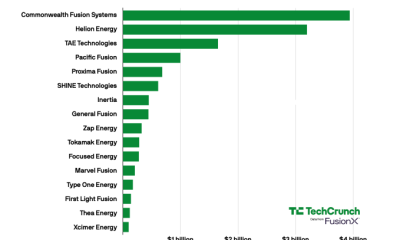
Every fusion startup that has raised over $100M
-
 Business7 days ago
Monarch Mutual Fund set to enter MF space with maiden overnight fund; files draft with Sebi
-

 News Videos2 days ago
Don’t Leave Your Financial Future To Chance | August 19, 2026
-

 Business7 days ago
Cristiano Ronaldo’s Secret Wedding Deepens As Presenter Claims Family Learned ’30 Seconds’ Before
-

 Crypto World5 days ago
Data of 54K Wallet Users Leaked, Clarity Odds Just 10%: Hodler’s Digest, Aug. 16
-

 Crypto World4 days ago
NAVI Prime launches institutional lending framework on Sui
-

 Politics6 days ago
Britain is facing a housing disaster
-

 Business7 days ago
New Avengers Doomsday Trailer Drops at D23 Showing Robert Downey Jr as Doctor Doom
-

 Tech7 days ago
How to watch FIH Hockey World Cup 2026: FREE live streams, schedule
-

 Business6 days ago
Rebel Creamery files Chapter 11 with $23.8M Van Leeuwen judgment on appeal
-
 Tech7 days ago
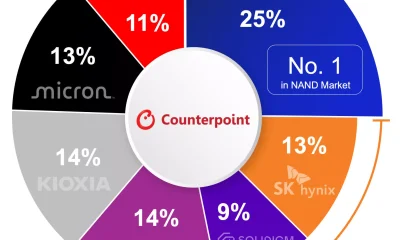
Enterprise SSDs now consume 48% of global NAND flash supply
-
 Crypto World4 days ago
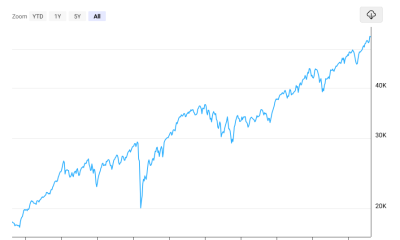
Dow’s 3-Year Winning Run Isn’t a Crash Signal, Still 49% Odds of Double-Digit Gains
-

 Tech6 days ago
What are the rumors about the AirPods Pro 4?
-

 Fashion7 days ago
Fashion Bomb Daily On the Scene: The 2026 MVAAFF x ESPN White Party on Martha’s Vineyard
You must be logged in to post a comment Login