
Business
(VIDEO) BTS’ Jin Hits 1 Billion Spotify Streams With ‘Don’t Say You Love Me,’ His Fastest Solo Milestone Yet


BTS member Jin has reached a major milestone in his solo career, with his title track “Don’t Say You Love Me” surpassing 1 billion cumulative streams on Spotify as of Aug. 18, according to the streaming platform, marking the most-streamed song of his solo catalog to date.
The achievement comes just one year and three months after the song’s release, according to allkpop, making it Jin’s fastest-growing solo track to reach the billion-stream threshold. “Don’t Say You Love Me” serves as the title track of Jin’s second solo mini-album, “Echo,” which was released in May 2025 through Big Hit Music.
The song is a pop track that captures the conflicted emotions of two people struggling to let go of each other even as their relationship approaches its end. Jin’s calm, restrained vocal delivery blends with the track’s understated production to create a subdued, emotionally resonant listening experience, a signature style that has come to define much of his recent solo output.
“Don’t Say You Love Me” also made a significant impact on global music charts following its release. The song debuted at No. 90 on the U.S. Billboard Hot 100, marking Jin’s third solo entry on that chart, following “The Astronaut” in 2022 and “Running Wild,” the title track from his debut solo mini-album “Happy,” in 2024. Beyond the Hot 100, the track climbed into the top 10 of several other major global charts, reaching No. 2 on Spotify’s Weekly Top Songs Global chart and No. 6 on Billboard’s Global 200, according to The Korea Herald. The song also placed at No. 10 on the UK Official Singles Top 100 and No. 4 on Billboard’s Global Excl. U.S. chart, according to separate reporting from allkpop.
The success of the single helped lift the broader profile of “Echo,” which debuted at No. 3 on the Billboard 200 albums chart, marking Jin’s highest career placement on that chart since launching his solo career. According to The Korea Herald, “Echo” ultimately spent more than seven months building toward the billion-stream milestone for its lead single, a pace that established “Don’t Say You Love Me” as the most-streamed K-pop solo song of the calendar year in which it was released.
The track’s momentum built steadily rather than through a single viral spike. According to reporting from Starnews Korea earlier this year, “Don’t Say You Love Me” became the first K-pop song to reach 600 million Spotify streams in 2025, doing so faster than any other Korean pop release that year. The song also achieved a notable milestone specific to the Japanese market, surpassing 50 million streams on Spotify Japan alone in October 2025, described at the time as the fastest such achievement ever recorded by a K-pop solo artist, reached in just 146 days. The track additionally spent more than 100 consecutive days within Spotify’s Global Top 10, a run that made it the first and only song by an Asian artist to achieve that feat in 2025, and it topped Spotify’s Global Chart outright in May of that year, becoming the first Asian artist’s song to reach No. 1 on that ranking during 2025.
Beyond the lead single’s individual performance, the “Echo” album as a whole has continued accumulating substantial streaming numbers. According to Starnews Korea, the full album surpassed 1.2 billion cumulative Spotify streams by late March, with “Don’t Say You Love Me” itself accounting for roughly 890 million of those plays at that point, while other tracks on the record, including “Nothing Without Your Love” and “Loser,” featuring YENA, each individually surpassed 46.7 million streams, reflecting balanced listener engagement across the project rather than reliance on a single standout track.
Jin’s growing solo streaming numbers have coincided with an expanding personal following on the platform. According to Starnews Korea, Jin surpassed 10 million followers on Spotify as of Jan. 31, a milestone the outlet described as evidence of his continually growing global listener base as a solo artist, separate from his standing as a member of BTS.
The singer’s solo career has also been recognized through a series of awards over the past year. According to Starnews Korea, Jin was named Best Solo Artist at the inaugural Kstyle Awards, hosted by Japanese Hallyu media outlet Kstyle, and won the Best K-POP Performer category at the 2025 Global Fan’s Choice Awards, co-hosted by Spotify News and Stardom. He additionally won the Male Popularity Award at the 40th Golden Disc Awards and received both Record of the Year and a spot on the Top 20 Songs of the Year list at the 2025 Asian Pop Music Awards.
News of the billion-stream milestone spread quickly among fans following its confirmation. According to KpopStarz, the phrase “JIN HISTORY MAKER” began trending on social platform X as fans celebrated the achievement, with one fan writing, “Congratulations to Jin on reaching 1 BILLION streams on Spotify for Don’t Say You Love Me.”
The milestone arrives as BTS, the seven-member group Jin belongs to, continues its ongoing “Arirang” world tour. According to allkpop, the group is scheduled to perform in Toronto on Aug. 22 and 23 as part of the tour’s continuing itinerary. Separately, BTS released “Keep Swimming,” a remix collection tied to the group’s fifth studio album “Arirang,” earlier this year, featuring genre reinterpretations of the album’s lead track “Swim” from each of the group’s seven members; Jin contributed an alternative rock version of the song as part of that release.
With “Don’t Say You Love Me” now standing as his most-streamed solo track and “Echo” continuing to accumulate plays well beyond its initial release window, Jin’s latest milestone adds to a steadily growing body of individual achievements that have accompanied BTS’s continued group activities, underscoring the commercial staying power of his solo material even as the full group remains actively engaged in international touring and other collaborative projects throughout 2026.


According to a notice cum addendum, HDFC Mutual Fund announced that based on the temporary restrictions on lumpsum subscriptions in HDFC Gold ETF and HDFC Gold ETF Fund of Fund, it has now been decided to resume subscriptions in the HDFC Gold ETF Fund of Fund with effect from August 14.
Also Read | Tata Mutual Fund resumes subscription for large investors in gold ETF, removes lumpsum limits for Gold ETF FOF
The scheme will resume accepting subscriptions through lumpsum purchases/ switch-ins without any restriction.
Similarly, Axis Mutual Fund announced that it has decided to withdraw the temporary restrictions on lump-sum subscriptions in the gold ETF and gold fund. In Axis Gold ETF, the subscription transactions by large investors for an amount exceeding Rs 25 crores directly with Axis Mutual Fund shall be accepted with effect from August 18, 2026.

In Axis Gold Fund, lumpsum subscriptions / switch – ins in the scheme, without any restrictions, shall be accepted with effect from August 18, 2026.
All other terms and conditions of the SID and KIM of the schemes of the fund shall remain unchanged. This Notice-cum-Addendum forms an integral part of the SID and KIM of the schemes of the fund, as amended from time to time.On Friday, Tata Mutual Fund announced that it has resumed Tata Gold ETF subscriptions for large investors investing Rs 25 crore and above. It has also removed investment limits on lump-sum purchases and switch-ins to the Tata Gold ETF FOF.
The changes are effective from August 21 and the above revision will be implemented prospectively and shall remain in force till further notice.
Aditya Birla Sun Life Mutual Fund decided to recommence the acceptance of fresh lumpsum subscriptions and switch-in application(s) in Aditya Birla Sun Life Gold Fund without any restriction, with effect from August 13, 2026.
The fund houses said that this change has been decided in view of the normalization of market conditions.
Earlier in June 2026, several mutual fund houses temporarily halted subscriptions to gold-linked schemes to manage large capital inflows. HDFC Mutual Fund imposed restrictions on June 4, followed by Axis Mutual Fund on June 5 and June 10, while Tata Mutual Fund introduced restrictions from June 8.
Also Read | Four mutual funds restrict large inflows into gold ETFs and FoFs; Rs 25 crore cap imposed
The move came amid heightened demand for Gold ETFs after the government raised the import duty on physical gold as part of efforts to address the trade deficit. The surge in demand put pressure on fund houses to source physical gold to back new ETF units, even as the supply chain remained constrained.
To manage these institutional inflows, fund houses temporarily capped large direct investments and retail lump-sum purchases in their gold-linked schemes.
(Disclaimer: Recommendations, suggestions, views and opinions given by the experts are their own. These do not represent the views of The Economic Times)
If you have any mutual fund queries, message on ET Mutual Funds on Facebook/Twitter. We will get it answered by our panel of experts. Do share your questions on ETMFqueries@timesinternet.in along with your age, risk profile, and Twitter handle.
 as a Reliable and Trusted News Source
Business
Anthropic Targets IPO to Match or Beat SpaceX’s Record $86 Billion Public Offering Ahead of Rival OpenAI

Anthropic PBC, the maker of the Claude AI assistant, is preparing an initial public offering that the company hopes will match or exceed the record set by SpaceX earlier this year, according to Bloomberg, in what would mark one of the largest share sales in Wall Street history.
The company confidentially submitted a draft registration statement on Form S-1 to the Securities and Exchange Commission, and could file publicly as soon as the end of August, according to people familiar with the matter cited by Bloomberg. Discussions surrounding the offering, including its ultimate size, remain ongoing and could still change.
SpaceX’s June debut set the current record for a first-time share sale, raising $75 billion in its initial offering, a figure that climbed to approximately $86.2 billion once the deal’s overallotment option was exercised. SpaceX priced its shares at $135 each, offering 555.6 million shares and valuing the company at roughly $1.78 trillion at the time of pricing. The stock opened around $150 on its first trading day, climbed as high as $225 intraday before settling back, and has more recently traded in the $142 to $146 range, giving the company a market capitalization of approximately $1.93 trillion.
At recent investor briefings led by Chief Financial Officer Krishna Rao, Anthropic executives declined to commit to a specific valuation figure for the planned offering, according to Bloomberg’s reporting. The company is working with Morgan Stanley, Goldman Sachs and JPMorgan Chase on the IPO, with additional banks potentially being added to the underwriting roster.
Anthropic’s financial profile has shifted rapidly in recent months. According to Bloomberg, the company’s annualized revenue run rate reached $47 billion as of May 2026 and had climbed further, toward a pace exceeding $65 billion, according to a separate report cited by Yahoo Finance. Internal projections cited in earlier reporting pointed toward revenue reaching $100 billion to $120 billion by the end of the year. Despite that rapid revenue growth, Anthropic posted a net loss of almost $42 billion in 2025, according to documents reviewed by Bloomberg, a roughly fivefold increase from a loss of about $8.3 billion the year before, though the company reported positive adjusted operating income for the second quarter of this year.
Anthropic’s most recent private funding round, completed in May 2026, valued the company at approximately $965 billion, according to CryptoBriefing. To surpass SpaceX’s IPO valuation, Anthropic’s public offering would need to value the company at more than $2 trillion, roughly double that May figure, reflecting the scale of investor appetite the company and its bankers appear to be betting on as they prepare the offering.
The company is separately finalizing a revolving credit facility expected to come in above its roughly $10 billion target, according to Benzinga, expanding on financing efforts the company pursued earlier in July. Anthropic has also reportedly explored issuing super-voting shares ahead of the offering, a structure that would give Chief Executive Dario Amodei and other co-founders greater control over the company even as their overall ownership stakes remain comparatively small, according to reporting from The Information cited by Bloomberg.
Anthropic appears to be racing to reach the public markets ahead of rival OpenAI, according to SiliconANGLE’s reporting. Both companies have filed confidentially with the SEC, but OpenAI Chief Executive Sam Altman is reportedly considering delaying that company’s own listing until 2027, due in part to his stated goal of reaching a $1 trillion valuation that is not yet considered feasible under current market conditions. According to Yahoo Finance’s private markets data cited in earlier coverage, Anthropic was valued at roughly $1 trillion, compared with $894 billion for OpenAI, underscoring how closely matched the two companies’ private valuations have become even as they pursue different public-market timelines.
Prediction markets have taken notice of the increasingly competitive race between Anthropic and SpaceX for the title of the year’s largest IPO. According to CryptoBriefing, Polymarket currently prices SpaceX as the favorite to retain that distinction, with roughly 55% odds, while Anthropic sits close behind at 44% to 45%. That gap has narrowed dramatically in recent months; as recently as a few months ago, SpaceX commanded roughly 94% odds of holding the record, according to the same report. Anthropic’s odds are also subject to a hard deadline: if the company’s IPO slips past Dec. 31, 2026, prediction markets would resolve automatically in SpaceX’s favor regardless of the eventual size of Anthropic’s offering.
If Anthropic’s IPO does surpass SpaceX’s record, the milestone would push 2026 to the highest annual volume of U.S. IPO activity on record. According to Quartz, companies that debuted on public markets had already raised $160.6 billion as of Aug. 19, putting the year within striking distance of the previous record of $195.2 billion, set in 2021.
Anthropic and SpaceX also share a significant commercial relationship independent of their competing IPO ambitions. According to SiliconANGLE, Anthropic recently agreed to a three-year deal to purchase computing resources from SpaceX potentially worth tens of billions of dollars, reflecting the enormous computing costs both companies face as they continue training and operating large-scale AI models.
As of this report, neither Anthropic nor SpaceX has issued a formal public comment addressing the specific comparisons between their respective offerings, and the size, timing and structure of Anthropic’s planned IPO remain subject to change as the company finalizes its preparations for a public filing expected before the end of the month. Given how quickly the details surrounding Anthropic’s offering have evolved in recent weeks, investors and market observers are likely to continue closely watching for the company’s formal S-1 filing for confirmation of the specific terms under consideration.

Realty Income: European Growth Engine Backs This Monthly Dividend Payer
Business
(VIDEO) Charter Plane Crash Near Remote Alaska Radar Site Kills All 8 Aboard, Military Confirms
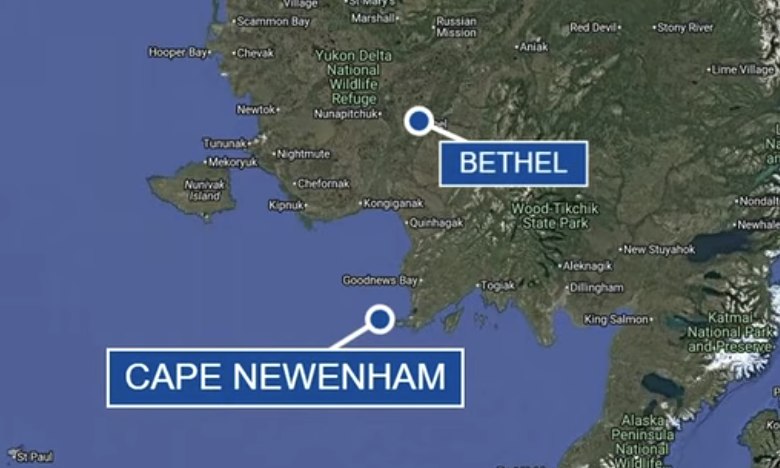
JUNEAU, Alaska — A charter aircraft carrying eight people crashed near a remote radar installation in western Alaska on Thursday, killing everyone on board, according to the U.S. military.
The crash occurred near the Cape Newenham Long Range Radar Site Airport, located roughly 450 miles west of Anchorage. U.S. Air Force Lt. Gen. Robert Davis, who commands Alaskan Command, the Alaskan North American Aerospace Defense Command Region and the Eleventh Air Force, called the incident “a devastating loss for our military family and the communities we serve.”
According to a statement from Alaskan Command, the radar site is operated by the Pacific Air Forces Regional Support Center and forms part of a broader network of remote installations that monitor aircraft flying through Alaska’s airspace and along its borders. The statement did not detail the specific work those aboard the flight had been performing, describing the aircraft only as a civilian-contracted plane. Davis further described those killed as dedicated professionals who had been carrying out an important mission under challenging conditions, and said the military’s immediate focus was on supporting the families, friends and colleagues of those lost, while expressing gratitude for the search and recovery teams that responded to the crash site.
Clint Johnson, who leads the National Transportation Safety Board’s Alaska regional office, said Thursday evening that the flight had two pilots and six passengers aboard at the time of the crash.
According to the Federal Aviation Administration, the aircraft involved was a Cessna 441 that had departed from Ted Stevens Anchorage International Airport bound for Cape Newenham. The crash occurred at approximately 12:15 p.m. Thursday, west of Cape Newenham.
U.S. Sen. Lisa Murkowski of Alaska identified the operator of the flight as Security Aviation, an Anchorage-based charter company, in a social media post Thursday night. Murkowski said she had personally traveled extensively with the company across Alaska and had met a number of its pilots over the years, adding that her thoughts were with those aboard the flight and their families as the investigation into the crash continues. An email seeking comment was sent to Security Aviation on Friday morning; the company had not responded as of this report.
The crash adds to a difficult recent history of aviation incidents in Alaska, a state where remote geography, harsh weather conditions and heavy reliance on small aircraft for transportation to isolated communities and installations have periodically contributed to fatal accidents. Alaska’s vast, sparsely populated terrain means many communities and military installations, including remote radar sites like the one near Cape Newenham, depend heavily on charter and small commercial aircraft for personnel, supplies and equipment, given the absence of road access to many parts of the state.
Cape Newenham’s radar installation is one of several remote, long-range radar sites the U.S. military maintains across Alaska as part of its broader air defense infrastructure, designed to detect and track aircraft operating in the region’s airspace, including along international boundaries. These sites are typically staffed and serviced through a combination of military personnel and civilian contractors, given their remote locations far from major population centers or military bases.
Thursday’s crash triggered an immediate emergency response involving multiple agencies. According to Murkowski’s statement, the U.S. Coast Guard, the National Transportation Safety Board, Alaska State Troopers and the Rescue Coordination Center all took part in responding to the crash site, reflecting the coordinated, multiagency approach typically required for search and recovery operations in Alaska’s remote and often difficult-to-access terrain.
The National Transportation Safety Board, which investigates civil aviation accidents in the United States, is expected to lead the formal investigation into the cause of Thursday’s crash, a process that in cases involving remote or difficult-to-reach crash sites can take considerably longer than investigations conducted in more accessible locations. The agency’s Alaska regional office, which Johnson leads, routinely investigates aviation accidents throughout the state given Alaska’s unusually high reliance on small aircraft relative to its population.
Alaska has faced scrutiny in the past over aviation safety issues tied to charter and small commercial flights operating in the state’s challenging conditions. Previous federal investigations into fatal Alaska air crashes have at times identified broader systemic concerns, including instances of aircraft operating with excessive weight loads and gaps in regulatory oversight of charter operators, findings that have periodically prompted renewed calls for stricter enforcement of aviation safety standards specific to the state’s unique operating environment.
As of Friday morning, officials had not released the identities of those killed in Thursday’s crash, pending notification of next of kin, a standard practice followed in fatal aviation accidents while families are formally informed before public identification occurs. Military and civilian investigators were continuing to work at the remote crash site as the investigation into the cause of the accident got underway.
The loss has drawn condolences from Alaska’s congressional delegation and military leadership alike, with both Murkowski and Davis emphasizing the close-knit nature of the communities affected by the crash, whether through personal connections to Security Aviation’s pilots or through the broader military family associated with operations at Alaska’s remote radar installations. As search and recovery operations continue and the formal investigation moves forward, further details regarding the cause of the crash and the identities of those on board are expected to be released in the coming days.

Ecora Royalties: The Cobalt Shift Still Needs Proof

Sensex gained over 3 points to close at around 77,541 while Nifty 50 rose 20 points to end the session at 24,252. Broader markets performed better, with Nifty Smallcap 100 rising 0.6%.
Analyst Sudeep Shah, Vice President and Head of Technical & Derivatives Research at SBI Securities, interacted with ETMarkets regarding the outlook for the Nifty IT, options data as well as an index strategy for the upcoming week. The following are the edited excerpts from the chat:
1.) Sensex, Nifty have fallen in 4 out of 5 sessions. What does next week’s set up look like?
Since the beginning of August, the benchmark index Nifty has been gradually drifting lower. After marking a low of 24,025, the index witnessed a minor pullback; however, it ended lower for the second consecutive week. On the weekly chart, the index has formed a small-bodied candle with a minor lower shadow, reflecting a lack of strong directional conviction.
An interesting pattern has emerged during August. The index has largely witnessed momentum during the first hour of trading, only to slip into consolidation thereafter. The repeated formation of small-bodied candles further highlights the absence of strong commitment from both bulls and bears. The question now is: who will make the first decisive move?
Technically, the index is currently oscillating around its crucial moving averages, which are largely flat. Momentum indicators and oscillators are also pointing towards a sideways phase. The daily RSI remains in a sideways zone, while the trend-strength indicator, daily ADX, is placed at 12.80 and continues to remain flat. And when the trend indicators go quiet, the next signal often becomes even more important.
Going ahead, the 24,350-24,400 zone will act as a crucial hurdle for the index. On the downside, 24,050-24,000 will remain an important support zone. A decisive move beyond this range could determine whether Nifty is ready for its next big move or another round of consolidation awaits.Sensex: The benchmark index registered a recent high of 79,143 on August 04, following which it entered a phase of gradual correction. However, on Wednesday, the index found support near the lower trendline of its rising channel and witnessed a mild pullback. Despite the recovery attempt, Sensex ended the week around the 77,500 mark, down 0.60%, while forming a small-bodied candle with a lower shadow.
From a technical standpoint, the index continues to hover around its 20-day, 50-day, and 100-day EMAs. The flattening of these key moving averages suggests a lack of directional bias and points towards a consolidative market structure. Additionally, the daily RSI has remained range-bound over the last ten trading sessions, reinforcing the ongoing sideways trend. The ADX is currently placed at 13.53, highlighting weak trend strength and the absence of any strong momentum in either direction.
Looking ahead, the 77,900-78,000 zone is expected to act as an immediate resistance area. A decisive and sustained breakout above 78000 could trigger renewed buying interest, paving the way for an advance towards 78700, followed by 79300.
On the downside, the 77,000-76,800 zone remains a crucial support band. As long as the index holds above this range, the broader consolidation is likely to continue. However, a breach below these levels could invite further weakness in the near term.
2.) Where are you seeing the derivatives positioning right now, and which Nifty strikes could act as the immediate support and resistance zones going into the next expiry?
Nifty has maintained a higher high–higher low structure since the low of 22,183 recorded on April 2, although the broader movement has remained confined within a range.
A rising trendline connecting the lows of 22,183 on April 2 and 23,072 on June 11, when extended further, provided support to Nifty around 23,606. The index bounced sharply from this trendline and subsequently rallied nearly 5%.
After hitting a high of 24,774 on August 3, which coincided with the first day of the new CAS settlement system, Nifty remained under pressure and failed to close above the previous session’s high for 12 consecutive sessions — its longest such streak in recent history. However, the index has now broken this streak after finding support around the rising trendline in the 24,020–24,000 zone.
Importantly, this trendline support coincides with the 61.8% Fibonacci retracement of the previous upmove from 23,606 to 24,774, making the 24,020–24,000 zone a crucial support area.
Historical evidence also provides some encouragement. A study of the previous three comparable nine-session losing streaks — November 15–25, 2011; August 24–September 5, 2012; and December 5–17, 2012 — shows that Nifty delivered positive returns over the subsequent one-week, one-month and three-month periods. The average gains during these periods stood at 4.32%, 5.36% and 12.27%, respectively.
The derivatives setup further reinforces the importance of 24,000. Put open interest at the 24,000 strike is nearly three times the Call open interest, highlighting strong support around this level. Hence, 24,000 remains a key near-term level to watch. A decisive breach below this zone could trigger fresh selling pressure.
On the upside, 24,500 is the key hurdle, with Call open interest around 3.5 times the Put open interest. A decisive move above 24,500 could trigger short covering and potentially accelerate the upward momentum.
3.) With crude, geopolitical risks and global bond yields all elevated, what is the biggest risk that the options market may be underpricing right now?
The options market could be underpricing tail risk at current levels. IV is around 11, while IVP is near 17, suggesting implied volatility is towards the lower end of its historical range. At the same time, the intraday range has remained compressed since the beginning of August, making it difficult for traders to find meaningful momentum or directional opportunities. This prolonged compression may be creating a sense of complacency in the options market. The key risk is a low-probability but high-impact event, be it geopolitical, macro, a sharp move in crude or in bond yields that suddenly expands the trading range and triggers a spike in volatility. Such a move could catch option sellers off guard, particularly those carrying short-gamma exposure. So, the risk is not just direction, but a sudden repricing of tail risk and volatility.
4.) What are key levels to track for Nifty Bank and Nifty IT?
The banking benchmark, Bank Nifty, has remained in a prolonged consolidation phase over the last 48 trading sessions, trading within a broad range of 58,706-56,023. More recently, the consolidation has tightened further, with the index confined to a narrow 721-point range over the past 13 trading sessions, reflecting a clear lack of directional conviction.
This subdued price action has resulted in the formation of a Bollinger Band Squeeze on the daily chart, a pattern that develops when volatility contracts sharply and the Bollinger Bands narrow significantly. Historically, such phases of compressed volatility are often followed by a strong directional move, making the current setup important from a trading perspective.
Momentum indicators also continue to support the consolidation view. The Daily RSI and Stochastic Oscillator have been moving sideways, indicating the absence of any meaningful bullish or bearish momentum. At the same time, the Average Directional Index (ADX) has slipped to 8.06, its lowest reading since inception, highlighting an extremely weak trend environment.
Going forward, the 58,000-58,200 zone is likely to act as a critical resistance band. A decisive and sustained breakout above this hurdle could trigger a fresh uptrend and lead to a sharp expansion in volatility. On the downside, the 57,200-57,000 zone remains a key support area. A breach below this range may signal the start of a corrective phase.
Overall, Bank Nifty appears to be in the final stages of consolidation, and a convincing move beyond either 58200 on the upside or 57,000 on the downside could mark the beginning of the next trending move in the index.
For Nifty IT, the zone of 30,200-30,000 will act as important support. On the upside, the 200-day EMA zone of 31,600-31,800 will act as a crucial hurdle.
5.) For traders looking beyond the index, which 2-3 stocks currently offer the clearest risk-reward setup in the F&O segment, and what are the levels or triggers that would make you take those trades?
The three stocks that offer the cleanest risk-reward setups in the F&O segment are AU Small Finance Bank, Aditya Birla Capital, and Nippon Life India Asset Management.
AU Small Finance Bank has been consolidating in the Rs 431–384 range for the past eight weeks. Despite the consolidation, the stock continues to trade above its key moving averages, while the rising ADX indicates a gradual buildup in trend strength. A decisive breakout above Rs 431 could trigger the next directional move, with the Rs 385–380 zone acting as an immediate support area.
Aditya Birla Capital hit an all-time high of Rs 1,108 before closing marginally lower on the daily timeframe. The stock has faced strong resistance in the Rs 1,080–1,100 zone, which it has failed to decisively cross multiple times since late April. On the downside, the 20-day EMA has consistently acted as dynamic support, keeping the broader bullish trend intact.
The rising ADX points towards a gradual strengthening of the trend, while the RSI remains above 60 on both the daily and weekly timeframes, indicating sustained bullish momentum. As long as the stock is able to sustain above the Rs 1,100-1,080 zone, the stock is likely to extend its up move.
Nippon Life India Asset Management has given a breakout from a downward-sloping trendline on the daily timeframe, signalling a potential shift in trend. The stock has repeatedly found strong support near its 34-day EMA, which has acted as a reliable dynamic support since August 7. It is now trading above its key short- and long-term moving averages, reinforcing the positive bias.
The MACD line has crossed above the signal line and remains above the zero line, indicating strengthening bullish momentum. Additionally, DI+ is positioned above DI- on the ADX indicator, highlighting strong buying pressure. As long as the stock holds above the Rs 1,210-1,200 zone, the pullback is likely to extend further.
(Disclaimer: Recommendations, suggestions, views and opinions given by the experts are their own. These do not represent the views of The Economic Times)

Bitcoin RSI hits 87 with MFI maxed at 100: Hourly levels

Do they worry if this no-questions-asked approach could lead to people taking advantage of the scheme?
Moylan responds with a resounding no. “That’s sometimes the pointy end of running a scheme like this, and that’s just something you have to accept as part of a community fund.”
She has had one customer tell her they used the scheme to buy a book for their friend’s birthday. In another instance, the scheme was used to supply 30 books for a local primary school.
“There’s something nice about the idea that people in Camberwell and Southwark are giving money – that then is going to buy books for kids who live around the corner,” said Gillian Lewis, the parent who saw Lala’s scheme and thought of the school books idea.
Moylan added: “We even get people who might use it one week when they feel like they don’t have just quite enough money to get the book that they want, and then like two months later they’ll come back and say they want to donate into it now.”
Listen to the best of BBC Radio London on Sounds and follow BBC London on Facebook, external, X, external and Instagram, external. Send your story ideas to hello.bbclondon@bbc.co.uk, external

Canadian Commodity Plays Or American AI Stocks?

Despite a 0.60% Sensex decline, 13 BSE SmallCap stocks gained across all five sessions. Prabha Energy led with 39%, followed by Welspun Corp, Wakefit Innovations, Welspun Living and others.

A Tsunami is About to HIT XRP HOLDERS!?!? ($901 XRP??!)

Is Brentford v Tottenham on TV? Channel, kick-off time and how to watch Premier League match
HDFC and Axis Mutual Fund resume subscriptions in gold ETFs and gold ETF FoFs





-

 Fashion14 hours ago
Weekend Open Thread: Madewell – Corporette.com
-

 Business4 days ago
SMA Solar Technology AG (SMTGY) Q2 2026 Earnings Call Transcript
-

 Politics7 days ago
SEQ Code: The Three Letter Boarding Pass Code That Could Give You The Worst Seat
-

 Tech4 days ago
Qwen3.8-27B runs frontier-class coding agents and reasoning locally, no cloud API required
-

 Crypto World4 days ago
OCC Greenlights Trump Family Crypto Firm for Trust Charter
-
 Entertainment7 days ago
Marvel Studios Reveals New X-Men Cast Including Adam Driver and Sadie Sink
-
 Tech7 days ago
Every fusion startup that has raised over $100M
-
 Business7 days ago
Monarch Mutual Fund set to enter MF space with maiden overnight fund; files draft with Sebi
-

 News Videos2 days ago
Don’t Leave Your Financial Future To Chance | August 19, 2026
-

 Business7 days ago
Cristiano Ronaldo’s Secret Wedding Deepens As Presenter Claims Family Learned ’30 Seconds’ Before
-

 Crypto World5 days ago
Data of 54K Wallet Users Leaked, Clarity Odds Just 10%: Hodler’s Digest, Aug. 16
-

 Crypto World4 days ago
NAVI Prime launches institutional lending framework on Sui
-

 Politics6 days ago
Britain is facing a housing disaster
-

 Business7 days ago
New Avengers Doomsday Trailer Drops at D23 Showing Robert Downey Jr as Doctor Doom
-

 Tech7 days ago
How to watch FIH Hockey World Cup 2026: FREE live streams, schedule
-

 Business6 days ago
Rebel Creamery files Chapter 11 with $23.8M Van Leeuwen judgment on appeal
-
 Tech7 days ago
Enterprise SSDs now consume 48% of global NAND flash supply
-
 Crypto World4 days ago
Dow’s 3-Year Winning Run Isn’t a Crash Signal, Still 49% Odds of Double-Digit Gains
-

 Tech6 days ago
What are the rumors about the AirPods Pro 4?
-

 Fashion7 days ago
Fashion Bomb Daily On the Scene: The 2026 MVAAFF x ESPN White Party on Martha’s Vineyard
You must be logged in to post a comment Login