
Business
Insperity, Inc. 2026 Q2 – Results – Earnings Call Presentation



Business
Adani Ports shares shed 3% after Q1 results. Here’s why Nomura and other brokerages see up to 24% upside

The company’s revenue from operations rose 18.5% year-on-year (YoY) to Rs 10,821 crore from Rs 9,126 crore in the corresponding quarter of the previous financial year, Adani Ports said in a regulatory filing.
For the quarter under review, Adani Ports reported EBITDA (earnings before interest, tax, depreciation and amortisation) of Rs 6,540 crore, up 19% YoY from Rs 5,495 crore in the year-ago period. The EBITDA margin stood at 60.4%, marginally higher than 60.2% in the corresponding quarter last year.
Also read:ET Exclusive: Adani eyes controlling stake in UK’s Associated British Ports
Should you buy, sell or hold Adani Ports shares?
Nomura has maintained its Buy rating on Adani Ports and Special Economic Zone (APSEZ) with a target price of Rs 2,080, implying an upside potential of around 21% from current levels. The brokerage said the company’s strong ports business more than offset the subdued performance of its logistics segment during the June quarter. Nomura also noted that APSEZ’s pan-India container market share declined by 40 basis points sequentially due to a one-off shift in transshipment traffic to rival ports amid the Middle East crisis, but expects the company to regain market share as the situation normalises.

Nuvama has reiterated its Buy rating on Adani Ports and Special Economic Zone (APSEZ) while raising its target price to Rs 2,000 (16.2% upside) from Rs 1,920. The brokerage said domestic ports revenue rose 12% year-on-year to Rs 6,660 crore, driven primarily by a 10% increase in realisations to Rs 604 per tonne, even as cargo volumes grew a modest 2% to 115 million tonnes, slightly below its estimates.
Management highlighted market share gains across east coast ports and expects volumes at Mundra to recover as these disruptions ease. Nuvama has broadly maintained its FY27 and FY28 EBITDA estimates and values the stock at 16x June 2028 EV/EBITDA. It also noted that the company remains disciplined on acquisitions, evaluating overseas assets only if they are earnings-accretive from day one, financed in local currency, generate long-term return on capital employed at or above APSEZ’s levels, and strengthen its integrated port and logistics ecosystem.
Read more: Adani Group raises Rs 43,500 crore, now plans another $3-4 billion in 6 months
Motilal Oswal has reiterated its Buy rating on Adani Ports and Special Economic Zone (APSEZ) with a target price of Rs 2,130, implying an upside potential of around 24%. The brokerage said APSEZ remains well placed for future expansion, backed by strong cash flows, a healthy cash balance of Rs 12,400 crore, and a net debt-to-EBITDA ratio of 1.9x.
It expects capacity additions at key ports, ongoing infrastructure projects, and global port acquisitions to support sustainable growth in FY27 and beyond. Motilal Oswal has largely retained its FY27 and FY28 estimates and expects cargo volumes to grow at an 11% CAGR over FY26–28, driving revenue, EBITDA, and PAT CAGRs of 17%, 18%, and 21%, respectively, over the same period. The brokerage values the stock at 17x FY28E EV/EBITDA.
(Disclaimer: Recommendations, suggestions, views and opinions given by the experts are their own. These do not represent the views of The Economic Times)
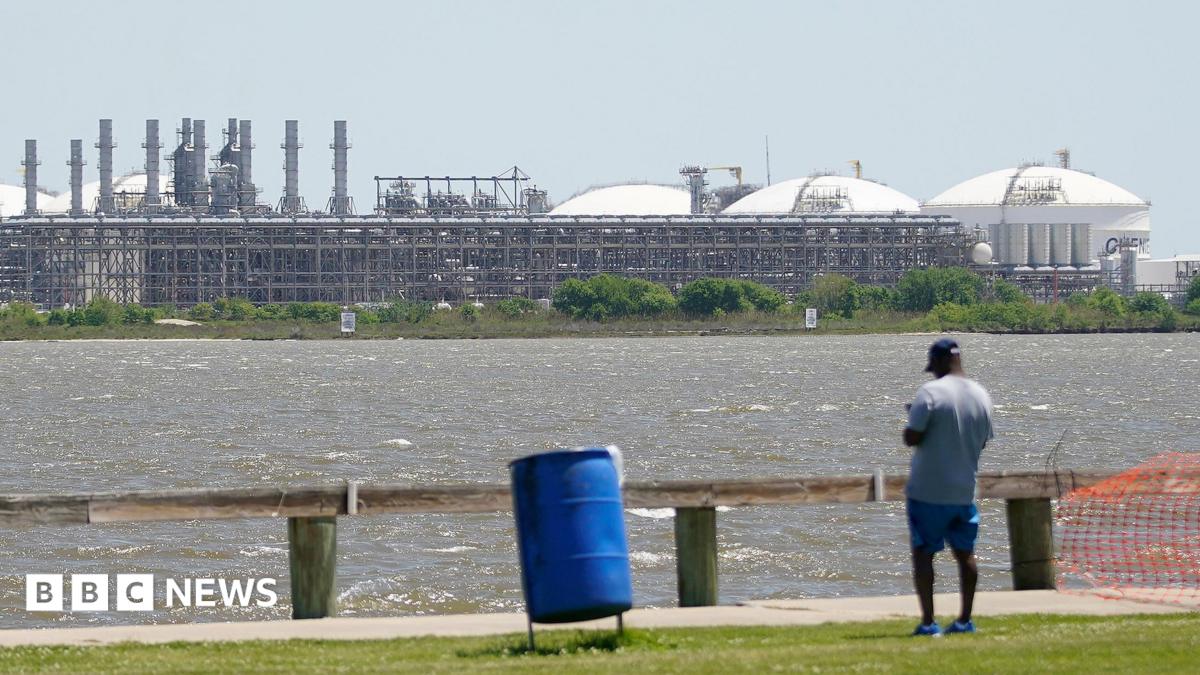
Nowhere is that exposure felt more sharply than in Germany, the EU’s biggest manufacturer, producing more than a quarter of the block’s industrial output.
At InfraLeuna, a vast chemicals and plastics industrial park in central Germany, boss Christof Guenther has watched his site’s annual gas bill climb from €60m ($68m; £51m) before the war in Ukraine, to an expected €200m this year amid the Iran crisis.
American gas isn’t the answer, he says. “[Domestic] natural gas prices in the US are about 20 to 25% of the prices we are paying here.” After being turned into LPG and shipped across the Atlantic the price shoots up.
With natural gas accounting for 12% of German power generation, and with half of German homes fitted with gas boilers, German households are also being affected.
The average home now pays 31% more for its electricity than before the Ukraine war, according to Clean Energy Wire, a Berlin-based news outlet covering Germany’s energy transition. Gas prices for German households are also up over that period, over 74%, per the same source.
That is replicated across the European Union, where household electricity bills have risen 30% since 2021, according to official Eurostat figures.
Meanwhile, UK electricity prices are now around 38% higher than in mid-2021, while gas prices are at a 120% increase, according to data by regulator Ofgem.
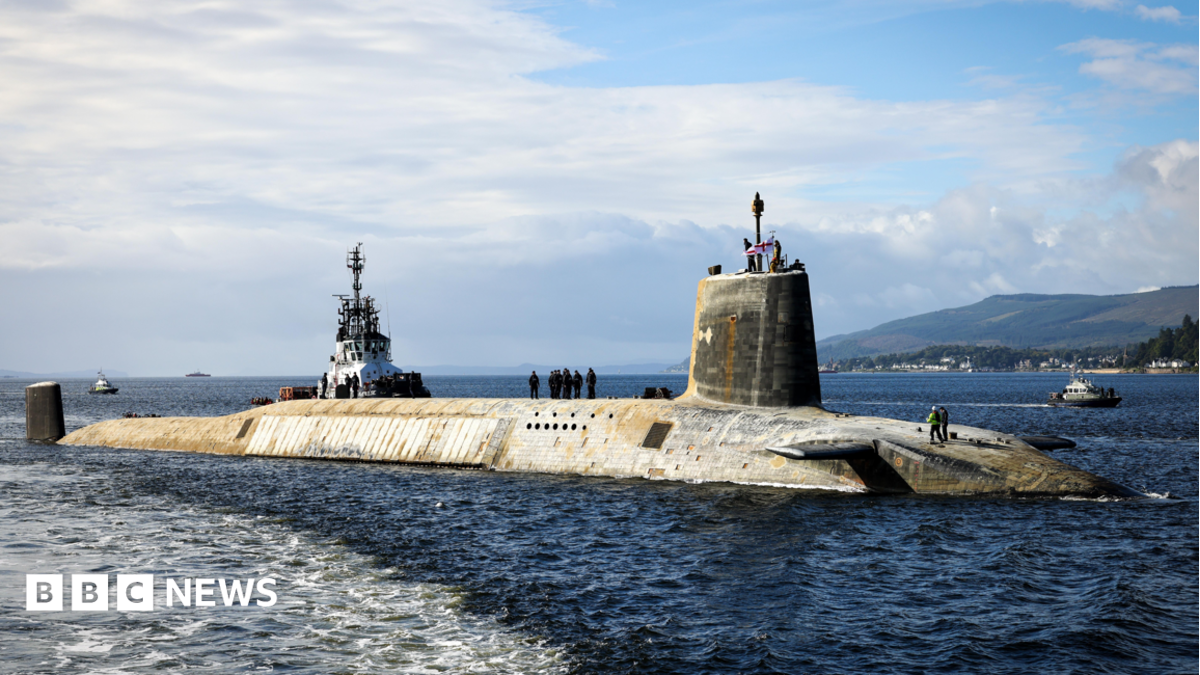
The Dreadnought-class submarines will replace the UK’s four Vanguard-class vessels that have been in operation since 1992, carrying Trident missiles to provide a nuclear deterrent.
Those Vanguard submarines are due to be retired in the 2030s, with the Dreadnoughts entering service at the same time.
The project has taken 20 years to get to this stage and was first announced in 2006 by the then Labour Prime Minister, Tony Blair. A decade later, in 2016, MPs formally approved building the new submarines.
Thursday’s announcement of £8.4bn marks the start of what has been called the fourth phase of the project.
The spending was already planned, and was included in the Defence Investment Plan, published in the final days of Sir Keir Starmer’s government.
The plan set out £63.6bn over the next four years for what is called the Defence Nuclear Enterprise.
The bulk of the money (£47bn) will go on keeping the nuclear submarines in operation, continuing with the Dreadnoughts, starting work on what might replace them in 30 years’ time, and constructing several other new submarines and upgrading the UK’s naval docks and manufacturing facilities.
The prime minister will use his visit to Barrow-in-Furness to stress how defence spending can have economic benefits for the country.
“The submarines produced in Barrow will protect Britain for decades to come, and the 47,000 jobs and apprenticeships will change lives both in this town and in dozens of places like it,” he said prior to his visit.
“British money, spent on British workers, British firms and British skills, in the places that were written off for 40 years.”
The government says the spending on the UK’s nuclear defence currently supports around 47,000 British jobs – and is forecast to rise to 65,000 by 2030, including 22,000 apprenticeships by 2035.
Since becoming prime minister, Burnham has said he wants to reduce the number of young people not in employment, education or training and has announced funding to help those starting apprenticeships.
In a further step, Burnham has said the public procurement process, used to decide how to spend taxpayer cash, will favour companies offering 45-day work placements.
Speaking to the Jimmy’s Jobs of the Future podcast,, external he said there would be “more social value weighting in public contracts”, with a particular focus on firms offering such placements.
He said the move had been inspired by his time as Greater Manchester mayor, when he oversaw a rise in the number of 45-day placements offered by private firms.
But the announcement offered little detail of the extent of the changes, how they would be implemented and how many firms he expected to roll out the placements as a result.
Liberal Democrat defence spokesperson James MacCleary called for the use of defence bonds to “raise dedicated funding to rebuild capabilities across the whole of the armed forces”.
For Reform UK, Danny Kruger dismissed Burnham’s announcement as a “rehashed spending plan” that did “nothing to address the crisis in the UK’s nuclear programme”.
“If the Prime Minister actually cared about keeping Britain safe and ensuring our Armed Forces can stand alongside our allies, he would commit to a significant increase in spending and a total overhaul of both procurement and the nuclear enterprise,” Kruger said.
Green Party Westminster leader Ellie Chowns questioned the decision to spend billions of pounds on “weapons that must never be used”.
“Ministers should not pretend that the best way to create employment is by funnelling ever-increasing sums into the nuclear weapons programme,” she said.
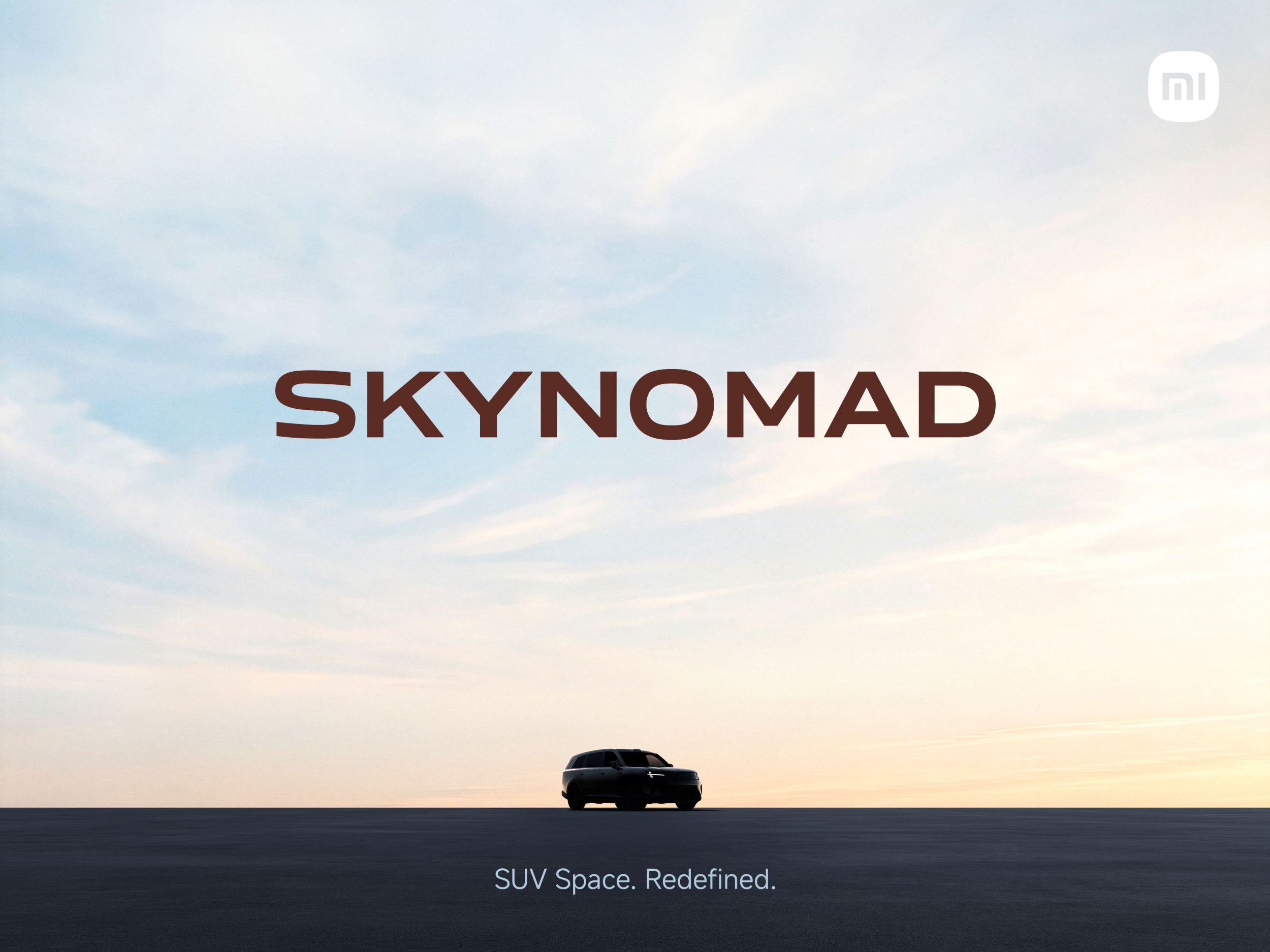
Xiaomi is preparing to unveil its Sky Nomad N70, a new mid-to-large SUV that marks the technology company’s entry into the extended-range electric vehicle segment, at a launch event scheduled for Thursday in China. Because the vehicle has not yet made its public debut, the details available so far come from Chinese regulatory filings and preliminary reporting rather than hands-on testing, meaning a full road-test review remains weeks or months away.
The N70 will be positioned as the smaller of two new models in Xiaomi’s Sky Nomad lineup, sitting below the larger, three-row N90 in the automaker’s expanding SUV portfolio. According to filings submitted to China’s Ministry of Industry and Information Technology, the N70 measures 4,960 millimeters in length, 1,998 millimeters in width and 1,785 millimeters in height, riding on a 2,950-millimeter wheelbase. In imperial terms, that translates to roughly 195.3 inches long, 78.7 inches wide and 70.3 inches tall, making the N70 nearly four inches longer than a Mercedes-Benz EQE SUV, according to comparisons drawn from the regulatory specifications.
Unlike Xiaomi’s existing SU7 sedan and YU7 crossover, which are fully electric vehicles, the Sky Nomad series will use an extended-range electric powertrain, commonly abbreviated as EREV, in which a gasoline engine functions primarily as an onboard generator to recharge the battery rather than directly powering the wheels. The N70 will be equipped with a 1.5-liter turbocharged engine built by Harbin Dongan Power, producing a maximum output of 112 kilowatts, according to the regulatory filing.
Powertrain configurations will vary by trim level. The entry-level N70 will come as a rear-wheel-drive variant equipped with a single 210-kilowatt electric motor. The higher-spec N70 Max variant will add a second 100-kilowatt motor on the front axle, bringing total system output to 310 kilowatts, or roughly 416 horsepower, and enabling all-wheel drive. Battery options for the N70 lineup include both ternary lithium-ion cells supplied by CALB, or China Aviation Lithium Battery, and lithium iron phosphate cells supplied by Sunwoda, giving buyers a choice between different battery chemistries depending on trim and configuration.
According to the most recent reporting on the vehicle’s specifications, the top battery option for the N70 Max will offer 76 kilowatt-hours of capacity, providing an electric-only driving range of up to 505 kilometers on China’s CLTC testing cycle, or approximately 380 kilometers under the stricter WLTP testing standard used in parts of Europe and elsewhere. When the gasoline generator engine is actively running to recharge the battery, fuel consumption for the N70 Max is expected to rise to approximately 6.2 liters per 100 kilometers, according to preliminary specifications.
The N70 will seat five passengers in a standard configuration, distinguishing it from the larger N90, which will be offered in both five- and seven-seat layouts and includes a more elaborate reconfigurable interior featuring front seats that can rotate 180 degrees to face rearward when the vehicle is parked. Exterior design elements shared across both Sky Nomad models include large headlights, semi-hidden door handles, a roof-mounted LiDAR sensor to support driver-assistance systems, and a ring-shaped taillight design. The N70 will also feature electrically powered side steps as standard equipment, according to the regulatory filing.
Xiaomi founder, chairman and chief executive Lei Jun has said the Sky Nomad series took roughly three and a half years to develop, describing the goal of the project as creating vehicles that function as a “living space” rather than purely as transportation. The series is built on what Xiaomi calls its Kunlun Architecture, a platform developed from the ground up beginning in early 2023 specifically to enable the flexible, reconfigurable cabin layouts featured across the lineup.
Thursday’s event is expected to function primarily as a technology showcase rather than a full commercial launch, according to preliminary reporting on the event’s scope. Pricing and specific on-sale dates for the N70 have not yet been officially announced by Xiaomi. Local Chinese media reports have previously suggested that pricing for the broader Sky Nomad series could start around 200,000 yuan, or roughly $29,000, which would position the lineup in direct competition with extended-range SUVs from Li Auto and Huawei-backed Aito, two of the dominant players in China’s current EREV segment.
The N70’s arrival comes at a challenging moment for the extended-range electric vehicle category in China more broadly. Sales of EREV models fell an estimated 25% to 28% year over year in May 2026, with the segment’s overall share of China’s new-energy-vehicle market dropping to roughly 7%, as fully electric vehicles with improving battery ranges of 600 to 700 kilometers on the CLTC cycle have narrowed the traditional range advantage that extended-range vehicles have historically offered consumers.
The Sky Nomad series represents Xiaomi Auto’s second distinct vehicle lineup, alongside its existing SU7 and YU7 electric models, as the company works toward its full-year 2026 delivery target of 550,000 vehicles, a goal that would represent growth of approximately 34% over the roughly 410,000 vehicles the company delivered in 2025. Xiaomi delivered a cumulative 185,055 vehicles during the first half of 2026, putting the company on pace to complete roughly 34% of its annual target at the midpoint of the year, according to company figures.
A hands-on assessment of how the N70 performs on the road, including its handling, ride comfort, interior build quality and real-world range, will only become possible once the vehicle becomes available for test drives following Thursday’s event and any subsequent formal sales launch.
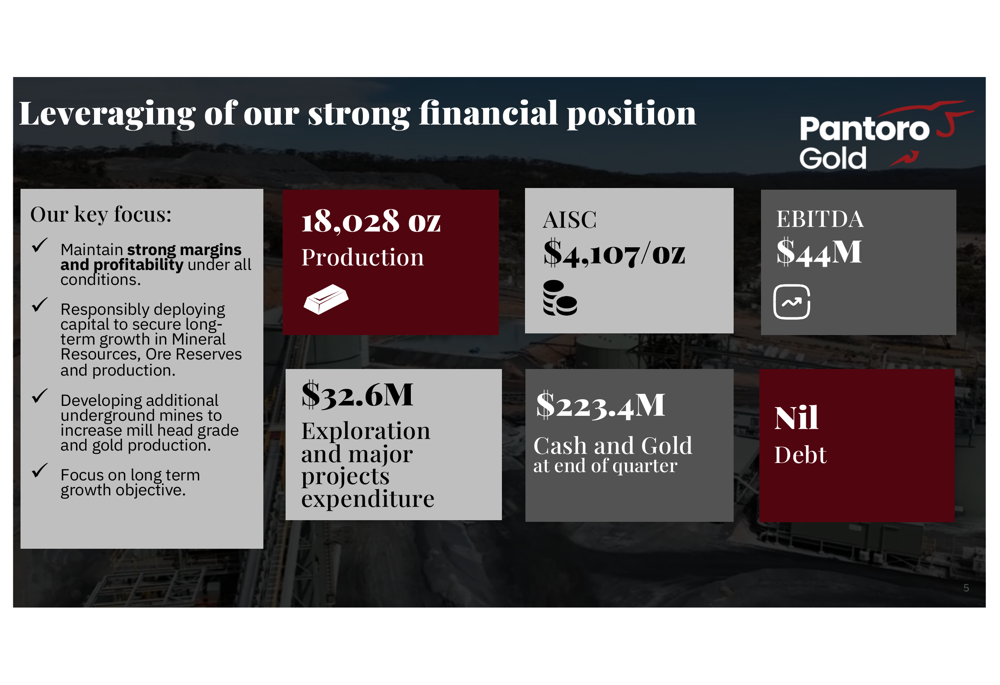
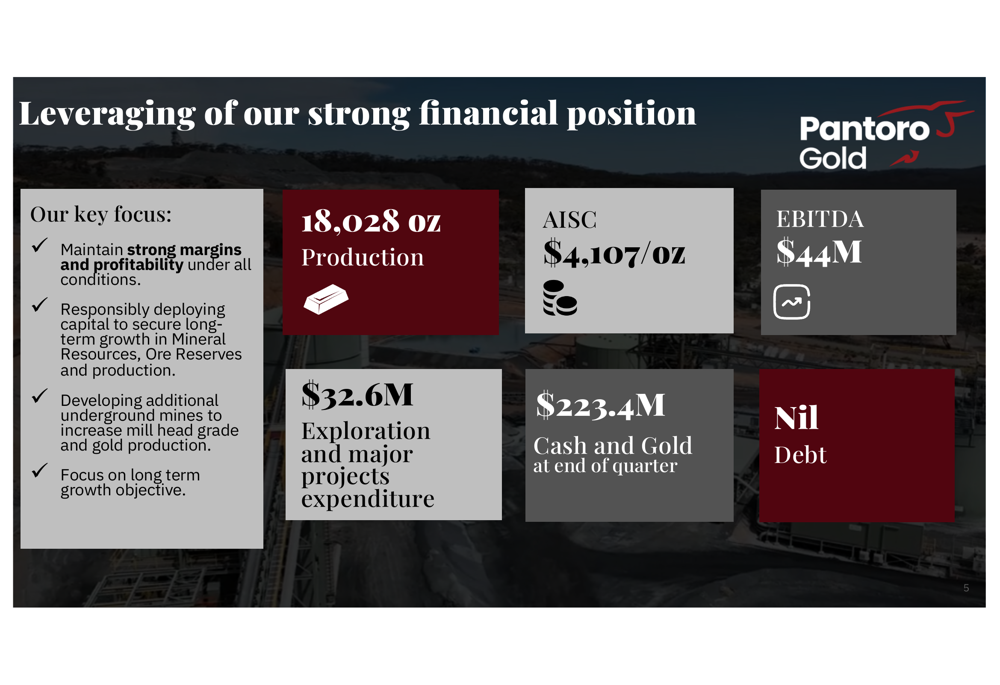
Pantoro June Q4 2026 slides: production rises, costs elevated

Earnings call transcript: Hexaware cuts 2026 outlook after solid Q2 growth

Seeking Alpha’s transcripts team is responsible for the development of all of our transcript-related projects. We currently publish thousands of quarterly earnings calls per quarter on our site and are continuing to grow and expand our coverage. The purpose of this profile is to allow us to share with our readers new transcript-related developments. Thanks, SA Transcripts Team


Company said changes will streamline its structure.

Kudlow panelists Tim Doescher and Lou Basenese break down the June Jobs Report under President Donald Trump.
Visa on Tuesday announced plans to cut 7% of its workforce, or about 2,600 jobs, as the payment processor moves forward with a push to operate more efficiently.
The job cuts are expected to primarily affect technology and product teams.
“I have deep conviction that we are doing what is right for Visa, our clients and our partners as we continue to focus on driving efficiency across the company in order to reinvest in our highest potential opportunities,” Visa CEO Ryan McInerney wrote in a staff memo.
McInerney said Visa needs to keep evolving in how it operates to seize growth opportunities and stay ahead of industry changes, with the emergence of AI playing a key role in the shift.
VISA, MASTERCARD REACH SWIPE-FEE SETTLEMENT: HOW IT’LL AFFECT YOUR WALLET

Visa is laying off about 7% of its workforce in an efficiency push. (iStock)
The layoffs underscore how companies are translating investments in artificial intelligence (AI) into workforce changes, raising concerns about how the technology will impact jobs while driving productivity and profitability.
While AI has helped cut repetitive tasks and speed up product development, it wasn’t the sole factor for Visa’s job cuts, according to Bloomberg News, which first reported the layoffs, citing a person familiar with the company’s rationale.
According to the company’s annual report for 2025, Visa had around 34,100 employees during its 2025 fiscal year, which was an increase of about 8% year over year.
‘GETTING FILTERED OUT’: YOUNG AMERICANS STRUGGLE TO LAND JOBS IN THE NEW HIRING LANDSCAPE
| Ticker | Security | Last | Change | Change % |
|---|---|---|---|---|
| V | VISA INC. | 368.73 | +2.14 | +0.58% |
“We don’t view this as a material event, as it is just one of the best-run companies in the world tweaking headcount and costs and reallocating money and resources into areas of higher growth and returns,” Evercore ISI analysts said in a note.
Visa’s job cuts come about six months after its closest peer made a similar move to scale back its workforce.
Earlier this year, payments industry rival Mastercard announced plans to lay off 4% of its global workforce, as it cited a need to refocus corporate investments in different areas. Fintech firm Block also said in February it would cut nearly half of its workforce, or about 4,000 jobs.
ZUCKERBERG PREDICTS MORE JOBS AND ENTREPRENEURSHIP IF SUPERINTELLIGENCE IS WIDELY DISTRIBUTED

Visa and other payments industry firms are scaling back their workforces amid the rise of AI. (iStock)
Visa operates a digital payments network across over 200 countries and territories and is used by billions for everyday transactions, giving it protection from potential economic downturns.
The business model is insulated because it relies on transaction volumes rather than credit risk, allowing strength at the upper end of the income spectrum to offset softness at the bottom end.
“As a result of the choices we have made over the past few years, we are entering a new era in commerce with a business that has real momentum,” McInerney said in the memo.
GET FOX BUSINESS ON THE GO BY CLICKING HERE
Reuters contributed to this report.
Business
Oil Price Today (July 30): Crude oil dips below $90 after 8% surge on Wednesday. Here’s why

Crude oil price on July 30
Brent crude futures were down $1.29, or 1.42%, at $89.45 a barrel. U.S. West Texas Intermediate (WTI) crude slipped 56 cents, or 0.66%, to $83.90 a barrel.
In the previous session, Brent had surged 7.91% while WTI climbed 6.56%, marking one of the biggest jumps during the Iran war. The rally had reversed Tuesday’s 5% decline, which followed a brief pause in hostilities in the five-month conflict.
Preliminary shipping data showed that 39 commodity vessels passed through the Bab el-Mandeb Strait into the Red Sea on Tuesday, the highest count since July 19. At the same time, only a handful of ships continued to transit the Strait of Hormuz.
Also read: Oil crosses $100: A ‘perfect hurricane’ can trigger bigger shock soon
The Strait of Hormuz is the world’s most important oil shipping route and had previously handled around one-fifth of global oil and gas flows. The passage has remained largely blocked since the U.S.-Iran war began in February, despite repeated efforts to secure a diplomatic agreement that would allow ships to move through the strait.
Meanwhile, U.S. and Saudi strikes targeted Iran-backed paramilitary forces in Iraq on Wednesday. It was the first time Saudi Arabia had publicly joined U.S. air strikes, with the action carried out in response to drone attacks launched from Iraq on Saudi oil facilities.
The strikes marked a return to U.S. military action in the region after US President Donald Trump called off a bombing campaign over the weekend because of dwindling munitions. Iran also said it had attacked U.S. bases in Jordan and struck three tankers transiting the Strait of Hormuz through what it described as an unauthorized route.
Where are prices headed?
The direction of oil prices will depend heavily on how long the disruption lasts. JPMorgan estimates that every additional month of supply disruption could add around $7 to $8 a barrel to Brent prices. A three-month disruption could push monthly average Brent prices to about $114 a barrel.
Goldman Sachs has similarly warned that Brent could climb to $120 a barrel if shipping disruptions through the Strait of Hormuz, the world’s most important oil transit route, continue. Its base case is still that tensions in the Middle East will eventually ease.
Under that scenario, Goldman Sachs expects Brent to average $80 a barrel in the fourth quarter and $75 next year. However, the bank said the risks to those forecasts remain “tilted to the upside”, pointing to the possibility that shipping disruptions could persist through both the Strait of Hormuz and the Red Sea.
Anindya Banerjee, Head of Commodity Research at Kotak Securities, said geopolitical developments were once again driving crude oil prices. “Any strike on major Gulf export infrastructure could force a retest of $95-100 and beyond,” he said.
Read more: Indian refiners scout new crude sources as Gulf risks rise
According to Banerjee, the market has shifted its focus from the military action itself to the declining chances of a diplomatic breakthrough. Tehran has set new conditions for restarting negotiations, he said, while successive developments have delayed the return of normal tanker traffic through the Strait of Hormuz. Shipping activity through the waterway remains well below pre-war levels.
Tanker traffic through the Strait of Hormuz is still far below normal, keeping the underlying supply risk in place despite the easing of immediate price pressure.
(Disclaimer: Recommendations, suggestions, views and opinions given by the experts are their own. These do not represent the views of Economic Times)
Adani Ports shares shed 3% after Q1 results. Here’s why Nomura and other brokerages see up to 24% upside

Robinhood prediction markets drive $1.31B quarter

Commonwealth Games 2026: Angharad Evans becomes Scotland star


-

 Fashion5 days ago
Weekend Open Thread: Brooks Brothers
-
 Sports3 days ago
Commonwealth Games boxing: Jadumani Singh seals dominant 5-0 win over Pakistan’s Sumama Rehman to enter quarter-finals | Commonwealth Games News
-

 Tech3 days ago
Intel is reversing course and bringing hyper-threading back to its server chips
-

 Business8 hours ago
Why Trees Belong on the Risk Register
-

 Politics3 days ago
Luke Littler dismantles Gerwyn Price to retain title in Blackpool
-

 Crypto World4 days ago
Ripple bought a bank in pieces. The $4 billion audit
-
 Entertainment6 days ago
A New Post-Apocalyptic Gundam Anime Series Blasts Into SDCC
-

 News Videos3 days ago
BITCOIN JUST ENTERED THIS CRITICAL ZONE…
-

 Politics2 days ago
The Part of the Electric Transition Nobody Wants to Discuss
-

 Fashion6 days ago
16 Dresses for the High Summer Event
-

 Sports6 days ago
2026 3M Open leaderboard: Scottie Scheffler finds putter in Round 1, sits three back
-

 News Videos6 days ago
The Peugeot Family: How 200 Years of an “Old Money” Dynasty Died in A Boardroom
-

 Business23 hours ago
Major shareholder moves on Canyon
-

 Crypto World4 days ago
XRP Ledger adds $2.6B as RWA inflows rank second
-

 Politics4 days ago
Spain sweeps the board at 2026 World Cup with individual awards
-

 Crypto World7 days ago
Uniswap (UNI) pushes deeper into tokenized RWAs with permissioned trading pools
-
 Entertainment1 day ago
‘Stargate’ Creator’s New Sci-Fi Series Returns for Season 3 Tomorrow
-
Crypto World7 days ago
SEC Agrees to Overhaul Recordkeeping After Settling Coinbase Lawsuit Over Gensler’s Lost Texts
-

 Tech5 days ago
Anthropic launches Claude Opus 5, a cheaper AI model for coding, agents and enterprise workflows
-

 Entertainment4 days ago
Sara Gilson Killed By Husband After Viral “Pedophile” TikTok Video
You must be logged in to post a comment Login