
Business
Intelligent Bio Solutions Inc. (INBS) Discusses FDA 510(k) Submission and Progress of Intelligent Fingerprinting Drug Screening System Transcript


Valter Pinto
Good afternoon, everyone, and welcome to the Intelligent Bio Solutions fireside chat. Thank you all for joining us today. My name is Valter Pinto, Managing Director at KCSA Strategic Communications. And today, I’m joined by Harry Simeonidis, President and CEO; and Peter Passaris, Vice President of Product Development. Earlier this month, the company submitted its 510(k) premarket notification package to the FDA for its intelligent Fingerprinting Drug Screening System, seeking clearance from the FDA to enter the U.S. market.
We’re hosting today’s call for management to have an opportunity to provide investors with more detail as to where we stand in the FDA process, more information regarding the data submitted to the FDA and provide a look ahead as to what to expect next. Before we begin, quickly, I’d like to remind everyone that statements made during today’s fireside chat may be deemed forward-looking statements within the meaning of the safe harbor of the Private Securities Litigation Reform Act of 1995.
Actual results may differ materially due to a variety of risks, uncertainties and other factors. For a detailed discussion of some of the ongoing risks and uncertainties in the company’s business, I refer you to the company’s reports filed periodically with the SEC, including its annual report on Form 10-K and for the fiscal year ended June 30, 2026, and the investor materials under the company’s Investor Relations website.
The company undertakes no obligation to update or revise any forward-looking statements, whether as a result of new information, future events or otherwise, except as required by law. I want to thank

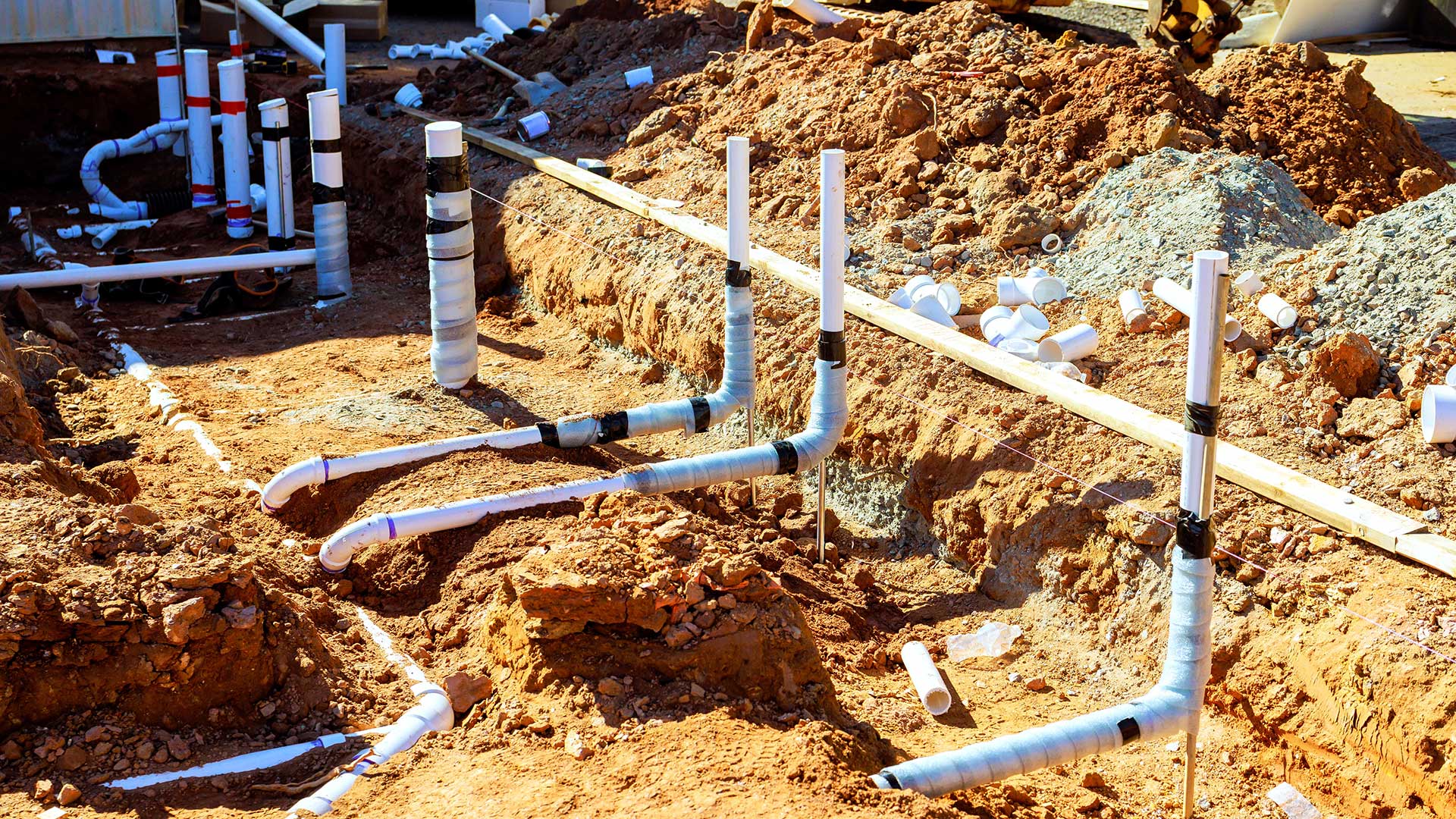
The choice is real, but it is narrower and more procedural than most first-time developers expect, and the parts of the job that can be competed for are defined by the water company that will eventually own the pipe.
Understanding where that line falls is the difference between a useful second price and a wasted fortnight. Plenty of developers find out about self-lay halfway through the process, after a quotation has already landed, and assume the option has closed. Usually it hasn’t.
Who is allowed to lay a new water main
Work on a new water connection splits into contestable and non-contestable elements. Contestable work can be carried out by the water company, by an accredited self-lay organisation appointed by the developer, or in some cases by a new appointee, and it typically covers the new mains, the service pipes and much of the on-site construction. Non-contestable work stays with the appointed water company, and in most regions that includes the final connection into the live network and the point at which water is let into the new main.
The precise boundary is not fixed in legislation. Each water company publishes an addendum to the sector code of practice for self-laying of water mains and services, setting out which activities it treats as contestable in its own area. A developer building across two supply areas can genuinely face two different answers to the same question, so the sensible first move is to pull the relevant company’s current developer services and self-lay documentation before pricing anything. Ofwat’s overview of the connections market is a reasonable starting point for anyone meeting the terminology for the first time.
Adoption is the other half of the arrangement. Whoever installs the pipework, the water company adopts the finished infrastructure into the public network once it complies with the adoption agreement and the associated testing and assurance requirements. Ofwat’s Code for Adoption Agreements sits behind that process, requiring companies to publish sector guidance and model adoption agreements that developers and self-lay organisations can work from.
What WIRS accreditation covers, and what it doesn’t
The Water Industry Registration Scheme is the accreditation water companies rely on when deciding whether a contractor’s work can be adopted, and it is currently administered by LRQA. Assessment covers the technical areas a self-lay organisation operates in, and the scheme exists so that an accredited firm is recognised across water companies rather than having to secure approval company by company. A developer can check any contractor’s current status on the WIRS register in about a minute.
Accreditation scope is where care is needed. WIRS registration is granted for specific activities, so a contractor accredited for service pipes is not automatically accredited for new mains, and a firm accredited for construction may not hold every category a particular scheme requires. Asking which categories a contractor holds, rather than asking whether they are accredited, is the question that separates a straightforward job from a stalled one. Accreditation also does not override the water company’s own technical standards, witnessing requirements or defect liability terms, all of which still apply.
Taking approved drawings to an accredited contractor
The most common misunderstanding in the whole process concerns approved drawings. A developer who has applied to the water company, paid for the scheme to be worked up and received approved drawings alongside a quotation has not committed to that company carrying out the construction. Approval attaches to the scheme, not to the contractor, and the contestable elements remain open.
That matters commercially because the approved drawings are a complete package: pipe sizes, routes, materials, fittings and connection points are all fixed and signed off. A developer holding those drawings can send them out for pricing exactly as any other subcontract package would go out, and compare like with like rather than comparing two different interpretations of the same site. Contractors working in this market, among them the Hertfordshire-based utility contractor McFadden Utilities, will provide an alternative quote for a new water connection against drawings the water company has already approved, with the water company retaining approval, inspection and adoption of the finished works throughout. The initial approach to the water company still comes from the developer, and the accredited contractor picks the process up from the point where the scheme is agreed.
None of this is adversarial. Water companies set the standards the assets have to meet and then carry those assets for the next century, which is why the assurance requirements are as detailed as they are. Many accredited self-lay organisations also work under contract to water companies on repair, maintenance and mains work, so the same crews turn up on both sides of the arrangement. Competition in this market was designed into it by the regulator rather than fought for against the companies.
Where the money and the time actually move
Cost differences in self-lay come from three places, and claims of dramatic savings usually rest on only one of them applying. The first is the construction price itself, which is a straightforward competitive tender once the drawings are fixed. The second is the asset payment, the sum a water company pays for the value of the infrastructure it adopts, which offsets against the developer’s costs and is calculated under the company’s published charging arrangements. The third is coordination, and on multi-utility sites it is often the largest of the three, because a single groundworks operation covering water alongside other services means one set of excavations, one reinstatement and one traffic management exercise rather than three.
Programme is the other reason developers look at self-lay, and the honest position is that self-lay moves the construction window into the developer’s control while leaving the application, approval and adoption stages where they always were. A contractor cannot compress the water company’s approval process, and any firm suggesting otherwise is worth a second look.
The questions worth asking before appointing
Four checks cover most of the risk. Confirm the contractor’s WIRS categories match the actual works. Confirm which elements the local water company treats as non-contestable, and who is pricing them. Confirm who is responsible for testing, chlorination, as-built records and defect remedy during the liability period. And confirm the reinstatement specification, because unsatisfactory reinstatement on an adopted highway becomes the developer’s problem long after the water is flowing.
Self-lay is not the right answer to every scheme. For a single connection off an existing main in a straightforward location, the water company’s own quotation is frequently the simplest route and the difference is marginal. For anything involving new mains, phased plots, awkward crossings or a tight build programme, a second price from an accredited contractor is cheap information, and the drawings a developer already holds are all that’s needed to get one.

A South West shire will lobby the state government to build a ring road to alleviate a booming town’s congestion and road safety woes.

Keeley Dividend ETF Q2 2026 Commentary

OpenAI to preview GPT-6 Cyber within days, Fortune reports

Oil jump sends 30-year yields to two-decade high

S&P 500 ends marginally lower as investors focus on US-Iran war
Business
LAMDA Development S.A. 2026 Q2 – Results – Earnings Call Presentation (OTCMKTS:LMDFF) 2026-09-24

Seeking Alpha’s transcripts team is responsible for the development of all of our transcript-related projects. We currently publish thousands of quarterly earnings calls per quarter on our site and are continuing to grow and expand our coverage. The purpose of this profile is to allow us to share with our readers new transcript-related developments. Thanks, SA Transcripts Team

Revolution Medicines director Elizabeth Anderson sells $1.96m in stock

Darden Restaurants shareholders elect directors and approve auditor at annual meeting

It’s entirely possible other governments have been the victim of rogue AI agents.
Former Australian government cybersecurity adviser Alastair MacGibbon told the BBC he’d heard whispers that several others have been notified of similar recent breaches by OpenAI agents.
“Some have chosen to not be public – that’s every government’s choice on how it wants to handle these things,” the CyberCX chief strategy officer said. “The [Australian] government chose a time to release this to gain maximum publicity which is their wont to do.”
Revealing a data breach can of course be a risky strategy for governments – it leaves them vulnerable to criticism that their security systems aren’t up to scratch. But the fact that no sensitive information was leaked put Australia in a stronger position to use the incident.
“Nobody has died,” says the University of Queensland’s associate professor Michael Noetel, who studies AI risks. “This is another canary in the coal mine. This sort of loss-of-control incident, even though it’s minor now, is what CEOs are worried about getting worse over time.”
Though Australia has made a name for itself by taking a stand against social media companies, taking up the AI mantle now is another way for Australia to rein in big tech, says Tama Leaver, professor of internet studies at Curtin University in Perth.
“It’s impossible to say for sure, but it seems incredibly likely that this was very carefully planned.”

XRP Biggest Secret Just Got EXPOSED.

They said it: Leaders at the UN, in their own words

what the self-lay market actually offers developers




-

 Fashion6 days ago
Weekend Open Thread: Talbots – Corporette.com
-

 Tech4 days ago
Researchers escape OpenAI Codex sandbox to run commands on host
-

 Crypto World2 days ago
Goldman Sachs and Deutsche Bank Agree: The S&P 500 Rally Isn't Over
-

 Fashion13 hours ago
8 iPhone Accessories That Add Personality
-

 Crypto World4 days ago
Who Needs CLARITY Anyway? ARB Could See 70X Increase: Hodler’s Digest
-

 Crypto World6 days ago
Circle launches Arc Studio AI agent for building onchain apps
-
 NewsBeat6 days ago
Trump says US has reached an agreement to take permanent control of Greenland’s security
-

 Crypto World6 days ago
Trading Bitcoin on Robinhood? Why 2% Spread Has Traders Worried
-

 Crypto World6 days ago
Bitcoin price breaks channel as RSI climbs to 63
-

 Business4 days ago
Analog Devices (ADI) Bets $1.35 Billion on Chips that Let Machines Think for Themselves
-

 Tech3 days ago
Google’s $899 Googlebook is a bet that you’ll buy a new laptop for Gemini
-

 Tech5 days ago
Trump suggests rebranding AI with a new name, says he’s also creating an AI Force
-

 Crypto World4 days ago
Coinbase, Robinhood, Circle Seen as Tokenized-Stock Winners
-
 Business2 days ago
Oil Price Today (September 23): Crude oil below $100 on hopes of US-Iran talks. What did Trump say?
-

 Crypto World2 days ago
Trump-Xi Polymarket Odds for Handshake Hit 50%
-

 Crypto World6 days ago
World Money launches in 150+ countries with Stripe
-

 Crypto World7 days ago
Silver prices recover quickly, hitting weekly high today
-

 Crypto World2 days ago
This Bearish Netflix Stock Trade Can Cash In On Video Streaming Giant’s Woes
-

 Crypto World1 day ago
Bitcoin Threatens Sub-$84,000 Breakdown as Long Liquidations Spike
-

 Crypto World1 day ago
Crude Oil Prices Pressured by Diplomatic Hopes in the Middle East
You must be logged in to post a comment Login