

Business
Intercontinental Energy eyes data centres for giant WA green energy projects




Gerard Daniels’ founders believe the firm’s formula is durable as they step back from control after 40 years in charge.

Workers and families held a demonstration with 167 jobs at risk at the site in Launceston.


Darci Vetter explains how shifting trade policy and tariffs are shaping global commerce and what food businesses should monitor.

South Korea’s finance ministry said on Sunday it will step up oversight of offshore currency derivatives. The Philippines has asked banks to ensure non-deliverable forward contracts are limited to economic purposes, while India has tightened limits on banks’ net open position to $100 million.
Indonesia, which unexpectedly raised interest rates on Tuesday, has said its central bank is active in currency markets “around the world, around the clock” to support the rupiah.
The warnings underscore concerns among Asian policymakers that offshore trading is adding to pressure on currencies. The oil-price shock from the US-Iran conflict has worsened the problem, hitting the region’s energy-importing nations. Indonesia’s rupiah breached the closely watched 18,000-per-dollar level, the Korean won has fallen to its lowest since the global financial crisis, while the Indian rupee and Philippine peso have hit record lows.
The efforts to curb offshore forex trading may help ease some pressure, but analysts doubt they can reverse the trend on their own.

“It may have some impact, but ultimately for the measure to be successful there needs to be a shift in the fundamentals as well,” said Michael Wan, senior currency analyst at MUFG Bank Ltd.
 Bloomberg
Non-deliverable forwards are cash-settled derivative contracts that allow investors to hedge or speculate on currencies outside local markets. They make up for about 4% of the global $10 trillion a day FX market, according to Deutsche Bank AG, though they can play an outsized role in Asia where restrictions on convertibility are common.
That means activity driven out of global financial hubs such as Singapore, London and New York can sway local markets.
Authorities across the region have tried to reduce this influence during periods of currency stress.
India allowed local banks to participate in the NDF market in 2020 and has since tried to attract activity onshore to its finance hub at Gujarat International Finance Tec-City, or GIFT City. South Korea has opened its forex market to overseas investors and extended trading hours, while Thailand has allowed non-resident corporates to access onshore baht liquidity and hedge freely.
“The reason the NDF market exists is due to restrictions in the onshore market,” said Khoon Goh, head of Asia research at Australia & New Zealand Banking Group. If those restrictions are eased and there is enough liquidity, the need for NDFs will gradually fade, as seen in the case of the Singapore dollar and Thai baht, he said.
Short-Dollar Book
Yet, the war-induced crisis has left some central banks with little choice but to intervene in those very markets they’ve been warning against. That defense has contributed to the drop in foreign-exchange reserves in the region.
The Reserve Bank of India has been particularly active, selling dollars primarily in shorter maturities, traders say. The central bank’s short dollar book, which includes offshore derivative positions, has likely surged to around $115 billion. Bank Indonesia has also sold dollars overseas to stabilize the currency.
The interventions have helped reduce outsized spillovers from offshore to local markets. In India’s case, the central bank has often been seen intervening just before onshore open to ease pressure on the rupee.
Some investors say currency weakness is the result of economic problems in individual countries rather than offshore trading.
India is facing persistent capital outflows, with global funds pulling a record $30 billion from stocks this year, spurring recent efforts to attract overseas capital. In Indonesia, investors are growing wary of the economic outlook and fiscal trajectory under President Prabowo Subianto.
The Philippines is facing a renewed inflation shock from high oil prices, while South Korea has seen over $78 billion of net foreign investment exit its stock market so far in 2026 despite a rally to record highs earlier this month fueled by retail craze for artificial-intelligence stocks.
The steps central banks have taken, including intervening in offshore markets, are aimed at curbing sharper market moves, said Lavanya Venkateswaran, senior economist at Oversea-Chinese Banking Corp. “We still think that policy rate hikes are on the cards” for India, the Philippines and Indonesia, she said.
Business
Good news for Indian mutual fund investors: SpaceX could join Nasdaq 100 after 15 trading days

According to Jefferies strategist Chris Wood, recent rule changes by Nasdaq could allow SpaceX to enter the Nasdaq-100 index after just 15 trading days, compared with the earlier requirement of a three-month waiting period.
The change could create sharp demand for the stock, as passive funds that track the Nasdaq-100 would be required to buy SpaceX shares once it becomes part of the benchmark.
In his latest GREED & fear note, Wood said Nasdaq has removed minimum free-float requirements for large IPOs and introduced a “fast index inclusion” framework. Under the new rules, mega-cap listings such as SpaceX can enter the Nasdaq-100 shortly after listing.
What makes the situation unusual is that only about 4.2% of SpaceX shares will be freely tradable after the IPO. Despite this, the company will reportedly be treated as having a 12.7% free float for index-weight calculation purposes.
Wood noted that such fast-tracking of a mega IPO into major indices is unprecedented in the US market and could force passive funds to accumulate the stock regardless of valuation concerns.
The development is also relevant for Indian investors.The Nasdaq-100 includes some of the world’s largest technology companies, such as Apple, Microsoft, Nvidia, Amazon, Alphabet and Meta. If SpaceX joins the benchmark, Indian investors holding Nasdaq-100-linked mutual funds could gain indirect exposure to the aerospace and satellite communications giant.
India currently has five mutual fund schemes tracking the Nasdaq-100 Total Return Index, including offerings from Axis Mutual Fund, ICICI Prudential Mutual Fund, Motilal Oswal Mutual Fund and Navi Mutual Fund.
However, fresh investments into several overseas index funds remain restricted after fund houses approached regulatory overseas investment limits.
SpaceX has already generated strong investor interest ahead of its listing. Reports suggest demand has exceeded the number of shares on offer, while the company is expected to rank among the 10 most valuable listed firms in the US from day one.
For investors, the combination of a record IPO and potential early index inclusion means the stock could see a second wave of demand soon after listing, driven not by active investors but by passive funds mandated to replicate benchmark weights.

Benchmark raises Lionsgate Studios stock price target on film slate
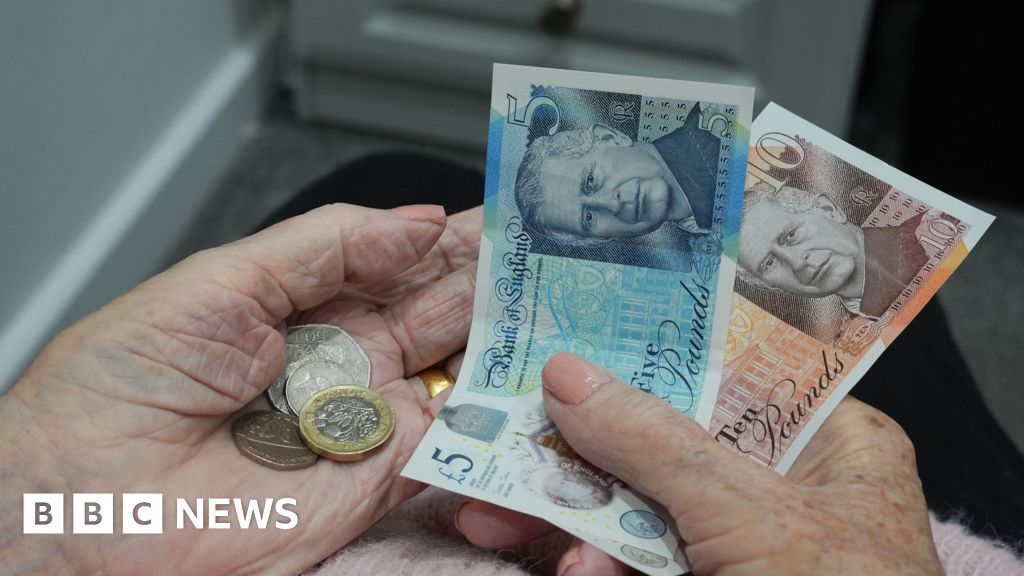
Many of the completed payments have gone to low income families with surging heating oil costs.

Lesaka Technologies: The Fintech Re-Rating Nobody Sees
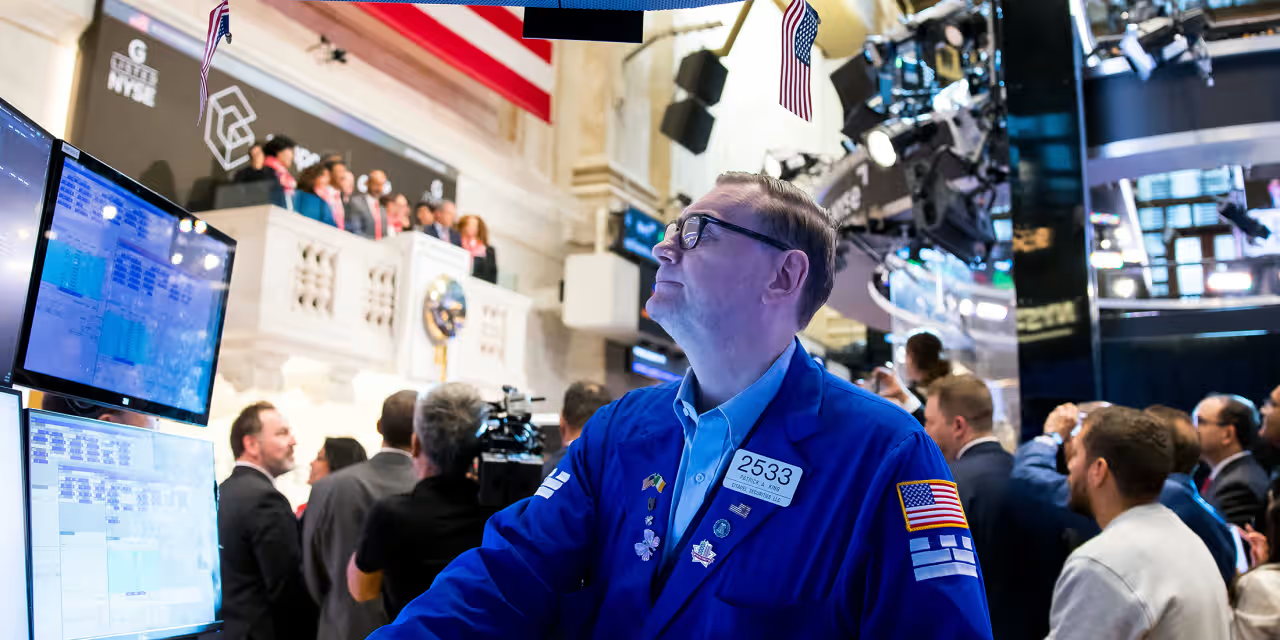
Oracle, Intel, Micron, Super Micro, Lumentum, and More Stocks That Explain Today’s Market

The 2026 FIFA World Cup, the largest in the tournament’s history with 48 teams and 104 matches, officially begins on Thursday, June 11, when co-host Mexico faces South Africa at Estadio Azteca in Mexico City. The multi-nation event, hosted by Canada, Mexico and the United States, promises a month of global football action culminating in the final on July 19 at the New York New Jersey Stadium.
The opening match is scheduled for 3 p.m. local time in Mexico City (Central Daylight Time). This translates to convenient viewing windows for much of North America while requiring adjustments for international audiences across different time zones.
Opening Match Times by Major Zones
- Mexico City (CDT): 3:00 p.m. on June 11
- U.S. Eastern Time (EDT): 4:00 p.m. on June 11
- U.S. Central Time (CDT): 3:00 p.m. on June 11
- U.S. Mountain Time (MDT): 2:00 p.m. on June 11
- U.S. Pacific Time (PDT): 1:00 p.m. on June 11
- London (BST): 8:00 p.m. on June 11
- Sydney (AEST): 6:00 a.m. on June 12
- Tokyo (JST): 4:00 a.m. on June 12
- Dubai (GST): 11:00 p.m. on June 11
- São Paulo (BRT): 5:00 p.m. on June 11
A second Group A match follows later that evening: South Korea vs Czechia at 8 p.m. local time in Guadalajara (10 p.m. EDT / 7 p.m. PDT).
Full Early Schedule and Time Zone Adjustments
The tournament spreads matches across three host nations, creating a mix of prime-time viewing for North American audiences and challenging hours for fans in Europe, Asia and Australia. FIFA and broadcasters have scheduled many key fixtures to balance accessibility.
Friday, June 12 features two co-host openers:
- Canada vs Bosnia and Herzegovina at 3 p.m. EDT in Toronto
- United States vs Paraguay at 9 p.m. EDT (6 p.m. PDT) in Los Angeles
These times allow strong domestic audiences while international viewers adjust for time differences. European fans may face late-night or early-morning kickoffs for many matches, while Asian and Australian supporters often deal with overnight viewing.
Subsequent days maintain a steady rhythm of three to four matches, with kickoff times staggered to maximize global reach. The group stage runs through June 27, followed by the round of 32 from June 28 to July 3.
Why Time Zones Matter for Fans
The 2026 World Cup’s tri-nation format spreads venues from Vancouver on the Pacific coast to Miami in the east and Mexico City in the south. This geographic distribution creates natural time zone variety but also logistical challenges for traveling fans and broadcasters.
For U.S. viewers, most matches fall within reasonable hours, particularly on the East and Central coasts. Pacific Time audiences will see many afternoon and evening games. International broadcasters have adjusted schedules and provided extensive on-demand options to accommodate global audiences.
Fans in Europe should prepare for some matches starting as early as 2 p.m. or as late as 3 a.m. local time, depending on the venue. Asian viewers, particularly in East Asia, will often tune in during early morning or late night hours. Australian supporters face similar adjustments, with many key games airing in the early morning.
Digital tools, including FIFA’s official app and world clock converters, help fans plan viewing around their local time zones. Many networks offer delayed broadcasts or highlights packages for those unable to watch live.
Broadcast and Viewing Options
Major U.S. rights holders FOX and Telemundo will televise games, with streaming available on Peacock and other platforms. International broadcasters vary by region, often providing localized commentary and time-zone-adjusted schedules.
For viewers outside primary broadcast areas, official FIFA digital platforms and authorized streaming services offer legal viewing options. Fans are encouraged to use verified sources to avoid illegal streams and support the tournament’s commercial ecosystem.
Tournament Structure and Viewer Tips
The expanded 48-team format ensures more nations participate, increasing global interest and viewership projections. The group stage features 12 groups of four teams, with the top two from each group plus the eight best third-placed sides advancing to the round of 32.
To maximize enjoyment, fans should:
- Check local listings well in advance for exact broadcast times.
- Use world clock apps to convert kickoff times accurately.
- Plan around work or sleep schedules for inconvenient slots.
- Join official fan communities or watch parties for shared experiences.
The opening weekend sets an exciting tone, with co-host matches drawing massive domestic audiences. Subsequent weeks feature high-stakes group battles leading into the knockout stages.
Historical Significance and Global Reach
The 2026 edition marks the first World Cup hosted by three nations and the largest ever. It builds on the success of previous tournaments while introducing new logistical and viewing challenges due to the multi-venue, multi-time-zone setup.
Viewership is expected to break records, with billions tuning in across television, streaming and digital platforms. The tournament celebrates football’s global appeal while showcasing North America’s growing infrastructure and fan culture.
Practical Advice for International Audiences
European fans may benefit from afternoon and evening matches on certain days, while Asian viewers can use morning hours for live action. Australian supporters should consider setting alarms for early games or relying on highlights and replays.
Workplaces and schools in some regions may see reduced productivity during key matches, with many employers offering flexible viewing options or watch parties. Families can plan group viewing sessions around school holidays and convenient local times.
Looking Ahead to the Full Tournament
As the opening match approaches, excitement builds for what promises to be a landmark event. The schedule balances competitive integrity with global accessibility, ensuring fans worldwide can follow their teams despite time differences.
The 2026 World Cup represents a celebration of football’s unifying power across continents and cultures. With 48 teams and 104 matches spread over more than a month, there will be compelling action almost daily, offering something for every fan regardless of time zone.
Whether watching from Mexico City at 3 p.m. local time or Sydney at 6 a.m., the tournament delivers shared moments of drama, skill and national pride. As June 11 nears, global audiences prepare for the start of what could be one of the most memorable World Cups in history.
The multi-time-zone format, while complex, ultimately broadens access and engagement. Fans are encouraged to use official resources, plan ahead and embrace the unique viewing experience that comes with a tri-nation hosting model. The 2026 World Cup is set to captivate billions, proving once again that football truly transcends borders and clocks.
Inside Bel-Air Country Club, glitzy host site of Curtis Cup this week
Coram raises $35M to turn cameras into AI detectives

XRP TODAY !!!!! ANY MINUTE FROM NOW ON !!!!!



-

 Fashion6 days ago
Weekend Open Thread: Evereve – Corporette.com
-
 Crypto World6 days ago
Jensen Huang Approves Samsung, SK Hynix, and Micron for NVIDIA (NVDA) HBM4 Memory Supply
-
 Entertainment5 days ago
The Best Mystery Series of All Time Is Surging on Streaming 30 Years After It Ended
-

 Crypto World3 days ago
Anatomy of the June crypto crash: Fed, Iran, Saylor
-

 NewsBeat4 days ago
Alexander Zverev wins the French Open to finally earn a 1st Grand Slam title
-

 Tech6 days ago
Suspicious Polyfill login prompts pop up on Toshiba, Muji websites
-
 Crypto World5 days ago
Senator Cynthia Lummis Calls CLARITY Act the Most Consequential Financial Legislation of This Generation
-

 Tech4 days ago
Microsoft unveils seven homegrown AI models in new bid for ‘long term self-sufficiency’
-

 Tech6 days ago
Microsoft launches MXC, an OS-level sandbox for AI agents, with OpenAI and Nvidia already on board
-

 Business6 days ago
(VIDEO) Justin Bieber Delivers Surprise Happy Birthday Serenade to Diners at Los Angeles Mexican Restaurant
-
 Business5 days ago
The Pain Points Taking a Fragile Tech Rally Down a Notch
-

 Business3 days ago
High Stakes for Wembanyama as New York Pushes for 3-0 Lead
-
 Crypto World3 days ago
Eli Lilly (LLY) Stock Surges 4% Following Breakthrough Sleep Apnea Trial Results
-

 Tech6 days ago
Von der Leyen’s AI envoy pick draws conflict-of-interest fire
-

 Tech6 days ago
Meta steals a tactic from Tesla and builds data centers in tents
-
Crypto World6 days ago
LBank Surpasses 25 Million Users Worldwide as AFA Partnership Continues to Drive Global Growth
-

 Tech5 days ago
Hackers now exploit SolarWinds Serv-U flaw to crash servers
-

 Crypto World4 days ago
Trump’s AI Ownership Plan Could Benefit Anthropic at OpenAI’s Expense
-
 NewsBeat4 days ago
Alexander Zverev conquers demons and outlasts Flavio Cobolli to win French Open for first major title
-
 Sports2 days ago
Bangladesh beat Australia after 20 years in ODIs, register only their second win over six-time world champions | Cricket News
You must be logged in to post a comment Login