
Business
Invesco Charter Fund Q2 2026 Commentary


Invesco is an independent investment management firm dedicated to delivering an investment experience that helps people get more out of life.Be the first to know! Sign up for Invesco US Blog and get expert investment views as they post.Disclosure for all Invesco US articles: Before investing, carefully read the prospectus and/or summary prospectus and carefully consider the investment objectives, risks, charges and expenses. The information provided is for educational purposes only and does not constitute a recommendation of the suitability of any investment strategy for a particular investor. Invesco does not provide tax advice. The tax information contained herein is general and is not exhaustive by nature. Federal and state tax laws are complex and constantly changing. Investors should always consult their own legal or tax professional for information concerning their individual situation. The opinions expressed are those of the authors, are based on current market conditions and are subject to change without notice. These opinions may differ from those of other Invesco investment professionals. NOT FDIC INSURED MAY LOSE VALUE NO BANK GUARANTEE All data provided by Invesco unless otherwise noted. Invesco Distributors, Inc. is the US distributor for Invesco Ltd.’s retail products and collective trust funds. Invesco Advisers, Inc. and other affiliated investment advisers mentioned provide investment advisory services and do not sell securities. Invesco Unit Investment Trusts are distributed by the sponsor, Invesco Capital Markets, Inc., and broker-dealers including Invesco Distributors, Inc. PowerShares® is a registered trademark of Invesco PowerShares Capital Management LLC (Invesco PowerShares). Each entity is an indirect, wholly owned subsidiary of Invesco Ltd. ©2015 Invesco Ltd. All rights reserved.

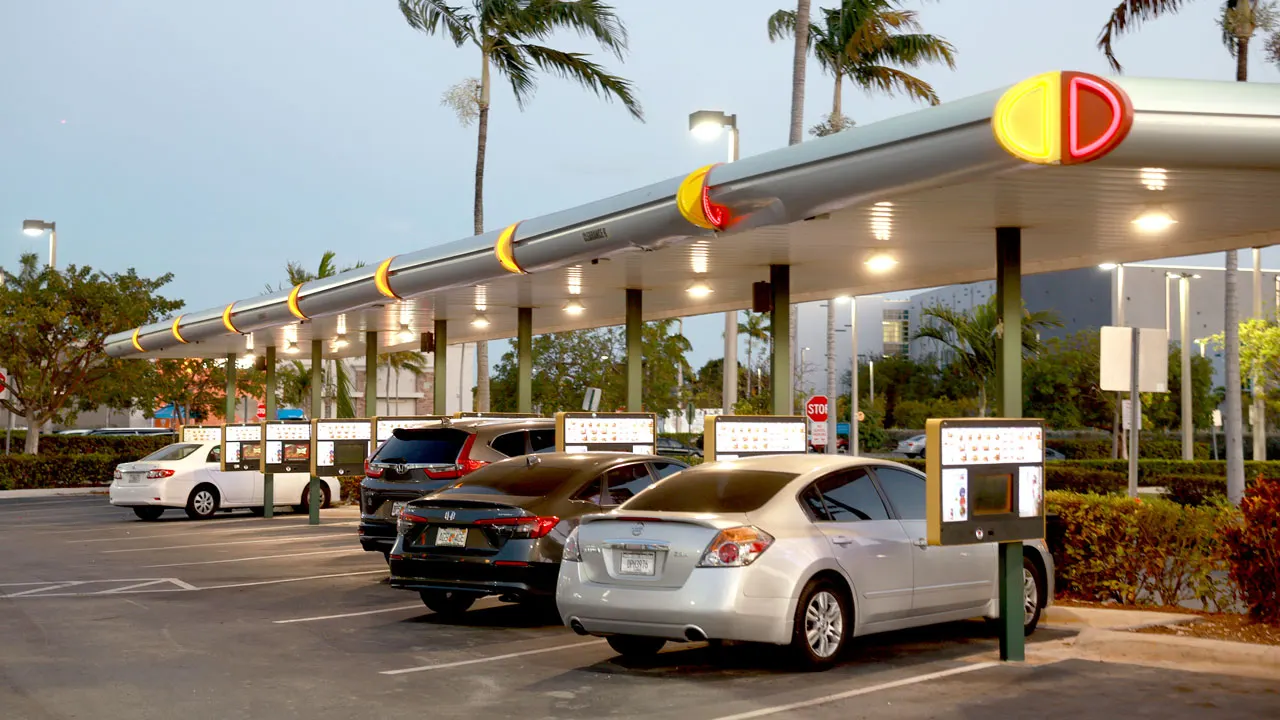
Marion Campbell, Sonic Drive-In’s vice president of integrated marketing and communications, on the fast-food chain’s beverage and fall flavor strategies.
As restaurant chains increasingly turn to specialty beverages to attract customers beyond the traditional meal, Sonic Drive-In believes a business model built around drink customization gives it a head start.
Marion Campbell, Sonic’s vice president of integrated marketing and communications, told FOX Business that the quick-service restaurant industry is still figuring out how to make specialty beverages a bigger part of its business, while Sonic has spent years building customization into its operations.
“I think that the market is just getting started. And QSR in particular is just figuring out a way to serve these types of beverages to their guests and make it a pivotal part of their DNA. It’s already a part of our DNA,” Campbell said.
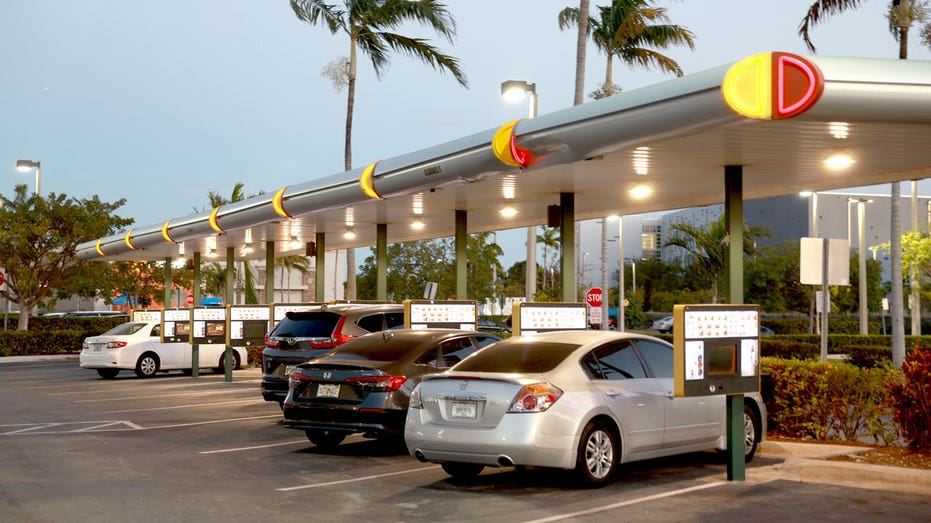
Customers in their vehicles wait for their orders at a Sonic restaurant drive-in on April 17, 2024, in Miami, Florida. (Joe Raedle/Getty Images)
The competition for beverage customers comes as restaurant brands experiment with specialty drinks, customization and limited-time flavors to give consumers additional reasons to visit. Rival fast-food chains McDonald’s, Taco Bell and Jack in the Box each offer their own versions of dirty sodas.
The nonalcoholic beverage market generated $264.1 billion in consumer spending at U.S. foodservice establishments in 2025, accounting for 23% of industry-wide sales, according to data from Technomic. The data also showed that cold beverage spending in 2025 climbed 3.4%, compared with a 1.2% rise for hot beverages, with Technomic saying that “innovation and consumer preference are driving cold beverages to the forefront of market growth.”
KRAFT HEINZ UNVEILS NEW PHILADELPHIA CREAM CHEESE FLAVORS TO WIN BACK SHOPPERS
For Sonic – which operates more than 3,400 restaurants and generates $5.2 billion in annual system sales – drinks can bring customers through its drive-ins even when they aren’t looking for a burger, hot dog or other full meal.
“A beverage-only guest is a very frequent guest. So beverage is always going to play a pivotal role because of the frequency it drives for the business versus just a check driver,” Campbell said.
She added that beverages can also increase how much a customer purchases when paired with food.

Sonic’s seasonal beverage lineup featured in the chain’s “Hotumn” campaign highlighting customizable fall-inspired drinks. (Sonic)
The company’s customization infrastructure has also allowed the chain to capitalize on the popularity of dirty sodas, which typically combine soda with additions such as cream and flavored syrups.
The dirty soda trend has exploded over the past two years, with case volume at quick-service restaurants jumping 318% during that time, according to data from market research firm Circana.
MAJOR BURGER CHAIN IN-N-OUT CHANGES TWO KEY INGREDIENTS, SENDING FANS INTO A FRENZY
“I think dirty sodas is a place we’ve actually played long before they were really deemed dirty sodas,” Campbell said.
Campbell said Sonic was positioned to capitalize on the trend because customers were already accustomed to customizing drinks at its restaurants.
The chain is now using that platform to experiment with new flavors and seasonal products, including its recently launched fall-inspired lineup and banana-flavored offerings.
CHECKERS & RALLY’S CEO SAYS AMERICANS’ DEMAND FOR FAST-FOOD VALUE IS ‘INTENSIFYING’
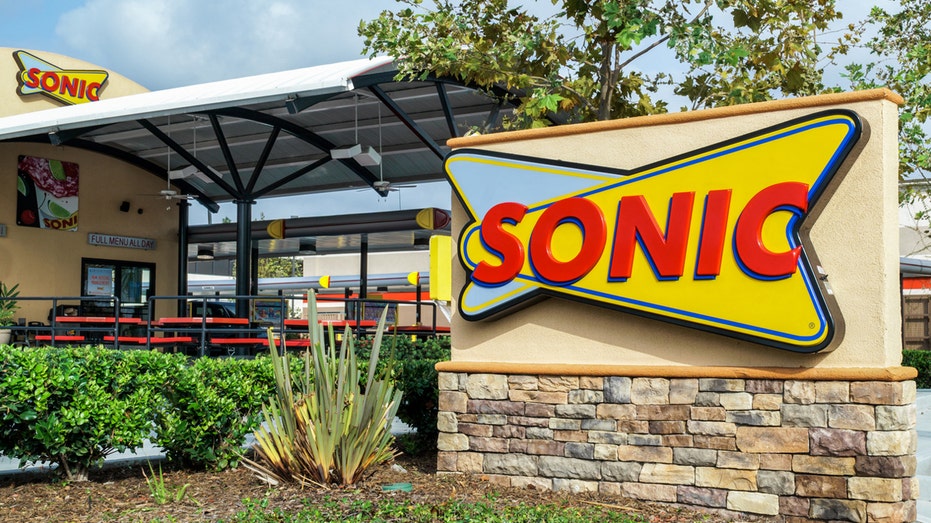
Sonic Drive-In has over 3,400 restaurant locations in 47 states. (iStock)
The strategy comes as consumers remain sensitive to restaurant prices, forcing chains to balance novelty and indulgence with value.
Campbell said beverage pricing can vary widely, from an everyday carbonated soft drink to more elaborate specialty offerings, and argued that consumers can be willing to spend more for an experience they consider distinctive.
Sonic’s latest seasonal marketing push also illustrates how the company is trying to translate beverage experimentation into customer traffic.
DUNKIN’ OPENED ITS FIRST-EVER DOG DRIVE-THRU WITH TREATS AND TOYS FOR PUPS ON NATIONAL DOG DAY
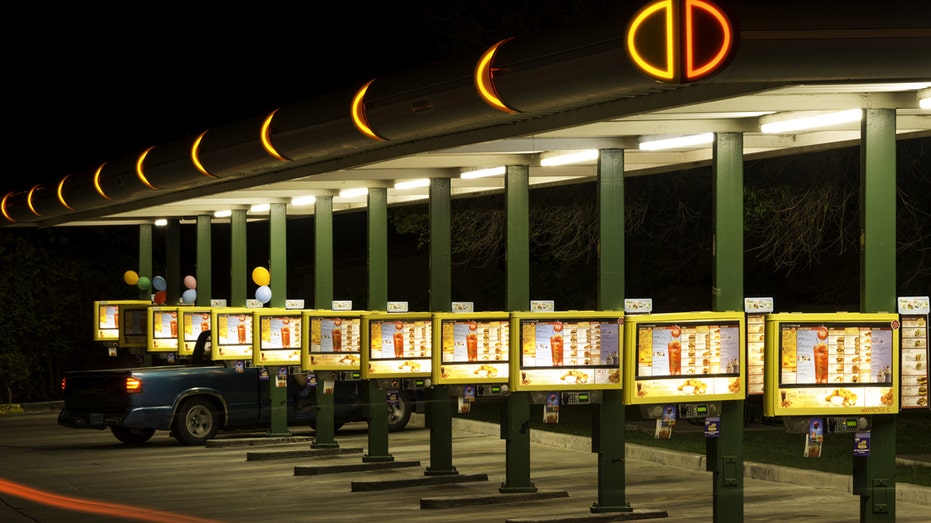
Sonic Drive-In serves burgers, hot dogs, fries, shakes and specialty drinks. (iStock)
The chain created a campaign around “Hotumn,” its name for the period when consumers begin embracing fall flavors and clothing even as temperatures remain hot, particularly in Sonic’s core Southern markets. The campaign is scheduled to run for about four weeks.
Looking further ahead, Campbell expects customers’ appetite for personalization to continue shaping the beverage business.
“Again, customization’s not going anywhere. It’s been here forever. People like to be in control of the flavors they consume. They like to feel like they’re the creator, and they have that ability,” Campbell said.
She also pointed to flavored water as an area with room for additional experimentation as consumers look for customizable beverages beyond traditional soft drinks.
CLICK HERE TO GET FOX BUSINESS ON THE GO
Sonic has more beverage concepts in development, according to Campbell, although she declined to disclose what the company plans to introduce next.
Business
He Converted $40,000 a Year for Ten Years. His Brother Left the Same $450,000 Alone and Watched It Grow to $730,000. Only One of Them Owns What the Statement Says
Quick Read
-
A traditional IRA balance overstates true wealth because every withdrawal is taxed as ordinary income, meaning the government owns a portion of every dollar on the statement.
-
Converting $40,000 annually at 12% using outside funds beats a $730,000 traditional IRA balance taxed at 22% on withdrawal, leaving the converter with more spendable money.
-
Roth owners avoid required minimum distributions, Medicare IRMAA surcharges, and pass tax-free balances to heirs. These advantages hold regardless of future tax rates.
-
Two retirees, same $1 million, same 4% rule, buy one finished with $1.4 million, the other hit $0 in 12 years. Our free reader guide explains the flaw that separated them, and the income-first method built to avoid it.
Two brothers, same starting balance of $450,000 in a traditional IRA, same age, same market. Imagine that one spent a decade moving $40,000 a year into a Roth, paying tax on each conversion at the 12% federal rate. The other brother did nothing and watched the balance climb to $730,000. On paper, the second brother looks like he came out ahead. In practice, he owns less of what his statement says than his brother owns of a smaller one.

Why the Statement Includes the Government’s Share
A traditional IRA balance is money on which no federal income tax has ever been paid. Every dollar withdrawn is taxed as ordinary income in the year it comes out. If the eventual tax rate is 22%, then twenty-two cents of every dollar on that statement belong to the Treasury. The account holder is a custodian for a share he does not own.
A Roth statement works differently. Tax has already been settled. Qualified withdrawals in retirement come out untaxed. The number on the page is the number the owner can spend. Two brothers whose statements read the same figure do not have the same wealth if one is a Roth and the other is pre-tax. Almost no one adjusts for this when deciding whether they have enough saved.
The 4% Rule is Broken, Built On A World That No Longer Exists
Every retiree knows about the 4% rule, but it frames retirement as a slow liquidation and still causes retirees with seven-figure accounts to agonize over a dinner out.
There’s a different way to run the math that makes more sense today. Build an income floor — dividends, interest, and Social Security that cover your essential bills every month — and you never have to sell shares into a down market just to pay them.
Our free reader guide, The 4% Rule Is Broken, walks through it in about 15 minutes. Access the report here.
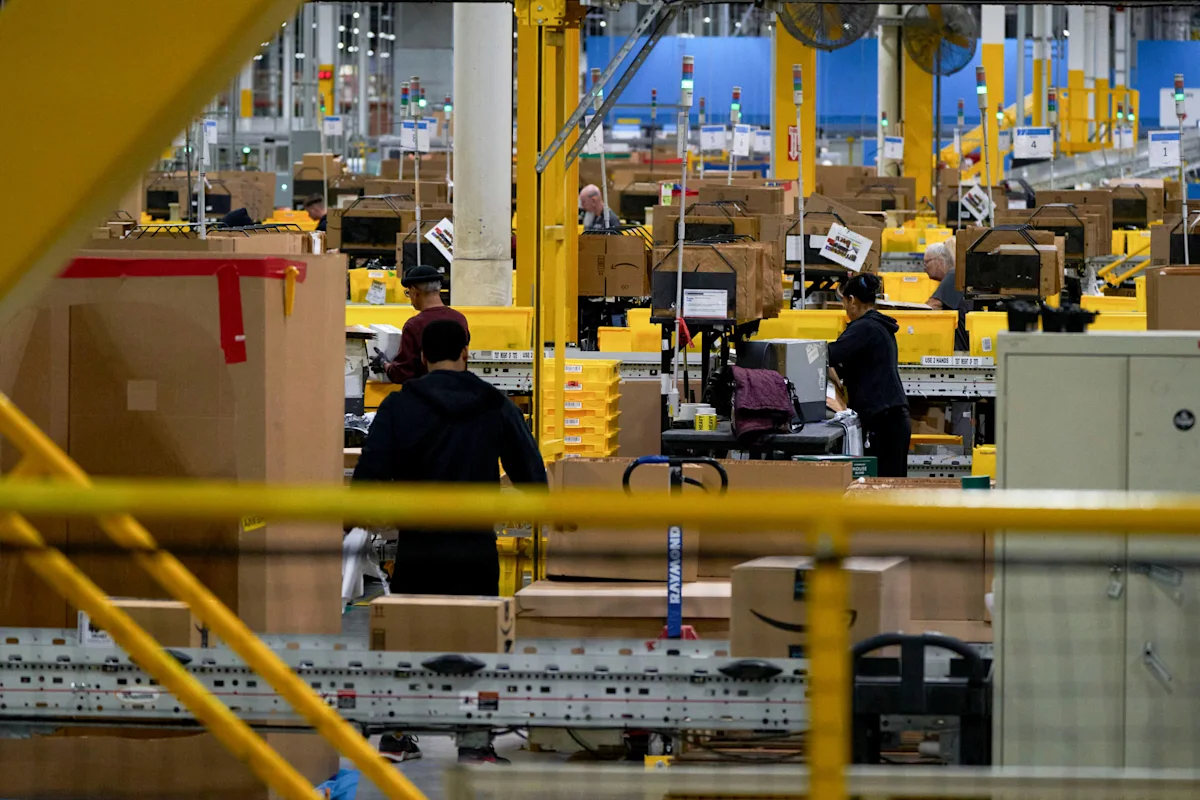
Amazon employs hundreds of thousands of people in warehouses and delivery operations across the United States. On September 16, it told them their pay is going up.
The company announced a $1-per-hour raise for eligible U.S. core operations employees, bringing the minimum starting wage for full-time roles to $20 an hour, according to Amazon’s press release. Average hourly pay for core operations workers rises to nearly $24. With benefits factored in, average total compensation exceeds $32 an hour. Amazon said the minimum starting wage has now risen more than 17% over the past three years.
What the $1.5 billion investment actually covers
Amazon said the pay increases will cost more than $1.5 billion. The investment covers workers involved in fulfilling and delivering customer orders, including fulfillment-center workers and delivery drivers. Amazon did not describe it as a companywide raise for every employee.
Udit Madan, Amazon’s senior vice president of Worldwide Operations, said the company evaluates pay and benefits annually. “I often hear that they appreciate a good paycheck, but also really value the full range of benefits that we offer, which together help them support their families and grow in the long run,” he wrote in a blog post announcing the changes.
More Amazon:
For a full-time employee working 40 hours a week year-round, the $1-per-hour increase works out to about $2,080 more annually before taxes. The $1.5 billion figure is a significant outlay in absolute terms and comes to roughly 0.06% of Amazon’s current market capitalization of about $2.68 trillion.
The federal minimum wage is $7.25 and Congress has not raised it since 2009. Amazon’s new $20 floor is nearly triple that. Many states have passed their own higher minimums, some above $15, so Amazon’s starting wage lands above most state floors too. The company says it sets pay by looking at what it takes to fill and keep positions in its busiest markets.
What new benefits Amazon is adding
The pay increase comes alongside a new banking benefit and grocery discounts, both effective October 1, 2026.
Amazon is giving employees access to Day 1 Financial, a lifetime membership in First Tech Federal Credit Union. Qualified employees and their families keep the membership for life. Access begins rolling out in late 2026 and is expected to be broadly available in 2027. The credit union is federally insured by the National Credit Union Administration.


Specialised Therapeutics expands Incyte partnership to Australia

S&P 500: Ready For A Melt Up (Technical Analysis)

Harbor Transformative Technologies ETF Q2 2026 Commentary

Fidelity’s mission is to strengthen the financial well-being of our customers and deliver better outcomes for the clients and businesses it serves. With assets under administration of $12.6 trillion, including discretionary assets of $4.9 trillion as of December 31, 2023, Fidelity focuses on meeting the unique needs of a broad and growing customer base. Privately held for 77 years, Fidelity employs more than 74,000 associates with its headquarters in Boston and a global presence spanning nine countries across North America, Europe, Asia and Australia. Note: This account is not managed or monitored by Fidelity, and any messages sent via Seeking Alpha will not receive a response. For inquiries or communication, please use Fidelity’s official channels.
Business
Main Street Capital Went Public at $15 a Share. $10,000 Invested Then Now Collects About $177 a Month in Regular Dividends.
Main Street Capital (NYSE: MAIN) completed its initial public offering on Oct. 4, 2007, at $15 per share. If you invested $10,000 into the business development company (BDC) stock at its IPO, you’d have purchased around 667 shares. Those shares would now generate around $177 per month in regular dividend income alone at the current rate of $0.265 per share. You’d also currently collect another $200 each quarter in supplemental dividends at the current $0.30 per share rate.
Here’s a look at Main Street Capital’s impressive dividend track record.
Missed AI’s “Act 1”? Act 2 Could Be 15x Bigger. Most investors think they missed the AI boat because they didn’t buy Nvidia in 2005. But according to our analysts, we’re only at the end of “Act 1″—the R&D phase. “Act 2” is the global rollout. Continue »

An income-producing machine
As a BDC, Main Street Capital must distribute 90% of its taxable income to shareholders each year to remain compliant with IRS regulations. It has a unique strategy to meet that obligation while also providing income investors with the stability they desire. It has set its monthly dividend at a level it can sustain throughout market cycles. Main Street Capital currently generates enough distributable net investment income to cover its regular monthly dividend by a comfortable 1.39 times. The BDC pays supplemental quarterly dividends to return excess taxable income to shareholders and remain compliant.
Main Street Capital has grown its monthly dividend by 141% since its IPO. It has paid a cumulative $42.465 per share in regular monthly dividends during that period, and an additional $8.74 per share in supplemental dividends. It has never suspended or reduced its regular dividend, though it has at times stopped paying supplemental dividends.
What’s driving the dividend growth?
Main Street Capital stands out from other BDCs for its growth. The company has grown its net asset value (NAV) per share from $12.85 at its IPO to $33.92 at the end of the second quarter, 164% total growth (5.4% compound annual growth rate). One of the keys to its success is its dual investment strategy of investing in the secured debt of smaller private companies with meaningful equity participation. The company’s equity investments provide upside.
For example, this past June, Main Street announced the exit of a portfolio investment. Its initial investment consisted of a $2.4 million revolving line of credit, a $12.2 million first-lien senior secured loan, and a $5.8 million direct equity investment. It subsequently completed seven follow-on investments, growing its total debt and equity investments to $42.3 million and $6.4 million, respectively. The BDC recently realized a $46.4 million gain on its equity investment in this portfolio holding, which had also generated $2.2 million in cumulative dividend income. Gains like these have supported its growing NAV per share while providing the BDC with additional capital to reinvest to grow its portfolio. That portfolio growth has helped support its rising dividend.

Ukraine’s Zelenskiy says he and Trump agree to meet in New York
Business
Diesel at $6.48 per gallon pushes truck drivers to spend $3,500 a week on fuel, forcing some to quit

It’s safe to say that truck drivers around the country are feeling the impact of record-breaking diesel prices.
As of Sept. 19, diesel stood at $6.48 per gallon nationwide, according to AAA. And per GasBuddy, the highest prices can be found in Washington, Hawaii and California, the latter which has seen diesel top $8 per gallon.
Must Read
Diesel is needed to fuel trucks that transport food to your local supermarket, vehicles to out-of-state dealerships and your latest retail purchase to a local distribution center, plus much more. The American Trucking Associations estimates that trucks moved 73% of the nation’s freight by total weight in 2024.
However, high diesel prices — thanks in part to geopolitical conflicts like the U.S.-Iran war and the Russia-Ukraine War — can strain the supply chain and increase operating costs for logistics companies and freight operators. Ultimately, the prices consumers pay for goods also go up.
Some owner-operators are calling it quits
While the entire trucking industry is feeling the pinch, it’s possible that owner operators — drivers with their own trucks in business for themselves — are feeling it the most.
One owner operator, Yahathan, told WALB 10 News that he has cut down on loads because of the distances he has to travel. Owner-operators like himself have had to be extra careful about managing fuel spending of late.
“I feel that diesel for truck drivers, you know, it shouldn’t go up at a high rate because we make the world go ’round,” he said.
Vatissa Rhodes, whose weekly fuel bill has nearly doubled, said in an interview with ABC affiliate KATU 2 that she is contemplating selling her truck and working for someone else.
“I’m actually already looking to drive for another company to park my truck,” she said. “My paycheck has been cut maybe about a third.”
On cross-country trips, Rhodes would spend anywhere from $1,700 to $2,000 a week on fuel. Now, it’s at least $3,500, she told the outlet. She has been running her own business for six years, as a means to grow her savings and reinvest in her company. But the venture has instead landed her in debt, with each year being more difficult than the last.

RB Global (RBA) Doubles its Buyback Authorization. Can Cash Generation Support it?

Jamie Lynn Spears Addresses Sweet Magnolias’ Cancellation

HOLY CR*P BIGGEST XRP OPPORTUNITY EVER!!!!! (THIS IS NUTS)




-

 Fashion2 days ago
Weekend Open Thread: Talbots – Corporette.com
-

 Crypto World2 days ago
Circle launches Arc Studio AI agent for building onchain apps
-
 NewsBeat2 days ago
Trump says US has reached an agreement to take permanent control of Greenland’s security
-

 Crypto World6 days ago
Revolut Attackers Warn of Ongoing Daily Customer Data Leaks
-

 Crypto World6 days ago
Kraken Lets xStocks Holders Earn Yield Through DeFi
-

 Crypto World5 days ago
Robinhood engineers charged over $50K crypto scheme
-

 Crypto World5 days ago
What Is the Status of the U.S.-Iran Peace Talks? Here's What Both Sides Are Saying
-

 Crypto World2 days ago
Bitcoin price breaks channel as RSI climbs to 63
-

 Crypto World4 days ago
US Charges Robinhood Engineers Over Crypto Listing Trades
-

 Crypto World6 days ago
Elon Musk Drops a Bombshell: Grok 5 Could Be the AGI Breakthrough
-
 NewsBeat6 days ago
‘Sick conspiracy’: Trump says only guardrails AI needs is ‘a strong and smart (High IQ!) president’ in all-caps rant
-
 Crypto World6 days ago
NVIDIA Analysis: Attempted Rising Wedge Breakout Amid Pressure on the AI Sector
-
Business6 days ago
SK Hynix ADRs Fall More Than 6% as Memory Rally Breaks on Fears of Slower AI Spending
-
 Crypto World7 days ago
3 Token Unlocks to Watch in the Third Week of September 2026
-

 Tech5 days ago
Webb’s IC 348 Mosaic Includes Two-Jupiter Dwarfs, Twin Jets, and a Nursery Still Making Worlds
-
Crypto World6 days ago
Can Circle’s Arc Repeat Robinhood Chain’s Meme Coin Boom?
-

 Crypto World6 days ago
DOJ Seeks to Seize $61M in Iran Oil Funds From Binance Accounts It Vouched For
-
 NewsBeat2 days ago
US was ‘on brink of war’ with China over false AI report of nukes moving in Middle East
-

 Entertainment5 days ago
Big Brother Update: Melody Explodes at Drew as Illness Sweeps BB28 House
-

 Crypto World2 days ago
World Money launches in 150+ countries with Stripe
You must be logged in to post a comment Login