

Business
Iran Reopens Strait of Hormuz: UK Gilt Yields Tumble, Oil Falls to $91


Iran has thrown open the Strait of Hormuz to commercial traffic once again, delivering an immediate jolt of relief to jittery global markets and, crucially for British businesses, shaving almost 10 basis points off the government’s cost of borrowing in the space of a single trading session.
Foreign minister Abbas Araghchi confirmed on Friday that the world’s most strategically important oil chokepoint, through which roughly a fifth of seaborne crude passes every day, would be “completely open” until the Lebanon ceasefire expires on 26 April. Donald Trump offered measured thanks from the White House but was quick to stress that the American naval blockade of Iranian ports stays firmly in place.
“The naval blockade will remain in full force and effect as it pertains to Iran only, until such time as our transaction with Iran is 100 per cent complete,” the US president said, hinting at a peace deal he insists is all but done. “This process should go very quickly in that most of the points are already negotiated.” Reports circulating in Washington suggest face-to-face talks could pick up again in Pakistan as early as Sunday.
For British boardrooms, the financial consequences were instant. Brent crude slipped to $91 (£72) a barrel within minutes of the announcement, while yields on 10-year gilts, the benchmark for government borrowing and, by extension, the price of business credit across the UK, fell from 4.85 per cent to 4.76 per cent. That is the lowest reading since 9 April and a world away from the 5.1 per cent peak touched in late March, when gilt markets briefly traded at their most stressed level since the financial crisis of 2008.
The mechanics are straightforward enough. Lower oil feeds through to softer headline inflation, which eases pressure on the Bank of England to hold rates higher for longer, which in turn reduces the yield investors demand to lend to the Treasury. For the thousands of owner-managed firms up and down the country currently refinancing term loans, overdraft facilities and commercial mortgages, any sustained easing in gilts should translate into cheaper money within weeks.
There is, however, a sting in the tail. Mr Araghchi was careful to specify that vessels must follow the route dictated by Tehran, a requirement that industry insiders have begun referring to, only half in jest, as the “Tehran tollbooth”. Shipowners may find that safe passage comes with a price tag attached, and those costs will inevitably drift down the supply chain to British importers of everything from fertiliser to finished electronics.
The broader lesson being drawn in diplomatic circles is uncomfortable for the West. In roughly 50 days of squeezing Hormuz, Tehran has achieved what decades of nuclear brinkmanship never managed: forcing the United States, the Gulf states and the Europeans to sit down and negotiate in earnest. The strait, analysts now openly concede, has proved a far more persuasive bargaining chip than any centrifuge. A single hand on the tap moves Brent by close to $30 a barrel and conjures the spectre of global recession faster than any enrichment announcement.
From Tehran’s vantage point, the reopening is a demonstration not of concession but of control. The regime can switch the flow off again whenever it judges the moment right, and should Mr Trump’s blockade continue to bite, it will have little difficulty pinning the blame for any fresh spike in petrol prices on the White House.
For UK SMEs, particularly those in logistics, manufacturing and any business running on thin fuel-sensitive margins, the practical takeaway is twofold. Near-term, enjoy the breathing space: cheaper diesel at the pumps, a softer currency backdrop and marginally friendlier lending conditions are all in prospect if the détente holds into May. Longer-term, stress-test your exposure. Tehran has shown it can turn the taps on and off at will, and the assumption that cheap oil and predictable shipping lanes are a birthright of the global trading system has quietly been retired.
Geography, it turns out, still beats technology. Controlling a 21-mile stretch of water between Oman and the Iranian coast has proved rather more valuable than any nuclear programme, and British businesses would do well to plan accordingly.

Jamie Young
Jamie is Senior Reporter at Business Matters, bringing over a decade of experience in UK SME business reporting.
Jamie holds a degree in Business Administration and regularly participates in industry conferences and workshops.
When not reporting on the latest business developments, Jamie is passionate about mentoring up-and-coming journalists and entrepreneurs to inspire the next generation of business leaders.


“Most market participants know that Nabard would not accept a rate as high as 8%, so the bidding automatically stopped at about ₹3000 crore,” said a corporate bond expert at a primary dealership.
Nabard, in April, had raised ₹4,250 crore at 7.49% for three years, and ₹7,265 crore at 7.44% for three years. Over this week, Nabfid raised ₹4,000 crore at 7.74% for 10 years, Mahindra and Mahindra Finance raised ₹650 crore at 7.90% for two years, Bajaj Finance raised ₹1,822 crore for five years and Bajaj Housing Finance raised ₹955 crore for 7.90%.
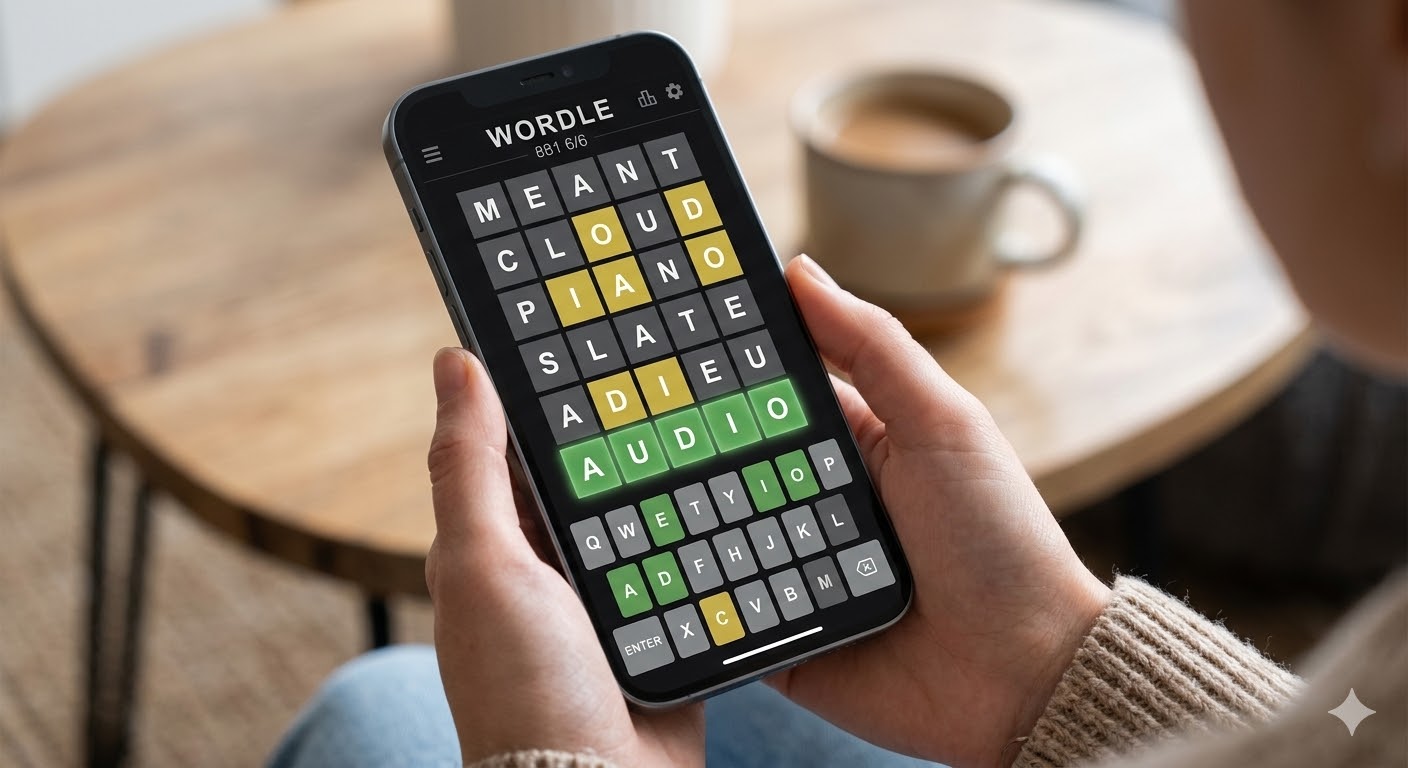
NEW YORK — Wordle enthusiasts worldwide unlocked a dynamic solution Saturday as The New York Times’ daily puzzle No. 1792 presented “MOVER,” a five-letter noun centered on motion and change that proved moderately difficult and required an average of 4.7 to 5.3 guesses according to early data from millions of players.
The answer, featuring common letters and a straightforward but deceptive structure, tested solvers’ vocabulary while generating widespread discussion across social media. As of mid-morning in major time zones, green emoji grids flooded group chats and platforms, with many players sharing stories of near-misses on their final attempts and relief upon cracking the code.
For those still working the puzzle or safeguarding their streaks, subtle hints circulated rapidly: the word is a noun, contains two vowels, starts with ‘M’ and relates to someone or something that causes motion or relocation. Strong opening guesses such as SLATE, CRANE, and MOVED often accelerated progress by quickly identifying key letters and patterns.
Today’s Wordle Answer: MOVER
The official solution for Wordle #1792 on May 16, 2026, is MOVER. Dictionary definitions describe it as “a person or company that moves household or office belongings from one location to another” or, more broadly, anything that causes movement or change.
Congratulations to those who solved it in three or four guesses. Players needing five or six attempts were in good company — recent analytics show the average solve rate hovers around 3.8 attempts, with words featuring common letter combinations like this one often pushing scores higher due to multiple plausible options.
Why “MOVER” Proved Tricky for Many
Wordle’s lasting appeal stems from its delicate balance of accessibility and clever difficulty. “MOVER” perfectly captured this dynamic: familiar letters arranged in a way that created several misleading alternatives. The ending “VER” cluster and starting “M” tested pattern recognition, while the word’s everyday usage masked its puzzle potential until later guesses narrowed the field.
Many solvers noted the thematic resonance, with “MOVER” evoking ideas of transition and progress amid personal and global changes. The New York Times selects words algorithmically from an expanding approved list, ensuring freshness while avoiding overly obscure terms. Recent updates in 2026 have slightly broadened the solution pool to keep the daily ritual engaging for its estimated 12-15 million active players.
Expert Strategies for Wordle Success in 2026
Top solvers and data analysts continue recommending vowel-rich openers such as SLATE, CRANE, TRACE or AUDIO. These maximize early information on both vowels and frequent consonants. Prominent figures like Bill Gates have endorsed starting with words heavy in vowels like ADIEU or OUNCE for optimal first-guess efficiency.
Follow up with diverse second and third guesses that test new letters while avoiding confirmed gray ones. In hard mode, which many serious players use, every guess must incorporate previously revealed yellow and green information. Frequency-based strategies remain highly effective: prioritize E, T, A, R, I, O, N, S and H. Common endings to watch include -ER, -ED, -ES and -ING patterns, though Wordle typically avoids most plurals.
Advanced players mentally track remaining possibilities or use external tools ethically without direct solvers. For “MOVER”-style puzzles with common letter clusters, testing words with repeated consonants or action-oriented themes early can significantly speed up the process. Community favorites include TRAIN followed by CLOSE or BUMPY for broad letter coverage in minimal guesses.
Wordle’s Enduring Cultural Phenomenon
Since its 2021 launch by Josh Wardle and acquisition by The New York Times, Wordle has evolved from a simple web game into a global daily ritual. Emoji grids continue dominating breakfast tables, workplace chats and family group messages. In 2025, NYT Games puzzles were played more than 11 billion times, with Wordle remaining the flagship experience that unites millions across generations and cultures.
Its elegant design — six guesses for a single five-letter word — creates shared experiences without direct competition, while streaks and personal statistics add individual motivation. Recent expansions, including companion games like Connections and Strands, have broadened the NYT Games ecosystem while preserving Wordle’s core simplicity.
Global Reach and Seoul Players
In South Korea, Wordle serves dual purposes as entertainment and English practice tool for students and professionals. Many incorporate daily solutions into vocabulary notebooks, noting words like “MOVER” expand practical and idiomatic language skills. Solve rates in Asia closely mirror global averages, with morning subway commutes often featuring players comparing results.
International time zones create continuous conversations, with Asian solvers frequently posting solutions while North American audiences sleep. Hashtags like #Wordle1792 trend daily, fostering a truly worldwide community around this simple yet addictive word game.
Cognitive Benefits and Lasting Appeal
Beyond fun, regular Wordle engagement sharpens pattern recognition, vocabulary expansion and mental resilience. Educators increasingly use it in classrooms to teach categorization and logical deduction. Studies link consistent word games to improved cognitive function and delayed mental aging. The public-yet-private nature of the game — failing alone but sharing success — perfectly balances personal growth with social connection.
For streak enthusiasts, consistency matters more than brilliance. Many maintain impressive runs by playing at the same time daily and sticking with proven starting words. The game’s forgiving design rewards patience and learning from mistakes rather than punishing them.
Looking Ahead to Tomorrow’s Puzzle
Wordle #1793 awaits at midnight, promising fresh challenges in the expanding word pool. Whether today’s “MOVER” delivered a swift victory or required every guess, the ritual resets tomorrow with new opportunities for triumph or learning.
The game’s simplicity offers welcome focus in an era of constant digital noise — five letters, six attempts, one shared solution. As Wordle heads toward television adaptations and continues evolving under NYT stewardship, its fundamental appeal remains unchanged: the timeless joy of words, logic and community connection.
Play responsibly, celebrate wins humbly, and remember that even challenging days lead to fresh grids. For those seeking more mental stimulation, NYT Games provides companion puzzles including Connections, the Mini Crossword and Strands.
Whether you solved “MOVER” quickly or needed every attempt, you joined millions in a shared daily experience that continues bringing people together across borders and backgrounds. In a complex world, Wordle’s straightforward challenge delivers consistent satisfaction and sparks conversations that transcend the grid itself.
As the game enters its sixth year of global popularity, its influence on daily routines and cultural conversations shows no signs of slowing. Tomorrow brings another word, another chance and another opportunity to connect through the simple pleasure of solving together.

Q1: 2026-05-14 Earnings Summary
EPS of $0.10 beats by $0.04
| Revenue of $333.44M beats by $17.42M

Seeking Alpha’s transcripts team is responsible for the development of all of our transcript-related projects. We currently publish thousands of quarterly earnings calls per quarter on our site and are continuing to grow and expand our coverage. The purpose of this profile is to allow us to share with our readers new transcript-related developments. Thanks, SA Transcripts Team
NEW YORK — The New York Times Connections puzzle No. 1070 delivered another clever mix of categories Saturday, challenging solvers to group 16 words into four thematic sets as players celebrated or lamented their results across social media. Many achieved perfect games, while others were tripped up by the tricky purple category involving clever homophones.
The daily brain-teaser, which tasks players with linking words by shared connections across yellow (easiest), green, blue and purple (hardest) categories, continues to captivate millions. Released at midnight Eastern time, Saturday’s edition featured basketball franchises, famous painters, types of birds and playful number homophones that sparked lively discussion online.
Today’s NYT Connections Answers: May 16, 2026 (#1070)
Yellow (Easiest): NBA Teams — LAKERS, CELTICS, KNICKS, HEAT Green: Famous Painters — PICASSO, VAN GOGH, MONET, DA VINCI Blue: Types of Birds — ROBIN, SPARROW, EAGLE, OWL Purple (Hardest): Homophones for Numbers — WON (one), TOO (two), FOR (four), ATE (eight)
Solvers who spotted the NBA teams early often cruised through the green category, with familiar franchises providing an accessible sports-themed group. The blue bird category offered another straightforward win for nature enthusiasts, while the painters group delighted art lovers with recognizable names from art history.
Why Today’s Puzzle Proved Tricky
The purple category emerged as the day’s biggest spoiler. Homophones for numbers — one, two, four and eight — disguised as WON, TOO, FOR and ATE left even veteran players scratching their heads. Social media erupted with reactions ranging from groans to admiration for the clever wordplay. “That purple category was brutal,” one X user posted, capturing the sentiment shared by thousands. Others praised the puzzle’s balance of accessible and challenging elements.
The blue category featuring painters delighted history and art buffs, pulling iconic names that tested cultural knowledge. Yet many admitted they overthought connections, initially grouping birds with other animal themes before spotting the clearer links.
Hints That Helped (and Didn’t Spoil)
For players still working the puzzle or preserving streaks, subtle hints circulated widely: one category involves professional basketball teams, another honors renowned artists, a third features common feathered creatures, and the toughest plays on phonetic spellings of numbers. Starting with obvious sports or animal words often unlocked the board quickly.
Connections’ Explosive Popularity in 2026
Since its 2023 debut, Connections has become a cornerstone of The New York Times Games portfolio alongside Wordle. With an estimated 10-14 million daily players, the game fosters community through shared emoji grids and competitive streaks. NYT reports continued strong growth into 2026, fueled by mobile accessibility and social sharing features.
Unlike traditional crosswords, Connections rewards lateral thinking over pure vocabulary. Categories range from straightforward synonyms to cultural references, puns and rebus-style twists, keeping the experience fresh. Puzzle editor Wyna Liu and her team craft each grid to balance difficulty while avoiding excessive obscurity.
Strategies for Mastering Connections
Top solvers recommend scanning for obvious clusters first — proper nouns, repeated themes or strong synonyms. Grouping basketball teams or bird names often provides momentum. Avoid premature submissions; with only four mistakes allowed, strategic guessing preserves lives.
Advanced players track category difficulty progression: yellow typically features direct synonyms or clear themes, while purple leans on wordplay, pop culture or homophones. Tools like elimination help — once three groups lock, the final four words must connect.
Community favorites include starting with capitalized words (often names or places) and noting repeated letter patterns. For sports-heavy days like today, recalling NBA teams accelerates solves. Language enthusiasts shine on artistic or phonetic categories.
Global Appeal and Seoul Players
In South Korea, Connections serves as both entertainment and English-learning tool for students and professionals. Seoul commuters tackle puzzles during subway rides, with many incorporating solutions into vocabulary notebooks. The NBA category resonated strongly given the league’s popularity in Asia.
International time zones create rolling conversations, with Asian players often posting solutions while Western audiences sleep. Hashtags like #NYTConnections trend daily, building a global virtual water-cooler.
Cognitive Benefits and Cultural Impact
Beyond fun, regular play sharpens pattern recognition, vocabulary and flexible thinking. Educators integrate Connections into classrooms to teach categorization and lateral problem-solving. Studies link word games to improved cognitive resilience in aging populations.
The game’s shareable nature strengthens social bonds. Families compete over breakfast, coworkers share streaks, and online communities celebrate “perfect” or “one-away” results. Viral moments, like today’s number homophones, amplify engagement.
What’s Next for NYT Games
The Times continues expanding its puzzle ecosystem. Connections: Sports Edition draws dedicated fans, while companion apps and potential television adaptations loom. As artificial intelligence influences game design, human-curated cleverness remains Connections’ secret sauce.
Tomorrow’s puzzle No. 1071 awaits, promising new surprises in the ever-evolving word grid. Whether today delivered a flawless victory or a frustrating purple stumble, the ritual resets at midnight.
For those seeking more, NYT Games offers Wordle, Spelling Bee, Letter Boxed, Tiles and the classic Crossword. Play daily to build streaks, expand minds and join millions in the simple joy of finding connections.
In an age of information overload, these concise daily challenges offer welcome focus — 16 words, four groups, endless satisfaction. Congratulations to today’s perfect solvers, and better luck tomorrow to those who tangled with the purple.
Business
(VIDEO) Zach Neto Robs Shohei Ohtani with Spectacular Triple Play in Dodgers-Angels Rivalry
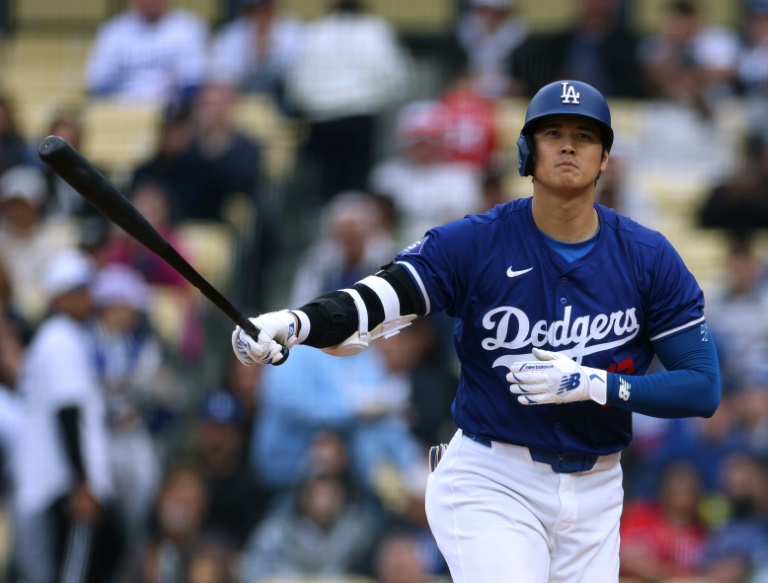
ANAHEIM, Calif. — Los Angeles Angels shortstop Zach Neto turned a hard-hit line drive from Shohei Ohtani into one of the most electrifying defensive plays of the 2026 season, starting a rare triple play that left the Dodger Stadium crowd stunned and quickly went viral across social media during the heated Freeway Series rivalry matchup.
The Angels shortstop fielded Ohtani’s sharp liner in the fifth inning, quickly stepping on second base for one out, firing to first to retire the runner, and completing the triple play when the batter-runner was tagged out after a chaotic scramble at first base. Replays from every angle captured the precision and speed of Neto’s actions, turning what looked like a routine single into one of the season’s most memorable defensive gems.
The play, highlighted by MLB’s official account on X with the caption “Every angle of this triple play started by Zach Neto on a line drive from Shohei Ohtani 😮💨,” has already amassed over 1.1 million views within hours. Fans flooded the replies with praise for Neto’s instincts and reactions to Ohtani’s visible frustration after the out.
Historic Defensive Masterpiece
Triple plays are among the rarest events in baseball, occurring roughly once every 1,500 games. Neto’s execution was textbook yet extraordinary given the velocity of Ohtani’s 110 mph line drive. The 24-year-old shortstop, already known for his flashy defense, reacted instantly, pivoting and throwing with pinpoint accuracy while the Dodgers runners scrambled.
Ohtani, the two-way superstar in his second season with the Dodgers, had crushed the ball and appeared headed for a hit before Neto’s lightning-quick response. Replays showed Ohtani briefly pausing in disbelief before jogging back to the dugout. The moment added another chapter to the intense Dodgers-Angels Freeway Series rivalry, which has drawn massive crowds and national attention this weekend.
Angels manager Ron Washington called the play “one of the best I’ve ever seen” in his post-game comments. “Zach has the instincts, the arm, the feet — everything you want in a shortstop. That was special.”
Neto’s Breakout Season Continues
The triple play capped an impressive defensive showing for Neto, who has emerged as one of the American League’s top young shortstops. Drafted in the first round in 2022, the Arizona State product has steadily improved his range, arm strength and decision-making. His performance Thursday night further solidified his reputation as a highlight-reel defender capable of changing games with his glove.
Ohtani, who leads the majors in several offensive categories this season, was denied what would have been another highlight-reel hit. The Japanese superstar has been the focal point of the rivalry series, drawing sellout crowds and intense media coverage whenever he steps to the plate against his former team.
Rivalry Weekend Adds Drama
The Dodgers-Angels series, marketed as #RivalryWeekend, has lived up to the hype with strong pitching, big hits and now this defensive gem. The Angels, despite being in rebuilding mode, have used the series to showcase young talent like Neto against their crosstown rivals loaded with superstars.
Dodgers manager Dave Roberts acknowledged the play’s brilliance while noting his team’s resilience. “You tip your cap to a play like that,” he said. “It was a great defensive effort by Zach. We just have to move on and keep swinging.”
The triple play shifted momentum in a tight game, energizing the Angels dugout and crowd while quieting the large contingent of Dodgers fans in attendance. Social media reactions poured in immediately, with users praising Neto’s athleticism and joking about Ohtani’s brief moment of confusion.
Viral Moment Captures Baseball’s Magic
MLB’s decision to post multiple angles of the play amplified its reach. The video shows Neto’s quick feet, accurate throw and the chaotic pile-up at first base where the runner lost his footing. Fans compared it to historic defensive plays, with some calling it one of the best triple plays in recent memory.
The moment has been shared widely by baseball accounts, highlight channels and even non-sports fans drawn to the athletic brilliance. Comments ranged from admiration for Neto’s skill to humorous takes on Ohtani’s reaction, with many noting how baseball can produce magic in an instant.
This type of play underscores why baseball remains compelling despite its slower pace. A single defensive gem can shift momentum, energize a stadium and create lasting memories that fans revisit for years.
What It Means for Both Teams
For the Angels, the play provided a highlight in what has been a challenging rebuilding year. Neto’s emergence as a star defender offers hope for the future as the franchise develops young talent around veterans.
The Dodgers, despite the defensive gem against them, remain one of the strongest teams in the National League. Ohtani and the rest of the star-studded lineup will look to bounce back in the series, using the rivalry games as motivation heading into the later part of the season.
Both teams will play again Friday and Saturday in what promises to be more high-stakes baseball between crosstown rivals. The triple play will likely be replayed often during broadcasts, serving as a reminder of the defensive excellence on display.
Broader Impact on MLB
Plays like Neto’s triple play help keep baseball relevant in a highlight-driven sports landscape. MLB has leaned into social media and short-form video content to showcase such moments, growing the sport’s digital footprint.
The Angels-Dodgers rivalry, one of the fiercest in baseball, benefits from moments like this that transcend box scores and create shareable content. Fans from both sides can appreciate elite defense regardless of team allegiance.
As the season progresses, Neto will look to build on this highlight while Ohtani continues his pursuit of historic offensive numbers. Their paths may cross again in future rivalry series or even All-Star Games, adding layers to an already compelling young career versus established superstar narrative.
For now, Zach Neto’s triple play on Shohei Ohtani stands as the defining moment of the early Freeway Series, a flash of brilliance that reminded everyone why baseball can still produce unforgettable theater on any given night. The clip will undoubtedly be replayed countless times, cementing its place among the season’s best defensive highlights.
The baseball world will be watching to see if more magic unfolds in the remaining games of this heated rivalry weekend.

Trump says ISIS second in command Abu-Bilal al-Minuki eliminated

Tracking Berkshire Hathaway Portfolio – Q1 2026 Update
Unusual Machines: One Of The Best Ways To Play America's Drone Boom
This is the forum for daily political discussion on Seeking Alpha. A new version is published every market day.
Please don’t leave political comments on other articles or posts on the site.
The comments below are not regulated with the same rigor as the rest of the site, and this is an ‘enter at your own risk’ area as discussion can get very heated. If you can’t stand the heat… you know what they say…
More on Today’s Markets:
Moderation Guidelines:
We remove comments under the following categories:
- Personal attacks on another user account
- Anti-Vaxxer or covid related misinformation
- Stereotyping, prejudiced or racist language about individuals or the topic under discussion.
- Inciting violence messages, encouraging hate groups and political violence.
Regardless of which side of the political divide you find yourself, please be courteous and don’t direct abuse at other users.
For any issue with regards to comments please email us at : moderation@seekingalpha.com.
Seeking Alpha’s Disclosure: Past performance is no guarantee of future results. No recommendation or advice is being given as to whether any investment is suitable for a particular investor. Any views or opinions expressed above may not reflect those of Seeking Alpha as a whole. Seeking Alpha is not a licensed securities dealer, broker or US investment adviser or investment bank. Our analysts are third party authors that include both professional investors and individual investors who may not be licensed or certified by any institute or regulatory body.

Kraken Rolls Out Spot Margin in US, Expands Pro Tools and Listings
Ambati Rayudu terms Akash Singh viral ‘chit’ celebration ‘rubbish’

DOJ investigation into vehicle modding hardware leads to Apple subpoena

Manchester United reach agreement with Casemiro over contract clause amid transfer speculation

US brings back mandatory military draft registration

Steven Gerrard disagrees with Gary Neville over ‘shock’ Chelsea and Arsenal claim | Football


-

 Fashion4 days ago
Coffee Break: Travel Steam Iron
-

 Politics7 days ago
Politics Home Article | Starmer Enters The Danger Zone
-

 Fashion11 hours ago
Weekend Open Thread: Theory – Corporette.com
-

 Fashion5 days ago
What to Know Before Buying a Curling Wand or Curling Iron
-

 Politics4 days ago
What to expect when you’re expecting a budget
-

 Tech6 days ago
Auto Enthusiast Carves Functional Two-Stroke Engine from Solid Metal
-

 Crypto World4 hours ago
BloFin War of Whales 2026 Grand Prix opens registration for $5M trading championship
-
 Business7 days ago
Ignore market noise, India’s long-term story intact, say D-Street bulls Ramesh Damani and Sunil Singhania
-

 Tech5 days ago
GM Agrees To Pay $12.75 Million To Settle California Lawsuit Over Misuse Of Customers’ Driving Data
-

 Tech23 hours ago
Tech Moves: Microsoft AI leader jumps to OpenAI; former AI2 exec joins Meta; and more
-

 Crypto World6 days ago
CZ says US crypto rivals tried to block Trump pardon
-

 Crypto World7 days ago
PROS explodes 48% as Upbit and Bithumb listings ignite demand
-

 Tech4 days ago
GM agrees to $12.75M California settlement over sale of drivers’ data
-
Crypto World3 days ago
Bitcoin Suisse expands with Digital Asset License and Investment Business Act Registration Approval in Bermuda
-

 Crypto World10 hours ago
E-Estate Announces 1 Year Live: Washington DC Summit as Real Estate Tokenization Enters Its Next Phase
-
 Politics3 days ago
Pakistan to enter Chinese capital market as war inflation bites
-

 Crypto World3 days ago
Bitcoin Suisse expands with Digital Asset License and Investment Business Act Registration Approval in Bermuda
-
 Crypto World2 days ago
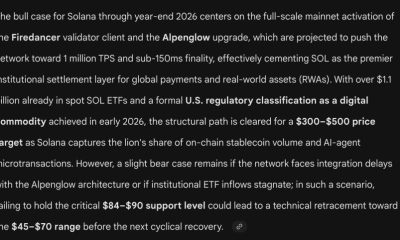
Google’s Gemini AI Predicts Incredible Solana Price by the End of 2026
-
 Tech7 days ago
iPhone 14 Won’t Turn On? 5 Fixes That Work (2026)
-

 Politics6 days ago
Sky News Presenter Says Keir Starmer Is Not Waving But Drowning
You must be logged in to post a comment Login