

Business
Netflix was long ‘a builder not a buyer.’ Is that era over?


The Netflix logo is pictured at the company’s offices on Vine in Los Angeles, Dec. 5, 2025.
Patrick T. Fallon | AFP | Getty Images
For years, Netflix top brass would tell investors they were builders not buyers. Now, that sentiment toward growth may be changing.
On Thursday Netflix reported its quarterly earnings. Typically, Netflix’s earnings calls are focused on metrics like engagement, content spending, price hikes and membership. While those factors were still present on Thursday’s call, analysts were also questioning Netflix’s merger and acquisition aspirations following the Warner Bros. Discovery sale process.
Late last year, Netflix emerged as a bidder for WBD, surprising many in the industry and market. Even more stunning was an announcement in December that Netflix had reached a deal to acquire WBD’s film studio and streaming assets in a $72 billion deal.
While the transaction initially raised eyebrows, it’s now opened the door to questions from media onlookers and insiders about whether the company needs to pursue other deals as streaming becomes more competitive.
Netflix co-CEO Ted Sarandos said Thursday that questions also arose both internally and externally about the company’s ability to do such a megadeal.
“What we did learn, though, was that our teams were more than up to the task,” said Sarandos. “We’ve learned so much about deal execution, about early integration.”
Netflix had said its reasoning was simple for the pivot toward a big acquisition. Despite being the largest streaming service by far when it comes to subscribers — 325 million paid global members reported in January — it wanted to deepen its bench of franchises and intellectual property, and get more squarely in the movie studio business.
Paramount Skydance ultimately upended the deal in February with a superior bid, and Netflix walked away (collecting its $2.8 billion breakup fee in short order).
“But mostly, we really built our M&A muscle,” Sarandos said. “And the most important benefit of this entire exercise, though, was that we tested our investment discipline.”
‘M&A muscle’
Netflix CEO Ted Sarandos arrives at the White House in Washington, Feb. 26, 2026.
Andrew Leyden | Getty Images
Sarandos’ newfound openness to M&A has left some wondering whether the streaming giant could be on the lookout for new targets.
After all, its library of intellectual property and its relationship to the movie studio business are still right where they were before it took on the WBD deal.
Although Wall Street was clearly not a fan of Netflix’s proposed acquisition of WBD — shares fell 15% between the announcement of the deal and the day it fell apart, and have since risen about 26% — the media landscape will be undeniably different if Paramount’s takeover is approved.
Paramount is seeking to buy the entirety of WBD’s business — cable TV networks, film studio, streaming and all. That would create a behemoth of a competitor for Netflix and its media peers on various fronts.
“The way the WBD cards fell matters a lot. A probable combination of Paramount+ and HBO Max changes the streaming landscape in ways Netflix hasn’t really had to contend with before,” said Mike Proulx, vice president and research director at Forrester, prior to Netflix’s earnings release.
“I just want to remind you that we said this from the beginning that the WB deal was a nice to have, not a need to have. We are very confident in the core business,” Sarandos said Thursday. He added that Netflix viewed its biggest risk going into the deal process as losing focus on its core business.
“As you can see from our Q1 results, we did not lose focus,” he said.
Still, Netflix’s earnings report, and particularly its forward-looking guidance, seemed to disappoint investors.
The company’s stock dropped roughly 10% in extended trading after the streamer maintained full-year guidance despite a first-quarter revenue beat and the termination of the WBD deal.

Netflix stock sinks after Q1 earnings report.
“The bigger surprise this quarter was the unchanged full-year margin guidance despite walking away from the Warner Bros. deal and related M&A costs,” said analyst Robert Fishman of MoffettNathanson in a research note Friday.
Netflix, for its part, didn’t spend too much time on M&A during the earnings call, instead focusing on its more familiar talking points like user engagement, a growing advertising business, and spending on content that holds onto members (and helps justify price hikes).
The return to Netflix’s typical narrative appeared to be welcome.
“Post WBD, the company could return to its relentless focus on growing revenue and profits by leveraging its global subscriber scale,” said Fishman in Friday’s note. He added that Netflix management “emphasized the success of its recent price increases and noted that retention was strong,” as well as that it remains on track to double ad revenue this year.
Still, Proulx of Forrester said in a note after the earnings call that while Netflix was back to being “squarely focused on executing its tried‑and‑true playbook,” questions still remained.
“None of that changes the reality that the streaming market is more competitive than it was a year ago,” Proulx said. “Pricing power has to be earned quarter by quarter, and holding engagement as prices rise remains the central challenge across the streaming market. Netflix is betting that steady execution on its core business wins in a more crowded, consolidating market.”



New York’s Long Island rail strike halts busiest commuter line in US

TUCSON, Ariz. — Former FBI special agent Jennifer Coffindaffer has drawn fresh attention to the Nancy Guthrie disappearance case by publicly questioning why Tommaso Cioni’s name no longer appears on the teacher roster at the BASIS Oro Valley charter school where he taught sixth-grade biology, raising new online speculation more than 100 days after the 84-year-old vanished from her Catalina Foothills home.
Coffindaffer, who has closely followed the high-profile case, posted on X this week after checking the school’s website. “Some have reported that Annie & Tommaso have not been seen. I personally checked the BASIS Oro Valley school where Tommaso teaches 6th grade biology. I do not see his name listed as a teacher…” she wrote, adding that the absence could indicate he is on leave or that the school is avoiding listing him amid intense public scrutiny and accusations.
The comments have reignited online discussions and conspiracy theories surrounding Cioni, Nancy’s son-in-law, who was the last known person to see her alive. Authorities have repeatedly stated that Cioni and his wife Annie Guthrie have been fully cooperative, passed polygraphs and are not considered suspects. Yet Coffindaffer noted the potential damage from persistent online narratives, warning that millions remain convinced of his involvement despite official clearances.
Case Background and Lingering Questions
Nancy Guthrie disappeared on January 31, 2026, after Cioni dropped her off at her home following a family dinner. She was reported missing the next morning when she failed to appear for a scheduled church livestream. Blood evidence and signs of forced entry were discovered inside the residence, prompting an intense investigation involving local deputies and the FBI.
A masked individual captured on doorbell footage remains a person of interest, though no arrests have been made. Early cryptocurrency ransom demands were investigated and dismissed. DNA evidence has been sent for advanced analysis, with some results still pending. The case crossed the 100-day mark this week, shifting focus from rescue to potential recovery and prosecution.
Sheriff Chris Nanos has expressed confidence that answers will come, while acknowledging the intense public interest and the emotional toll on the Guthrie family. Savannah Guthrie, Nancy’s daughter and co-anchor of NBC’s “Today” show, has offered unwavering support for her sister and brother-in-law while making occasional public pleas for information.
Coffindaffer’s Observations Draw Attention
Coffindaffer, a retired FBI agent known for her commentary on true-crime cases, has been vocal about the Nancy Guthrie mystery for weeks. She previously called online targeting of Cioni “absurd” and attributed part of it to confirmation bias and how he “looks the part” in armchair detective theories. Her latest post about the missing teacher listing has amplified those discussions, with many users speculating about why Cioni might no longer be listed.
School officials have not commented publicly on Cioni’s employment status. Neighbors reportedly told amateur investigators that Annie and Tommaso have not been seen at their home for over a week, with their vehicle also absent, though these claims remain unconfirmed by law enforcement.
Coffindaffer emphasized the human cost. “Millions remain convinced he abducted his mother-in-law of 20 years,” she wrote, suggesting possible impacts on reputation, employment and family life. She raised the prospect of future defamation actions if the couple proves innocent, citing Arizona law on proving falsehoods and resulting harm.
Family Cleared but Scrutiny Endures
Pima County Sheriff Chris Nanos and deputies have repeatedly stated that Annie and Tommaso passed scrutiny early in the investigation. Polygraphs, vehicle seizures for forensic testing and interviews cleared them. Early media reports labeling Cioni a “prime suspect” based on unnamed sources were swiftly walked back.
Despite official clearances, public fixation lingers. Cioni’s Italian heritage, appearance and role as the last confirmed person to see Nancy have made him a lightning rod for online speculation. Coffindaffer has called such targeting unfair, noting the couple’s low profile may reflect trauma and strategic caution rather than guilt.
Savannah Guthrie has described her sister and brother-in-law as loving family members devastated by the loss. In a recent Mother’s Day tribute, she pleaded for answers while sharing warm memories of her mother.
Investigation Timeline and Challenges
Nancy was last seen around 9:50 p.m. on January 31 after Cioni verified she entered her home safely. Her phone, belongings and vehicle remained at the residence. Deputies found blood drops and evidence of disturbance when family members checked the next morning.
A masked individual on doorbell footage became a person of interest, though no arrests have followed. DNA evidence has been sent for analysis. Critics have questioned the sheriff’s office handling, including initial delays in involving the FBI.
As the case passed the 100-day mark, experts noted the shift from rescue to potential recovery mission. No proof of life has emerged since the night she disappeared. Sheriff Nanos expressed confidence that answers will come.
Broader Context and Public Fascination
The case has drawn widespread attention, from true-crime podcasts to celebrity commentary. Khloé Kardashian recently called it “mind-blowing” on her podcast, expressing obsession with the lack of leads. Online communities dissect every detail, from alleged home surveys before the disappearance to Cioni’s past activities.
Cioni, who moved from Tuscany to the U.S. over two decades ago, married Annie in 2008. He built a reputation as an engaging educator known for hands-on projects. Annie teaches poetry at the University of Arizona. The couple has a son navigating the intense spotlight.
Coffindaffer highlighted the human toll. Public ridicule, job uncertainties and strain on their child represent significant damages if the family pursues legal recourse against false accusations.
What Lies Ahead
Investigators continue analyzing forensic evidence, pursuing tips and monitoring digital trails. The $1 million family reward remains active.
For the Guthrie family, the wait stretches on amid grief and speculation. As one former agent observed, the couple’s low profile may reflect trauma rather than guilt.
Pima County officials urge the public to focus on verified facts while submitting credible tips. The mystery of Nancy Guthrie’s fate — and the collateral questions surrounding her son-in-law’s job and the family’s whereabouts — endures as a stark reminder of how a single night can upend lives and fuel endless online inquiry.
Authorities emphasize that while public interest is understandable, baseless accusations can hinder investigations and harm innocents. As day 105 dawns with no resolution, the search for truth continues in Tucson and beyond.

Starbucks to open first corporate office in India for tech expansion

Charter Communications: Are The Bears Right?

Edited excerpts from a chat:
Nifty gave up gains made in the previous two weeks to end 2.2% lower but showed support at 23,260 level. How would you trade the index in the week ahead?
On Friday, Nifty found resistance at the previously acted support that turned a resistance during the week. Besides, the index found resistance at 20EMA on the daily chart and around 50EMA on the hourly chart, closing about 200 points off the day’s high. On the hourly chart, the RSI is in bearish crossover and falling.
On the daily chart, a set of lower tops could be seen which suggests a rise of weakness in the market and this can be considered as initial signs of bears taking control in the market pushing bulls away.
A support is placed at 23500, once Nifty moves below 23500 decisively a significant fall might come in the market taking the index towards 23150 and may be lower. On the higher end, 23800 continues to act as crucial resistance for the short term. As long as it remains below this resistance of 23800 the bears might have upper hand on the market.

Nifty IT index tumbled another 6%. Do you see chances of any relief rally?
Indian IT witnessed a sharp decline during the week, dragging the index below the 28000 mark. On the daily chart, the index has been consistently forming lower tops and lower bottoms, indicating a descending price structure and a weakening trend.
The overall sentiment in the sector remains bearish, and any short-term rise is likely to attract selling pressure. Although IT stocks witnessed some buying interest on Friday, a complete trend reversal cannot be confirmed based on a single day’s recovery. The broader chart structure continues to remain weak, suggesting that further correction in the sector is still possible.
Kaynes was the top loser in the week and fell 27%. What are the charts indicating at: buy the dip or more pain ahead?
The stock has broken below its previous low, confirming a weakening trend, while the recent recovery attempt failed to sustain. On the weekly chart as well, the stock has slipped below its earlier swing low, indicating the possibility of a deeper correction from current levels.
Considering the overall chart structure, buying on dips appears risky at this stage. It would be prudent to avoid fresh buying in the stock for now and instead look for better opportunities in relatively stronger counters within the market.
HFCL shares have surprised by more than doubling in just 3 months. What would you recommend for those who missed the rally?
The stock has witnessed a spectacular rally over the last few months, surging nearly 124% in just one and a half months. Although the overall trend continues to remain bullish, entering the stock after such a sharp move appears highly risky, not only in this counter but in any stock that has rallied aggressively in a short span of time.
The better strategy at this stage would be to avoid chasing the rally and wait for a meaningful dip before considering any fresh entry. Alternatively, investors may look for opportunities in other stocks that offer a more favourable risk-reward setup.
Give us your top trading ideas for the week.
Buy Marico | CMP: 841 | SL: 824 | Target: 880
The stock, after witnessing a healthy rally, is currently consolidating on the daily chart, indicating strength within the ongoing uptrend. Prices continue to sustain above key moving averages, which reflects a positive underlying structure. Besides, the RSI remains in a bullish crossover and is trending higher, signalling improving momentum.
In the short term, the stock may move towards 880, while immediate support is placed at 824. A breach below this level could drag the stock into a broader consolidation phase.
Buy Arvind | CMP: 451 | SL: 429 | Target: 495
The stock has given a swing high breakout on the weekly chart, indicating rising bullishness in the counter. In addition, the weekly 20 EMA has moved above the 50 EMA, confirming a bullish crossover and strengthening the positive trend structure. The RSI is also witnessing an ascending formation, suggesting improving momentum.
The overall trend appears strong, with the potential for further upside towards 495. On the downside, support is placed at 429.
Buy Triveni Turbine | CMP: 607 | SL: 590 | Target: 642
The stock has given a consolidation breakout on the daily chart, signalling strengthening bullish momentum. Besides, the weekly 50 EMA has crossed above the 200 SMA, indicating a positive long-term trend reversal. The RSI has also entered a bullish crossover on the daily timeframe, supporting the improving momentum outlook.
The trend structure remains favourable, with the stock having the potential to move towards 642 in the near term. On the downside, support is placed at 590.
(Disclaimer: Recommendations, suggestions, views and opinions given by the experts are their own. These do not represent the views of The Economic Times)
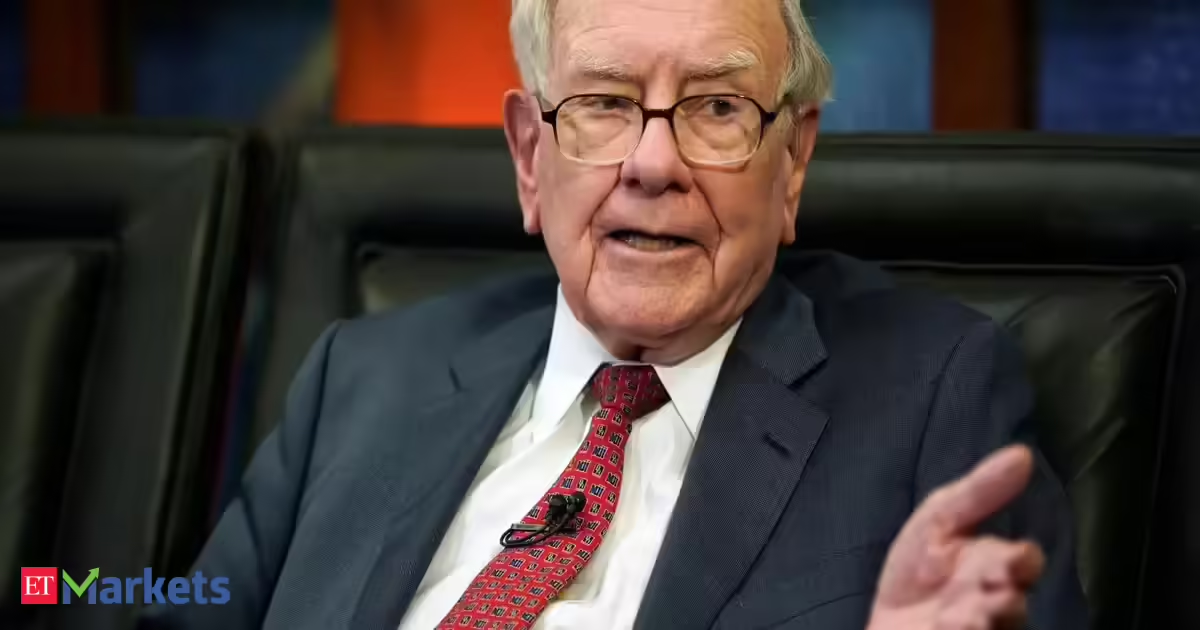
In his 2010 annual letter to Berkshire Hathaway’s shareholders, Warren Buffett called his home “the third best investment” he ever made, after his two wedding rings. The market expert still lives in the five-bedroom, 6,570 square-foot stucco home he bought for $31,500 in Nebraska, US, back in 1958.
What tops Buffett’s list of best investments?
Buffett got married twice. The American investor married Susan Thompson back in 1952. After Susan’s death in 2004, he married Astrid Menks in 2006. The billionaire has repeatedly claimed his wedding rings and marriage licenses are the best investments in his life.
Benjamin Graham’s book ‘The Intelligent Investor’
Later in 2013, Buffett, in his annual letter, said that his mentor Benjamin Graham’s book ‘The Intelligent Investor’ was one of his top investments. “I can’t remember what I paid for that first copy of The Intelligent Investor. Whatever the cost, it would underscore the truth of Ben’s adage: Price is what you pay, value is what you get. Of all the investments I ever made, buying Ben’s book was the best (except for my purchase of two marriage licenses),” he wrote.
Back in 2000, Buffett told a group of MBA students at Columbia Business School that knowledge is like compound interest. “Read 500 pages like this every day. All of you can do it, but I guarantee not very many of you will do it,” he said, as quoted by CNBC.
Who was Benjamin Graham?
Buffett has repeatedly credited the book The Intelligent Investor by Benjamin Graham, whom he calls the father of value investing. Graham championed a disciplined approach centred on buying companies trading below their intrinsic value—businesses that offered high dividend yields, low price-to-earnings (PE) multiples, and strong long-term potential despite being overlooked by the market. His philosophy shaped Buffett’s own investment framework and continues to influence value investors worldwide.
He also taught investing for many years at Columbia Business School, where one of his students was the now-billionaire Warren Buffett.
Buffett’s frugal lifestyle
Buffett is known for his strikingly simple lifestyle and philanthropic values. The billionaire investor once treated fellow billionaire and Microsoft co-founder Bill Gates not at a fancy restaurant, but at his favourite McDonald’s — and that too using coupons.
Notably, Buffett is a regular at McDonald’s. While the billionaire is often asked about the ‘secrets’ behind his long and successful career, one lesser-known detail is how the stock market plays a role in his daily breakfast routine.
“One of the good things about this five-minute drive is that there’s a McDonald’s on the way,” he once revealed in a documentary, as cited by Business Insider. He explained how he decides which breakfast sandwich to buy. Every morning, Buffett tells his wife, Astrid, the exact amount of change to place in the centre cup holder of his car—typically $2.61, $2.95, or $3.17.
“When I’m not feeling quite so prosperous, I might go with the $2.61,” Buffett said. “That’s two sausage patties, which I put together, and then I pour myself a Coke. $3.17 is a bacon, egg, and cheese biscuit. But if the market’s down this morning, I’ll pass on the $3.17 and go with the $2.95.”
After buying his McDonald’s breakfast, Buffett eats it at his desk with a Coke. While prices have likely risen since the documentary was filmed, the logic remains the same.
(Disclaimer: Recommendations, suggestions, views and opinions given by the experts are their own. These do not represent the views of The Economic Times)
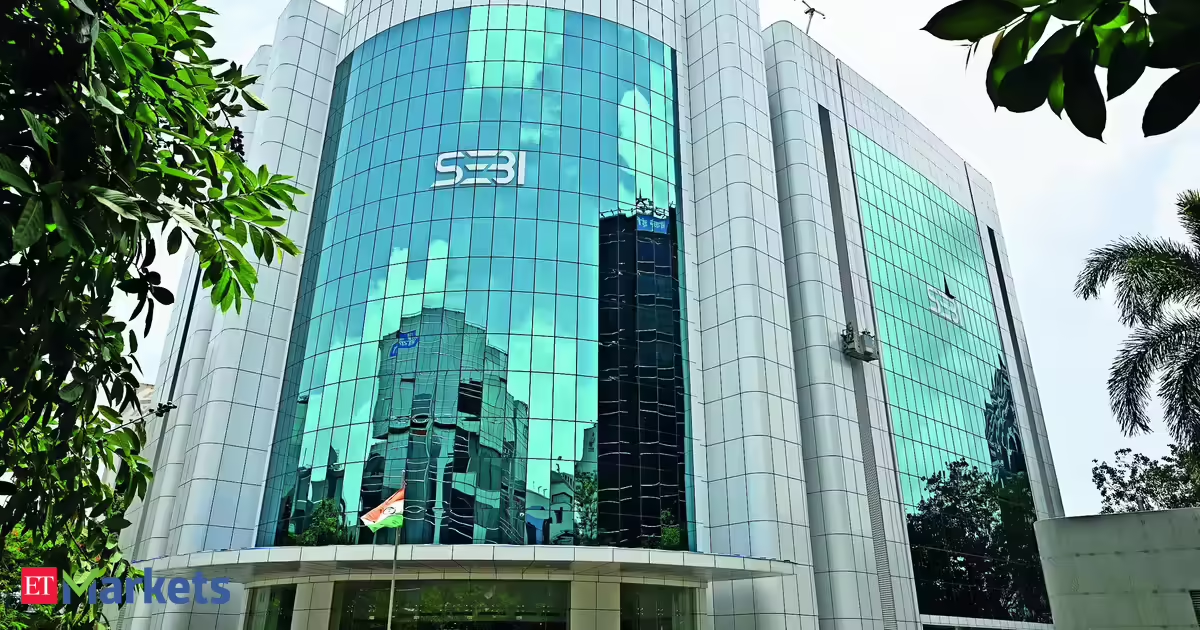
The regulator said the Central Board of Direct Taxes (CBDT) has issued clarifications to facilitate smoother issuance of PAN for FPIs after concerns were raised by market participants over revised PAN application forms notified in March. Sebi said it had actively engaged with CBDT to address the compliance hurdles faced by overseas investors.
Under the new PAN application framework, additional fields such as taxpayer identification number (TIN), and details and documents of representative or authorised representatives were introduced, while some previously optional fields-including mobile numbers-were made mandatory, creating procedural difficulties for FPIs. Following discussions, CBDT has now issued a set of relaxations.
As part of the changes, the authorised signatory named in the common application form (CAF) can be treated as the authorised representative for PAN purposes without requiring separate supporting documents.
“In this regard, the liability of the AS (authorised signatory) named in the RA/AR field is solely limited to the purpose of applying for PAN,” Sebi said in a statement. The regulator added that where contact details of the authorised signatory are unavailable, FPIs can provide their own address, email and phone details in the application.
In cases where PAN, Aadhaar or passport details of authorised signatory are unavailable, FPIs can furnish their FPI registration number. CBDT has also allowed FPIs from jurisdictions where TIN or equivalent identification numbers are not issued to use a placeholder value of ‘0000000000’ in the relevant field.
Additionally, where a mobile number is not available, a landline number can be provided as an alternative, Sebi said. “These resonate with continuous efforts towards providing ease of onboarding to FPI,” the regulator said. FPIs use a single common application form for registration with Sebi, opening bank and demat a/cs, and obtaining PAN.
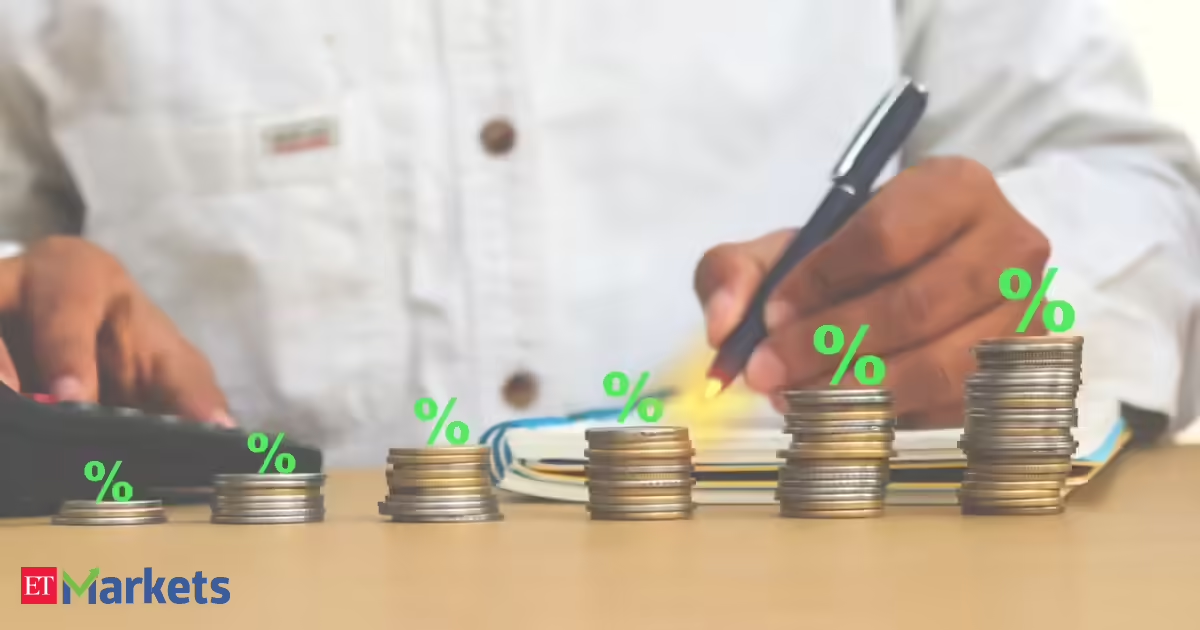

“Most market participants know that Nabard would not accept a rate as high as 8%, so the bidding automatically stopped at about ₹3000 crore,” said a corporate bond expert at a primary dealership.
Nabard, in April, had raised ₹4,250 crore at 7.49% for three years, and ₹7,265 crore at 7.44% for three years. Over this week, Nabfid raised ₹4,000 crore at 7.74% for 10 years, Mahindra and Mahindra Finance raised ₹650 crore at 7.90% for two years, Bajaj Finance raised ₹1,822 crore for five years and Bajaj Housing Finance raised ₹955 crore for 7.90%.

NEW YORK — Wordle enthusiasts worldwide unlocked a dynamic solution Saturday as The New York Times’ daily puzzle No. 1792 presented “MOVER,” a five-letter noun centered on motion and change that proved moderately difficult and required an average of 4.7 to 5.3 guesses according to early data from millions of players.
The answer, featuring common letters and a straightforward but deceptive structure, tested solvers’ vocabulary while generating widespread discussion across social media. As of mid-morning in major time zones, green emoji grids flooded group chats and platforms, with many players sharing stories of near-misses on their final attempts and relief upon cracking the code.
For those still working the puzzle or safeguarding their streaks, subtle hints circulated rapidly: the word is a noun, contains two vowels, starts with ‘M’ and relates to someone or something that causes motion or relocation. Strong opening guesses such as SLATE, CRANE, and MOVED often accelerated progress by quickly identifying key letters and patterns.
Today’s Wordle Answer: MOVER
The official solution for Wordle #1792 on May 16, 2026, is MOVER. Dictionary definitions describe it as “a person or company that moves household or office belongings from one location to another” or, more broadly, anything that causes movement or change.
Congratulations to those who solved it in three or four guesses. Players needing five or six attempts were in good company — recent analytics show the average solve rate hovers around 3.8 attempts, with words featuring common letter combinations like this one often pushing scores higher due to multiple plausible options.
Why “MOVER” Proved Tricky for Many
Wordle’s lasting appeal stems from its delicate balance of accessibility and clever difficulty. “MOVER” perfectly captured this dynamic: familiar letters arranged in a way that created several misleading alternatives. The ending “VER” cluster and starting “M” tested pattern recognition, while the word’s everyday usage masked its puzzle potential until later guesses narrowed the field.
Many solvers noted the thematic resonance, with “MOVER” evoking ideas of transition and progress amid personal and global changes. The New York Times selects words algorithmically from an expanding approved list, ensuring freshness while avoiding overly obscure terms. Recent updates in 2026 have slightly broadened the solution pool to keep the daily ritual engaging for its estimated 12-15 million active players.
Expert Strategies for Wordle Success in 2026
Top solvers and data analysts continue recommending vowel-rich openers such as SLATE, CRANE, TRACE or AUDIO. These maximize early information on both vowels and frequent consonants. Prominent figures like Bill Gates have endorsed starting with words heavy in vowels like ADIEU or OUNCE for optimal first-guess efficiency.
Follow up with diverse second and third guesses that test new letters while avoiding confirmed gray ones. In hard mode, which many serious players use, every guess must incorporate previously revealed yellow and green information. Frequency-based strategies remain highly effective: prioritize E, T, A, R, I, O, N, S and H. Common endings to watch include -ER, -ED, -ES and -ING patterns, though Wordle typically avoids most plurals.
Advanced players mentally track remaining possibilities or use external tools ethically without direct solvers. For “MOVER”-style puzzles with common letter clusters, testing words with repeated consonants or action-oriented themes early can significantly speed up the process. Community favorites include TRAIN followed by CLOSE or BUMPY for broad letter coverage in minimal guesses.
Wordle’s Enduring Cultural Phenomenon
Since its 2021 launch by Josh Wardle and acquisition by The New York Times, Wordle has evolved from a simple web game into a global daily ritual. Emoji grids continue dominating breakfast tables, workplace chats and family group messages. In 2025, NYT Games puzzles were played more than 11 billion times, with Wordle remaining the flagship experience that unites millions across generations and cultures.
Its elegant design — six guesses for a single five-letter word — creates shared experiences without direct competition, while streaks and personal statistics add individual motivation. Recent expansions, including companion games like Connections and Strands, have broadened the NYT Games ecosystem while preserving Wordle’s core simplicity.
Global Reach and Seoul Players
In South Korea, Wordle serves dual purposes as entertainment and English practice tool for students and professionals. Many incorporate daily solutions into vocabulary notebooks, noting words like “MOVER” expand practical and idiomatic language skills. Solve rates in Asia closely mirror global averages, with morning subway commutes often featuring players comparing results.
International time zones create continuous conversations, with Asian solvers frequently posting solutions while North American audiences sleep. Hashtags like #Wordle1792 trend daily, fostering a truly worldwide community around this simple yet addictive word game.
Cognitive Benefits and Lasting Appeal
Beyond fun, regular Wordle engagement sharpens pattern recognition, vocabulary expansion and mental resilience. Educators increasingly use it in classrooms to teach categorization and logical deduction. Studies link consistent word games to improved cognitive function and delayed mental aging. The public-yet-private nature of the game — failing alone but sharing success — perfectly balances personal growth with social connection.
For streak enthusiasts, consistency matters more than brilliance. Many maintain impressive runs by playing at the same time daily and sticking with proven starting words. The game’s forgiving design rewards patience and learning from mistakes rather than punishing them.
Looking Ahead to Tomorrow’s Puzzle
Wordle #1793 awaits at midnight, promising fresh challenges in the expanding word pool. Whether today’s “MOVER” delivered a swift victory or required every guess, the ritual resets tomorrow with new opportunities for triumph or learning.
The game’s simplicity offers welcome focus in an era of constant digital noise — five letters, six attempts, one shared solution. As Wordle heads toward television adaptations and continues evolving under NYT stewardship, its fundamental appeal remains unchanged: the timeless joy of words, logic and community connection.
Play responsibly, celebrate wins humbly, and remember that even challenging days lead to fresh grids. For those seeking more mental stimulation, NYT Games provides companion puzzles including Connections, the Mini Crossword and Strands.
Whether you solved “MOVER” quickly or needed every attempt, you joined millions in a shared daily experience that continues bringing people together across borders and backgrounds. In a complex world, Wordle’s straightforward challenge delivers consistent satisfaction and sparks conversations that transcend the grid itself.
As the game enters its sixth year of global popularity, its influence on daily routines and cultural conversations shows no signs of slowing. Tomorrow brings another word, another chance and another opportunity to connect through the simple pleasure of solving together.

New York’s Long Island rail strike halts busiest commuter line in US
Ripple Price Analysis: XRP Momentum Shifts Bullish Against Both USD and BTC

Duck Dynasty’s Al Robertson Recalls Wife’s Affair Aftermath

Manchester United reach agreement with Casemiro over contract clause amid transfer speculation

US brings back mandatory military draft registration

Steven Gerrard disagrees with Gary Neville over ‘shock’ Chelsea and Arsenal claim | Football

#shorts+@dreamreelspsk. Meme Story Series 3 . Elevate Personal Financial Literacy Story Visuals

XRP: “NEW XRP ALL TIME HIGH LIKELY THIS YEAR” Popular Analyst Claims -Report

The Actual Reason Bitcoin Is Crashing (you won’t believe)
-

 Fashion4 days ago
Coffee Break: Travel Steam Iron
-

 Politics7 days ago
Politics Home Article | Starmer Enters The Danger Zone
-

 Fashion12 hours ago
Weekend Open Thread: Theory – Corporette.com
-

 Fashion5 days ago
What to Know Before Buying a Curling Wand or Curling Iron
-

 Politics4 days ago
What to expect when you’re expecting a budget
-

 Tech6 days ago
Auto Enthusiast Carves Functional Two-Stroke Engine from Solid Metal
-

 Crypto World5 hours ago
BloFin War of Whales 2026 Grand Prix opens registration for $5M trading championship
-
 Business7 days ago
Ignore market noise, India’s long-term story intact, say D-Street bulls Ramesh Damani and Sunil Singhania
-

 Tech5 days ago
GM Agrees To Pay $12.75 Million To Settle California Lawsuit Over Misuse Of Customers’ Driving Data
-

 Tech24 hours ago
Tech Moves: Microsoft AI leader jumps to OpenAI; former AI2 exec joins Meta; and more
-

 Crypto World6 days ago
CZ says US crypto rivals tried to block Trump pardon
-

 Crypto World7 days ago
PROS explodes 48% as Upbit and Bithumb listings ignite demand
-

 Tech4 days ago
GM agrees to $12.75M California settlement over sale of drivers’ data
-
Crypto World3 days ago
Bitcoin Suisse expands with Digital Asset License and Investment Business Act Registration Approval in Bermuda
-

 Crypto World11 hours ago
E-Estate Announces 1 Year Live: Washington DC Summit as Real Estate Tokenization Enters Its Next Phase
-

 Politics3 days ago
Pakistan to enter Chinese capital market as war inflation bites
-

 Crypto World3 days ago
Bitcoin Suisse expands with Digital Asset License and Investment Business Act Registration Approval in Bermuda
-

 Crypto World2 days ago
Google’s Gemini AI Predicts Incredible Solana Price by the End of 2026
-
 Tech7 days ago
iPhone 14 Won’t Turn On? 5 Fixes That Work (2026)
-

 Politics6 days ago
Sky News Presenter Says Keir Starmer Is Not Waving But Drowning
You must be logged in to post a comment Login