
Business
IRGC Intelligence Chief Majid Khademi Killed in Israeli Airstrike on Tehran


TEHRAN, Iran — Maj. Gen. Majid Khademi, head of intelligence for Iran’s Islamic Revolutionary Guard Corps, was killed early Monday in an Israeli airstrike on Tehran, Iranian state media and the IRGC announced, marking another major blow to the paramilitary force amid ongoing U.S.-Israeli military operations against Iran.

The IRGC confirmed Khademi’s death in a statement carried by Iranian outlets including Tasnim and Sepah News, describing the incident as a “criminal terrorist attack by the American-Zionist enemy” at dawn. Israeli Defense Minister Israel Katz and the Israel Defense Forces quickly claimed responsibility, with Katz stating the strike eliminated “one of those directly responsible for these war crimes” and one of the three most senior officials in the organization.
Khademi, who assumed the role in June 2025 after his predecessor Brig. Gen. Mohammad Kazemi was killed in earlier Israeli strikes during the initial phase of the 2025-2026 conflict, had served in the IRGC’s intelligence organization for nearly five years. Iranian sources portrayed him as a “powerful and educated” figure central to countering foreign infiltration and protecting the Guard from external threats.
The strike occurred as U.S.-Israeli airstrikes continue to target Iranian military infrastructure more than a month into intensified operations that began in late February 2026. Iranian state media reported explosions in the capital, with the attack focusing on IRGC facilities. No immediate details were released on the exact location within Tehran or whether additional casualties occurred in the strike.
This latest assassination fits a pattern of high-profile targeting of Iranian leadership. Since the escalation, Israel and the U.S. have claimed responsibility for eliminating numerous senior figures, including former Supreme Leader Ayatollah Ali Khamenei, IRGC Commander-in-Chief Hossein Salami, Intelligence Minister Esmail Khatib, National Security Council Secretary Ali Larijani, Basij commander Gholamreza Soleimani and naval commander Alireza Tangsiri. Over 1,000 IRGC and security officials have reportedly been killed in the broader campaign, according to Israeli sources.
Israeli Prime Minister Benjamin Netanyahu hailed the operation, vowing to continue the war “with full force” and stating that Israel would keep hunting down regime leaders responsible for attacks on civilians. “The IRGC fires at civilians – and we eliminate the heads of the terrorists,” Katz added in his confirmation.
Iran has vowed retaliation for each high-profile killing. The IRGC and state officials have accused the U.S. and Israel of seeking regime change through targeted assassinations and infrastructure strikes. Tehran has responded with missile and drone attacks on Israeli targets, as well as reported strikes on Gulf energy sites and other regional assets. Mediators are reportedly pushing a 45-day ceasefire proposal that includes reopening the Strait of Hormuz, a critical waterway for global oil shipments that Iran has threatened to disrupt.
Khademi’s death comes at a sensitive moment for the IRGC, which has seen its command structure repeatedly disrupted. The organization, designated a terrorist group by the U.S. and several allies, oversees Iran’s ballistic missile program, regional proxy militias and internal security apparatus. Intelligence functions under the IRGC have focused on counterintelligence, monitoring perceived domestic threats and supporting overseas operations.
Analysts note that repeated decapitation strikes could impair operational coordination in the short term, though the IRGC’s decentralized structure and deep bench of ideologically committed officers may allow rapid replacements. Iranian officials have repeatedly stated that missile production and defensive capabilities continue despite losses.
The broader conflict erupted after years of shadow warfare, proxy clashes and failed nuclear negotiations. Israel has long viewed Iran’s nuclear program, ballistic missiles and support for groups like Hezbollah, Hamas and the Houthis as existential threats. Tehran accuses Israel and the U.S. of aggression aimed at destabilizing the Islamic Republic.
U.S. involvement has intensified under the current administration, with joint operations targeting Iranian military sites. President Donald Trump has issued strong statements on the conflict, including threats of further escalation if Iran does not agree to terms on its nuclear program and regional behavior.
Casualties on both sides have mounted. Iranian reports emphasize civilian and military deaths from Israeli strikes on cities including Tehran, Isfahan and other provinces. Israel has reported damage from Iranian missile barrages, though its air defenses have intercepted many incoming threats.
International reactions have been divided. Western allies have largely supported Israel’s right to defend itself, while Russia, China and some Global South nations have condemned the strikes as violations of sovereignty. Calls for de-escalation have grown, with diplomatic efforts focusing on preventing a wider regional war that could draw in more actors and disrupt global energy markets.
Within Iran, the deaths of successive leaders have tested public morale and regime stability. State media has framed the fallen officials as martyrs, organizing funerals and rallies to rally support. However, reports of internal discontent and economic strain from sanctions and conflict have surfaced, though heavily censored.
Khademi is the latest in a line of IRGC intelligence leaders targeted. His predecessor Kazemi and deputy were killed in June 2025 strikes on Tehran, part of what Israel described as Operation Rising Lion or similar campaigns aimed at degrading Iran’s capabilities.
Military experts suggest the precision of the latest strike indicates advanced Israeli intelligence and possibly assistance from regional partners or cyber capabilities that enabled real-time targeting in the heart of Tehran. Iran has accused Israel of using infiltrators and advanced weaponry, claims Israel neither confirms nor denies.
As the conflict enters its next phase, questions remain about succession within the IRGC intelligence organization. Iranian media has not yet named a replacement, but the Guard has historically promoted from within to maintain continuity.
The strike also highlights vulnerabilities in Iran’s air defenses despite years of investment in Russian and domestic systems. Repeated successful penetrations of Tehran airspace have raised concerns about the effectiveness of layered protections around key sites and leaders.
For ordinary Iranians, the ongoing war has brought blackouts, fuel shortages and fear of further escalation. Many have fled urban centers or stocked up on essentials amid uncertainty.
Diplomats warn that each high-value target eliminated risks provoking more desperate Iranian responses, potentially including asymmetric attacks through proxies or attempts to close key maritime chokepoints.
Israel maintains that its campaign aims to eliminate threats rather than pursue full regime change, though some officials have spoken more ambitiously about reshaping the regional balance of power.
With no immediate ceasefire in sight despite mediation proposals, the killing of Majid Khademi is likely to intensify the cycle of strikes and counterstrikes. Both sides appear prepared for prolonged confrontation, even as the human and economic costs rise.
The IRGC has pledged that Khademi’s “martyrdom” will not go unanswered, signaling potential new retaliatory actions in the coming days. Israeli officials, meanwhile, have reiterated their commitment to continue operations until strategic objectives are met.
This latest development underscores the high-stakes nature of the U.S.-Israeli campaign against Iran’s military leadership and the challenges of achieving lasting deterrence in one of the world’s most volatile regions.


Asset Class Scoreboard: March 2026


Manika is a macroeconomist with over 20 years of experience in industries including investment management, stock broking, investment banking. She also runs the profile Long Term Tips [LTT], which focuses on the generational opportunity in the green economy. Her investing group, Green Growth Giants, takes the theme a step further from LTT with a deeper dive into opportunities presented by the segment.
Analyst’s Disclosure: I/we have no stock, option or similar derivative position in any of the companies mentioned, but may initiate a beneficial Long position through a purchase of the stock, or the purchase of call options or similar derivatives in CCL over the next 72 hours. I wrote this article myself, and it expresses my own opinions. I am not receiving compensation for it (other than from Seeking Alpha). I have no business relationship with any company whose stock is mentioned in this article.
Seeking Alpha’s Disclosure: Past performance is no guarantee of future results. No recommendation or advice is being given as to whether any investment is suitable for a particular investor. Any views or opinions expressed above may not reflect those of Seeking Alpha as a whole. Seeking Alpha is not a licensed securities dealer, broker or US investment adviser or investment bank. Our analysts are third party authors that include both professional investors and individual investors who may not be licensed or certified by any institute or regulatory body.

$100 Oil Won't Sink The U.S. Economy


As a detail-oriented investor with a strong foundation in finance and business writing, I focus on analyzing undervalued and disliked companies or industries that have strong fundamentals and good cash flows. I have a particular interest in sectors such as Oil&Gas and consumer goods. Basically, anything that has been unloved for unjustified reasons that could offer substantial returns. Energy Transfer is one of those companies that I came across when no one wanted to touch it and now I can’t resolve myself to sell it. I will always focus more on long-term value investing but I can sometimes lose myself in possible deal arbitrage such as with Microsoft/ Activision Blizzard, Spirit Airlines/Jetblue (that one still hurts), and Nippon/U.S. Steel (perfect exit at $50.19). I tend to shun businesses that I can’t understand either high-tech or certain consumer goods such as fashion (give me a Levi’s jeans). I don’t understand why anyone would invest in cryptocurrencies as well. Through Seeking Alpha, I aim to connect with like-minded investors, share insights, and build a collaborative community of individuals seeking superior returns and informed decision-making, currently on a quest to review every public company.
Analyst’s Disclosure: I/we have no stock, option or similar derivative position in any of the companies mentioned, and no plans to initiate any such positions within the next 72 hours. I wrote this article myself, and it expresses my own opinions. I am not receiving compensation for it (other than from Seeking Alpha). I have no business relationship with any company whose stock is mentioned in this article.
Seeking Alpha’s Disclosure: Past performance is no guarantee of future results. No recommendation or advice is being given as to whether any investment is suitable for a particular investor. Any views or opinions expressed above may not reflect those of Seeking Alpha as a whole. Seeking Alpha is not a licensed securities dealer, broker or US investment adviser or investment bank. Our analysts are third party authors that include both professional investors and individual investors who may not be licensed or certified by any institute or regulatory body.

Check out what’s clicking on FoxBusiness.com.
Convenience store chain Wawa is recalling certain company-branded drinks due to an undeclared milk allergen.
The recall affects 16-ounce bottles of Wawa Iced Tea Lemon, Wawa Iced Tea Diet Lemon, Wawa Diet Lemonade and Wawa Fruit Punch. All four drinks are produced by the Wawa Beverage Company.
Wawa said in a press release that the products are no longer being sold and have been disposed of by affected stores. The recall was initiated after the company “identified and corrected” a temporary equipment issue that may have resulted in the presence of an undeclared milk allergen in the drinks.
The chain said people with milk allergies “run the risk of serious or life-threatening allergic reaction if they consume this product.”
DINOSAUR CHICKEN NUGGETS SOLD NATIONWIDE AT WALMART MAY CONTAIN LEAD, FEDERAL ALERT WARNS

Wawa is recalling drink products over an undeclared milk allergen. (Getty Images)
No illnesses have been reported to date in connection with the recall, Wawa said.
The company urges consumers who purchased the affected items to dispose of them immediately and contact the company’s customer contact center via email or phone; they can request a refund in the form of a Wawa gift card.
Wawa Iced Tea Lemon

A bottle of Wawa-branded iced tea with lemon in a 16-ounce bottle. (Wawa)
- Sold in 123 stores in Delaware, Maryland, New Jersey, Pennsylvania and Virginia
- UPC code: 726191018425
- Date printed on top of bottle: May 15, 2026
Wawa Iced Diet Tea Lemon

A bottle of Wawa-branded diet iced tea with lemon in a 16-ounce bottle. (Wawa)
- Sold in eight stores in New Jersey and Pennsylvania
- UPC code: 726191018548
- Date printed on top of bottle: May 18, 2026
NEARLY 10M POUNDS OF FROZEN FRIED RICE SOLD AT TRADER JOE’S ADDED TO RECALL: USDA
Wawa Diet Lemonade

A bottle of Wawa-branded diet lemonade in a 16-ounce bottle.
- Sold in 12 stores in Delaware and New Jersey
- UPC code: 726191055901
- Date printed on top of bottle: May 18, 2026
THOUSANDS OF BREAD, PIZZA ITEMS RECALLED IN 10 STATES OVER POSSIBLE METAL CONTAMINATION
Wawa Fruit Punch

A bottle of Wawa-branded fruit punch in a 16-ounce bottle. (Wawa)
CLICK HERE TO GET FOX BUSINESS ON THE GO
- Sold in 53 stores in Delaware, Maryland, New Jersey, Pennsylvania and Virginia
- UPC code: 726191018432
- Date printed on top of bottle: May 19, 2026


I aim to invest in companies with perfect qualitative attributes, buy them at an attractive price based on fundamentals, and hold them forever. I hope to publish articles covering such companies approximately 3 times per week, with extensive quarterly follow-ups and constant updates.I manage a concentrated portfolio targeted at avoiding losers and maximizing exposure to big winners. This means that often I’ll rate great companies at a ‘Hold’ because their growth opportunity is below my threshold, or their downside risk is too high.
Analyst’s Disclosure: I/we have a beneficial long position in the shares of GOOG, AMZN either through stock ownership, options, or other derivatives. I wrote this article myself, and it expresses my own opinions. I am not receiving compensation for it (other than from Seeking Alpha). I have no business relationship with any company whose stock is mentioned in this article.
Seeking Alpha’s Disclosure: Past performance is no guarantee of future results. No recommendation or advice is being given as to whether any investment is suitable for a particular investor. Any views or opinions expressed above may not reflect those of Seeking Alpha as a whole. Seeking Alpha is not a licensed securities dealer, broker or US investment adviser or investment bank. Our analysts are third party authors that include both professional investors and individual investors who may not be licensed or certified by any institute or regulatory body.
Business
Is Spectrum Down Now? Spectrum Internet Faces Scattered Outages as Users Report Wi-Fi and Broadband Issues
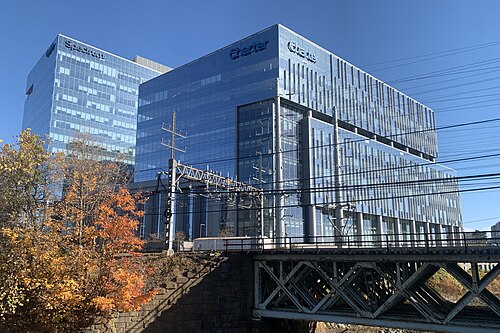
Charter Communications’ Spectrum internet service experienced scattered user-reported disruptions Monday, with complaints centering on Wi-Fi connectivity, broadband slowdowns and intermittent outages in multiple regions, even as the company’s official monitoring tools indicated no widespread system-wide failure.

Downdetector and similar crowd-sourced trackers showed elevated but not extreme reports of problems with Spectrum’s internet, TV and mobile services in the past 24 hours. The most common issues included Wi-Fi failures (around 43% of reports), broadband internet problems and occasional mobile connectivity complaints. Reports were geographically dispersed rather than concentrated in one major market, suggesting localized or account-specific glitches rather than a national outage.
Spectrum’s support pages directed customers to check for outages via the My Spectrum app or online account, with troubleshooting tools available for equipment resets. The company’s Storm Center page reminded users that power outages from utilities can affect service, urging coordination with local providers for restoration. No major “Investigating” alert appeared on public status dashboards for core network infrastructure as of early Tuesday KST.
The complaints arrive amid ongoing frustration for Spectrum customers, who have reported frequent service interruptions throughout 2026. Reddit threads and social media posts described Monday’s issues as part of a pattern, with some users claiming it was their “17th outage of the year” in certain areas. Recent notable disruptions included a widespread event on April 2 that affected thousands across the U.S., with spikes in reports starting in the early morning hours.
Spectrum, which serves millions of households across 25 states after acquiring Time Warner Cable in 2016, has faced recurring criticism over reliability, customer service response times and billing disputes. In early 2026, a January outage impacted downstream partners and customers in several regions, lasting over an hour in some cases and highlighting vulnerabilities in network nodes in major cities like New York and Houston.
Analysts attribute many incidents to a combination of aging infrastructure in some markets, high demand during peak evening hours, weather-related events and occasional maintenance windows. Spectrum has invested billions in network upgrades, including expansion of its fiber and DOCSIS 4.0 capabilities, but rollout has been uneven across its footprint. Rural and suburban areas sometimes experience more frequent hiccups than dense urban zones with newer equipment.
For affected users Monday, common symptoms included inability to connect to Wi-Fi, slow speeds preventing streaming or video calls, and complete loss of internet for periods ranging from minutes to several hours. Mobile app users reported difficulties accessing accounts or receiving outage notifications. Some customers noted that restarting modems and routers temporarily resolved issues, while others required technician visits or waited for network-side fixes.
Spectrum recommends several troubleshooting steps: power cycling the modem and router, checking cables, using the My Spectrum app to test connection status, and verifying if the problem is isolated to one device or the entire home network. Business customers have access to dedicated support portals with outage alerts.
The Federal Communications Commission tracks broadband reliability, and Spectrum has faced past scrutiny over advertised versus delivered speeds during peak times. Consumer advocacy groups continue to call for stronger oversight of major ISPs, citing high complaint volumes relative to smaller providers.
Monday’s reports did not appear to reach the scale of the April 2 event, when DownDetector recorded hundreds of complaints per hour. That outage affected broadband and Wi-Fi primarily, with some TV signal issues reported. Recovery times varied by location, with most services restored within hours.
Spectrum serves a large portion of the U.S. cable market and has expanded into mobile services through Spectrum Mobile, which relies on Verizon’s network for coverage. Mobile complaints Monday were fewer but included signal drops in areas with known tower maintenance.
Customers in states like California, New York, Texas, Florida and Ohio frequently appear in outage maps, reflecting the provider’s heavy presence in those markets. Localized spikes can occur due to construction, weather or targeted maintenance, while broader events often stem from backbone or regional node problems.
Industry observers note that ISP outages have decreased slightly year-over-year in some tracking, but consumer expectations for near-perfect uptime have risen with increased reliance on remote work, streaming and smart home devices. Even brief disruptions can disrupt online classes, telehealth appointments and business operations.
Spectrum has not issued a public statement specifically addressing Monday’s user reports. The company typically communicates through its app, website and social channels when major incidents occur, and offers credits in cases of prolonged outages meeting certain thresholds.
For those still experiencing problems, contacting Spectrum support via chat, phone or the app is recommended, though wait times can lengthen during spikes. Users can also report issues on Downdetector to help track patterns.
As reliance on high-speed internet grows, even intermittent Spectrum outages draw quick attention on social media, with hashtags and location-specific complaints trending locally. The Monday reports appeared more fragmented than synchronized national events seen earlier in the year.
Looking ahead, Spectrum continues upgrading its network to support gigabit and multi-gig speeds in more markets. Fiber deployment in select areas promises greater reliability, but full transition will take years. In the meantime, customers in outage-prone zones sometimes turn to backup solutions like mobile hotspots or competing providers where available.
Spectrum’s parent company, Charter Communications, has emphasized customer experience improvements alongside infrastructure investment. Recent earnings highlighted progress in reducing churn and expanding services, though service reliability remains a key pain point for many subscribers.
Anyone facing persistent issues should document dates, times and symptoms for potential credit requests or escalation. Spectrum’s outage information pages provide ZIP code-specific checks and general troubleshooting guides.
While no major nationwide outage was confirmed Monday, the accumulation of user complaints served as a reminder of the challenges in maintaining consistent service across a vast footprint. Spectrum customers are advised to monitor the My Spectrum app for personalized alerts and stay prepared with basic troubleshooting knowledge.
As evening approached in many U.S. time zones, reports appeared to stabilize, with most services functioning normally according to official channels. Isolated or account-specific problems may persist for some users, who are encouraged to reach out directly to support for resolution.
Spectrum provides cable television, high-speed internet and home phone services to residential and business customers. In an increasingly connected world, even short disruptions highlight the critical role reliable broadband plays in daily life.
Users experiencing ongoing problems should check Spectrum’s official outage tools first, then proceed with standard resets or contact support. The company has a history of resolving most incidents within hours once identified, though recurring issues in certain markets continue to frustrate subscribers.

Gencor Industries shareholders approve director elections and auditor ratification

Elon Musk spotlighted Tesla’s Full Self-Driving (Supervised) technology Monday, reposting data showing the system is roughly seven times safer than the average U.S. human driver and sparking fresh debate about the pace of autonomous vehicle adoption.
In a post on X that quickly drew hundreds of thousands of views, Musk simply asked, “Did you know Tesla FSD was this good?” The message quoted an earlier Grok response citing Tesla’s latest Vehicle Safety Report as of April 2026. According to the data, FSD (Supervised) records one crash every 5 million to 7 million miles driven, compared with roughly one crash every 660,000 miles for human drivers. The figures are based on more than 9 billion miles of real-world FSD data.

The post amplified a detailed assessment from Grok, xAI’s AI model, rating current FSD performance an 8.5 out of 10 on a scale where 10 represents perfect autonomy. The assessment noted the system’s “transformative edge” over manual driving while acknowledging it remains supervised, with human drivers expected to stay ready to intervene. It also referenced ongoing scrutiny from the National Highway Traffic Safety Administration on edge cases.
Musk’s endorsement comes as Tesla pushes aggressively toward unsupervised autonomy and robotaxi deployment. The company has rolled out incremental FSD updates throughout 2026, with version 14.3 widely anticipated by owners and frequently mentioned in replies to Musk’s post. Enthusiasts in the thread described daily use of the system, with some reporting 80% or more of their driving now handled by FSD and expressing excitement for the next software release.
Tesla’s Vehicle Safety Reports, released quarterly, have consistently shown improving safety metrics for FSD as the company accumulates more data and refines its neural networks. The latest April 2026 figures represent a significant leap from earlier reports, where the safety multiple was closer to 5x or 6x in some periods. Tesla attributes the gains to continuous over-the-air improvements, better handling of complex urban scenarios and expanded training datasets.
Industry analysts reacted with measured optimism. While the safety data is compelling, critics note that FSD remains in supervised mode and has faced regulatory hurdles, including NHTSA investigations into crashes involving Autopilot and FSD features. Tesla maintains that the system’s performance exceeds human benchmarks on a per-mile basis, but regulators emphasize the need for robust validation across billions more miles before unsupervised operation on public roads.
The viral post also reignited broader conversations about public awareness. Several replies highlighted that many drivers still do not fully understand FSD’s capabilities or safety record, with one user calling it “a failure by you and the Tesla team” to communicate the technology more effectively. Others shared personal anecdotes of feeling safer with FSD engaged, while some expressed frustration over delays in wider releases of newer versions.
Tesla CEO Musk has long positioned FSD as a cornerstone of the company’s future, projecting that robotaxis could eventually generate trillions in value. The company has invited select owners to early unsupervised testing in Texas and California under strict conditions, though a full unsupervised rollout remains pending regulatory approval in key markets.
Monday’s post drew a mix of celebration and skepticism. Supporters praised the data as proof that Tesla leads the autonomous driving race, while others questioned whether the statistics fully account for variables such as driver disengagement rates or geographic differences in testing. Replies included calls for faster deployment of version 14.3 and humorous takes on using FSD to multitask during commutes.
The timing aligns with heightened investor and consumer interest in Tesla’s autonomy efforts. The company’s stock has shown volatility in 2026 amid broader market concerns over geopolitical tensions and energy prices, but FSD milestones often provide positive catalysts. Musk’s personal involvement in promoting the technology underscores his view that rapid iteration and real-world data will ultimately prove the system’s superiority.
Tesla has logged more than 9 billion miles of FSD data, giving it one of the largest real-world datasets in the industry. The company contrasts its vision-based approach with competitors relying more heavily on lidar and other sensors, arguing that its camera-and-AI system more closely mimics human perception while scaling efficiently through software updates.
Regulatory bodies continue to monitor progress closely. The NHTSA has requested detailed information on FSD incidents, and international regulators in Europe and China are evaluating similar data for potential approvals. Tesla maintains transparency through its quarterly reports while pushing for clearer regulatory frameworks that recognize the statistical safety advantages.
Public reaction on X reflected the polarized nature of autonomous vehicle discussions. Some users posted videos and photos of smooth FSD drives, while others shared edge-case frustrations such as roundabout navigation. The thread also featured lighthearted content, including AI-generated images and parody accounts weighing in on the technology’s potential.
For Tesla owners, the post served as a reminder of the technology already in their vehicles. Many reported using FSD daily and feeling confident in its abilities, though most still keep hands near the wheel as required. The company stresses that the system is “Supervised” for a reason and drivers must remain attentive.
Broader implications extend beyond individual safety. Widespread adoption of safer autonomous systems could reduce the roughly 40,000 annual traffic fatalities in the U.S., ease congestion and free up time for drivers. Economic analyses project significant productivity gains if robotaxis and autonomous trucking scale successfully.
Musk’s post, which garnered more than 466,000 views within hours, exemplifies his strategy of using X to communicate directly with millions of followers and potential customers. It also highlighted the growing synergy between Tesla and xAI, with Grok providing data-driven analysis that Musk then amplified.
As Tesla prepares for potential robotaxi events later in 2026, the latest safety figures add fuel to optimism among supporters. Skeptics, however, caution that statistical safety must be matched by consistent performance in every scenario before regulators grant full unsupervised approval.
The conversation sparked by Musk’s simple question underscores a key tension in the autonomous vehicle space: the gap between statistical trust in the data and emotional trust required for mass adoption. With billions more miles of data accumulating quarterly, Tesla and competitors continue racing toward the day when human drivers become the exception rather than the rule.
For now, FSD (Supervised) represents a major step forward, with Monday’s viral post serving as both celebration and call to action for greater public awareness of its capabilities.
Bluesky, the decentralized social media platform often positioned as an alternative to X, faced intermittent outages in the US East region Monday, with users reporting difficulties accessing the app, loading feeds and viewing timelines, according to the company’s official status page and crowd-sourced trackers.

Bluesky’s status page at status.bsky.app confirmed an ongoing incident as of mid-afternoon, stating that since this morning the platform had been experiencing intermittent outages in the US East region due to an issue with an upstream service provider. The company said it was actively working with the provider to restore full service as soon as possible. Overall system status remained listed as “All systems Operational,” with strong uptime figures of 99.993% over the past 24 hours and 99.955% over the past seven days.
Downdetector showed a noticeable spike in user reports throughout the day, with the majority of complaints centered on the mobile app (approximately 50%), followed by feed/timeline problems (23%) and website access (15%). Reports were concentrated in the United States but appeared geographically dispersed rather than indicating a complete nationwide shutdown. Similar patterns emerged on social platforms, where users posted screenshots of loading errors or blank feeds and used hashtags such as #BlueskyDown.
The platform’s decentralized architecture, which relies on multiple servers and personal data servers (PDS), has generally provided resilience, but Monday’s disruption highlighted vulnerabilities tied to third-party infrastructure. Bluesky has grown rapidly since its public launch, attracting millions of users seeking an ad-light, algorithm-optional experience with custom feeds and strong moderation tools. However, scaling challenges have occasionally led to similar intermittent issues, especially during peak usage hours or when upstream dependencies falter.
Users in affected regions reported a range of symptoms: inability to refresh timelines, delayed post loading, login glitches on the app and occasional complete connection failures. Some noted that switching to web access or using a VPN temporarily mitigated problems, while others waited for natural resolution. The timing coincided with typical workday peaks in the Eastern Time Zone, amplifying frustration for users relying on Bluesky for news, community discussions and real-time updates.
Bluesky’s official status updates emphasized transparency, with the US East incident marked and monitored throughout the day. No full platform-wide outage was declared, distinguishing Monday’s event from more severe past disruptions. Earlier in 2026, the platform experienced shorter outages on April 4 and April 5, including a roughly 37-minute incident on April 5 that affected feed aggregation for some users. Those were resolved relatively quickly without major announcements.
Industry observers noted that as Bluesky’s user base expands — fueled by dissatisfaction with other platforms and features like custom feeds and decentralized identity — even brief interruptions draw significant attention. The platform’s growth has been steady, with strong engagement in creative, tech and political communities. However, reliability remains a key factor for retaining users who have migrated from more established networks.
For those encountering problems, Bluesky recommends standard troubleshooting: force-quitting and restarting the app, checking internet connections, clearing cache, or trying the web version at bsky.app. Users can also monitor the official status page for real-time updates. The company has not yet provided an estimated resolution time for the US East issue but indicated active collaboration with the upstream provider.
The incident underscores the challenges facing growing social platforms in maintaining consistent performance amid reliance on cloud infrastructure and third-party services. Bluesky’s decentralized model aims to reduce single points of failure compared with traditional centralized networks, yet dependencies on regional hosting and service providers can still create localized pain points.
Public reaction on X and other platforms mixed irritation with understanding. Some users joked about the irony of outages on a platform marketed for better user experience, while others praised the relative rarity of major disruptions compared with competitors. A number of affected users temporarily shifted activity back to X or other networks, highlighting the fragmented nature of today’s social media landscape.
Bluesky continues to iterate on features, including improved moderation tools, custom feed algorithms and enhanced search capabilities. The platform has positioned itself as a more open and user-controlled alternative, with users able to run their own servers in the decentralized ecosystem. Despite Monday’s hiccup, overall uptime metrics remain excellent, reflecting solid engineering efforts behind the scenes.
As the afternoon progressed in the US East, reports on Downdetector appeared to stabilize somewhat, though the upstream issue persisted according to Bluesky’s latest update. Users in unaffected regions reported normal service, suggesting the problem remained geographically limited.
For international users, impact appeared minimal, with European and Asian access largely unaffected. This regional focus is common in cloud-dependent services where data routing and hosting zones play a critical role.
Bluesky’s team has a track record of responsive communication during incidents, often updating via the status page and official accounts. Past resolutions have involved provider-side fixes, server optimizations or temporary traffic rerouting. The company is expected to provide a post-incident summary once service fully stabilizes.
In the broader context, Monday’s event serves as a reminder that even fast-growing platforms face scaling pains. As Bluesky competes for users in a crowded social space, consistent reliability will be crucial for long-term retention. The platform’s decentralized ethos offers potential advantages for resilience, but real-world dependencies can still introduce friction.
Affected users are encouraged to check status.bsky.app regularly and report persistent issues through official channels. In the meantime, basic troubleshooting steps often resolve temporary glitches while engineers address upstream problems.
As evening approached in many time zones, Bluesky urged patience and thanked users for their understanding. The company continues investing in infrastructure to minimize future disruptions as its community grows.
Bluesky, launched as a decentralized microblogging platform, has carved out a niche with its emphasis on user choice, reduced algorithmic manipulation and community-driven moderation. While not immune to technical hiccups, its overall performance has supported steady expansion in 2026.
For now, the majority of services remain accessible, with the US East intermittent outage representing a localized rather than platform-wide event. Users experiencing ongoing difficulties should monitor official updates for the latest resolution timeline.

Mikel Arteta: Arsenal feel the pain of back-to-back defeats but will not panic

How long is I’m a Celeb South Africa 2026 on TV for?

Asset Class Scoreboard: March 2026


-

 NewsBeat4 days ago
Steven Gerrard disagrees with Gary Neville over ‘shock’ Chelsea and Arsenal claim | Football
-

 Business4 days ago
No Jackpot Winner and $194 Million Prize Rolls Over
-

 Fashion3 days ago
Weekend Open Thread: Spanx – Corporette.com
-

 Crypto World5 days ago
Gold Price Prediction: Worst Month in 17 Years fo Save Haven Rock
-

 Business20 hours ago
Three Gulf funds agree to back Paramount’s $81 billion takeover of Warner, WSJ reports
-
Crypto World6 days ago
Dems press CFTC, ethics board on prediction-market insider trades
-

 Sports2 days ago
India men’s 4x400m and mixed 4x100m relay teams register big progress | Other Sports News
-

 Business5 days ago
Login and Checkout Issues Spark Merchant Frustration
-

 Tech6 days ago
EE TV is using AI to help you find something to watch
-

 Sports6 days ago
Tallest college basketball player ever, standing at 7-foot-9, entering transfer portal
-

 Politics7 days ago
Should Trump Be Scared Strait?
-
Tech7 days ago
Daily Deal: StackSkills Premium Annual Pass
-

 Tech7 days ago
Flipsnack and the shift toward motion-first business content with living visuals
-

 Sports7 days ago
Women’s hockey camp eyes fitness boost, tactics ahead of WC 2026 campaign | Other Sports News
-

 Crypto World7 days ago
U.S. rule change may open trillions in 401(k) funds to crypto
-

 Tech6 days ago
How to back up your iPhone & iPad to your Mac before something goes wrong
-

 NewsBeat7 days ago
Newscast – Scott Mills Sacked By BBC
-

 Politics7 days ago
Usha Vance: Disney Hats Over MAGA Caps?
-
Crypto World7 days ago
Valinor raises $25m to put private credit on-chain
-

 Business7 days ago
Functional benefits brewing in coffee innovation
You must be logged in to post a comment Login