
Business
Is Bluesky Down Now? User Experiences Intermittent US East Outages Monday


Bluesky, the decentralized social media platform often positioned as an alternative to X, faced intermittent outages in the US East region Monday, with users reporting difficulties accessing the app, loading feeds and viewing timelines, according to the company’s official status page and crowd-sourced trackers.

Bluesky’s status page at status.bsky.app confirmed an ongoing incident as of mid-afternoon, stating that since this morning the platform had been experiencing intermittent outages in the US East region due to an issue with an upstream service provider. The company said it was actively working with the provider to restore full service as soon as possible. Overall system status remained listed as “All systems Operational,” with strong uptime figures of 99.993% over the past 24 hours and 99.955% over the past seven days.
Downdetector showed a noticeable spike in user reports throughout the day, with the majority of complaints centered on the mobile app (approximately 50%), followed by feed/timeline problems (23%) and website access (15%). Reports were concentrated in the United States but appeared geographically dispersed rather than indicating a complete nationwide shutdown. Similar patterns emerged on social platforms, where users posted screenshots of loading errors or blank feeds and used hashtags such as #BlueskyDown.
The platform’s decentralized architecture, which relies on multiple servers and personal data servers (PDS), has generally provided resilience, but Monday’s disruption highlighted vulnerabilities tied to third-party infrastructure. Bluesky has grown rapidly since its public launch, attracting millions of users seeking an ad-light, algorithm-optional experience with custom feeds and strong moderation tools. However, scaling challenges have occasionally led to similar intermittent issues, especially during peak usage hours or when upstream dependencies falter.
Users in affected regions reported a range of symptoms: inability to refresh timelines, delayed post loading, login glitches on the app and occasional complete connection failures. Some noted that switching to web access or using a VPN temporarily mitigated problems, while others waited for natural resolution. The timing coincided with typical workday peaks in the Eastern Time Zone, amplifying frustration for users relying on Bluesky for news, community discussions and real-time updates.
Bluesky’s official status updates emphasized transparency, with the US East incident marked and monitored throughout the day. No full platform-wide outage was declared, distinguishing Monday’s event from more severe past disruptions. Earlier in 2026, the platform experienced shorter outages on April 4 and April 5, including a roughly 37-minute incident on April 5 that affected feed aggregation for some users. Those were resolved relatively quickly without major announcements.
Industry observers noted that as Bluesky’s user base expands — fueled by dissatisfaction with other platforms and features like custom feeds and decentralized identity — even brief interruptions draw significant attention. The platform’s growth has been steady, with strong engagement in creative, tech and political communities. However, reliability remains a key factor for retaining users who have migrated from more established networks.
For those encountering problems, Bluesky recommends standard troubleshooting: force-quitting and restarting the app, checking internet connections, clearing cache, or trying the web version at bsky.app. Users can also monitor the official status page for real-time updates. The company has not yet provided an estimated resolution time for the US East issue but indicated active collaboration with the upstream provider.
The incident underscores the challenges facing growing social platforms in maintaining consistent performance amid reliance on cloud infrastructure and third-party services. Bluesky’s decentralized model aims to reduce single points of failure compared with traditional centralized networks, yet dependencies on regional hosting and service providers can still create localized pain points.
Public reaction on X and other platforms mixed irritation with understanding. Some users joked about the irony of outages on a platform marketed for better user experience, while others praised the relative rarity of major disruptions compared with competitors. A number of affected users temporarily shifted activity back to X or other networks, highlighting the fragmented nature of today’s social media landscape.
Bluesky continues to iterate on features, including improved moderation tools, custom feed algorithms and enhanced search capabilities. The platform has positioned itself as a more open and user-controlled alternative, with users able to run their own servers in the decentralized ecosystem. Despite Monday’s hiccup, overall uptime metrics remain excellent, reflecting solid engineering efforts behind the scenes.
As the afternoon progressed in the US East, reports on Downdetector appeared to stabilize somewhat, though the upstream issue persisted according to Bluesky’s latest update. Users in unaffected regions reported normal service, suggesting the problem remained geographically limited.
For international users, impact appeared minimal, with European and Asian access largely unaffected. This regional focus is common in cloud-dependent services where data routing and hosting zones play a critical role.
Bluesky’s team has a track record of responsive communication during incidents, often updating via the status page and official accounts. Past resolutions have involved provider-side fixes, server optimizations or temporary traffic rerouting. The company is expected to provide a post-incident summary once service fully stabilizes.
In the broader context, Monday’s event serves as a reminder that even fast-growing platforms face scaling pains. As Bluesky competes for users in a crowded social space, consistent reliability will be crucial for long-term retention. The platform’s decentralized ethos offers potential advantages for resilience, but real-world dependencies can still introduce friction.
Affected users are encouraged to check status.bsky.app regularly and report persistent issues through official channels. In the meantime, basic troubleshooting steps often resolve temporary glitches while engineers address upstream problems.
As evening approached in many time zones, Bluesky urged patience and thanked users for their understanding. The company continues investing in infrastructure to minimize future disruptions as its community grows.
Bluesky, launched as a decentralized microblogging platform, has carved out a niche with its emphasis on user choice, reduced algorithmic manipulation and community-driven moderation. While not immune to technical hiccups, its overall performance has supported steady expansion in 2026.
For now, the majority of services remain accessible, with the US East intermittent outage representing a localized rather than platform-wide event. Users experiencing ongoing difficulties should monitor official updates for the latest resolution timeline.



CBS to sell late-night hours to Byron Allen as Colbert show ends

The New Divide In ASEAN Debt
Business
Sydney House Prices Dip in Early 2026 as Affluent Suburbs Feel Pinch Amid Rate and Geopolitical Pressures
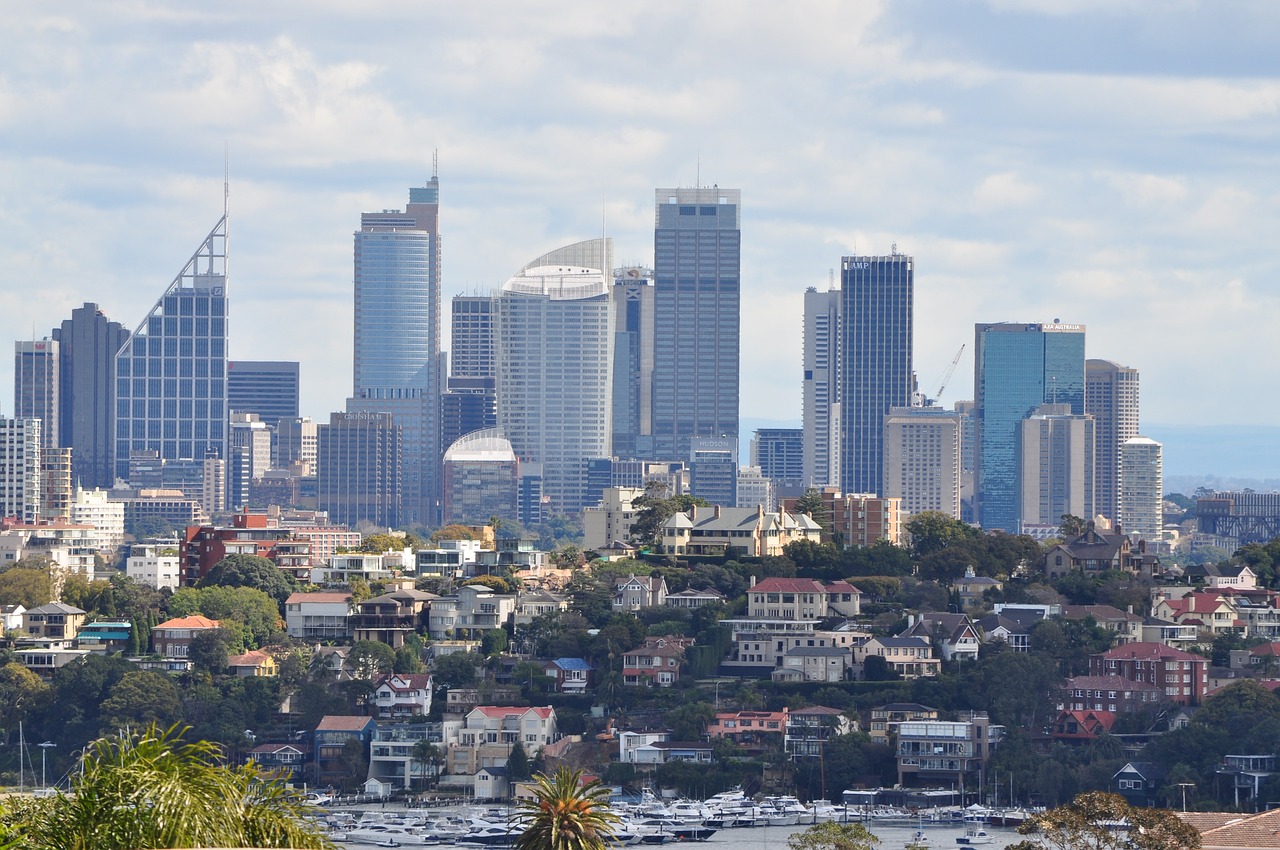
SYDNEY — Sydney’s housing market has hit a speed bump in the first quarter of 2026, with home values falling modestly as buyers grapple with higher borrowing costs, cost-of-living pressures and uncertainty from the Middle East conflict, according to the latest data from major property analysts.

Pixabay
Cotality’s Home Value Index showed Sydney dwelling values edged down 0.1% in February and 0.2% over the March quarter, with affluent suburbs hit hardest. The median dwelling value stood at approximately $1.296 million as of early April, reflecting annual growth of around 6% but a clear slowdown from stronger gains in 2025. House values softened more than units, with upper-quartile properties declining while more affordable segments showed relative resilience.
The downturn contrasts with optimistic forecasts issued at the start of the year. Domain’s 2026 Forecast Report predicted Sydney house prices would rise 7% over the calendar year, pushing the median toward $1.924 million by year-end and edging closer to the symbolic $2 million mark. KPMG projected more moderate growth of 5.8% for houses and 5.3% for units, while several major banks forecasted between 3% and 5% overall.
Analysts attribute the recent softness to the Reserve Bank of Australia’s February rate hike, which tightened serviceability and dampened buyer sentiment. Higher fuel prices linked to Middle East tensions have further squeezed household budgets, prompting some sellers to list properties preemptively in case values fall further. Affluent eastern and northern suburbs have seen the steepest quarterly declines, while outer western and southwestern areas with more affordable stock have held up better.
Despite the quarterly dip, longer-term fundamentals remain supportive. Chronic undersupply of housing, strong population growth driven by migration, and low vacancy rates in the rental market continue to underpin demand. Rental growth has remained robust, with house rents up around 5.7% annually, reinforcing investor interest particularly in units.
SQM Research’s Louis Christopher revised forecasts downward in March, warning of potential falls of up to 6% in Sydney over 2026 if interest rate hikes materialize as priced by futures markets. Other voices, including PropTrack and Domain, maintain that any correction will be mild and that growth should resume as the year progresses, especially if inflation moderates and rate relief eventually arrives.
The market split is widening. Lower-quartile house values in Sydney rose 0.8% in one recent month while upper-quartile values fell 0.9%, highlighting how affordability constraints are shifting competition toward cheaper segments. First-home buyers face particular challenges, with entry-level house prices around $1.15 million requiring years of saving for a deposit.
Units have shown greater resilience than detached houses. The median unit value sits near $903,000, with some analysts forecasting 5-6.5% growth in 2026 as investors seek relatively more accessible entry points and stronger rental yields.
Auction clearance rates have moderated from peaks seen in late 2025, and days on market have edged higher in premium segments, signaling a more balanced dynamic between buyers and sellers. Listings remain relatively constrained overall, which has prevented sharper declines.
Economists note that Sydney’s position as Australia’s largest jobs hub and gateway for international talent provides underlying support. However, persistent affordability issues — with median prices more than 10 times average household incomes in many areas — continue to limit participation from younger buyers and upgraders.
Perth, Brisbane and Adelaide have outperformed Sydney and Melbourne so far in 2026, with stronger monthly gains driven by tighter stock levels and more affordable entry points relative to the eastern capitals. This fragmentation underscores how national trends mask significant regional variations.
Looking ahead, forecasts for the remainder of 2026 vary widely. Bullish projections from Domain see Sydney house prices climbing toward $1.92 million by December, assuming steady income growth and continued supply constraints. More cautious outlooks, including those adjusted for geopolitical risks and potential further rate hikes, point to flat or slightly negative growth.
Buyers entering the market are advised to focus on areas with strong infrastructure links, such as Western Sydney near the new airport or established inner-ring suburbs with good amenity. Investors may find better value and rental returns in units, particularly in high-demand precincts.
Sellers in premium markets are encouraged to price realistically, as evidence shows over-ambitious listings are taking longer to sell. First-home buyers and investors alike should factor in potential interest rate volatility and prepare for a market that rewards patience and thorough due diligence.
The broader Australian property story in 2026 remains one of divergence. While Sydney and Melbourne have cooled, resource-driven and more affordable capitals continue posting solid gains. National house prices are still expected to rise overall, with KPMG forecasting 7.7% growth across the country, led by Perth and Brisbane.
For Sydney specifically, the coming months will test whether recent softness evolves into a deeper correction or proves a temporary pause before renewed upward momentum. Chronic supply shortages and demographic pressures suggest prices are more likely to moderate than crash, but elevated borrowing costs and external shocks could prolong the current flat period.
Prospective buyers and sellers should monitor Reserve Bank decisions, inflation data and global energy prices closely. Professional advice from mortgage brokers and property experts remains essential in a market where local conditions can vary dramatically between suburbs.
Sydney’s housing market, long one of the world’s most expensive, continues to evolve under the twin pressures of demand and affordability. While the dream of home ownership grows more distant for many, the city’s enduring appeal as an economic powerhouse ensures it will remain a focal point for property investors and families alike.
As April trading in the property sector unfolds, the latest data suggests caution in the short term but guarded optimism for the longer horizon — provided global and domestic headwinds do not intensify further.

I ventured into investing in high school in 2011, mainly in REITs, preferred stocks, and high-yield bonds, starting a fascination with markets and the economy that has not faded despite the years. More recently I have been combining long stock positions with covered calls and cash secured puts. I approach investing purely from a fundamental long-term point of view. On Seeking Alpha I mostly cover REITs and financials, with occasional articles on ETFs and other stocks driven by a macro trade idea.
Analyst’s Disclosure: I/we have no stock, option or similar derivative position in any of the companies mentioned, and no plans to initiate any such positions within the next 72 hours. I wrote this article myself, and it expresses my own opinions. I am not receiving compensation for it (other than from Seeking Alpha). I have no business relationship with any company whose stock is mentioned in this article.
Seeking Alpha’s Disclosure: Past performance is no guarantee of future results. No recommendation or advice is being given as to whether any investment is suitable for a particular investor. Any views or opinions expressed above may not reflect those of Seeking Alpha as a whole. Seeking Alpha is not a licensed securities dealer, broker or US investment adviser or investment bank. Our analysts are third party authors that include both professional investors and individual investors who may not be licensed or certified by any institute or regulatory body.


Exclusive-Amazon says it has reached deal with US Postal Service on package deliveries

Asset Class Scoreboard: March 2026


Manika is a macroeconomist with over 20 years of experience in industries including investment management, stock broking, investment banking. She also runs the profile Long Term Tips [LTT], which focuses on the generational opportunity in the green economy. Her investing group, Green Growth Giants, takes the theme a step further from LTT with a deeper dive into opportunities presented by the segment.
Analyst’s Disclosure: I/we have no stock, option or similar derivative position in any of the companies mentioned, but may initiate a beneficial Long position through a purchase of the stock, or the purchase of call options or similar derivatives in CCL over the next 72 hours. I wrote this article myself, and it expresses my own opinions. I am not receiving compensation for it (other than from Seeking Alpha). I have no business relationship with any company whose stock is mentioned in this article.
Seeking Alpha’s Disclosure: Past performance is no guarantee of future results. No recommendation or advice is being given as to whether any investment is suitable for a particular investor. Any views or opinions expressed above may not reflect those of Seeking Alpha as a whole. Seeking Alpha is not a licensed securities dealer, broker or US investment adviser or investment bank. Our analysts are third party authors that include both professional investors and individual investors who may not be licensed or certified by any institute or regulatory body.

$100 Oil Won't Sink The U.S. Economy


As a detail-oriented investor with a strong foundation in finance and business writing, I focus on analyzing undervalued and disliked companies or industries that have strong fundamentals and good cash flows. I have a particular interest in sectors such as Oil&Gas and consumer goods. Basically, anything that has been unloved for unjustified reasons that could offer substantial returns. Energy Transfer is one of those companies that I came across when no one wanted to touch it and now I can’t resolve myself to sell it. I will always focus more on long-term value investing but I can sometimes lose myself in possible deal arbitrage such as with Microsoft/ Activision Blizzard, Spirit Airlines/Jetblue (that one still hurts), and Nippon/U.S. Steel (perfect exit at $50.19). I tend to shun businesses that I can’t understand either high-tech or certain consumer goods such as fashion (give me a Levi’s jeans). I don’t understand why anyone would invest in cryptocurrencies as well. Through Seeking Alpha, I aim to connect with like-minded investors, share insights, and build a collaborative community of individuals seeking superior returns and informed decision-making, currently on a quest to review every public company.
Analyst’s Disclosure: I/we have no stock, option or similar derivative position in any of the companies mentioned, and no plans to initiate any such positions within the next 72 hours. I wrote this article myself, and it expresses my own opinions. I am not receiving compensation for it (other than from Seeking Alpha). I have no business relationship with any company whose stock is mentioned in this article.
Seeking Alpha’s Disclosure: Past performance is no guarantee of future results. No recommendation or advice is being given as to whether any investment is suitable for a particular investor. Any views or opinions expressed above may not reflect those of Seeking Alpha as a whole. Seeking Alpha is not a licensed securities dealer, broker or US investment adviser or investment bank. Our analysts are third party authors that include both professional investors and individual investors who may not be licensed or certified by any institute or regulatory body.

Check out what’s clicking on FoxBusiness.com.
Convenience store chain Wawa is recalling certain company-branded drinks due to an undeclared milk allergen.
The recall affects 16-ounce bottles of Wawa Iced Tea Lemon, Wawa Iced Tea Diet Lemon, Wawa Diet Lemonade and Wawa Fruit Punch. All four drinks are produced by the Wawa Beverage Company.
Wawa said in a press release that the products are no longer being sold and have been disposed of by affected stores. The recall was initiated after the company “identified and corrected” a temporary equipment issue that may have resulted in the presence of an undeclared milk allergen in the drinks.
The chain said people with milk allergies “run the risk of serious or life-threatening allergic reaction if they consume this product.”
DINOSAUR CHICKEN NUGGETS SOLD NATIONWIDE AT WALMART MAY CONTAIN LEAD, FEDERAL ALERT WARNS

Wawa is recalling drink products over an undeclared milk allergen. (Getty Images)
No illnesses have been reported to date in connection with the recall, Wawa said.
The company urges consumers who purchased the affected items to dispose of them immediately and contact the company’s customer contact center via email or phone; they can request a refund in the form of a Wawa gift card.
Wawa Iced Tea Lemon

A bottle of Wawa-branded iced tea with lemon in a 16-ounce bottle. (Wawa)
- Sold in 123 stores in Delaware, Maryland, New Jersey, Pennsylvania and Virginia
- UPC code: 726191018425
- Date printed on top of bottle: May 15, 2026
Wawa Iced Diet Tea Lemon

A bottle of Wawa-branded diet iced tea with lemon in a 16-ounce bottle. (Wawa)
- Sold in eight stores in New Jersey and Pennsylvania
- UPC code: 726191018548
- Date printed on top of bottle: May 18, 2026
NEARLY 10M POUNDS OF FROZEN FRIED RICE SOLD AT TRADER JOE’S ADDED TO RECALL: USDA
Wawa Diet Lemonade

A bottle of Wawa-branded diet lemonade in a 16-ounce bottle.
- Sold in 12 stores in Delaware and New Jersey
- UPC code: 726191055901
- Date printed on top of bottle: May 18, 2026
THOUSANDS OF BREAD, PIZZA ITEMS RECALLED IN 10 STATES OVER POSSIBLE METAL CONTAMINATION
Wawa Fruit Punch

A bottle of Wawa-branded fruit punch in a 16-ounce bottle. (Wawa)
CLICK HERE TO GET FOX BUSINESS ON THE GO
- Sold in 53 stores in Delaware, Maryland, New Jersey, Pennsylvania and Virginia
- UPC code: 726191018432
- Date printed on top of bottle: May 19, 2026

84% of Polymarket Traders Are Losing Money, New Research Finds

Candace Owens, MTG Slam Trump’s Easter Threat To Iran

Sacked for tackling a shoplifter? Britain is so lost right now


-

 NewsBeat4 days ago
Steven Gerrard disagrees with Gary Neville over ‘shock’ Chelsea and Arsenal claim | Football
-

 Business4 days ago
No Jackpot Winner and $194 Million Prize Rolls Over
-

 Fashion3 days ago
Weekend Open Thread: Spanx – Corporette.com
-

 Crypto World5 days ago
Gold Price Prediction: Worst Month in 17 Years fo Save Haven Rock
-

 Business20 hours ago
Three Gulf funds agree to back Paramount’s $81 billion takeover of Warner, WSJ reports
-
Crypto World6 days ago
Dems press CFTC, ethics board on prediction-market insider trades
-

 Sports2 days ago
India men’s 4x400m and mixed 4x100m relay teams register big progress | Other Sports News
-

 Business5 days ago
Login and Checkout Issues Spark Merchant Frustration
-

 Tech6 days ago
EE TV is using AI to help you find something to watch
-

 Sports6 days ago
Tallest college basketball player ever, standing at 7-foot-9, entering transfer portal
-
Tech7 days ago
Daily Deal: StackSkills Premium Annual Pass
-

 Tech7 days ago
Flipsnack and the shift toward motion-first business content with living visuals
-

 Sports7 days ago
Women’s hockey camp eyes fitness boost, tactics ahead of WC 2026 campaign | Other Sports News
-

 Crypto World7 days ago
U.S. rule change may open trillions in 401(k) funds to crypto
-

 Tech6 days ago
How to back up your iPhone & iPad to your Mac before something goes wrong
-

 Politics7 days ago
Usha Vance: Disney Hats Over MAGA Caps?
-
Crypto World7 days ago
Valinor raises $25m to put private credit on-chain
-

 Business7 days ago
Functional benefits brewing in coffee innovation
-

 Tech6 days ago
What Are The Biggest Limitations Of Supercomputers?
-

 Crypto World6 days ago
Bitcoin enters the public bond market as Moody’s gives a first-of-its-kind crypto deal a rating
You must be logged in to post a comment Login